
Caregiver decision guide
North Carolina fall foliage trips seniors can actually enjoy
Compare five low-exertion, senior-friendly fall foliage experiences in North Carolina — the Smoky Mountain Railroad, Biltmore's accessible tour, the NC Arboretum, GSMNP's paved Sugarlands nature trail, and Grandfather Mountain — using verified access specs, starting prices, and color windows. Use the honest trade-offs on time, cost, crowds, and walking distance to choose the one day out that fits your family's stamina and budget.
For a family comparing senior-friendly fall foliage trips in North Carolina, the first question is not which view looks best in a brochure. It is how much walking the day quietly requires: the steps from the parking lot, the slope after the elevator, the distance to the restroom, the wait before boarding, and the point where “paved” stops feeling safe for someone using a cane, walker, or wheelchair.
The five options below are the ones with enough documented access detail to make a practical comparison. They are not interchangeable. A 4.5-hour seated railroad trip solves one problem and creates others. A paved half-mile national park loop may be easier on stamina than a famous estate visit. An elevator to a mountaintop bridge is helpful only if the rest of the outing still fits the person’s balance, device, and energy.
| Experience | Unavoidable walking and surface | How access is obtained | Cost and booking reality | Time commitment | Color timing to consider |
|---|---|---|---|---|---|
| Great Smoky Mountains Railroad, Nantahala Gorge Excursion | Mostly seated once boarded; walking still occurs at parking, ticketing, boarding, restrooms, and any layover stops. | Train excursion from Bryson City; open-air gondola cars are among the available car options. | Runs April 3–Oct. 31, 2026; 44 miles round trip; starting at $63.72. Fall weekend adult tickets have been reported around $88, and advance booking is advised. [1][2] | About 4.5 hours round trip. [1] | Often treated as a lower-elevation foliage outing; best matched to mid-October through early November rather than the earliest high-ridge color. |
| Biltmore, Asheville | House access is partial: First and Second Floors are accessible by elevator; Third Floor and Basement are viewed by Access Lounge video. | Guests with disabilities may buy a reduced-price admission ticket, but the ticket must be purchased in person at the Reception & Ticketing Sales Center; Biltmore advises confirming details with Guest Services. | A specific reduced ticket amount is not listed here. Build time for in-person ticketing into the day. [3] | Variable; depends on house-entry time, gardens, parking, meals, and how much of the estate the family attempts. | Asheville-area, generally below 4,000 feet: usually better aligned with mid-October through early November. |
| North Carolina Arboretum, Blue Ridge Parkway MP 393 | A garden setting with largely wheelchair-accessible paved paths and designated routes marked on visitor maps. | Use visitor maps to stay on designated accessible routes; do not assume every garden spur is equally easy. | Current admission or parking price is not listed here. Verify current parking and ticket rules before departure. [4] | Flexible; can be kept short if the family chooses one paved route rather than trying to cover the full property. | Asheville-area, generally below 4,000 feet: usually mid-October through early November. |
| Sugarlands Valley Nature Trail, Great Smoky Mountains National Park | Paved half-mile loop; the park identifies it as its one ADA-accessible trail. | Free GRIT all-terrain wheelchairs can be reserved at Sugarlands and Oconaluftee visitor centers May through October, 3–30 business days in advance. | No entrance fee is listed here for the trail itself, but October is the park’s busiest month and the park advises buying parking tags at home. [5][6] | Short trail time, but parking, crowds, restroom stops, and the drive into the park may dominate the day. | Lower valley timing is generally mid-October through early November. |
| Grandfather Mountain, Linville area | Elevator access reaches the Mile High Swinging Bridge area, but the paved wildlife-habitat loop is occasionally steep and has benches. | The bridge has been wheelchair-accessible by elevator since 2010; ADA-accessible EnChroma viewfinders are available. No on-site wheelchair or stroller rentals. | A starting ticket price is not listed here. Families needing a wheelchair should bring their own or arrange one before arrival. [7] | Variable; can be a bridge-focused visit or a longer mountain outing if stamina allows. | Higher-elevation timing: often earlier, especially early to mid-October. |
The seated railroad trip is useful, but it is not a magic answer
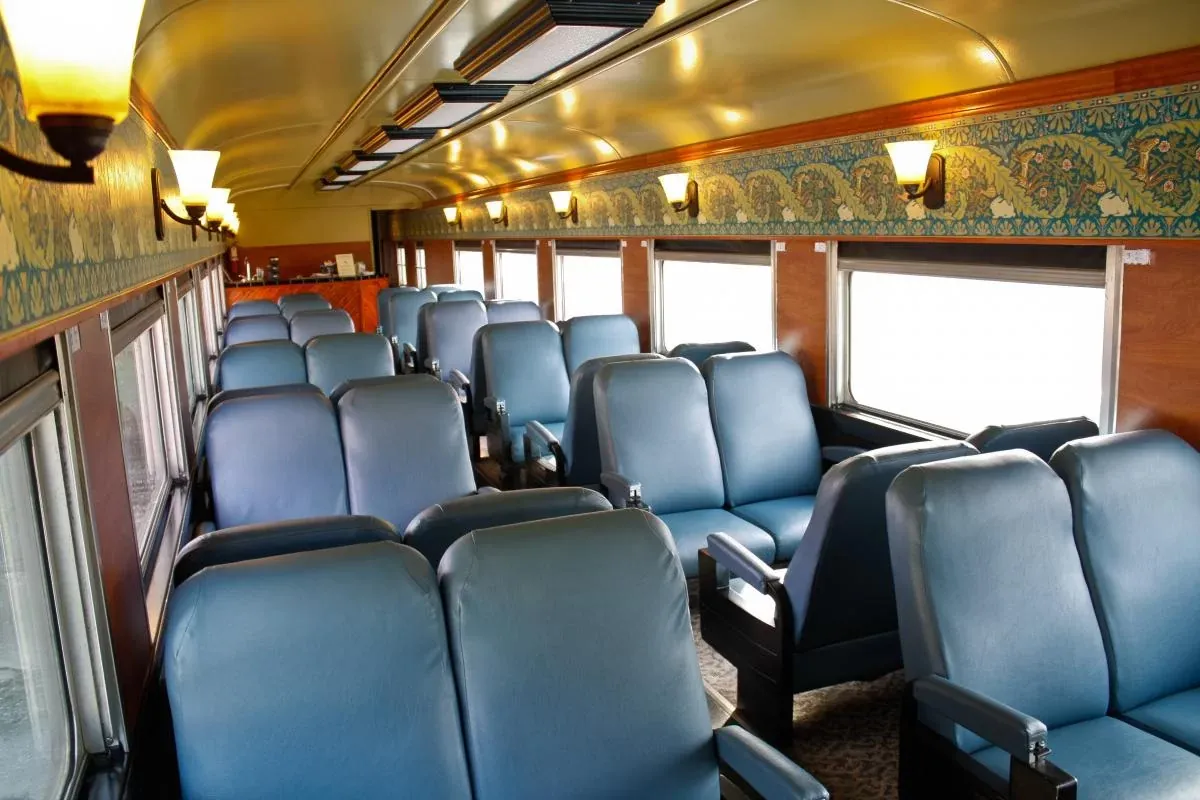
The Great Smoky Mountains Railroad’s Nantahala Gorge Excursion deserves the first serious look for a parent who cannot walk far. A 44-mile, 4.5-hour round trip from Bryson City means the main attraction happens while everyone is seated, and the 2026 season for this excursion runs April 3 through Oct. 31 with fares listed as starting at $63.72. [1]
That is exactly why it can get oversold in family planning. “Mostly seated” does not remove the transfer from car to station, the boarding process, the restroom question, or the fatigue of a long ride. It also does not guarantee the kind of wide, high-overlook foliage view people may imagine when they hear “Nantahala Gorge.” Travel + Leisure has reported fall weekend adult tickets around $88 and advises booking far in advance, and at least one traveler-review caveat says foliage visibility can feel limited because the train runs below the gorge scenery rather than above it. [2]
For some families, that trade is still worth it. A parent with limited standing tolerance may enjoy conversation, scenery, and a mountain-town outing without repeatedly getting in and out of the car. But the railroad is best treated as a seated fall excursion, not as a guaranteed leaf-peeping overlook. If the family’s main hope is to be surrounded by color with minimal walking, it may work beautifully. If the hope is sweeping high-elevation vistas, expectations need adjusting before the tickets are bought.
The fare also needs to be read as a starting point, not as the cost of the day. Add the car class, date, booking pressure, parking or transportation, meals, and the adult child’s very practical question: after 4.5 hours on the train and the drive back, will the older traveler still have enough energy to get safely from the car into the house?
When level ground matters more than a famous name

Sugarlands Valley Nature Trail is the clearest level-ground national park option in this set. Great Smoky Mountains National Park identifies it as the park’s one ADA-accessible paved trail, a half-mile loop, and the park’s free GRIT all-terrain wheelchairs can be reserved at Sugarlands and Oconaluftee visitor centers from May through October. The reservation window is specific: 3–30 business days in advance. [5]
That reservation detail is not a footnote. It can decide the outing. A family that arrives hoping a specialty wheelchair will simply be available may lose the very feature that made the trail realistic. The stronger plan is to choose the date, reserve the GRIT chair if needed, buy the parking tag at home, and assume October crowds will slow the day down; the National Park Service identifies October as the park’s busiest month. [6]
The North Carolina Arboretum is the softer, more flexible version of the level-route idea. It is a 434-acre public garden at Blue Ridge Parkway Milepost 393, with largely wheelchair-accessible paved paths and designated accessible routes shown on visitor maps. [4] For an older adult who likes gardens, benches, and the option to stop early without feeling as if the main attraction was missed, that flexibility matters.
The caution is that a garden can tempt families into “just a little farther.” Paved does not always mean flat, dry, uncrowded, or easy to turn around. Wet leaves, low light, uneven edges, and medication-related dizziness can turn a pretty path into a fall-risk problem. If rain is in the forecast, it is worth treating the trip the same way you would any other outing with slick surfaces: shorten the route, keep hands free, and reconsider shoes or mobility devices. For a broader safety frame, see these rainy-weather fall prevention tips.
Biltmore and Grandfather Mountain are accessible only if their conditions fit your family
Biltmore can be a wonderful fall day for a family that wants architecture, gardens, dining, and estate scenery rather than a trail. The access details, though, are partial. Only the First and Second Floors of Biltmore House are accessible by elevator. Guests who cannot access the Third Floor and Basement may view those areas by video in the Access Lounge. Biltmore also offers a reduced-price admission ticket for guests with disabilities, but that ticket must be purchased in person at the Reception & Ticketing Sales Center; the estate directs guests to confirm details with Guest Services at 800-411-3812. [3]
That in-person purchase requirement can matter for a caregiver trying to keep the day smooth. It may mean standing in another line, stopping at ticketing before the rest of the plan begins, or discovering that the family should have called ahead about documentation, timing, or arrival logistics. Biltmore is not a simple “buy online and roll in” answer for every disability-ticket situation.
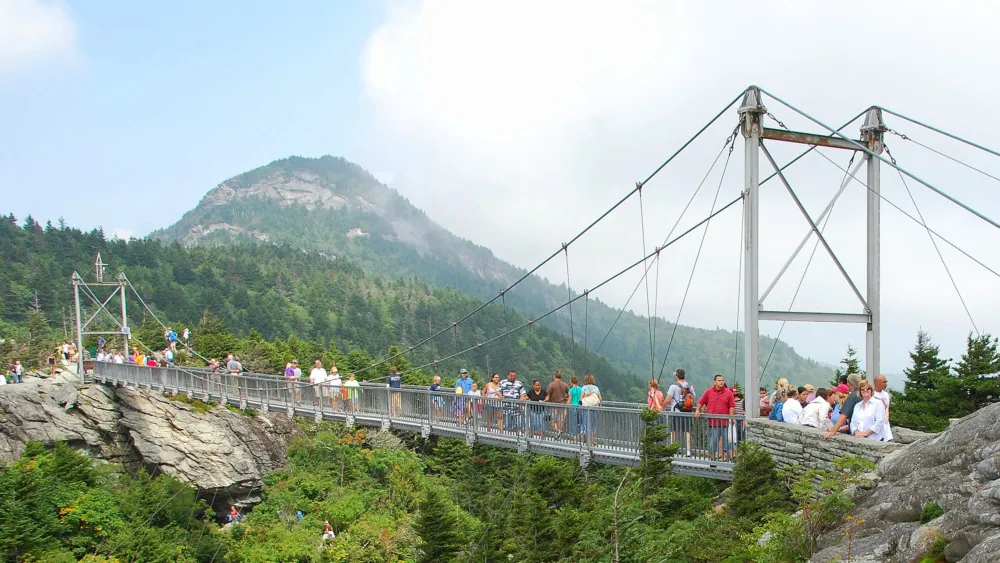
Grandfather Mountain has a different kind of appeal: the big moment is dramatic, and the Mile High Swinging Bridge has been wheelchair-accessible by elevator since 2010. The site also documents ADA-accessible EnChroma viewfinders. [7] For a parent who can handle the drive and the weather, getting to a high-elevation view without a climb is a meaningful access feature.
The rest of the Grandfather Mountain day should not be flattened into the word “accessible.” Its paved wildlife-habitat loop is described as occasionally steep with benches, and the site says there are no on-site wheelchair or stroller rentals. [7] If a wheelchair is needed, bring one or arrange it before arrival. If a walker user is uneasy on slopes, plan the visit around the elevator-accessible bridge area rather than assuming the loop will be comfortable.
Use elevation as a timing filter, not a promise
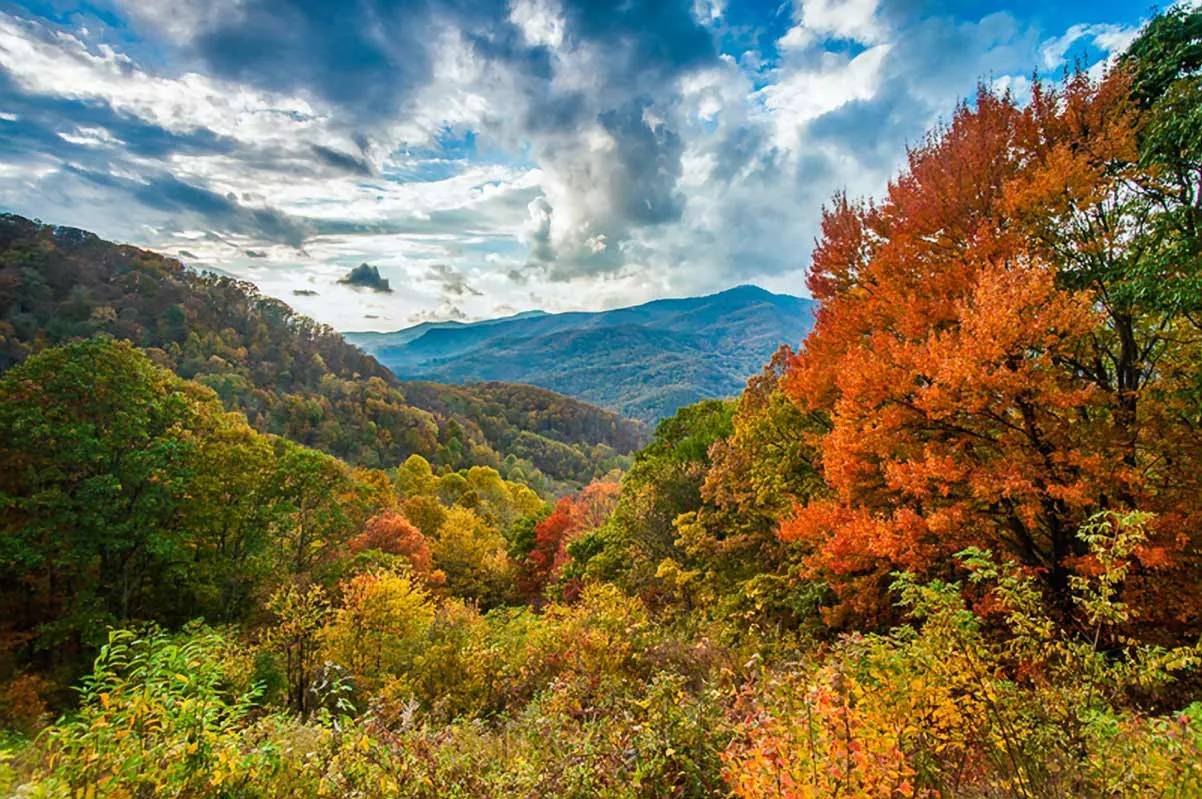
For fall color timing, the most useful rule is broad and elevation-based. Great Smoky Mountains National Park describes fall color as beginning at the highest elevations and moving downward, while Explore Asheville’s fall-drive guidance uses the same practical split: areas above 4,000 feet generally color earlier, and areas below 4,000 feet generally run later. In planning terms, think early to mid-October for higher elevations and mid-October to early November for lower elevations. [6][8]
That puts Grandfather Mountain in the earlier-color conversation, while Biltmore, the Arboretum, Sugarlands Valley, and many lower railroad-viewing areas often make more sense later in October. It does not mean a specific Tuesday will peak. Weather, storms, leaf drop, and local elevation shifts can change what the family actually sees.
The timing question should also be matched to stamina. A slightly imperfect color week with easier parking and a safer surface may be a better senior-friendly trip than a peak-color weekend spent fighting crowds, standing in lines, and rushing bathroom breaks.
Do the boring verification before anyone gets in the car
Before choosing the destination, choose the tolerance level. A cane user who can manage a few gentle paved slopes has different options from a wheelchair user who needs reliable elevator access and cannot transfer easily. A parent who can sit for hours but tires after standing in line may be a strong railroad candidate. A parent who becomes stiff or confused after a long ride may do better with a shorter paved garden or trail.
- If walking distance is the tightest limit, start with Sugarlands Valley Nature Trail or a short, mapped Arboretum route.
- If seated time is easier than walking, compare the railroad’s duration, boarding logistics, and fare class before assuming it is the lowest-effort choice.
- If the family wants a house-and-garden day, call Biltmore before travel about the disability ticket, elevator access, arrival timing, and how the Access Lounge works.
- If the goal is a high-elevation view, consider Grandfather Mountain, but bring needed mobility equipment and treat steep paved sections as optional.
- If rain, fog, medication changes, or a poor sleep night show up, shorten the plan rather than trying to rescue the original itinerary.
For families who like a graded activity format, the same logic applies beyond foliage trips: separate seated, light-movement, and observe-and-enjoy plans before the day begins. This senior activity planning guide uses that kind of structure, and the broader three-layer fall prevention frame is a helpful reminder that community outings are part of fall planning, not separate from it.
Road status deserves the same respect as ticket status. As of Aug. 24, 2026, the National Park Service listed Helene-related closures on North Carolina Blue Ridge Parkway sections MP 317.5–324.7, MP 333.9–344.2, and MP 344.2–355.3, plus construction closures near Rough Ridge and Linn Cove at MP 298.5–305.1. Those closures can affect routes to Parkway-area stops, including the Arboretum, Grandfather Mountain, and nearby scenic drives. [9]
Last verified for Parkway road status: Aug. 24, 2026. Check current NPS road conditions, attraction accessibility pages, ticket policies, parking requirements, and weather before departure. A static ranking cannot know whether the elevator is enough, the loop is too steep, the fare has jumped, or the road you planned to use is closed.
References
- “Tickets & Packages,” Great Smoky Mountains Railroad.
- “Great Smoky Mountains Railroad Fall,” Travel + Leisure.
- “Is Biltmore accessible for guests with limited mobility?,” Biltmore.
- “Fall Activities for Seniors: Accessible Autumn Adventures,” Loyal Lifts.
- “Trail Accessibility Information,” National Park Service.
- “Fall Colors,” National Park Service.
- “Accessibility,” Grandfather Mountain.
- “Scenic Drives Near Asheville in Fall,” Explore Asheville.
- “Road Closures,” National Park Service, Aug. 24, 2026.
Questions to bring to a clinician or OT
This is not medical, legal, or a family's final decision — only a framework. Bring these questions to a clinician, occupational therapist, or your local Area Agency on Aging.
Find Local HelpRelated reading
Noticed something outdated or inaccurate on this page? Flag a correction. We review every report against CDC, NIA, and AARP HomeFit guidance before updating a page.