
Caregiver decision guide
Packing Checklist for Older Adults in Croatia's Summer Heat
For older adults visiting Croatia in summer, heat is the highest-stakes packing decision. A CDC-anchored checklist helps you pack for hydration, sun protection, medication safety, and sightseeing timing — and recognize the warning signs that mean getting out of the heat and seeking care right away.
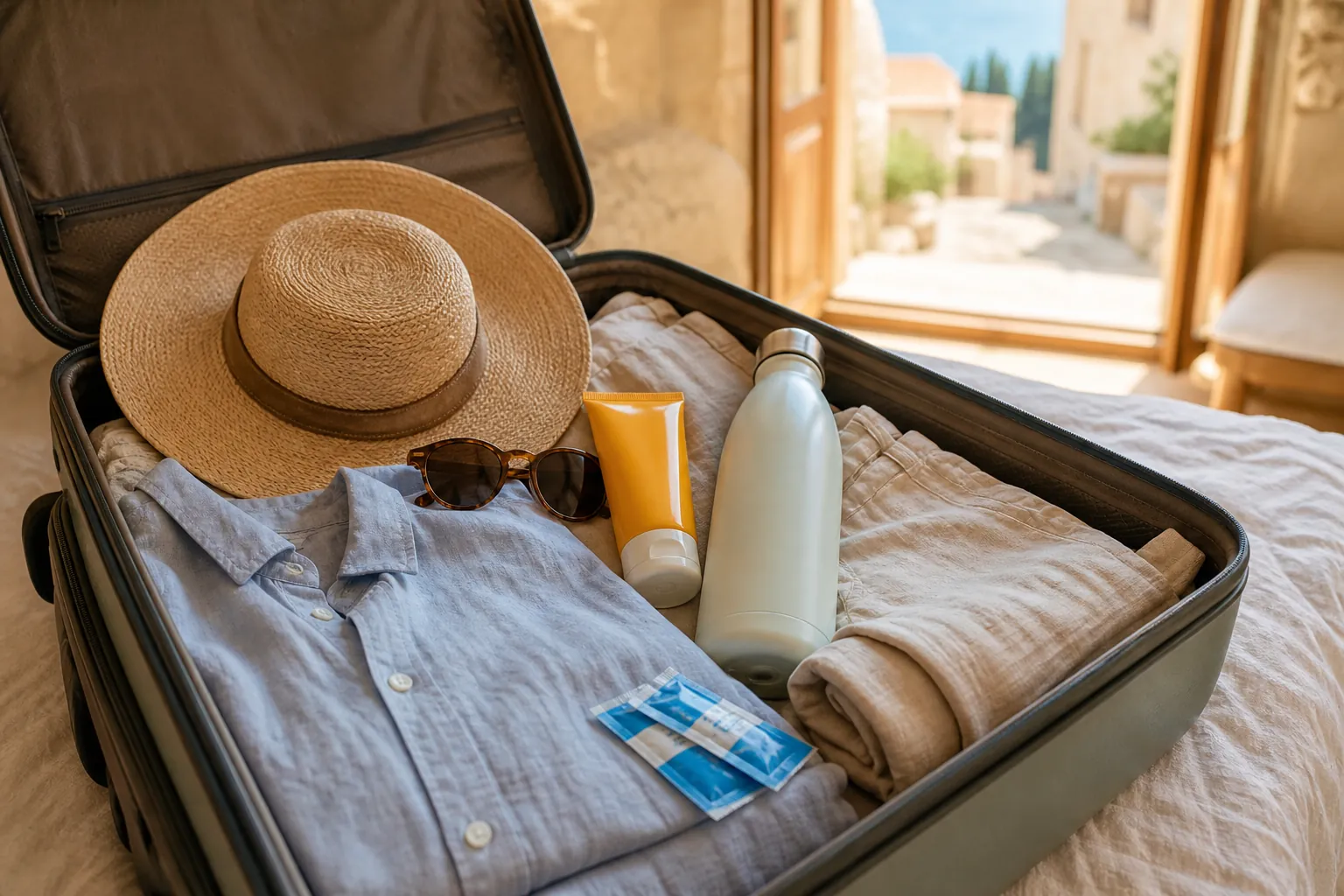
Start the suitcase with the items that will still matter at 2 p.m. on pale stone streets: water, oral rehydration salts, a wide-brim hat, sunglasses, sunscreen, light clothing, blister supplies, medication copies, and a card that tells someone whom to call. A packing checklist for older adults traveling to Croatia in summer is not a beachwear list with one health note tacked on. It is a heat plan that happens to fit in a carry-on.
The reason is not that every traveler over 65 is fragile. It is that the CDC identifies adults aged 65 and older as more prone to heat illness because older bodies adjust more slowly to sudden temperature changes, chronic medical conditions can change the body’s heat response, and some prescription medicines can affect temperature control and sweating.[1] For Croatia specifically, the CDC traveler packing list includes the plain, unglamorous items that make a hot day safer: sunscreen with UVA/UVB protection, sunglasses, a wide-brim hat, aloe gel, oral rehydration salts, prescription copies, health insurance documents, and a contact card.[2]
There is also a timely reason to take this seriously in 2026. Secondary heatwave summaries have reported exceptional Croatian heat this summer, including a reported first-ever 40.4°C June reading; that kind of figure should be checked against Croatia’s official meteorological service before a trip, not treated as the foundation of a health decision.[3] The packing list does not depend on one record. It depends on what heat does during long outdoor sightseeing days, ferry waits, stone steps, and bright waterfront glare.
This is travel-planning guidance, not personal medical advice. If a clinician has limited your fluids, prescribed water pills, adjusted heart or blood pressure medicine, or warned you about kidney, heart, or sodium concerns, the packing list should go with you to that clinician before it goes into the suitcase.
The heat-first Croatia packing checklist
This is the short version to print, screenshot, or hand to the adult child who keeps slipping “just in case” items into side pockets. The point is not to pack more. It is to pack the few things that change what happens when the day gets hot.
| Pack this | Why it matters in Croatia’s summer heat |
|---|---|
| Reusable water bottle you will actually carry | The CDC advises older adults to drink more water than usual in hot weather and not wait until thirsty, with a clinician caveat for fluid limits or water pills.[1] |
| Oral rehydration salts | The CDC’s Croatia packing list includes oral rehydration salts for travelers.[2] |
| Salty snacks for long outdoor days | For hours outdoors in heat, the CDC advises eating salty snacks and drinking water to replace salt lost through sweating.[4] |
| Broad-spectrum sunscreen, SPF 15+ | The CDC Croatia packing list specifies sunscreen with SPF 15 or higher and UVA/UVB protection.[2] |
| Sunglasses and a wide-brim hat | Both appear on the CDC Croatia destination packing list and reduce direct sun exposure.[2] |
| Loose, lightweight, light-colored clothing | CDC heat guidance for older adults recommends loose, lightweight, light-colored clothing in hot weather.[1] |
| Aloe gel | Included on the CDC Croatia packing list for sun exposure aftercare.[2] |
| Prescription medicines in protected packaging | Some medicines can affect temperature control and sweating, so heat exposure and storage deserve attention before travel.[1] |
| Prescription copies with generic names | The CDC Croatia list includes prescription copies with generic names.[2] |
| Moleskin or molefoam, bandages, and minor-wound supplies | The CDC Croatia list includes moleskin or molefoam and bandages; hot walking days make small foot problems trip-limiting fast.[2] |
| Health insurance documents and contact card | Both are included in CDC destination packing guidance for Croatia.[2] |
| Immunization records | CDC older-adult travel guidance recommends carrying immunization records and discussing routine vaccines before travel.[5] |
Hydration belongs in the day bag, not just the hotel room
A water bottle left beside the sink does not help in a museum line, on a ferry pier, or halfway up a stepped lane. Choose a bottle that is light enough to carry when full and familiar enough that you will not leave it behind. The best bottle is not the largest one; it is the one that makes it into the day bag every morning.
The CDC’s older-adult heat guidance says to drink more water than usual and not wait until thirsty in hot weather. The same guidance adds the important boundary: people whose doctors limit fluids or who take water pills should ask how much to drink during hot weather.[1] That caveat is not fine print. It is the difference between useful advice and advice that may be wrong for the person who most needs a careful plan.
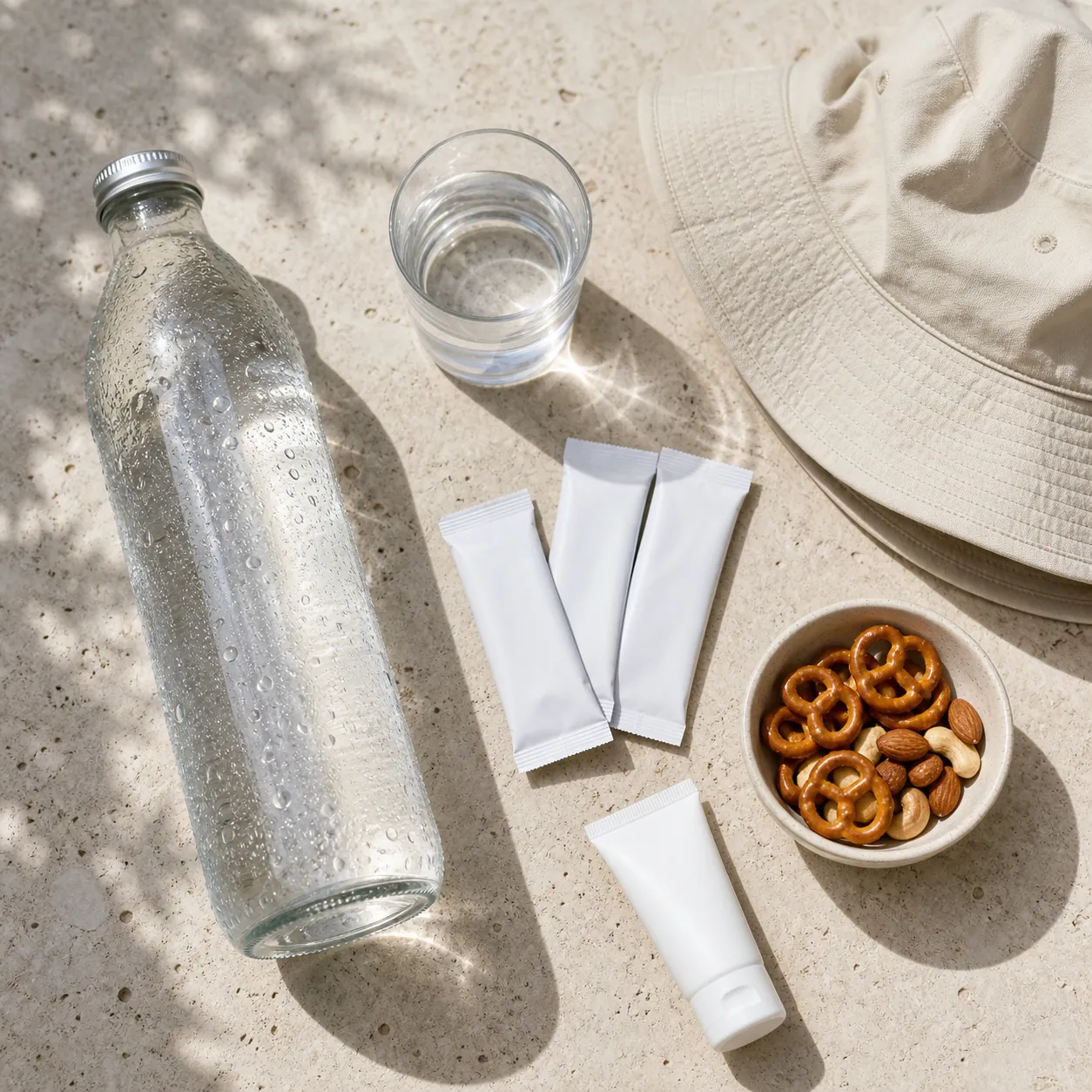
Pack oral rehydration salts in their original sachets, not loose powder in an unmarked bag. They take little room, they are on the CDC Croatia packing list, and they are easier to use calmly if they are already separated from cosmetics, snacks, and chargers.[2] For a long hot outdoor stretch, add a small salty snack you tolerate well. The CDC’s Croatia travel advice specifically says that when outdoors for many hours in heat, travelers should eat salty snacks and drink water to replace salt lost through sweating.[4]
Do not turn this into a contest over ounces. A traveler on a fluid restriction, a diuretic, or certain heart or kidney plans needs an individualized answer. The practical packing move is simple: before departure, write the clinician’s hot-weather fluid guidance on a note in the medication pouch or phone. If no special limit applies, the travel day still needs repeated drinking before thirst announces itself.
The same heat rules that protect you at home travel with you; if you want a home version for relatives staying behind, see the room-by-room heat wave safety plan.
The sun layer: hat, glasses, sunscreen, clothing
The sun layer should be packed as one working set, not scattered through three bags. Put the hat, sunglasses, sunscreen, and a light cover layer where they can be reached before stepping into sun. If the hat is crushed at the bottom of the suitcase and the sunscreen is in checked luggage, neither is part of the day’s heat plan.
- Wide-brim hat: choose one that shades the face and stays on in wind along the water. A decorative brim that has to be held down with one hand is less useful on steps and ferry ramps.
- Sunglasses: glare off water and pale paving can turn an ordinary walk into squinting fatigue. Sunglasses are included in the CDC Croatia packing list.[2]
- Sunscreen: pack broad-spectrum sunscreen with SPF 15 or higher and UVA/UVB protection, as listed by the CDC for Croatia travelers.[2]
- Aloe gel: useful after too much sun, and also included in the CDC Croatia packing list.[2]
- Loose, lightweight, light-colored clothing: this is CDC heat guidance for older adults, and it matters more than whether the outfit photographs well.[1]
The clothing test is whether the traveler can sit, climb, sweat, and cool. Tight waistbands, heavy dark fabrics, and shoes that only work for dinner have a way of becoming medical equipment in reverse: they create problems the rest of the bag has to solve. A light long-sleeve layer can be more useful than another sleeveless top if it keeps direct sun off the arms while waiting outside.
Medication safety in heat
Medication planning for Croatia in summer has two parts: what the medicines do to the body in heat, and what heat does to the medicines. The CDC warns that some prescription medicines can affect temperature control and sweating.[1] That does not mean stopping a medicine for travel. It means asking the prescriber or pharmacist, before departure, which medicines need extra caution in hot weather and what symptoms should change the day’s plan.
Pack prescription copies with generic names, because that is what the CDC Croatia packing list recommends.[2] Brand names do not always travel well across borders. A generic-name copy gives a clinician or pharmacist a better starting point if pills are lost, damaged, or questioned.
- Keep medicines in carry-on luggage, not in a checked bag that may sit hot or arrive late.
- Keep medicines in original labeled containers when possible.
- Pack the prescription copy separately from the pill bottles, so one lost pouch does not take everything.
- Ask before travel whether any medication changes heat tolerance, sweating, thirst, dizziness risk, or fluid instructions.
- Avoid leaving medication in direct sun, on a beach chair, in a hot parked vehicle, or against a sunny window.
This is also where the adult child can help without taking over. A small medication pouch, a copy of prescriptions, and a note about heat instructions protect independence better than hovering reminders every hour.
Feet, skin, and the small things that decide whether the day continues
Croatia’s summer heat is not only overhead. It comes up through stone, pavement, stairs, and crowded waiting areas. Feet swell, straps rub, and a small blister can become the reason everyone changes plans. Moleskin or molefoam and bandages are on the CDC Croatia packing list, and they belong in the day bag, not buried in the hotel suitcase.[2]
- Moleskin or molefoam cuttable to fit a rubbing spot
- Assorted adhesive bandages
- A small amount of wound-cleaning supplies
- Two pairs of well-tested walking shoes or sandals, if luggage space allows
- Moisture-wicking socks for travelers who wear closed shoes
Do not save new shoes for Croatia. A hot day finds every stiff seam. If a shoe has not already handled a long walk at home, it has not earned a place as the main sightseeing shoe.
Paperwork that belongs with the health items
Health paperwork is easy to dismiss as “administrative,” until someone needs care in a place where the group is tired, hot, and not thinking clearly. The CDC Croatia packing list includes health insurance documents and a contact card.[2] Put them somewhere reachable, and make sure a travel companion knows where that place is.
- Health insurance documents
- Travel insurance information, if purchased
- Emergency contact card with name, phone number, allergies, major conditions, and key medications
- Prescription copies with generic names
- Immunization record
Before international travel, the CDC advises older adults to schedule a health appointment 4–6 weeks before departure, especially to review destination needs, routine vaccines, and individual risks. Its older-adult travel guidance also names routine vaccines such as pneumococcal, shingles, and annual flu as items to discuss with a clinician.[5]
For broader planning around international living and travel choices later in retirement, this site’s guide to affordable places for seniors to retire abroad may be useful, but the summer Croatia suitcase still has to answer the immediate heat question first.
Use the checklist between 10 a.m. and 4 p.m.
Packing the right items is only half the job. The other half is using them before the body starts negotiating. The CDC’s Croatia travel guidance says to seek shade during the hottest time of day, identified as 10 a.m. to 4 p.m.[4] That window should shape the itinerary, not merely decorate it with the word “break.”

A sensible Croatian summer day for an older traveler often puts outdoor walking early, indoor or shaded time in the middle, and waterfront or old-town strolling later. That is not giving up the trip. It is choosing the hours that let the traveler keep going.
| Part of the day | What to do with the packed items |
|---|---|
| Before leaving the lodging | Fill the water bottle, put oral rehydration salts and salty snacks in the day bag, apply sunscreen, and place the hat and sunglasses where they are used immediately. |
| Morning sightseeing | Walk while streets and queues are cooler. Drink before thirst. Treat rubbing shoes early with moleskin or bandages. |
| 10 a.m.–4 p.m. | Shift toward shade, indoor museums, meals, rest, or transport. Avoid treating this window as the best time for exposed climbs, long queues, or unshaded waterfront waits.[4] |
| Late afternoon and evening | Resume lower-exposure walking if symptoms are absent, refill water, and reassess energy rather than pushing to “make up” missed midday time. |
| Back at lodging | Restock the day bag: water bottle ready, salts replaced, bandages replenished, prescriptions checked, clothes laid out for heat rather than fashion alone. |
This is where independence is preserved. A traveler who plans the shaded side of the street, takes the earlier ferry when possible, and skips an exposed climb at noon is not being managed. They are managing the trip.
Ordinary Croatia packing, kept in its place
Yes, pack swimwear if swimming is part of the trip. Yes, packing cubes may make a suitcase neater. A nicer dinner outfit is fine if there is room. Those items simply do not deserve the first decision in an August suitcase for an older traveler.
If space gets tight, keep the item that changes heat exposure, hydration, walking comfort, medication safety, or access to care. The extra outfit can lose. The hat, prescription copy, moleskin, insurance card, and oral rehydration salts should not.
When the checklist stops being enough
A packing list is not a promise that heat illness will not happen. It is a way to lower the odds and make the first response faster. The CDC warns that heat stroke can be deadly.[4] The moment symptoms begin, the plan should narrow: get out of the heat, cool down, drink only if safe and appropriate for the person, and seek medical care when warning signs are present or symptoms do not quickly improve.

Do not argue with muscle cramps, headache, nausea, vomiting, unusual weakness, confusion, fainting, or a traveler who is suddenly not acting like themselves. Move to shade or air-conditioning. Stop the outing. Use the contact card and insurance documents if care is needed. If the situation feels urgent, seek emergency help rather than trying to finish the itinerary.
Families who want a separate document for urgent-care preparation can use the hospital emergency safety checklist for elderly patients. For Croatia in summer, the immediate judgment is simpler: the packing list has done its job only if it helps the traveler stay hydrated, shaded, medication-safe, and willing to change plans before heat illness becomes an emergency.
References
- Heat and Older Adults (Aged 65+), CDC. https://www.cdc.gov/heat-health/risk-factors/heat-and-older-adults-aged-65.html
- Croatia – Traveler view – Packing List, CDC. https://wwwnc.cdc.gov/travel/destinations/croatia/traveler/packing-list
- 2026 European heatwaves, Wikipedia. https://en.wikipedia.org/wiki/2026_European_heatwaves
- Croatia – Traveler view, CDC. https://wwwnc.cdc.gov/travel/destinations/traveler/none/croatia
- Older Adults and Healthy Travel, CDC. https://wwwnc.cdc.gov/travel/page/senior-citizens
Questions to bring to a clinician or OT
This is not medical, legal, or a family's final decision — only a framework. Bring these questions to a clinician, occupational therapist, or your local Area Agency on Aging.
Find Local HelpRelated reading
Noticed something outdated or inaccurate on this page? Flag a correction. We review every report against CDC, NIA, and AARP HomeFit guidance before updating a page.