
Caregiver decision guide
Are store closures a health risk for elderly shoppers?
Pharmacy, grocery, and bank closures are more than a retail trend for older adults — they can disrupt medication refills, food access, and daily independence. This guide explains who is most at risk when nearby stores close and what families should check in their own situation.
When a familiar pharmacy, grocery store, or bank branch closes, the first question is usually practical: where is the next one? For an older adult, the better question is a little different: what routine did that place quietly hold together?
A nearby store may have been the refill reminder, the weekly reason to leave the house, the place where someone could buy fresh food without carrying bags across two bus transfers, or the bank counter where a teller noticed unusual activity. Once that stop disappears, the replacement is not just a new address. It may require a new ride, a new account login, a new prescription transfer, a longer walk, a higher delivery fee, or help from family that was not needed before.
This is general information, not medical, financial, or legal advice. Medication changes, banking decisions, benefit applications, and safety concerns should be reviewed with the appropriate professional or local agency when the situation is specific or urgent.
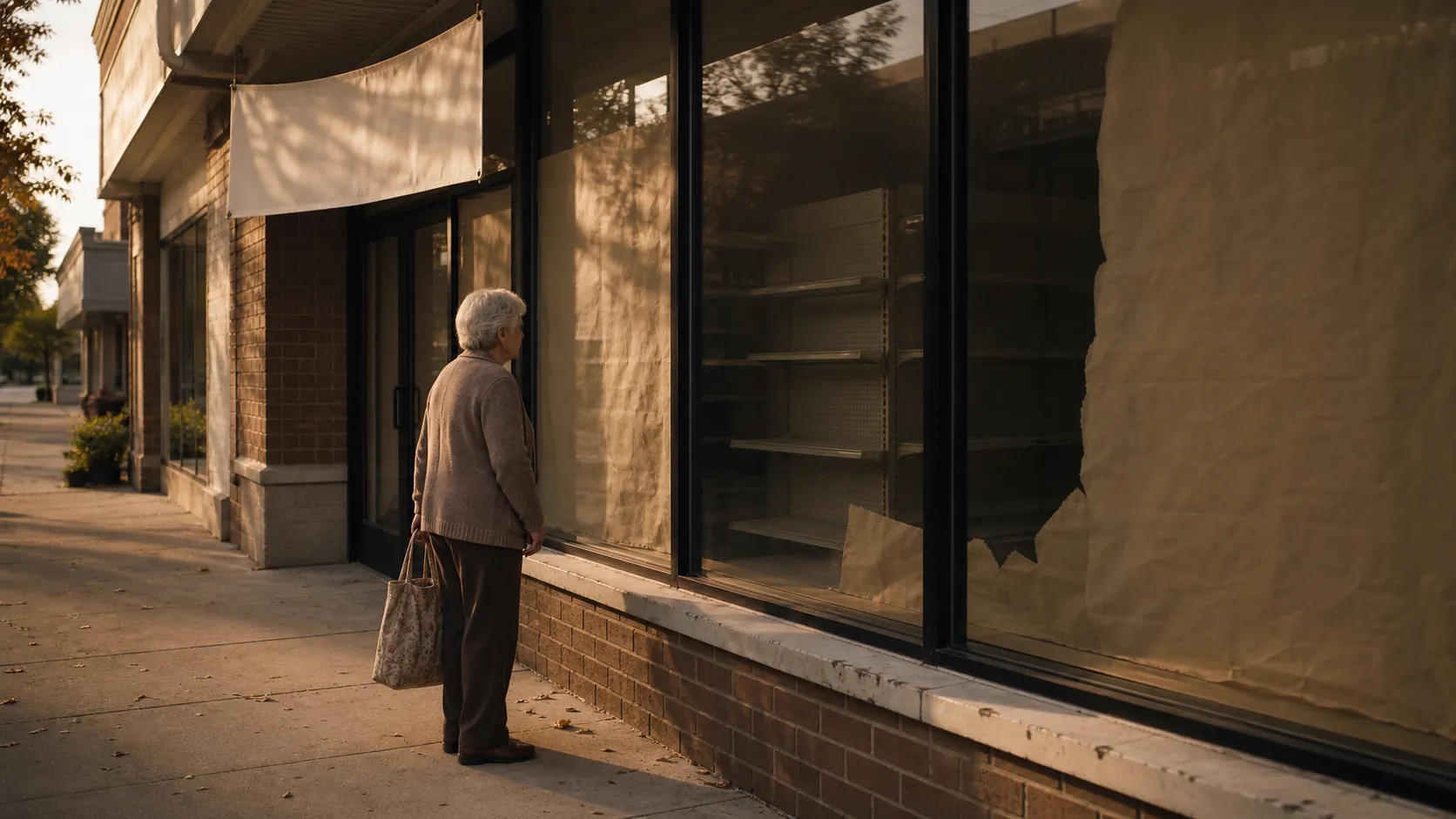
The strongest warning sign comes from pharmacy closures
The clearest evidence that store closures can become a health risk comes from pharmacy data, because researchers can see whether people keep refilling important medications after their regular pharmacy disappears.
In a JAMA Network Open study of adults age 50 and older, researchers compared people whose pharmacy closed with people whose pharmacy stayed open. Over the following 12 months, about 23.8% of adults whose pharmacy closed never refilled their statin, compared with 12.8% of those whose pharmacy remained open. The study also found an adherence drop of about 5.9 percentage points after closure, with larger declines among people who had used independent pharmacies and among those in low-access neighborhoods.[1]
That statin finding matters because it is not measuring annoyance. It is measuring a break in medication continuity. A refill record cannot prove exactly what happened in someone’s kitchen — whether they had leftover pills, whether a doctor changed treatment, or whether they simply stopped — but a year with no refill is a serious enough signal to notice. For an older adult managing heart disease risk, diabetes, blood pressure, pain, memory symptoms, or several medications at once, the closure can become the point where the system stops nudging them along.
Independent pharmacies deserve special attention here. A chain counter can be familiar too, but a small local pharmacy may be where the pharmacist knows which daughter usually calls, which patient struggles with childproof caps, or which refill tends to get forgotten. When that pharmacy closes, the prescription file may transfer on paper, but the small accommodations often do not transfer as cleanly.
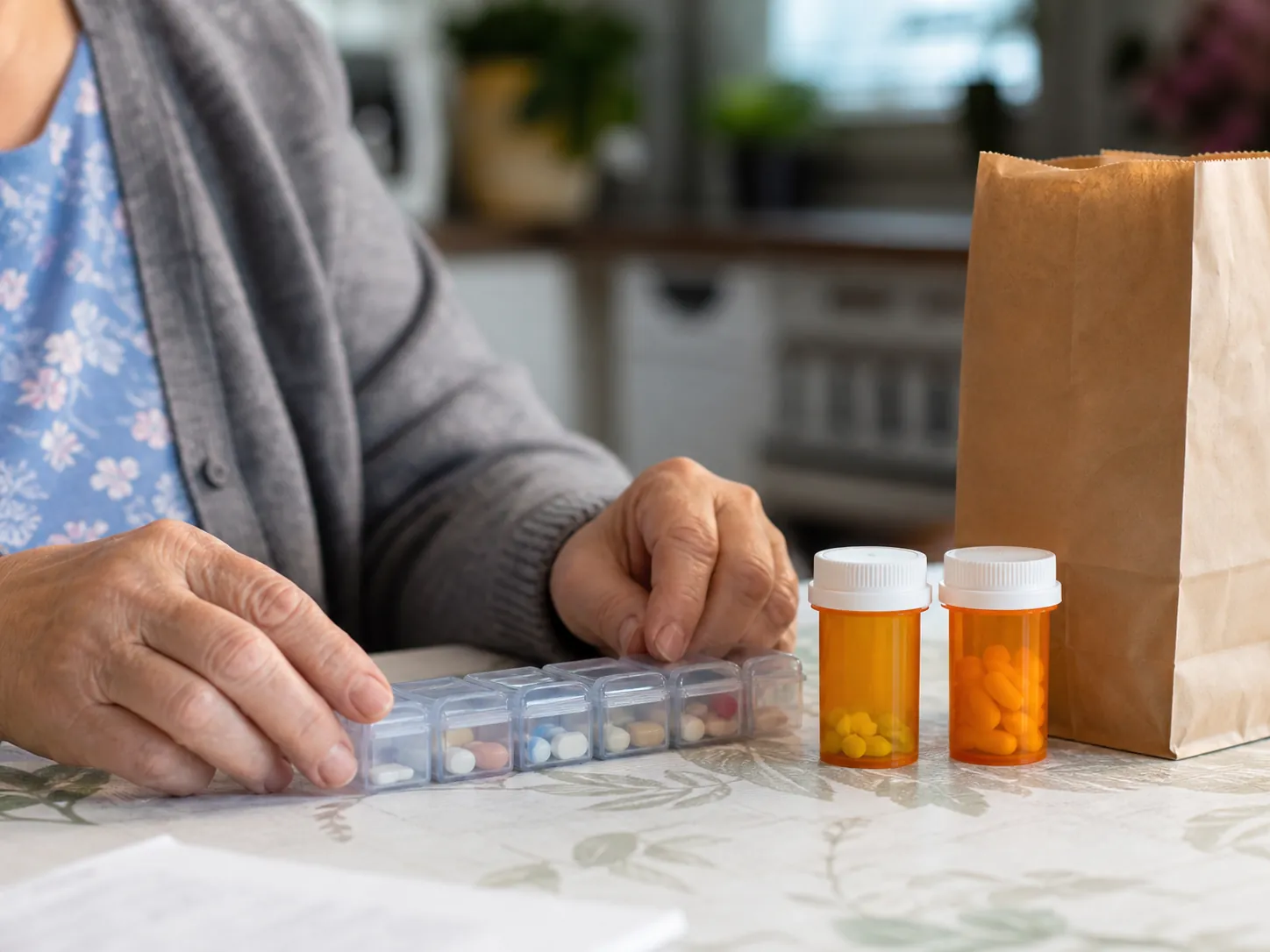
Pharmacy closures are widespread, but the local effect is what counts
Large closure totals help explain why more families are facing this problem, but they should not be treated as if every closing store creates the same level of danger. A USC Program on Medicines and Public Health summary of Health Affairs research reported that roughly 30% of U.S. pharmacies closed from 2010 to 2021.[2] STAT, citing GoodRx and Health Affairs reporting, described an estimated 45 million Americans living in pharmacy deserts, defined there as having the nearest pharmacy more than 10 miles away, and reported announced plans for Walgreens to close about 1,200 stores by 2027 and CVS to close about 270.[3]
Those figures are context, not a personal risk score. A closure in a dense neighborhood with multiple bus routes, several nearby pharmacies, and a caregiver already picking up prescriptions may be manageable. A closure in a rural area, a low-access neighborhood, or a town where the pharmacy was attached to the only weekly errand route is different. The health risk grows when the closed store was the only realistic path to the medication, not merely the closest storefront.
“Nearby” can be misleading when someone no longer drives
For a driving adult with a credit card, a smartphone, and flexible time, a store two miles farther away may be irritating. For an older adult who no longer drives, the same two miles can mean asking for a ride, paying for transportation, walking along unsafe sidewalks, waiting in bad weather, or giving up the errand entirely.
Transportation data explains why a replacement location can look reasonable on a map and still fail in real life. West Health Mosaic reported that 21% of adults 65 and older who live alone lack vehicle access. It also reported that 8 in 10 older non-drivers say lack of transportation prevents needed activities, and that in 2023, 5.9% of rural adults age 60 and older said transportation kept them from essential activities, compared with 4.5% of urban adults in that age group.[4]
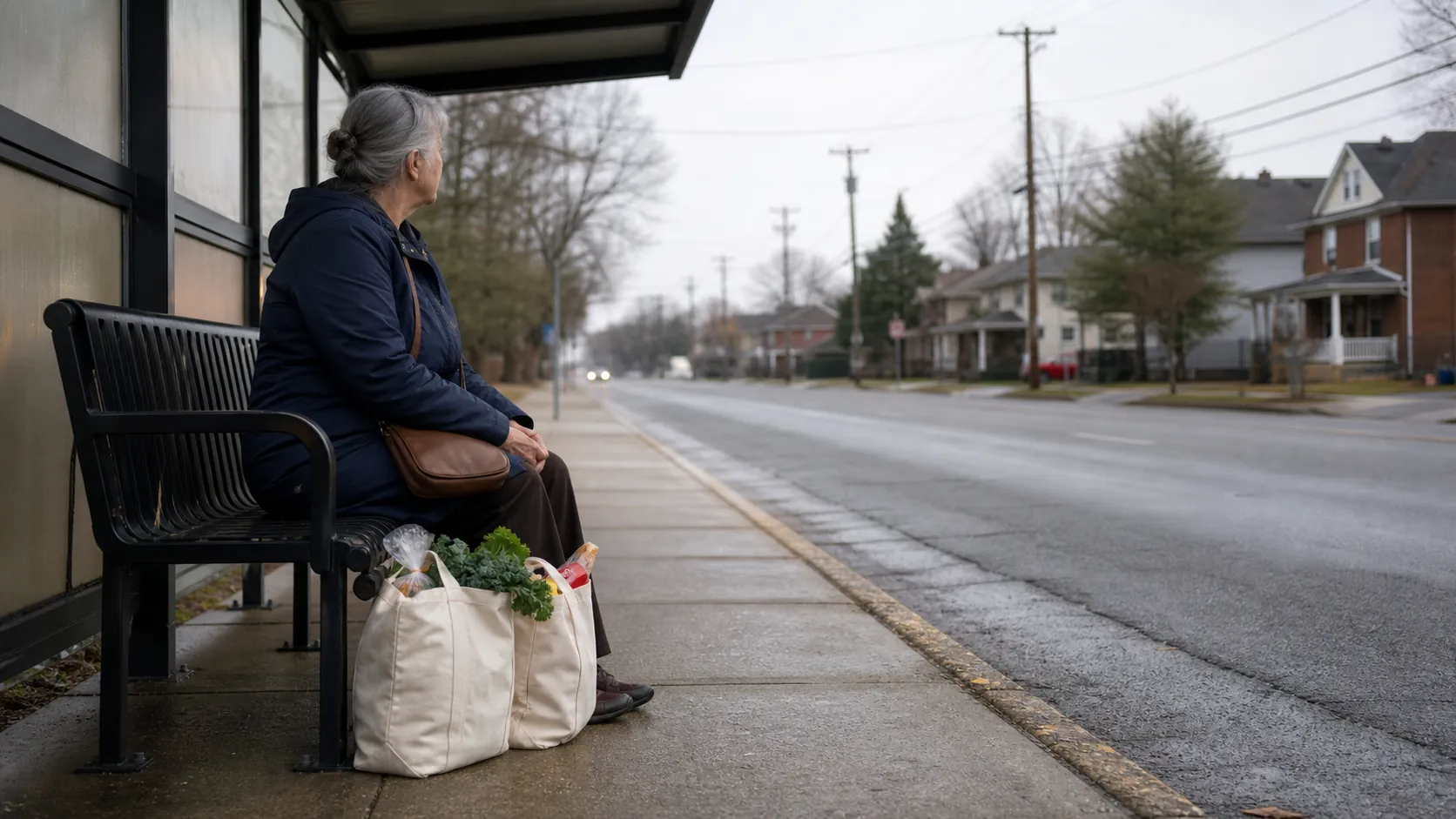
This is where store closures start to affect independence. The older shopper may still be capable, careful, and determined. The problem is that the route now asks for more stamina, more planning, and more margin for error. A refill trip that once took 20 minutes may become a half-day project. A grocery trip may be limited to whatever can be carried. A bank visit may be postponed until someone else is available.
Grocery closures add food access and affordability pressure
The grocery evidence is not as direct as the pharmacy refill study. There is not one single closure-to-health measure in the materials here as strong as the statin refill finding. Still, the pieces fit together in a way caregivers should take seriously: older adults already experience food insecurity, many do not receive benefits for which they may qualify, grocery prices are straining budgets, and losing a nearby store can make the remaining options harder to reach or more expensive.
Feeding America reports that almost 7 million seniors were food insecure in 2022.[5] West Health Mosaic reported that more than 9% of adults 60 and older were food insecure in 2023, and that nearly 60% of SNAP-eligible older adults were not claiming benefits in 2022.[6] AARP’s December 2025 grocery and food prices survey found that more than 4 in 10 adults over 50 said grocery prices now cost more than they can afford.[7]
A store closure can worsen several parts of that picture at once. The remaining store may be farther away, pricier, less familiar, or harder to navigate. Delivery may add fees, minimum orders, substitutions, and tip decisions. A discount store may be reachable but have fewer fresh options. A senior who already stretches groceries to the end of the month may respond by buying shelf-stable food, skipping produce, or reducing trips rather than asking for help.
For families comparing grocery alternatives after a specific closure, the broader health question belongs here, but the shopping match belongs in a more practical guide. CareWise Guide’s senior grocery options after Stop & Shop closes page walks through store pickup, delivery, senior transportation, and local food options in more detail.
Bank branches are part of the same independence map
Bank closures may not sound like a health issue, but they can affect whether an older adult can manage money without surrendering privacy or control. Some people still rely on tellers for cash withdrawals, deposits, account questions, money orders, fraud concerns, or simply reassurance that a transaction went through correctly.
The Federal Reserve Bank of St. Louis reported that bank branches were down about 11% since 2009. Its analysis found a median distance to the nearest branch of 0.64 mile in rural areas and 0.18 mile in urban areas, while explicitly noting that branch closures can be especially inconvenient for the elderly, people with mobility limitations, and people with limited transportation access.[8]
The distances may look small on paper. They do not capture whether there is a sidewalk, whether the older person can stand in line, whether a winter curb cut is cleared, whether the ATM feels safe, or whether the person trusts mobile banking. A closed branch can quietly shift financial tasks to an adult child, neighbor, or paid helper before the family has discussed boundaries, fraud protection, or power of attorney.
Delivery and online accounts help some people, not everyone
Online refills, mail-order pharmacy, grocery delivery, rideshare, mobile banking, and automatic payments can genuinely preserve independence for some older adults. They can also create a new set of barriers: passwords, two-factor codes, card updates, delivery windows, product substitutions, porch drop-offs, app fees, scam worries, and customer-service phone trees.
USA Today’s 2025 consumer explainer on store closures quoted retail researchers from Emory University describing older adults and people without reliable internet as disproportionately affected by closures.[9] That is the part that often gets missed when online alternatives are treated as automatic substitutes. The substitute only works if the older adult can use it, afford it, trust it, and recover when something goes wrong.
Which older shoppers are most exposed?
A store closure is not automatically a health emergency. Many older adults adapt quickly, choose a new store, move prescriptions, or prefer delivery. The risk rises when the closure lands on top of other limits that were already being managed quietly.
- No reliable driving option, especially for someone living alone or in a rural area.
- A medication routine tied to one familiar pharmacy, pharmacist, packaging system, or refill reminder.
- Fixed income, tight grocery budget, or difficulty absorbing delivery fees, higher prices, transportation costs, or minimum orders.
- Limited comfort with apps, online forms, passwords, mail-order systems, or automated phone menus.
- Mobility limitations that make longer walks, heavier bags, bus transfers, snow, heat, or poor sidewalks more dangerous.
- Few nearby alternatives, such as a pharmacy desert, a rural town with one grocery route, or a bank branch that was already the last convenient in-person option.
- A small support network, especially when the older adult is proud of not wanting to “bother anyone” until the missed errand has already become a problem.
A short family risk check after a nearby closure
The goal is not to take over a parent’s errands just because a store closed. It is to find the weak point before it becomes a missed dose, an empty refrigerator, an unpaid bill, or a month of staying home.
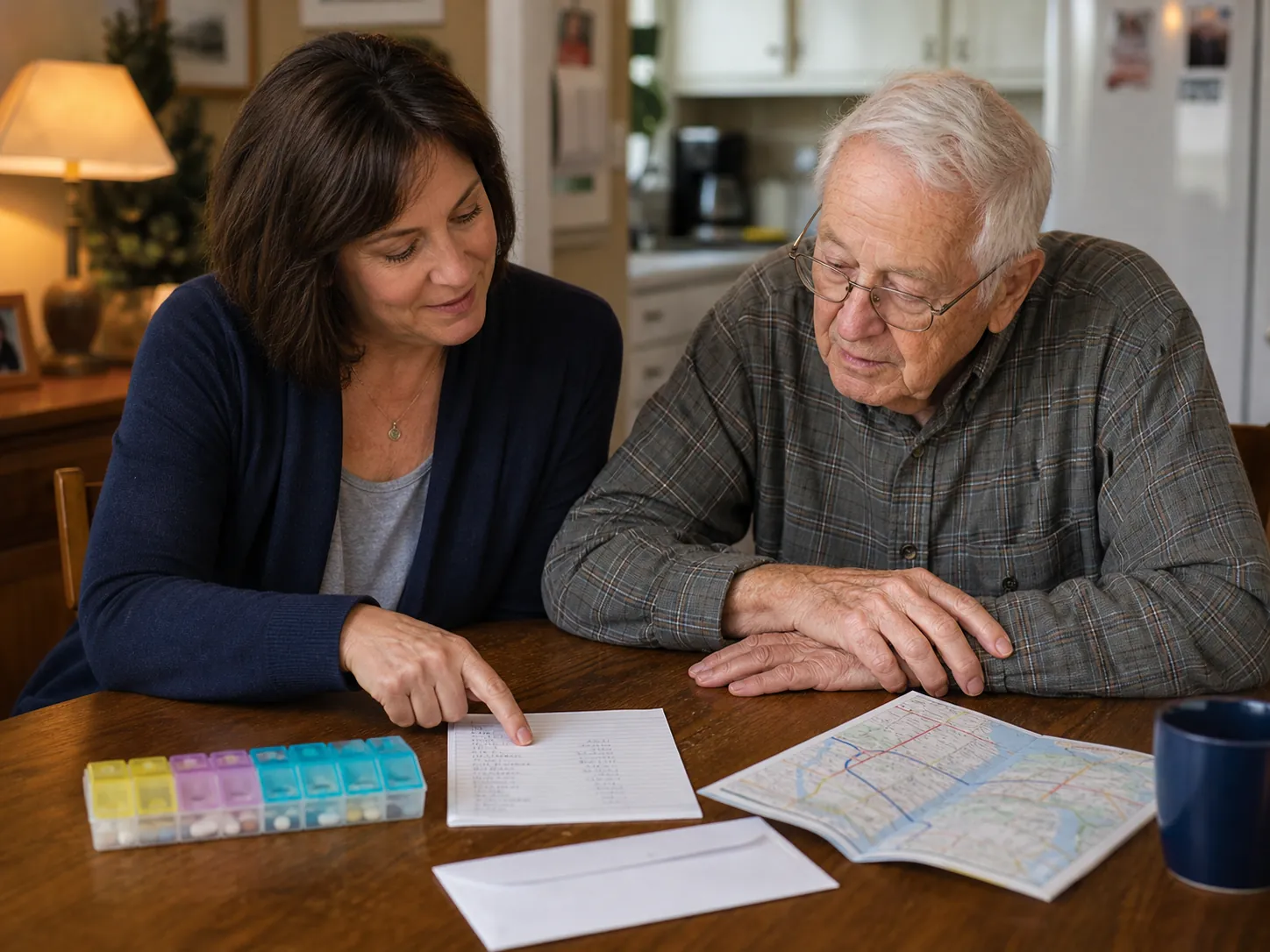
- Medication supply: How many days of each important medication are left? Has the prescription actually transferred to the new pharmacy? Does the older adult know the new refill phone number, hours, pickup window, delivery process, and copay? If medication lists, hospital paperwork, or emergency contacts are already hard to keep organized, the hospital emergency safety checklist can help create a clearer medication record.
- Transportation: What is the real route to the new pharmacy, grocery store, and bank — not just the distance by car? Check the bus schedule, walking distance from the stop, curb cuts, lighting, weather exposure, and whether a return trip with bags is realistic. In areas with snow, ice, or power outages, pair this with a winter storm safety plan.
- Food access and affordability: Is there enough fresh food in the house after the closure? Has the grocery bill changed? Is the older adult skipping items because the new store is more expensive or harder to reach? If grocery delivery, pickup, senior transportation, or local food programs are being considered, compare options in the senior grocery options guide.
- Banking routine: Which tasks were handled in person — cash, deposits, bill payment, account questions, fraud concerns, statements, or safe deposit access? If those tasks move online or to another person, make the arrangement explicit rather than letting it happen informally.
- Digital backup: Can the older adult actually use the proposed app, website, phone system, or mail-order service? Check login access, passwords, payment card status, delivery instructions, how substitutions are handled, and who gets called if an order fails.
- Cascade risk: If one errand is missed, what happens next? A skipped pharmacy trip may become missed medication. A skipped grocery trip may become weaker meals. A skipped bank trip may become unpaid bills or reliance on someone unprepared. A skipped weekly outing may become less walking, fewer conversations, and more isolation.
Store closures do not harm every older shopper in the same way. But when a closure combines with no driving, fixed income, low digital comfort, rural distance, mobility limits, or thin support, it becomes a predictable independence risk rather than a simple change of address.
References
- Association Between Pharmacy Closures and Adherence to Cardiovascular Medications Among Older US Adults, PubMed / JAMA Network Open
- As Drugstores Close, Older People Are Left in Pharmacy Deserts, USC Program on Medicines and Public Health, January 13, 2025
- Pharmacy desert: Walgreens closes, Rite Aid, rural insulin, STAT, October 27, 2025
- The Mobility Crisis in Aging America: How Geography and Disability Shape Access to Transportation, West Health Mosaic
- Senior Hunger Facts, Feeding America
- The Growing Challenge of Food Access for Older Adults, West Health Mosaic
- Grocery and Food Prices Survey, AARP, December 2025
- How Branch Closures Affect Access to Banking Services, Federal Reserve Bank of St. Louis, First Quarter 2021
- Store closures consumer impact: price, what to know, USA Today, February 27, 2025
Questions to bring to a clinician or OT
This is not medical, legal, or a family's final decision — only a framework. Bring these questions to a clinician, occupational therapist, or your local Area Agency on Aging.
Find Local HelpRelated reading
Noticed something outdated or inaccurate on this page? Flag a correction. We review every report against CDC, NIA, and AARP HomeFit guidance before updating a page.