
Caregiver decision guide
The Unmet Need Gap: Why 5 Million Older Americans Lack Basic Bathing Equipment and What Caregivers Can Do About It
A data-driven guide for family caregivers on the systemic gap in bathing equipment access. Learn why 42% of older adults who need grab bars, shower chairs, and raised toilet seats don't have them, how Medicare's coverage gap contributes to the problem, and actionable steps to assess needs, find affordable equipment, and access financial assistance.
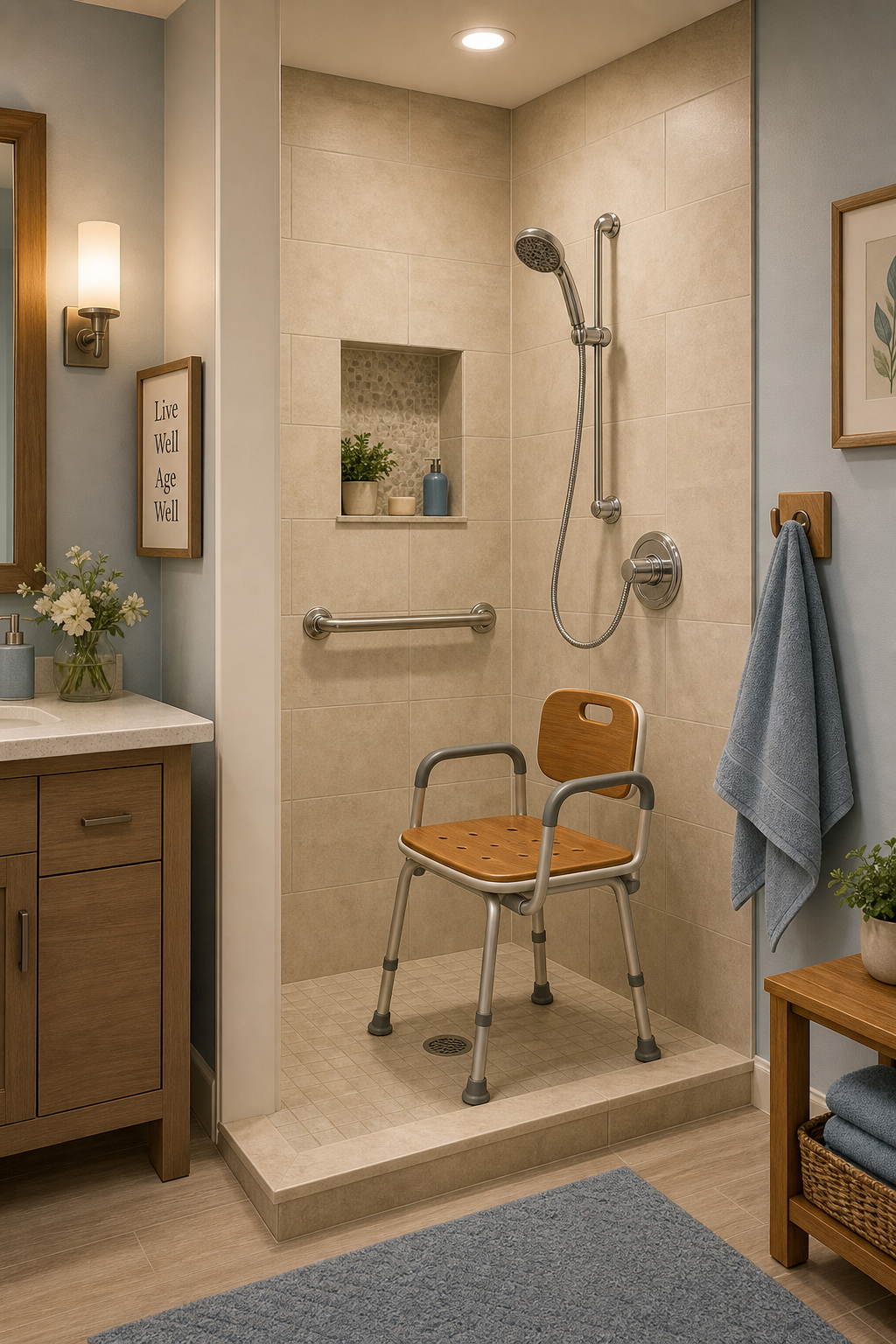
5 Million Older Americans Lack Basic Bathing Equipment: The Fixable Gap
Here is a number that should stop every family caregiver cold: 42% of older adults who need bathing or toileting equipment do not have it. That is not a niche statistic from a small survey. It comes from a nationally representative cohort study published in JAMA Internal Medicine (Lam et al., 2021) that followed 2,614 participants representing roughly 12 million community-dwelling older adults. The researchers found that 5 million Americans who need a grab bar, a shower chair, or a raised toilet seat are managing without one.
What makes this gap so frustrating is how easily it could be closed. The equipment in question costs $25 to $50 per item. A basic shower chair runs about $30. A grab bar costs $15 to $25. A raised toilet seat is typically under $40. And the return on that investment is substantial: home modifications that include these items reduce falls by approximately 19%, and the benefits are estimated at six times the cost.
This article is not about remodeling your bathroom or choosing between brands of shower chairs. Other guides on this site cover those topics in detail. This is about a systemic problem — a gap in awareness, policy, and access that leaves millions of older adults at unnecessary risk. And it is about what you, as a family caregiver, can do to close that gap for the person you care for.
What Counts as 'Bathing Equipment' and Why It Matters
When researchers talk about bathing equipment, they are referring to a short list of low-tech, low-cost devices that make the difference between a safe shower and a dangerous one:
- Grab bars — wall-mounted bars that provide stable handholds when entering, exiting, or moving inside the shower or tub.
- Shower chairs and transfer benches — seats that allow a person to bathe while seated, eliminating the need to stand on a wet, slippery surface.
- Raised toilet seats — frames or seats that add height to the toilet, making it easier to sit down and stand up without straining.
- Handheld showerheads — detachable heads that allow a seated person to control water direction and flow without twisting or reaching.
These devices matter because of a concept called the person-environment fit model of disability. The core idea is straightforward: disability is not simply a property of a person's body. It arises when there is a mismatch between what a person can do and what their environment demands. A 78-year-old with moderate knee arthritis may be perfectly capable of bathing independently — if there is a shower chair to sit on and a grab bar to steady herself. Without those items, the same person may be unable to bathe safely at all.
This framework shifts the focus from treating the person's impairment to modifying the environment. And it reveals why the equipment gap is so damaging: we are leaving millions of people in environments that turn manageable limitations into disabling barriers.
Who Is Most at Risk? Age, Race, and Health Disparities in Equipment Access
The unmet need for bathing equipment is not evenly distributed. The JAMA Internal Medicine study revealed striking disparities that challenge common assumptions about who is most vulnerable.
| Population Group | Unmet Need for Bathing/Toileting Equipment |
|---|---|
| Ages 65–74 | 49% |
| Ages 75–84 | 40% |
| Ages 85+ | 29% |
| White older adults | 40% |
| Black older adults | 51% |
| Hispanic older adults | 54% |
| Other race/ethnicity | 55% |
| No recent hospitalization | 46% |
| Hospitalized in past year | 37% |
| No chronic conditions | 55% |
| 3+ chronic conditions | 39% |
The pattern is counterintuitive in several ways. Younger seniors — those aged 65 to 74 — have the highest rate of unmet need at 49%, while those 85 and older have the lowest at 29%. This likely reflects a combination of factors: younger seniors are less connected to healthcare systems, less likely to have had a triggering event like a fall or hospitalization that prompts an equipment assessment, and may not yet identify themselves as someone who needs assistive devices.
The racial disparities are equally concerning. Black (51%), Hispanic (54%), and older adults of other races (55%) are significantly more likely to lack needed equipment compared to White older adults (40%). These gaps persist even after accounting for income, health status, and healthcare access — suggesting that systemic factors, including differential treatment within healthcare systems and unequal access to information, are at play.
Why Medicare Won't Pay for Grab Bars or Shower Seats (And What Will)
One of the most significant barriers to closing the equipment gap is a policy gap. Medicare Part B covers durable medical equipment (DME) — items like walkers, wheelchairs, commode chairs, and canes — when a doctor certifies them as medically necessary. But grab bars, shower chairs, and raised toilet seats do not qualify.
The reason, according to Medicare's own rules, is that these items are not considered "primarily medical in nature." A shower chair is classified as a convenience item rather than medical equipment, even though its absence can directly cause a fall that leads to a hip fracture, hospitalization, and loss of independence. This is what we call the Medicare DME prevention paradox: the program will pay tens of thousands of dollars for a hip replacement after a fall, but it will not pay $25 for the grab bar that could have prevented the fall in the first place.
There are, however, other funding pathways that caregivers should know about:
- Medicare Advantage (Part C) plans: Some Medicare Advantage plans offer over-the-counter (OTC) spending allowances or prevention benefits that can be used for grab bars, shower chairs, and similar items. Check the plan's summary of benefits.
- Medicaid Home and Community-Based Services (HCBS) waivers: Section 1915(c) waivers in many states cover home modifications and assistive devices, including bathroom safety equipment, for eligible individuals.
- VA benefits: The VA's Special Adaptive Housing (SAH) grant and Home Improvements and Structural Alterations (HISA) grant can fund grab bars, shower modifications, and related equipment for eligible veterans.
- Equipment loan banks: Many communities have equipment loan programs run by local Area Agencies on Aging, senior centers, or non-profits that provide free or low-cost short-term loans of shower chairs, raised toilet seats, and other devices.
- Non-profit programs: Organizations like Rebuilding Together and local faith-based groups sometimes install grab bars and other safety equipment at no cost for low-income older adults.
For a more detailed breakdown of funding sources, see our guide on how to pay for aging-in-place home modifications and our specific overview of grants and assistance for senior bathroom remodels in 2026.
The Persistence of Unmet Need: 4-Year Follow-Up Findings
One might hope that the equipment gap resolves itself over time — that people eventually get the devices they need. The data suggests otherwise. The same study followed participants for four years and found that 35% of those who needed bathing equipment at the start never received it. For toileting equipment, the number was even higher: 52% never received it.
Why does the gap persist? The research points to several interconnected factors:
- Lack of routine screening: Most primary care visits do not include a standardized assessment for bathing difficulty or equipment needs. The problem stays invisible.
- Fragmented funding: As discussed above, Medicare's coverage gap means that no single payer system takes responsibility for these items. Caregivers must navigate a patchwork of programs, each with different eligibility criteria.
- The misconception that equipment is expensive or requires remodeling: Many families assume that installing a grab bar means a full bathroom renovation. In reality, a grab bar can be installed in 15 minutes with a drill and the right anchors.
- Absence of a triggering event: People who have not yet fallen or been hospitalized are less likely to seek out equipment — yet these are precisely the people for whom preventive installation would be most valuable.
Actionable Steps for Family Caregivers: From Assessment to Installation
The systemic nature of this problem can feel overwhelming, but the individual actions available to caregivers are concrete and effective. Here is a step-by-step approach.
Step 1: Assess the Need
Start with observation. Watch your parent or relative during their bathing routine (with their permission) or ask them specific questions: Do you ever feel unsteady getting in or out of the shower? Have you ever grabbed the towel rack or soap dish for support? Do you feel tired standing through a full shower? The CDC's Check for Safety questionnaire is a free, validated tool that includes questions about bathroom safety and can be used at home.
Step 2: Purchase the Equipment
Basic equipment is widely available and affordable:
| Item | Typical Cost | Where to Buy |
|---|---|---|
| Grab bar (stainless steel, 18–24 inch) | $15–$25 | Hardware store, pharmacy, online |
| Shower chair (basic plastic or metal) | $25–$50 | Pharmacy, medical supply store, online |
| Raised toilet seat (standard height) | $20–$40 | Pharmacy, medical supply store, online |
| Handheld showerhead | $15–$40 | Hardware store, online |
Step 3: Install Safely
A grab bar is only safe if it is installed correctly. It must be anchored into a wall stud or use heavy-duty toggle bolts rated for the weight load. A bar that pulls out of drywall can cause the very fall it was meant to prevent. If you are not comfortable with this, hire a handyman or occupational therapist who specializes in home safety. Shower chairs and raised toilet seats typically require no installation — just place them on a flat, non-slip surface.
Step 4: Seek Financial Assistance
If cost is a barrier, explore the funding options listed in the previous section. Start with your local Area Agency on Aging — they can connect you to equipment loan banks, non-profit installation programs, and Medicaid waiver information specific to your state. A single phone call can often yield a free shower chair delivered to your door.
Closing the Gap: A Checklist for Your Parent's Next Doctor Visit
The medical system is not currently set up to screen for bathing equipment needs automatically. That means you, as the caregiver, need to initiate the conversation. Here is a checklist to bring to your parent's next appointment:
- Ask the doctor to screen for bathing difficulty. A simple question — "Do you have any trouble getting in or out of the shower or tub?" — can open the door to a more thorough assessment.
- Request a referral to an occupational therapist (OT). An OT can perform a home safety evaluation and recommend specific equipment tailored to your parent's mobility level and bathroom layout.
- Ask about a Letter of Medical Necessity. Even though Medicare Part B won't cover grab bars or shower chairs, a written letter from the doctor can help with Medicaid waivers, VA benefits, or other funding sources that require documentation of medical need.
- Inquire about local resources. Many healthcare systems have social workers or care coordinators who can connect you to equipment loan banks, Area Agency on Aging programs, and non-profit installation services.
The gap of 5 million older Americans lacking basic bathing equipment is not an inevitable fact of aging. It is a fixable problem — one that can be addressed with awareness, advocacy, and a few low-cost items. As a family caregiver, you have the power to close that gap for one person. And that person's safety and independence are worth the effort.
Questions to bring to a clinician or OT
This is not medical, legal, or a family's final decision — only a framework. Bring these questions to a clinician, occupational therapist, or your local Area Agency on Aging.
Find Local HelpRelated reading
Noticed something outdated or inaccurate on this page? Flag a correction. We review every report against CDC, NIA, and AARP HomeFit guidance before updating a page.