
Caregiver decision guide
What every caregiver should know about senior water safety
Senior drowning rates are rising faster than any other age group, yet most water safety advice targets young children. This guide helps family caregivers understand the unique risks aging parents face—from bathroom falls and medication interactions to dementia wandering—and provides a practical two-zone safety framework for home and recreational water.
Most Americans learned water safety through a child-centered lens: lock the pool gate, watch the toddler, empty the kiddie pool. Those habits still matter, but they leave a large blind spot. Globally, adults 70 and older now drown at a reported rate of 8.15 per 100,000, higher than the 7.66 per 100,000 rate reported for children under 5 in peer-reviewed research summarized by Pool Guard USA.[1] In the United States, CDC drowning data show geriatric drowning mortality rising significantly from 1999 to 2020, with a 19% increase among adults 65 to 74 from 2019 to 2022.[2]
That does not mean older adults should be kept away from water. It means caregivers need a different mental model. A 78-year-old is not at risk for the same reasons a 3-year-old is at risk. The concern is more likely to involve a bathtub transfer after a medication change, a hot tub that worsens dizziness, a night bathroom trip in poor light, a proud swimmer who goes out alone, or a person with dementia walking toward a pond that no longer registers as dangerous.
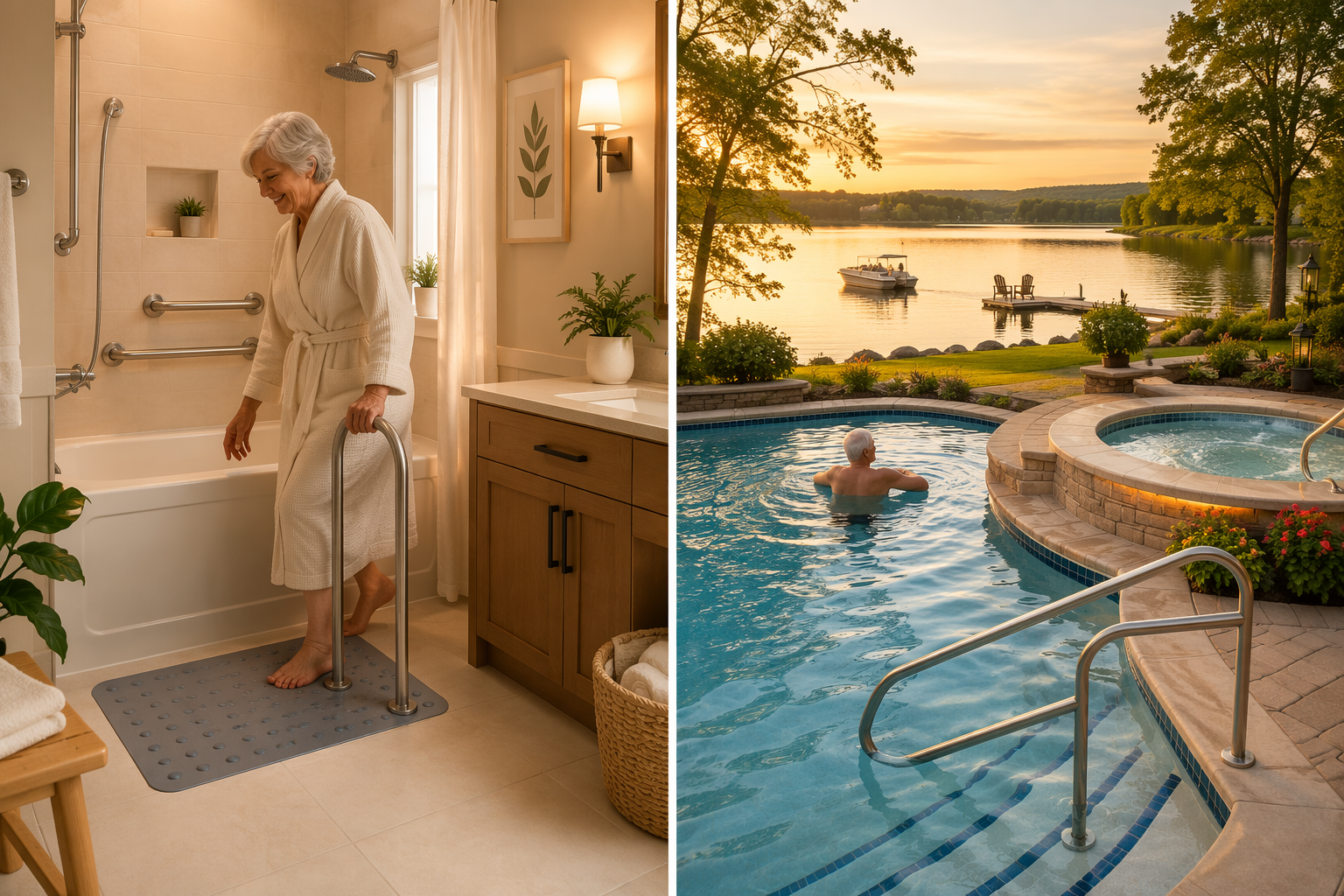
The useful split is simple: home water and recreational water. Home water includes bathrooms, bathtubs, showers, hot water, backyard pools, ponds, fountains, and on-property water features. Recreational water includes swimming pools, lakes, beaches, boats, and hot tubs away from the daily household routine. The same older adult may need different protections in each zone.
Why Senior Water Risk Looks Different
Water safety tips for seniors have to account for changes that are ordinary in later life but consequential around water: reduced leg strength, slower reaction time, poorer balance, impaired vision, neuropathy, dehydration, heat sensitivity, and medications that affect alertness, blood pressure, or heart rhythm. None of these makes an older adult incapable. They do make a wet, hard, low-friction environment less forgiving.
Medication deserves more than a passing mention. In Australian data summarized by Pool Guard USA, among older adults who drowned while on medication, 72% were taking drugs known to increase risk of cardiac arrhythmia; the cited examples include some antibiotics, antihistamines, and antidepressants.[1] That finding is Australian-specific, so it should not be treated as a direct estimate for every U.S. household. Still, it changes the caregiver question. Before swimming, bathing alone, or using a hot tub, the issue is not only whether Mom can swim. It is whether today’s medication mix, hydration, heat exposure, and cardiac symptoms make water a poor place to be alone.
The other difference is setting. Nearly 28% of older adult drowning deaths occur at home, including pools, bathtubs, and on-property water features, according to the same literature summary.[1] For family caregivers, that moves senior water safety out of the vacation category and into the aging-in-place category. The bathroom and backyard are not side notes.
Zone One: Home Water
The home zone is where small fixes can do a lot of work because the same movements repeat every day: stepping over a tub wall, turning on water, reaching for a towel, getting up at night, walking across tile, unlocking a patio door, passing a backyard pond. A caregiver does not need to make the house look clinical. The goal is to remove the moment when one slip, faint spell, or memory lapse becomes unrecoverable.
Start With the Bathroom, Not the Backyard Pool
Bathroom safety is often discussed as fall prevention, not drowning prevention, but the two overlap for older adults. State aging departments and CDC fall data are commonly cited for the estimate that about 80% of falls among people over 65 occur in the bathroom, and more than 200,000 seniors are treated each year for bathroom-related injuries.[3] The exact 80% figure is best treated as a derived aging-safety estimate rather than a single CDC calculation, but the practical point holds: the bathroom concentrates wet surfaces, hard edges, transfers, privacy, and urgency.
A useful Saturday-morning inspection starts at foot level. Look for bath mats that slide, rugs without backing, towels dropped near the tub, and thresholds that catch slippers or walkers. Then look at hand placement. If the only stable object near the tub is a towel bar, the bathroom is asking for a fall. Towel bars are not grab bars.
- Install grab bars where the person actually enters, exits, turns, and lowers themself, not only where the wall has open space.
- Use non-slip strips or a secured non-slip mat inside the tub or shower, and remove loose rugs from the walking path.
- Add a shower chair or tub transfer bench when standing fatigue, dizziness, arthritis, or fear of falling changes bathing behavior.
- Keep soap, shampoo, towels, and clothing within easy reach so bathing does not require twisting, bending, or stepping out while wet.
- Improve night visibility with motion lights from bed to bathroom, especially after illness, medication changes, or power outages.
If night lighting is already a problem in the home, connect bathroom planning with a broader fall plan for outages and dark hallways. A power outage fall prevention checklist can help caregivers think beyond the bathroom door.
Set Hot Water for Slower Reactions
Scald prevention is one of the clearest fixes because the numbers are so stark. MedlinePlus notes that exposure to 140°F water can cause a serious burn within 3 seconds, and recommends setting water heaters to 120°F to eliminate most tap-water scald risk.[4] Older skin can be more vulnerable, and a person with neuropathy, slower movement, or cognitive impairment may not pull away quickly enough.
Check the water heater setting directly if you can do so safely, or ask a plumber, building manager, or the utility contact to help. In a long-distance caregiving situation, ask for a photo of the dial or schedule a service visit rather than relying on, “It feels fine.” A parent may have adapted to water that is hotter than advisable, or may not remember that the setting changed after maintenance.
Backyard Water Needs Adult-Specific Barriers
Pools, ponds, fountains, drainage areas, and decorative water features matter even when no young children live in the home. For an older adult with intact cognition, barriers may be about fall recovery and emergency access. For someone with dementia, they may be about preventing an exit before the caregiver knows the person has left.
- Keep pool gates self-closing and latched, and check that latches still work after weather, landscaping, or repairs.
- Add clear lighting around steps, pool edges, patios, and paths to ponds or docks.
- Remove trip hazards near water, including hoses, planters, uneven pavers, and loose outdoor rugs.
- Make sure someone can call for help from the pool or patio area; a phone left inside the house is not an emergency plan.
- For homes with dementia risk, consider door alerts, locked gates, visual barriers, and a written response plan for exits toward water.
Barriers should not be framed as punishment. They are the same kind of environmental support as better lighting or a stair rail: the house takes over part of the safety burden so the person does not have to perform perfectly every time.
Zone Two: Recreational Water
Recreational water is where families often fall back on advice that is technically correct and practically thin: do not swim alone. For older adults, that sentence has to become a protocol. The person may be a lifelong swimmer and still need changes after a new beta-blocker, a fainting episode, a hip replacement, a heat wave, or a diagnosis that affects judgment.
Solo swimming deserves special attention because it is common, dignified, and risky. Canadian data summarized by Pool Guard USA found that nearly 3 out of 4 drowning deaths among people 65 and older involved individuals swimming alone.[1] That does not prove that every accompanied swim would have been saved. It does show why a family should not treat “I’ve always done this” as a safety plan.
Make Supervision Specific Enough to Work
A good supervision plan answers plain questions before anyone gets in the water: Who knows the person is swimming? Who is close enough to notice distress? Who can physically help, or at least call for help immediately? What is the exit plan if the swimmer becomes tired, dizzy, cold, confused, or short of breath?
| Situation | Better Than “Be Careful” |
|---|---|
| Community pool | Swim when a lifeguard is present, use stairs or a ramp with rails, and tell a companion the planned swim length. |
| Backyard pool | Have another adult nearby and attentive, with a phone outside and rescue equipment visible. |
| Lake or beach | Use designated swimming areas, avoid going out alone, and set a turnaround point before fatigue starts. |
| Hot tub | Review medications, heat sensitivity, alcohol use, dizziness, and time limits before entering. |
| Vacation rental | Inspect exits, rails, lighting, pool gates, and bathroom setup on arrival rather than assuming the property is senior-safe. |
The YMCA’s adult and senior swim safety guidance emphasizes practical habits such as swimming with a buddy, knowing personal limits, using designated areas, and building skills rather than relying on confidence alone.[5] For caregivers, the missing piece is often agreement. A parent who bristles at “supervision” may accept a more reciprocal framing: someone knows when you get in, someone knows when you expect to get out, and someone can act if the plan changes.
Treat Hot Tubs as a Separate Risk
Hot tubs can look safer than pools because they are shallow and contained. For some older adults, they are the opposite: heat, sitting-to-standing transitions, dehydration, alcohol, blood-pressure medications, and cardiac symptoms can converge in a small space. A person does not have to drown in deep water to be in danger. Fainting, confusion, or weakness in a tub can become an emergency quickly.
Before hot tub use, caregivers should pay attention to recent medication changes, dizziness, fainting history, chest discomfort, shortness of breath, and dehydration. Heat waves deserve extra caution because dehydration and blood pressure drops can make ordinary routines less stable; families already managing summer risk may want a broader plan to cool seniors without AC and prevent falls during heat waves.
Entry and Exit Are Part of Water Safety
Many senior water incidents begin or worsen at the edge: the tub wall, the boat ladder, the pool steps, the dock, the slick locker-room floor. A recreational plan should include the path in and the path out. If the person can swim but cannot safely climb a ladder when tired, the outing is not well planned.
- Choose pools with stairs, ramps, or handrails instead of vertical ladders when possible.
- Use water shoes where surfaces are rough, slippery, or hot.
- Plan shorter swims after illness, hospitalization, medication changes, or long periods away from exercise.
- Avoid swimming when dizzy, unusually fatigued, short of breath, confused, or experiencing chest discomfort.
- Make the exit plan visible before entering: where to get out, who assists, and what to do if strength drops suddenly.
When Dementia Changes the Water Plan
Dementia adds a different layer because the person may not be choosing to swim or bathe. They may be walking, searching, following a remembered route, or responding to a need they cannot explain. The commonly cited Alzheimer’s Association figure is that 60% of people living with dementia will wander, and caregiver guidance warns that wandering can place people near water they may not recognize as dangerous.[6]
For a person with dementia, water safety begins at the door, not at the shoreline. Caregivers should map every water source within realistic wandering distance: backyard pool, neighbor’s pond, drainage canal, creek, retention basin, marina, community pool, bathtub, and even a familiar route to a lake from decades earlier. Familiar places can be more compelling than new ones.
- Use door alerts or chimes so an exit is noticed immediately, especially at night.
- Secure gates, pool areas, and outdoor paths without relying on a verbal reminder.
- Share nearby water hazards with neighbors or local responders when wandering risk is active.
- Consider GPS or sensor tools as part of a response plan, not as a substitute for barriers and supervision.
- Keep a current photo, clothing description, and likely destinations ready for a rapid search.
Families dealing with nighttime exits need a fuller response plan than a water safety article can provide. A practical next layer is an Alzheimer’s wandering at night crisis response guide. For home changes beyond water areas, a dementia-friendly home modifications guide can help match changes to the stage of impairment. If the family is evaluating GPS devices, door sensors, or monitoring systems, compare them through the lens of response time and caregiver capacity; a guide to dementia monitoring systems for wandering can help separate useful alerts from false reassurance.
A Caregiver Action Plan for This Week
The right first step depends on what has already happened. A family responding after a fall, burn, wandering episode, or near-drowning should act faster and accept temporary inconvenience while the home is stabilized. A family planning ahead can move room by room, but should still start with the places where water, privacy, and poor footing meet.
| If You Have One Hour | If You Have One Weekend |
|---|---|
| Check the water heater setting and lower it toward 120°F if appropriate. | Install grab bars, non-slip surfaces, and better bathroom lighting. |
| Remove loose bathroom rugs and clutter from the tub-to-toilet path. | Walk the property and secure pools, ponds, gates, docks, and water features. |
| Ask about dizziness, fainting, new medications, and recent falls before swimming or bathing alone. | Create a swim and hot tub agreement that covers buddy plans, time limits, exits, and symptoms that stop the activity. |
| Put a phone or alert device within reach of bathing and outdoor water areas. | For dementia risk, add door alerts and write a rapid response plan for exits toward water. |
| Take photos of bathroom, pool, and patio hazards if you are helping from a distance. | Coordinate with siblings, neighbors, aides, or facility staff so someone owns each safety layer. |
Long-distance caregivers can do more than ask, “Is the bathroom safe?” Ask for photos of the tub entry, toilet area, shower floor, bath mat, water heater dial, patio door, pool gate, pond path, and nighttime hallway lighting. Photos reveal towel bars being used as grab bars, rugs curling at the edge, steps without rails, and water features that no one thought to mention.
The conversation with an aging parent should stay adult. Try, “I want the house to support the way you already live,” rather than, “You can’t do this anymore.” Offer choices where choices are real: which grab bar finish, which shower chair style, which swim time, which companion, which pool. Hold the line where the risk is not negotiable: scalding water, solo hot tub use after dizziness, a pool gate that does not latch, or an unsecured exit when dementia wandering is active.
Senior water safety is manageable when families stop borrowing child-safety advice and build layers around the way aging actually changes risk. The layers are ordinary: safer transfers, cooler tap water, better lighting, working barriers, medication awareness, no solo swimming, and a response plan when cognition changes. None of that removes water from an older adult’s life. It makes the bathroom, the pool, the lake, and the hot tub fit the body and brain the person has now.
References
- Drowning in Older Adults, Pool Guard USA.
- Drowning Data, CDC, January 2026.
- Older Adult Falls Data, CDC.
- Bathroom Safety, MedlinePlus, reviewed May 2024.
- Swim Safety Tips for Adults and Seniors, YMCA.
- Water Safety: Essential Tips for Caregivers, CICOA.
Questions to bring to a clinician or OT
This is not medical, legal, or a family's final decision — only a framework. Bring these questions to a clinician, occupational therapist, or your local Area Agency on Aging.
Find Local HelpRelated reading
Noticed something outdated or inaccurate on this page? Flag a correction. We review every report against CDC, NIA, and AARP HomeFit guidance before updating a page.