Bathing Assistance for the Elderly: A Complete Family Caregiver's Guide to Safety, Dignity, and Practical Technique
A comprehensive, evidence-based guide for family caregivers who are new to helping an older adult bathe after a fall, hospitalization, or functional decline. Covers bathroom safety setup, step-by-step bathing techniques, maintaining dignity, addressing resistance, and protecting your own physical health.
By Editorial Team
new caregiver
personal hygiene
ADLs
bathroom safety
daily routines
📄
A printable version of this guide is available. Use your browser's print function (Ctrl+P / ⌘P) to save or print.
Why Bathing Assistance Is One of the Hardest Caregiving Tasks
If you have just taken on the role of helping a parent or spouse bathe, you have likely already discovered something that caregiver surveys consistently confirm: bathing assistance ranks among the top three most difficult daily activities caregivers manage, alongside toileting and transferring. The reasons are layered. The bathroom is statistically the most dangerous room in the house — an estimated 80% of falls in the home occur there, according to UCLA Health citing CDC data. And unlike helping with meals or medication, bathing requires you to navigate physical vulnerability, privacy, and your own discomfort all at once.
The stakes are high. Each year, about 3 million older adults visit emergency departments due to falls, and falls are the leading cause of fatal and non-fatal injuries among people 65 and older. The bathroom, with its wet surfaces, hard fixtures, and the complex movements required to get in and out of a tub or shower, is where many of these injuries happen. A fall in the bathroom is also twice as likely to result in injury as a fall in other areas of the home.
This guide exists to help you build competence in three interconnected areas: environmental safety, practical technique, and emotional intelligence. Mastery of all three preserves your loved one's dignity, reduces your risk of injury, and makes a task that feels overwhelming feel manageable. This is a deep dive focused exclusively on bathing — a complement to the broader Personal Hygiene Assistance for Seniors guide, which covers oral care, grooming, and incontinence alongside bathing.
Bathing assistance is a learnable skill that combines safety, technique, and emotional intelligence.
Creating a Safe Bathroom Environment
Before you focus on technique, the space itself must be made as safe as possible. You do not need a full bathroom renovation to dramatically reduce fall risk. The following equipment addresses the most common hazards and can be installed or placed without structural work.
Essential Safety Equipment
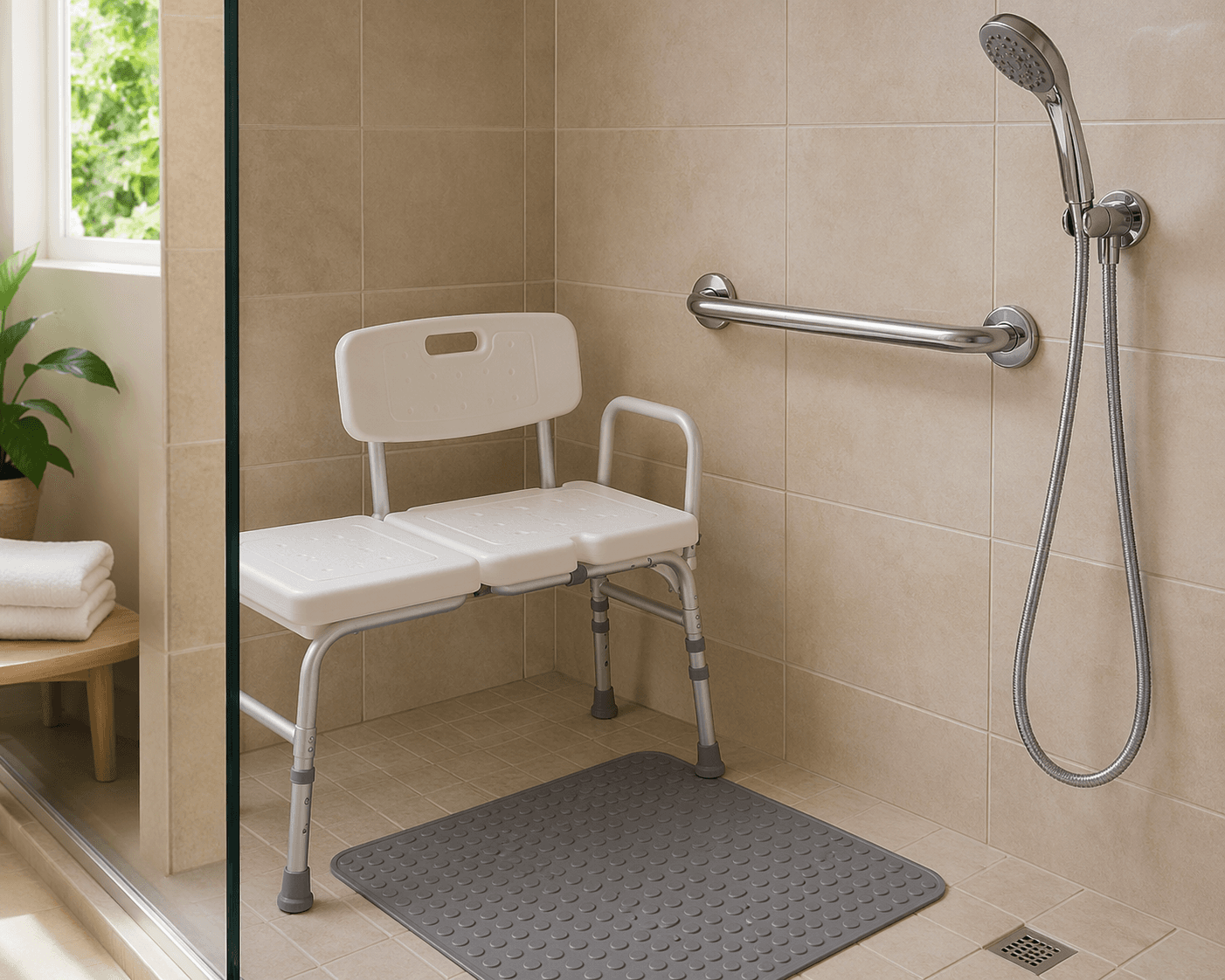
Grab bars: Install grab bars near the toilet and inside the shower or tub. They must be anchored into wall studs — towel racks and suction-cup bars are not safe substitutes. The ADA recommends a height of 33 to 36 inches above the floor, though an occupational therapist may recommend a different height based on the individual's needs. A horizontal bar next to the toilet assists with standing and sitting; a vertical bar at the shower entrance helps with stepping in and out.
Non-slip mats and strips: Place a non-slip mat inside the shower or tub and another just outside the exit. Avoid loose bath mats that can slide or bunch up. For the shower floor itself, adhesive non-slip strips provide additional traction.
Shower chair or transfer bench: A shower chair allows the person to sit while bathing, eliminating the need to stand on a wet surface. A transfer bench extends outside the tub, so the person can sit down outside the tub and swing their legs over the edge — a much safer alternative to stepping over the tub wall.
Handheld showerhead: A handheld showerhead gives you precise control over where the water goes, reducing the need for the person to reposition. It also makes rinsing easier when the person is seated.
Water heater set to 120°F (49°C): Older adults often have decreased temperature sensitivity and can be scalded by water that feels warm to you. Set your water heater to a maximum of 120°F. Anti-scald devices on faucets and showerheads provide an additional layer of protection.
Adequate lighting: Brighten the bathroom with higher-wattage bulbs or additional lighting. A nightlight or motion-sensor light helps with middle-of-the-night bathroom trips.
A well-equipped shower with a chair, grab bar, handheld showerhead, and non-slip mat — the core safety setup for bathing assistance.
Step-by-Step Bathing Techniques for Caregivers
Once the environment is safe, the next layer is your technique. A calm, predictable process reduces anxiety for both of you. The following steps are adapted from guidance by the National Institute on Aging and the Alzheimer's Association.
Before You Begin: Preparation
Gather all supplies in advance: soap, shampoo, washcloths, towels, a bath chair, and a change of clothes. Having everything within arm's reach means you never have to leave the person alone.
Warm the room. A cold bathroom can make the experience physically unpleasant and increase resistance. Close windows, turn on a space heater (placed safely away from water), or run warm water for a minute before the person enters.
Test the water temperature with your wrist or elbow before the person gets in. Water that feels comfortable to your hand may be too hot for thinner, older skin.
Fill the tub with only 2 to 3 inches of water before the person enters. Assess their reaction before adding more. For a shower, start with a gentle spray and adjust pressure to the softest setting — some older adults, particularly those with dementia, may perceive the sting of shower water as a threat.
During the Bath
Give step-by-step verbal instructions: "Put your feet in the tub," "Sit down," "Here's the soap," "Wash your arm." Use short, simple phrases. If the person is confused, demonstrate the action or gently guide their hand.
Begin with less threatening areas. Start by washing the hands or feet before moving to more sensitive areas. This gives the person time to adjust to the sensation and temperature.
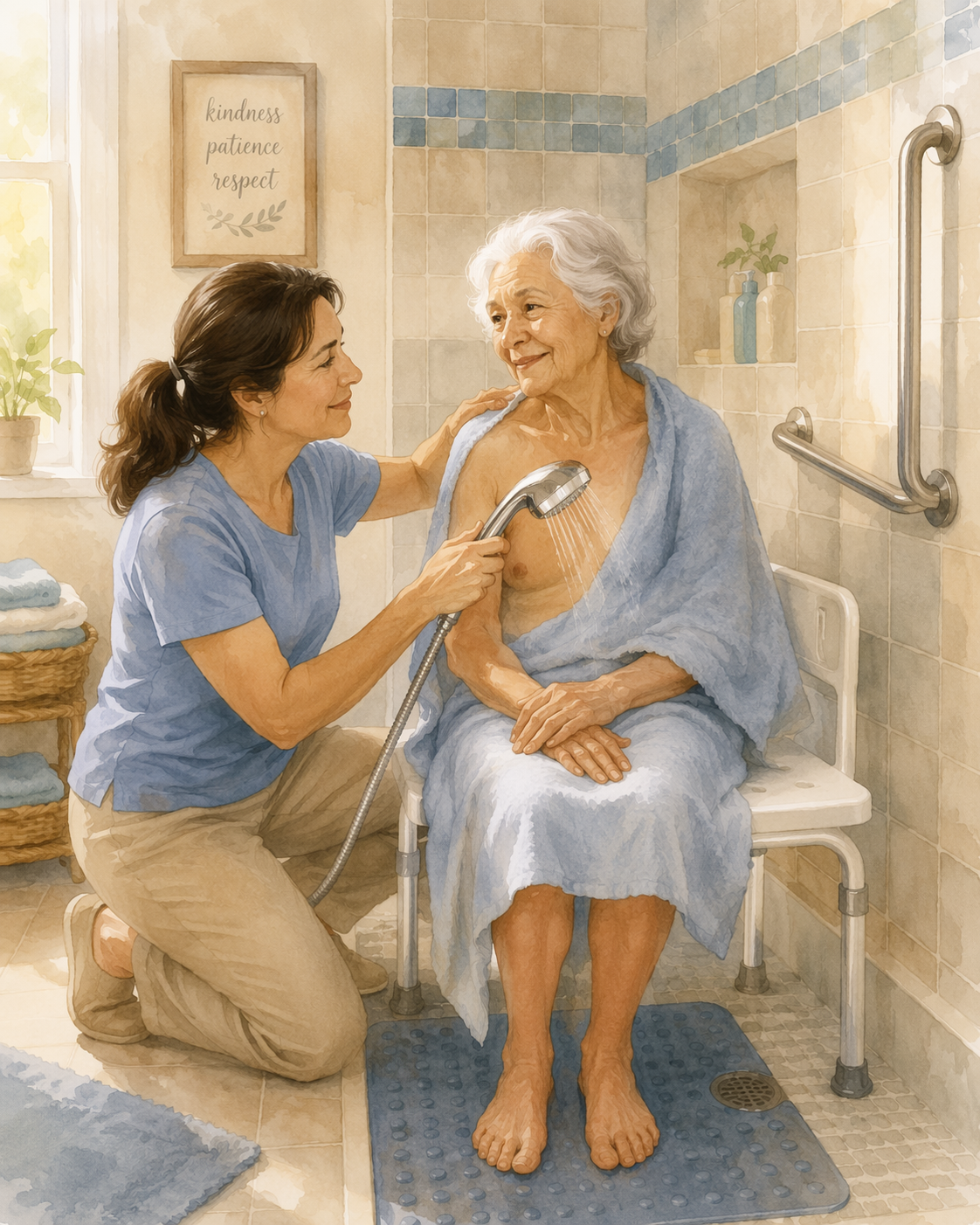
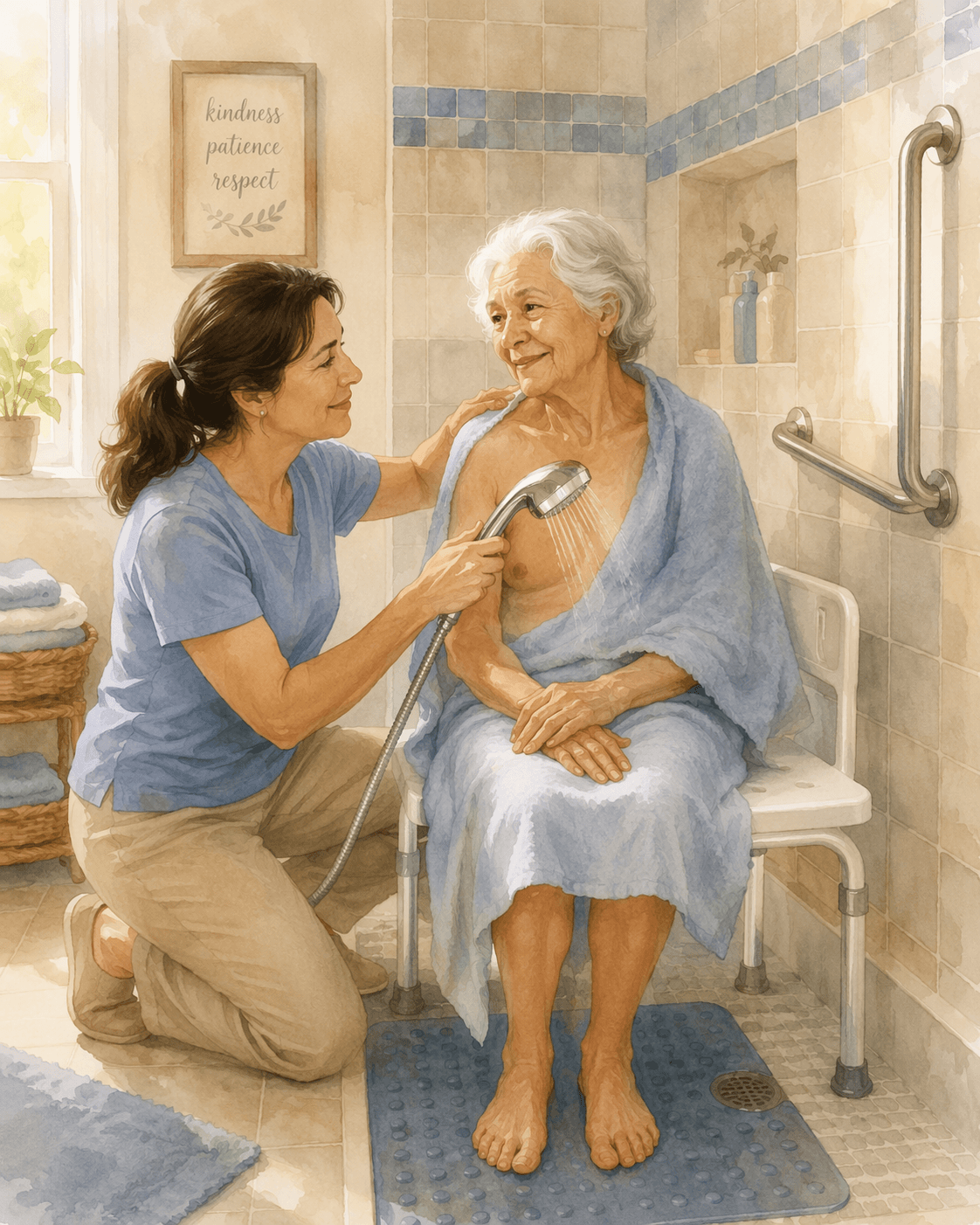
Use the towel-over-lap technique for modesty. Place a towel over the person's shoulders or lap, then wash and rinse under the towel. This preserves dignity throughout the process and helps the person feel less exposed.
Never leave the person alone in the tub or shower, even for a moment. If you forgot something, take the person with you or bring the entire basin of supplies into the bathroom.
After the Bath
Pat the skin dry instead of rubbing. Older skin is fragile and tears easily. Pay attention to skin folds, between toes, and under breasts — areas where moisture can lead to rashes or infections.
Check for any redness, rashes, or sores, especially if the person is incontinent. Early detection of skin breakdown is critical.
Apply lotion to prevent dryness. Full baths strip natural oils from the skin, which is why the NIA and Caregiver Action Network recommend limiting full baths to two or three times per week.
When a Full Bath Is Not Possible: The Bed Bath
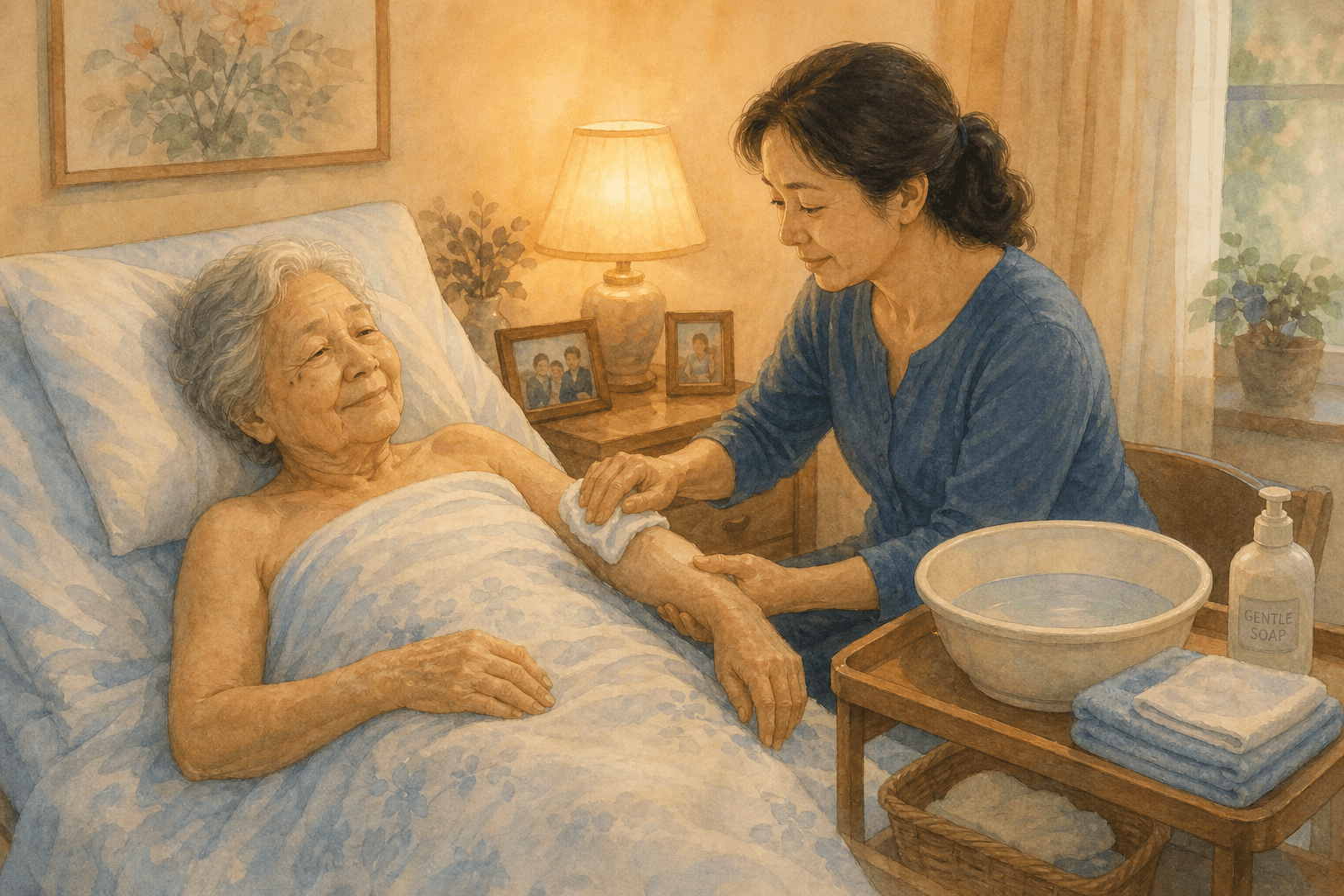
On days when a full bath is too exhausting, too upsetting, or logistically impossible, a bed bath is a safe and effective alternative. You will need a basin of warm water, several washcloths, a towel, and no-rinse soap if available.
Place a towel under the person to protect the bedding. Keep the person covered with a sheet or blanket, exposing only the area you are washing.
Wash and rinse one section at a time: face, arms, chest, stomach, legs, feet, and back. Use a fresh section of the washcloth for each area to avoid spreading soap or bacteria.
Pat dry each area before moving to the next. Apply lotion as needed.
No-rinse soap products, used with warm, wet towels, are equally effective as traditional soap and water when used thoroughly, according to research cited by the Alzheimer's Association.
A bed bath is a safe, dignified alternative when a full bath is not possible.
Maintaining Dignity and Encouraging Independence
Bathing is one of the most intimate activities of daily life. When an older adult can no longer bathe independently, the loss of privacy and control can feel profound. How you approach this task has a direct impact on your loved one's sense of self-worth and your relationship with them.
The following principles should be integrated into every step of the bathing process, not treated as a separate "emotional" layer added on top of the physical task.
Offer choices whenever possible. "Do you want to bathe now or in 15 minutes?" "Would you prefer a bath or a shower?" Even small choices restore a sense of control. Avoid asking "Do you want to bathe?" when the answer is likely no — instead, frame it as a when or how decision.
Use matter-of-fact language. Treat bathing as a routine task, not a sensitive topic. A calm, neutral tone communicates that this is normal and nothing to be embarrassed about. Avoid apologizing or over-explaining.
Let the person do as much as they can. Hand them a washcloth and let them wash their face, arms, or chest. Even if they can only manage one small area, that act of independence matters. You can finish the rest. Start with simple tasks like wiping an arm to build confidence.
Provide towels for modesty throughout. Keep a large towel draped over the person's shoulders or lap. Use a second towel to cover areas you are not currently washing. The towel-over-lap technique recommended by the Alzheimer's Association and Family Caregiver Alliance allows you to wash and rinse under the towel without full exposure.
Respect gender preferences. If the person is more comfortable being bathed by a same-gender caregiver, honor that preference whenever possible. For spousal caregivers, showering together can be a practical and comfortable solution — one wife reports that her husband likes showering together and feels good afterward, while she can ensure he does not fall or burn himself.
Understanding and Addressing Bathing Resistance
If your loved one refuses to bathe, you are not alone. Resistance is one of the most common and frustrating challenges family caregivers face. The key is to understand what is driving the refusal, because the underlying cause determines the solution.
Common Causes of Bathing Resistance
Common causes of bathing resistance and practical strategies for each.
Cause
What It Looks Like
What Helps
Fear of falling
The person may have had a previous bathroom fall or knows someone who did. The bathroom becomes a frightening space.
Install grab bars, a shower chair, and non-slip mats. Reduce fear-based objections by showing the person the safety equipment is in place. Let them see you test the stability of the grab bar.
Dementia
The person may not perceive a need to bathe, may have depth perception problems that make stepping into water scary, or may feel threatened by the sensation of water.
Use simple, step-by-step instructions. Adjust shower pressure to the softest setting. Use the 'watch-me' technique — demonstrate and then gently guide the person's hand. For full dementia-specific strategies, see the dedicated guides on dementia bathing refusal.
Depression
Loss of interest in self-care is a common symptom of depression. The person may not have the energy or motivation to bathe.
Lead with compassion. Do not say 'you're filthy' or 'you smell.' Make getting clean a team goal: 'We should shower today before we go to lunch.' Praise any steps toward self-care.
Feeling cold
A cold bathroom or cold water can make bathing physically unpleasant, especially for older adults who feel cold more easily.
Warm the room before bathing. Use a towel warmer or wrap the person in a warm towel immediately after. Consider bathing in the afternoon when the person is naturally warmer and more relaxed.
Loss of dignity
The person may feel embarrassed about needing help or about their changing body.
Use the towel-over-lap technique. Offer choices. Use matter-of-fact language. Allow the person to wash what they can. Respect gender preferences for the caregiver.
Practical Strategies That Work
Experienced family caregivers have developed a range of strategies that can be adapted to your situation:
Tie bathing to an activity or event. One caregiver got her father to shower by saying church was the next day. Another tied bathing to going out for lunch. The external reason can feel less personal and less confrontational.
Use a therapeutic fib. If the person is cognitively impaired, a well-intentioned fib can reduce resistance without causing harm. One caregiver told her mother, "In order for me to get the government assistance we receive, I had to be sure she was bathing." The fib created an external reason that preserved the mother's dignity.
Adjust the sensory experience. Reduce shower pressure to the softest setting. Use a handheld showerhead to direct water away from the face. Play soft music if that helps. Some people with dementia find the sound of running water calming; others find it distressing — pay attention to their reaction.
Consider a same-gender caregiver. If the person is consistently more resistant with you, a professional bath aide of the same gender may be more successful. One caregiver reported that the very first time a bath aide came, her mother was cleaned up, including dentures, within an hour.
Relax your hygiene standards. A full bath twice a week plus wet-wipe maintenance between is sufficient for most people. One caregiver noted that her mother-in-law only took sponge baths for 17 years without issues. Daily bathing is not necessary and can dry sensitive skin.
Protecting Yourself as a Caregiver
Bathing assistance is physically demanding. You are often bending, reaching, supporting weight, and working in a confined, wet space. Without proper body mechanics and equipment, you risk injuring your back, shoulders, or knees — which would then compromise your ability to provide care.
Body Mechanics and Equipment
Bend at your knees, not your waist. When reaching down to help with legs or feet, keep your back straight and use your leg muscles to lower yourself. This protects your lower back.
Use transfer devices. A bath board or transfer bench eliminates the need to lift or support the person's full weight during entry and exit. For heavier individuals or those with very limited mobility, a mechanical lift may be necessary.
Keep a phone or medical alert device within reach. If you fall or injure yourself while assisting, you need to be able to call for help. Never leave your phone in another room.
Know your limits. If you are feeling strain, pain, or fatigue during or after bathing, that is a signal that the current approach is not sustainable. It is not a failure — it is information.
Signs It Is Time to Seek Professional Help
There is no shame in recognizing that the physical demands of bathing assistance exceed what you can safely manage. The following signs suggest it is time to bring in professional support:
You have experienced back pain, shoulder pain, or knee pain during or after bathing sessions.
The person you care for has become heavier or less mobile, making transfers more difficult than when you started.
You feel anxious or fearful about the bathing process because of the physical risk.
Bathing sessions are taking longer than 30 minutes and leaving both of you exhausted.
If any of these apply, consider hiring a professional home care aide who can visit a couple of times per week for thorough bathing while you handle day-to-day washing. The step-by-step guide on setting up home assistance walks through the process of finding, vetting, and paying for professional care.
Alternative Approaches When Full Bathing Is Not Possible
There will be days — or weeks — when a full bath or shower is not feasible. Having a set of reliable alternatives ensures that basic hygiene is maintained without causing distress or exhaustion.
No-rinse soap products and shampoos. These products allow for thorough cleaning without the need for rinsing. They are especially useful for bed baths and for individuals who find the sensation of running water distressing. Research cited by the Alzheimer's Association shows that regular, thorough use of no-rinse products is equally effective as traditional soap and water.
Sponge baths. A sponge bath using a basin of warm water, washcloths, and no-rinse soap can be done in bed or while seated. It is less disruptive than a full bath and can be completed in 10 to 15 minutes.
Professional home care aides. A home care aide can visit two or three times per week to provide thorough bathing. This takes the physical burden off you and can be more effective if the person is less resistant with a professional. A doctor's order can sometimes be obtained for a bath aide.
Adult day services. Some adult day centers offer bathing assistance as part of their services. This can provide a break for you while ensuring your loved one receives regular, professional care.
For readers considering ongoing professional support, the Senior Care Assistance at Home guide provides a comprehensive overview of the options available, from home health aides to adult day programs and beyond.
Bathing assistance is a skill, not an instinct. It takes practice, patience, and a willingness to adapt. By focusing on safety, technique, and dignity in equal measure, you can turn one of the most challenging caregiving tasks into a routine that protects both your loved one and yourself.

Comments
Join the discussion with an anonymous comment.