Home Assistance for the Elderly in 2026: What Families Need to Know About Costs, Technology, and Policy Changes
This article helps adult children and spousal caregivers understand the key shifts in home care as of Q2 2026 — including rising costs, new technology like AI and wearables, policy updates such as EVV mandates, and changing care models — so they can make informed decisions for their loved ones.
By Editorial Team
home care costs
home care technology
Medicare home health
caregiver workforce
aging in place
📄
A printable version of this guide is available. Use your browser's print function (Ctrl+P / ⌘P) to save or print.
The Home Assistance Landscape in 2026: A Quick Overview
If you last looked into home care for a parent or spouse a year or two ago, the landscape has shifted in ways that directly affect your options, your budget, and the quality of care you can expect. By the second quarter of 2026, several converging forces — rising costs, rapid technology adoption, new government compliance rules, and persistent workforce shortages — have reshaped what it means to arrange home assistance for an elderly family member.
This article is written for family caregivers who already understand the basics of home care — the difference between companion care and personal care, the role of a home health aide, and the general funding landscape. What follows is a targeted update on what has changed in 2026 and how those changes should influence your decisions, from choosing an agency to planning your budget to evaluating new technology options.
The core message is straightforward: the home assistance market is evolving faster than most families realize, and the families who understand these trends — cost increases, AI-powered monitoring, stricter compliance rules, and new care models — are better positioned to make timely, cost-effective decisions that support a loved one's independence.
2026 Home Care Costs: What Families Are Paying Now
The national median cost of nonmedical in-home care in 2026 is $34 per hour, according to data from A Place for Mom, while SeniorLiving.org reports a median of $35 per hour for a home health aide (CareScout data). Both sources indicate roughly a 5% increase from 2024 levels. That may not sound dramatic, but for families paying for 30 to 40 hours of care per week, the annual difference adds up to thousands of dollars.
Estimated monthly costs based on national median rates from A Place for Mom ($34/hr) and SeniorLiving.org/CareScout ($35/hr). Actual costs vary by location and agency.
Care Schedule (Hours/Week)
Monthly Cost at $34/hr
Monthly Cost at $35/hr
7 hours/week
$1,031
$1,061
15 hours/week
$2,208
$2,273
30 hours/week
$4,416
$4,548
44 hours/week
$6,478
$6,671
State-level variation remains wide. Median hourly rates range from $25 in Mississippi to $44 in South Dakota (A Place for Mom data), while SeniorLiving.org reports a range of $23 in Louisiana to $42 in Washington. The gap between the lowest- and highest-cost states has widened slightly since 2024, reflecting regional differences in labor markets and cost of living.
For families comparing home care to facility-based options, the aging in place remodel cost vs. assisted living decision guide provides a detailed cost comparison. The key takeaway for 2026: home care costs are rising faster than inflation in many markets, making early planning and budget flexibility more important than ever.
Technology Is Reshaping Home Care: AI, Wearables, and Remote Monitoring
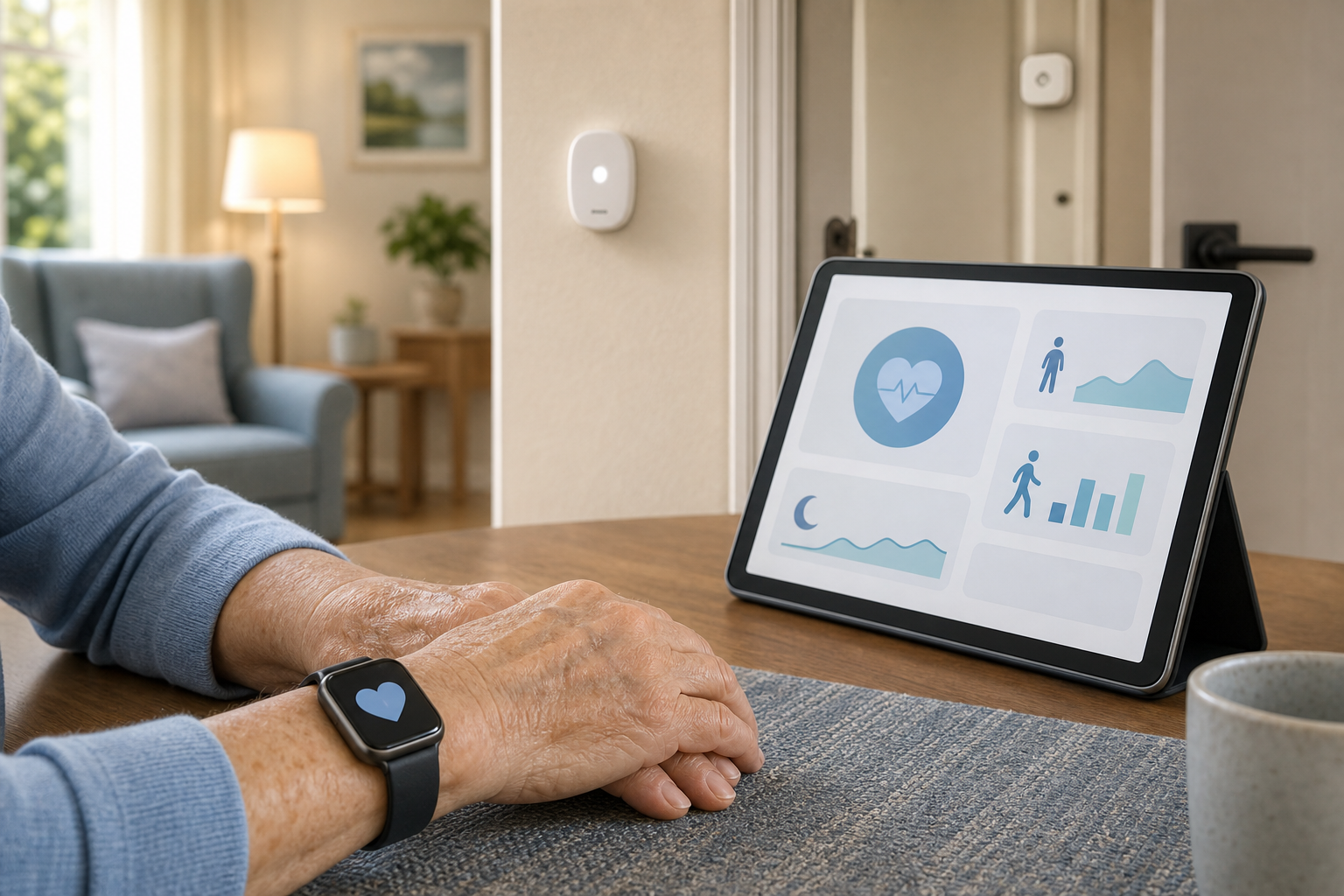
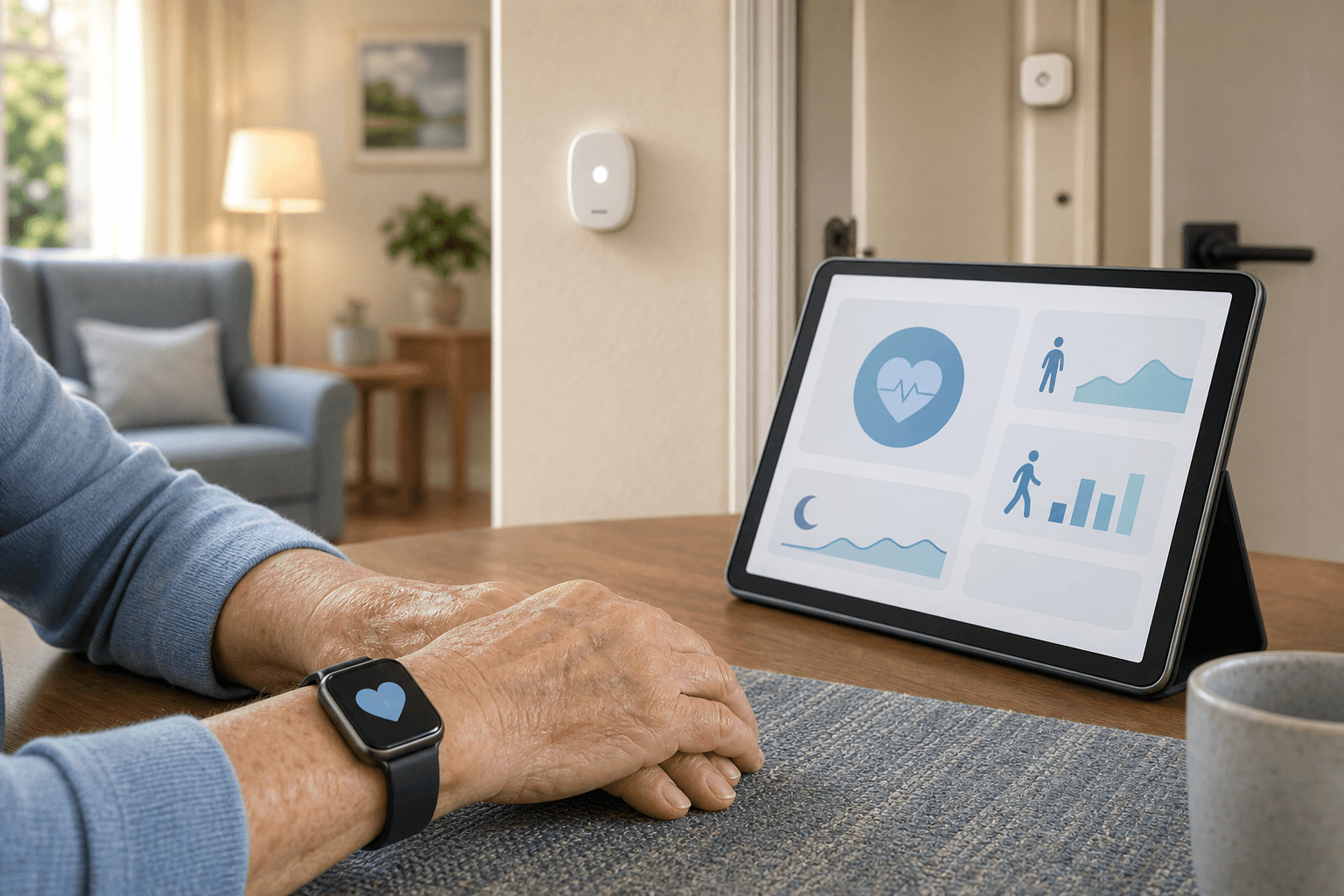
Wearable health devices and remote monitoring sensors are becoming standard tools in home care, offering families real-time visibility into a loved one's safety and health trends.
The most significant shift in home assistance for the elderly in 2026 is the mainstream adoption of technology that was experimental just a few years ago. According to industry analysis from CareSmartz360, the home healthcare market is expected to grow at a compound annual growth rate (CAGR) of 15.2% through 2029, with much of that growth driven by technology integration.
For family caregivers, the most relevant technology trends include:
AI-powered predictive care tools: Some agencies now use artificial intelligence to analyze client health data — activity levels, vital signs, medication adherence — to anticipate fall risk and early signs of decline before they become emergencies. This is a genuine differentiator worth asking about.
Wearable health monitors: Smartwatches and medical-grade wearables that track heart rate, sleep patterns, and physical activity are increasingly integrated into care plans. The All Seniors Foundation notes that these devices, combined with AI analytics, can alert caregivers to changes in a senior's condition in real time.
Remote monitoring systems: Passive sensors placed around the home — on doors, in hallways, on the refrigerator — can detect changes in routine without requiring the senior to wear or operate anything. These systems are particularly valuable for families managing care from a distance.
AI-powered scheduling: Agencies are using AI to optimize caregiver schedules, reducing missed visits and caregiver fatigue. For families, this means more consistent, reliable care.
For a deeper look at clinical monitoring tools, see our guide to remote patient monitoring for seniors. The key point for 2026: technology is no longer a nice-to-have add-on. It is becoming a standard component of quality home care, and families should evaluate agencies partly on their technology capabilities.
Policy Changes That Affect Your Care Decisions: EVV, Medicare, and Medicaid
Several policy shifts in 2026 have practical implications for families arranging home care. The most significant is the tightening of Electronic Visit Verification (EVV) mandates for Medicaid-funded care. EVV systems use GPS and real-time reporting to verify that a caregiver arrived at the correct location, stayed for the scheduled duration, and provided the authorized services.
According to CareSmartz360, EVV compliance requirements are becoming more stringent in 2026, with state-specific audits and real-time reporting mandates. For families, this means greater accountability — agencies are more likely to deliver the hours they bill for — but it can also mean more administrative friction, especially if the senior is uncomfortable with GPS tracking in their home.
On the Medicare front, value-based care models are expanding. The 2026 Medicare home health update details the specific changes, but the trend is clear: Medicare is increasingly tying reimbursement to patient outcomes rather than volume of services. This can benefit families because agencies have stronger incentives to provide effective, coordinated care. However, it also means that eligibility criteria — including the often-misunderstood Medicare homebound rule — remain critical gatekeepers for coverage.
Medicaid Home and Community-Based Services (HCBS) waivers continue to expand in many states, offering coverage for nonmedical in-home care for eligible seniors. The National Institute on Aging notes that Medicaid coverage varies significantly by state, so families should check their state's specific waiver programs. The trend in 2026 is toward broader eligibility and more flexible service options, but waitlists remain long in some states.
New Care Models: Personalized Plans, Home-First Services, and the Caregiver as Advocate
The way home care is designed and delivered is evolving. According to Right at Home and the All Seniors Foundation, several care model trends are reshaping what families can expect from home care agencies in 2026:
Personalized, strength-based care plans: Instead of a one-size-fits-all approach, agencies are designing care plans around the senior's existing abilities and preferences, focusing on maintaining independence rather than just compensating for deficits.
Home-first services: The expansion of home-based primary care, mobile clinics, and telehealth means more medical care can be delivered at home. This reduces the need for transportation to appointments and keeps seniors in familiar environments.
Integration of behavioral and mental health: Routine home care increasingly includes attention to mental health, social engagement, and cognitive stimulation — not just physical tasks.
The family caregiver as care coordinator: Agencies are recognizing that family members are not just observers but active care coordinators. Many now provide family training, regular updates, and tools for remote involvement.
These shifts align with a strong and persistent preference: over 90% of older adults want to age in place, according to Choice Mutual. Yet only 10% of U.S. homes are "aging ready" — equipped with the modifications needed to safely accommodate an older adult. This structural gap means that home care planning in 2026 must include a realistic assessment of the home environment itself. The Habitat for Humanity aging in place program guide and the aging in place remodel cost guide offer practical resources for addressing this gap.
The Workforce Reality: Turnover, Shortages, and the Value of Family Caregivers
The home care workforce is under extraordinary strain. According to CareSmartz360, caregiver turnover rates at home care agencies have reached approximately 79% industry-wide — the highest level in recent memory. This means that nearly four out of five caregivers hired by an agency may leave within a year, creating significant challenges for continuity of care.
For families, high turnover translates into practical problems: new faces in the home every few months, inconsistent care quality, and the emotional toll on a senior who has to build trust with a series of strangers. When evaluating agencies, asking about turnover rates and retention strategies is no longer optional — it is essential.
The median wage for home care aides is approximately $16 per hour, according to industry data. This low wage is a primary driver of turnover. Some agencies are using incentives like the Work Opportunity Tax Credit to improve retention, but the structural problem remains.
Meanwhile, the value of unpaid family caregiver labor is staggering. Choice Mutual estimates that family caregivers provide $873 billion in unpaid care annually. This figure underscores a reality that many families live: even when professional home care is in place, family members remain the backbone of the care system, providing coordination, oversight, and hands-on support that no agency can fully replace.
What These Trends Mean for Your Family: Making Smarter Decisions Now
The convergence of rising costs, technology adoption, policy changes, and workforce challenges creates a complex decision environment for families. Here is how to translate these trends into actionable steps:
Budget for continued cost increases: With home care costs rising ~5% annually in many markets, build in a buffer when planning your budget. Consider locking in rates with an agency that offers long-term pricing guarantees, if available.
Evaluate agencies on technology: Ask specific questions about AI predictive tools, remote monitoring, and wearable integration. An agency that uses these tools effectively can provide better care and greater peace of mind.
Understand policy implications: If you are relying on Medicaid HCBS waivers, confirm your state's EVV requirements and how they affect your loved one's privacy. If using Medicare home health, ensure you understand the homebound rule and how value-based care models might affect service delivery.
Assess the home environment: With only 10% of homes aging-ready, a home assessment should be a standard part of your care planning. The cost of modifications is often far less than the cost of a facility move.
Plan for workforce instability: High turnover means you need a backup plan. Build relationships with multiple agencies if possible, and maintain a list of independent caregivers who can step in when needed.
Protect your own role: The $873 billion in unpaid family caregiver labor is a reminder that your contribution is essential — and unsustainable without support. Use respite care, seek training, and connect with other caregivers through virtual support networks.
Checklist: Questions to Ask Home Care Agencies in 2026
Use this checklist when interviewing home care agencies. These questions reflect the standards and realities of the 2026 home care landscape discussed in this article.
What is your caregiver turnover rate, and what do you do to retain staff?
Do you use AI or predictive tools to monitor for fall risk or early signs of decline?
What remote monitoring or wearable technology options do you offer or support?
How do you handle EVV compliance, and what does that mean for my loved one's privacy?
Do you offer personalized, strength-based care plans, or do you use a standard approach?
How do you integrate family caregivers into the care coordination process?
What training do you provide to caregivers on technology, dementia care, and communication?
Do you offer virtual therapy, telehealth integration, or home-based primary care services?
What is your backup plan if a scheduled caregiver is unavailable?
Can you provide references from families who have used your services for at least six months?

Comments
Join the discussion with an anonymous comment.