Overnight Care for Elderly with Dementia: A Guide to Nighttime Safety Without Medication
This guide helps family caregivers understand and manage sundowning, night-wandering, and sleep disruption in seniors with dementia. It focuses on non-pharmaceutical strategies—environmental design, routine consistency, and behavioral redirection—to reduce nighttime risks and improve sleep quality without relying on sedating medications.
By Editorial Team
dementia care
sundowning
nighttime safety
non-pharmaceutical interventions
overnight care
📄
A printable version of this guide is available. Use your browser's print function (Ctrl+P / ⌘P) to save or print.
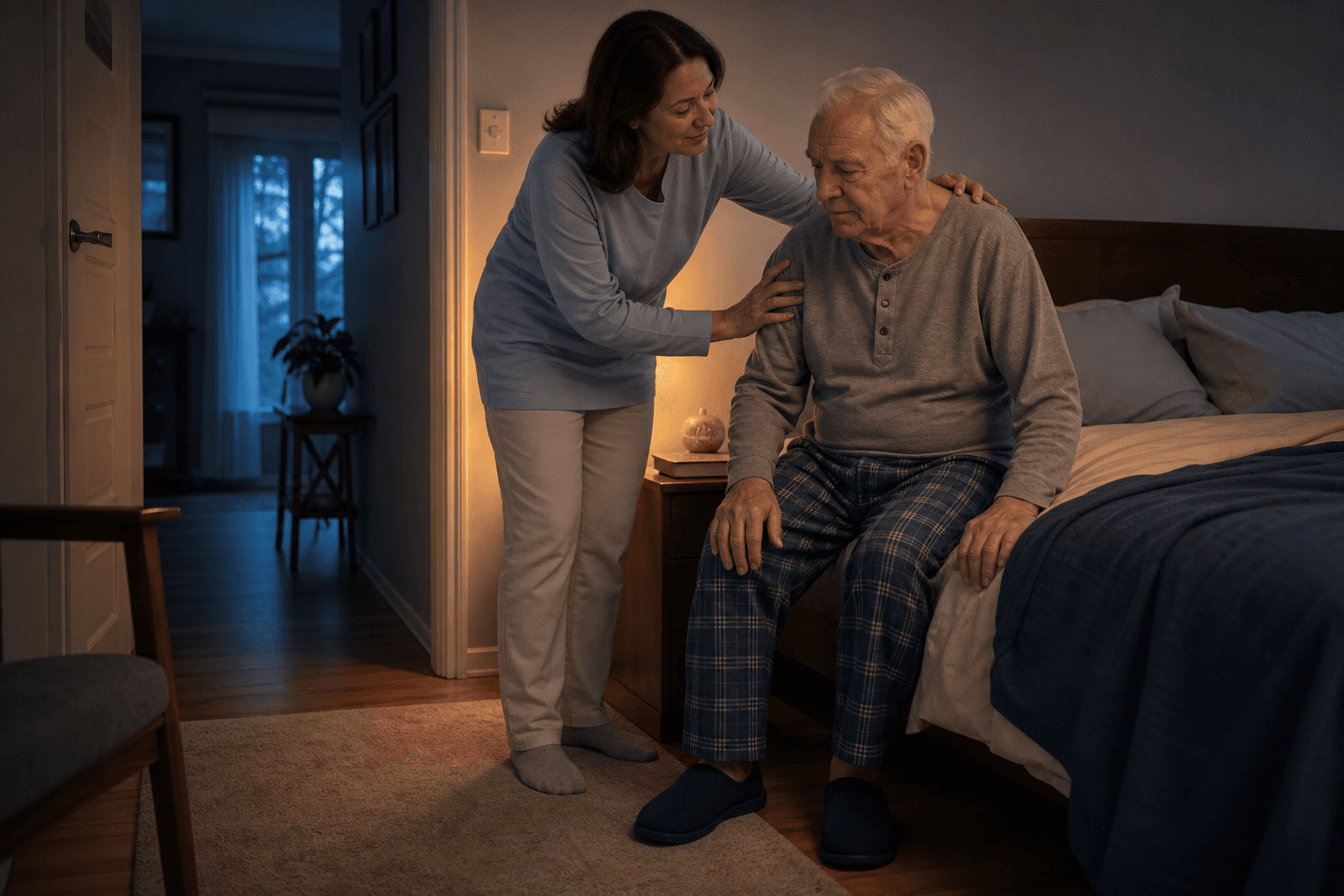
A calm, supportive nighttime environment can reduce confusion and agitation for a person living with dementia.
Why Dementia Changes the Overnight Care Equation
When a person has Alzheimer's disease or another form of dementia, the night is not simply a time for rest. The brain's internal clock — the circadian rhythm — becomes disrupted, making it difficult to distinguish day from night. This neurological shift is the root cause of sundowning, a set of symptoms that includes increased confusion, agitation, pacing, and disorientation that typically begins in the late afternoon and extends through the night.
Sundowning is not a disease itself but a collection of behavioral symptoms that affect an estimated 20–45% of individuals with Alzheimer's disease. This wide range reflects differences in study populations and dementia stages, but the clinical reality is that a substantial portion of families will face nighttime challenges that standard overnight care models — designed for seniors who simply need bathroom assistance or fall prevention — are not equipped to handle.
The risks during these hours are acute. Each year, more than one out of four older adults (65+) falls, and falls are the most common cause of traumatic brain injuries in this population. For a person with dementia, the combination of reduced visibility, compromised balance, slower reaction times, and the confusion of sundowning creates a perfect storm for injury. A caregiver who is asleep or unprepared may not hear a bed exit or a wandering episode until it is too late.
This is why dementia-specific overnight care requires a fundamentally different approach. The core thesis of this guide is that many families can reduce nighttime risks and improve sleep quality without relying on sedating medications — by understanding sundowning's triggers, redesigning the sleep environment, and deploying caregivers who are trained in dementia-specific behavioral strategies rather than general personal care.
Understanding Sundowning: Triggers and Patterns
Sundowning is not random. It follows patterns that, once recognized, can be anticipated and managed. The Alzheimer's Association identifies several contributing factors: mental and physical exhaustion accumulated during the day, navigating a new or confusing environment, a mixed-up internal body clock, low lighting that increases shadows and visual misinterpretation, and stress in the people around the person with dementia.
Common triggers cluster into four categories:
Physiological triggers: Hunger, thirst, fatigue, pain, or the need to use the bathroom. As the day wears on, the person's reserves are depleted, making it harder to cope with even minor discomforts.
Environmental triggers: Low lighting that creates confusing shadows, unfamiliar sounds, a room that is too warm or too cold, or a cluttered space that the person cannot visually parse.
Overstimulation triggers: Too much activity, loud conversations, or a blaring television in the hours before dusk can overwhelm an already taxed brain.
Circadian disruption triggers: Irregular sleep-wake cycles, excessive daytime napping, and insufficient exposure to natural morning light all weaken the brain's ability to regulate sleep.
The most practical tool for families is a trigger log. For one week, record the time of each sundowning episode, what happened in the two hours before it began, what the person ate, how much they rested during the day, and what the environment was like (lighting, noise, activity level). Patterns will emerge. You may discover that a late-afternoon nap longer than 30 minutes guarantees a restless night, or that a bright overhead light in the kitchen at 5 PM triggers agitation while a dimmer lamp does not.
The transition from day to night can be a critical trigger period for sundowning. Managing light and activity levels during this window is key.
Non-Pharmaceutical Interventions as First-Line Strategy
The Alzheimer's Association is explicit: "For sleep issues primarily due to Alzheimer's disease, most experts encourage the use of non-drug measures rather than medication." Sedating medications carry significant risks for older adults with dementia — including increased fall risk, cognitive worsening, and paradoxical agitation — making non-pharmaceutical approaches the first-line strategy, not an afterthought.
The following interventions have the strongest evidence base and are recommended by the Alzheimer's Association and the National Council of Certified Dementia Practitioners (NCCDP):
Morning light exposure: Spending 30–60 minutes outside in natural sunlight, or sitting near a bright window, helps reset the circadian rhythm. This is one of the most effective single interventions for improving nighttime sleep quality.
Structured evening routine: Perform the same calming activities in the same order every evening — gentle stretching, soft music, a warm non-caffeinated drink, quiet conversation. Predictability reduces anxiety.
Meal timing adjustment: Offer the largest meal at lunch and keep the evening meal lighter. A heavy dinner can disrupt sleep and contribute to nighttime discomfort.
Limited daytime napping: If the person naps, keep it to 30 minutes or less, and avoid naps after 2 PM. Longer naps accumulate sleep pressure that fragments nighttime rest.
Weighted blankets: Some individuals with dementia respond well to the deep pressure stimulation of a weighted blanket, which can reduce anxiety and improve sleep quality. Evidence is emerging, and results vary by individual.
Evening bright-light therapy: Controlled exposure to bright light in the early evening (using a light therapy box) has been shown to reduce sundowning severity in some studies, though protocols should be discussed with a healthcare provider.
Daytime engagement is a critical companion strategy. Keeping the person with dementia physically active and socially engaged during the day — through walks, simple chores, or adult day programs — helps regulate the sleep-wake cycle and reduces the energy deficit that fuels sundowning. For more on this, see our guide on Dementia Adult Day Care as a companion strategy for regulating circadian rhythms.
Environmental Design Checklist for Nighttime Dementia Safety
The physical environment is a powerful lever for reducing nighttime risks. A well-designed dementia-safe bedroom can prevent falls, reduce elopement, and minimize the confusion that triggers agitation. Below is a room-by-room checklist focused specifically on nighttime safety.
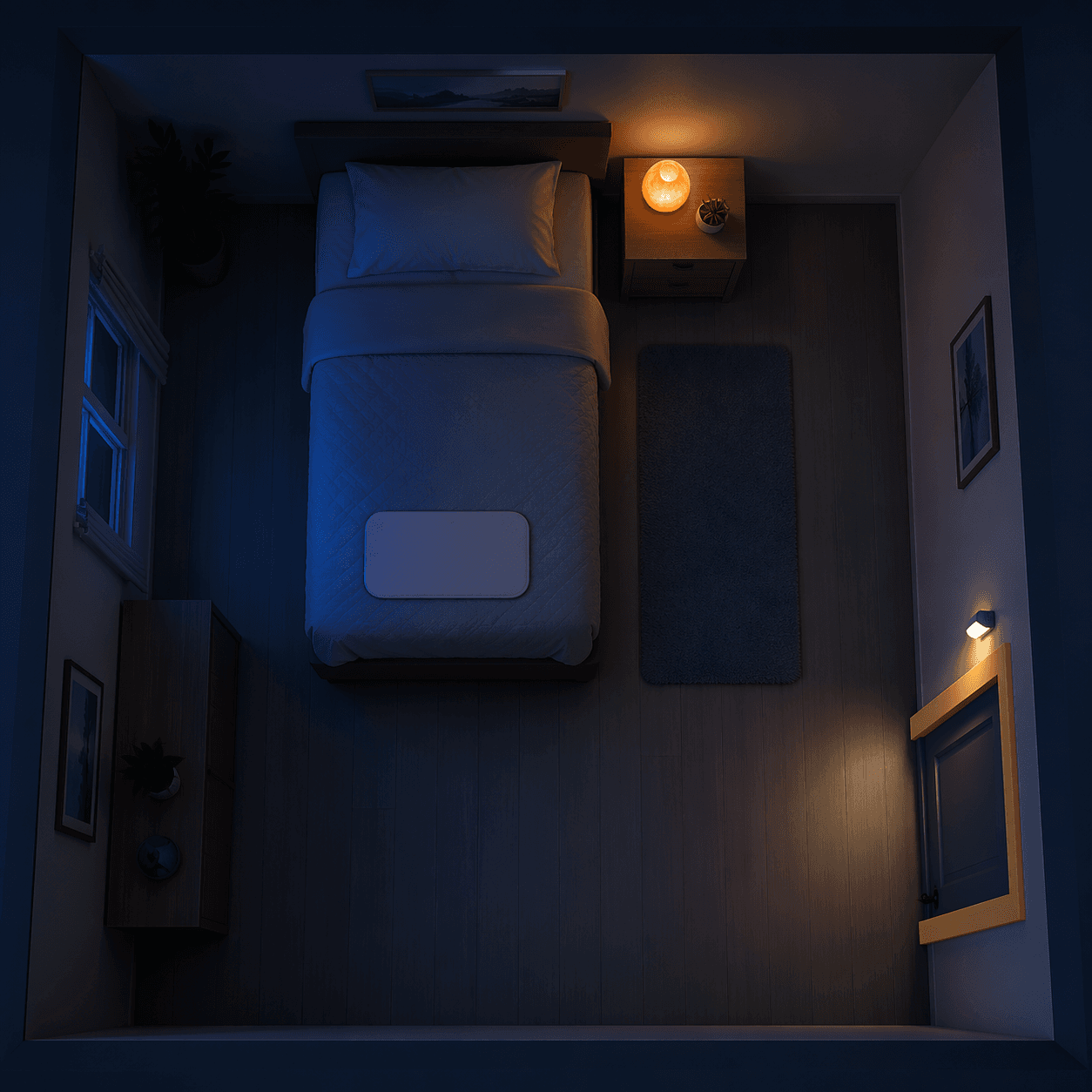
Nighttime environmental modifications for dementia safety. Each intervention addresses a specific risk associated with sundowning and night-wandering.
Area
Intervention
Purpose
Bedroom
Amber/red wavelength nightlight (plugged into an outlet near the bed)
Provides enough light for orientation without suppressing melatonin or creating confusing shadows
Bedroom
Bed alarm or pressure-sensor mat on the mattress
Alerts the caregiver the moment the person sits up or attempts to exit the bed, reducing fall risk
Bedroom
Non-slip rug beside the bed
Provides stable footing if the person stands; reduces slip-and-fall injuries
Bedroom
Contrast-colored door frame or bathroom door
Helps the person visually identify the exit and the bathroom, reducing disorientation
Bedroom
Remove or secure loose cords, clutter, and small furniture
Eliminates tripping hazards and reduces visual confusion
Hallway / Bathroom
Motion-sensor nightlights (amber wavelength) along the path to the bathroom
Automatically illuminates the route without requiring the person to find a switch
Exterior doors
Wander-deterrent door locks or alarms (placed high or low, out of line of sight)
Prevents elopement without the person feeling trapped; alarms alert the caregiver
Entire home
Remove or secure throw rugs and loose mats
These are a leading cause of falls for older adults, especially in low-light conditions
A dementia-safe bedroom layout designed for nighttime safety. Key elements include amber nightlighting, clear pathways, and a sensor pad on the mattress.
When a Trained Overnight Dementia Caregiver Is the Right Choice
Not all overnight caregivers are equipped to handle dementia-specific behaviors. A caregiver who is excellent at personal care — bathing, dressing, meal preparation — may have no training in the redirection techniques, communication strategies, and behavioral understanding required to manage sundowning and night-wandering. This distinction matters because the wrong response to a sundowning episode can escalate agitation rather than calm it.
When vetting an overnight caregiver or agency for dementia-specific care, look for the following competencies:
Redirection techniques: The ability to gently guide the person away from distressing thoughts or actions without arguing, correcting, or using logic. For example, if the person insists they need to "go home" at 2 AM, a trained caregiver validates the feeling and redirects to a calming activity rather than explaining that they are already home.
Behavioral pattern recognition: The caregiver should understand that sundowning is not intentional misbehavior but a neurological symptom. They should be able to identify early warning signs — increased pacing, repetitive questioning, changes in facial expression — and intervene before the agitation escalates.
Communication strategies: Training in using simple, one-step instructions, a calm tone of voice, and non-verbal cues. The caregiver should know not to approach from behind, not to startle the person, and to give plenty of time for the person to process information.
Environmental awareness: The caregiver should understand how lighting, noise, and room temperature affect the person's state and be proactive about adjusting the environment before problems arise.
In the dementia context, the choice between awake overnight care and sleep overnight care is particularly important. Awake care — where the caregiver remains alert for the entire shift — is appropriate when the person is at high risk of falls, experiences severe confusion or wandering, or requires frequent assistance during the night. Sleep overnight care, where the caregiver sleeps nearby but can wake quickly, may be sufficient for individuals who generally sleep through the night but occasionally need help.
Live-in care, where one caregiver resides in the home for several consecutive days, is a different model entirely. Live-in caregivers are legally entitled to 6–8 hours of uninterrupted sleep and a 4-hour break during the day. This means the person with dementia has no direct supervision during those sleep hours. If sundowning or night-wandering is a concern, live-in care alone is unlikely to be sufficient — 24-hour shift care with awake overnight coverage is typically required.
Deciding Between Home Care and a Memory Care Transition
Non-pharmaceutical strategies and trained overnight caregivers can extend the time a person with dementia remains safely at home, but they are not a permanent solution for every family. There comes a point when the combination of behavioral symptoms, safety risks, and caregiver capacity makes a transition to a memory care community the appropriate next step.
Clinical signals that indicate home-based overnight care is no longer sufficient include:
Frequent falls or near-falls during the night despite environmental modifications and supervision
Repeated elopement attempts that cannot be managed with alarms and locks
Aggressive behavior during sundowning episodes that puts the caregiver or the person at risk of injury
Caregiver exhaustion that has reached a point where the caregiver's own health is deteriorating — this is not a failure but a biological limit
The need for 24/7 awake care that exceeds the family's financial or logistical capacity
This decision is deeply personal and should be made with input from the person's primary care provider, a geriatric care manager, and the family. For a comprehensive overview of the options, see our Dementia Care Options: A Stage-Based Guide.
Cost Considerations for Dementia-Specific Overnight Care
Dementia-specific overnight care costs more than standard home care for several reasons: overnight shifts command a premium, caregivers with specialized dementia training charge higher rates, and the need for awake overnight coverage (rather than sleep-through care) increases the total hours billed.
The following figures provide a national context for budgeting. Actual costs vary significantly by geography, agency, and the specific level of care required.
National cost ranges for dementia overnight care models. Source: A Place for Mom 2026 Cost of Care report ($34/hr median); Care.com live-in and 24/7 cost ranges (2025–2026).
Care Model
Typical Monthly Cost Range (National)
Key Consideration for Dementia Families
Hourly in-home care (non-medical)
$34/hour (national median, 2026)
Standard rate; overnight surcharges may apply; dementia-trained caregivers may cost more
Live-in care (one caregiver, 24-hour presence with 8-hour sleep break)
$8,000 – $12,000/month
Not suitable if the person requires supervision during the caregiver's 8-hour sleep period
24/7 awake shift care (rotating caregivers, no sleep break)
$15,000 – $25,000+/month
Appropriate for active sundowning, night-wandering, or high fall risk; most expensive option
Several funding sources may help offset these costs:
Medicaid Home and Community-Based Services (HCBS) waivers: These waivers can cover in-home care costs for eligible individuals, including overnight care. Eligibility and coverage vary significantly by state, and waitlists are common.
VA Aid & Attendance pension: Veterans and surviving spouses who need the aid of another person for daily activities may qualify for this monthly pension, which can be applied toward home care costs.
Long-term care insurance: Policies vary widely. Some cover in-home dementia care, including overnight shifts, while others only cover facility-based care. Review the policy's definition of "custodial care" and any elimination periods.
For a more detailed breakdown of costs across all overnight care models, see our dedicated guide: Overnight Care Costs in 2026.



Comments
Join the discussion with an anonymous comment.