Why Your Parent With Dementia Keeps Trying to Leave the House — and How to Respond Safely
Understand why exit-seeking behavior happens in dementia and learn a layered safety approach — environmental, behavioral, and technological — that reduces elopement risk while respecting your parent's dignity and autonomy.
By Editorial Team
new caregiver
experienced caregiver
long-distance caregiving
spousal caregiver
working caregiver
daily routines
medication management
personal hygiene
care coordination
first steps
ADLs
IADLs
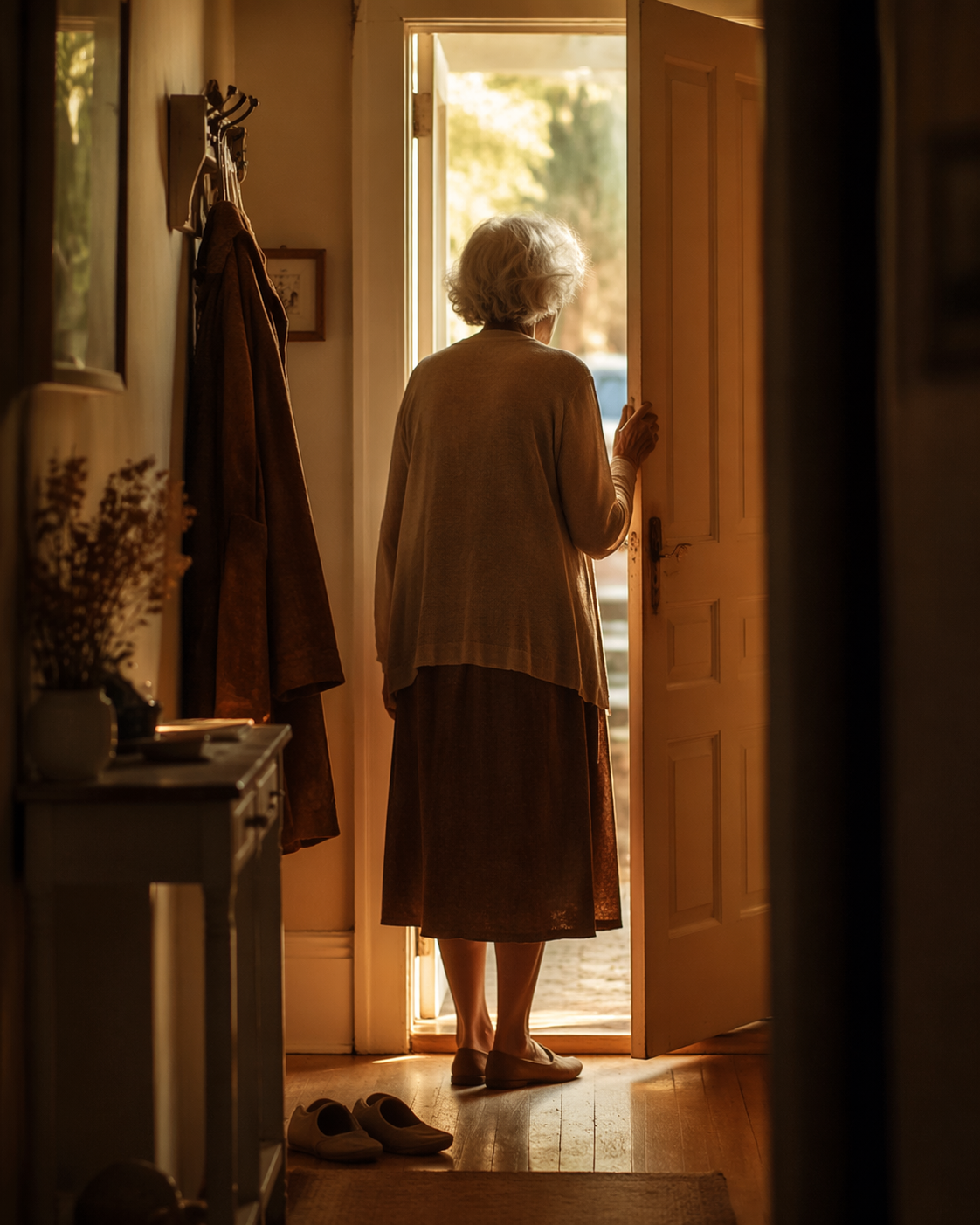
The first time your parent heads for the door, it may look ordinary: a hand on the knob, a purse tucked under one arm, a jacket pulled from the chair. Then you hear, “I have to go,” and your body understands the danger before your mind has caught up. A parent with dementia keeps trying to leave the house for reasons that are usually more complicated than “wandering.” They may be trying to get to work, find a child, go home, use the bathroom, escape noise, or make sense of a place that no longer feels familiar.
That distinction matters because the safest response begins before the lock. The Alzheimer’s Association says six in 10 people living with dementia will wander at least once, and many do so repeatedly; it also notes that anyone with memory problems who can walk is at risk.[1] Other research reviews have found wide variation in wandering estimates because studies define the behavior differently, but the practical point for a family is the same: once exit-seeking starts, assume it can happen again.[2]
I would not spend your first hour arguing about whether this is “wandering,” “elopement,” or “exit-seeking.” I would spend it asking what problem your parent is trying to solve, moving the coat and keys out of sight, setting a door alert before evening, and making sure someone besides you knows what to do if they see your parent walking alone.
Start With the Need Behind the Door
The sentence “Mom, you live here now” feels truthful to the caregiver and often useless to the person with dementia. If her brain is telling her that her children are waiting after school, the correction does not answer the emergency she feels. If he does not recognize the living room, the fact that he has lived there for 35 years may not land as comfort.
Before you respond, look for the pattern. Write down the time, what happened just before the attempt, what your parent said, what they were wearing or carrying, and what helped them settle. A few days of notes can show you whether the trigger is hunger, a bathroom need, boredom, a noisy room, a particular visitor leaving, a shadowed hallway, or the late-day agitation families often call sundowning.
What you notice
What it may mean
First response to try
“I need to go to work” or “I’m late”
A remembered obligation feels current
Validate the responsibility, then redirect into a related task
“I have to pick up the kids”
A past caregiving role is active in the present moment
Offer reassurance that the children are safe, then give a purposeful activity
“I want to go home” while already at home
Home may mean safety, childhood, or a familiar emotional place
Ask what they miss about home rather than correcting the address
Pacing, coat-grabbing, checking the door near dusk
Restlessness or sundowning may be rising
Begin a calming routine before the usual high-risk time
Repeated attempts after meals, drinks, or medications
Pain, bathroom urgency, thirst, medication effects, or discomfort may be involved
Check physical needs and call the clinician if the change is sudden
This is not detective work for its own sake. The cause changes the response. A lonely person does not need the same intervention as a person with untreated pain. A former teacher who believes school is starting does not need the same distraction as someone who is frightened by an unfamiliar-looking hallway.
Unmet Needs: Hunger, Pain, Bathroom, Thirst, Temperature
A person with dementia may not say, “My hip hurts,” or “I need the toilet.” They may stand up, pace, open drawers, head toward the entry, or insist they need to leave. Start with the body before you assume the behavior is purely cognitive: bathroom, fluids, food, pain, constipation, shoes that hurt, a room that is too hot, or a hearing aid that is not working.
A sudden new pattern deserves medical attention, especially if it comes with sleep change, fever, falls, new confusion, medication changes, or signs of pain. Environmental fixes can reduce risk, but they should not hide delirium, infection, medication side effects, or unmanaged discomfort.
Many attempts to leave are purposeful inside the person’s reality. A retired mechanic may believe his shift is starting. A mother may believe small children are waiting. A former church volunteer may believe she is expected at a meeting. Calling that “trying to escape” misses the dignity of what is happening: the person is trying to fulfill a duty.
Meet the duty first. “You always took care of getting there on time” is more useful than “You haven’t worked in 20 years.” Then move the energy into something believable: sorting towels for “the morning,” checking a calendar together, setting the table, folding napkins, or writing a short note that says the appointment has been handled.
Disorientation: The House Stops Feeling Like Home
Sometimes the person is not leaving a home; they are leaving a place that feels strange. Mirrors, shadows, changed furniture, holiday decorations, guests, a new caregiver, or a moved favorite chair can make a familiar house feel wrong. The front door then becomes the most obvious solution.
If this is the pattern, reduce visual confusion. Keep paths simple. Put familiar photos or a favorite blanket where your parent rests. Use clear signs for the bathroom. Avoid rearranging entry areas unless the change is meant to remove exit cues. A house does not have to look institutional to become easier for a changed brain to read.
“I Want to Go Home” May Not Mean This Address
The request to “go home” can be one of the hardest for adult children because it sounds like rejection. Dementia organizations commonly advise that the phrase may refer to a childhood home, a remembered period of safety, or a feeling the person is trying to recover rather than the current physical address.[1][3]
Try answering the feeling: “You miss home. Tell me about the kitchen there.” Or, “You want to be somewhere familiar. Let’s sit with your tea while you tell me what you’re picturing.” If your parent relaxes when talking about the old neighborhood, you have learned something important. The door was not the only subject. Safety was.
Sundowning: When Late Day Makes the Door More Tempting
If the attempts cluster from late afternoon into evening, take that seriously. The Alzheimer’s Association describes sundowning as increased confusion, anxiety, agitation, pacing, or disorientation later in the day and into the night.[4] In a 2024 MedicAlert study of missing incidents among older adult subscribers, incidents occurred most often in the afternoon and evening: 46.8% in the afternoon and 31.1% in the evening, nearly 78% combined.[5]
That does not prove every late-day exit attempt is sundowning, and the MedicAlert sample is not every family. But it fits what many caregivers see: as light changes, fatigue rises, and the house gets busier or quieter, the person becomes less able to interpret where they are and what is expected.
Do not wait until the agitation peaks. Start the evening routine early: snack, bathroom, soft lighting before shadows lengthen, quieter television, familiar music, a simple task at the kitchen table, and someone assigned to be present during the riskiest window. If your parent always reaches for the coat at 5:30 p.m., the plan should begin at 4:45 p.m.
Respond in Layers, Not With One Big Fix
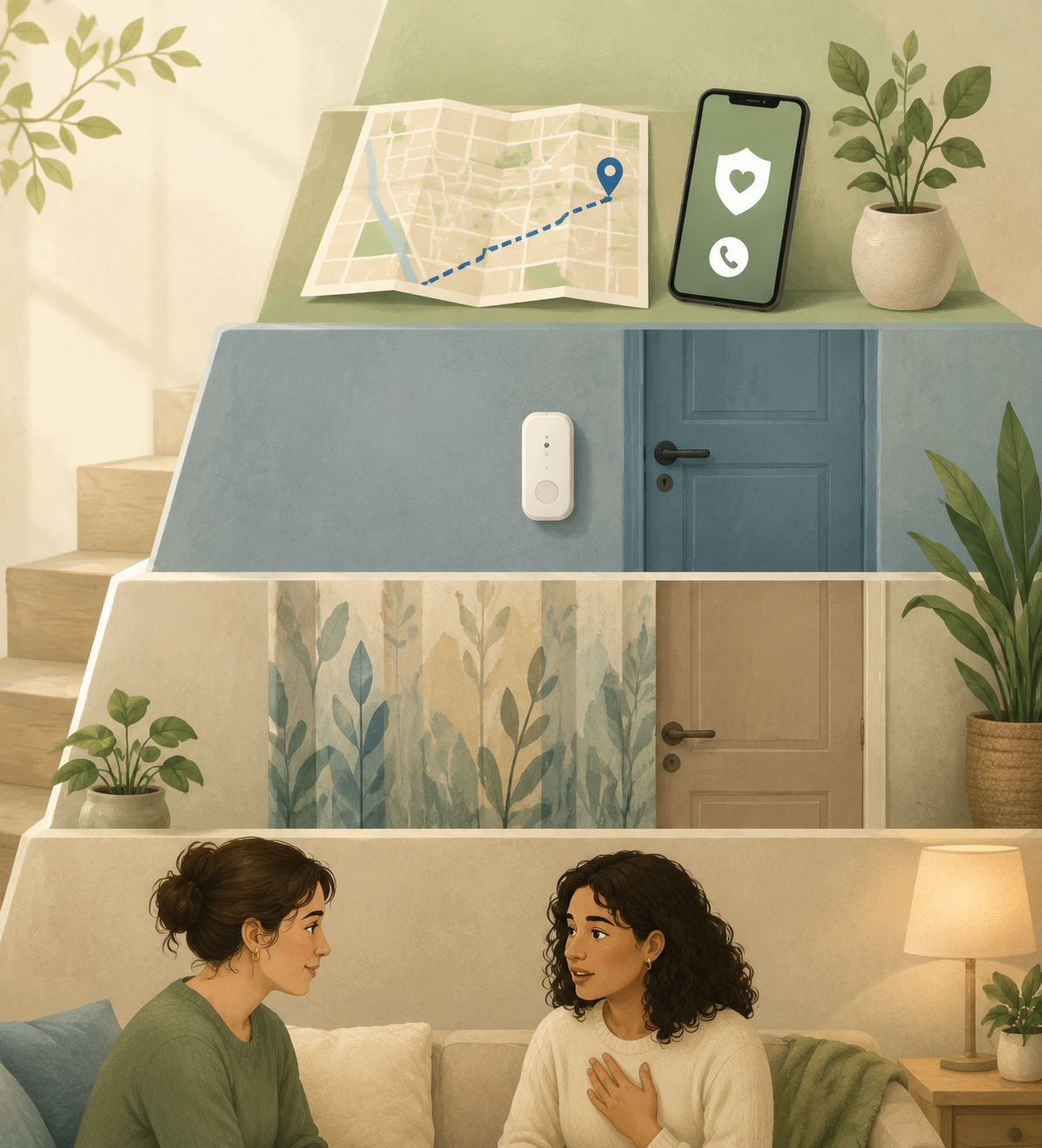
One lock, one tracker, or one perfect sentence will not carry this alone. The safer approach is layered: how you answer in the moment, how the home cues behavior, how you monitor without humiliating the person, and how ready you are if they do get out.
Validate Before You Correct
Correction often escalates because it asks the person to abandon the only explanation their brain currently has. Validation does not mean you agree that the children are waiting outside or that the office expects them. It means you answer the emotion and the role before steering the body away from the door.
Instead of “You live here,” try “You’re looking for somewhere familiar. Come sit with me while we figure it out.”
Instead of “You don’t work anymore,” try “You were always dependable. Let’s check what needs doing before you go.”
Instead of blocking the doorway with panic in your voice, try stepping beside them, lowering your tone, and offering a concrete next action.
Instead of saying “No” repeatedly, try “First let’s use the bathroom,” “First let’s have tea,” or “First help me fold these towels.”
The redirection has to make sense to the person. “Let’s do a puzzle” may fail if they believe they are late for work. “Can you help me sort these papers before we leave?” may succeed because it respects the working identity.
Build the Day Around the High-Risk Time
If your notes show a pattern, build around it rather than reacting to it. A parent who paces after lunch may need a supervised walk before restlessness builds. A parent who tries to leave at dusk may need lights on earlier, a predictable snack, a quieter room, and a purposeful table task. A parent who heads out after a caregiver leaves may need a goodbye routine that does not happen at the front door.
Boredom is not a small matter here. People who spent decades working, parenting, repairing, cleaning, driving, organizing, cooking, or helping others can become restless when the day has no shape. Meaningful activity does not need to be elaborate. It needs to be familiar enough that the hands know what to do: pairing socks, wiping a counter, watering a plant, sorting recipe cards, folding washcloths, setting spoons beside plates.
Remove Exit Cues Before You Add More Rules
The front entry can accidentally advertise departure. A coat on the hook, shoes by the mat, keys in the bowl, a handbag on the bench, and sunlight through the glass all say, “This is where leaving happens.” For a person already searching for a solution, those cues can be enough.
Move coats, hats, purses, wallets, shoes, and keys away from the entry and out of sight.
Use a curtain, mural, or color-matched covering to make the door less visually prominent.
Place a simple visual stop cue on doors only if your parent responds calmly to it.
Consider a dark mat or dark tape threshold only with caution, because visual barriers can also create fall risk or distress for some people.
Make the safer destination more obvious: a well-lit chair, a photo album on the table, or a basket of folding towels in view.
For a broader room-by-room approach, the dementia-specific safety ideas in dementia-friendly home modifications are more useful than general aging-in-place advice because dementia changes how a person interprets space, not just how safely they move through it.
Use Barriers Carefully and Humanely
Families often ask whether they can install locks. The answer depends on local rules, fire safety, who else lives in the home, the person’s mobility, and whether someone is always present. A lock that traps a confused person alone in a house is not a care plan. A discreet latch used while an awake caregiver is present is a different safety decision.
If you add a deadbolt or latch, keep emergency exit needs in mind and ask the local fire department, locksmith, clinician, or care manager what is safe in your situation. The goal is not to create a prison. The goal is to slow an unsafe exit long enough for a person to be noticed, approached, and redirected.
Technology Helps Only If Someone Responds
Door alarms, bed or chair pressure mats, motion sensors, smart doorbells, and GPS devices can be very helpful. They can also become expensive noise if no one knows who receives the alert, how quickly they can act, and what they are supposed to do next.
Start with the simplest technology that matches the risk. If the problem is leaving through one door while you are cooking dinner, a door chime may be enough. If your parent wakes at night and heads outside while you are asleep, you may need a louder alarm, a pressure mat, or nighttime supervision. If they have left the property before, GPS may be reasonable, but it should be paired with a response plan.
Name the responder: the alert goes to one primary person and one backup, not to “the family” in general.
Test the device at the actual risky time of day, with normal household noise and phone settings.
Choose devices your parent will tolerate; a tracker left in a drawer protects no one.
Explain the device in the most respectful truthful language your parent can understand.
Review battery life, charging routines, cellular coverage, and who pays attention overnight.
Consent and dignity still matter, even when memory is impaired. Some people can participate in the decision: “This helps me find you if we get separated.” Others cannot fully consent, and families must weigh privacy against a real safety risk. That decision should be made plainly, not hidden under the comforting idea that technology has solved the problem.
For a closer look at product categories and monitoring tradeoffs, see dementia monitoring systems. The important question is not which device sounds most advanced. It is whether the device shortens the time between an unsafe movement and a capable person showing up.
Prepare for the Incident You Are Trying to Prevent
Preparation can feel frightening, as if making a missing-person plan invites the worst. It does the opposite. When a parent is gone, the house becomes loud with panic: someone checks the bedroom twice, someone runs outside without a phone, someone calls a sibling instead of 911. Decide now what happens first.
The Alzheimer’s Association advises that most people with dementia who go missing are found within 1.5 miles of where they disappeared.[1] In the 2024 MedicAlert subscriber study, 90.6% of missing incidents ended with the person returned safely, 9.2% involved injuries, and 0.2% were fatal.[5] Those numbers should neither paralyze nor soothe you. They say the risk is real, quick action matters, and most incidents can end safely.
Keep a current close-up photo and full-body photo on your phone, updated when hair, glasses, weight, or clothing habits change.
Write a one-page information sheet with name, diagnosis, medications, communication needs, former addresses, favorite walking routes, and places they may try to reach.
Tell trusted neighbors what to do if they see your parent walking alone: approach calmly, stay with them, and call you or emergency services.
Check nearby hazards in advance, including ponds, busy roads, transit stops, wooded areas, parking lots, and former workplaces.
If your parent is missing for 15 minutes, call 911 or local emergency services rather than continuing a private search.
Consider an identification or return program such as MedicAlert Safe & Found if it fits your family’s situation.
When you call for help, say clearly that your parent has dementia and is a vulnerable missing adult. Give the last known location, time last seen, clothing, direction of travel if known, medical risks, and likely destinations. This is not the moment to minimize because you are embarrassed that they “only went for a walk.”
When Home Supervision Is No Longer Enough
Wandering and exit-seeking do not only endanger the person with dementia. They wear down the caregiver who sleeps lightly, showers fast, cancels errands, and starts listening for the door in every room. A 2024 study in the Journal of Geriatric Mental Health found that wandering behavior alone predicted 30% of caregiver burden.[6] That finding names what many families feel but are slow to admit: vigilance becomes its own health risk.
Escalation does not mean you failed. It means the level of risk has outgrown the current setup. Look for these signs: repeated attempts despite environmental changes, leaving at night, getting outside unnoticed, falls or injuries during attempts, increasing aggression when redirected, caregiver sleep loss, missed work, children in the home being affected, or a sudden behavior change that has not been medically assessed.
At that point, the next layer may be adult day care, more in-home coverage, overnight help, a dementia-capable home care team, or memory care. If the main crisis time is daytime restlessness, a well-run dementia-capable adult day care program can add structure and give the caregiver a real break. If nights are unsafe, compare what 24-hour home care can realistically cover. If supervision, exits, medication management, and agitation are all becoming daily safety problems, use a functional guide to ask whether it is time for memory care.
A family cannot remove every risk, and constant vigilance is not a sustainable care plan. What you can do is make the next attempt less likely, less silent, and less dangerous: learn the pattern, answer the need, change the entry cues, add monitoring that has a real responder, and prepare the search plan before you need it.

Comments
Join the discussion with an anonymous comment.