When an Elderly Parent Refuses to Bathe: Understanding the Causes and What Actually Works
Bathing refusal in older adults is rarely stubbornness. This guide helps family caregivers understand the root causes — from fear of falling and sensory discomfort to dementia-related confusion and depression — and provides practical, cause-specific strategies to reduce conflict and preserve dignity.
By Editorial Team
personal hygiene
ADLs
dementia communication
new caregiver
bathroom safety
📄
A printable version of this guide is available. Use your browser's print function (Ctrl+P / ⌘P) to save or print.
Why This Matters: The Scope of Bathing Refusal
If you are reading this, you have likely experienced the knot of frustration and guilt that comes when a parent or spouse refuses to bathe. You know the arguments, the pleading, the silent treatments. And you have probably wondered, at some point, whether this is simple stubbornness or something deeper.
Bathing is one of the core Activities of Daily Living (ADLs) — the basic self-care tasks that clinicians use to measure functional independence. When an older adult resists bathing, it is rarely about hygiene itself. More often, it is a signal that something in the experience has become frightening, painful, confusing, or degrading.
The numbers underscore how common this challenge is. The CDC reports that more than one out of four people aged 65 and older falls each year, and falls are the leading cause of traumatic brain injuries among older adults. The bathroom is a particularly high-risk zone: a CDC study found that falls in the bathroom are 2.4 times more likely to result in injury than falls in other rooms, with injury rates climbing sharply from 112 per 100,000 for those aged 65–74 to 515 per 100,000 for those aged 85 and older. For someone who has already fallen — or who fears falling — the bathroom can feel like a hazard zone, not a place of care.
Understanding the real cause behind the resistance is the first step toward resolving it. The strategies that work for a person who is afraid of falling are different from those that work for someone with dementia-related confusion or depression. This guide walks through each root cause and the specific approaches that address it.
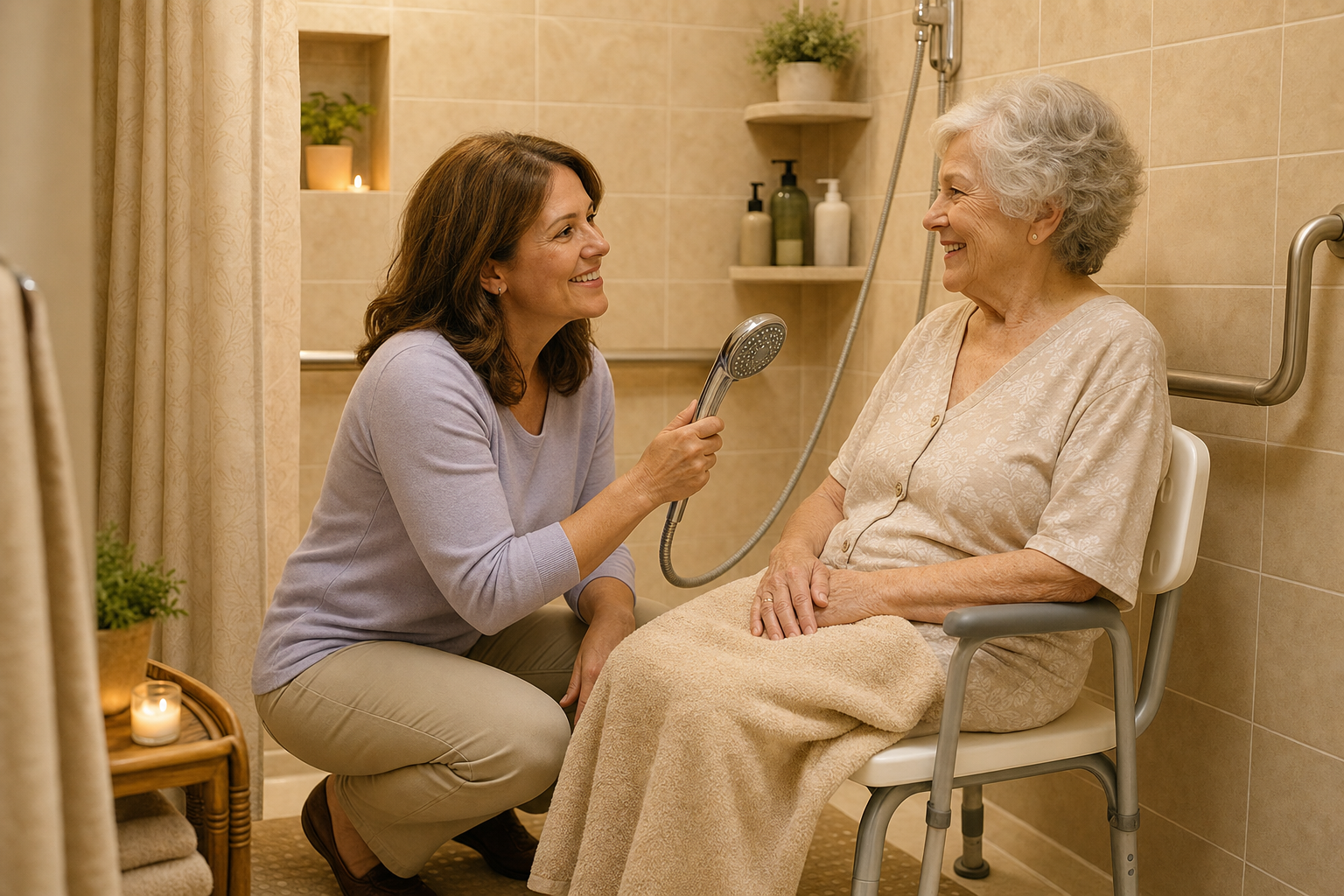
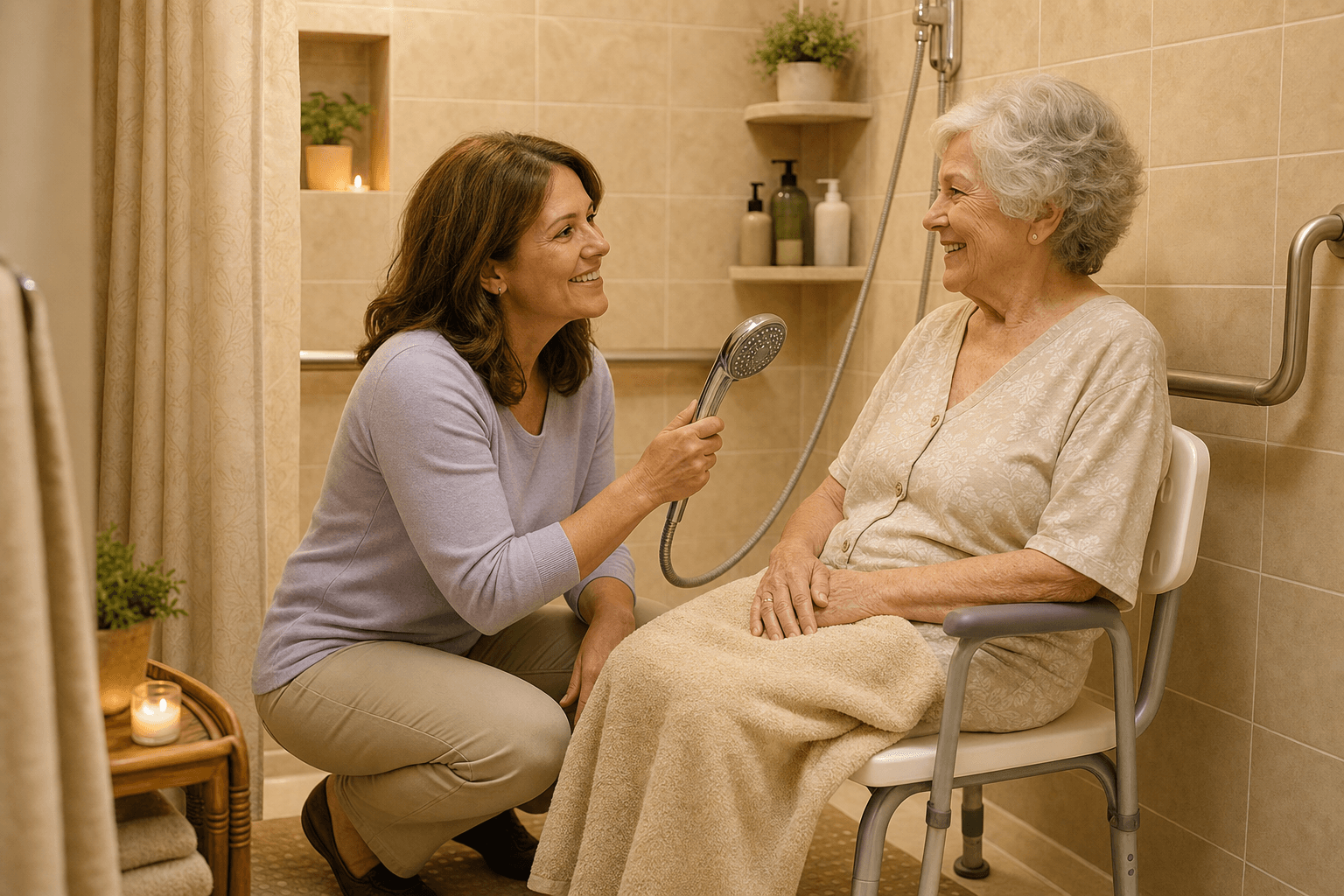
A calm, respectful bathing setup with a shower chair, handheld showerhead, and grab bar can reduce fear and preserve dignity.
Root Cause 1: Fear of Falling and Water
Fear of falling is the most common driver of bathing refusal among older adults, and it is one of the most rational. The bathroom combines nearly every fall risk factor: wet, slippery surfaces; hard, unforgiving fixtures; the need to stand, step, and balance in a confined space; and often, no one nearby to help if something goes wrong.
The data backs up this fear. According to the CDC, an estimated 234,094 nonfatal bathroom injuries among people aged 15 and older were treated in U.S. emergency departments in 2008, and 81.1% of those injuries were caused by falls. The risk escalates dramatically with age: the injury rate for those aged 85 and older was 515.3 per 100,000 population. For this oldest group, more than half of bathroom injuries occurred on or near the toilet, and nearly 39% occurred in or around the tub or shower.
Beyond the statistics, the lived experience matters. Stepping over a tub edge requires balance, strength, and confidence. Standing on a wet surface while reaching for soap or a towel demands coordination that may have diminished. For someone who has already fallen — and the CDC notes that falling once doubles the chances of falling again — the memory of that fall can turn the bathroom into a source of genuine terror.
When fear is the root cause, the solution is not persuasion — it is safety. Installing grab bars, using a shower chair or tub bench, placing non-slip mats both inside and outside the tub, and switching to a handheld showerhead so the person can sit while bathing can transform the experience from frightening to manageable. The Mobility & Daily Independence guide offers a broader look at assistive devices that support safe movement in and out of the bathroom.
Root Cause 2: Sensory Discomfort and Physical Sensitivity
What feels like a refreshing shower to you may feel genuinely unpleasant — even painful — to an older adult. Aging skin becomes thinner, drier, and more sensitive to temperature and pressure. Arthritis can make the sensation of water hitting the body feel sharp or startling. The echo of water in a tiled bathroom can be disorienting. A rough towel rubbed against fragile skin can sting.
The Alzheimer's Association notes that people with dementia may find bathing cold or uncomfortable, and the Family Caregiver Alliance recommends adjusting shower pressure to be as soft as possible and pat drying instead of rubbing. These are not luxuries — they are accommodations for genuine physical sensitivity.
Warm the bathroom thoroughly before the person undresses. Cold air hitting bare skin is a common trigger for resistance.
Use a handheld showerhead with adjustable water pressure. Keep the spray soft and avoid aiming directly at the face.
Warm towels in the dryer for a few minutes before drying. Pat dry gently rather than rubbing.
Consider a shower chair so the person does not have to stand under the spray. This also reduces the startling sensation of water hitting the body from above.
Play soft music or keep conversation calm to mask the echo and noise of running water.
Root Cause 3: Loss of Dignity and Privacy
Bathing requires a level of vulnerability that most adults have not experienced since early childhood. Being undressed, helped into water, and touched by another person — especially when that person is your own child — can feel like a profound loss of dignity and control. Resistance in this context is not irrational; it is a protective response.
The National Institute on Aging (NIA) recommends putting a towel over the person's shoulders for modesty and offering choices — "Do you want to bathe now or in 15 minutes?" — to restore a sense of control. The Alzheimer's Association suggests having a same-gender caregiver assist with bathing when possible, and covering the person with a towel while undressing to minimize exposure.
The emotional dimension of bathing assistance is often underestimated. When a caregiver approaches the task with calm, respect, and a willingness to let the person do as much as they can independently, the dynamic shifts from one of control to one of partnership.
Root Cause 4: Dementia-Related Confusion and Paranoia
Dementia fundamentally changes how a person experiences bathing. This is not a matter of stubbornness or poor cooperation — it is a neurological reality. Understanding these changes is essential for any caregiver supporting someone with Alzheimer's or another form of dementia.
The Alzheimer's Association explains that depth perception problems can make stepping into a tub or shower look like stepping into a dark hole or over a ledge. The person may not perceive a need to bathe at all — the awareness of body odor or soiled clothing diminishes as the disease progresses. Multi-step processes like undressing, entering the water, washing, rinsing, and drying become overwhelming because the brain can no longer sequence them.
Paranoia can also play a role. Water may feel threatening. A caregiver's approach from behind or from the side can startle someone whose peripheral vision has narrowed. The Teepa Snow / Positive Approach to Care (PAC) method emphasizes approaching from the front at or below eye level, with your body turned slightly sideways to appear less threatening. This posture signals safety rather than confrontation.
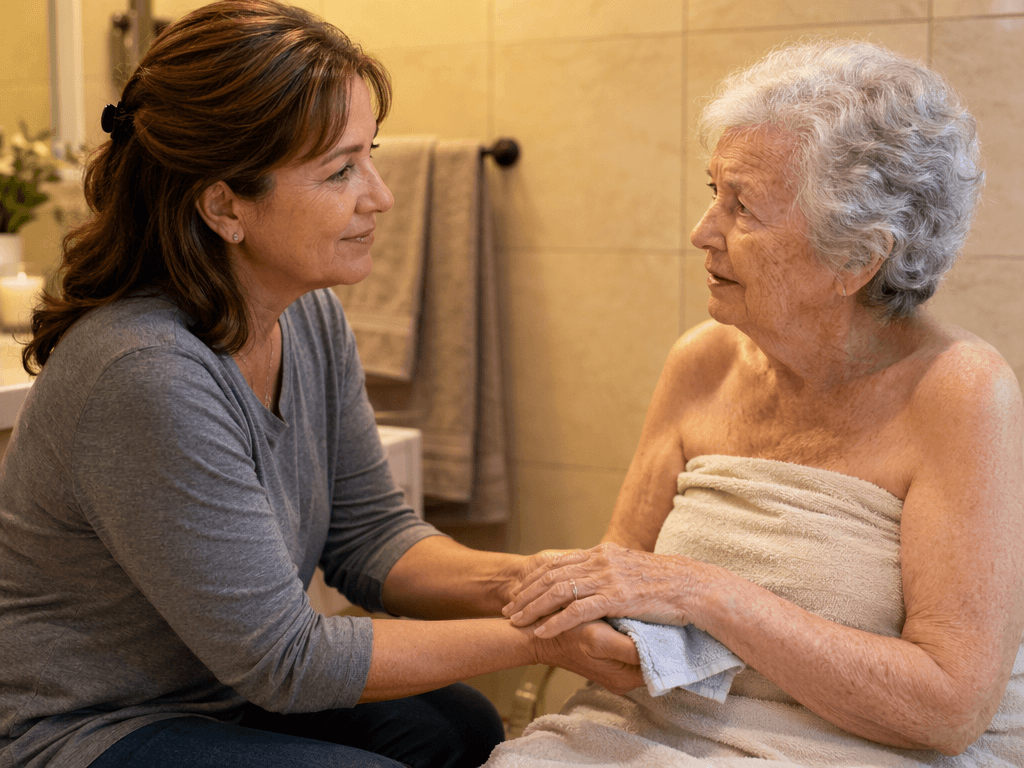
The hand-under-hand technique allows the person with dementia to feel more in control of the bathing process.
Key dementia-specific techniques include:
The 'watch-me' technique: Demonstrate each step — wet the washcloth, soap it, wipe your own arm — then gently guide the person's hand to do the same. This uses the brain's mirror-neuron system rather than relying on verbal instructions.
Hand-under-Hand: Place your hand under the person's hand rather than over it. This gives the person a sense of control and reduces the feeling of being manipulated.
Wash the head last: The face and head are the most sensitive areas. Lay a washcloth with shampoo on the head and gently wet through the fabric, or defer hair washing to another day.
Use strong visual cues paired with short verbal cues before touching. Say "I'm going to wipe your arm with this warm cloth" while showing the cloth, then wait for a response before proceeding.
Fill the tub with only 2–3 inches of water. A full tub can look deep and dangerous to someone with impaired depth perception.
For caregivers managing middle-stage Alzheimer's, our Middle-Stage Alzheimer's Care Planning Guide provides a broader framework for daily care routines. If sundowning or evening agitation is compounding bathing resistance, the Sundowning Safety Plan offers strategies for managing late-day confusion.
Root Cause 5: Depression and Loss of Interest
Sometimes the resistance has nothing to do with the bath itself. Depression in older adults can manifest as a pervasive loss of interest in self-care. The person may not care whether they are clean. They may lack the energy or motivation to undress, stand, wash, and dress again. The AgingCare article notes that a decline in bathing and grooming habits in seniors with dementia can signal depression, and this should prompt a medical evaluation.
Distinguishing depression-related refusal from dementia-related confusion or fear-based resistance is important because the response is different. Depression requires medical attention — a primary care visit, a geriatric assessment, or a mental health referral. No amount of gentle bathing technique will resolve clinical depression.
While awaiting medical guidance, gentle encouragement paired with a preferred activity can help. The AgingCare article suggests offering incentives: "Let's get cleaned up, then we can go to your favorite restaurant" or "After your bath, let's listen to that album you love." The goal is not to bribe but to reconnect bathing with something the person still finds pleasurable.
Practical Strategies by Root Cause
The table below matches each root cause to specific, actionable strategies. Use it as a quick reference when you are planning your approach or troubleshooting a difficult bathing session.
Root causes of bathing refusal and corresponding strategies
Root Cause
Primary Strategy
Specific Actions
Fear of falling
Eliminate physical hazards
Install grab bars; use a shower chair or tub bench; place non-slip mats inside and outside the tub; use a handheld showerhead so the person can sit; warm the room to prevent chill after exiting the water.
Sensory discomfort
Modify the sensory environment
Adjust water pressure to soft; warm towels before drying; pat dry instead of rubbing; use a shower chair to avoid standing under the spray; play soft music to mask echoes.
Loss of dignity
Restore control and modesty
Offer choices (time, order of steps); use a same-gender caregiver when possible; drape a towel over shoulders and lap throughout the bath; let the person do as much as they can independently.
Dementia-related confusion
Simplify and demonstrate
Use the 'watch-me' technique; approach from the front at eye level; use Hand-under-Hand guidance; wash the head last; fill the tub with only 2–3 inches of water; give one-step instructions.
Depression
Seek medical evaluation
Schedule a primary care or geriatric assessment; pair bathing with a preferred activity; use gentle encouragement without pressure; consider a home health aide to reduce family conflict.
The NIA also emphasizes the importance of preparation: gather all supplies (towel, washcloth, soap, clean clothes) before the person undresses. Never leave a person with Alzheimer's alone in the tub or shower. The Family Caregiver Alliance adds that coupling bathing with an activity — such as listening to music or having a conversation about a favorite topic — can serve as a calming distraction.
The Art of the Compromise: When a Full Bath Isn't Possible
One of the most important lessons for any caregiver is this: a full bath is not always necessary, and forcing one can damage the trust you have worked to build. The NIA recommends bathing someone with Alzheimer's two or three times a week, with sponge baths on other days. The Family Caregiver Alliance agrees: daily bathing is not necessary unless incontinence is present — once or twice a week may be sufficient.
When a full bath is not possible, these alternatives can maintain hygiene while reducing conflict:
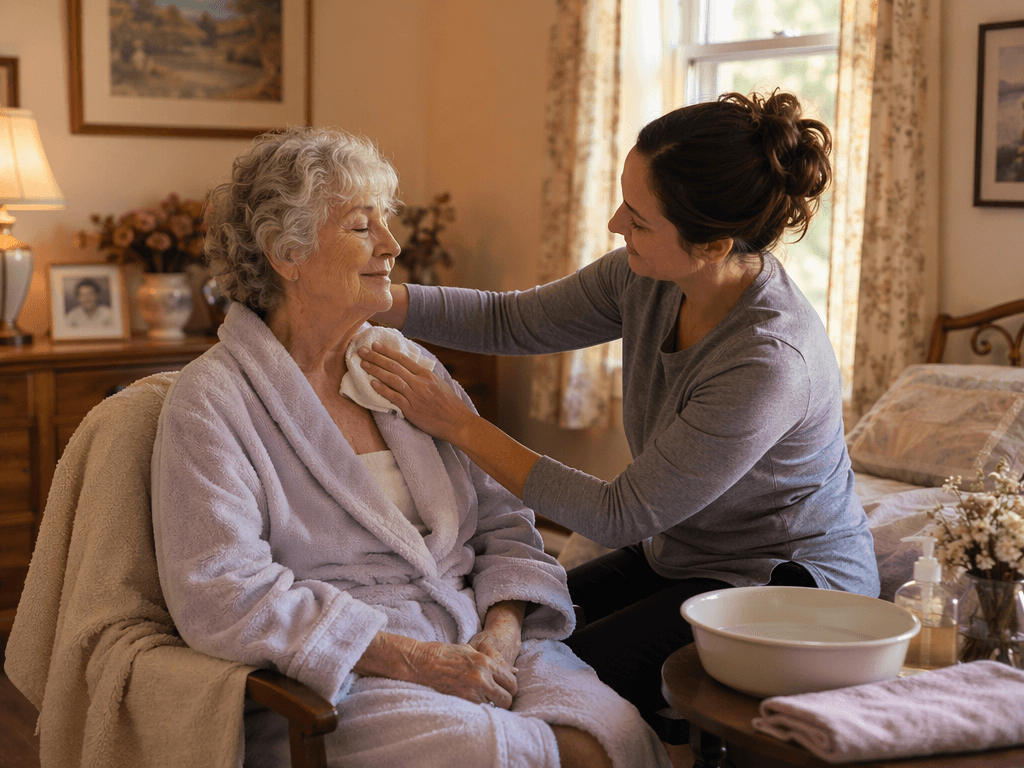
Sponge baths: A warm washcloth with mild soap can clean the face, underarms, hands, and groin area in just a few minutes. The person stays partially dressed and seated.
No-rinse wipes and cleansers: Products designed for bed baths or no-rinse bathing are widely available. They reduce the need for water and rinsing, which are often the most distressing parts of bathing.
Washing one body part per day: The Alzheimer's Association suggests this approach when full baths are too upsetting. Monday: face and hands. Tuesday: arms and chest. The cumulative effect over a week is the same as a full bath.
Bed baths: For someone who cannot or will not go to the bathroom, a basin of warm water, a washcloth, and a waterproof pad on the bed can accomplish the task without the stress of moving to the bathroom.
A sponge bath in a comfortable, warm room can be a dignified alternative when a full bath is too distressing.
When to Bring in Help
There are limits to what family caregivers can manage alone, and recognizing those limits is a sign of strength, not failure. Consider bringing in professional support in these situations:
Persistent refusal despite trying multiple strategies: If you have addressed fear, sensory issues, dignity, dementia-related confusion, and depression — and the person still refuses — a fresh perspective from a professional can help.
Caregiver injury risk: Lifting, transferring, and supporting an unsteady person during bathing puts significant strain on your back. The American Academy of Orthopaedic Surgeons notes that more than 53 million family caregivers provide care, and the back is the most commonly injured area. An occupational therapist can assess the environment and recommend equipment that protects both of you.
Signs of depression or untreated medical issues: If the refusal is accompanied by weight loss, sleep changes, or withdrawal, a medical evaluation is needed before any bathing strategy will work.
Relationship strain: If bathing has become a daily battle that leaves both of you angry and exhausted, a home health aide or professional caregiver can take over this task. The AgingCare article notes that hiring a professional for bathing often works well because the emotional history between family members is removed from the equation.
An occupational therapist can conduct a home assessment and recommend specific equipment — shower chairs, grab bars, handheld showerheads, transfer benches — matched to your parent's mobility level and bathroom layout. A home health aide can provide hands-on bathing assistance, giving you a break from the most physically and emotionally demanding caregiving task.
If you are new to caregiving and feeling overwhelmed by the scope of what lies ahead, our 5-Step Triage Framework for New Caregivers can help you prioritize the most urgent needs and build a sustainable care plan.

Comments
Join the discussion with an anonymous comment.