
STEADI: Intervene
72-Hour Senior Typhoon Safety Checklist
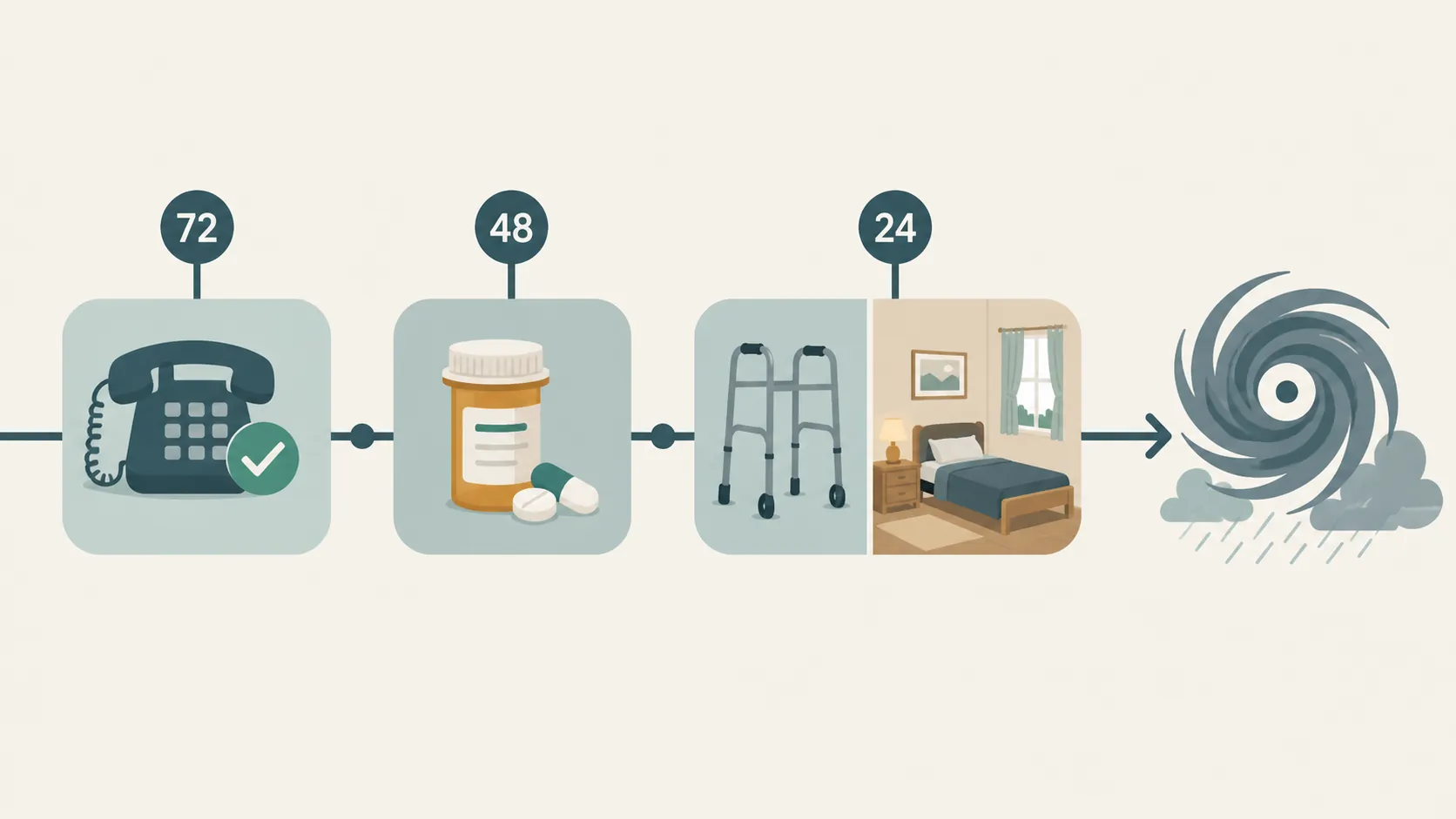
Use this 72-hour countdown when a typhoon or hurricane is three days out. Each timed block pairs senior-specific medical, mobility, and home-safety steps with the official NWS watch and warning windows, and a printable one-page master checklist ties the whole plan together.
When a typhoon or hurricane is three days away, the useful question is not how many supplies are in the house. It is which senior-safety decisions still have time to work. Use the forecast as a decision ladder: T-72 hours, T-48 hours, T-24 hours, and the warning period.
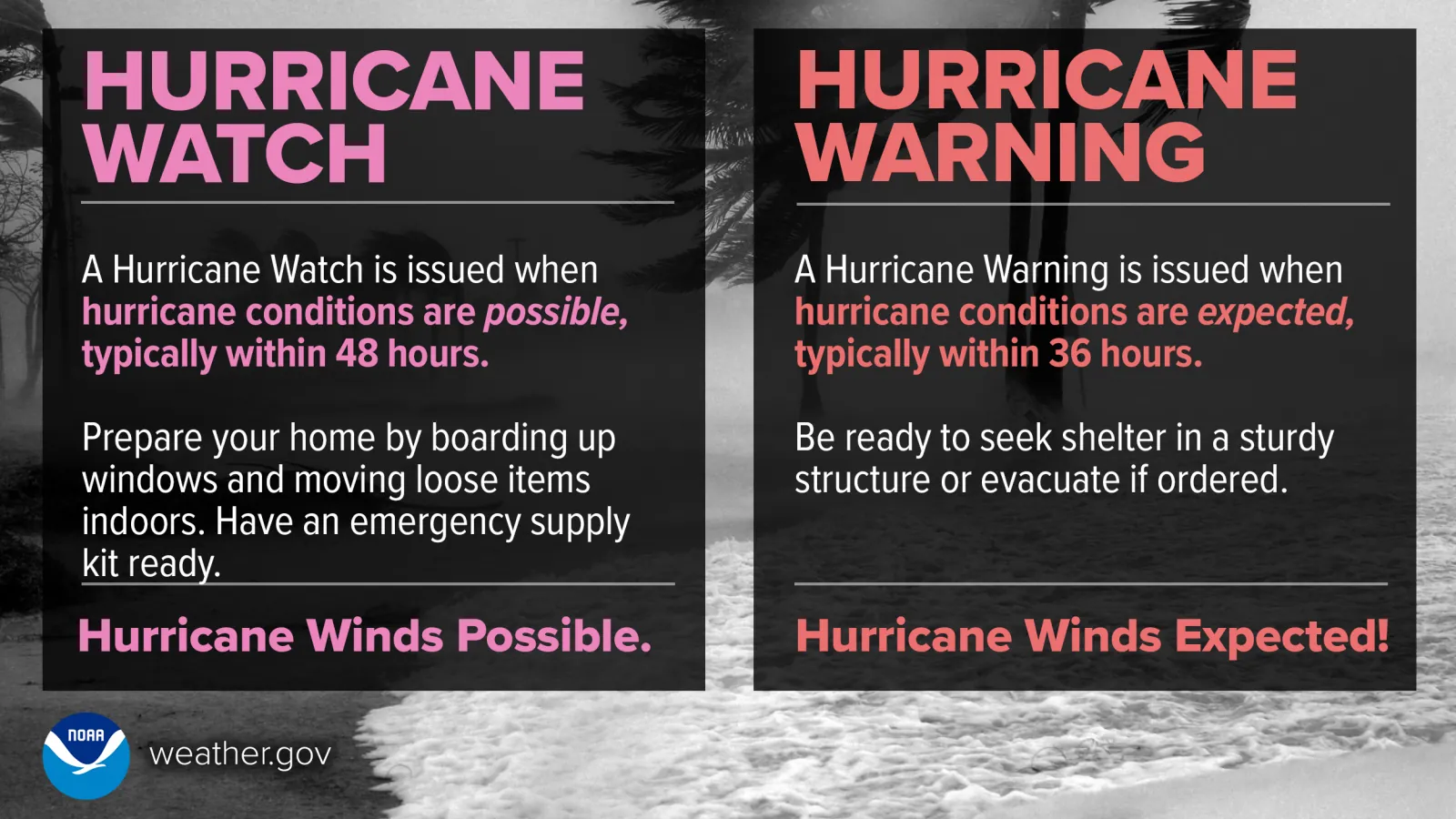
This countdown is a practical synthesis, not an official National Weather Service procedure. The official anchors are important: a hurricane watch is issued when tropical-storm-force winds are possible within 48 hours, and a hurricane warning when those winds are expected within 36 hours. Advisories are issued at least every six hours, and every three hours once watches or warnings are in effect. [1]
In Guam, the Northern Mariana Islands, Micronesia, and other western-Pacific locations, the same tropical cyclone may be called a typhoon rather than a hurricane. The preparation problem is the same; the regional term changes. NOAA describes hurricanes and typhoons as basin-specific names for the same type of storm. [2]
T-72 Hours: Make the Calls That Can Close
Start with the two actions that may become unavailable before the storm arrives: confirm access to local special-needs assistance and try to refill time-sensitive prescriptions. Do them before organizing drawers or adding items to a kit.
- Call the county emergency management office and ask whether the older adult is correctly listed for a special-needs shelter, transportation, welfare check, or other local assistance. Ask what information must be updated and when applications stop.
- Call the electric utility to confirm any medical-baseline or life-support registration and ask what documentation the utility requires. A county registry does not automatically mean the utility has the same information.
- Call the pharmacy and prescriber about early refills for maintenance medication, insulin, oxygen-related supplies, and other treatments that cannot be interrupted. Ask what can be filled today, what requires prescriber approval, and what happens if the prescriber cannot be reached.
- Write down the name of every person who answers, the time of the call, the case or confirmation number, and the next action. If local lines are busy, try the county website, the utility's medical program, or 211.
The 72-hour cutoff is not universal. For example, Nassau County, Florida, states that new special-needs shelter applications stop being accepted 72 hours before expected tropical-storm-force winds; existing registrants also need periodic updates. Other counties may use different names, deadlines, or eligibility rules. Verify the actual cutoff with the reader's county emergency management office and utility rather than assuming a neighboring county's process applies. [4]
Refill authority is also state-specific. Florida offers a useful example, not a national rule: during the state of emergency for Hurricane Milton, the Florida Board of Pharmacy described a 30-day supply when the prescriber could not be reached, a one-time 72-hour emergency refill, and insulin emergency refills up to three nonconsecutive times per year. Schedule II medications were excluded. [5]
Confirm the rule for the current storm through the state board of pharmacy, prescriber, pharmacy, county emergency management office, or 211. A phone call that produces a confirmed refill is more useful than a general assurance that medication will probably be available.
Then make the stay-or-go decision using actual inputs: the evacuation order, the older adult's medical needs, transportation, the home's flood and wind exposure, the availability of a safe destination, and whether a caregiver can remain reachable. Use the stay-or-go decision guide for seniors to work through those factors while there is still daylight and transportation capacity.
Assign one person to medication and medical information, one to transportation or shelter contact, and one to checking in with the older adult. If one adult child is coordinating from work, put the assignments and phone numbers in a shared message rather than leaving them in separate conversations.
T-48 Hours: Turn the Plan Into a Usable Room
At the 48-hour point, the household should be moving from decisions to placement. A hurricane watch may now be in effect, and the next official update can change the travel or shelter window. Keep checking official advisories rather than relying on the storm's distance alone. [1]
- Test every backup-power arrangement for a power-dependent device now. Confirm that the concentrator, refrigerator, communication device, or other essential equipment can be connected as planned. Do not wait for the outage to discover that a cord, adapter, battery, or outlet is missing.
- Place the walker, cane, wheelchair, glasses, hearing aids, shoes, phone, charger, and emergency contacts where the older adult can reach them without crossing a dark or crowded room.
- Stage medications in their original labeled containers and keep the medication list with allergy information, prescriber details, pharmacy information, and insurance details.
- Decide who will physically accompany the older adult if evacuation becomes necessary, who will drive, and who will stay in contact if roads or phone service become unreliable.
- Use the existing senior emergency-kit checklist for supply gaps. The American Red Cross recommends older adults maintain a 30-day medication baseline and plan for assistive devices and power-dependent equipment, but the countdown's job here is to confirm that those items are accessible and usable. [3]
Do a slow room-by-room pass with the older adult, not around them. Ask which route they normally use to reach the bathroom, chair, bed, and exit. Move loose rugs, cords, baskets, small tables, and anything that narrows that route. The detailed room-by-room severe-storm checklist can handle the full hazard pass; here, record only the changes that must be completed before the house is closed up.
If the household may lose power, identify the safest room for a prolonged stay and check that it has lighting, communication, medication access, and enough clear floor space for the mobility aid. Keep the power-dependent equipment plan specific to the device. Runtime estimates and outage restoration information belong in the power-outage safety guide for older adults.
T-24 Hours: Reduce Movement and Prepare the Safe Room
By T-24 hours, the task changes. Finish outside arrangements, close the evacuation loop, and reduce the number of reasons anyone needs to walk through the house. If a warning has been issued, follow the official instructions and use the warning-phase fall-prevention steps for seniors rather than starting another general preparation project.
- Set up the safe room with the mobility aid, shoes, medications, water, phone, charger, glasses, hearing aids, flashlight, and a way to communicate for help.
- Clear the path to the safe room, bathroom, and exit. Secure or remove anything that could slide, tip, spill, or become a trip hazard.
- Charge phones and essential devices, and place backup lights where they can be reached without searching in the dark.
- Tell the older adult the plan in plain terms: where to go, who is responsible for them, when to call, and which items must stay within reach. Preserve their role in the decision wherever safety allows.
- Complete evacuation before conditions deteriorate if officials direct the household to leave. Do not make the older adult carry bags, step over thresholds repeatedly, or wait until the last possible departure window.
During the Storm: Stay Put and Stay Reachable
Move to a small interior room, closet, or hallway on the lowest practical level, away from windows, and follow local evacuation or shelter instructions. Keep the older adult's mobility aid and communication device within reach. The National Weather Service warns that a calm period may be the eye passing over; dangerous winds can return from the opposite direction. [6]
Avoid unnecessary trips for food, chargers, medication, or equipment. If someone must move, use the clearest route, turn on available lighting, wear shoes, and have the assigned caregiver accompany the older adult. Keep monitoring official alerts, especially if the household is near flooding, storm surge, or an evacuation zone.
Printable 72-Hour Master Checklist
- T-72h: Call county emergency management; confirm special-needs registration, transportation options, shelter requirements, and the application cutoff.
- T-72h: Call the utility; confirm medical-baseline or life-support registration and required documents.
- T-72h: Call the pharmacy and prescriber; request emergency refills and record what was approved, denied, or still pending.
- T-72h: Make the stay-or-go decision and assign transportation, medication, communication, and check-in responsibilities.
- T-48h: Test backup power for every essential medical or communication device.
- T-48h: Stage the walker, cane, wheelchair, shoes, glasses, hearing aids, medications, contacts, and chargers.
- T-48h: Clear the routes to the bathroom, bed, safe room, and exit; secure hazards identified during the room pass.
- T-24h: Prepare the safe room and place all essential items within reach.
- T-24h: Charge devices, reduce unnecessary movement, and complete evacuation if officials direct the household to leave.
- During warning: Stay in the interior safe location, away from windows; keep mobility and communication equipment close; do not leave during a temporary calm without confirmation that conditions are safe.
Tape the checklist to the refrigerator, send it to a sibling, or read it aloud over the phone. For state-specific deadlines, registry rules, utility programs, and refill authority, verify locally through the county emergency management office, utility, state board of pharmacy, pharmacy, prescriber, or 211. After the storm, use the water-safety guidance for protecting older adults from contaminated drinking water before treating tap water as safe.
References
- Hurricane and Tropical Storm Watches, Warnings, Advisories and Outlooks — National Weather Service
- What is the difference between a hurricane and a typhoon? — NOAA Ocean Service
- Older Adults Emergency Preparedness — American Red Cross
- Special Needs Shelters — Nassau County Health Department
- Hurricane Milton Early Prescription Refills Permitted Under State of Emergency — Florida Board of Pharmacy
- Actions to Take When a Tropical Storm or Hurricane Threatens — National Weather Service
Related reading
Noticed something outdated or inaccurate on this page? Flag a correction. We review every report against CDC, NIA, and AARP HomeFit guidance before updating a page.
Part of the Fall Prevention section.