
STEADI: Intervene
Protecting Elderly Parents From Contaminated Drinking Water
When a parent's tap water may be contaminated — a boil-water advisory, flood or well damage, or a change in taste or color — caregivers need both an immediate response and a way to prevent the next incident. This guide pairs timed act-now steps, including when to call a clinician, with measurable plan-ahead standards for annual water quality reports, state-certified well testing, and NSF-certified filters.
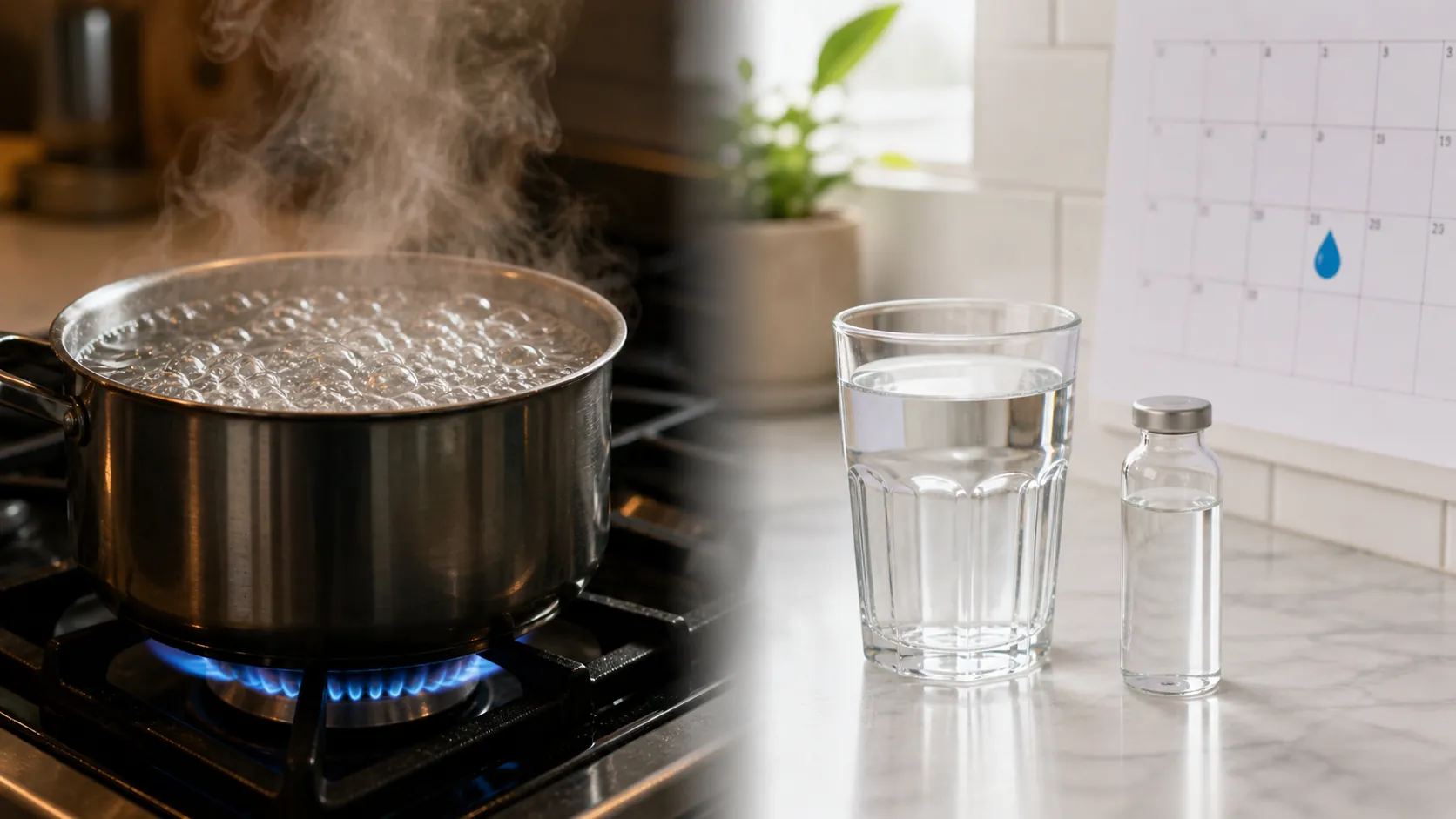
If your parent’s drinking water may be unsafe today, the decision is not whether the water “seems fine.” It is whether anyone has made it safe enough for an older adult to drink, cook with, brush teeth with, and take medications with. The CDC says anyone can get sick from unsafe drinking water, but adults 65 and older are more likely to get sick from it; that is enough reason for an adult child or other caregiver to step in instead of waiting for a parent to monitor the situation alone. [1]
Use two paths. The first is for today: a boil-water advisory, flooding, a damaged well, a strange color or odor, or illness after drinking the water. The second is for the month when nothing dramatic is happening: identify the water source, read the annual report or test the well, match any filter to the actual contaminant concern, and put replacement dates where someone will see them.
| If the water may be unsafe today | If there is no active emergency |
|---|---|
| Switch to bottled water or boil water at a full rolling boil for at least 1 minute, then store it in a clean, covered container for no more than 72 hours. [2] | Find out whether the home is on a public water system or a private well. |
| Call the water utility, local health department, or EPA Safe Drinking Water Hotline at 800-426-4791 if the instructions are unclear. [1] | For a public system, get the annual Consumer Confidence Report. For a private well, schedule state-certified lab testing. |
| Treat diarrhea, vomiting, dehydration, confusion, or unusual weakness as a clinician call, not a filter-shopping problem. | Choose any filter by NSF/ANSI standard and contaminant claim, not by taste claims or brand promises. |
When the water may be unsafe today
A boil-water advisory, a flood around a well, a water-main break, sudden cloudiness, discoloration, sediment, a chemical smell, or a parent saying the water “tastes different” should all move the household into a temporary safe-water routine. The goal is not to diagnose the contaminant from the kitchen sink. The goal is to keep untreated tap water out of the parent’s mouth until the right authority or lab says the water is safe again.
If you are managing this by phone, be concrete. Ask your parent to stop drinking tap water now, set aside a visible supply of bottled or boiled water, and avoid using tap water for coffee, tea, powdered drink mixes, ice, rinsing dentures, brushing teeth, and washing foods that will be eaten raw. If a neighbor, aide, or family member can enter the home, ask that person to remove ice from the freezer, label the safe water, and place it on the counter where medications are taken.
Boil it correctly, or use bottled water
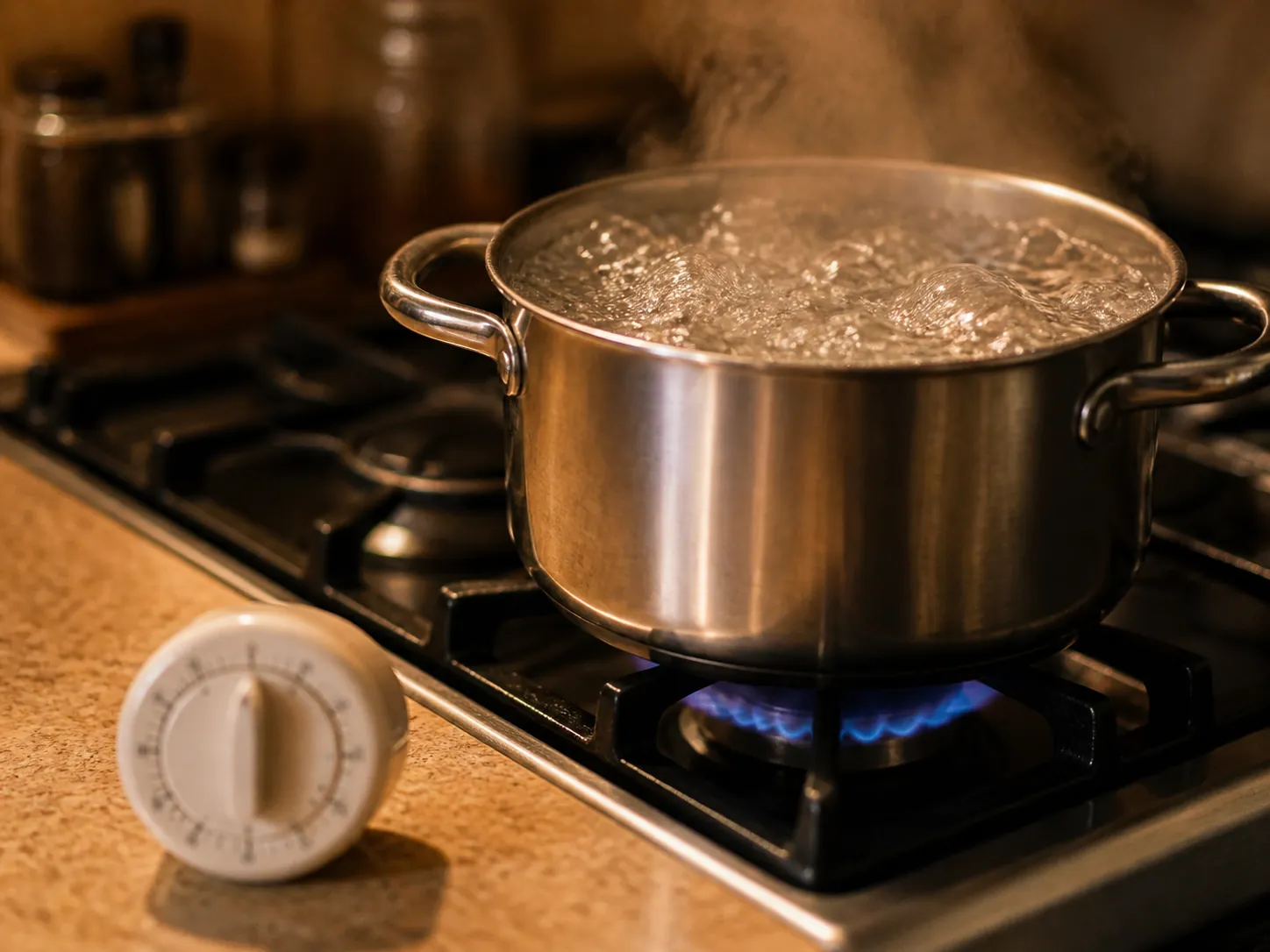
For a boil-water advisory, the usable instruction is precise: bring water to a full rolling boil for at least 1 minute. After boiling, let it cool and store it in a clean, covered container. Do not keep stored boiled water longer than 72 hours. [2]
That timing matters for older households because the weak point is often not the first pot. It is the half-filled pitcher left on the counter, the old ice in the freezer, the coffee maker reservoir, or the glass by the bed. If your parent has shaky balance, memory problems, low vision, oxygen tubing near the stove, or no working gas or electricity, bottled water is usually the safer emergency choice than asking them to boil water repeatedly.
Know who gets the next call
For a public water system, the utility or local health department is the place to confirm whether an advisory applies to the address, what uses are restricted, and when the advisory is lifted. If you cannot identify the utility or the instructions conflict, the EPA Safe Drinking Water Hotline is 800-426-4791. [1]
For a private well after flooding, well damage, nearby construction, or a sudden water change, do not treat the well as “probably fine” because it has been fine for years. Stop using it for drinking and cooking until the local health department or a state-certified lab tells you what testing and disinfection steps are needed.
Keep the medical line separate from the plumbing line. If your parent has diarrhea, vomiting, signs of dehydration, new confusion, faintness, or unusual weakness, contact a clinician or urgent care service. This article is general home-safety information, not medical or legal advice, and it cannot tell you whether a symptom is from water, food, medication, heat, or another illness. For the fall-risk side of dehydration and gastrointestinal illness, see Why Salmonella Symptoms in Seniors Become a Fall Risk and the related outbreak response guide, What to Do in the Salmonella Outbreak if Your Parent Is 65+.
After non-use, flush the fixtures before returning to normal
If the home has been vacant or certain taps have not been used for a week or more, the CDC recommends fully opening the cold water taps and showerheads and flushing them for 2 minutes, then running hot water until it feels hot. [3] That is a useful step after a hospital stay, a long visit with family, a snowbird season, or any period when water sat in the home’s plumbing.
Do this flushing carefully. A parent with poor balance should not stand over a shower drain waiting for water to run, and no one should inhale heavy mist from a showerhead while trying to “clear the line.” Put another adult in charge of the flush if the parent is frail, short of breath, or unsteady.
Find out what kind of water system your parent has
The plan-ahead work starts with one plain question: public water system or private well? Many families do not know, especially when a parent has lived in the home for decades and the bills are on autopay. Look for a water bill, ask the town or county, check the property records, or call the landlord or homeowners association. Write the answer down with the utility name, account number, emergency number, and after-hours number.
This is the same kind of practical aging-in-place record as a breaker-panel label or medication list. It saves time when the parent calls at 8 p.m. to say the faucet is brown, or when a daughter three states away sees a boil-water notice online and cannot tell whether it includes the parent’s street.
For public water, get the annual report before there is a scare
Community water systems issue an annual Consumer Confidence Report, and the report is due by July 1 each year. It explains where the water comes from, what regulated contaminants were detected, whether there were violations, and what actions customers should take. [4][5]
Do not wait for your parent to find this mailing or email. Download the current report yourself, save it as a PDF, and skim for three things: the water source, any listed violations or action steps, and contaminants that matter for the parent’s home. If the report mentions lead, disinfection byproducts, nitrates, arsenic, microbial contaminants, or any special notice, call the utility or local health department until you understand whether the parent needs a home-specific action.
Lead deserves special caution because it often comes from service lines or household plumbing, not because the water has a warning taste. Regulations and local service-line requirements can change, so use the current EPA Lead and Copper Rule information and the local Consumer Confidence Report rather than relying on an old family note or a decades-old plumbing memory. [6]
For a private well, testing is the safety system
Private wells need a different level of caregiver ownership. EPA estimates that more than 23 million U.S. households, serving more than 43 million people, rely on private wells. Those wells are not regulated under the Safe Drinking Water Act, and EPA cites a USGS study of 2,100 private wells in which about 1 in 5 had at least one contaminant above a human-health benchmark. [7]
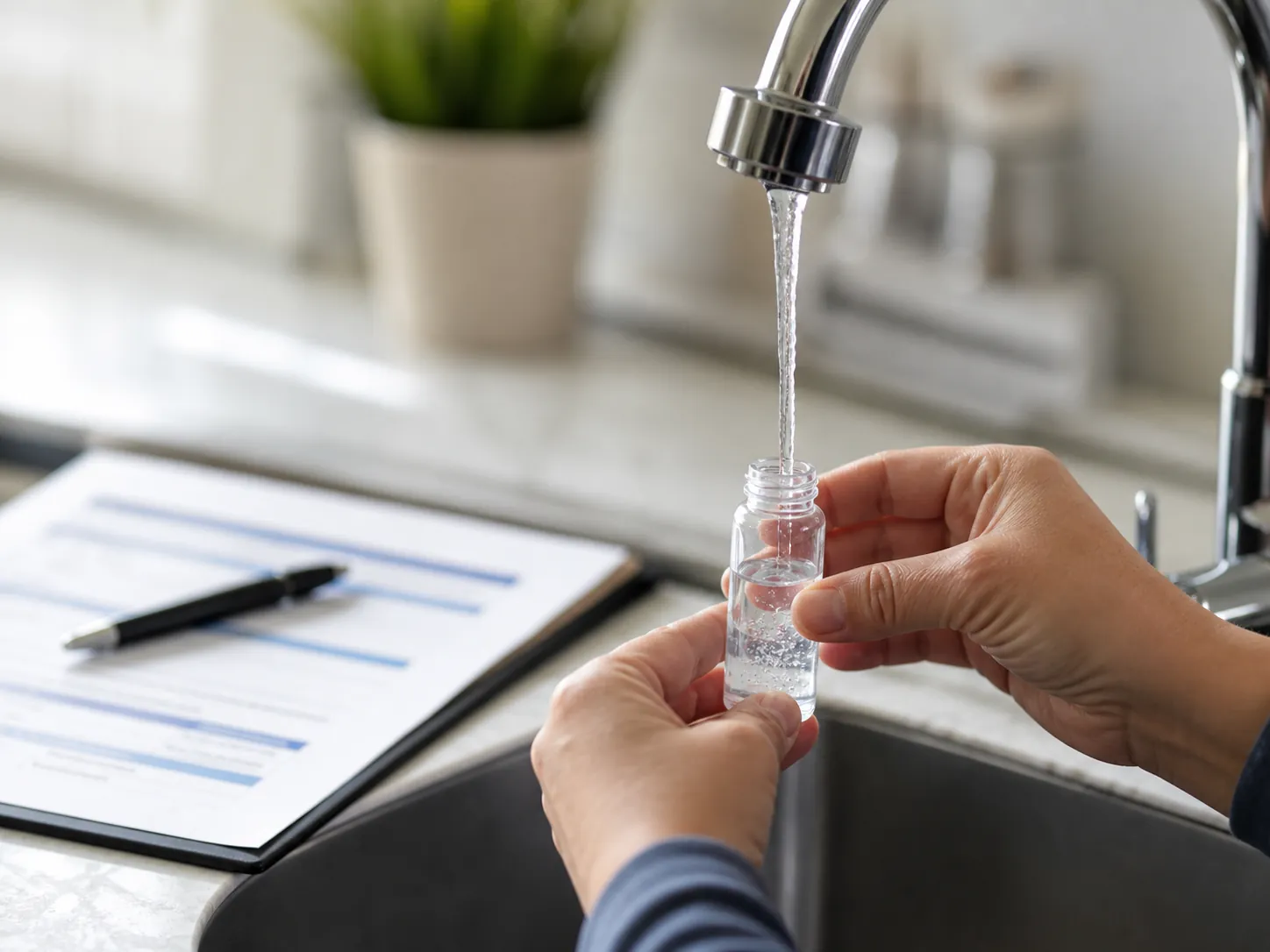
That does not mean every well is unsafe. It means no one should accept “we’ve always used this well” as a test result. The CDC recommends testing private wells every year through a state-certified laboratory for total coliform bacteria, nitrates, total dissolved solids, and pH. [8]
Put the lab, the sample instructions, and the due month on a calendar you control. If there is flooding, repair work, a new nearby septic problem, a change in color or smell, or an illness cluster in the home, call the local health department or certified lab before collecting a sample; some tests require specific bottles, timing, or handling. A rinsed-out jar from the kitchen cabinet is not a lab sample.
For homes in flood-prone areas, keep water testing in the same planning file as outage supplies and evacuation contacts. The article What Goes in a Senior Emergency Kit for Outages and Flooding is a useful companion because safe water, lighting, medications, and mobility aids usually fail together during a storm.
Choose filters after you know the contaminant concern
A filter is not a general promise. It is a device tested for particular reductions under particular standards, and it only helps if it is installed, used, and replaced correctly. Many common pitcher and refrigerator filters are mainly taste-and-odor carbon filters. The CDC also notes that most home water filters do not remove germs. [9]
For health-related contaminants, look for the NSF/ANSI standard and the specific contaminant claim. CDC guidance points caregivers toward NSF/ANSI 53 or NSF/ANSI 58 certification for cyst reduction, or an absolute 1-micron filter for that purpose. NSF’s consumer guidance organizes standards by treatment type and contaminant reduction claims, which is the level of detail caregivers need before buying anything. [9][10]
For lead, do not use taste as a guide. NRDC states that there is no safe level of lead exposure and recommends filters certified to NSF/ANSI 53 for lead reduction, along with NSF/ANSI 42 for particulate reduction. Treat that as a contaminant-specific filter choice, not as proof that the same device solves bacteria, nitrates, arsenic, or every other concern. [11]
The replacement date is part of the filter. If your parent cannot reliably change cartridges, reset refrigerator alerts, or recognize a bypassed filter, the caregiver plan has to include that task. A neglected filter can become a false reassurance: everyone thinks the water is being treated, while the device is past its service life or never certified for the contaminant in question.
Set the water heater with both germs and scalds in mind
Water-heater temperature is one of the few places where home-safety advice can feel as if it is pulling in two directions. Lower temperatures reduce scald danger. Legionella prevention guidance points higher: the CDC says to set the water heater at 130°F to 140°F to help kill germs, while noting the scald risk, and the New York State Department of Health recommends thermostatic mixing valves in homes with older adults or others at higher scald risk. [3][12]
The practical resolution is not to let a frail parent guess at the dial. Have a qualified plumber or appropriate building professional evaluate the water heater, install or check anti-scald protection such as thermostatic mixing valves, and confirm safe delivery temperatures at sinks and showers. If your family has already used a 120°F target from a fire or burn-prevention checklist, do not quietly change the heater without understanding the scald controls. Reconcile the two goals deliberately. The related Room-by-Room Fire Emergency Checklist for Seniors is useful for the burn-prevention side of that conversation.
Build a caregiver-owned water file
The durable protection is not a lecture to your parent about being careful. It is a small, dated file that someone other than the parent can use under pressure. Keep it in a shared folder, on paper in the home, or both.
| Item to keep | Why it matters |
|---|---|
| Water source: public system name or private well | Determines whether you need a Consumer Confidence Report, a utility call, or private lab testing. |
| Utility, local health department, certified lab, and EPA Safe Drinking Water Hotline | Prevents a long-distance caregiver from searching during an advisory. |
| Latest Consumer Confidence Report or latest well-test result | Shows what has actually been checked, and when. |
| Filter standard, contaminant claim, model, install date, and replacement date | Keeps the family from treating a taste filter as a health filter. |
| Water-heater setting and anti-scald protection notes | Makes the Legionella-versus-scald decision visible instead of accidental. |
| Clinician-contact threshold for vomiting, diarrhea, dehydration, confusion, or unusual weakness | Moves illness out of household troubleshooting and into care. |
Add calendar reminders that match the system: download the Consumer Confidence Report after July 1 for public water, schedule annual well testing for private water, replace filters before the due date, and review the emergency water supply before storm or outage season. If your parent has heart failure, kidney disease, or another condition with fluid limits, pair water-safety planning with clinician guidance; during heat or illness, “drink more” may not be simple. The guides How to Protect Older Adults From Heat Wave Dangers and How Much to Drink in Heat When Seniors Have Fluid Limits cover that separate problem.
Cloudy water on a parent’s counter is not just a plumbing nuisance. It can become dehydration, weakness, missed medications, a fall, an urgent-care trip, or a family scramble that should have been preventable. Taste, smell, and a parent’s vigilance are not a safety plan. A caregiver-owned routine is.
References
- About Drinking Water, CDC
- Safe-Water Guidelines, UPMC Hillman Cancer Center
- Preventing Waterborne Germs at Home, CDC
- How to Read Drinking Water Quality Reports, CDC
- Understanding Your Annual Water Quality Report, EPA
- Lead and Copper Rule, EPA
- Private Drinking Water Wells, EPA
- Guidelines for Testing Well Water, CDC
- About Choosing Home Water Filters, CDC
- Standards for Water Treatment Systems, NSF
- How to Protect Yourself from Lead-Contaminated Water, NRDC
- Protect Yourself from Legionnaires’ Disease at Home, New York State Department of Health
Related reading
Noticed something outdated or inaccurate on this page? Flag a correction. We review every report against CDC, NIA, and AARP HomeFit guidance before updating a page.
Part of the Fall Prevention section.