
STEADI: assess
Which Medications Raise Heat Risk in Older Adults?
Identify which prescription and over-the-counter medications can raise heat risk in older adults, then use a medication-review checklist, heat-safe storage rules, and a power-outage plan to prepare before a heat wave. The guidance emphasizes reviewing every Rx and OTC with a pharmacist or doctor — never stopping or adjusting a dose on your own.

The most important heat-safety item on the kitchen counter may not be the water glass. It may be the amber bottle labeled “take once daily,” the blood-pressure combination that includes a diuretic, the sleep aid used only some nights, or the allergy tablet bought over the counter in spring and still sitting in the cabinet in August.
Heat can make some routine medications harder on an older body. The answer is not to stop, skip, split, or “hold” a dose because the forecast looks bad. The safe answer is a medication review with a pharmacist or prescribing clinician before the next serious heat day, especially if there are water pills, blood-pressure medicines, antidepressants, antipsychotics, antihistamines, decongestants, stimulants, insulin, inhalers, or emergency injectors in the mix.
This is the medication layer underneath a broader heat wave safety checklist for elderly parents. It is not a replacement for emergency judgment, and it is not personal medical advice. It is a practical way to walk into the pharmacy or clinician’s office with the full picture instead of one prescription at a time.
Why the pill list belongs in a heat plan
CDC clinical guidance names several medication groups that can increase heat risk, including diuretics, anticholinergics, and some psychotropic medicines, and it specifically flags combinations such as an ACE inhibitor or ARB taken with a diuretic as a concern for heat-related harm.[1] AARP’s consumer-facing list overlaps with CDC’s but is broader in everyday terms: it includes heart medications such as diuretics, beta blockers, ACE inhibitors, ARBs, and antiplatelets; antidepressants; antipsychotics; central nervous system stimulants; anticholinergics; antihistamines; decongestants; and dopaminergic medications.[2]
Those two lists do not line up neatly because they are doing different jobs. CDC’s clinical guidance is organized around mechanisms and prescribing risk. AARP’s list is closer to what a family member sees when sorting bottles, blister packs, and drugstore boxes on a counter. Both are useful. The point is not to memorize a perfect list; it is to recognize when a medication deserves a hot-weather question before the heat arrives.
The body’s heat defenses are ordinary and easy to take for granted: thirst, sweating, blood flow to the skin, alertness, and fluid balance. Medications can narrow one or more of those margins. An older adult may not feel thirsty soon enough, may not sweat effectively, may have less room for dehydration, may become dizzy or confused faster, or may depend on a medication or device that itself can be damaged by heat.
The medication-risk map: which bottles deserve special attention
Use this map as a review prompt, not as a do-it-yourself stop list. If a medicine appears here, the next step is to ask how to handle heat days safely for that person’s diagnosis, kidney function, fluid instructions, blood pressure pattern, and other medications.
| Medication or product type | Why it matters in heat | What to ask during review |
|---|---|---|
| Diuretics, often called “water pills” | CDC flags diuretics as a medication class that can increase heat risk; AARP also lists them among heart medications that can make heat harder to handle.[1][2] | Ask how much to drink on hot days, what symptoms should trigger a call, and whether any lab or blood-pressure monitoring is needed. |
| ACE inhibitors and ARBs | AARP includes ACE inhibitors and ARBs in its heat-risk medication list; CDC particularly flags ACE/ARB-plus-diuretic combinations.[1][2] | Ask whether the combination changes the person’s hot-weather hydration instructions or monitoring plan. |
| Beta blockers | AARP lists beta blockers among heart medications that can make heat harder to handle.[2] | Ask what heart-rate, blood-pressure, dizziness, or fatigue changes should be reported during heat. |
| Antiplatelet medications | AARP includes antiplatelets in its list of heart-related medications that can make heat harder to handle.[2] | Ask whether heat, dehydration, falls, or bleeding risk changes any monitoring instructions. |
| Antipsychotics and other psychotropic medicines | CDC names some psychotropics as heat-risk medications, and AARP lists antipsychotics separately.[1][2] | Ask about confusion, sedation, sweating, and when behavior or alertness changes should be treated as urgent. |
| SSRIs, SNRIs, TCAs, and other antidepressants | AARP lists antidepressants as medications that can make heat harder to handle; TCAs also often overlap with anticholinergic effects.[2] | Ask which side effects could mimic or worsen heat illness, especially sleepiness, dizziness, sweating changes, or confusion. |
| Anticholinergics | CDC names anticholinergics as a heat-risk class, and AARP lists them among medications that can make heat harder to handle.[1][2] | Ask whether the person is taking more than one medicine with anticholinergic effects, including bladder, nausea, sleep, or allergy products. |
| Antihistamines | AARP lists antihistamines, including common over-the-counter allergy medicines, as a heat-risk medication type.[2] | Ask whether “as needed” allergy or sleep products should be avoided, substituted, or timed differently in hot weather. |
| Decongestants | AARP lists decongestants among medications that can make heat harder to handle.[2] | Ask whether the product is safe with the person’s blood pressure, heart disease, or other prescriptions. |
| Central nervous system stimulants | AARP includes CNS stimulants in its heat-risk list.[2] | Ask what appetite, thirst, sleep, heart-rate, or agitation changes should be watched during heat. |
| Dopaminergic medications | AARP lists dopaminergics among medication types that can make heat harder to handle.[2] | Ask about dizziness, movement changes, confusion, and whether timing or monitoring needs special attention in heat. |
| Inhalers, EpiPens, insulin, and other heat-sensitive products or devices | CDC warns that inhalers can burst in hot environments, EpiPens may malfunction, and insulin can become less effective after heat exposure.[3] | Ask exactly where to store them, how to travel with them, what temperature exposure is unsafe, and what to do after a power outage. |
The quiet problem is duplication. A person may not have a bottle labeled “anticholinergic,” but the effect can appear across several categories: an over-the-counter sleep aid, a bladder medicine, a nausea medicine, an older antidepressant, and an allergy tablet. A prescriber seeing one medication may not see the whole stack. A pharmacist reviewing the full prescription and over-the-counter list is often the person best positioned to spot that pileup.
Blood-pressure combinations deserve the same full-list treatment. A diuretic may be a separate bottle, or it may be built into a combination pill. If the instruction from one office was “avoid dehydration” and another instruction was “don’t overdo fluids,” do not try to reconcile that at home with guesswork. Bring both instructions to the review.
What to gather before the review
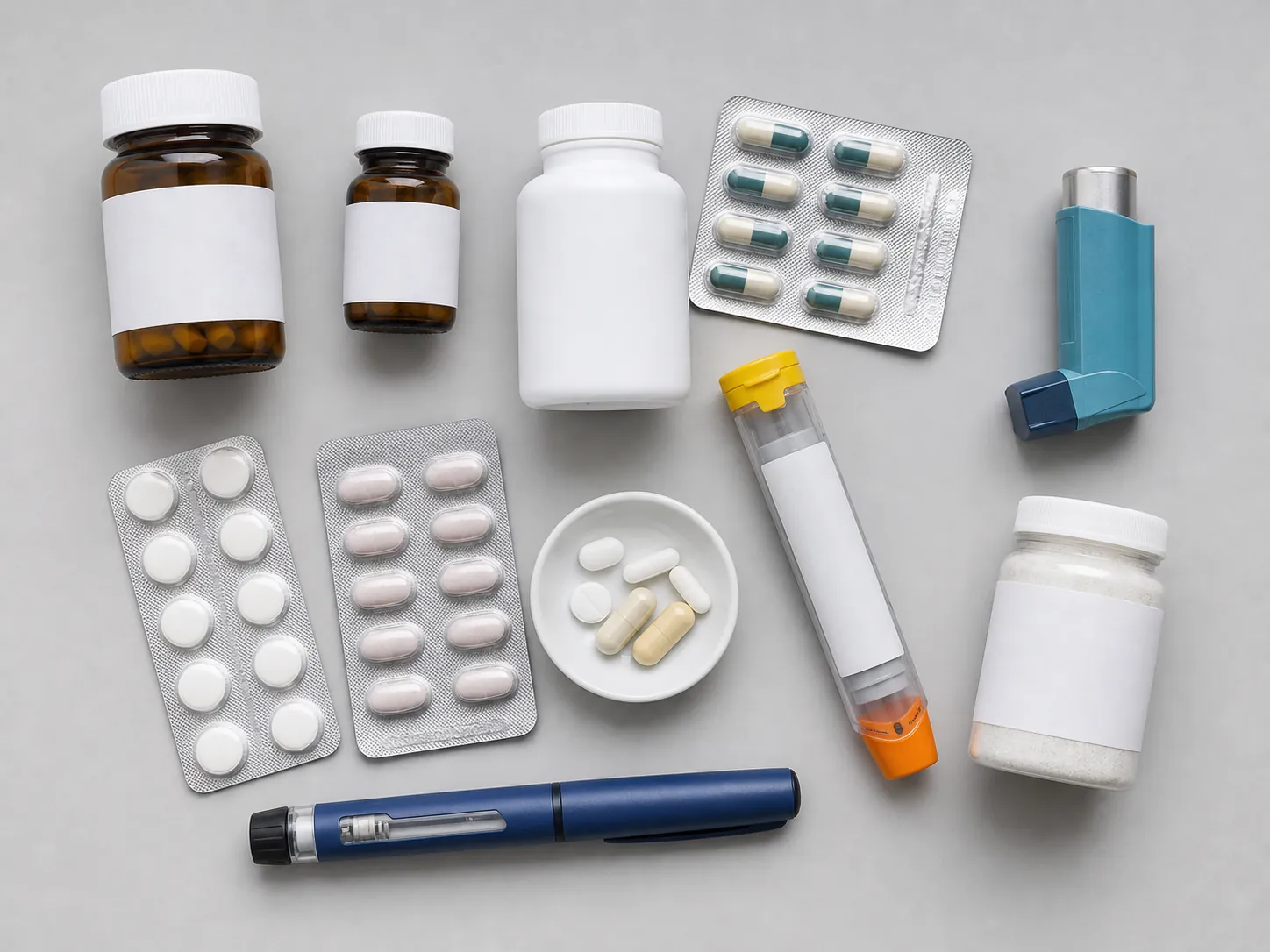
Do not bring only the neat typed medication list if the counter tells a messier truth. For a heat-focused medication review, gather what the person actually uses, including the products that do not feel like “real medicine.”
- Every prescription bottle, blister pack, patch, cream, drop, inhaler, injectable, and emergency device.
- Over-the-counter allergy, cold, sleep, pain, stomach, bladder, and motion-sickness products.
- Vitamins, minerals, herbal products, and supplements.
- Medicines taken “only sometimes,” including antihistamines, decongestants, sleep aids, and old prescriptions that are still in the home.
- The dosing schedule the person really follows, not just the directions on the label.
- Any fluid restriction, kidney or heart-failure instructions, blood-pressure log, recent dizziness, falls, confusion, fainting, or poor appetite during hot weather.
- Where the medicines are stored now: bathroom cabinet, kitchen counter, car, purse, bedside table, refrigerator, weekly organizer, or travel bag.
If you are the older adult managing this yourself, the same rule applies: take the whole set to one pharmacist or one clinician who can look across categories. If an adult child helps, let the older adult’s daily routine lead the conversation. The schedule that looks tidy on paper may not match breakfast, naps, transportation, bathroom access, or the time of day when the apartment becomes hottest.
Questions to ask before the next orange, red, or magenta HeatRisk day
CDC advises older adults to make a medication plan for HeatRisk orange, red, and magenta days, and it specifically says people who are on fluid restriction or who take “water pills” should ask their doctor how much to drink in hot weather.[4] That is the kind of instruction that needs to be written down before the weather alert appears, not argued over during a dizzy spell.
- “Which of these medicines can increase heat sensitivity, dehydration risk, dizziness, confusion, or falls?”
- “Does this person take an ACE inhibitor or ARB with a diuretic, either as separate pills or as a combination product?”
- “Are any over-the-counter allergy, cold, sleep, bladder, or stomach products adding anticholinergic effects?”
- “If the person has a fluid limit, heart failure, kidney disease, swelling, or a diuretic, what exactly is the hot-day drinking plan?”
- “Which symptoms mean we should call the clinician the same day?”
- “Which symptoms mean we should treat this as an emergency rather than waiting for a callback?”
- “Do any medicines, inhalers, injectors, test strips, insulin pens, or refrigerated products need special temperature protection?”
- “What should we do if the refrigerator loses power, the air conditioning fails, or the person has to leave home with the medication bag?”
The hydration question is where generic advice can become unsafe. “Drink more water” may be reasonable for one person and wrong for another who has been told to limit fluids. If that is the issue in your household, use a dedicated fluid-limits heat safety guide alongside the medication review, then ask the prescribing clinician to turn the advice into a person-specific plan.
Storage is part of medication safety, not housekeeping
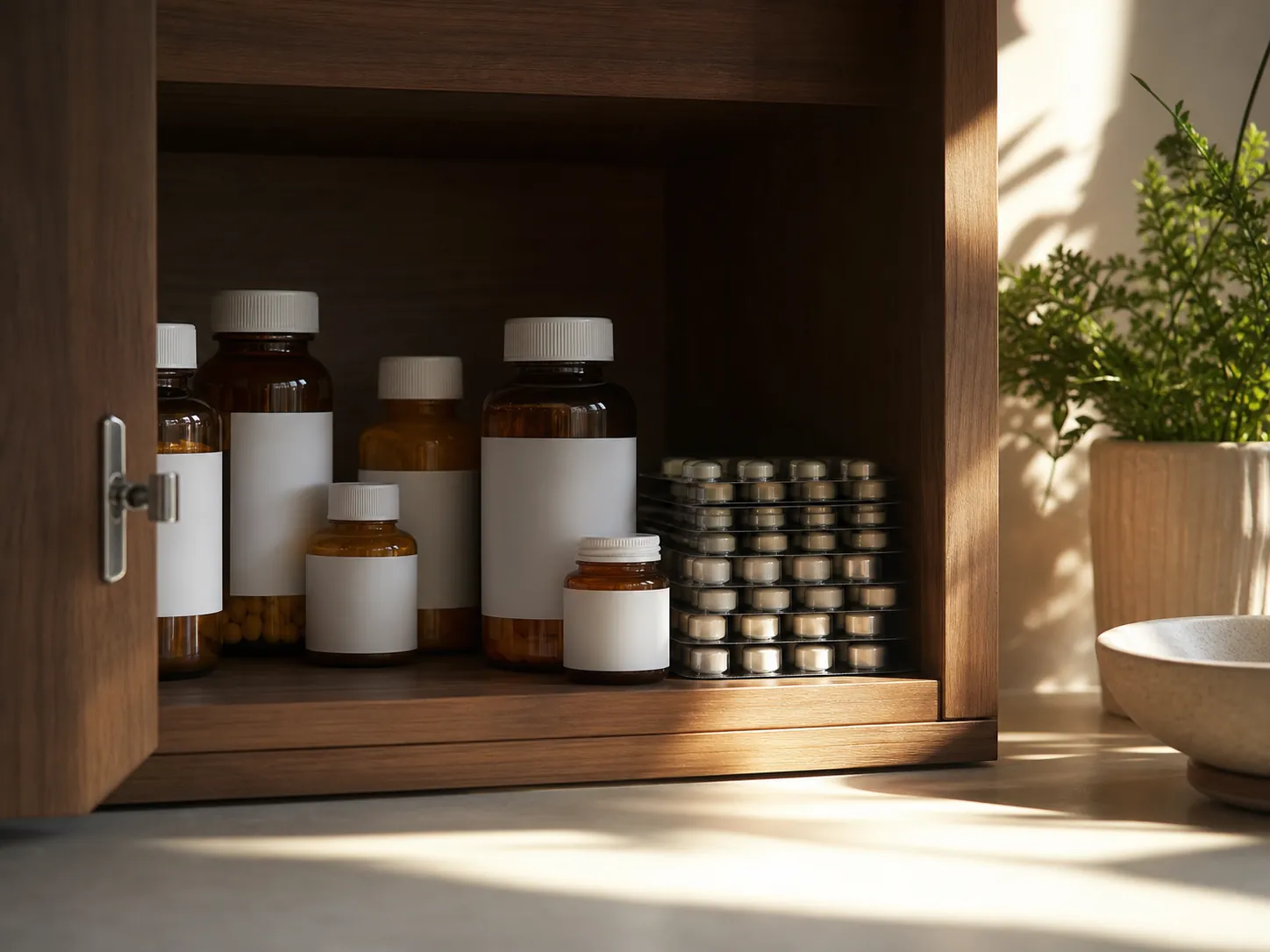
A medicine can be reviewed correctly and still be handled poorly in a heat wave. The sunny kitchen sill, the glove compartment, the bathroom cabinet after a hot shower, and the purse left in a parked car are not harmless storage spots.
Age UK advises storing most medications below 25°C, which is about 77°F, in a cool, dry place out of direct sunlight.[5] In a U.S. home, that usually means using the label and pharmacy instructions first, then choosing a stable, shaded indoor location rather than a hot counter, window ledge, bathroom, garage, mailbox, or vehicle.
- Keep original labels and inserts when possible so storage instructions are not separated from the product.
- Ask the pharmacist which medicines should not be repacked into a weekly organizer because of moisture, light, child-safety, or identification concerns.
- Do not store heat-sensitive products in a car, on a windowsill, beside a stove, or in direct sun while traveling.
- If a product has been exposed to high heat, ask the pharmacist or manufacturer what to do; do not assume it is safe or unsafe based only on appearance.
Devices need the same attention. CDC warns that inhalers can burst in hot environments, EpiPens may malfunction, and insulin can become less effective when exposed to heat.[3] Those are not abstract storage details for someone who depends on a rescue inhaler, emergency epinephrine, or insulin during a power outage or evacuation.
Make the outage plan before the refrigerator goes quiet
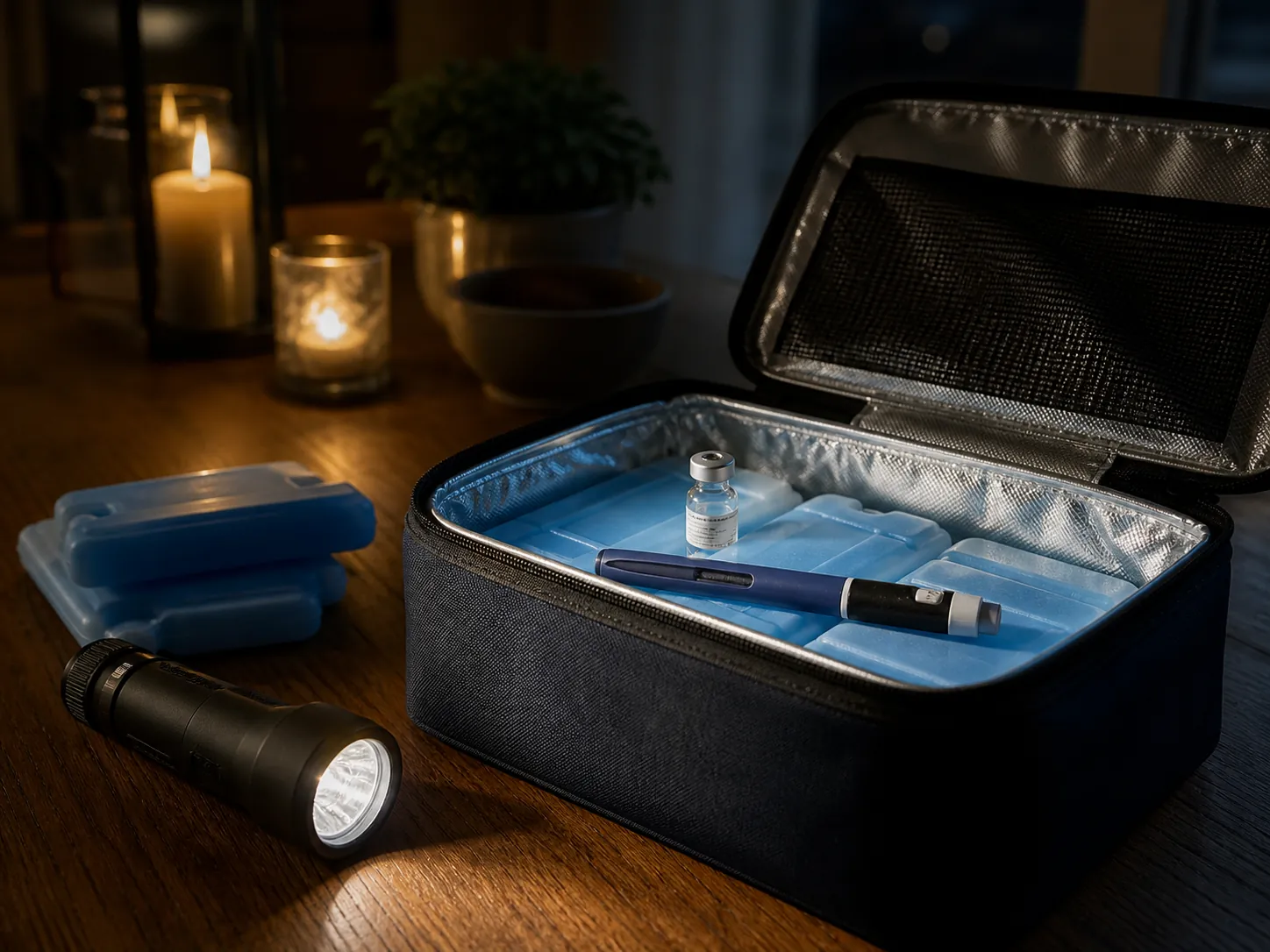
CDC recommends that older adults have a power-outage plan for refrigerated medications and electrically powered medical devices.[4] That plan should be specific enough that someone can follow it at night, in a warm room, without searching through old discharge papers.
| Item to plan | Decision to make before heat |
|---|---|
| Refrigerated medications | Which products must stay refrigerated, what temperature range is required, how long they can be out if allowed, and who to call if the refrigerator loses power. |
| Insulin and injectables | How to transport them safely, whether an insulated bag is appropriate, and what heat exposure requires replacement or pharmacist guidance. |
| Inhalers and emergency auto-injectors | Where they will be kept during travel, appointments, and outages so they are accessible but not overheated. |
| Electrically powered medical devices | What battery backup, charging routine, alternate location, or emergency contact is needed if power fails. |
| Medication list | Where the updated list is kept, who has a copy, and whether it includes OTC products, supplements, allergies, pharmacy phone number, and prescriber names. |
The broader severe-weather supplies still matter, but they should not bury the medication details. If you are building the general kit, use a severe-weather preparedness checklist for seniors and then add the pharmacy-specific answers above. The American Red Cross treats extreme heat as an emergency-preparedness issue, and that framing is useful here: the medication plan is part of the emergency plan, not an errand to postpone.[6]
If outages are common where the older adult lives, pair this with a more detailed power-outage plan for older adults. The medication version should answer one plain question: if the lights and refrigerator go out at 8 p.m., who knows what has to stay cold, what must stay charged, and where the person can safely go?
During heat, use the reviewed plan instead of improvising
Once the review is done, the hot-day routine should be boring on purpose: take medications as prescribed, follow the written fluid instructions, keep products out of heat, use the agreed cooling plan, and watch for the symptoms the clinician said matter for that person. Do not skip a diuretic, double a drink target, stop an antidepressant, or move insulin storage around based on a guess.
This article is not the place for a full heat exhaustion versus heat stroke table. If symptoms are already present, use the site’s heat stroke or heat exhaustion guide for older adults rather than trying to solve an emergency through medication research. If the issue is living alone, add medication awareness to the existing heatwave safety plan for seniors living alone.
What should be ready before the heat arrives
Before the next serious heat stretch, the goal is not a prettier pill organizer. The goal is a reviewed medication list and a plan that another person could follow if the older adult became dizzy, confused, overheated, or stuck in a power outage.
- A current medication list reviewed by a pharmacist or prescribing clinician, including prescriptions, OTC drugs, supplements, inhalers, injectables, emergency devices, and “only sometimes” products.
- Clear hot-weather hydration instructions for that person, especially if there is a fluid limit, kidney or heart condition, swelling, or a diuretic.
- A note identifying which medicines may raise heat sensitivity, dizziness, confusion, dehydration risk, or storage concerns.
- A safe storage location that is cool, dry, shaded, and consistent with the label and pharmacist’s instructions.
- A power-outage plan for refrigerated medications and electrically powered medical devices.
- A short emergency plan that points caregivers to warning signs and when to seek urgent help.
A heat plan that skips medication review and storage planning is incomplete. The bottles on the counter are part of the forecast now. They deserve a careful review before the heat arrives, and any medication change belongs only to the prescribing clinician.
References
- Heat and Medications – Guidance for Clinicians, CDC Heat Health
- 8 Types of Medications That Can Make It Harder to Handle the Heat, AARP
- Protect Yourself From the Dangers of Extreme Heat, CDC Climate and Health
- Heat and Older Adults (Aged 65+), CDC Heat Health
- How to keep cool in hot weather, Age UK
- Extreme Heat Safety, American Red Cross
Related reading
Noticed something outdated or inaccurate on this page? Flag a correction. We review every report against CDC, NIA, and AARP HomeFit guidance before updating a page.
Part of the Fall Prevention section.