
STEADI: Intervene
Cold Weather Safety for Seniors Starts With the Thermostat
An older adult's home kept at 60–65°F can cause hypothermia even when it feels only a little cool — and because aging blunts cold sensation and shivering, the person at risk is often the last to know. Prevention comes down to a thermostat set to at least 68°F and a caregiver check-in plan, with the warning signs that require a 911 call and the safe rewarming steps clearly laid out.
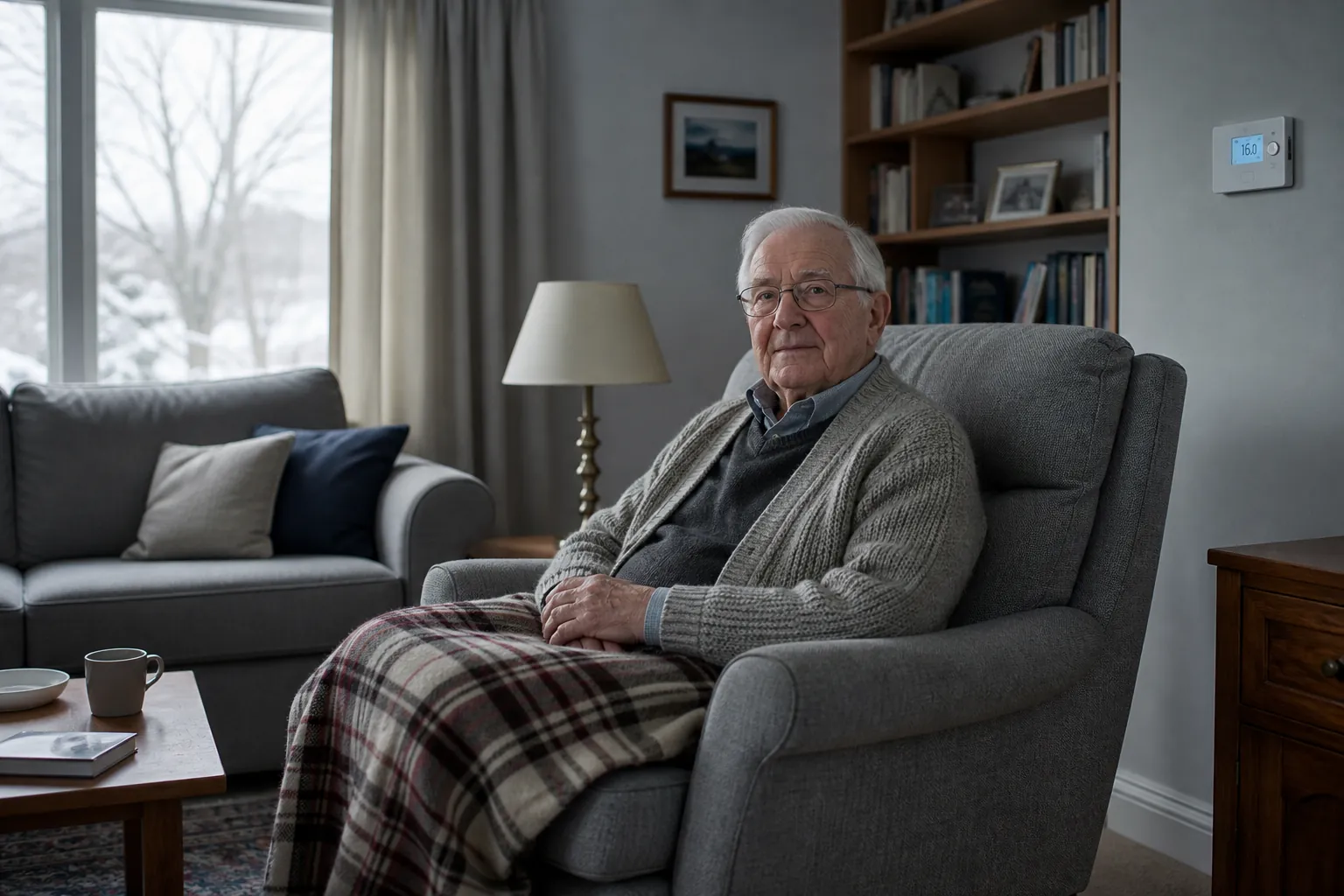
The usual search for cold weather safety tips for elderly parents often lands on coats, boots, ice melt, and storm supplies. Those matter, but they can miss the quieter winter problem inside the house: an older adult sitting calmly in a living room that is only “a little cool.” The National Institute on Aging warns that a home kept around 60–65°F can still cause hypothermia in an older adult, and it recommends setting the heat to at least 68°F.[1]
That is the part worth taking seriously before anyone argues about sweaters. A parent may be dressed warmly, may say they feel fine, and may still be in a room that is too cold for their body to handle safely. The risk is not that every cool room becomes an emergency. The risk is that the warning signs can look ordinary until they are not: sleepiness, slower speech, confusion, pale skin, cold hands and feet.
A cool house is not the same risk for every age
Thermostat guidance is not perfectly uniform. The NIA says to set the heat to at least 68°F, while HealthInAging, from the American Geriatrics Society, advises keeping the home at 65°F or warmer.[1][2] Here, 68°F is the practical prevention target because it gives a margin above the 60–65°F range the NIA specifically identifies as potentially dangerous for older adults.
The reason is not weakness or poor judgment. Mayo Clinic lists older age as a hypothermia risk factor because both temperature regulation and the ability to sense cold can lessen with age.[3] HealthInAging also cautions that shivering is not a reliable warning sign in older adults because they may shiver less or not at all.[2]
That explains the mismatch families notice in winter. The room feels chilly to a visitor, but the person who lives there is not complaining. They may have adapted to the setting, may be trying to keep the bill down, or may simply not be getting a strong enough body signal that the room has crossed into risky territory.
Certain medicines can add another layer of risk. Mayo Clinic notes that some antidepressants, antipsychotics, narcotic pain medicines, and sedatives can alter the body’s ability to regulate temperature.[3] That does not mean a family caregiver should change or question a medication plan on their own. It does mean a low-heat home deserves more attention when those medicines are part of the picture.
Use 68°F as the working number, then verify the room
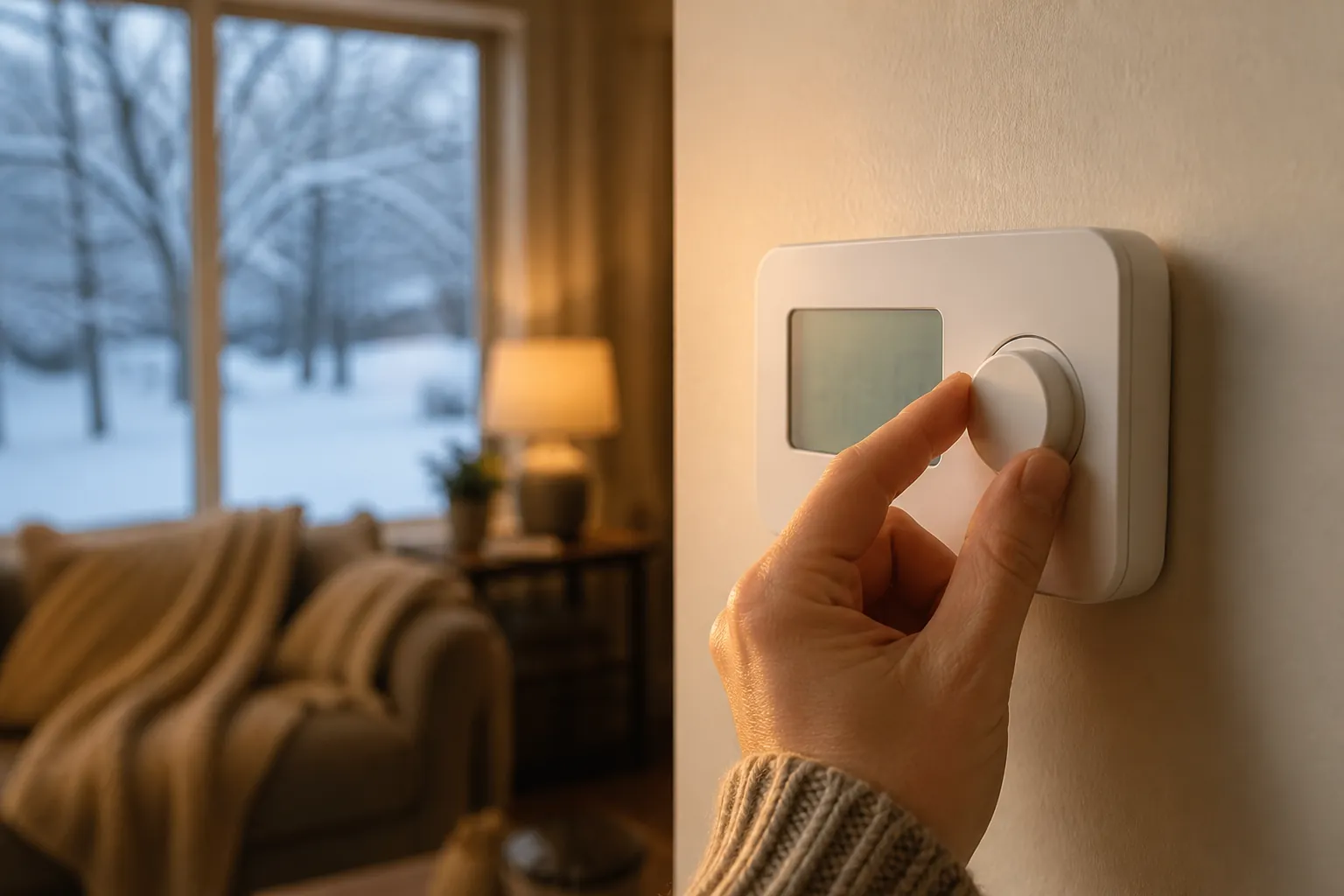
For prevention, the most useful question is not “Are you cold?” It is “What temperature is the room where you are spending the day?” A thermostat set to at least 68°F is the starting point, but the actual living space still needs checking, especially if the older adult spends most of the day in one chair, one bedroom, or one partially heated room.[1]
| What to verify | Why it matters | Who can confirm it |
|---|---|---|
| Thermostat is set to at least 68°F | This follows the NIA prevention recommendation for older adults.[1] | The older adult, a visiting family member, a neighbor, or a home aide |
| The room being used most is actually warm | A hallway thermostat may not tell you how cold the chair, bedroom, or back room feels. | Someone in the home, ideally with a room thermometer |
| The person is alert, speaking normally, and using their hands normally | Hypothermia warning signs can appear as sleepiness, confusion, slower speech, or clumsy movement.[1] | The person on a call, plus someone in person if anything sounds off |
| Heat is not being rationed because of cost | Keeping the heat low to save money can become a medical safety issue, not just a household preference. | A family member or trusted helper who can discuss bills without blame |
A small room thermometer can be more useful than a long conversation. It gives everyone the same fact to work from. “The living room is 63°F” is different from “I’m fine.” It also avoids turning the check-in into a debate about toughness, thrift, or independence.
For long-distance caregivers, make the check-in observable
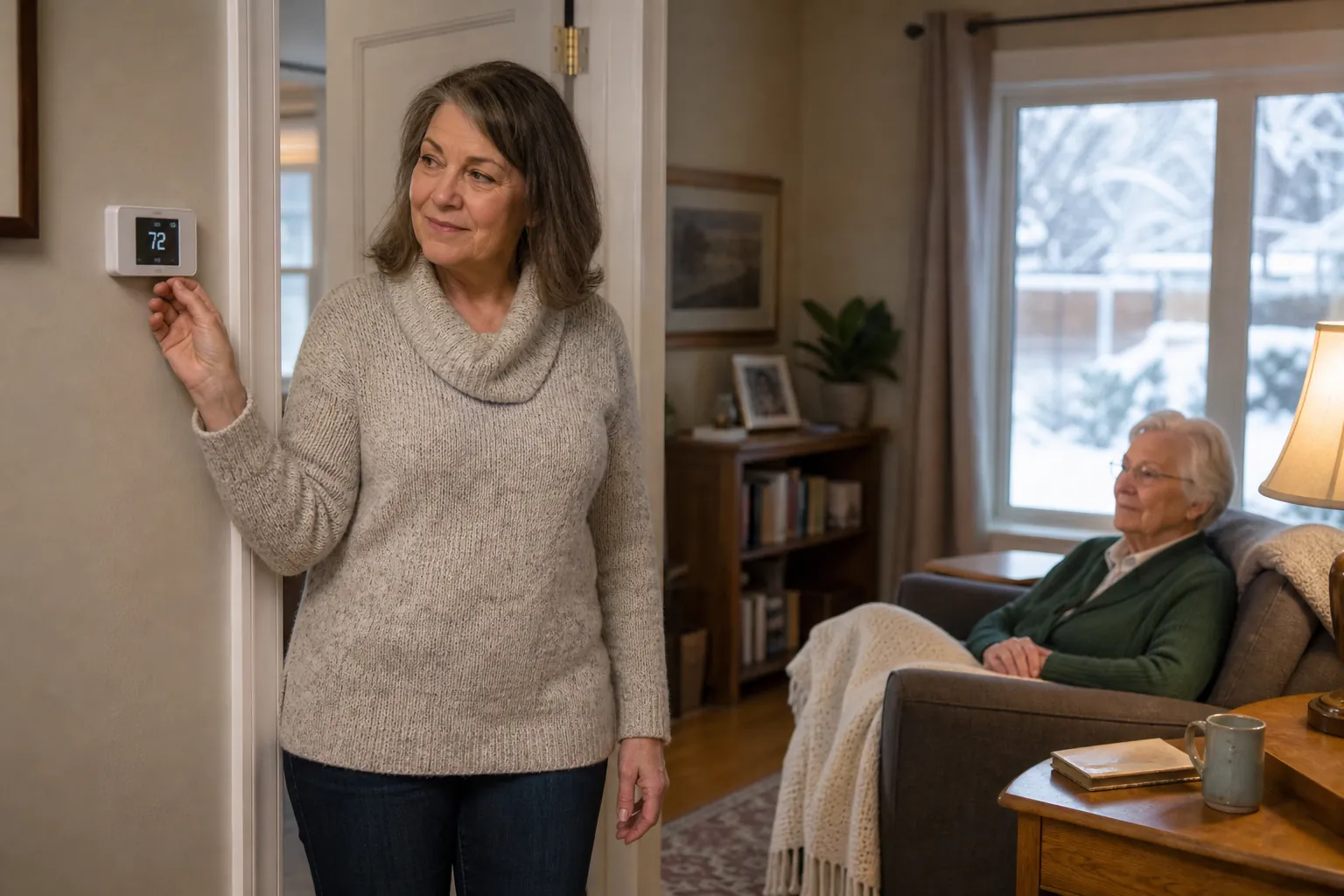
Phone calls help, but winter calls need a few concrete checks. Ask for the thermostat number. Ask where they have been sitting most of the day. Ask whether their hands are working normally: buttoning clothes, holding a mug, using the phone. If their speech is slower than usual or they sound unusually sleepy, do not treat that as just a cozy afternoon.
- Set a regular winter check-in time, especially during cold spells.
- Ask for the number on the thermostat or room thermometer, not only how the room feels.
- Have one nearby person who can enter the home or look through the situation in person if the call sounds wrong.
- Write down the plan before winter: who calls, who visits, who has a key, and when to call 911.
When “cool and tired” becomes suspected hypothermia
This is general safety information, not medical advice. If you suspect hypothermia, treat it as urgent. The CDC says a body temperature below 95°F is a medical emergency.[4] In a real home situation, you may not have a reliable temperature reading, so symptoms and the person’s condition matter.
| Possible earlier warning signs | More urgent warning signs |
|---|---|
| Cold hands and feet; puffy face; pale skin; slower-than-normal speech; sleepiness; confusion.[1] | Fumbling or clumsy hands; slurred speech; slow or shallow breathing; slow heartbeat; loss of consciousness.[1][4] |
| Shivering may occur, but do not wait for it. | Older adults may shiver less or not at all, so the absence of shivering is not reassuring.[2] |
| The person may say they are fine. | Confusion, drowsiness, or memory problems can be part of the emergency picture.[4] |
Call 911 now if any of these are present
- Body temperature is below 95°F.
- The person is confused, very drowsy, faint, or hard to wake.
- Speech is slurred or much slower than usual.
- Hands are fumbling or movement has become clumsy.
- Breathing is slow or shallow.
- The person has lost consciousness.
Do not drive around looking for a thermometer or wait to see whether a nap fixes it. Emergency care matters because severe hypothermia may require supervised medical rewarming; the NIA notes that hospital treatment can include warmed IV fluids.[1]
While waiting for help
- Move the person to a warmer room if you can do so safely.
- Remove wet clothing if present.
- Wrap the person in dry blankets or coats, including the head and neck if possible.
- Focus warmth on the center of the body: chest, neck, head, and groin.
- Offer a warm, nonalcoholic drink only if the person is fully awake and able to swallow.
Avoid hot baths, heating pads, heating lamps, rubbing the arms or legs, or giving alcohol. Fast, uneven, or unsafe warming can create additional danger, and a confused or drowsy person can choke on a drink.
Clinician commentary from Cleveland Clinic also makes the practical point that indoor hypothermia is not only an outdoor exposure problem; in cold-enough conditions, it can develop in as little as 10–15 minutes.[5] That time frame should not be treated as a prediction for every cool room, but it is a reason to act promptly when symptoms appear.
If the heat is low because money is tight
Many older adults keep the heat low for reasons that deserve respect: fixed income, high utility bills, old windows, pride in managing independently. None of that changes the medical risk. It does change how the conversation should happen.
A useful opening is specific and nonjudgmental: “I’m not trying to take over the bill. I want to know whether the room is staying at least 68°F.” From there, move quickly to help with costs rather than arguing about the setting.
The National Council on Aging describes LIHEAP as a federally funded energy assistance program with state-by-state rules and limited annual funding, so applying early matters. It also notes that the Weatherization Assistance Program can serve households up to 200% of the federal poverty guidelines or households receiving SSI, and it lists the National Energy Assistance Referral hotline at 1-866-674-6327.[6]
For eligibility screening, application timing, and documents to gather, use CareWise Guide’s fuller home energy assistance for seniors guide. Here, the main point is simpler: if heat is being rationed, the safety plan needs a benefits path, not only a reminder to turn the thermostat up.
Why this deserves attention before a crisis
Once the indoor mechanism is clear, the larger data are less abstract. A 2024 analysis published in JAMA Network Open found that cold-related deaths in the United States more than doubled from 1999 to 2022, with the highest rates among adults age 75 and older.[7] That does not mean every older adult in a chilly home will become hypothermic. It does mean cold exposure in later life is not a fringe concern.
The home setting is exactly where families can still change the outcome. A thermostat can be checked. A neighbor can be asked to look in. A room thermometer can be placed beside the chair. A bill problem can be moved toward assistance before the heat gets turned lower.
Where the rest of winter safety fits
This thermostat plan does not replace the rest of winter safety. It narrows the first job. If the concern is a storm, loss of heat, carbon monoxide, generator placement, or space-heater clearance, use a broader winter home safety checklist for seniors. If a parent may lose heat during an outage, make a separate power outage plan for elderly parents.
Outdoor winter hazards still matter too. Falls on ice need their own prevention plan, and storm-related exposure can escalate quickly. CareWise Guide covers those separately in preventing falls on ice for elderly adults and winter storm hypothermia signs in seniors.
The winter check-in that answers the real question
A good cold-weather plan for an older adult does not start with a pile of supplies. It starts with a warm-enough home and someone besides the person at risk verifying it.
- Keep the heat set to at least 68°F unless a clinician has given different individualized guidance.
- Check the room where the older adult actually spends time.
- Do not rely on “I feel fine,” heavy clothing, or shivering as the safety test.
- Build a winter call-and-visit routine that includes thermostat number, room temperature, alertness, speech, and hand coordination.
- If cost is driving the thermostat down, start energy assistance applications early.
- Call 911 for suspected hypothermia, especially if body temperature is below 95°F or the person is confused, very drowsy, slurring speech, breathing slowly, fumbling, or unconscious.
A sweater may help comfort. A blanket may help comfort. Neither one proves the room is safe. The thermostat, the room temperature, and the condition of the person in the chair are the winter facts that need checking.
References
- Cold Weather Safety for Older Adults — National Institute on Aging
- Tip Sheet: Winter Safety for Older Adults — HealthInAging.org, July 2019
- Hypothermia — Symptoms and causes — Mayo Clinic
- Preventing Hypothermia — Centers for Disease Control and Prevention
- Hypothermia Can Happen Both Indoors and Outdoors — Cleveland Clinic
- Energy Assistance Programs for Older Adults — National Council on Aging
- Cold-Related Deaths in the US — JAMA Network Open, 2024
Related reading
Noticed something outdated or inaccurate on this page? Flag a correction. We review every report against CDC, NIA, and AARP HomeFit guidance before updating a page.
Part of the Fall Prevention section.