
STEADI: Screen
COVID Symptoms in Older Adults Can Start With a Fall
COVID in older adults often skips the classic fever and cough — a fall, dizziness, or new confusion can be the first sign. Learn which quiet symptoms warrant a test or a call to the provider, when to use 911, and why the same observation doubles as a fall-risk warning.
Reviewed for current guidance: August 25, 2026.
This article is for education and caregiver decision support, not a diagnosis or a substitute for medical care. If you are unsure whether an older adult needs urgent help after a fall, sudden confusion, weakness, dizziness, or possible COVID symptoms, call their clinician, nurse line, local urgent care, or emergency services.
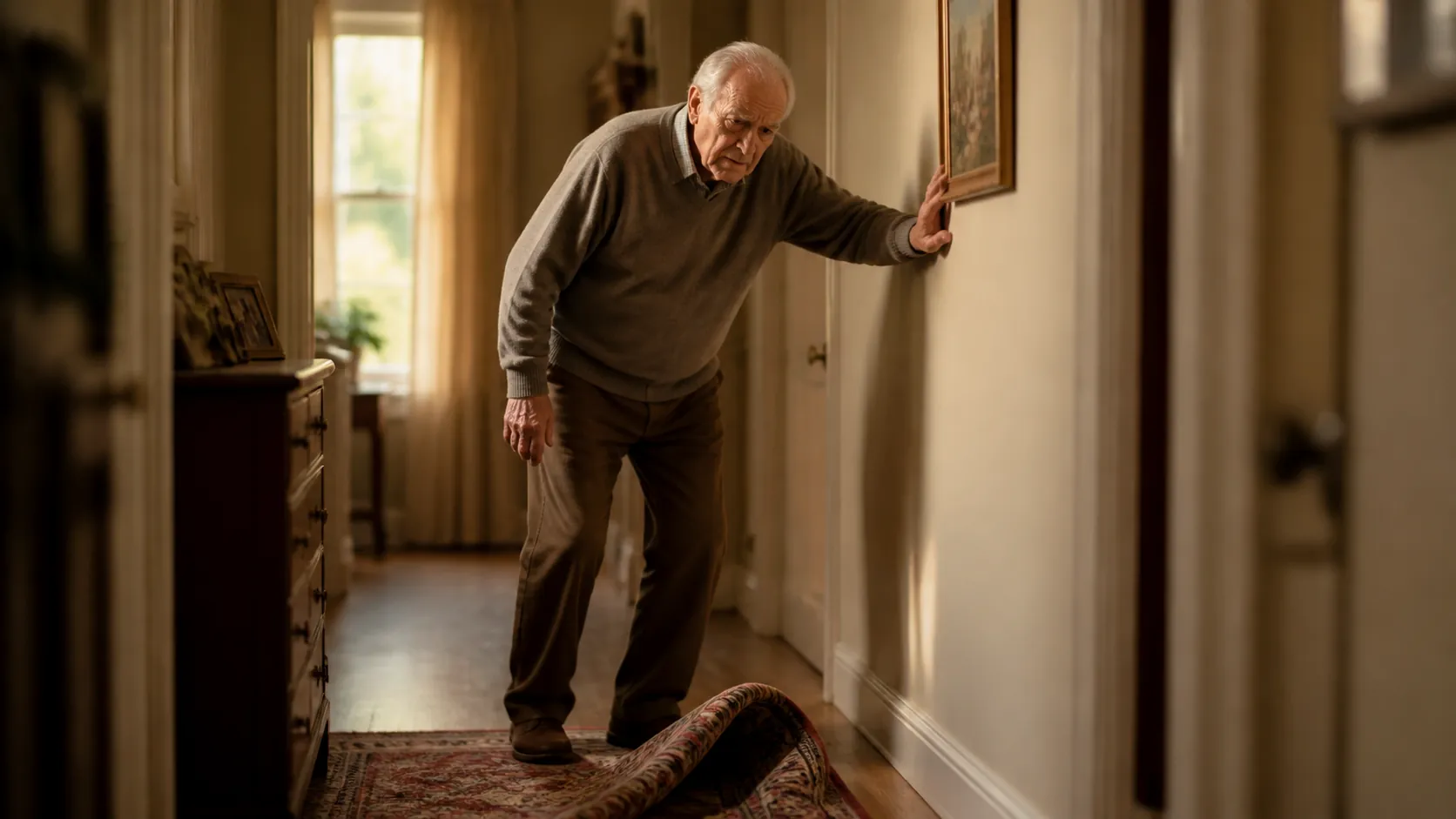
In an older adult, COVID can start with a fall, dizziness, new confusion, sudden weakness, or a flat refusal to eat before anyone hears a cough or finds a fever. That is the part families miss when they wait for the familiar checklist. Your parent falls in the hallway, says they are “just tired,” grips the counter longer than usual, or seems strangely quiet at dinner—and everyone hesitates because it does not look respiratory yet.
Do not treat that hesitation as harmless. The right standard is not “diagnose COVID from a fall.” It is simpler: when an older adult falls or suddenly seems off, treat it as both a possible infection clue and an immediate fall-risk warning. Test when appropriate, call the provider when the change is new or persistent, and use the CDC emergency warning signs for 911.
A documented pattern: the fall can come first
One of the clearest examples was published in the Journal of the American Geriatrics Society early in the pandemic: an 83-year-old man came to medical attention after a fall. He had vague dizziness, no fever, and no obvious respiratory complaint. Initial screening classified him as low risk for COVID-19; the infection was found only after incidental chest imaging led clinicians to test him [1].
That case matters because it shows the household version of the problem. A fall may be treated as a balance accident, a medication issue, dehydration, fatigue, or “just aging.” Sometimes it is one of those things. But in older adults, acute infection can first show up as the body failing at ordinary tasks: standing, walking, staying oriented, eating, or keeping up with a normal routine.
Falls have been reported as a presenting feature of COVID in older adults, but the exact proportion varies by study and setting. A Cleveland Clinic Journal of Medicine review described falls as a presenting symptom in 23.5% to 32% of older adult cases it discussed; a later scoping review found a pooled falls prevalence of 16.78%, with individual cohorts ranging from 3.8% to 36% [2][3]. Those figures come largely from 2020–2023 literature, so they should not be read as today’s exact prevalence. They are still useful for the practical point: falls are not too far removed from COVID to take seriously.
Why fever and cough may not be the first clues
Older bodies often do not advertise infection cleanly. The classic “watch for fever and cough” advice can fail because fever may be absent, lower than expected, or delayed. In the Cleveland Clinic review, 37% of older emergency department patients with delirium had neither fever nor shortness of breath, and 52% of hospitalized older adults had no respiratory symptoms at admission [2].
Temperature thresholds also need care. A geriatric fever is often defined at 38.3°C, or 101°F. The Infectious Diseases Society of America has also used a lower fever definition for older adults in long-term care: a single oral temperature over 100°F, repeated oral temperatures over 99°F, or a rise of 2°F over a person’s baseline [2][3]. If your parent usually runs cool, a temperature that looks unimpressive on the thermometer may still be a meaningful change.
This is why a normal temperature cannot be the family’s only reassurance. It is one piece of the picture, alongside new dizziness, a fall, confusion, unusual fatigue, poor intake, breathing changes, and the simple but often accurate observation that the person is not themselves.
Quiet COVID signals that also raise fall risk
The useful signs are the ones a caregiver can actually notice without pretending to be a clinician. They are also the same signs that make another fall more likely in the next hour or the next day.
| What you notice | Why it can matter for COVID | What to do for fall safety right away |
|---|---|---|
| A fall, stumble, or near-fall | Falls have appeared as a presenting feature in older COVID cohorts, with wide variation by setting and study period [2][3]. | Do not let the person resume walking alone. Check for injury, clear the path, improve lighting, and consider a COVID test or provider call if the fall is unexplained or paired with new symptoms. |
| Dizziness, faintness, or collapsing when standing | COVID-related illness, dehydration, poor intake, or blood-pressure instability can make standing unsafe. | Have them sit or lie down. Encourage fluids if safe for them, avoid sudden standing, and call a clinician if dizziness is new, recurrent, severe, or associated with a fall. |
| New confusion, delirium, or seeming suddenly unlike themselves | Altered mental status and delirium are documented atypical presentations in older adults with COVID [3][4]. | Stay with them and remove trip hazards. Call 911 for new confusion; otherwise call the provider promptly and supervise bathroom trips. |
| Sudden fatigue, weakness, or functional decline | Functional decline was reported in 25% and altered mental status in 11% of older adults with atypical COVID symptoms in one health-system study; 49% of atypical patients had atypical symptoms alone [4]. | Pause normal routines. Do not ask them to shower, cook, climb stairs, or walk outside alone until the cause is clearer. |
| Loss of appetite or poor fluid intake | Poor intake can worsen weakness and dizziness and may be part of a broader acute illness picture. | Track fluids and meals, watch urine output if you normally monitor it, and call if poor intake continues or combines with weakness, dizziness, fever, or confusion. |
Dizziness and standing up: the blood-pressure piece
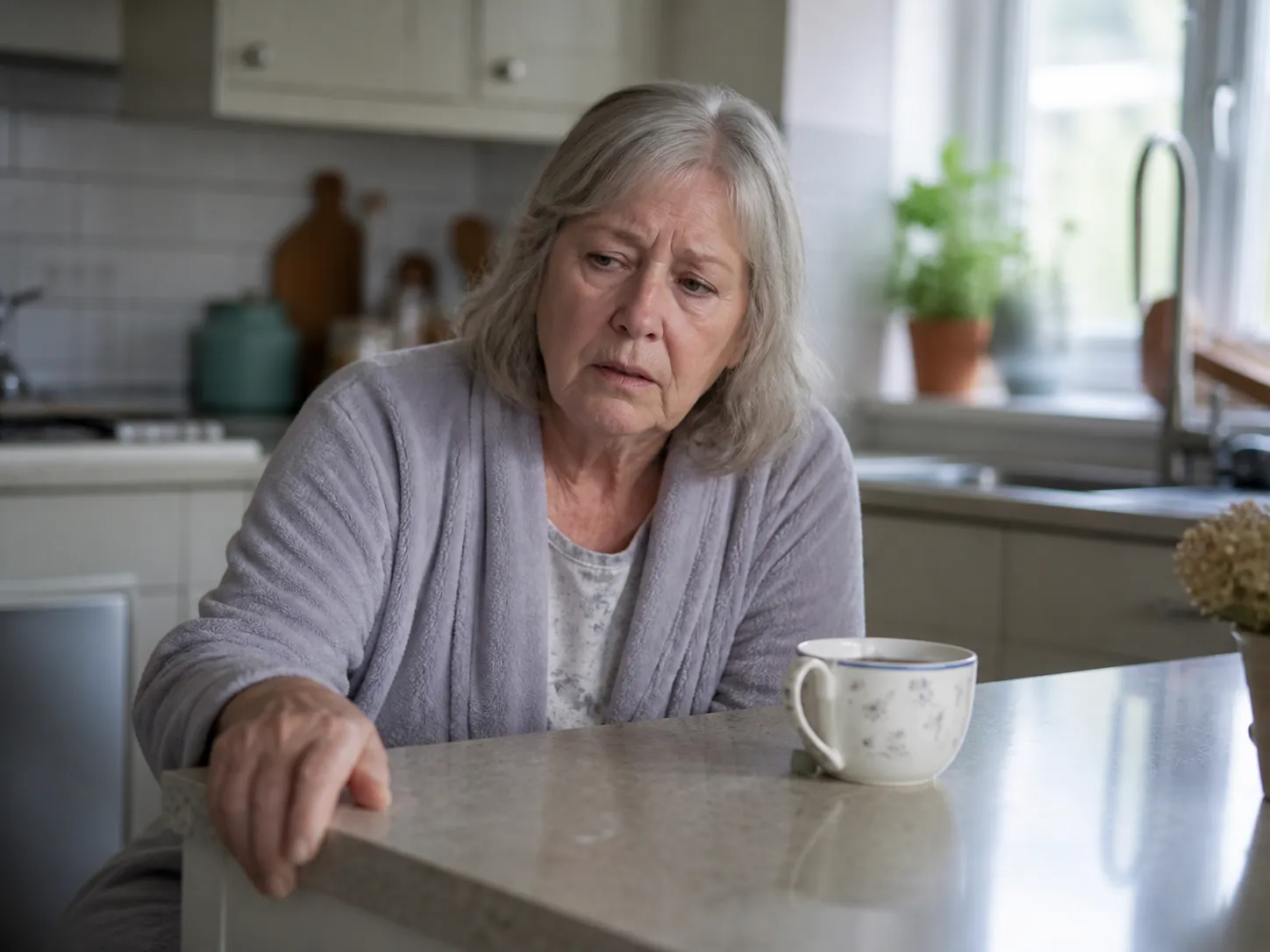
Dizziness is easy to minimize because it sounds vague. But vague is not the same as safe. Orthostatic hypotension means blood pressure drops after standing—commonly defined as at least a 20 mmHg systolic drop or at least a 10 mmHg diastolic drop within 3 minutes. A published COVID-associated dysautonomia case described recurrent falls with blood pressure dropping from 107/80 while lying down to 66/53 while standing [5].
That is one case, not proof that every dizzy older adult with COVID has the same mechanism. Still, it explains why a person who looked safe in a chair may collapse on the way to the bathroom. Illness, dehydration, medication effects, heat, missed meals, and infection can stack together. The practical response is the same: do not send the person walking alone while you wait to see if a cough appears.
Physicians quoted by KFF Health News described older adults with COVID becoming “weak and dehydrated” and collapsing when they stood to walk; the same caregiver-facing guidance advised calling the provider if an older adult is “not themselves” for a couple of days [6]. Do not wait several days if the change is sharp, paired with a fall, or getting worse.
What to do when the first sign is a fall or “off” behavior
Start with the body in front of you, not the virus name. After a fall, check for injury, head impact, pain, bleeding, new weakness, or inability to bear weight. If you need a post-fall triage route, use the site’s senior health warning signs after a fall guide or the first-15-minute checks after a sidewalk fall for act-now decisions.
Then add the infection question. If the fall is unexplained, or it comes with dizziness, new confusion, sudden fatigue, weakness, poor appetite, known exposure, sore throat, cough, congestion, fever, chills, or a general “not themselves” change, a COVID test is reasonable if available. If the person is high-risk, worsening, dehydrated, repeatedly falling, newly confused, or unable to manage normal activities, call the provider rather than relying on the test alone.
A negative home test can be falsely reassuring early in illness. A positive test does not tell you whether the fall caused an injury. Keep both tracks open: infection follow-up and fall follow-up. If the person hit their head, is on blood thinners, has new pain, cannot walk normally, or has symptoms that evolve over the next 72 hours, use a post-fall watch plan such as the site’s 72-hour warning-sign guidance and call a clinician when indicated.
When it is 911, not watchful waiting
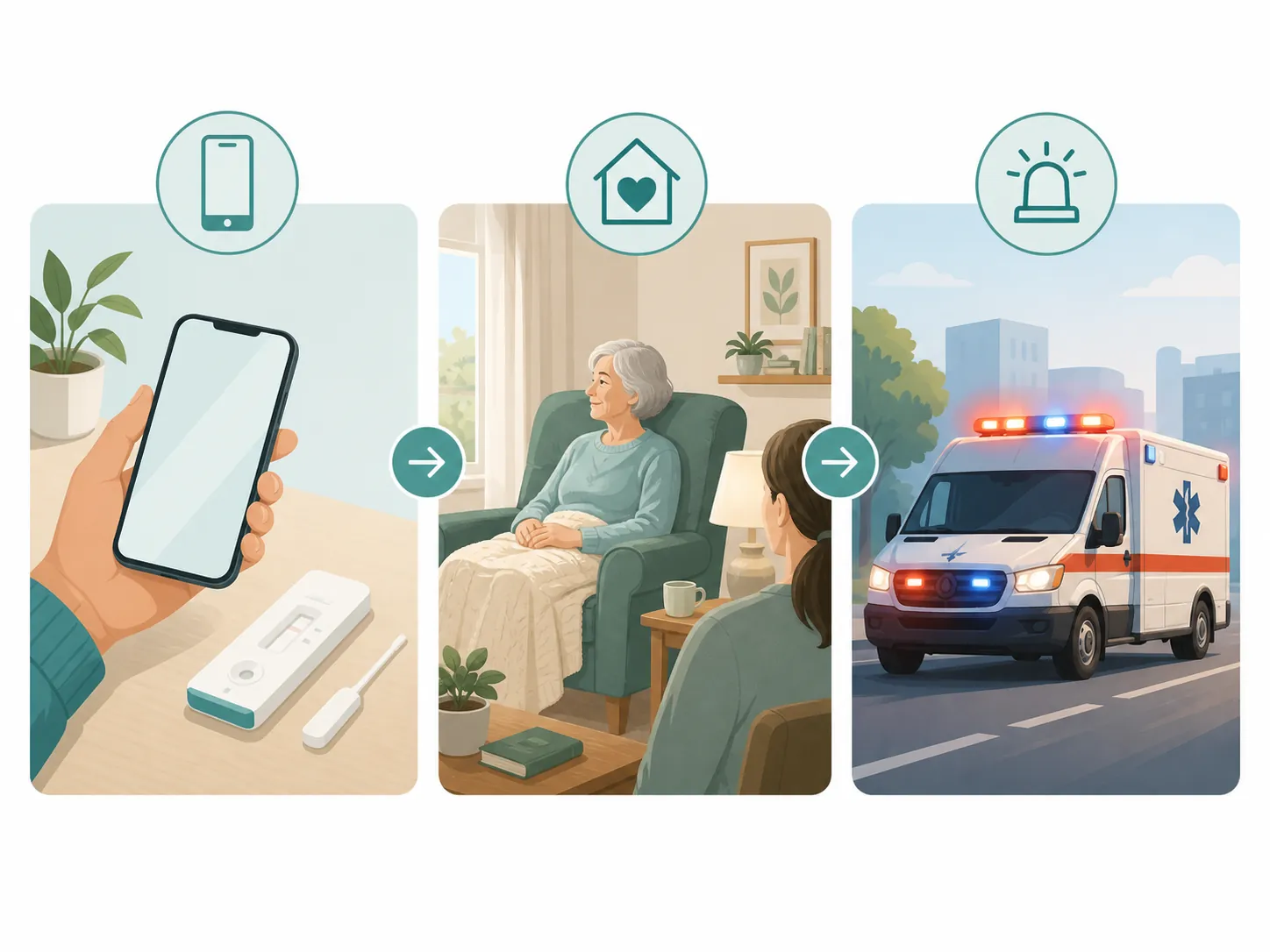
The CDC says to call 911 for these COVID emergency warning signs: “trouble breathing”; “persistent pain or pressure in the chest”; “new confusion”; “inability to wake or stay awake”; or “pale, gray, or blue lips, nail beds, or skin” [7].
Those are emergency signs whether or not a test has confirmed COVID. If confusion is new, call 911. Do not downgrade it to “probably aging,” especially if it is paired with breathing trouble, chest pressure, inability to stay awake, bluish or gray color changes, or a dangerous fall.
Why this deserves more than a shrug
The point is not to make every fall a COVID emergency. Older adults fall for many reasons: medications, poor lighting, weak legs, dehydration, neuropathy, stroke history, low blood pressure, clutter, footwear, alcohol, acute illness, and plain bad luck. The point is that infection belongs on the list sooner than many families put it there.
COVID risk also remains uneven by age. The National Council on Aging reports that more than 81% of COVID-19 deaths have occurred among people 65 and older, and that their risk is 97 times that of adults ages 18–29 [8]. That is not a reason to panic over every stumble. It is a reason to respect subtle changes in the people least likely to show textbook symptoms.
Classic symptoms can still happen: fever, cough, sore throat, runny nose, congestion, body aches, headache, chills, and loss of taste or smell. They are just not the only doorway into the illness in an older adult. A caregiver who notices the slippers left in the hallway, the untouched lunch, the hand gripping the counter, or the sudden need to sit after three steps may be seeing the first useful warning.
Make the same observation serve two jobs
When an older adult falls, becomes dizzy, grows newly confused, seems unusually weak, stops eating, or is simply not themselves, do two things at once. Treat it as a possible infection signal: test when appropriate, check temperature against their baseline if you know it, look for exposure or other symptoms, and call the provider when the change is new, persistent, worsening, or concerning. Treat it as a fall-risk signal: reduce walking alone, supervise bathroom trips, remove loose rugs and cords, improve lighting, encourage safe hydration if allowed, and ask a clinician or pharmacist whether medications could be contributing.
For planning beyond the immediate episode, the same basics still matter: strength and balance, annual medication review, footwear, hydration routines, and home hazard checks. The site’s healthy and independent after 70 guide covers that prevention work; the medication side is especially important during heat, dehydration, and illness, as outlined in the medications that raise heat risk checklist.
You are not being asked to diagnose COVID by hunch. You are being allowed to take the hunch seriously enough to act: test or call when the quiet signs appear, make the home safer immediately, and call 911 if CDC emergency warning signs show up.
References
- Typically Atypical: COVID-19 Presenting as a Fall in an Older Adult — Journal of the American Geriatrics Society
- COVID-19 in older adults — Cleveland Clinic Journal of Medicine
- Clinical manifestations of COVID-19 among older adults: a scoping review — PMC
- COVID-19 study: prevalence of unusual symptoms in older adults — Feinstein Institutes for Medical Research / Northwell Health
- COVID-19-Associated Dysautonomia — Cureus / PMC
- Seniors With COVID-19 Show Unusual Symptoms, Doctors Say — KFF Health News
- Symptoms of COVID-19 — Centers for Disease Control and Prevention
- COVID Basics: Risks, Vaccines and Prevention Strategies for Older Adults — National Council on Aging
Related reading
Noticed something outdated or inaccurate on this page? Flag a correction. We review every report against CDC, NIA, and AARP HomeFit guidance before updating a page.
Part of the Fall Prevention section.