
STEADI: Assess
Can Cyclospora Diarrhea Make Seniors Fall?
Prolonged cyclospora diarrhea can dehydrate an older adult into the weakness and dizziness that experts link to real fall risk. This guide covers the warning signs that mean call the doctor, how long is too long before seeking help, and which symptoms require the ER.
Yes. Prolonged cyclospora diarrhea can make a senior more likely to fall, especially when days of watery stools lead to dehydration, electrolyte problems, weakness, dizziness, confusion, reduced urination, or acute kidney injury. AARP-cited clinicians specifically warn that dehydration from cyclosporiasis can raise fall risk in older adults, and that is the urgent part for a caregiver who is deciding whether a parent is safe to stand, walk to the bathroom, or stay home another night.[1]
If you came here looking for cyclospora food safety tips for seniors, the most important tip tonight may not be about lettuce or washing produce. It may be this: once an older adult with suspected cyclospora has become weak, dizzy, confused, or unable to keep fluids down, treat the illness as a fall-risk problem as well as a stomach infection.

The short answer: diarrhea can become a fall problem
Cyclosporiasis is caused by the parasite Cyclospora cayetanensis, not by a bacterium. Symptoms usually begin about one week after exposure, though CDC gives a range of 2 days to 2 weeks. The classic pattern is watery diarrhea that can ease and then return; without treatment, symptoms may last weeks to a month or longer.[2]
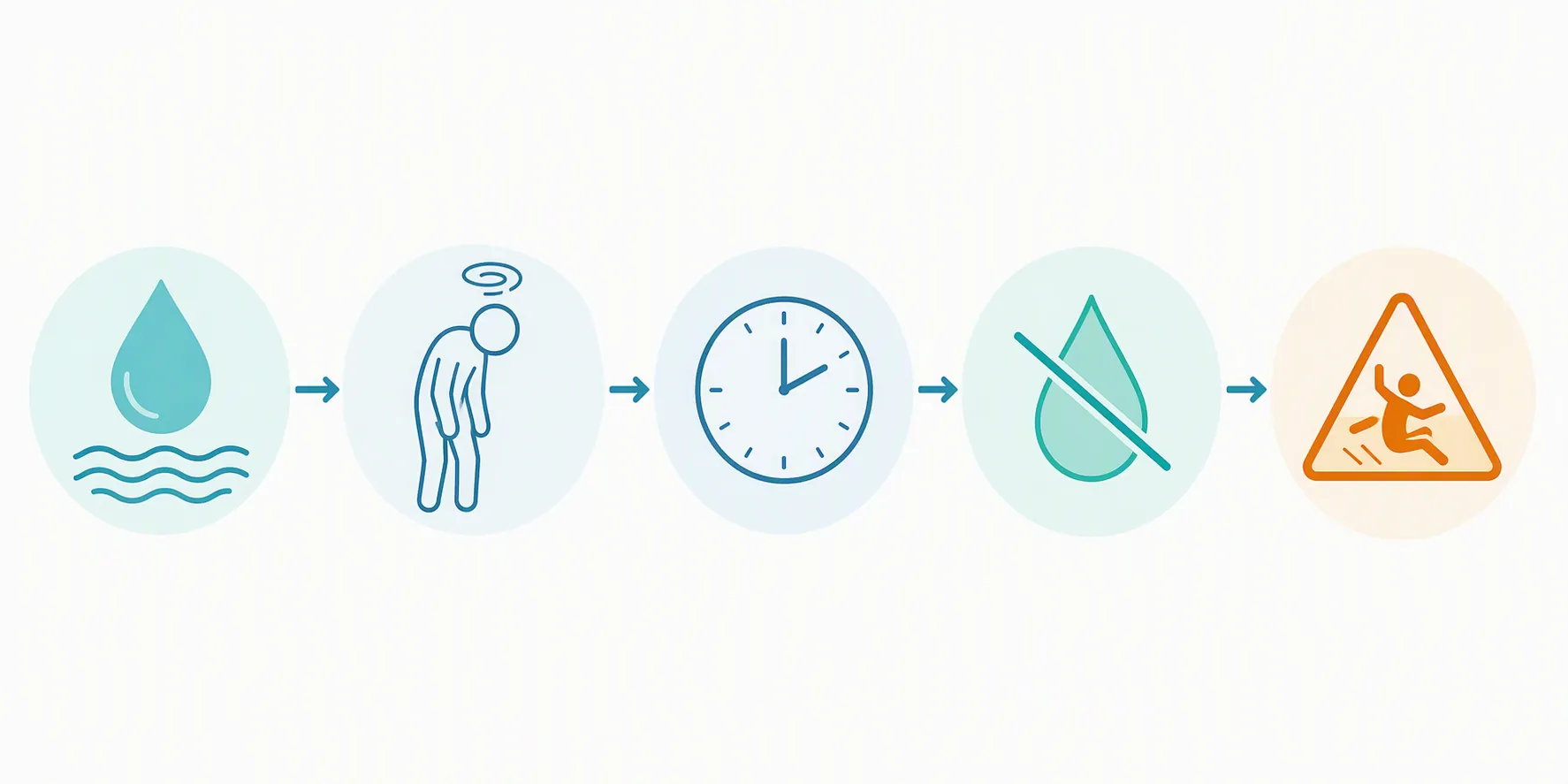
That relapsing pattern is why caregivers can get caught off guard. A parent may look “better” in the afternoon, then need the bathroom repeatedly overnight. Each trip can mean more fluid loss. Less fluid in the body can mean lower blood volume, electrolyte imbalance, lightheadedness when standing, slower thinking, and weaker legs. The fall may happen in the ordinary place: beside the bed, at the bathroom doorway, or while reaching for the sink.
This guide cannot diagnose cyclospora or dehydration for a particular person. It can help you sort the next action: watch closely and call the clinician, or go to the ER now.
A practical clock: when to call the doctor
The senior-specific timing below comes from AARP-cited clinicians. These are expert recommendations, not CDC rules, and they should not override a clinician who already gave your family a different plan. They are still useful because they give caregivers a count and a clock instead of vague advice to “stay hydrated.”[1]
| What you are seeing | What to do |
|---|---|
| Severe diarrhea, especially more than 6 to 8 episodes in a day | Call the doctor the same day.[1] |
| Diarrhea lasting more than 2 to 3 days without improvement | Call the doctor, even if the person is still drinking some fluids.[1] |
| Dizziness, confusion, decreased urination, dry mouth, or rapid heartbeat after only 1 to 2 days | Call sooner; do not wait for the 2- to 3-day mark.[1] |
| Weakness or unsteadiness when standing | Treat bathroom trips and transfers as fall-risk moments while you contact the clinician. |
| A fall, near-fall, fainting, or new inability to walk safely | Seek urgent medical guidance; use emergency services if the person cannot be safely moved or has ER warning signs. |
Do not make the person “earn” a call by reaching the exact episode count. A frail older adult with kidney disease, heart disease, diabetes, blood pressure medicines, diuretics, or poor oral intake may run into trouble sooner than a healthier adult. If your parent looks newly unsteady, the fall risk is already part of the medical picture.
Signs that should override waiting
Some symptoms move the decision out of “call during office hours” territory. Cleveland Clinic lists confusion, dizziness, dark urine, and reduced urination among signs of dehydration that need emergency care in cyclosporiasis.[3] AARP-cited clinicians also flag blood in the stool, persistent vomiting, high fever with chills, severe abdominal pain, and inability to keep fluids down as reasons to seek emergency care.[1]
- Go to the ER or use emergency services if the person is confused, hard to keep awake, fainting, or too dizzy to stand safely.
- Go urgently if urine is very dark, much less frequent than usual, or the person has not been able to replace fluid losses.
- Do not wait at home if diarrhea is paired with persistent vomiting, blood in the stool, high fever with chills, or severe abdominal pain.
- If the person has already fallen, hit their head, cannot get up, has chest pain, has stroke-like symptoms, or seems suddenly different from baseline, treat that as an emergency rather than a routine diarrhea call.
The uncomfortable part is that dehydration does not always announce itself neatly. An older adult may say they are “just tired,” refuse help, or insist they can walk alone. If they are newly swaying, grabbing furniture, forgetting where they are, or needing help to rise, believe the change.
Why older adults have less room for fluid loss
Older adults are generally more vulnerable to severe foodborne illness because aging can affect immune response, digestion, stomach acid, and organ function. FoodSafety.gov also notes that chronic conditions can make foodborne illness more serious in older adults.[4]
CDC gives a severity anchor from other foodborne infections: nearly half of adults 65 and older with lab-confirmed illness from Salmonella, Campylobacter, or Listeria are hospitalized. That statistic is not a cyclospora-specific hospitalization rate, but it is a reminder that foodborne illness in older adults is not automatically minor.[5]
The medication list matters too. Blood pressure medicines, diuretics, kidney-related restrictions, diabetes medicines, and heart failure plans can complicate “just drink more fluids.” A clinician may need to know not only that diarrhea is happening, but how much fluid is staying down, how often the person is urinating, and whether dizziness appears when they sit up or stand.
Make the bathroom trip safer while the illness is active

Do this while you are calling the clinician, not after. Diarrhea creates repeated urgent trips, and urgent trips make people rush.
- Clear the route from bed or chair to bathroom. Move shoes, cords, baskets, pet bowls, and throw rugs out of the path.
- Turn on a nightlight before bedtime. A dark hallway plus sudden diarrhea is a predictable setup for a fall.
- Put the cane, walker, glasses, and phone where the person can reach them before standing.
- If the person is dizzy, weak, confused, or newly unsteady, supervise standing and walking. This is not hovering; it is temporary fall prevention during an acute illness.
- Have them sit at the edge of the bed or chair for a moment before standing. If they feel lightheaded, they should sit back down.
- Consider a bedside commode or urinal if repeated nighttime bathroom trips are becoming unsafe, especially if the bathroom is far from the bedroom.
- Avoid showers or baths alone while dizziness or weakness is present. Wet surfaces add another fall hazard.
The mechanism is similar to the dehydration-and-balance pathway described in why extreme heat raises fall risk in older adults. The trigger here is different: infectious diarrhea is draining fluid and electrolytes, then the bathroom trip exposes the balance problem.
What to have ready before you call
A short, organized call can help the clinic decide whether your parent needs testing, treatment, urgent evaluation, or ER care.
- How many diarrhea episodes happened in the past 24 hours, and how many days symptoms have lasted
- Whether the diarrhea is watery, relapsing, or associated with vomiting, fever, chills, blood, or severe abdominal pain
- How much fluid the person can keep down
- Urination changes: less often, darker urine, or no usual bathroom pattern
- Any dizziness, confusion, weakness, fainting, near-fall, or fall
- A current medication list, including diuretics, blood pressure medicines, diabetes medicines, kidney-related medicines, and supplements
- Major conditions such as kidney disease, heart failure, diabetes, immune problems, or recent hospitalization
- Possible exposure history, including recent produce, recalled foods, travel, or other household members with diarrhea
If cyclospora is a possibility, ask whether a specific stool test is needed. For a fuller symptom-and-testing guide, see Could that diarrhea be cyclospora? Signs in older adults. If the clinician confirms or strongly suspects the infection, the next questions are treatment, medication interactions, and allergy history; those are covered in How to Treat Cyclospora Diarrhea in Older Adults.
Where food safety fits after the immediate risk
Food safety still matters, especially if other people in the home may be eating the same foods. But once an older adult is already ill and unsteady, prevention details should not delay triage. Handle the fall risk and dehydration risk first.
For general prevention, washing, and produce-safety guidance, use What Seniors Should Know About Cyclospora Food Safety. For shopping and recall decisions, see Is Lettuce Safe for Seniors During the Cyclospora Recall?.
For seniors, cyclospora becomes most dangerous when ongoing diarrhea starts changing hydration, urination, balance, thinking, or the ability to keep fluids down. Call the doctor when the warning thresholds appear, go to the ER for red flags, and protect the bathroom route while the person is weak.
References
- Cyclospora outbreak older adults, AARP, July 27, 2026.
- Symptoms of Cyclosporiasis, CDC.
- Cyclosporiasis, Cleveland Clinic.
- Older Adults, FoodSafety.gov.
- Safer Food Choices for Adults 65 and Older, CDC.
Related reading
Noticed something outdated or inaccurate on this page? Flag a correction. We review every report against CDC, NIA, and AARP HomeFit guidance before updating a page.
Part of the Fall Prevention section.