
STEADI: Intervene
Prepare Your Parent's Home for Extreme Heat During El Niño
El Niño 2026 is forecast to bring extreme heat, and most heat deaths among older adults happen indoors at home. Caregivers can use this plan-ahead guide to finish a room-by-room home cooling plan before the heat arrives, with a clear indoor-temperature target and a practical fallback for homes without air conditioning.
Extreme heat safety for seniors during El Niño starts inside the house, not with the forecast map. NOAA declared El Niño conditions on June 11, 2026, and said there was a 63% chance sea-surface temperatures would exceed 2.0°C, the “very strong” threshold; the World Meteorological Organization later said the strong El Niño was expected to intensify through August–October 2026 and raise the likelihood of above-normal temperatures across much of the world.[1][2] That does not mean El Niño causes any one heat wave by itself. It does mean families should stop treating the first heat warning as the day to begin planning.
For an older parent aging at home, the dangerous moment often looks ordinary: the living room is familiar, the curtains are half closed, the air conditioner is present, and nobody has checked whether the room is actually cool enough. Health Canada’s guidance for adults 60 and older recommends using 26°C, about 79°F, as an upper indoor-temperature limit, and treats sustained indoor temperatures of 26–31°C, especially overnight, as a danger signal.[3] That is the number to put on the plan.
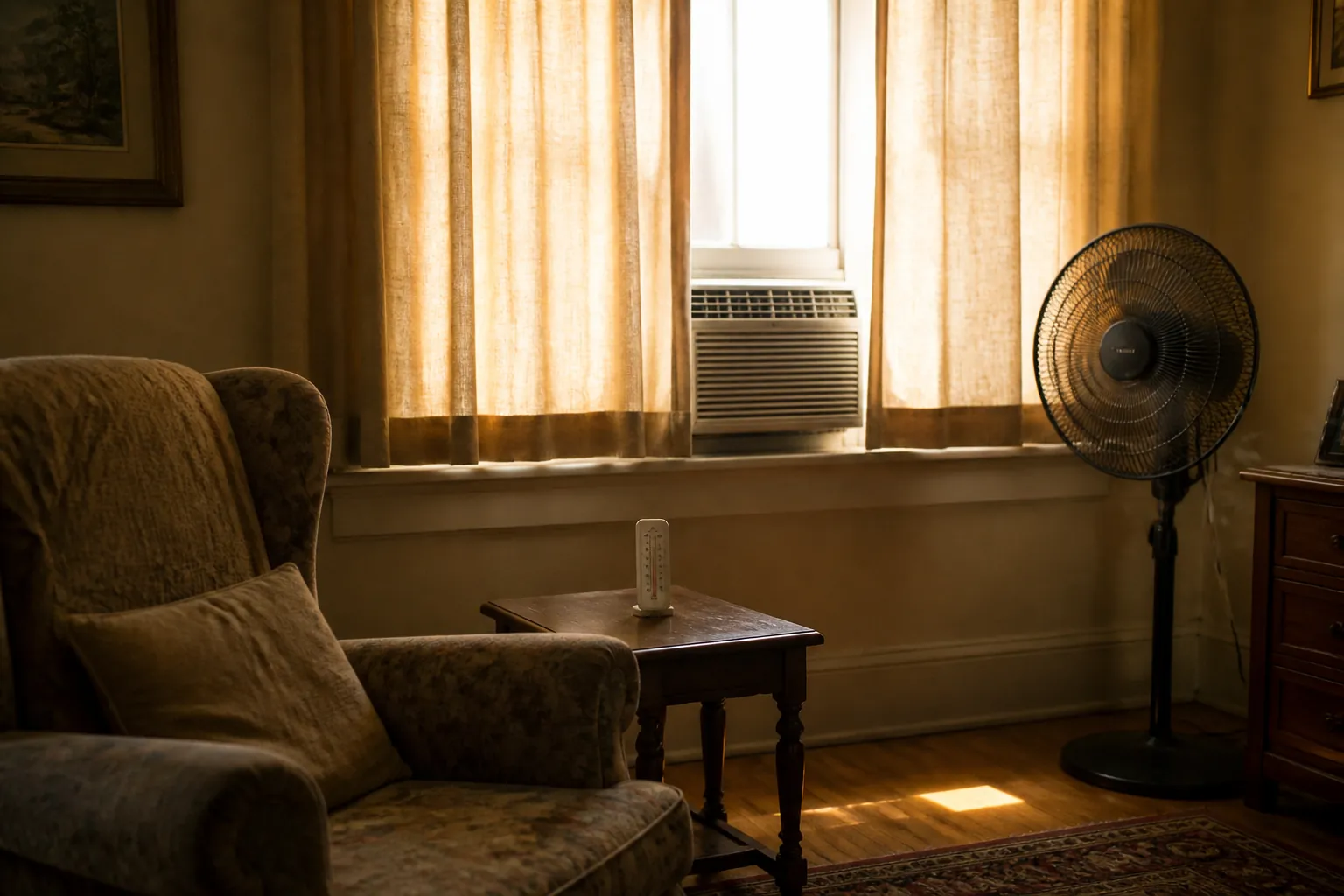
One caution before the checklist begins: owning cooling equipment is not the same as being protected. Health Canada cites studies in North American and European cities finding that 54–98% of heat deaths occurred at home.[3] New York City’s 2026 Heat Mortality Report found that 48% of heat-stress decedents were exposed at home; among those with air-conditioning information available, none were using air conditioning, and 23% of at-home decedents had an electric fan on.[4] In Maricopa County in 2019, Harvard Medicine Magazine reported that 91% of indoor heat deaths had air conditioning present but off, low, or broken.[5] A fan may move air around the room, but the American Red Cross warns that fans alone are not enough in extreme heat.[6]
Use one indoor target so nobody has to argue by phone
Families waste a surprising amount of time debating whether a house “feels fine.” The parent says it is comfortable. The adult child hears the air conditioner in the background and relaxes. A neighbor walks in from outside and thinks the room feels cooler than the porch. None of that tells you whether the house is safe enough for an older adult who may be taking medications, sleeping poorly, or trying not to “waste” electricity.
For this plan, use Health Canada’s 26°C, about 79°F, upper limit as the conservative household trigger.[3] Local agencies, housing programs, or emergency managers may use different thresholds for their own purposes, and you should follow local heat alerts. But inside your parent’s home, one written number prevents the usual family improvising: if the main room or bedroom is at or above about 79°F, the plan changes from “keep an eye on it” to “take action.”
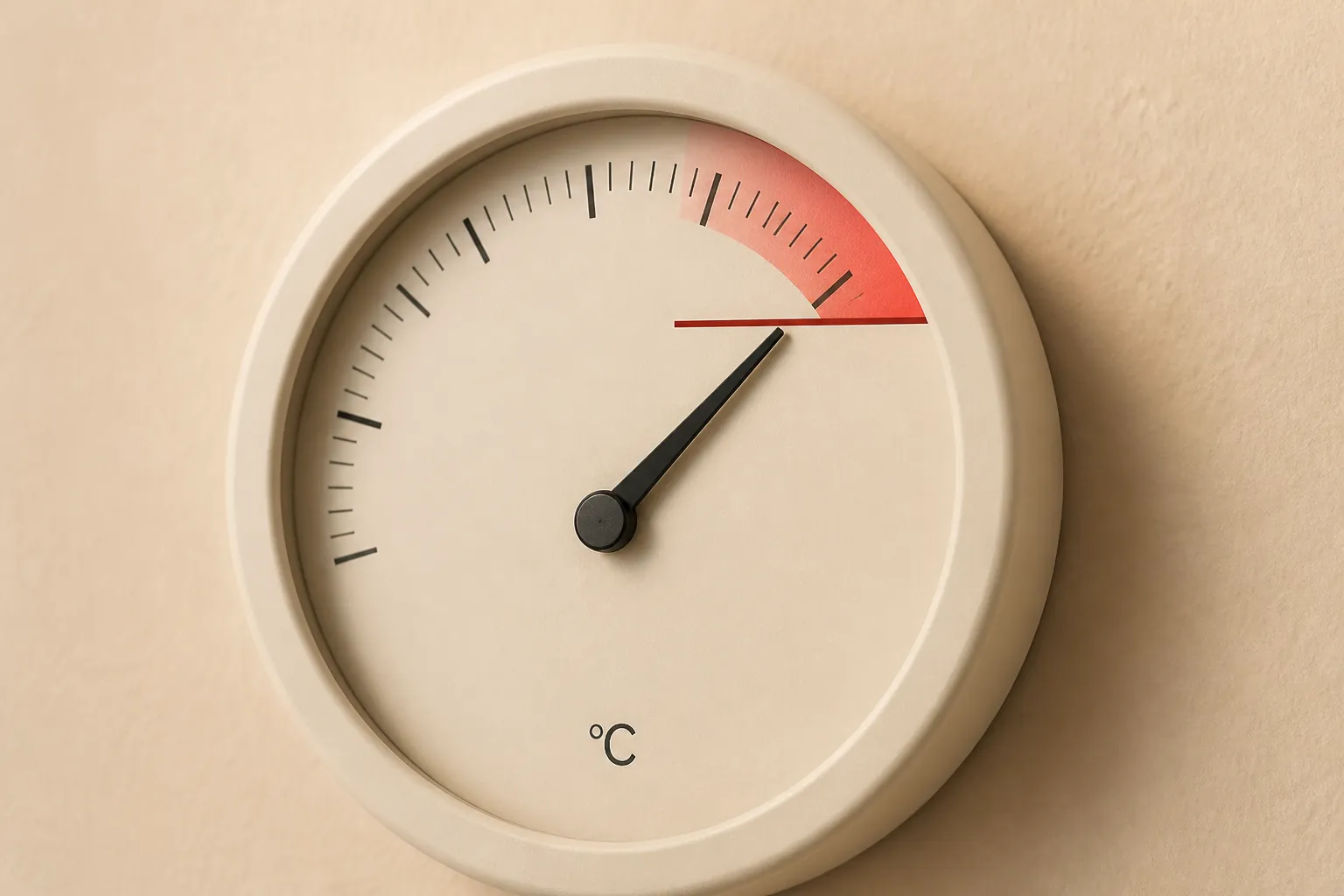
| Household rule | What someone must do |
|---|---|
| Main daytime room reaches about 79°F | Turn on cooling or lower the thermostat, close sun-facing shades, and recheck the thermometer after the room has had time to cool. |
| Bedroom remains warm into the evening | Move sleep to the designated cool zone or activate the fallback plan before bedtime. |
| Air conditioner is present but not cooling | Treat it as a failed cooling plan, not as a minor comfort problem. |
| Parent refuses to run cooling because of cost | Use the fallback plan: assistance programs, a public cooling location, or a prearranged stay elsewhere. |
| Only a fan is available | Do not count the room as protected during extreme heat; use a cooler location. |
If you already use a room-by-room home safety checklist for fall prevention, this is the same habit with a different hazard. Do not inspect the house as if every room matters equally. Start with where your parent sits, sleeps, cooks, bathes, stores medication, and waits for help.
Choose the cool zone before August heat tests the house
Every home needs a named cool zone. Not “the house has AC.” Not “Mom can go downstairs if she gets hot.” A cool zone is the room where your parent will spend the hottest hours, where the indoor temperature can be measured, where a chair is safe to get in and out of, where water and a phone are within reach, and where someone else knows to check first.
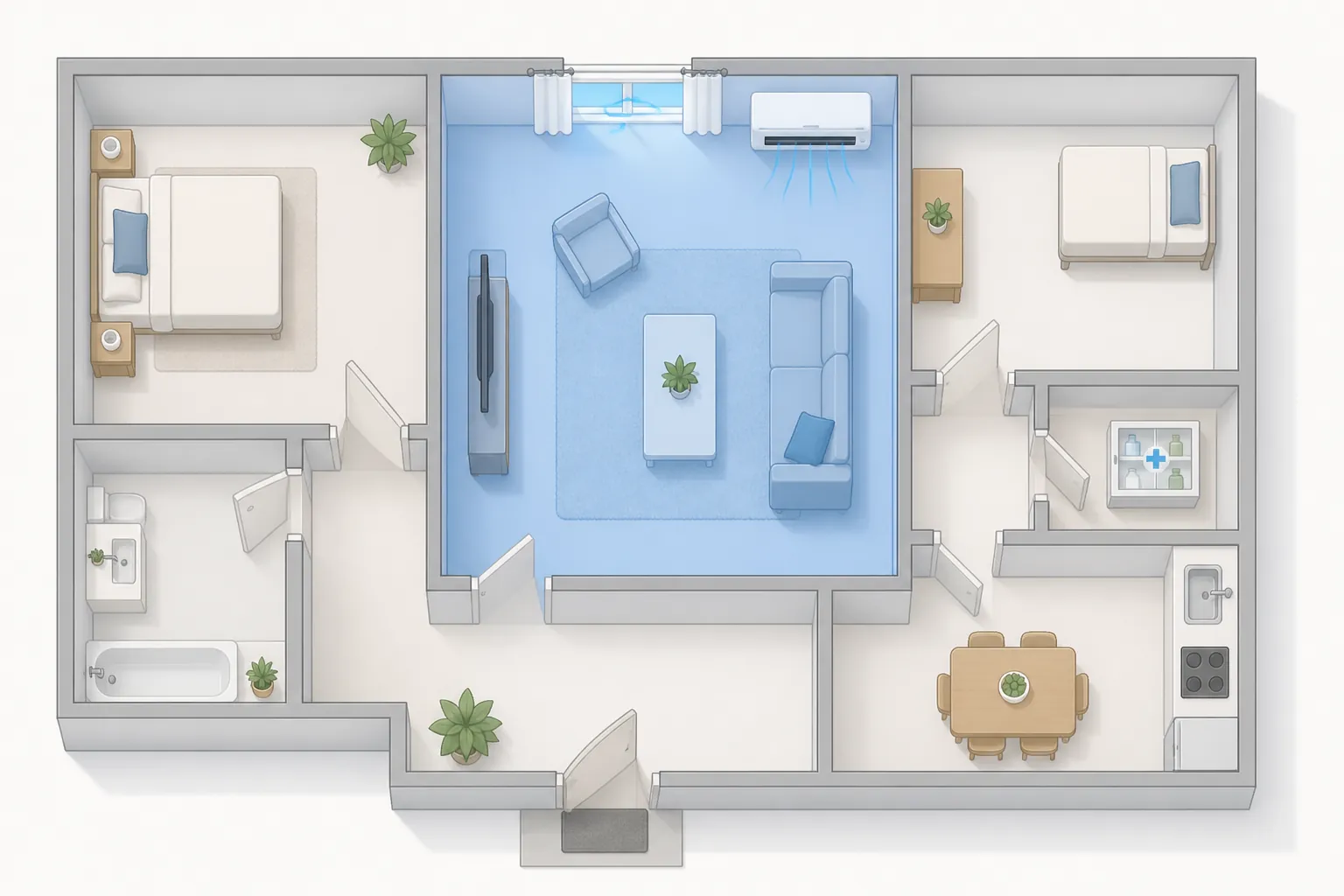
Walk the house once when the weather is still manageable. Put an inexpensive indoor thermometer in the likely cool zone at about seated height, away from direct sun, vents, the stove, or a window air conditioner’s immediate blast. A reading taken directly beside the cold air can make the room look safer than it is.
- Write down the cool zone by name: “front living room,” “downstairs den,” or “bedroom with window unit.”
- Confirm the chair is stable, high enough to stand from, and not blocking the path to the bathroom.
- Move the phone charger, water, eyeglasses, hearing aids, walker, and emergency contact list into that room.
- Make sure the thermometer is visible without climbing, bending, or standing on tiptoe.
- If the parent uses a medical device that needs electricity, connect this plan with the broader severe weather preparedness checklist rather than treating heat as a separate household project.
Test the air conditioner as equipment, not as decoration
Turn the unit on before the first serious heat arrives. Listen for strange cycling. Check whether cold air actually comes out. Clean or replace the filter if the manufacturer’s instructions call for it. Make sure the remote has batteries and the wall controls are readable. If the thermostat display is confusing, put a simple note beside it: “Heat day setting: keep room below 79°F.”
Window units deserve extra attention because they can be installed, plugged in, and still not solve the problem. Check for blocked airflow, loose side panels, a tripped outlet, and extension cords that create a trip hazard. If the unit is too loud, too expensive, or too hard for your parent to operate, the practical result may be the same as not having it.
Make the bedroom part of the heat plan
Heat plans often fail at night. People tolerate a warm bedroom because they expect the evening to cool down, or because the window unit is in another room, or because moving bedding feels like too much trouble at 10 p.m. Health Canada’s warning about sustained indoor temperatures of 26–31°C matters especially overnight because the body may not get a recovery period.[3]
Check the bedroom temperature in the evening during a warm spell, not only at noon. If it stays near or above the household limit, decide now whether your parent will sleep in the cool zone on heat-alert nights. That may mean moving a recliner, setting up a temporary bed, clearing a safe path to the bathroom, and adding a night-light so the heat plan does not create a fall hazard.
Look at the kitchen and bathroom as heat-and-fall spaces
The kitchen can undo a good cooling plan. Oven use, a sunny breakfast nook, or a habit of standing at the stove during the hottest hours can raise heat exposure right when an older adult is already tired. Put easy cold meals and drinks where they can be reached without climbing or digging through a packed refrigerator. If your parent uses a walker or cane, do not stack cases of water in the walking path.
The bathroom needs the same plain inspection. Heat-related weakness or lightheadedness plus a wet floor is a bad combination. Check grab bars, bath mats, lighting, and the path from the cool zone to the toilet. If the plan is for your parent to spend the day in one cooler room, make sure the bathroom trip from that room is the safest trip in the house.
Put medication storage and medication review on the same visit
Some medication issues are about the person’s heat tolerance; others are about the medicine itself. CDC guidance notes that medications including diuretics, anticholinergics, beta-blockers, SSRIs and SNRIs, and antipsychotics can affect thirst, sweating, fluid balance, heat regulation, or heat-related risk.[7] CDC clinician guidance also flags heat-sensitive storage concerns for items such as insulin, inhalers, and epinephrine auto-injectors.[8]
Do not stop, skip, or change medication because of a heat article. The useful caregiver task is simpler: make a current medication list, note which medicines or supplies may be heat-sensitive, ask the pharmacist or clinician how they should be stored during hot weather, and keep that answer with the medication list. If your family already uses a fall-prevention handout to prompt medication review, add a heat-season note to it.
Windows, shades, and fans: useful, but not a rescue plan
Close sun-facing shades before the room heats up. Check whether curtains block the air conditioner. Make sure windows that should stay closed against outdoor heat are easy to secure, and windows that are part of a cooler-evening ventilation routine can be opened without a struggle. These are small details until the day your parent is tired, the room is 82°F, and the only person available is trying to troubleshoot by phone.
Fans can help circulate conditioned air or make a mildly warm room feel more comfortable. They should not be counted as the safety plan during extreme heat. The New York City finding that some at-home heat-stress decedents had a fan on is exactly the warning families need: air movement can make a dangerous room look “handled” when the temperature has not been brought down.[4][6]
Low-risk comfort steps such as a cool cloth, misting bottle, or cool shower may make someone feel better for a while. Keep them in their proper place: after cooling equipment, temperature checks, hydration access, and a real fallback location have been handled.
If the home cannot stay cool, decide where your parent goes
A fallback plan is not a vague promise to “go somewhere cool.” It is a destination, a ride, a key, a backup contact, and a rule for when to use it. This matters for homes without air conditioning, homes with an unreliable unit, apartments that overheat overnight, and households where the real barrier is the electric bill.
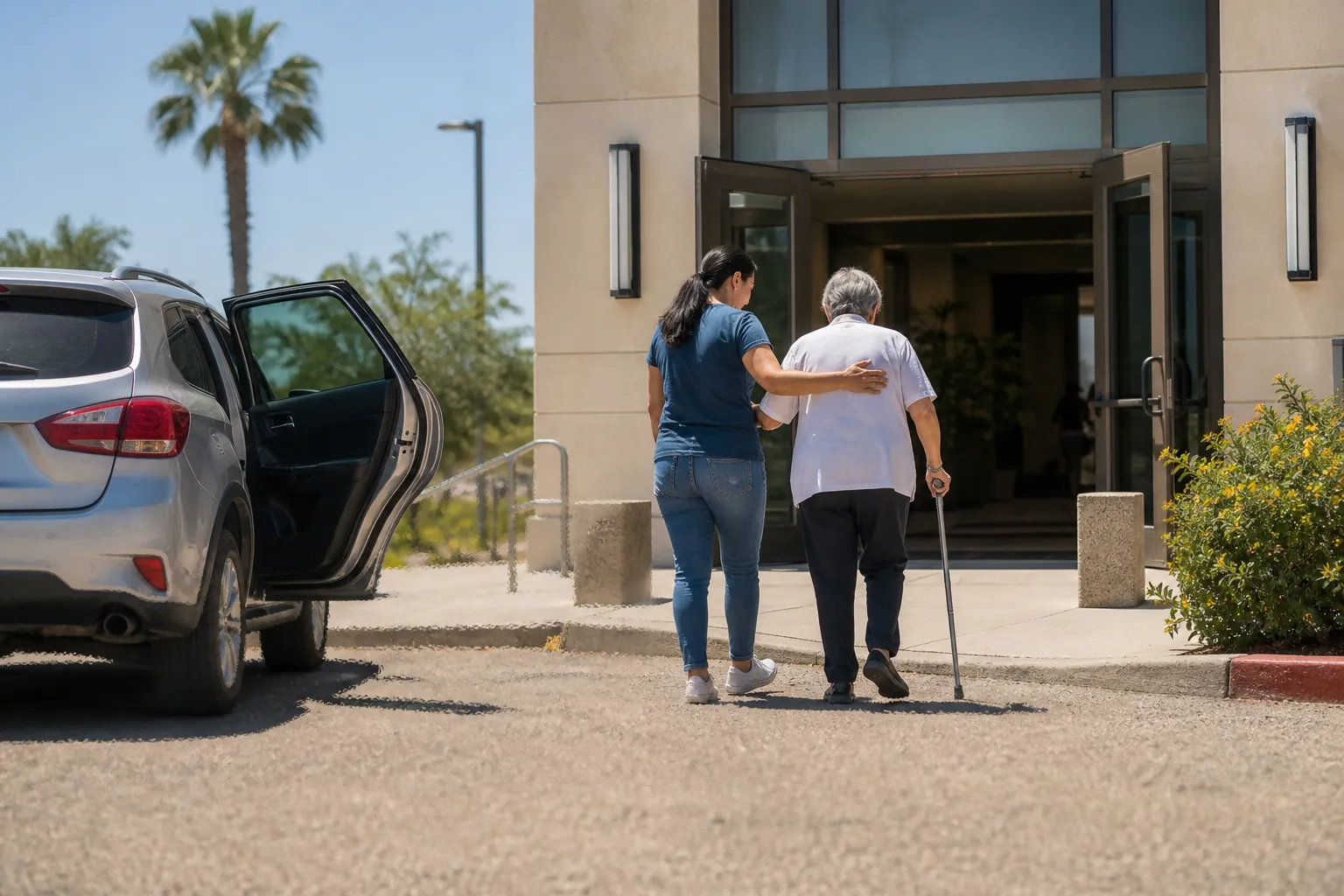
Energy insecurity is not a side issue. The Center for American Progress reported that 14.8 million older adults were energy-insecure in 2023, and that LIHEAP cooling assistance was available in only 26 states plus the District of Columbia and three territories. It also lists the LIHEAP information line as 1-866-674-6327.[9] That uneven help is exactly why the household plan should be written before a heat alert, not after a parent has already decided the air conditioner is too expensive to run.
| Fallback question | Write down the answer |
|---|---|
| Where is the first cool place? | Specific address: cooling center, library, senior center, community building, relative’s home, or hotel if that is the realistic option. |
| How will your parent get there? | Named driver, transit route, paratransit plan, rideshare helper, or neighbor with permission to assist. |
| Who decides the plan is activated? | Parent, adult child, neighbor, home aide, or spouse; include the indoor-temperature trigger. |
| What must go along? | Medication list, needed medicines, mobility aid, phone and charger, water, keys, hearing aids, glasses, and emergency contacts. |
| What if the first destination is closed? | Second location with hours checked before heat season. |
Check cooling-center information through the local health department, emergency management office, 311 service where available, Area Agency on Aging, or senior center. Do not assume the building your parent remembers from last summer is open this year, reachable without stairs, or available on weekends. If the plan depends on a portable or window air conditioner, order, install, and test it before heat warnings begin. The purchase is not finished until the room can hold the target temperature.
For parents with breathing problems, wildfire smoke or ozone alerts can arrive with heat and change the usual “open the windows at night” routine. Keep the heat plan connected to your household’s air-quality alert instructions so one warning does not accidentally make another risk worse.
Make daily verification boring enough that it actually happens
A heat plan should not depend on your parent recognizing danger early. Older adults may underreport discomfort, avoid using electricity, or describe a hot room as “not too bad.” The daily check-in should ask for facts, not impressions.
| Instead of asking | Ask this |
|---|---|
| Are you okay? | What does the thermometer say in the room where you are sitting? |
| Is the AC on? | Is the cool air coming out, and what temperature is the room now? |
| Did you drink enough? | What have you had to drink since breakfast, and is water next to your chair? |
| Are you staying cool? | Which room are you in right now, and are the shades closed on the sunny side? |
| Do you need anything? | If the room reaches 79°F, who is coming over or where are you going? |
For a parent who likes routine, make the temperature reading part of the morning and late-afternoon call. For a parent who dislikes being checked on, use a neutral script: “I’m writing down the house temperature twice a day during the heat alert.” If text messages work better than calls, adapt the same idea from daily good-morning check-ins: the reply should include the room temperature, the room they are in, and whether the cooling equipment is running.
If your parent sounds confused, unusually weak, faint, very sleepy, or not like themselves during heat, do not keep negotiating over the thermostat. Use the emergency plan, call the clinician or local urgent line as appropriate, or call emergency services if symptoms seem serious. This article can help organize a home, but it cannot diagnose heat illness or replace medical advice.
The pre-heat visit: finish these before the first warning
- Put an indoor thermometer in the main daytime room and another in the bedroom if they are different spaces.
- Write 79°F / 26°C as the household action limit near the thermometer and in the caregiver notes.
- Name the cool zone and clear a safe path from that room to the bathroom.
- Test the air conditioner long enough to confirm the room cools, not just that the machine turns on.
- Check filters, batteries, remotes, cords, outlets, and whether the parent can operate the controls without guessing.
- Close or label sun-facing shades and remove anything blocking vents or window units.
- Move water, phone charger, glasses, hearing aids, mobility aids, and emergency numbers into the cool zone.
- Review medications and heat-sensitive supplies with a pharmacist or clinician; do not change medications on your own.
- Choose the fallback cooling location, confirm hours and accessibility, and write down transportation.
- Assign the daily verifier: adult child, neighbor, home aide, spouse, friend, or rotating family schedule.
- Decide what happens if the thermometer reaches the action limit or the AC fails.
The useful plan is the one someone can test on a weekday afternoon. Have your parent read the thermometer out loud. Have them turn the cooling on. Have the neighbor with a key find the written instructions. Time the drive to the backup location. If any part depends on a person being calm, strong, or willing to spend money while the house is already hot, fix that part now.
For El Niño heat safety, the safest home is not the one with the most tips taped to the refrigerator. It is the one where someone has measured the rooms, chosen the cool zone, confirmed the equipment, and written down exactly what happens if the home cannot be kept cool.
References
- El Nino forms, expected to strengthen, say NOAA forecasters, NOAA, June 11, 2026.
- Strong El Niño expected to intensify, World Meteorological Organization, July 31, 2026.
- Guidance on upper indoor temperature limits: Protecting the health of older adults, Health Canada.
- NYC 2026 Heat Mortality Report, NYC Health.
- The Effects of Heat on Older Adults, Harvard Medicine Magazine.
- Extreme Heat Safety, American Red Cross.
- Heat and Older Adults (Aged 65+), Centers for Disease Control and Prevention.
- Heat and Medications – Guidance for Clinicians, Centers for Disease Control and Prevention.
- Protecting Older Adults From the Growing Threats of Extreme Heat, Center for American Progress.
Related reading
Noticed something outdated or inaccurate on this page? Flag a correction. We review every report against CDC, NIA, and AARP HomeFit guidance before updating a page.
Part of the Fall Prevention section.