
A Fall-Safe Tropical Storm Preparedness Checklist for Seniors
This checklist covers the full tropical storm cycle through a fall-prevention lens, addressing the fall and mobility hazards that spike during preparation, the storm itself, and post-storm recovery — and includes the senior-specific supplies most standard checklists miss.
Why a senior storm checklist has to include fall risk
AARP’s disaster resilience synthesis puts the problem plainly: adults 75 and older were about 6% of the population but accounted for roughly half of Hurricane Katrina deaths, and adults 60 and older made up 61 of 87 Hurricane Ian fatalities, or 70% of the total deaths reported in that storm’s aftermath. Those figures come from hurricane disasters, but they are the reason an emergency preparedness checklist for seniors during tropical storms cannot be treated like a regular household supply list with “extra medications” added at the bottom. Older adults are harmed out of proportion to their share of the population, and the risks begin well before the roof leaks or the power goes out. [1]
The missing piece is often the physical work of getting ready: hauling water, dragging patio furniture, bending into low cabinets, stepping over bags, moving through dim rooms, and trying to keep a cane or walker usable while the house is being rearranged. A checklist can look complete on paper and still make the person using it less safe.
A fall-safe tropical storm plan has to cover three hazard windows: preparation, the storm itself, and recovery. Supplies matter, but the test is not whether the pantry is full. The test is whether the older adult can prepare without overreaching, shelter without losing mobility, and recover without being pushed into wet floors, debris, darkness, or unsafe generator use.
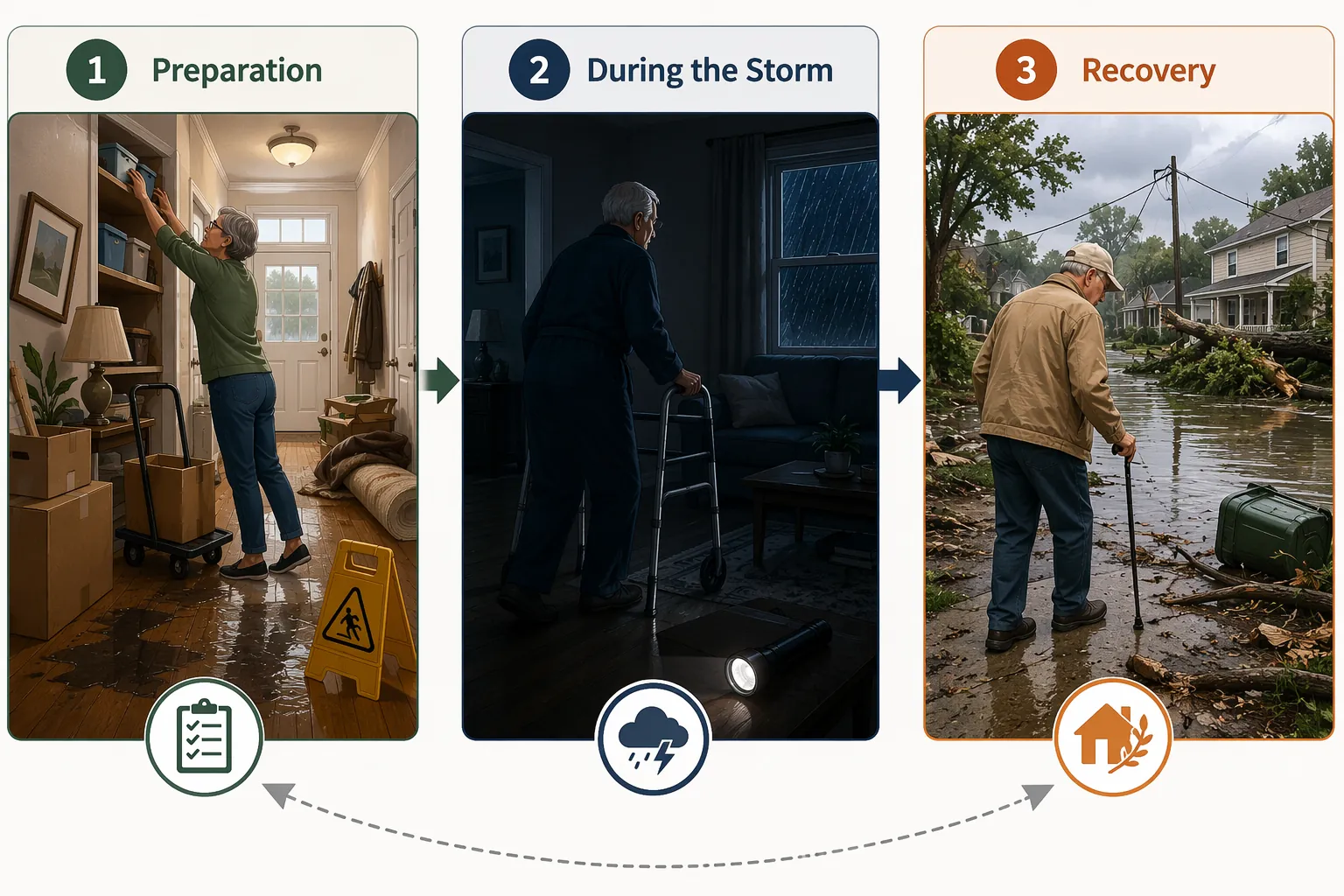
| Storm window | What the checklist must prevent | Fall-safe actions to include |
|---|---|---|
| Before storm season | Last-minute climbing, hauling, and blocked walkways | Create reachable supply stations, assign heavy lifting to someone else, check mobility aids, and pre-plan power-dependent medical needs |
| When a storm is forecast | A house made more dangerous by the act of preparing | Clear paths before supplies arrive, secure outdoor items without the senior lifting them, stage lights and medications at waist height, and keep wet-entry areas controlled |
| During the storm | Dark trips to the bathroom, misplaced glasses or hearing aids, and inaccessible mobility aids | Set up the safe room for transfers, toileting, communication, lighting, and device charging |
| After the storm | Falls on flooded floors, debris, disrupted routines, and unsafe recovery behavior | Delay inspections, keep the senior out of debris zones, prevent indoor generator use, and restore walking routes before cleanup expands |
Before storm season: make the home easier to prepare safely
The safest storm preparation is the kind that does not require an older adult to prove they are still strong enough to do it all in one afternoon. Ready.gov tells older adults to build a support network, make a plan that accounts for personal needs, and prepare before disaster conditions arrive; the Red Cross also emphasizes planning around mobility, medical, communication, and daily living needs. Those recommendations are useful, but they become much more protective when they are translated into the actual movements that happen inside a senior’s home. [2][3]
Start with the walking routes, not the water cases. The path from the bed to the bathroom, the main chair to the kitchen, the door to the safe room, and the chair to the medication station should be clear before supplies are brought inside. If the storm bin, bottled water, pet food, or battery packs land in those routes, the checklist has created a new hazard.
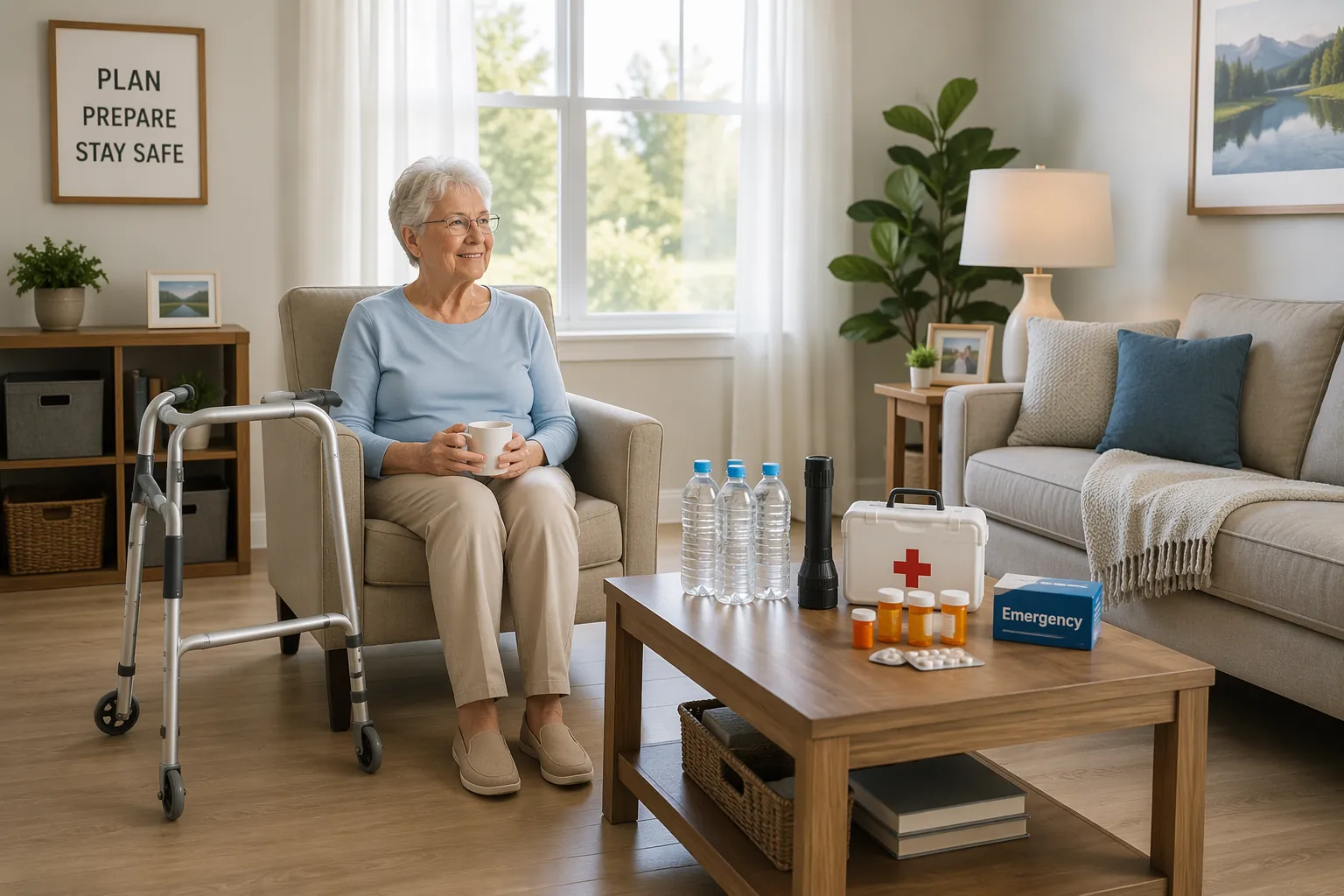
This is where family roles need to be practical, not polite. If a parent uses a walker, has poor balance, gets short of breath, or becomes unsteady when rushed, “bring in the patio furniture” should not be on their personal list. Neither should carrying water cases from the car, climbing for lanterns, pulling shutters from a high shelf, or moving storage boxes to reach batteries. Those jobs should be assigned before storm season to a neighbor, relative, paid helper, building staff member, or local support contact.
A good pre-season walk-through does not have to become a room-by-room renovation project. If you need that level of detail, use the separate Tropical Storm Preparedness Checklist for Seniors at Home or the guide to senior tropical storm home modifications. For this checklist, the immediate standard is simpler: the older adult should be able to reach storm supplies without a step stool, move through the home with their usual aid, and sit, stand, transfer, and toilet without stepping around storm clutter.
Pre-season actions that reduce fall exposure
- Move flashlights, lanterns, batteries, medications, glasses, hearing aids, and phone chargers to reachable shelves or a stable table. Do not store critical items in overhead cabinets, deep closets, or low bins that require bending.
- Remove or secure throw rugs on the main walking routes, especially between the bed, bathroom, kitchen, favorite chair, and safe room.
- Choose one supply location that does not narrow a hallway or block the turning radius of a walker, rollator, wheelchair, or power chair.
- Place frequently used storm supplies in smaller containers instead of one heavy bin. A bin that cannot be moved safely by the person who needs it is storage, not preparedness.
- Test canes, walkers, rollators, wheelchairs, transfer benches, raised toilet seats, and grab bars before storm season. Tighten loose parts and replace worn tips, brakes, or batteries.
- Create a wet-entry plan: an absorbent mat that lies flat, a place for wet shoes, a chair near the entry if shoes must be changed, and a towel supply that does not sit on the floor.
- Write down who will move outdoor furniture, trash cans, plants, and yard items. The person with the highest fall risk should not be the default worker because everyone else is busy.
If medical equipment depends on electricity, decide earlier than feels necessary
Oxygen concentrators, CPAP machines, nebulizers, power chairs, hospital beds, stair lifts, refrigerated medications, and charging-dependent communication devices change the storm plan. They also change the fall plan, because a power loss can force transfers, bathroom trips, sleeping arrangements, or breathing routines into unfamiliar conditions.
FEMA’s older adult disaster guide tells people to plan for medical, mobility, assistive technology, communication, and support needs, including what will happen if utilities are interrupted. For people who cannot safely remain at home without power, special needs shelter planning should happen well before storm season through local or county emergency management, not after a warning is issued. [4]
That decision deserves a real conversation, not a vague promise to “see how bad it gets.” If a parent uses oxygen, has severe lung disease, relies on a powered mobility device, or cannot transfer safely without equipment, pre-registering for a special needs shelter or arranging a powered destination may be the most important fall-prevention step in the whole checklist.
Senior-specific supplies standard storm lists often underplay
Water, shelf-stable food, radios, flashlights, and first aid supplies still belong on the list. The problem is that a younger household can sometimes improvise around missing personal items. A senior with low vision, bladder urgency, neuropathy, oxygen use, hearing loss, arthritis, or a walker may not have that margin.
- Medications: Keep an updated medication list and ask the prescriber or pharmacist how to maintain an emergency supply where allowed. Include dosing instructions, allergies, pharmacy information, and the prescribing clinician’s contact details.
- Medical documentation: Keep printed copies of diagnoses, device needs, insurance cards, advance directives if applicable, emergency contacts, and shelter or transportation registration details in a waterproof pouch.
- Backup power plan: Include charged battery packs, device-specific backup batteries, extension cords that do not cross walking paths, and a written plan for where the person will go if home power cannot support essential medical equipment.
- Mobility-aid repair items: Add spare cane tips, walker glides, wheelchair tire supplies if relevant, rollator brake checks, charging cords for power chairs, and the phone number for the equipment provider.
- Vision and hearing supplies: Pack spare eyeglasses, magnifiers if used, hearing-aid batteries or chargers, cleaning tools, and a labeled container so these items do not disappear during a rushed safe-room move.
- Incontinence and toileting supplies: Include briefs, pads, wipes, gloves, disposal bags, barrier cream, toilet paper, and a bedside commode or urinal if nighttime bathroom trips are unsafe during outages.
- Footwear and grip: Keep sturdy, closed-toe shoes by the bed and near the safe room. Slippers that work on a normal morning may fail on wet tile, gritty floors, or during a dark trip to the bathroom.
- Food and hydration that match the person’s body: Include items that are easy to open, easy to chew, compatible with medical restrictions, and reachable without lifting a heavy container.
For older adults with chronic lung disease, oxygen use, CPAP, or heat and mold sensitivity, the medical part of the list deserves extra attention after the storm as well as before it. In a peer-reviewed study of Florida Medicare data from 1999 through 2016, respiratory disease hospitalizations among older adults increased 4.37 times during tropical cyclone exposure periods, with effects persisting up to 5 days after the storm. That finding is Florida-specific and should not be stretched to every region, but it is directly relevant for families planning along the Atlantic and Gulf coasts. [5]
When a storm is forecast: reduce the work, not just the uncertainty
The day or two before a tropical storm can be more dangerous than it looks. Everyone is trying to be useful, routines break, and the house fills with objects that are not usually there. This is when an older adult may decide to “just move that chair,” “just get the lantern,” or “just bring in one more box.” Fall prevention has to be built into the preparation sequence.
Before supplies come through the door, clear where they will go. If a family member is bringing water, food, batteries, or sandbags, they should know exactly where to place them so the older adult is not left to drag items out of the hallway later. Keep the walker path open first; sort the pantry second.
Outdoor preparation should be assigned by name. Patio chairs, plants, trash cans, hoses, bird feeders, and decorations become projectiles or cleanup hazards, but they are also fall hazards while being moved. If the senior insists on helping, give them a seated task: checking the written contact list, labeling medication bags, charging phones, or confirming that flashlights work.
Do not let the storm plan depend on step stools. Move flashlights, lanterns, manual can openers, radios, first aid supplies, and medication pouches down to waist-to-shoulder height. If something critical is stored high because it is “only for emergencies,” it is stored in the wrong place.
If the forecast reaches the warning stage, use a dedicated time-sensitive plan instead of trying to rebuild one from memory. The 36-hour hurricane warning checklist for seniors covers that compressed window. If evacuation is still uncertain, the separate guide on how to track a tropical storm and decide when to evacuate an elderly parent is the better place to work through timing.
The pre-storm fall-safe check
- Can the older adult walk from bed to bathroom without stepping around supplies, cords, rugs, towels, or bags?
- Can they reach the flashlight, glasses, hearing aids, phone, water, and medications from a seated position?
- Is the safe room accessible with the person’s usual cane, walker, rollator, wheelchair, or power chair?
- Are wet shoes, umbrellas, towels, and rain gear kept out of walking paths?
- Has someone other than the older adult handled high, heavy, outdoor, or ladder-related tasks?
- Are charging cords placed along walls instead of across routes to the bathroom, kitchen, bed, or safe room?
- If power-dependent medical equipment is essential, has the family confirmed the backup power, shelter, or relocation plan before conditions deteriorate?
During the storm: plan the small trips
During a tropical storm, the danger inside the home is often a short trip made under worse conditions than usual: bed to toilet, chair to medication, sofa to safe room, recliner to phone charger. The plan should make those trips boring.
Set up the safe room before the wind and rain are distracting. The chair should be stable and easy to rise from. The walker, cane, wheelchair, rollator, or transfer device should be inside the room, not parked across the hall. Keep a light source within reach of the seated person, with a second light in the bathroom route if that route must be used.
Nighttime toileting deserves its own line on the checklist. If the older adult is unsteady, dizzy when rising, or likely to rush because of urgency, consider a bedside commode, urinal, absorbent products, or a scheduled toileting plan before the worst weather arrives. This is not about convenience. It is about preventing a dark, wet, half-awake walk across the house.
Glasses and hearing aids should be treated like safety equipment. If a parent cannot see floor edges, read medication labels, hear alerts, or understand instructions, every other part of the plan gets weaker. Put them in a labeled container near the safe-room chair or bedside table, along with batteries or chargers.
For detailed outage navigation, use the separate storm power outage fall prevention checklist for seniors. The short version here is this: keep light, communication, mobility, toileting, and medications reachable from the places where the person will actually sit and sleep.
After the storm: recovery is part of the checklist
A storm checklist that ends when the wind quiets is unfinished. Recovery is when people step onto wet tile, walk into dim garages, cross broken branches, lift waterlogged items, miss medications, skip meals, overheat, and try to inspect damage before the ground is safe. For an older adult who lives alone, that gap between “storm passed” and “help arrived” can be the most fragile part of the plan.
The first recovery rule is to restore safe walking routes before expanding the cleanup. Clear the path from bed to bathroom, chair to kitchen, chair to phone, and exit to car or ambulance access. Do not send the older adult outside to “look around” until someone has checked for standing water, loose steps, branches, unstable railings, washed-out soil, and debris hidden under leaves or puddles.
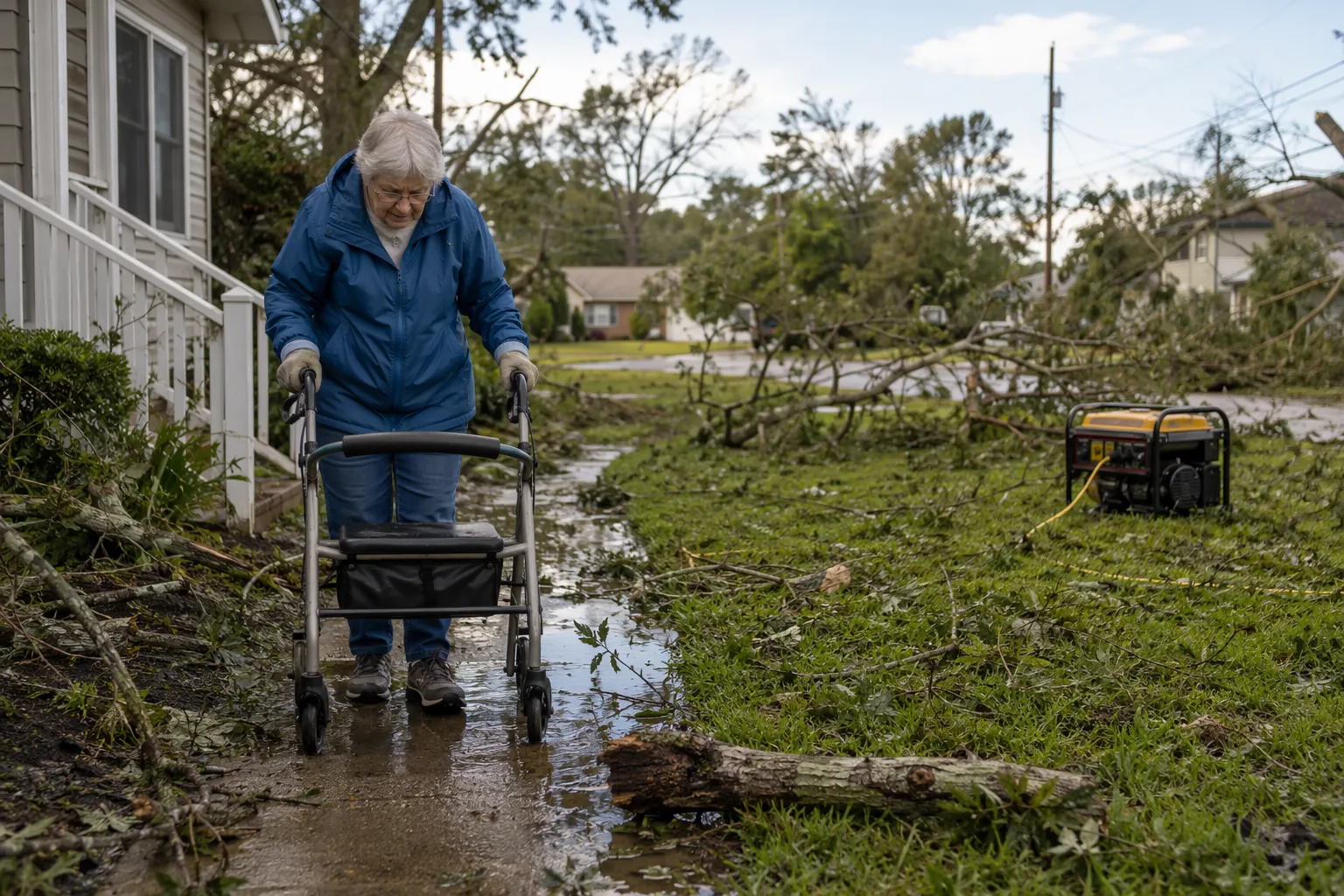
Inside the home, treat water like a fall hazard even when it looks minor. A towel tossed onto the floor can curl into a trip hazard. A bucket placed under a leak can block a walker. A fan cord can cut across the only dry route. Cleaning has to happen, but the walking path comes first.
Generator safety belongs in a senior fall-safe plan because power loss often pushes people into bad improvisation: running a generator too close to the house, opening doors for cords, stepping over extension cords, or moving through dark rooms while confused by fumes, heat, or noise. CDC hurricane safety guidance says generators should be used outdoors at least 20 feet away from windows and doors. They should never be used inside a home, garage, basement, crawl space, shed, or partially enclosed area. [6]
If the older adult has oxygen needs, chronic lung disease, or a history of respiratory hospitalization, recovery should include a check for heat, mold, damp materials, and whether medical equipment is still functioning. The Florida hospitalization study does not prove every post-storm cough is storm-related, but it does support taking respiratory vulnerability seriously in the days after a tropical cyclone exposure. [5]
Recovery tasks the senior should not do alone
- Walking the yard to inspect roof, fence, gutter, tree, dock, or shed damage
- Crossing flooded walkways, slick decks, wet steps, or debris-covered driveways
- Lifting wet rugs, boxes, plants, branches, sandbags, or outdoor furniture
- Resetting breakers, moving generator equipment, or managing long extension cords
- Cleaning bathrooms, garages, patios, or entryways where water, mud, or cleaning products make floors slick
- Driving before traffic signals, familiar routes, medications, vision, and alertness are stable
What makes the checklist complete
A complete senior tropical storm checklist should leave very little physical improvising for the older adult. It should name who moves heavy items, where supplies sit, how the person reaches medication and light, how toileting works in the dark, what happens if medical equipment loses power, and who checks the home before recovery begins.
| Checklist question | Complete answer |
|---|---|
| Can the senior prepare without climbing, hauling, or bending into unsafe positions? | Yes — heavy and high tasks are assigned to someone else, and supplies are stored at reachable height. |
| Can the senior move through the home with their usual mobility aid? | Yes — walking routes are clear before supplies are staged and remain clear during the storm. |
| Can the senior manage medications, glasses, hearing aids, phone, and lighting during an outage? | Yes — essential items are reachable from the bed, safe-room chair, and bathroom route. |
| Can medical equipment keep working or be replaced by a safe shelter or relocation plan? | Yes — backup power, device documentation, and shelter or transportation arrangements are made before storm season. |
| Can the senior toilet safely at night or during power loss? | Yes — lighting, mobility aids, absorbent products, or bedside toileting equipment are planned before the storm. |
| Can recovery start without sending the senior into water, debris, fumes, or darkness? | Yes — someone checks the home and restores safe walking paths before cleanup expands. |
That is the practical difference between a stocked house and a prepared senior household. A fall-safe tropical storm checklist is complete only when it protects the older adult while they prepare, while they shelter, and while they recover.
References
- Disaster Risks to Older Adults — AARP
- Older Adults — Ready.gov
- Older Adults Preparedness — American Red Cross
- Disaster Preparedness Guide for Older Adults — FEMA, September 2023
- Tropical cyclone exposure is associated with increased hospitalization rates in older adults — Nature Communications, 2023
- Hurricane Safety — CDC
Related reading
Noticed something outdated or inaccurate on this page? Flag a correction. We review every report against CDC, NIA, and AARP HomeFit guidance before updating a page.
Part of the Fall Prevention section.