
STEADI: intervene
Flood Emergency Preparedness for Older Adults at Home
A plan-ahead flood checklist for older adults and the caregivers preparing their home: exact supply quantities, home-hardening measurements, insurance waiting-period rules, and benefit safeguards to complete before flood season. Explains why the decisions that protect an older adult during a flood must be made weeks in advance, when calm planning is still possible.
Flood emergency preparedness for elderly residents has a deadline that is easy to miss: most of the useful work has to be finished before anyone issues a flood watch. Once water is rising, a caregiver can still make phone calls, move a bag closer to the door, or tell a parent to avoid the basement. They usually cannot put a new flood policy in force, refill a month of prescriptions, install a backflow valve, teach a neighbor how to help with a transfer, or find out whether the only working cane is in the car.
The plan below treats a flood as a home-safety problem first. The question is not whether the household owns a flashlight. It is whether the older adult can get through a wet hallway without the glasses they usually wear, whether someone will notice a missed medication, whether benefit payments can still be accessed if the local branch is closed, and whether the house has already been assessed against the water level it is likely to face.
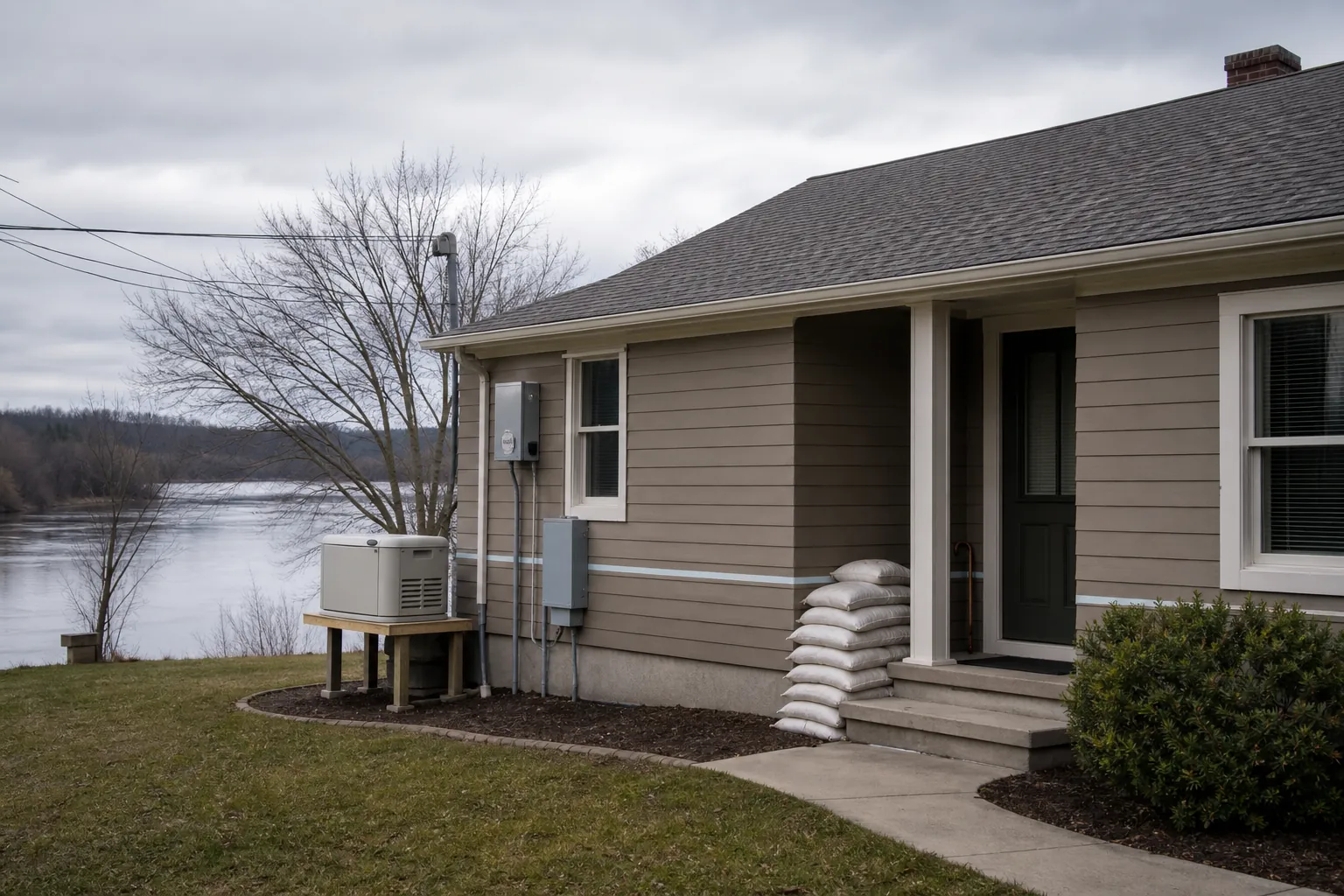
The calm-week route, before a flood watch
Do this during an ordinary week, when pharmacies are open, relatives are answering texts, and contractors are not triaging emergency calls. The order matters less than the finish line: every item needs an owner, a date, and a quick test.
| Decision to finish before flood season | What “finished” means | The simple test |
|---|---|---|
| Confirm the flood risk | The home’s FEMA map status, local drainage history, and projected flood elevation have been checked with official or local planning sources. | A caregiver can point to the expected water level and name which entrances, utilities, and rooms are exposed. |
| Put flood insurance in force | Coverage is active before flood season, not merely discussed after a watch is issued. | The policy effective date is written down with the declarations page or account login. |
| Assemble medication and mobility reserves | Medications, assistive items, eyeglasses, cane or walker, chargers, water, and basic supplies are counted and stored together. | The older adult or caregiver can gather the kit in one pass without searching another room. |
| Rehearse the support network | Named people know who checks in, who drives, who handles pets or equipment, and who calls if there is no response. | The plan has been practiced at least once by phone, text, or in person. |
| Protect income access | Benefit payments, debit cards, direct deposit, card PINs, trusted contacts, and backup documents have been reviewed before banks or mail service are disrupted. | The older adult can access funds without relying on a single mailbox, branch, device, or memory-only password. |
| Assess home hardening | Electrical elevation, sump pump backup power, backflow protection, fuel-tank anchoring, and safe shutoff locations have been reviewed against projected flood elevation. | The household knows which fixes are done, which require a licensed professional, and which remain an accepted risk. |
Use the checklist as planning support, not as medical, legal, insurance, or financial advice. Medication changes belong with a clinician or pharmacist; insurance decisions belong with a qualified agent or the insurer; home electrical and plumbing work belongs with licensed professionals.
Start with the water the house is actually planning for
The first task is not buying supplies. It is learning what kind of flooding the home is exposed to. Look up the address in the FEMA Flood Map Service Center, then call the local county or city planning office if the map does not answer the practical questions: Which road floods first? Which entrance is lower? Has stormwater backed up into this block before? Where is the projected flood elevation for this property?
That projected elevation becomes the reference point for the rest of the house. It helps decide whether electrical outlets are too low, whether the basement equipment is exposed, whether the wheelchair ramp drains toward the door, and whether a caregiver should be planning around one safe entrance or none. A map alone does not show whether an older adult can step over a swollen door threshold with a walker.
The financial stakes are not abstract. The National Flood Insurance Program estimates that roughly one inch of water in an average-size home can cause about $25,000 in damage.[1] For an older adult at home, that inch can also mean soaked carpet, warped thresholds, lost medications, a nonworking lift chair, and a bathroom route that becomes a fall hazard before anyone calls it a disaster.
If the home has already had water intrusion, use that history. Mark the height on the basement wall or utility-room photo. Photograph the lowest exterior door, the electrical panel, the water heater, the furnace, the washer and dryer, and any medical equipment that stays plugged in. Those photos make conversations with insurers, contractors, adult siblings, and local officials less vague.
Insurance has to be active before the warning
Flood insurance is the preparedness step with the least forgiveness. FEMA states that there is typically a 30-day waiting period after an NFIP policy is purchased before coverage takes effect, with limited exceptions.[2] That rule is the reason “we’ll look into it if a storm comes” is not a plan.
For a caregiver, the practical job is to confirm three things before flood season: whether the home has flood coverage, when the policy becomes effective, and who can access the documents if the older adult cannot find the folder. Write the policy number, insurer or agent contact, premium due date, and online account access location in the household emergency file. Do not put the only copy in a basement cabinet.
Last verified Aug. 25, 2026: the NFIP waiting-period detail above is time-sensitive and should be checked again with FEMA, the insurer, or a licensed agent before a purchasing decision.[2] That is not paperwork fussiness. A policy that starts after the flood is a receipt, not protection.
Insurance also changes the family conversation about home hardening. If the likely loss is unaffordable, adult children need to know that before they argue about whether to raise equipment, replace flooring, or move a parent’s bedroom out of the lowest level. The point is not to frighten anyone into expensive work. It is to stop pretending that an avoidable delay is neutral.
Medication, mobility, and water belong in the same kit
Older-adult flood planning breaks down when the emergency kit is treated as one box and daily function as another. A parent who has water and granola bars but no spare eyeglasses, no cane, and only a few days of heart medication is not prepared to shelter at home or leave safely.
The American Red Cross advises older adults to keep at least 30 days of medications and extra assistive items such as a cane and eyeglasses, and to plan for either staying home for at least two weeks or evacuating.[3] Keep that 30-day medication target separate from the general emergency-kit baseline: Ready.gov recommends one gallon of water per person per day for several days, and specifically a three-day supply for evacuation.[4]
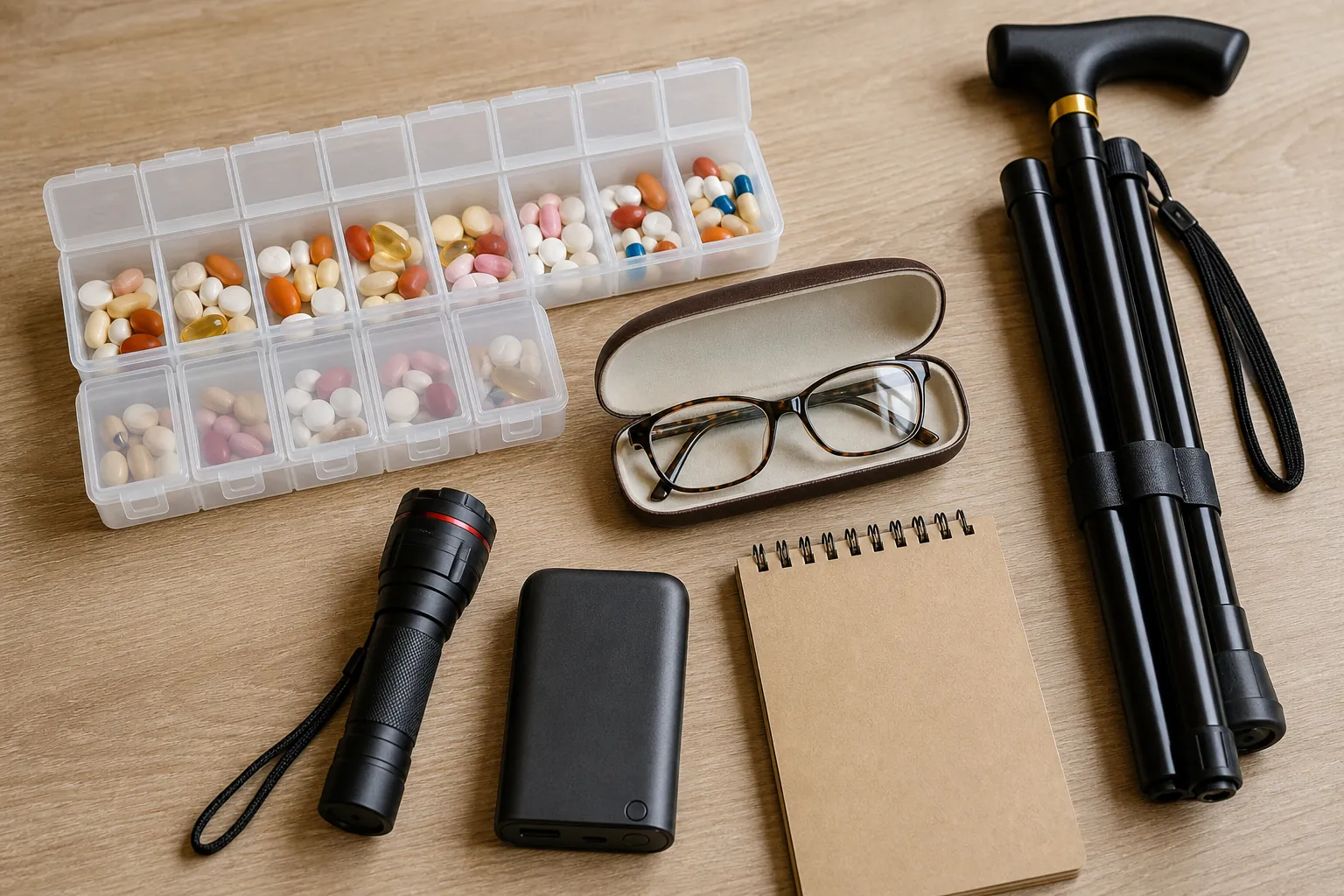
Those two numbers do different jobs. The 30-day medication reserve protects against pharmacy closures, delivery disruption, evacuation delays, and a caregiver who cannot cross town. The three-day water baseline is the minimum planning quantity for short-term evacuation or interruption. One should not be quietly substituted for the other.
Put the following items in one known place, then test whether the older adult can identify them without help:
- A current medication list, including dose timing and prescribing clinicians.
- At least 30 days of medications when the prescriber, pharmacist, insurer, and storage rules allow it.
- Spare eyeglasses, hearing-aid batteries or charger, denture supplies, and any daily-use medical-device supplies.
- The cane, walker, wheelchair cushion, transfer belt, brace, or other mobility item the person actually uses, not the one stored in the garage.
- Chargers, a labeled power bank, and backup power arrangements for essential devices.
- Water counted by person and day, plus food that matches chewing, swallowing, diabetes, kidney, or other diet restrictions discussed with the care team.
- A printed contact sheet, because a dead phone should not erase the pharmacy, neighbor, insurer, doctor, and family numbers.
Mobility supplies deserve the same respect as medication. If a wheelchair, walker, or cane is part of the flood plan, inspect it before storm season. Tires, brakes, tips, grips, batteries, and fit matter more when floors are damp and lighting is poor. For a more detailed mobility inspection, use the wheelchair safety checklist for seniors rather than waiting until evacuation is being discussed.
A support network is only real after someone has practiced the job
Ready.gov frames older-adult preparedness as assessing needs, creating a plan, and engaging a support network.[5] That sequence is useful because it makes the family name the dependency before assigning the helper. “Someone will check on Mom” becomes “Dina calls at 8 a.m.; Mr. Lee knocks if there is no answer; Jonah has the key code; the pharmacist is called if the medication list is missing.”
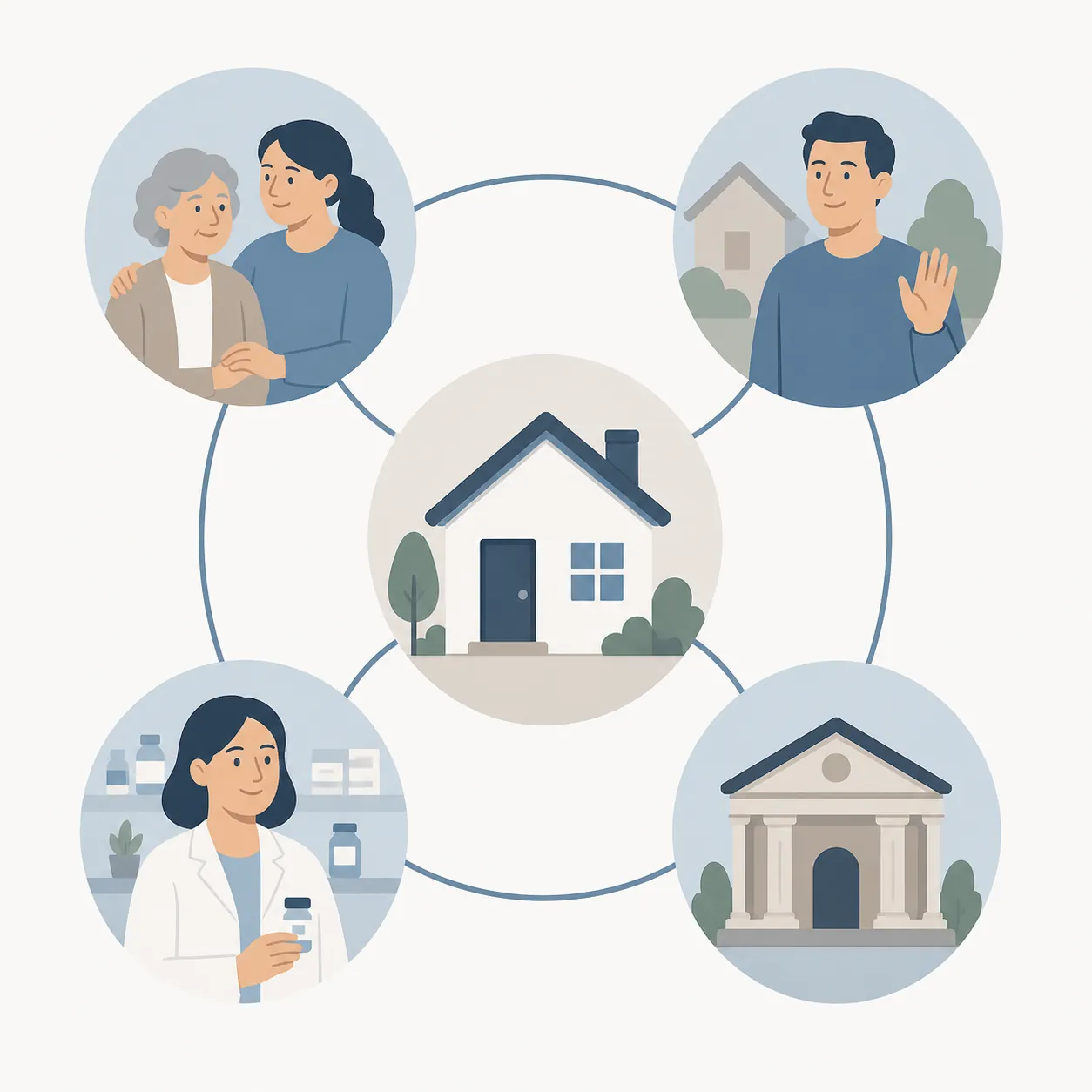
Start with the tasks that fail quietly:
- Who notices if the older adult misses a medication dose?
- Who confirms the person has water within reach, not just somewhere in the house?
- Who knows whether the person can transfer from bed to chair without power?
- Who can move a walker, wheelchair, oxygen supplies, or pet carrier into the car?
- Who has permission to call the building manager, utility company, pharmacy, insurer, or bank?
- Who calls emergency services if there is no answer, and after how long?
Then rehearse the plan lightly. A rehearsal can be a 20-minute call in which everyone reads their role aloud, confirms current phone numbers, and checks whether the older adult can hear the alert, unlock the door, reach the kit, and explain where the medications are. If the household already uses cameras, sensors, smart speakers, or check-in systems, decide what counts as a warning sign and who receives it. The elderly monitoring system decision framework can help sort those responsibilities without turning monitoring into guesswork.
Resistance is common and understandable. Many older adults hear “preparedness” as a vote of no confidence. Keep the ask concrete: “Let’s put your cane, glasses, medication list, and charger in one place,” is easier to accept than “You need an emergency plan.” If family conversations about safety tend to stall, the caregiver approach in post-hospital fall-prevention strategies is useful even outside the hospital context: reduce the argument to the next observable risk.
Protect benefit and banking access while systems are still normal
Money access is part of flood preparedness, especially for an older adult who depends on monthly benefits, local banking, paper mail, or one debit card. If the branch is closed, the mailbox is unreachable, the phone is dead, or the caregiver does not know where the card is, a small disruption becomes a practical emergency.
Before flood season, confirm how Social Security, pension, disability, veterans, or other recurring payments arrive. If paper checks are still involved, ask the paying agency or bank about direct deposit or a Treasury-sponsored benefit card option such as Direct Express. Program contact details and card rules are time-sensitive; last reviewed for inclusion on Aug. 25, 2026, but should be verified directly on official program materials before relying on them.
The household does not need to share every password with every relative. It does need a safe way for the older adult and a trusted backup person to find account contacts, card issuer information, insurance contacts, identification copies, and the location of emergency cash if the family chooses to keep any. Store copies high enough to avoid expected water, and keep a second copy outside the home with a trusted person or in secure digital storage.
Also decide how fraud risk will be handled. A flood is a bad time for a caregiver to improvise with someone else’s debit card, PIN, or online banking. If a power of attorney, trusted contact, representative payee, or account alert is appropriate, set it up while everyone is calm enough to understand what authority is being granted.
Hardening the home: use the measurements, but keep the evidence straight
The CDC’s flood-preparation guidance recommends several home-hardening measures: have a licensed electrician raise switches, sockets, and circuit breakers at least 12 inches above projected flood elevation; use sump pumps with backup power; install backflow valves or plugs to prevent sewer backup; and anchor fuel tanks.[6] These are general flood recommendations, not elder-specific research. Their value for an older resident is practical: they reduce the chance that the home loses power, backs up wastewater, floats a tank, or leaves the safest route wet and dark.
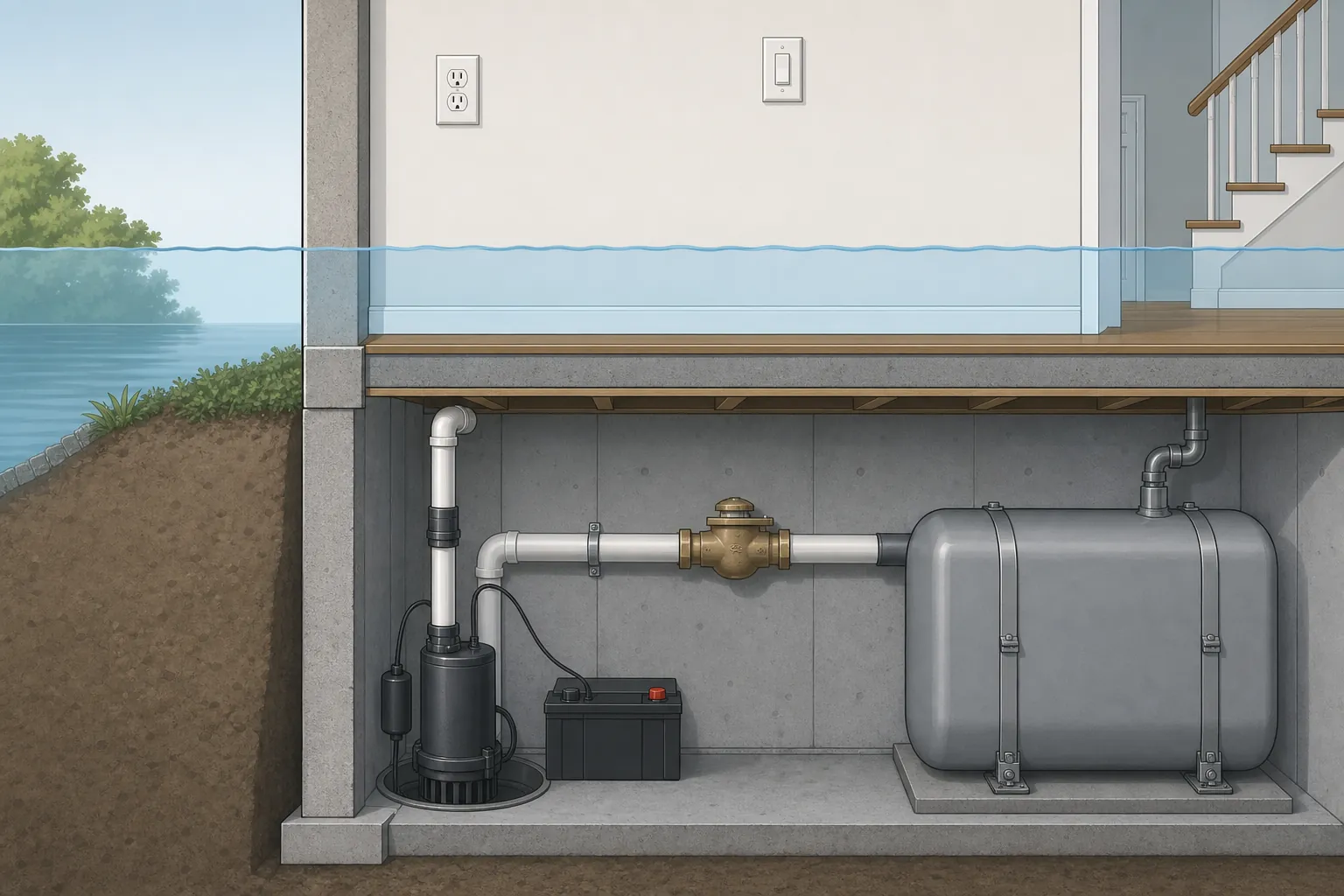
The 12-inch figure is a measurement to discuss with a licensed electrician and local building officials, not a do-it-yourself instruction. The right decision depends on the projected flood elevation, local code, panel location, equipment age, and whether raising a component creates a new reach problem for the older adult. A switch placed safely above flood level still has to be usable by the person living there.
For many families, this is where a home-modification conversation belongs. A contractor looking only at flood damage may miss the daily-use questions: Can the older adult reach the shutoff? Does the sump-pump alarm sound where they can hear it? Is the backup battery accessible without stairs? Does the evacuation route pass over a slippery utility-room floor? The broader home-readiness framework in best place to live for elderly home-modification readiness can help keep flood work connected to aging-in-place safety.
Electrical elevation
Ask a licensed electrician which switches, outlets, service panels, and circuit breakers are below projected flood elevation and what it would take to raise or protect them. If the older adult uses powered medical equipment, a lift chair, a stair lift, refrigeration for medication, or an electric bed, identify what happens when that circuit fails. A backup power plan is only useful if the device can actually be connected and operated by the person or helper assigned to do it.
Sump pump and backup power
A sump pump that works only during normal power is not much help during the outage that often accompanies severe weather. Check whether there is backup power, whether the alarm is audible, whether the discharge line is clear, and who is responsible for maintenance. If the pump is in a basement the older adult should not enter during heavy rain, the support network needs to know that before the alarm sounds.
Backflow valves and drains
Sewer or drain backup turns a fall risk into a contamination problem. Ask a qualified plumber whether backflow protection is appropriate and how it is maintained. Then look at the walking routes. If the bathroom, bedroom, medication storage, and exit path all depend on crossing a low drain area, the plan should not assume the older adult can simply “avoid the wet spot.”
Fuel tanks, utilities, and shutoffs
Anchored fuel tanks are part of general flood hardening because unanchored tanks can move in floodwater.[6] For the household plan, add two questions: who knows where the shutoffs are, and can that person reach them safely? If the answer requires an older adult to go outside in rising water or down basement stairs, the task belongs to someone else or to a professional mitigation plan completed earlier.
Alerts and evacuation decisions need more than one channel
Set up at least two alert paths before the season starts: one that depends on the older adult’s phone and one that does not, such as a NOAA Weather Radio. Add the FEMA app or local emergency alerts if they are usable in the household, but do not assume an app notification helps someone who sleeps without hearing aids, keeps the phone in another room, or cannot read small text quickly.
Write down the evacuation trigger in plain language. It might be an official evacuation order, water reaching a named road, loss of power for a device-dependent resident, or a caregiver being unable to reach the home before nightfall. The trigger should be something the support network can recognize without debating weather terminology.
If evacuation may require wheelchair transport, oxygen logistics, dialysis scheduling, pet transport, or help down stairs, contact local emergency management or the relevant service providers before flood season. A neighbor with a sedan may be generous and still be the wrong evacuation plan.
Do the fall-risk walk-through after the flood plan is built
Flood preparedness does not end when the water stops. Wet flooring, lifted thresholds, ruined grab-bar anchoring, debris, poor lighting, and rushed cleanup can keep the fall risk high. The companion piece Why a Water Crisis Is a Fall Emergency for Older Adults covers the wet-floor and re-entry side in more detail. Use it after the pre-flood plan is in place, not instead of one.
If the household has already prepared for other hazards, reuse the same routine. The plan-ahead work in Wildfire Safety for Older Adults During a Heat Dome follows the same discipline: decide before the emergency which supplies, helpers, equipment, alerts, and evacuation limits are real.
The final calm-week check
Walk through the house once with the older adult and once with the caregiver who is most likely to be called. Do not grade the plan by how complete the folder looks. Grade it by whether these statements are true:
- The flood risk has been checked against FEMA mapping and local drainage knowledge.
- Flood insurance, if used, is already active or its effective date is known.
- Medications are counted toward the older-adult 30-day reserve, and water is counted separately by person and day.
- Cane, walker, wheelchair parts, eyeglasses, chargers, hearing supplies, and medication list are stored where they can be found quickly.
- The support network has practiced who calls, who comes, who has access, and who escalates.
- Benefit payments, banking access, card information, and trusted contacts have backups that do not depend on one mailbox or one device.
- Electrical elevation, sump pump backup, backflow protection, fuel-tank anchoring, and shutoff access have been assessed by the right professional or accepted as known unfinished risks.
- Alerts can reach the older adult in more than one way, and evacuation triggers are written in plain language.
When a flood watch arrives, this is the work that should already be finished: insurance in force, supplies counted, medications and mobility items together, home-hardening questions assessed, income access protected, and people rehearsed enough to know what they are doing.
References
- Understanding the Fundamentals: The Real Cost of Flooding, National Flood Insurance Program.
- Flood Insurance, FEMA.gov.
- Older Adults Emergency Preparedness, American Red Cross.
- Build A Kit, Ready.gov.
- Older Adults, Ready.gov.
- Preparing for Floods, CDC.
Related reading
Noticed something outdated or inaccurate on this page? Flag a correction. We review every report against CDC, NIA, and AARP HomeFit guidance before updating a page.
Part of the Fall Prevention section.