
A Caregiver's Guide to Medication Review for Fall Prevention
Many medications commonly taken by older adults can increase fall risk, yet caregivers often don't know how to initiate a review. This guide provides a step-by-step process based on the HomeMeds framework to help you identify high-risk drugs and work with healthcare providers to reduce fall risk.
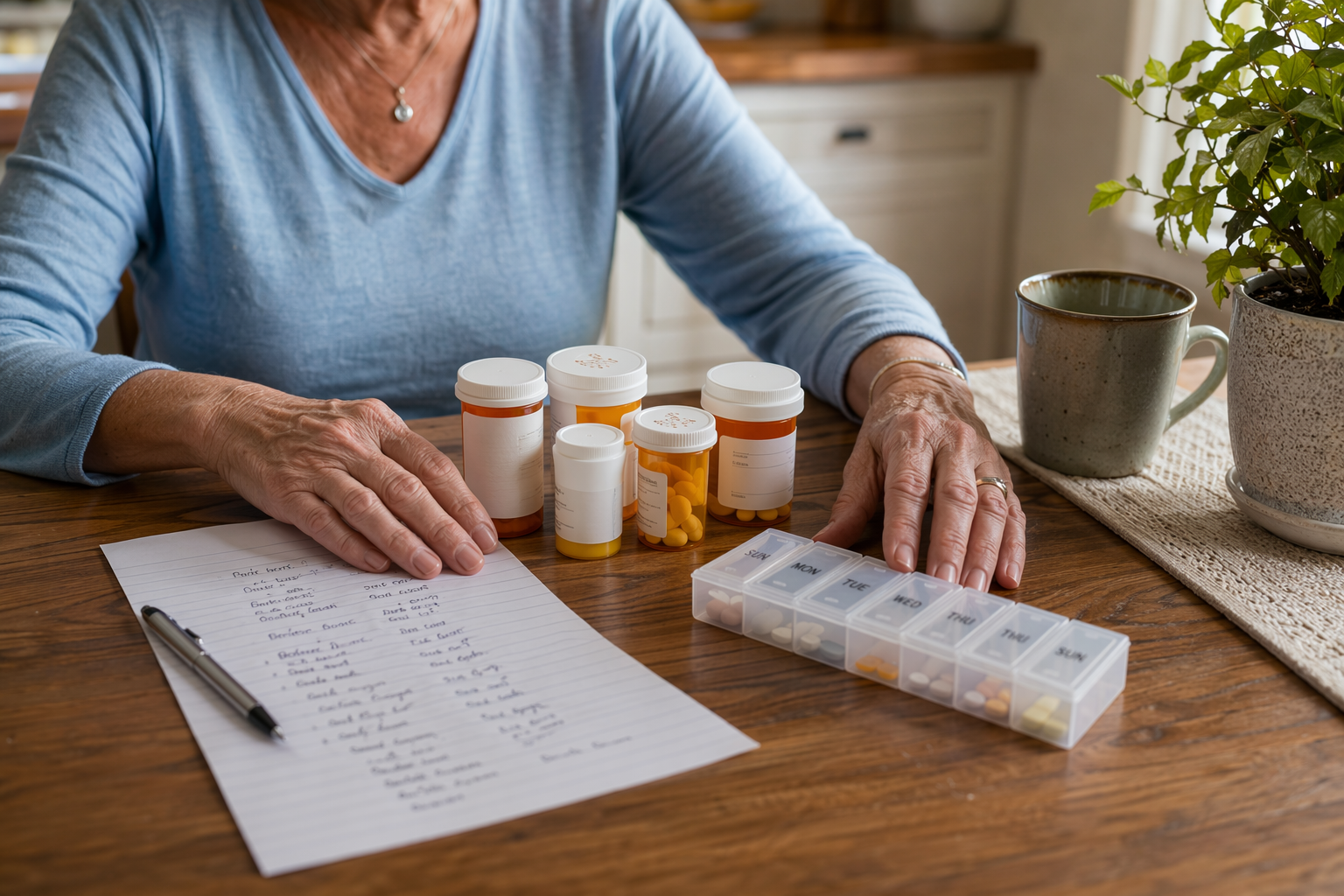
After a parent falls, the medication list suddenly looks different. The bottles that were ordinary yesterday—the blood pressure pill, the bladder medication, the sleep aid bought at the pharmacy, the antidepressant that has been stable for years—now have to be read as part of the fall story. Not because anyone should stop them at the kitchen table, but because someone needs to make a complete, reviewable packet and get the right clinical eyes on it.
For caregivers working on fall prevention in older adults, medication review is one of the few places where an adult child or spouse can do something useful before the appointment. The caregiver’s job is not to diagnose dizziness or deprescribe. It is to make sure the pharmacist and prescriber can see the full medication picture: what is being taken, when it changed, who prescribed it, and which drugs might raise fall risk.
Why medication review belongs in fall prevention
The medication issue becomes more urgent when an older adult takes several drugs at once. CDC STEADI materials and Johns Hopkins Medicine both identify use of five or more medications as a threshold associated with higher fall risk in older adults.[1][2] That count should include prescription drugs, over-the-counter products, and regularly used supplements when you are preparing the list for review.
The frustrating part is that a medication review may not happen automatically after a fall. NCOA’s HomeMeds program materials report that only 8% of primary care physicians base fall prevention on established guidelines.[3] That number does not mean physicians do not care. It explains why a caregiver who waits for “someone” to reconcile the bottles may be waiting through the next dizzy spell.
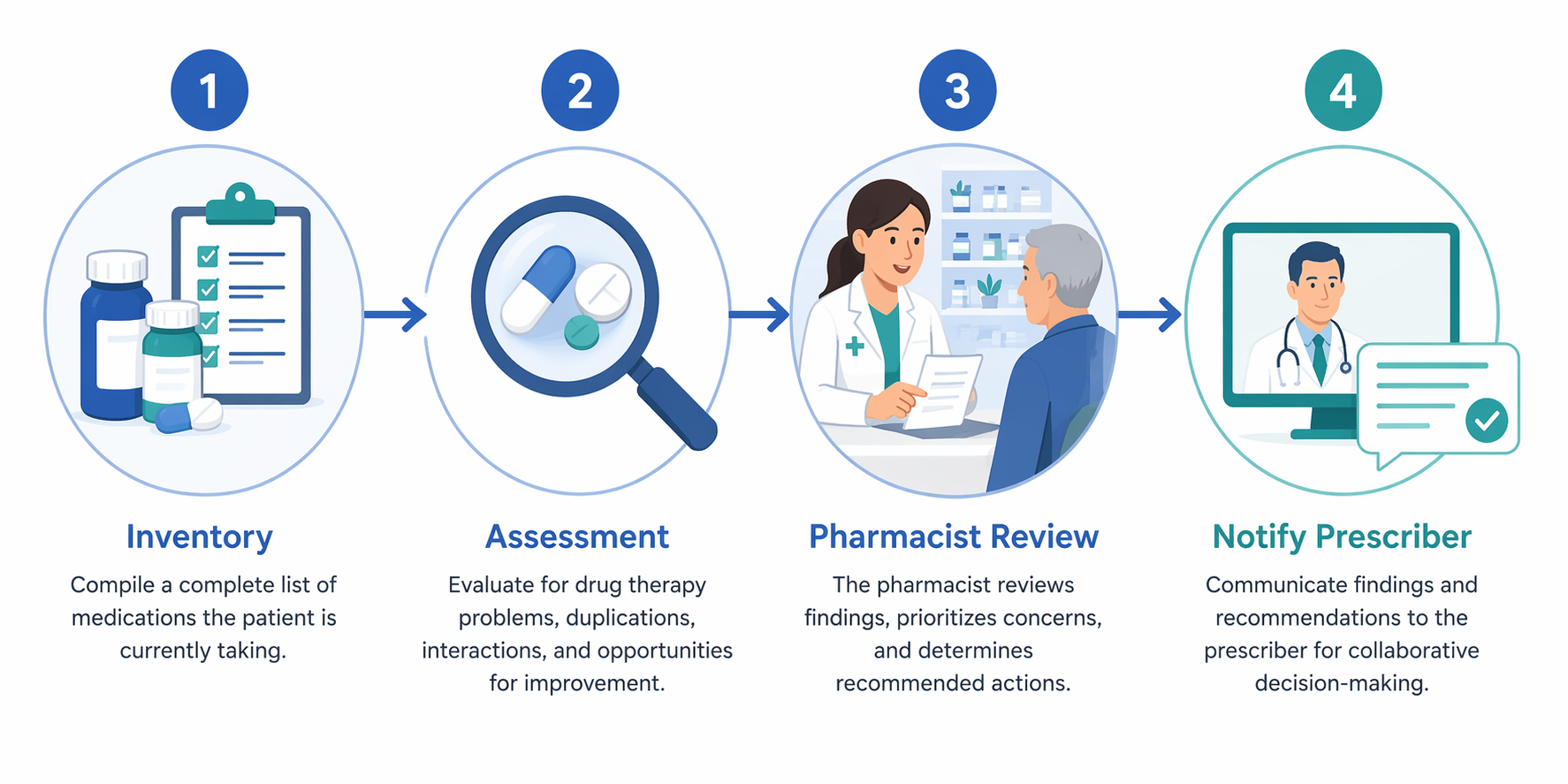
A structured review gives the conversation a place to start. HomeMeds describes a sequence of medication inventory, computerized assessment using risk criteria, pharmacist review, and prescriber notification when concerns are identified.[3] Caregivers can borrow the practical shape of that process even if they are not enrolled in a formal HomeMeds program.
First, build the medication inventory the clinician actually needs
A useful inventory is not the same as a neat medication list from last year’s portal. It is a current record of what the older adult is really taking. That means opening the cabinet, checking the bedside table, looking at the pill organizer, and comparing those items with the discharge paperwork and patient portal list.
Start with the medications that are taken every day, then add the ones used “only sometimes.” Those occasional products are easy to leave out, and they can matter. An older adult may not think of a nighttime allergy pill, Tylenol PM, Benadryl, or a bladder control medication as part of the fall conversation, especially if it was bought without a prescription.
- Medication name, including brand and generic name if both appear on the bottle
- Dose and instructions exactly as written, plus how the person actually takes it
- Time of day taken, including bedtime, middle-of-the-night, or “as needed” use
- Reason it was prescribed or why it is being used, if known
- Prescriber or source, such as primary care, cardiology, urology, psychiatry, hospital discharge, or over-the-counter purchase
- Recent changes, including new medications, dose increases, dose decreases, missed doses, or stopped medications
The recent-change column is worth the extra effort. A fall that happens after a hospital discharge, a new blood pressure dose, a new sleep medication, or a change in antidepressant therapy gives the reviewer a timeline. It does not prove the medication caused the fall, but it gives the pharmacist and prescriber something concrete to evaluate.
For long-distance caregivers, the inventory can be built in pieces. Ask for photos of every bottle label, the front and back of supplement containers, the weekly pill organizer before it is filled, and the most recent discharge list. If a neighbor, home health aide, or sibling is nearby, ask that person to check places where non-prescription products live: the bathroom cabinet, the nightstand, the kitchen counter, and the purse or travel bag.
| What to capture | Why it matters for fall review |
|---|---|
| Bedtime medications | Sleepiness, nighttime bathroom trips, and morning grogginess can all affect balance |
| Blood pressure medications and dose changes | Lightheadedness or blood pressure drops may be relevant after standing |
| OTC allergy and sleep products | Some contain ingredients with sedating or anticholinergic effects |
| Bladder medications | Some may have anticholinergic effects and are easy to omit from fall conversations |
| Hospital discharge medications | The discharge list may differ from the bottles already at home |
| Multiple prescribers | No single clinician may see the full medication burden unless the caregiver assembles it |
Recognize the fall-risk medication patterns
Some medication categories deserve a bright flag on the inventory. NCOA identifies several classes that can increase fall risk in older adults, including psychoactive drugs, sedatives or hypnotics, blood pressure medications, muscle relaxants, and anticholinergics.[4] This is a recognition guide, not a stop list. The purpose is to know what belongs in the review.
Psychoactive medications
This group can include antidepressants, benzodiazepines, and antipsychotics.[4] A caregiver may see these on the list because of depression, anxiety, sleep, agitation, or another medical reason. The fall question is not whether the medication is “bad.” It is whether the current dose, timing, combination, or recent change could be affecting alertness, reaction time, or balance.
Sedatives, hypnotics, and sleep aids
Sleep medications are often hidden in plain sight because everyone understands why an exhausted older adult wants rest. The review still needs to include prescription sleep drugs and non-prescription nighttime products. If the person wakes to use the bathroom, walks in dim light, or feels foggy in the morning, the timing of sedating medication becomes part of the fall-prevention conversation.
Blood pressure medications
Blood pressure treatment can be essential. It can also become relevant after a fall if the older adult reports dizziness, lightheadedness, weakness, or symptoms when standing up. Caregivers should note recent dose changes, missed meals, dehydration concerns, and whether symptoms happen after morning medications or after getting out of bed.
Muscle relaxants
Muscle relaxants may be prescribed after pain, spasms, or injury, but they can also bring sedation or weakness into an already fragile routine.[4] If one appears after a fall-related injury, it deserves special attention because the medication meant to manage pain may affect the next few days of mobility.
Anticholinergics, including products that do not look risky
Anticholinergic medications are where many families have the “wait, that counts?” moment. NCOA and Johns Hopkins Medicine both point to products such as antihistamines and some bladder control medications as fall-risk concerns in older adults.[2][4] Diphenhydramine, the ingredient associated with Benadryl and some nighttime pain or sleep products such as Tylenol PM, is a common example caregivers may find outside the prescription list.[2][4]
For a quick companion list of medication categories to flag, use What Medications Increase Fall Risk in Older Adults?. The larger task here is turning that recognition into a review process.
Turn the list into a pharmacist handoff
Once the inventory is complete enough to be useful, the next step is pharmacist review. A pharmacist can look across the whole list for duplicate therapy, high-risk combinations, sedating medications, anticholinergic burden, and timing issues. In the HomeMeds model, pharmacist review follows the medication inventory and risk assessment, and prescribers are notified when the review identifies concerns.[3]
The handoff should be specific. “Can you look at Mom’s meds?” is easy to agree with and easy to lose. A better request is: “She fell on Saturday. She takes more than five medications, including a sleep product and a bladder medication. Could you review this list for fall-risk concerns and send recommendations or questions to the prescribing clinician?”
- Send the current medication inventory, not just the portal list
- Include the fall date, discharge date if there was a hospitalization, and any dizziness or confusion noted
- Flag medications started, stopped, or changed in the weeks around the fall
- Ask whether any medications, combinations, doses, or timing patterns could contribute to falls
- Ask how recommendations will reach the prescriber and how the caregiver will know what changed
If the older adult uses one pharmacy for all prescriptions, start there. If prescriptions are split across pharmacies, mail order, specialists, and hospital discharge fills, say that plainly. Fragmentation is the problem you are asking the pharmacist to help sort through, not a personal failure to have everything perfectly organized.
Caregivers should also ask about authority before they need it. If privacy rules prevent the pharmacist or clinician from discussing details, the older adult may need to sign a permission form or add the caregiver to the account. This paperwork is annoying, but it is better handled before the next urgent portal message.
Make sure the prescriber receives a clear question, not a vague worry
Medication changes belong with the prescriber. The caregiver’s role is to make the concern traceable enough that the prescriber can respond. If a pharmacist identifies a possible fall-risk medication, duplicate, interaction, or timing concern, ask whether the pharmacist can send that recommendation directly to the prescribing clinician. If not, ask for the concern in writing so it can be attached to a portal message or brought to the appointment.
A useful message names the event, the list, and the requested action. For example: “After Dad’s fall on June 18, we completed a current medication inventory. The pharmacist flagged nighttime diphenhydramine use and recent blood pressure dose changes as possible fall-risk concerns. Could you review whether any medication changes or timing adjustments are appropriate?” This kind of message does not tell the prescriber what to do. It gives the prescriber a concrete reason to review.
When there are multiple prescribers, the primary care clinician may need the whole list even if cardiology, urology, psychiatry, or pain management owns one piece of it. For families juggling that many messages, a simple care coordination setup can prevent the same medication question from being asked five different ways. The guide How to Build a Care Coordination System can help caregivers keep prescriber names, portal access, pharmacy contacts, and follow-up tasks in one place.
What not to do at home
Do not stop a medication abruptly because it appears on a fall-risk list. Some drugs require tapering, substitution, monitoring, or coordination among specialists. Even an over-the-counter product can be tied to a symptom the older adult has been trying to manage, such as insomnia, itching, urinary urgency, or pain.
Also avoid cleaning up the list by memory. Old bottles, duplicate bottles, and discontinued medications may reveal exactly where confusion entered the routine. Keep them available for review, separated from the active daily medications if needed for safety, until a pharmacist or clinician confirms what should remain.
Medication review is one part of the fall picture
Falls rarely come from one source. Medication review belongs beside strength, balance, vision, hearing, footwear, bathroom safety, lighting, and mobility aids. CDC and NCOA fall-prevention materials cite evidence that hearing aids can reduce fall risk by 50% in adults with hearing loss, so sensory health should not be left out while the medication list is being reviewed.[5][6]
If the fall just happened and the family is still sorting out urgent decisions, use After a Fall: A Step-by-Step Guide to Activating Senior Health Services or The 72-Hour Caregiver Checklist to sequence the immediate calls, appointments, and paperwork. For the home environment, pair medication review with A Room-by-Room Fall Prevention Checklist. For a broader printable overview, use The Complete Fall Prevention Handout for Seniors and Their Caregivers.
The safest line is also the clearest one: caregivers should not deprescribe, but they can make review possible. Bring the complete inventory. Flag the fall-risk patterns. Ask for pharmacist input. Make sure the prescriber receives a specific concern or recommendation. That is no longer a vague instruction to “ask the doctor.” It is a medication review with a paper trail.
References
- STEADI — Older Adult Fall Prevention. Centers for Disease Control and Prevention. https://www.cdc.gov/steadi/
- Fall Prevention: Balance and Strength Exercises for Older Adults. Johns Hopkins Medicine. https://www.hopkinsmedicine.org/health/wellness-and-prevention/fall-prevention-exercises
- HomeMeds. National Council on Aging. https://www.ncoa.org/article/evidence-based-program-homemeds/
- What Medications Increase Fall Risk in Older Adults? National Council on Aging. https://www.ncoa.org/article/what-medications-increase-fall-risk-in-older-adults/
- Hearing Aid Use and Fall Risk. Centers for Disease Control and Prevention. https://www.cdc.gov/hearing-loss/data-research/facts-stats/index.html
- Falls Prevention for Older Adults. National Council on Aging. https://www.ncoa.org/older-adults/health/prevention/falls-prevention/
Related reading
Noticed something outdated or inaccurate on this page? Flag a correction. We review every report against CDC, NIA, and AARP HomeFit guidance before updating a page.
Part of the Fall Prevention section.