
The Complete Fall Prevention Handout for Seniors and Their Caregivers
This printable handout gives seniors and their caregivers one practical reference covering home safety checks, balance exercises, medication review, and respectful conversation starters — all in one place so you can take action immediately after a fall or when starting fall prevention.
The most useful fall prevention handout for seniors is not the longest one. It is the one an adult child can bring to the kitchen table after a fall or near-fall, place between two people, and use without making the older adult feel inspected.
Start with the reason the conversation matters: about 1 in 4 adults age 65 and older falls each year, and falling once doubles the chance of falling again.[1] That is serious enough to act on today. It is also not a sentence to give up stairs, gardening, errands, or walking to the mailbox. Many falls are preventable, and the point of the handout is to protect independence, not shrink it.[1]
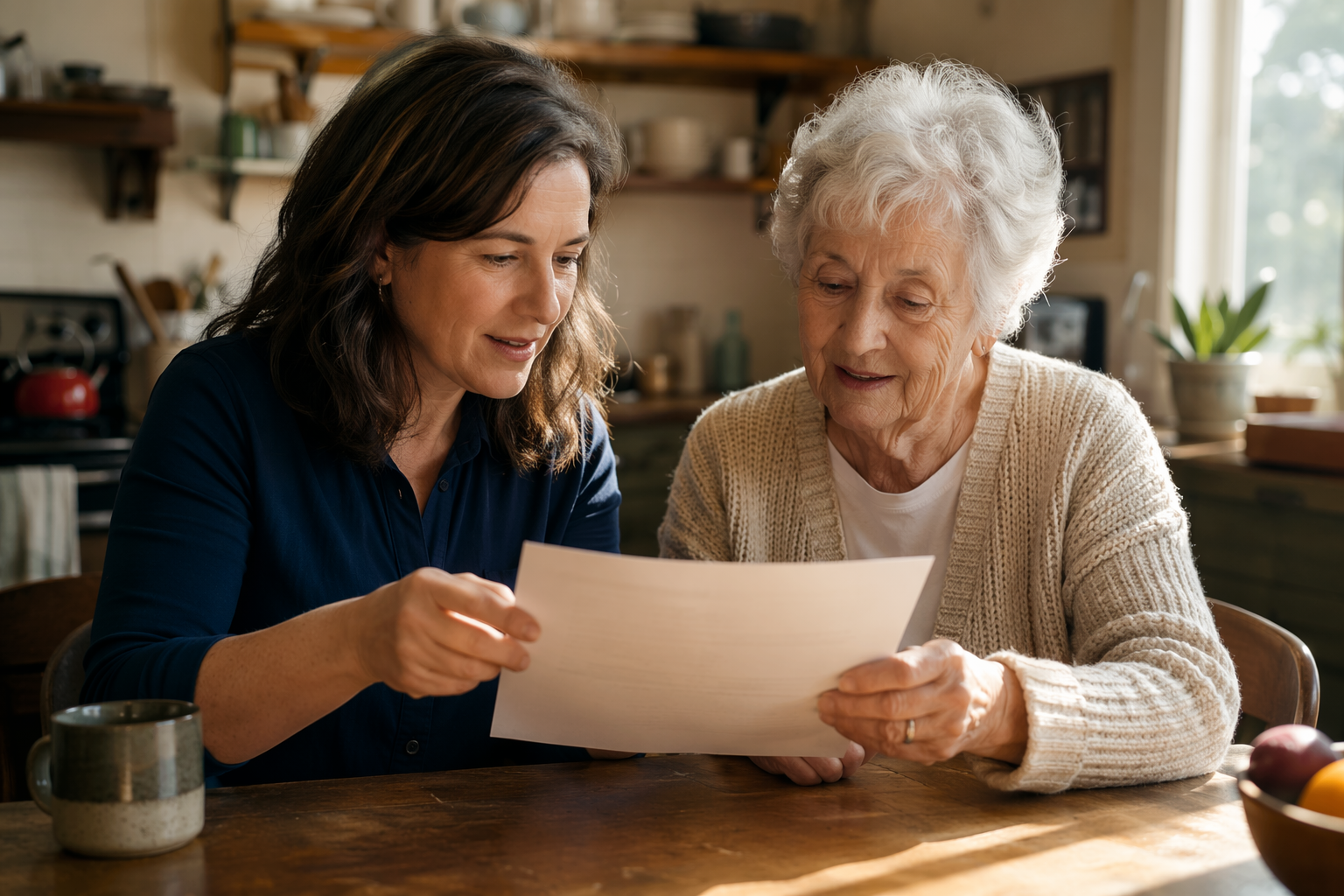
Use this as a fall-prevention educational, printable reference. It is not a clinical fall-risk assessment. If your parent has already fallen, has new weakness, dizziness, confusion, head injury, worsening pain, or cannot walk normally, use this alongside medical follow-up, not instead of it. For the first few days after a fall, the companion guide Your Parent's First Fall: A 72-Hour Prevention Plan gives a more focused next-step sequence.
The Printable Handout: One Page, Two Jobs
A caregiver usually wants a checklist. The older adult often wants reassurance that the checklist is not a verdict on competence. A good handout needs to do both jobs at once: give the caregiver concrete actions and give the senior a way to stay in charge of the changes.
| Handout section | What it asks you to do | Who should be involved |
|---|---|---|
| Fall facts | Name the risk without dramatizing it | Senior and caregiver |
| Quick home scan | Check walkways, lighting, bathroom safety, stairs, footwear, and commonly used items | Senior and caregiver together |
| Medication review | Put all prescriptions, over-the-counter medicines, and supplements in one bag for a clinician or pharmacist to review | Senior, caregiver if invited, clinician or pharmacist |
| Vision and hearing prompts | Schedule checks when vision, hearing, dizziness, or balance changes are present | Senior, eye professional, hearing professional, primary care clinician |
| Beginner movement | Try only safe, supported exercises within comfort limits | Senior, caregiver nearby at first, physical therapist when needed |
| Conversation starters | Use respectful language that protects choice | Caregiver and senior |
| Referral pathway | Know when to ask for physical therapy, occupational therapy, or medical evaluation | Care team |
If you want the clinical framework behind these pieces, the simplified handout lines up well with STEADI-style fall prevention. The detailed guide How to Build a Fall Prevention Action Plan Using the CDC STEADI Framework explains that structure more fully. For a kitchen-table printout, the safer choice is usually fewer words and clearer next actions.
Section 1: The First Lines to Print at the Top
Put these lines at the top of the handout, in large type:
- Falls are common after age 65, but many are preventable.[1]
- One fall makes another fall more likely, so small changes now matter.[1]
- The goal is to keep daily life going: walking, bathing, cooking, visiting, shopping, and moving with confidence.
- No one should stop or change medicines without a clinician or pharmacist.
- Exercises should be done only when safe, steady, and comfortable.
Those lines matter because the first emotional signal of the handout is as important as the first task. If the page begins like a warning label, the older adult may hear, “You are the problem.” If it begins with independence, the rest of the page has a better chance of being used.
Section 2: The 15-Minute Home Scan
More than half of falls occur at home, and AAOS notes that simple environmental changes can cut fall risk by half.[2] That makes the home scan the best first task after the urgent medical issues are handled. It should be quick enough to finish before everyone gets tired or defensive.
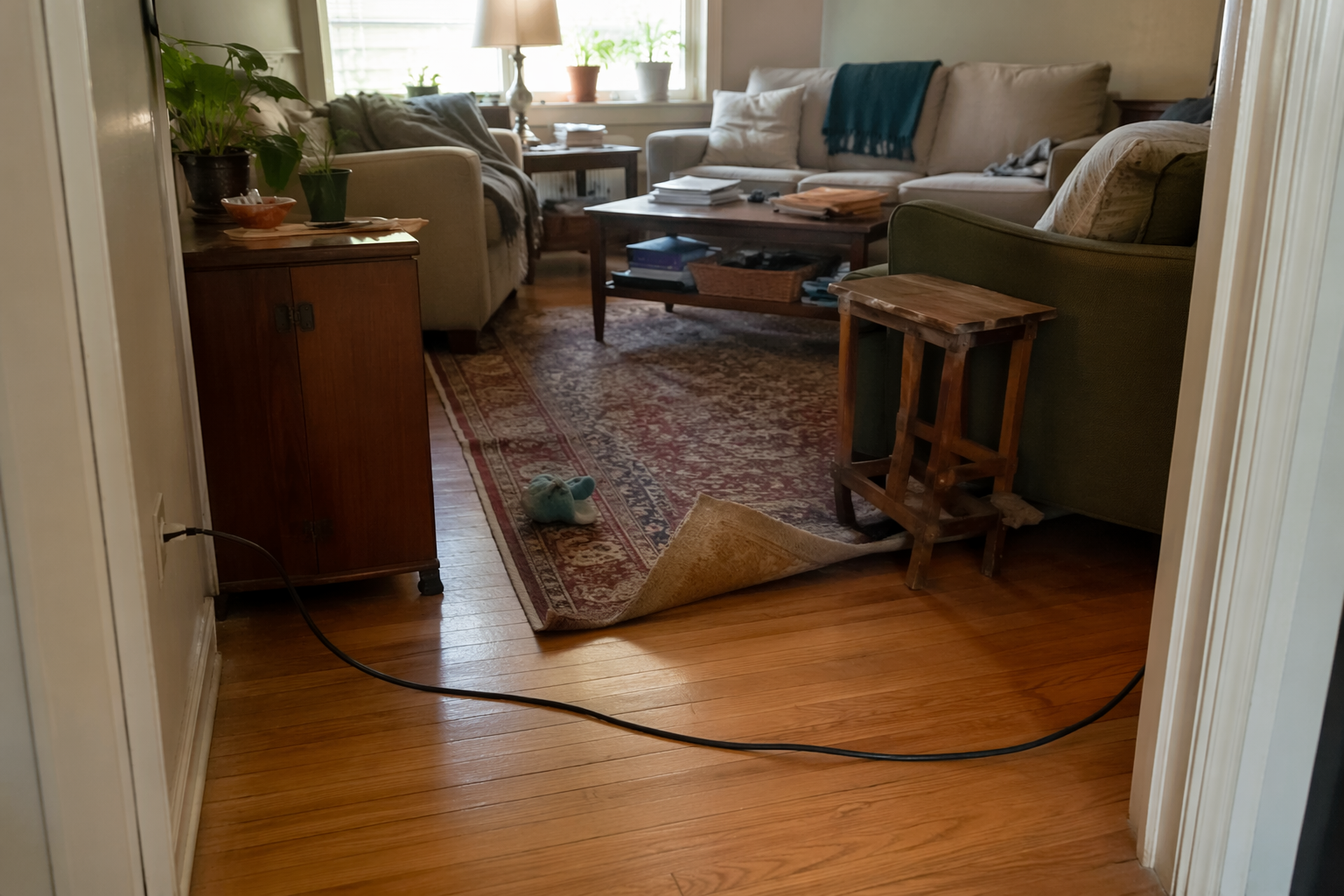
For the handout, use a condensed version. Save the full walk-through for a calmer day with the extended Room-by-Room Fall Prevention Checklist for Caregivers.
| Area | Check today | Small first fix |
|---|---|---|
| Main walking paths | Cords, shoes, pet items, low tables, stacks of mail, or anything that narrows the path | Clear one wide route from bedroom to bathroom and from favorite chair to kitchen |
| Rugs and mats | Curled edges, sliding mats, thick throw rugs, or rugs used to cover worn flooring | Remove, secure, or replace the highest-risk rug first |
| Lighting | Dim hallways, burned-out bulbs, hard-to-reach switches, dark stairs, and nighttime bathroom route | Add night lights or brighter bulbs where walking happens after dark |
| Bathroom | Slippery tub, no grab bar, loose bath mat, low toilet, towel rack being used as support | Add non-slip surfaces and discuss proper grab bars |
| Stairs | Loose railings, clutter on steps, poor contrast at edges, uneven lighting | Clear the steps and check that railings are secure |
| Bedroom | Rushing to the bathroom, unstable furniture, cords near the bed, hard-to-reach lamp | Place light, phone, glasses, and walking aid within easy reach |
| Footwear | Backless slippers, slick soles, shoes kept far from the bed | Keep supportive shoes where they are actually used |
The rug conversation deserves its own line on the handout because it is rarely about a rug. It may be about a gift, a memory, or not wanting the house to look “medical.” Instead of “This has to go,” try: “Can we test this walkway for a week and see if it feels easier?” A temporary trial often lands better than a permanent decree.
Section 3: The Brown-Bag Medication Review
The medication section should not invite a caregiver to play pharmacist. It should ask for a brown-bag review: put every prescription, over-the-counter medicine, vitamin, supplement, sleep aid, and pain reliever in one bag and bring it to a clinician or pharmacist.
This deserves space because medication risk is easy to miss. Johns Hopkins Medicine notes that taking five or more medications raises fall risk.[3] Mayo Clinic also flags side effects such as dizziness, drowsiness, and lightheadedness as issues to discuss with a healthcare professional.[4]
- Print this prompt: “Please review these medicines for dizziness, sleepiness, blood pressure drops, balance effects, and interactions.”
- Add this safety line: “Do not stop a medicine suddenly unless the prescriber tells you to.”
- Ask one practical question: “Which medicine should we call about first if dizziness or unsteadiness continues?”
- Bring notes about when the fall or near-fall happened, including time of day, meals, alcohol use if relevant, new medicines, and recent dose changes.
This is also where the caregiver may need to slow down. If the older adult hears, “You take too many pills,” the conversation may end. “Can we ask the pharmacist whether any of these could be making balance harder?” keeps the authority where it belongs and gives the parent room to agree.
Section 4: Vision, Hearing, and the Less Obvious Fall Clues
Most families think about eyeglasses before they think about hearing. Keep both on the handout. NCOA reports that hearing loss is associated with nearly three times the risk of falling, and hearing aid use is associated with a 50% reduction in risk.[5] That does not mean hearing aids are a guaranteed fall-prevention device for every person, but it is a strong reason not to ignore missed words, turned-up television volume, or trouble hearing in noisy rooms.
- Schedule an eye exam if vision has changed, glasses are outdated, depth perception seems off, or stairs have become harder to judge.
- Ask about hearing evaluation if conversations are being missed, the person startles when approached, or they seem less aware of people, pets, or sounds nearby.
- Call the primary care clinician about new dizziness, faintness, numbness, weakness, foot pain, or sudden changes in walking.
- Consider whether fear after a fall is causing the person to move less; the guide How Fear of Falling Leads to More Falls explains why avoiding all activity can backfire.
The handout should leave room for the senior’s own observations: “I feel unsteady when…” and “I feel safest when…” Those two blanks can reveal more than a lecture.
Section 5: Safe Beginner Balance Exercises
Exercise belongs on the handout, but it needs caution before instructions. Use a sturdy chair that does not roll. Keep a counter, wall, or another stable surface within reach. Have another person nearby the first time. Stop if there is chest pain, severe shortness of breath, dizziness, new pain, or a feeling that a fall is likely. Anyone with recent injury, major balance problems, or medical restrictions should ask a clinician or physical therapist before trying new exercises.
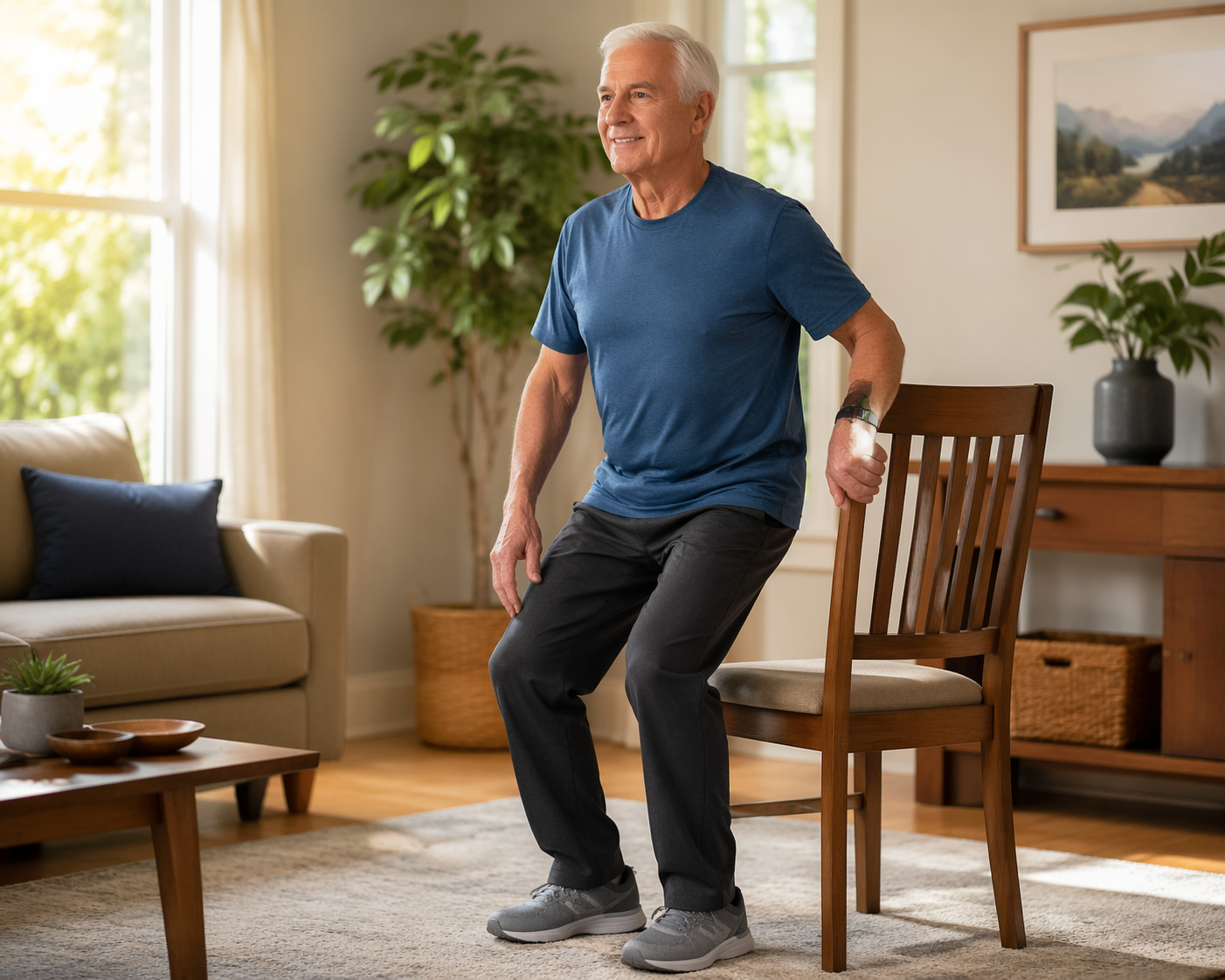
Johns Hopkins Medicine and MedlinePlus both include simple home exercises such as sit-to-stand, toe stands, and balance practice in fall-prevention guidance.[3][6] The handout should describe them plainly and keep repetitions flexible rather than turning the page into a workout plan.
| Exercise | How to do it safely | Stop or modify if |
|---|---|---|
| Sit-to-stand | Sit near the front of a sturdy chair. Stand up slowly. Sit back down with control. Use hands if needed. | Knees, hips, dizziness, or weakness make the movement feel unsafe |
| Toe stands | Hold the back of a sturdy chair or counter. Rise onto the balls of the feet, pause briefly, and lower slowly. | There is calf pain, foot pain, swaying, or lightheadedness |
| Feet-together balance | Stand near a counter or sturdy chair with feet close together. Hold support as needed. Practice only for a comfortable amount of time. | The person cannot release support safely or feels panicked |
| Short indoor walking | Walk a clear, well-lit route inside the home using the usual cane, walker, or support if prescribed. | The route has clutter, loose rugs, pets underfoot, or fatigue |
The handout can point to Maintaining Mobility at Home when the question becomes less “Which exercise?” and more “Does this home setup still support safe movement?”
Section 6: Conversation Lines That Do Not Corner the Person
The conversation section is not decoration. It may be the difference between a handout that gets taped to the refrigerator and one that gets folded into a drawer. ODPHP suggests using direct, caring language such as, “You’re important to me, and I don’t want you to fall and get hurt.”[7] NCOA also recommends approaching the topic with respect, listening, and avoiding blame.[8]
| Instead of | Try |
|---|---|
| You have to get rid of these rugs. | Can we look at the rug edges together and decide which one worries you most? |
| You’re not safe living here. | I want this house to keep working for you. Can we make one walkway easier today? |
| You need a walker. | Would you be willing to ask the doctor or physical therapist whether your current support is still the best fit? |
| You take too many medicines. | Can we ask the pharmacist whether any of these could be affecting balance? |
| You can’t keep doing that. | Which activities matter most to you? Let’s make those safer first. |
One common myth is that limiting activity prevents falls. NCOA identifies that belief as a myth, and it is a costly one for daily life because less movement can mean less strength and confidence.[9] The better message is not “do everything the old way.” It is “let’s keep you doing what matters with fewer traps in the path.”
Section 7: When the Handout Is Not Enough
A printable reminder is useful because it lowers the barrier to starting. It cannot diagnose why someone fell. It cannot decide whether a walker is fitted correctly. It cannot judge whether dizziness is from medication, dehydration, blood pressure, inner-ear issues, heart rhythm, infection, pain, or something else.
- Ask the primary care clinician for a fall-risk review after a fall, repeated near-falls, dizziness, fainting, new weakness, or changes in walking.
- Ask about physical therapy if strength, gait, balance, fear, or getting up from a chair has changed.
- Ask about occupational therapy or a home safety assessment if the bathroom, stairs, transfers, kitchen tasks, or daily routines feel unsafe.
- Schedule vision and hearing checks when sensory changes are present or overdue.
- Use Senior Health Care After a Fall for medical follow-up questions that go beyond a one-page handout.
Parachute Canada’s caregiver guide uses an action-plan approach after a fall: record what happened, identify contributing factors, and decide who will help with each next step.[10] That structure transfers well to a family handout because it prevents the older adult in the room from becoming the project while everyone else gives instructions.
A Printable Version You Can Copy Into One Page
Use this as the condensed handout text. Keep the type large, leave checkboxes wide enough to mark easily, and do not crowd the page.
| Print this section | Handout wording |
|---|---|
| Why we are doing this | Falls are common after 65, and one fall makes another more likely. The goal is to keep independence, confidence, and daily routines going. |
| Today’s home check | Clear one main walkway. Check rugs, cords, lighting, bathroom surfaces, stairs, bedroom route, and footwear. Pick the highest-risk fix first. |
| Medication review | Put all prescriptions, over-the-counter medicines, vitamins, supplements, pain relievers, and sleep aids in one bag. Ask a clinician or pharmacist about dizziness, sleepiness, interactions, and balance effects. |
| Vision and hearing | Schedule checks if vision, depth perception, hearing, dizziness, or awareness of surroundings has changed. |
| Safe movement | Use a sturdy chair or counter. Have someone nearby at first. Try only comfortable sit-to-stand, toe stands, feet-together balance, or short indoor walking. Stop if unsafe. |
| Conversation agreement | We will make changes with you, not to you. We will start with the activity or room that matters most to you. |
| When to call for help | Call a clinician after a fall, repeated near-falls, dizziness, fainting, new weakness, pain, confusion, or a change in walking. |
If a question comes up while using the handout, the Fall Prevention FAQ for Seniors and Caregivers can help sort quick concerns without turning the whole visit into another research session.
Print the handout. Do the first home walk-through together. Schedule medication, vision, or hearing review where needed. Try beginner exercises only within comfort and safety limits. Use the fuller guides for post-fall care, the STEADI-based action plan, and the complete room-by-room checklist when the first page is no longer enough.
References
- CDC STEADI Patient & Caregiver Resources, CDC.
- AAOS Home Safety Checklist, AAOS.
- Johns Hopkins Medicine Fall Prevention Exercises, Johns Hopkins Medicine.
- Mayo Clinic Fall Prevention: Simple Tips, Mayo Clinic.
- NCOA Get the Facts on Falls Prevention, NCOA.
- MedlinePlus Exercises to Help Prevent Falls, MedlinePlus.
- ODPHP Conversation Starters, ODPHP.
- NCOA 4 Tips to Talk to Older Adults About Preventing Falls, NCOA.
- NCOA 10 Myths About Older Adults and Falls, NCOA.
- Parachute Canada Caregivers' Guide to Fall Prevention, Parachute Canada.
Related reading
Noticed something outdated or inaccurate on this page? Flag a correction. We review every report against CDC, NIA, and AARP HomeFit guidance before updating a page.
Part of the Fall Prevention section.