
STEADI: Screen
Mexico's Oldest Living Person Offers Senior Longevity Tips
Mexico's oldest living person is Eulalia Bravo Bravo, verified at age 113 — a rare case in a field crowded with claims that never pass validation. Her documented life points to practical longevity tips for seniors at home, and the most protective step is the fall-prevention check that keeps independence intact.
Mexico’s oldest living person is Eulalia Bravo Bravo. As of Aug. 25, 2026, she is 113 years and 194 days old, a point-in-time age from live trackers that can change. She was born on Feb. 12, 1913, in Nopala de Villagrán, Hidalgo, and now lives in Pachuca, Hidalgo; in February 2026, she celebrated her 113th birthday with four of her six children present, according to LongeviQuest’s profile of her case. [1]
That first sentence matters more than it may seem. Extreme-age stories are easy to repeat and hard to verify. Bravo Bravo’s case is not just a family memory or a local headline: she is a validated supercentenarian listed by LongeviQuest and the Gerontology Research Group, and the GRG World Supercentenarian Rankings List placed her at No. 17 as of Aug. 25, 2026. [1][2]
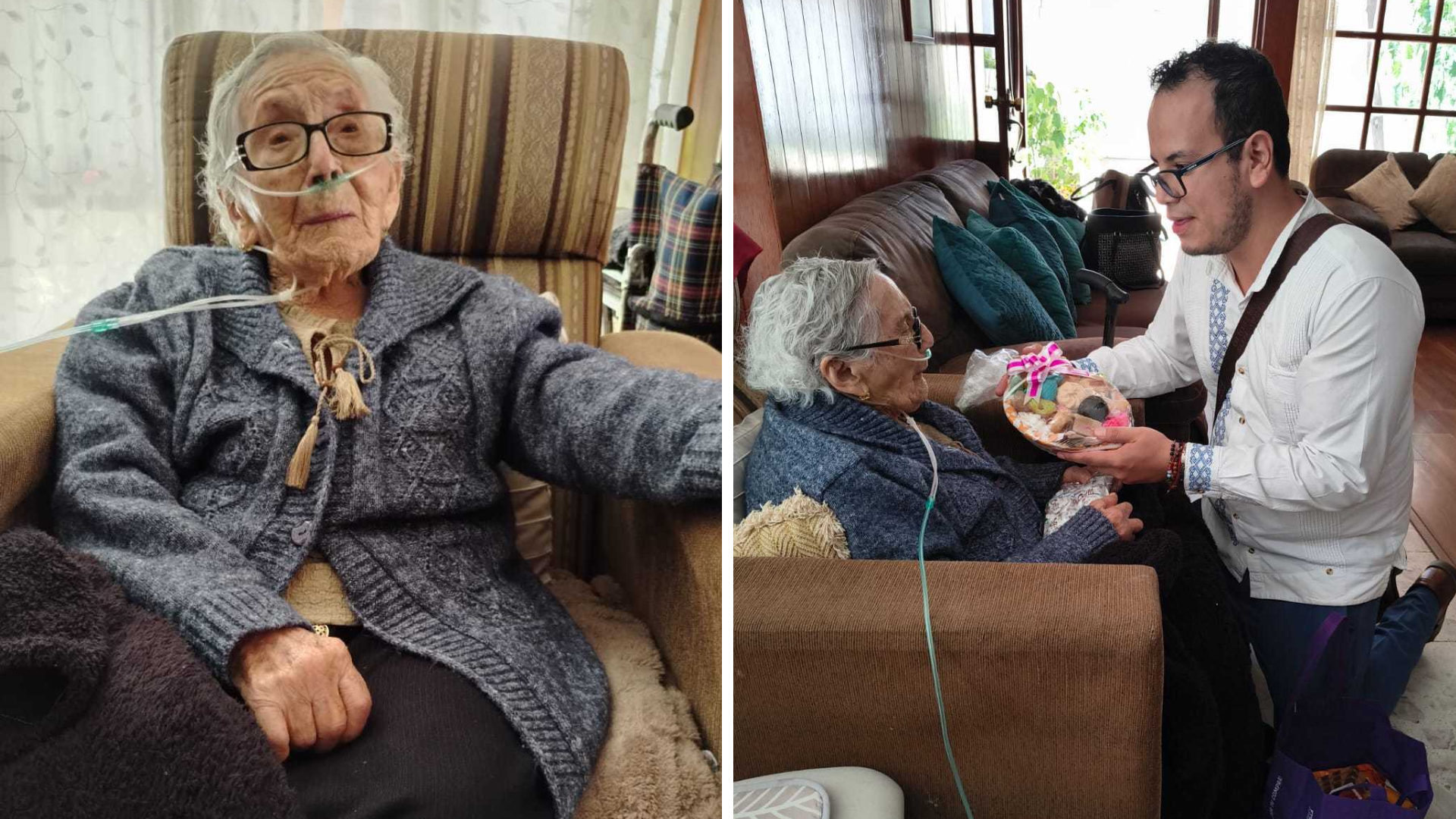
The distinction is not pedantic. A verified 113-year-old deserves a different kind of attention than a spectacular age claim that has never been documented well enough to enter the recognized supercentenarian lists. It lets readers admire the life without turning the life into folklore.
Verified ages and age claims belong in different columns
Mexico has other longevity names that help orient the record, but they should not blur the central point. Higinio Velasco Cisneros of Jalisco is listed as Mexico’s oldest living man, at age 110, in the Gerontology Wiki list of oldest living people in Mexico. [3] Hilario Orozco Lemus, a previously recognized Mexican longevity case, celebrated his 111th birthday before his death. [4] Those are useful context, but Bravo Bravo remains the verified case at the center here.
The more important contrast is with very high claimed ages. Don Manuel García Hernández was reported as a lifelong farmer who might be the world’s oldest person at a claimed 124. [5] Leandra Becerra Lumbreras was widely described as having reached 127, with accounts noting that she had lost her birth certificate. [6] Those stories may be meaningful to families and communities, but they are not the same evidentiary category as a GRG/LongeviQuest-validated case.
| Person | How the age is documented | Why the distinction matters |
|---|---|---|
| Eulalia Bravo Bravo | Validated supercentenarian; 113 years, 194 days as of Aug. 25, 2026 [1][2] | Her documented age can be used as the factual starting point. |
| Higinio Velasco Cisneros | Listed as Mexico’s oldest living man, age 110 [3] | Brief context for current Mexican male longevity. |
| Hilario Orozco Lemus | Validated recent Mexican male longevity context; celebrated 111 before death [4] | Useful background, but a different case. |
| Don Manuel García Hernández | Claimed 124 [5] | A newsworthy claim should not be treated as validated longevity. |
| Leandra Becerra Lumbreras | Claimed 127; documentation problem noted in public accounts [6] | A dramatic age claim is not the same as a verified supercentenarian record. |
That documented-versus-claimed line also protects families from a familiar problem in longevity writing: the attempt to extract a “secret” from a single person’s biography. A 113-year-old birthday is remarkable. It is not a controlled experiment.
What ordinary seniors can reasonably take from Eulalia Bravo Bravo’s life
The details available about Bravo Bravo’s life point toward familiar, ordinary supports: family nearby, adult children who remain involved, and a life that included decades of physical work. Her birthday gathering with four children present is not a longevity formula, but it is a human picture of what many families are trying to preserve: enough health, mobility, and connection for an older person’s routine to continue. [1]
For seniors aging at home, the safer lesson is not “do what she did and you may live to 113.” The safer lesson is that the habits most often linked with healthy aging are plain enough to start now: move regularly, keep balance and strength from quietly slipping away, stay socially connected, and preserve roles that still give the day structure.
The National Institute on Aging’s healthy-aging guidance, summarized by NIH MedlinePlus Magazine, points older adults toward about 2.5 hours of physical activity per week and specifically includes balance exercises such as tai chi or standing on one foot. [7] That recommendation is more useful than most “longevity secret” claims because it gives families something they can actually schedule, adapt, and watch for safety.
Blue Zones research also emphasizes social connection, family priority, and purpose as recurring themes among long-lived communities. [8] But Mexico itself should not be recast as a Blue Zone because of one verified supercentenarian. The closest named Blue Zones region in Latin America is Nicoya, Costa Rica, and the Blue Zones findings are best used here as interpretation, not proof of why any one person lived so long. [8]
For a fuller habit-by-habit guide, see Longevity Tips That Keep Seniors Independent Longer. The practical question that follows from Bravo Bravo’s story is how to protect the independence an older adult still has.
The longevity habit that belongs at the front of the plan: fall prevention
For most families, the urgent goal is not to reach 113. It is to keep a parent or grandparent safely walking to the bathroom at night, getting to the kitchen, answering the door, watering plants, visiting family, and doing the small daily acts that make home feel like home.
Falls are the reason the conversation should become concrete quickly. The CDC reports that more than 1 in 4 U.S. adults age 65 and older falls each year, fewer than half tell their doctor, and falling once doubles the chance of falling again. [9] A fall that produces no broken bone can still change behavior: the older adult starts avoiding stairs, stops going outside, or moves less because walking no longer feels trustworthy.
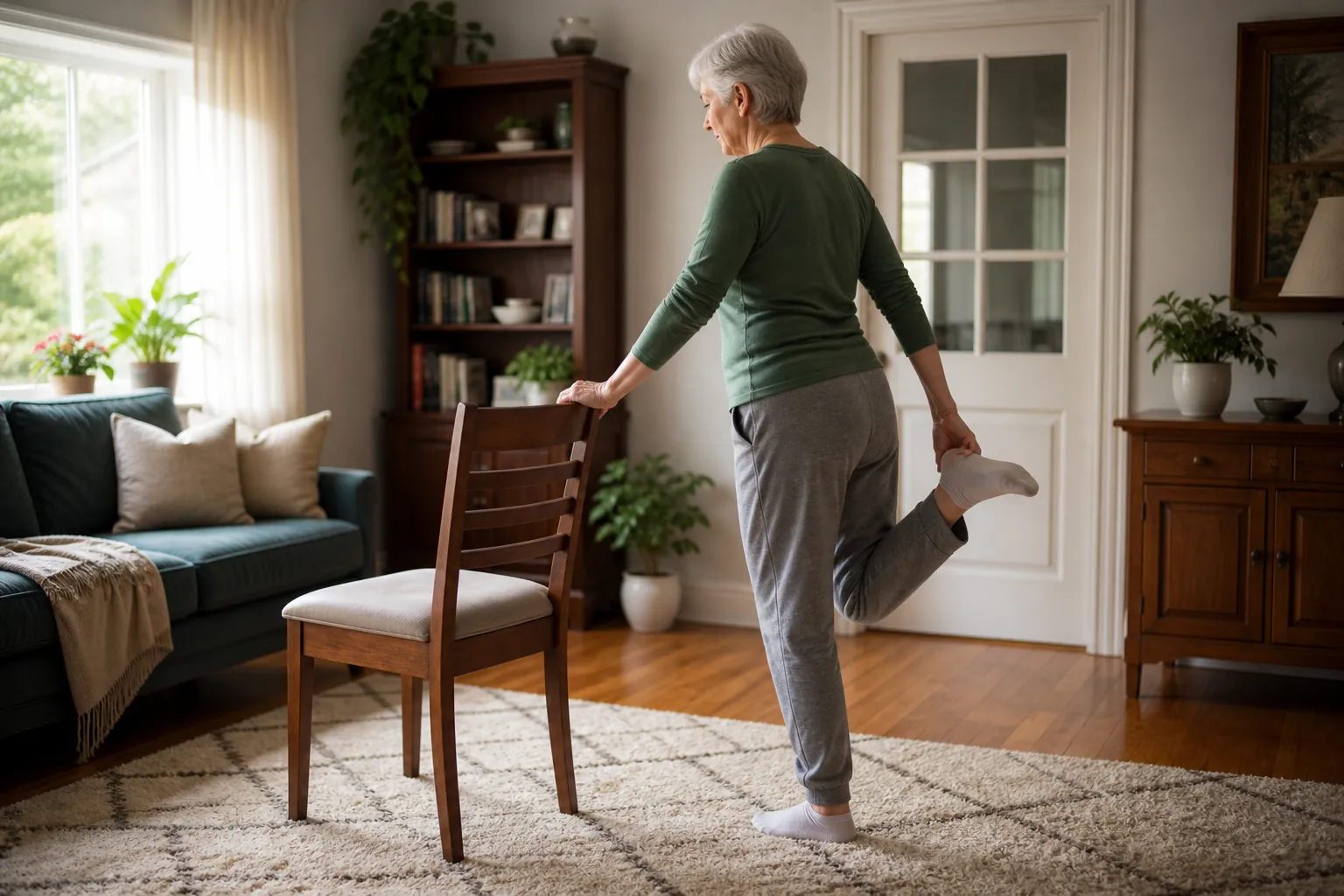
This is where balance work connects the longevity and safety conversations. Balance practice is not a glamorous anti-aging ritual. It is a way to help an older adult keep transferring weight, turning, stepping over thresholds, and recovering from a small stumble before it becomes a fall. It should be adapted to the person’s current ability, and anyone with dizziness, fainting, new weakness, recent falls, or major medical concerns should talk with a clinician before starting or changing an exercise routine.
This article is educational and is not a substitute for medical advice, diagnosis, home-health evaluation, or emergency care. A fall, near-fall, sudden change in walking, or new fear of falling is worth discussing with a healthcare professional, even if the person feels embarrassed or insists it was “nothing.”
Start with the question people often skip
The first screening step can be plain: “Have you fallen, almost fallen, or started avoiding anything because you feel unsteady?” Families often notice the workaround before they hear the admission. A parent stops carrying laundry. A grandparent no longer showers unless someone is home. A cane appears by the chair but never leaves the living room.
- Ask about falls directly, including falls that did not cause injury.
- Write down where and when the fall or near-fall happened: bathroom, bedroom, porch, wet walkway, stairs, or while getting up from a chair.
- Bring the information to a clinician, especially after any repeated fall, dizziness, blackout, head hit, new pain, or change in walking.
- Do not wait for a “serious” injury before treating fall risk as a health issue.
Then walk the home like someone who trips there at 2 a.m.
AARP’s HomeFit Guide is a useful framework because it treats the home as something that can be adjusted as people age, rather than as a fixed backdrop. [10] The first pass does not need to be a renovation plan. It should identify the obvious hazards that can be changed this weekend.
| Area | First thing to look for | Why it matters |
|---|---|---|
| Entry and walkways | Loose mats, uneven thresholds, poor lighting, packages or shoes in the path | Many falls happen during ordinary transitions: coming in, stepping out, turning, or carrying something. |
| Bathroom | Wet floors, no secure handhold, low toilet, slippery tub or shower surface | Wet surfaces reduce margin for error, especially when someone is tired or rushing. |
| Kitchen | Frequently used items stored too high or too low | Reaching, bending, and carrying hot items can combine with poor balance. |
| Bedroom | Clutter between bed and bathroom, dim night route, unstable furniture used as a handhold | Nighttime trips are predictable enough to plan for. |
| Stairs | Missing handrails, loose carpet, objects left on steps, low contrast at edges | Stairs punish small missteps more severely than flat floors. |
| Outdoor areas | Wet leaves, rain-slick surfaces, ice, broken pavement, low visibility | Weather can turn a familiar route into a new hazard. |
If the home inspection turns up weather-related hazards, these guides can help with the next pass: a rainy-day home safety checklist and tips to prevent falls on ice outdoors. For broader risk factors, including body-size and mobility issues that can make recovery from a stumble harder, see obesity and fall risk in seniors. Footwear and daily clothing choices also matter; this guide to style tips for women over 90 includes practical points about stability without treating safety as a loss of dignity.
The useful lesson is smaller than the myth
Eulalia Bravo Bravo’s life is worth noticing because it is documented. Her age, place in the rankings, and family context can be checked instead of merely repeated. That makes the story sturdier, and it also makes the practical lesson more modest.
Family connection, purpose, movement, and balance work do not guarantee supercentenarian age. They do support a more reachable goal: helping an older person keep moving through the home and the day with fewer preventable losses. Protect the independence that exists now, and start with the fall risks close enough to remove.
References
- Eulalia Bravo Bravo, Mexico’s Oldest Living Person, Turns 113 — LongeviQuest
- World Supercentenarian Rankings List — Gerontology Research Group
- List of oldest living people in Mexico — Gerontology Wiki
- Hilario Orozco Lemus, Mexico’s oldest living man, celebrated his 111th birthday — Gerontology Research Group
- At 124, lifelong farmer Don Manuel might be world’s oldest person — Mexico News Daily
- Leandra Becerra Lumbreras — Wikipedia
- Live long, be well: Science-based tips for healthy aging — NIH MedlinePlus Magazine
- Blue Zones: Lessons From the World’s Longest Lived — American Journal of Lifestyle Medicine, 2016
- Facts About Falls | Older Adult Fall Prevention — CDC
- AARP HomeFit Guide — AARP
Related reading
Noticed something outdated or inaccurate on this page? Flag a correction. We review every report against CDC, NIA, and AARP HomeFit guidance before updating a page.
Part of the Fall Prevention section.