
STEADI: intervene
Caught in a Rip Current? Safety Tips for Older Adults
Rip currents pull you away from shore, not under the water—so the first step is to stop fighting the current. Older beachgoers get a step-by-step escape sequence, a float-and-signal fallback for when stamina runs low, and clear rules for what a companion on the sand should do without becoming a second victim.
If the water is pulling you away from shore
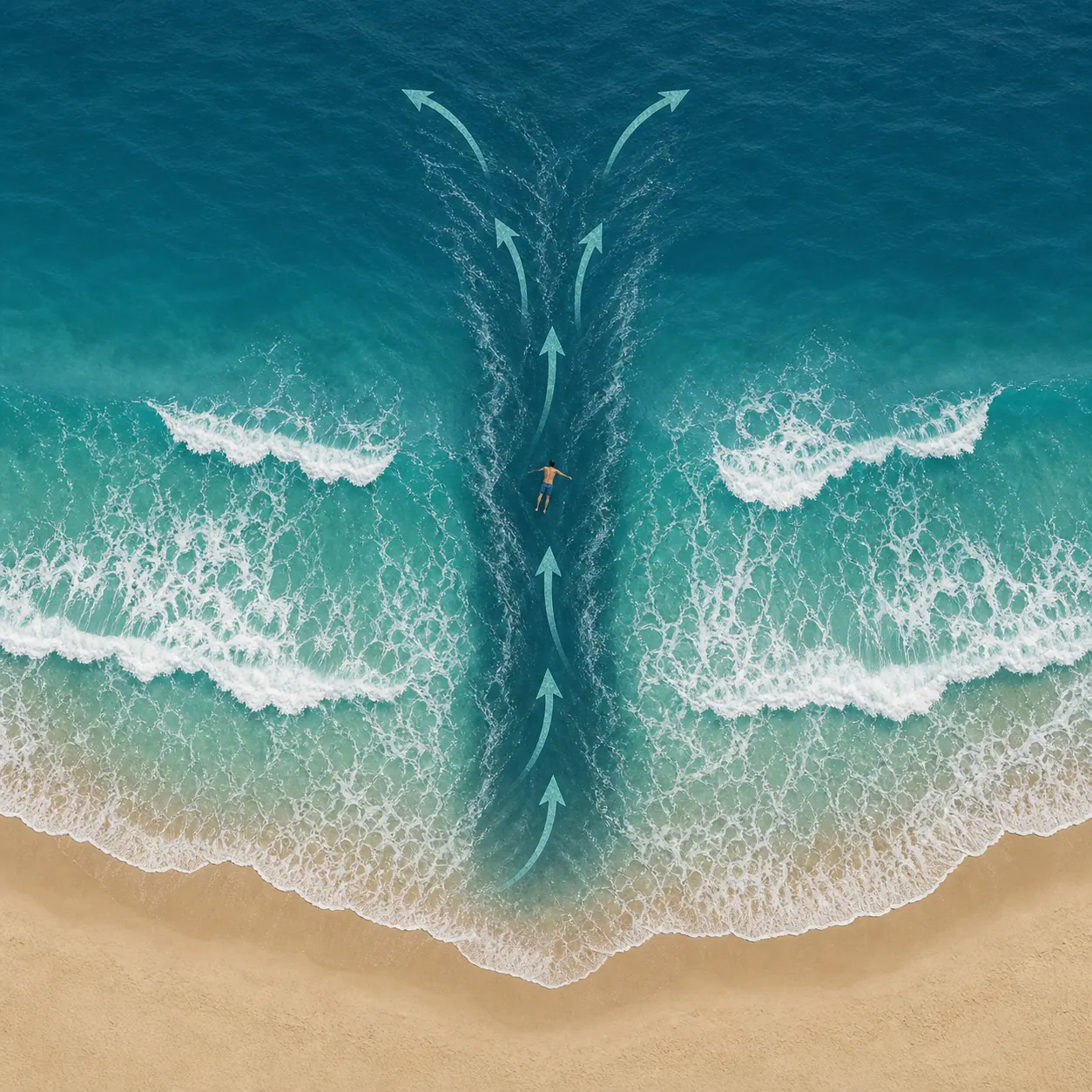
A rip current pulls you seaward, away from the beach. It does not pull you under the water. That distinction matters in the first frightened seconds, because the natural urge is to fight straight back toward shore, and that is exactly how people burn through the strength they need to stay alive. Rip currents can move at up to 8 feet per second, faster than an Olympic swimmer, so failing to beat one is not a personal failure or a sign that you “should have been stronger.” [1][2]
- Keep your head above water and take a breath. The job is not to win against the current; it is to stop giving it all your energy.
- Do not swim straight back toward the beach against the pull.
- Turn and swim parallel to the shoreline, along the beach, not toward it. Rip currents are usually narrower than they feel when you are inside one.
- When the pull lets up, angle back toward shore, still taking the easiest line you can find. NOAA and the American Red Cross both advise swimming parallel to shore first, then returning at an angle once free. [2][3]
- If parallel swimming is not working, or your stamina is dropping, roll onto your back and float. Face shore if you can, wave one arm, and yell for help. The National Weather Service’s Gulf Coast guidance gives this weaker-swimmer fallback plainly: flip on your back and float to conserve energy. [4]

That last step is not an afterthought for older adults. It is the step to choose before the arms are spent and before breath turns into panic. A swimmer who still has enough composure to roll over, float, and signal has kept options open for the lifeguard, a rescue board, or flotation from shore.
When to keep swimming sideways, and when to stop spending energy
Parallel swimming is useful while it is efficient. If you can breathe, keep your face clear, and move along the shoreline without a desperate sprint, keep going sideways until the current weakens. Then turn diagonally toward the beach.
The moment your stroke turns ragged, your legs feel heavy, or you catch yourself trying to claw straight back to sand, change tactics. Roll onto your back. Spread your arms and legs enough to float. Let your ears go partly under if that helps your body ride higher. Look toward shore when you can. Wave, then return your arm to a floating position if holding it up costs too much.
| What is happening | Best next move | What you are protecting |
|---|---|---|
| You feel pulled away from shore but can breathe and swim steadily | Swim parallel to the shoreline | Distance from the strongest part of the current |
| You are still being pulled and your stroke is getting sloppy | Stop trying to outswim it; roll onto your back and float | Breath, buoyancy, and decision-making |
| You can see people or a lifeguard tower | Face shore, wave, and yell for help | Visibility to rescuers |
| The pull weakens | Angle back toward shore without sprinting | Enough stamina to finish the return |
A strong swimmer may dislike this advice because floating feels passive. In a rip current, floating is an active decision. It buys time. It keeps the airway clear. It prevents the ugly little bargain where pride spends the last good minute of strength.
If you are the companion on shore
The person on the sand has a separate job: get help moving without becoming the next emergency. Love makes people run into the surf. Rip currents punish that impulse.
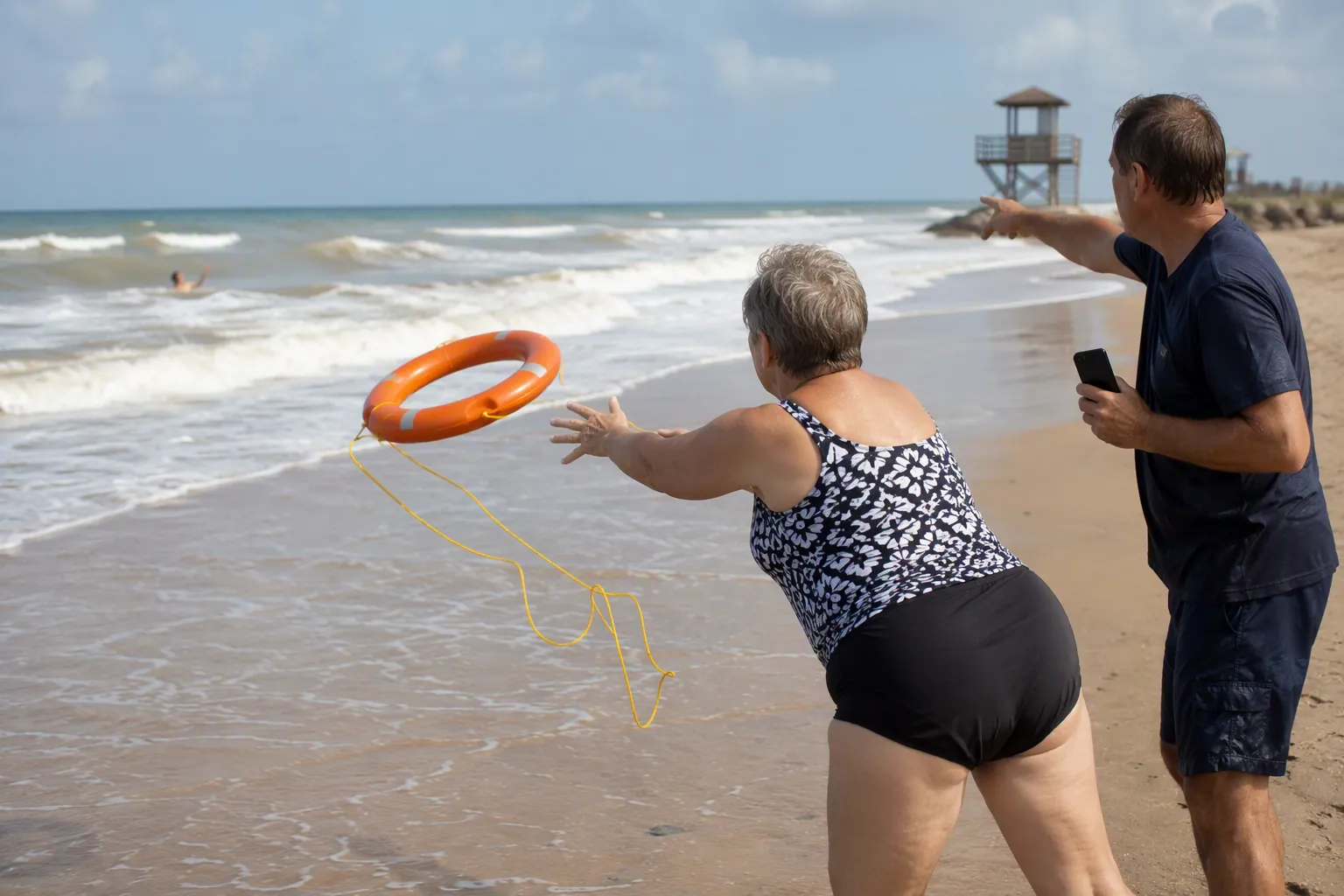
- Keep your eyes on the swimmer and point so others can track the location.
- Alert a lifeguard immediately if one is present. Do not assume someone else already did.
- If there is no lifeguard, call 9-1-1. Say that a swimmer is caught in a rip current and give the beach access point, landmark, or lifeguard stand number if you know it.
- Throw something that floats: a life ring, rescue tube, bodyboard, cooler, or other buoyant object. If other people are nearby, assign one person to get flotation and another to keep watching the swimmer.
- Shout simple instructions if the swimmer can hear you: “Float on your back.” “Do not fight it.” “Swim sideways if you can.”
- Do not swim after the person. In the Carolinas, about 27% of rip current drownings since 2011 were people attempting a rescue, a regional figure that is grim enough to settle the rule for any untrained companion. [1]
If you are with an older parent, spouse, or friend, this is not the moment to prove devotion by entering the same current. Stay on sand, keep help coming, and put flotation between the water and the person. Trained rescuers bring equipment for a reason.
Why stamina matters more than swimming pride
Rip currents are the leading surf hazard, and NOAA describes them as accounting for more than 80% of rescues performed by surf beach lifeguards. [2] The danger is not that the current drags a swimmer under like a hand from below. The danger is exhaustion: a swimmer spends breath and muscle trying to go straight back to the beach while the current keeps carrying them seaward.
There is no need to pretend older adults are the main rip-current fatality group; the sources here do not show that. The narrower, better-supported point is enough: overall drowning risk among older adults has been rising, according to CDC Vital Signs, and stamina is a practical safety variable. [6] A person who swims comfortably in a pool may still tire quickly in surf, chop, cold water, or panic.
USLA statistics put the chance of fatal drowning at a USLA-affiliated lifeguarded beach at about 1 in 18 million. [5] That figure does not make the ocean harmless. It tells you where to swim when you still have the choice.
Before the next beach day
Choose a lifeguarded area, look at posted flags, and take local warnings seriously. The American Red Cross also advises entering water feet first and being careful when standing in surf, because waves and uneven bottom can knock people off balance. [3]
For companions planning a beach trip around heat, walking distance, rest stops, and stamina, the same practical thinking applies on land. A route that is easy at 9 a.m. may not be easy after sun, sand, and a long walk back to the car; this safe summer walking routes guide is useful for pacing the day. For broader water-hazard planning, including how moving water can surprise older adults, see the flood preparedness checklist for elderly adults and the guide to flash flood road closures for seniors.
This article is general safety information, not medical advice. In any real water emergency, involve lifeguards or call 9-1-1. If the incident leads to an emergency department visit, use an ER safety checklist for elderly patients to keep medications, contacts, and instructions from getting lost in the shuffle.
In the water, the older swimmer conserves energy, floats before exhaustion takes over, signals clearly, and accepts rescue. On shore, the companion keeps eyes on the swimmer, calls for trained help, throws flotation, and stays out of the current.
References
- Carolinas Rip Current Awareness — National Weather Service.
- Rip Current Safety — NOAA JetStream.
- Beach and Ocean Safety — American Red Cross.
- Rip Current Awareness — National Weather Service.
- Statistics — United States Lifesaving Association.
- Drowning deaths rise in the United States — CDC Vital Signs, June 2024.
Related reading
Noticed something outdated or inaccurate on this page? Flag a correction. We review every report against CDC, NIA, and AARP HomeFit guidance before updating a page.
Part of the Fall Prevention section.