
STEADI: Assess
Room-by-Room Air Safety for Seniors with Breathing Problems
Seniors with COPD, asthma, or other chronic breathing conditions breathe mostly indoor air, and the biggest hazards in it are usually fixable. This room-by-room guide gives caregivers the concrete numbers — 30–50% humidity, MERV 13 filters, a 24-hour mold window — that turn an air-quality assessment into an actionable home walkthrough.
Start with the air the senior actually breathes
Outdoor AQI gets the alerts, the weather-map colors, and the family text messages. But for a senior with COPD, asthma, or another chronic breathing condition, the quieter exposure is often inside the house. AirNow notes that people spend about 90% of their time indoors, and older adults are among the groups more vulnerable to air pollution effects. [1]
That does not make the house a medical treatment. Keep the senior’s COPD or asthma action plan, medications, oxygen instructions, and clinician guidance at the center of care; CDC guidance for people with chronic conditions emphasizes following healthcare-provider instructions and having needed medicines available. [2] This walkthrough is the home-safety layer around that care: what to remove, dry, ventilate, filter, and check before small daily exposures become the background of every breath.
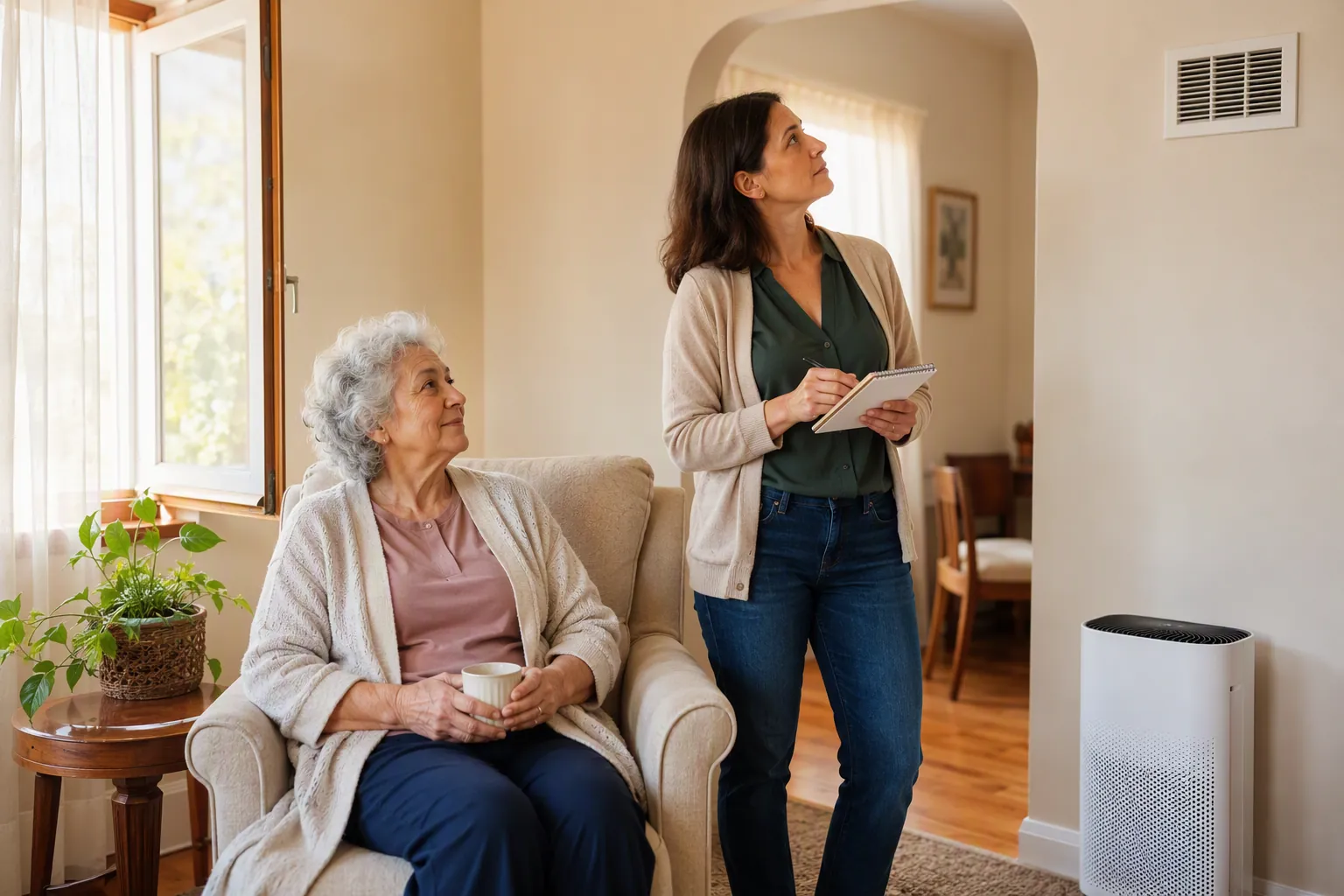
If smoke is already in the air today, a parent is suddenly short of breath, or you need AQI-specific steps, use the act-now guidance instead: Keep Seniors with COPD Safe During Air Quality Warnings and For Older Adults, Air Quality Precautions Start at AQI 101. This article is for the slower walk-through: notebook in hand, filter panel open, bathroom rug lifted, kitchen fan tested.
The four checks to use in every room
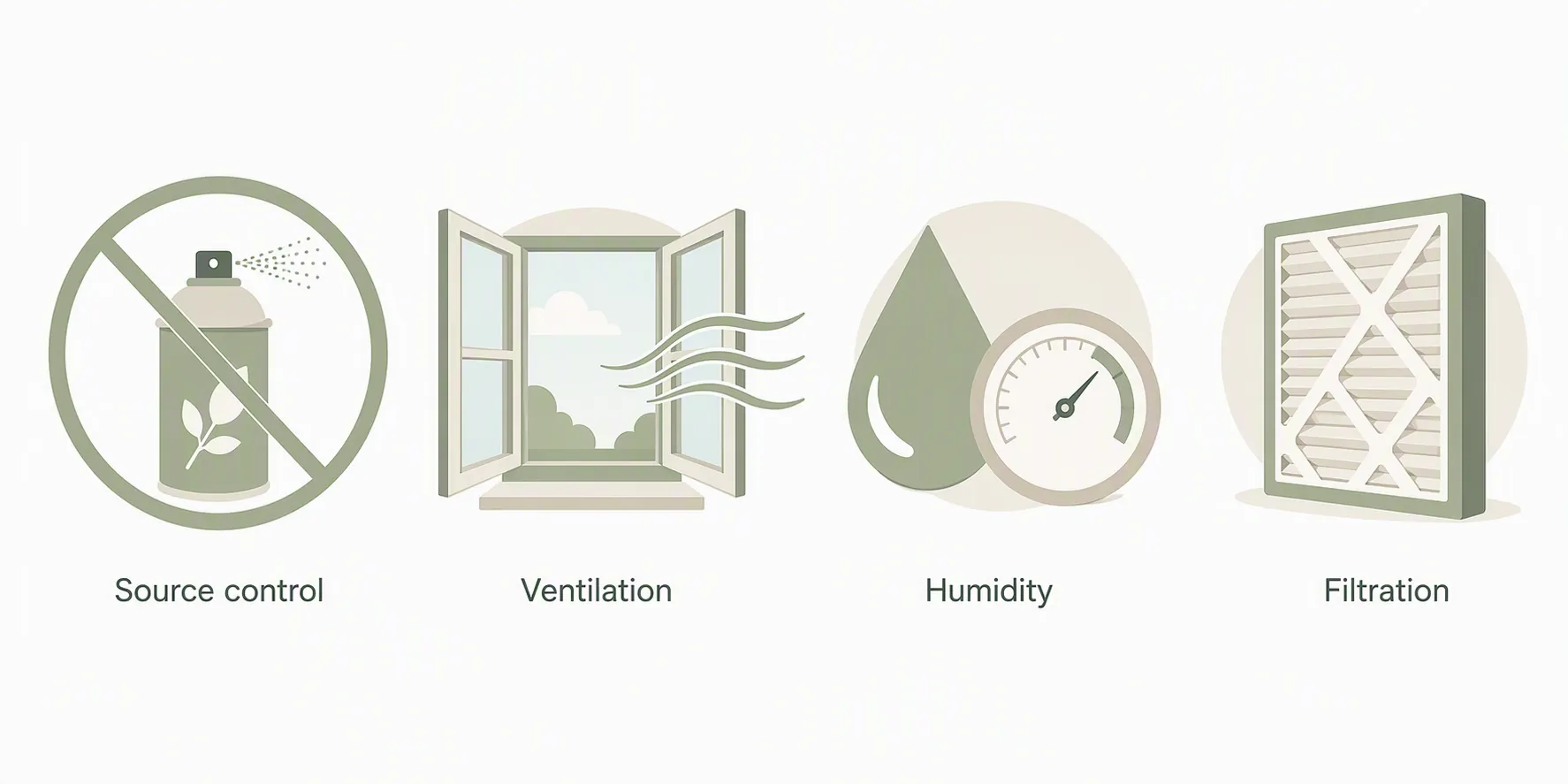
A useful home assessment does not need to become a product hunt. In each room, look at the same four levers. They keep the walk-through from turning into a random tip list and make it easier to decide what matters first.
| Lever | What you are looking for | Typical action |
|---|---|---|
| Source control | Something in the room is adding irritants or odors | Remove it, replace it, store it elsewhere, or use less of it |
| Ventilation | Air is trapped, cooking fumes linger, or a fan is avoided | Use a fan that vents properly, open windows only when outdoor air is acceptable, or change the routine |
| Humidity | Moisture is feeding mold, mildew, or dust mites | Measure relative humidity, dry wet materials quickly, repair leaks, and run exhaust fans |
| Filtration | Particles are not being captured where the senior spends time | Check HVAC filters, choose safe portable air-cleaner placement, and maintain devices |
Bring three simple things before you start: a small humidity gauge, a flashlight, and a way to write down dates. The humidity gauge tells you whether the bathroom, bedroom, or basement is drifting into a moisture problem. The flashlight finds dust-clogged vents, dark spots under sinks, and lint around the dryer. The date matters because air filters, leaks, and damp towels are all easier to manage when someone can say, “This was checked two months ago,” instead of “I think we did that sometime.”
Living room and bedroom: protect the longest exposure hours
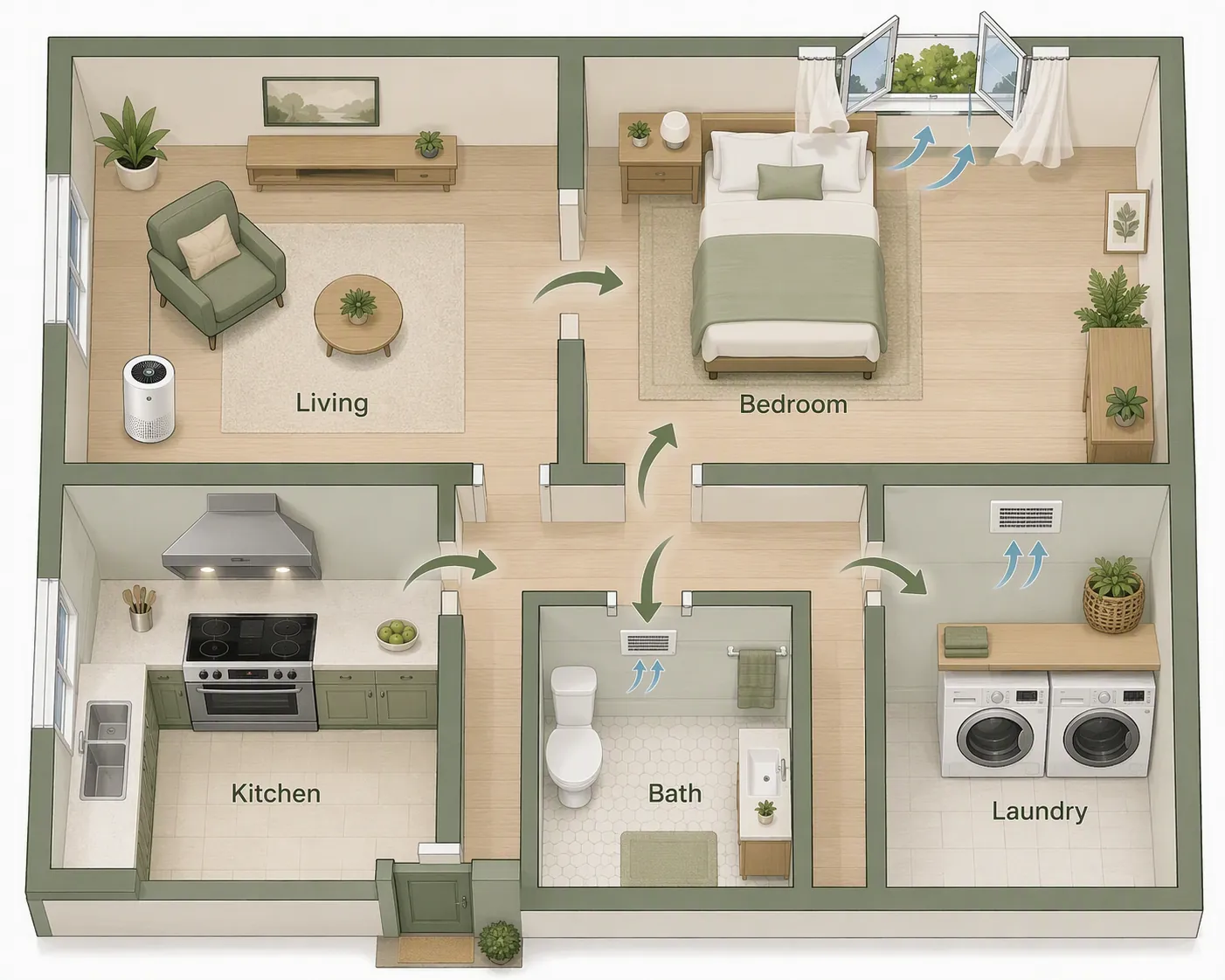
Start where the older adult actually sits and sleeps. A bedroom used for ten hours and a recliner used through the afternoon deserve more attention than a guest room with a perfect window fan. Look at the chair, the side table, the wall outlet, the nearby vent, the rug, the curtains, and anything scented within arm’s reach.
The first pass is source control. Unplug air fresheners near the recliner. Remove scented candles from the bedside table if they are being used for “freshness.” Move paint, hobby solvents, strong cleaning products, and fragranced sprays out of sleeping and sitting areas. AAFA specifically identifies volatile organic compounds, or VOCs, from sources such as new furniture, paint, cleaning supplies, and air fresheners, and notes that VOCs can be 2 to 5 times higher indoors than outdoors. [3] That figure is about VOCs, not every possible indoor pollutant, but it is enough reason to stop adding fragrance and chemical odors to the room where breathing is already hard work.
New items deserve a pause. A new mattress, upholstered chair, rug, bookcase, or freshly painted wall may be perfectly reasonable to own, but it should not be treated as neutral just because it looks clean. If an item has a strong odor, give it ventilation time away from the senior’s main sitting or sleeping spot when possible. Do not store half-empty paint cans or cleaning caddies in the bedroom closet because the closet has “extra space.” That is not extra space for lungs.
Then look at filtration where the person spends time. AirNow’s smoke-readiness guidance says to choose a portable air cleaner sized for the room where the person spends the most time and to avoid air cleaners that generate ozone. [4] In a living room, that means the unit belongs in the actual breathing zone of daily life, not in a hallway because the hallway outlet is convenient. Keep it out from behind curtains, not wedged behind a chair, and not pointed into a pile of blankets. If the senior sleeps with the bedroom door closed, a living-room unit will not clean that bedroom overnight.
Ventilation in these rooms is a judgment call, not a reflex. Opening windows can help when outdoor air is acceptable, pollen is not a problem for that person, and the weather does not create a heat or cold risk. On poor outdoor-air days, or when smoke is the issue, the safer move may be to keep windows closed and rely on filtration and source control. This is why a planned home assessment should sit alongside, not replace, the family’s AQI routine.
Finally, check the surfaces no one likes to mention: dusty fabric lampshades, washable throw blankets, pet beds, heavy drapes, and the carpet edge behind the recliner. The goal is not a sterile room. It is to stop the older adult’s main breathing space from collecting every odor, particle, and damp textile in the house.
Kitchen: remove what gets made at the stove
In the kitchen, the question is less “Is the room clean?” and more “Where do cooking fumes go?” A spotless stove can still send smoke, grease particles, and strong odors into the hallway if the range hood is never used because it is loud, broken, or venting poorly.
Turn on the kitchen fan during the walk-through. Does it pull air toward the hood? Does it vent outdoors, or does it only recirculate through a small filter? Is the filter greasy? Does the senior avoid using it because the sound is irritating or because the switch is hard to reach? A fan that works only in theory does not protect someone who cooks breakfast every morning.
The useful routine is simple: start the fan before cooking produces smoke or steam, use back burners when that improves capture by the hood, and keep the senior out of the immediate cooking plume when someone else is preparing food. During smoke events, CDC advises people with chronic conditions to reduce indoor sources of pollution, including avoiding activities such as frying foods. [2] Even outside wildfire season, frying is worth flagging if it regularly leaves the living room smelling like oil for an hour.
Also check what has been normalized on the counter: aerosol cooking sprays, strongly scented cleaners, plug-in fragrance near the trash can, and a trash lid that does not close. If odors are being covered with fragrance instead of removed, the source-control step has not happened yet. Empty the trash more often, clean the spill tray, store cleaners away from heat, and choose unscented or lower-odor options when a product swap is needed.
A kitchen window is not automatically good or bad. If the outdoor air is clean and the temperature is safe, opening it briefly while cooking may help. If the window faces a smoky street, a neighbor’s idling vehicle, or wildfire haze, it may make the room worse. The caregiver’s job is to make the routine specific enough that the senior is not guessing at the stove while breathing feels tight.
Bathroom and laundry: the room has a clock
Bathrooms and laundry areas are where indoor air problems become visible under a towel. A damp bath mat, a slow leak under the sink, a shower curtain that never dries, or a laundry basket of wet clothes is not just housekeeping clutter. It is a moisture schedule.
Put the humidity gauge in the bathroom after a shower and again later in the day. AAFA recommends keeping indoor relative humidity around 30% to 50% to help limit mold and dust mites. [3] The number matters because “a little damp” is too vague. If the room stays above that range, the next action is not another scented spray; it is better drying, better exhaust, a leak repair, or a dehumidification plan.
EPA’s indoor-air guidance notes that mold can begin growing on wet materials within about 24 hours. [5] That puts a practical deadline on the caregiver’s checklist. A towel left on the floor overnight should be hung or washed. A bath mat that is still wet the next morning should be dried, laundered, or replaced with something that dries faster. A ceiling stain or soft cabinet floor under the sink should not wait for the next holiday visit.
- Run the bathroom exhaust fan during bathing and long enough afterward for mirrors and walls to dry.
- Check whether the fan actually moves air; a loud fan that does not pull tissue toward the grille may need cleaning or repair.
- Look under sinks, around toilet bases, behind the washing machine, and near the water heater for dampness or staining.
- Do not leave wet laundry sitting in the washer or basket.
- Make sure the dryer vents outdoors and that lint is not collecting around the vent path.
This is also the place to separate air safety from fall safety without ignoring either one. A bath mat that dries quickly but slides is not acceptable. A heavy rug that prevents slipping but stays damp is not acceptable either. If you are already modifying the bathroom for fall prevention, pair the air check with the home’s room-by-room safety work instead of treating moisture as a separate chore.
Entryway, closets, and storage: small sources that follow people inside
The entryway does not need a long inspection, but it does need an honest one. Shoes, damp umbrellas, pet towels, cardboard boxes, and seasonal storage can bring moisture and debris into the house and then sit there long enough to matter. If the senior’s favorite chair is ten feet from the front door, the entry is part of the breathing space.
Create a place for wet shoes and umbrellas to dry without soaking carpet. Do not stack cardboard directly on a basement floor or against an exterior wall where it can absorb moisture. Move gasoline, solvents, pesticides, old paint, and strongly scented supplies out of indoor living space whenever safe storage is available. If the closet smells like chemicals when the door opens, that smell is already in the house.
Closets also hide old filters, unused humidifiers, and “air purifiers” bought years ago by someone who meant well. Check labels before anything gets plugged back in. AirNow’s guidance is clear that ozone-generating air cleaners should not be used. [4] If a device advertises ozone, ionization without clear safety information, or a “fresh thunderstorm” smell, it does not belong in the room of a person with chronic breathing problems.
HVAC and whole-home filtration: check the filter before shopping for anything else
The HVAC filter is where many homes quietly fail the assessment. It is out of sight, it has no daily alarm, and the person most affected by the air may not be the person climbing a step stool to change it. Open the return grille or filter slot and look before making any assumptions.
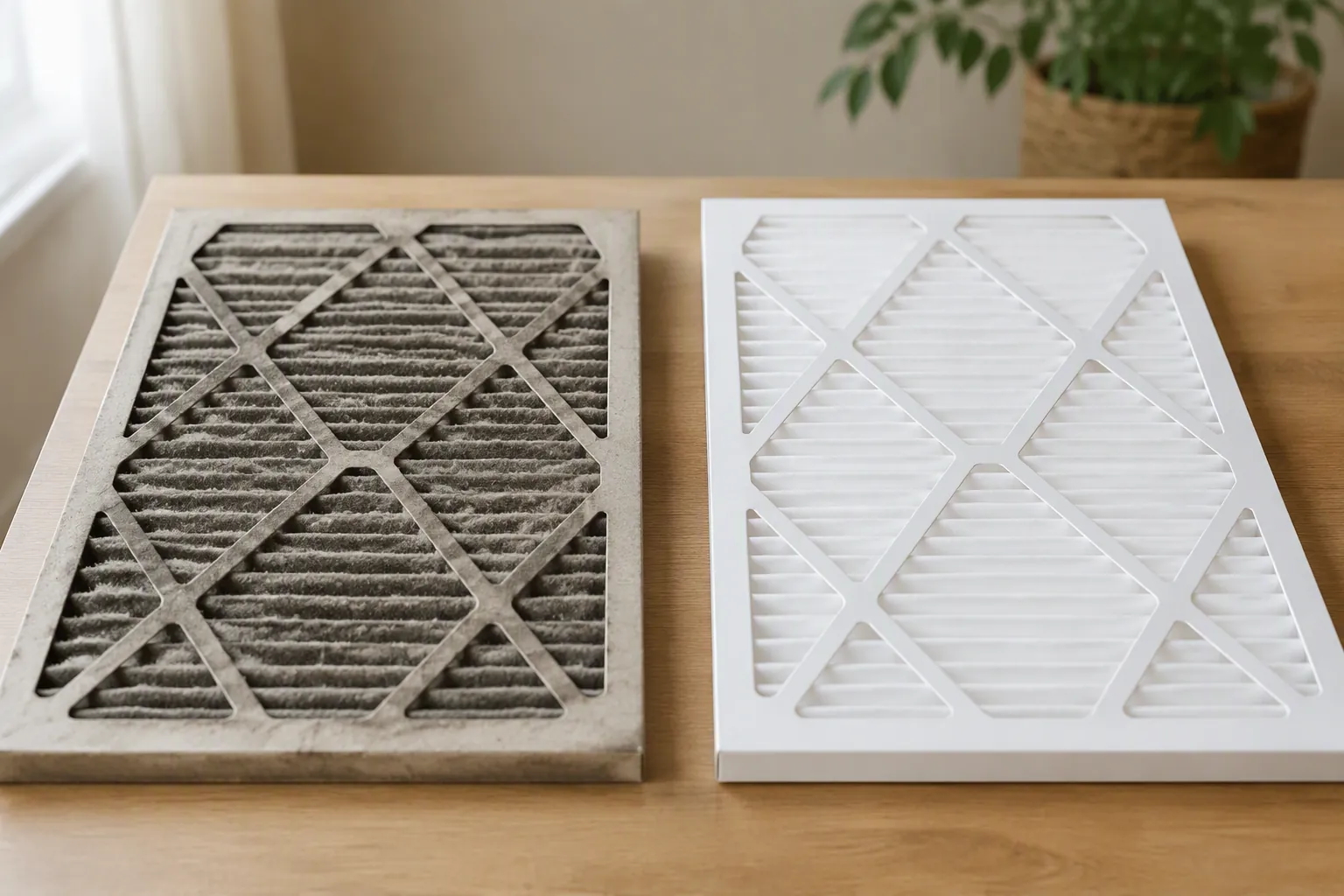
The American Lung Association says default one-inch HVAC filters are typically MERV 8, while upgrading to MERV 13 or higher can capture more small particles; it also notes that disposable filters cost about $12 and should be changed about every two months or when visibly dirty. [6] Those details are useful because they turn “change the filter more often” into a schedule and a budget line.
Do not force a higher-MERV filter into a system that cannot handle it. Check the furnace or air-handler manual, ask the HVAC technician, or use the filter rating the system can safely support. A filter upgrade that strains airflow can create a different maintenance problem. The best filter is the one that captures more while still allowing the system to run correctly and that someone will actually replace on time.
- Write the filter size and MERV rating in the caregiver’s notes.
- Put the replacement date on the filter frame with a marker.
- Keep at least one correct replacement filter in the home.
- Check that return vents are not blocked by furniture, curtains, or storage bins.
- If the senior cannot change the filter safely, assign the task to a specific person rather than leaving it as a vague family responsibility.
Portable filtration still has a role, especially in the room where the senior spends the most time, but it should not distract from a filthy whole-home filter or a bathroom leak. Place portable units by room use, size them to that room, run them according to instructions, and maintain the filters. Skip ozone-generating units entirely.
A practical priority order
When the walk-through produces a page of notes, do not treat every item as equal. The order below keeps attention on changes that remove exposures rather than merely covering them up.
- Remove sources first: air fresheners, smoke, strong odors, stored chemicals, damp cardboard, scented sprays, and unnecessary pollutants near the bed or main chair.
- Control moisture quickly: keep humidity around 30% to 50%, dry wet materials before the 24-hour mold window becomes relevant, and repair leaks.
- Use ventilation deliberately: run working exhaust fans in the kitchen and bathroom, and open windows only when outdoor conditions and temperature are safe for that person.
- Improve filtration where exposure is longest: check the HVAC filter, consider MERV 13 or higher if the system can handle it, and place safe portable air cleaners in the rooms the senior actually uses.
- Keep the medical plan visible: the home checklist supports the clinician’s breathing plan; it does not replace medications, oxygen instructions, or individualized advice.
Indoor air risk is never fully controllable. Outdoor smoke can leak in, old buildings have surprises, and chronic lung disease does not disappear because a filter was changed. Still, enough of the home environment is controllable that a room-by-room assessment is more useful than a generic promise to “improve air quality.” The caregiver can unplug one source, dry one material, fix one fan habit, replace one dirty filter, and make tomorrow’s breathing space a little less loaded.
For acute outdoor-air decisions, use the AQI and COPD safety articles linked above. For smoke-season planning when heat, power outages, transportation, or evacuation are part of the problem, see Wildfire Safety for Older Adults During a Heat Dome and the wildfire evacuation checklist for seniors.
References
- Older Adults and Air Quality — AirNow.gov
- Wildfire Smoke and People with Chronic Conditions — Centers for Disease Control and Prevention
- Indoor Air Quality — Asthma and Allergy Foundation of America
- Be Smoke Ready — AirNow.gov
- Indoor Air Quality — U.S. Environmental Protection Agency
- Air Cleaning — American Lung Association
Related reading
Noticed something outdated or inaccurate on this page? Flag a correction. We review every report against CDC, NIA, and AARP HomeFit guidance before updating a page.
Part of the Fall Prevention section.