
STEADI: Intervene
What to Do in the Salmonella Outbreak if Your Parent Is 65+
Two Salmonella outbreaks are active — shell eggs and jalapeño peppers — and adults 65+ are hospitalized at far higher rates. This act-now guide gives caregivers the exact steps for today: check the fridge by carton code, sanitize anything recalled food touched, keep using the safer-food rules, and know when symptoms mean calling a clinician.
Last verified: August 25, 2026, UTC. During an active Salmonella outbreak, do not treat a news headline as the source of truth after today; case counts and food guidance can change. If your parent is 65+, start with the CDC’s live foodborne outbreak index, then check the current egg and jalapeño investigation pages before dinner.[1]
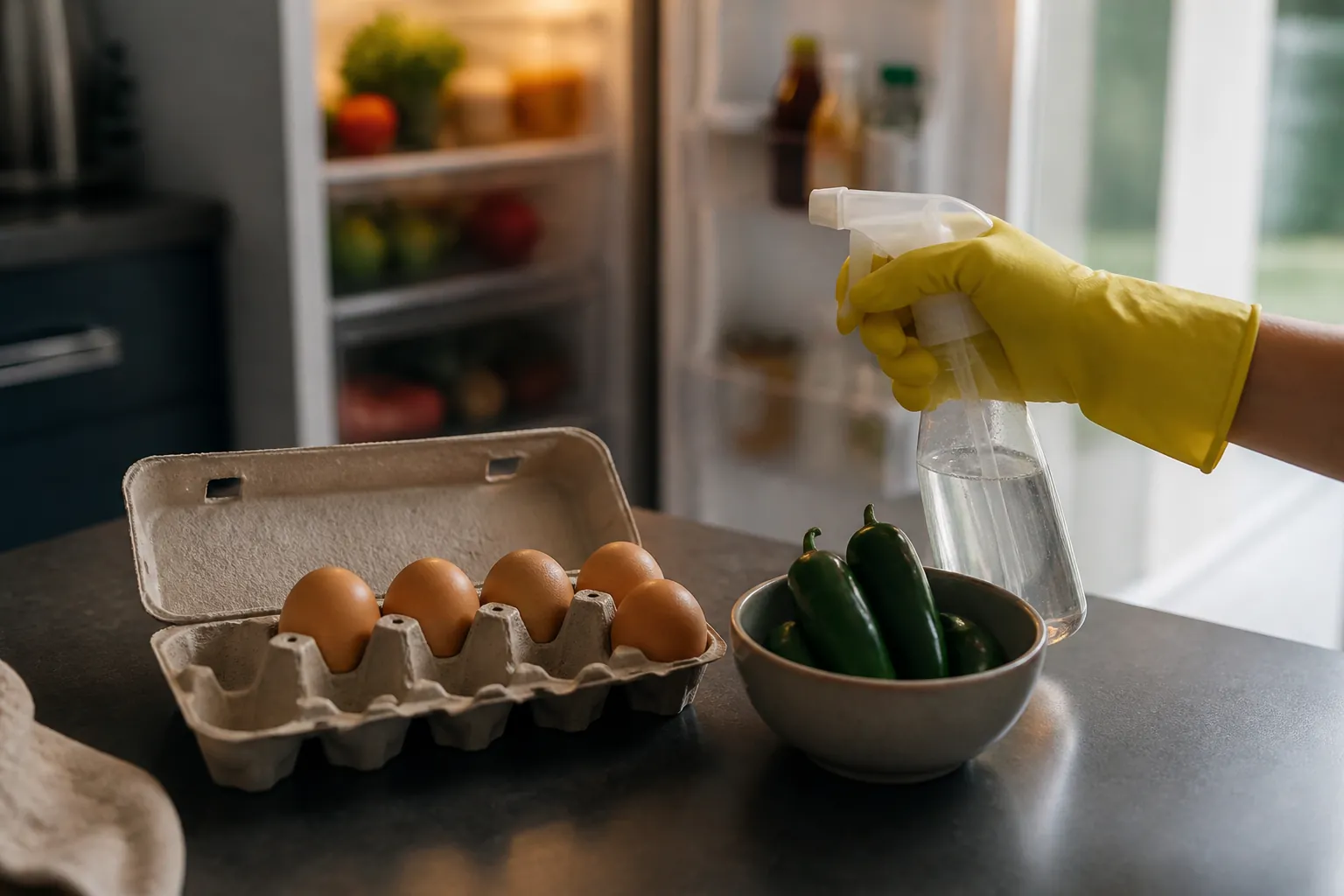
Start with what is in the kitchen right now
If you are helping an older parent from across town or a few hours away, the first useful question is not “How dangerous is Salmonella?” It is: what is in the refrigerator, what touched it, and what is being served tonight?
Use this order:
- Check shell eggs by carton code, plant code, Julian date, and sell-by or best-by date.
- Check fresh jalapeño peppers against the current CDC investigation guidance before using them.
- Throw away recalled food, matching food, or food that cannot be identified because the packaging is gone.
- Clean and sanitize the refrigerator area, containers, counters, cutting boards, and hands or tools that touched the recalled food.
- If symptoms start in an older adult, move to clinical judgment rather than online reassurance.
Eggs: look for the exact identifiers
For the shell egg recall, the FDA identifies recalled eggs by carton codes P-1950 or 0840962, Julian dates 157–184, and sell-by or best-by dates from July 20–August 17, 2026.[2]
That means the inspection has to happen at the carton, not by asking whether the eggs “seem fine.” If the carton matches, throw the eggs away. If the eggs were moved into a refrigerator egg tray, bowl, or another container and the original carton is gone, the FDA’s guidance is also plain: eggs stored without packaging and not identifiable should be thrown away.[2]
For the more detailed version of that fridge check — including what to do when a parent has already thrown out the carton, wants to keep the eggs, or needs help documenting the product — use How to Check a Parent’s Fridge for the Salmonella Egg Recall.
Jalapeños: check the live page before serving them
The jalapeño investigation is separate from the egg investigation. Do not use the egg recall codes to make a decision about peppers, and do not use the peppers’ appearance as reassurance. If fresh jalapeños are in the refrigerator, on the counter, in salsa, or chopped into a container, compare them with the current CDC jalapeño investigation guidance before they are served.[3]
If someone already cut the peppers and no one can say where they came from, set them aside and do not serve them to an older adult while you verify the live guidance. A loosely stored pepper in a produce drawer creates the same practical problem as loose eggs without a carton: the caregiver has to make a decision from what can be identified, not from what everyone hopes is true.
Throwing it away is only half the job
After recalled or unidentifiable food is out of the kitchen, the next risk is what it touched. That may be a refrigerator shelf, egg tray, produce drawer, bowl, cutting board, knife, counter, sink edge, or the handle of the refrigerator door. The CDC advises throwing away recalled food and cleaning the refrigerator where it was stored; the FDA also instructs consumers to sanitize surfaces and containers that touched recalled eggs.[2][3]
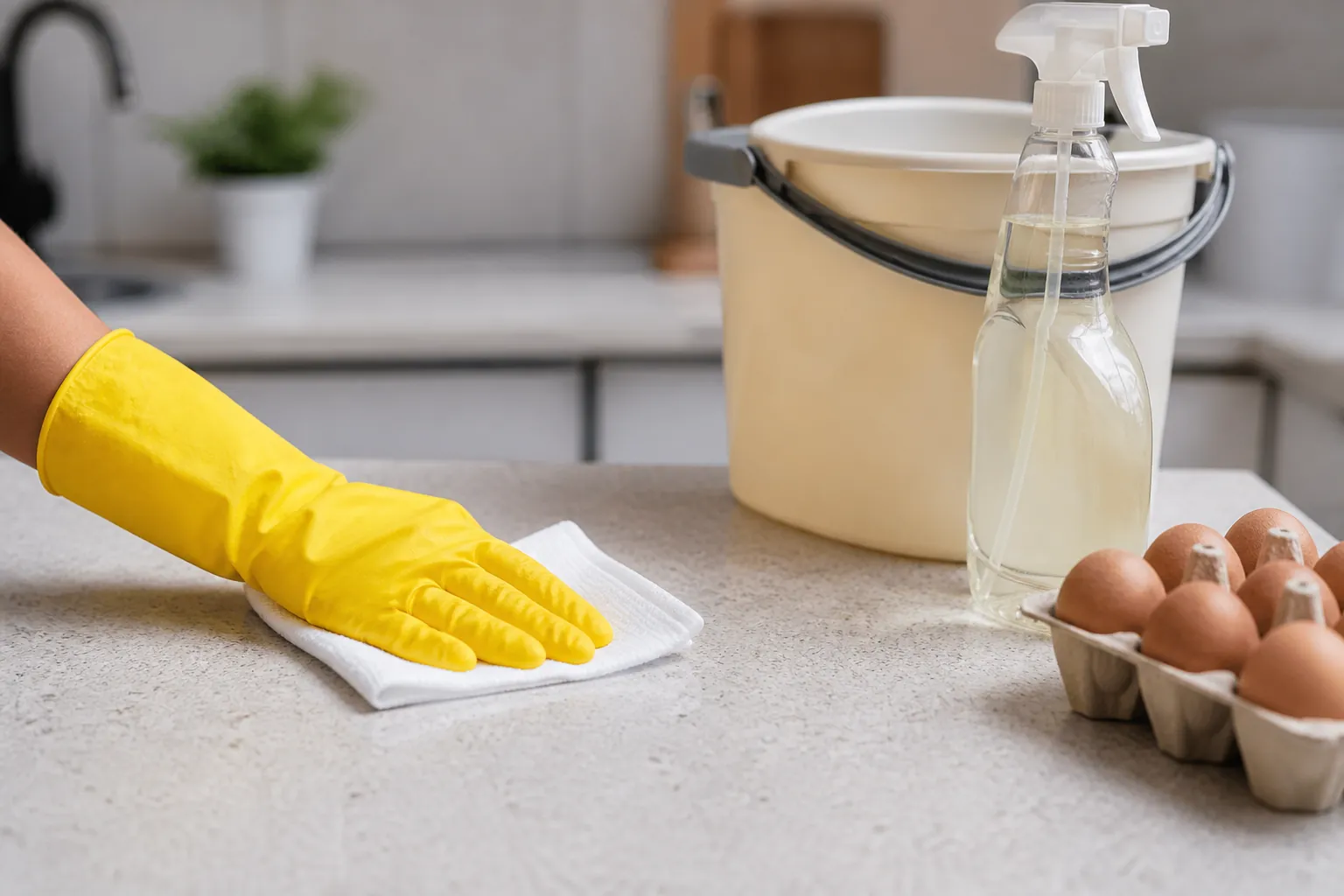
Work outward from the food:
- Bag the discarded eggs or peppers so they do not leak into the trash can.
- Empty the shelf, drawer, tray, bowl, or container where the food sat.
- Wash removable containers, drawers, and tools that can be washed.
- Wipe the refrigerator shelf, drawer rails, counter, cutting board, sink area, and any handle touched during cleanup.
- Sanitize surfaces and containers that touched the recalled eggs using the FDA’s solution: 1 tablespoon chlorine bleach per 1 gallon of hot water.[2]
- Wash hands after handling the food, trash, cleaning cloths, or containers.
The easy miss is the refrigerator drawer. Eggs leave residue on cartons and trays; peppers roll, sit in bags, and get moved by hand. If a recalled food sat in a drawer with other loose produce, the drawer needs attention before the next salad, sandwich, or snack comes out of it.
If you are doing this by phone with a parent, ask for visible actions rather than promises. “Read me the code on the egg carton.” “Show me where the peppers were stored.” “Put the drawer on the counter so we can wash it.” That is more useful than “be careful,” especially when dinner is already being made.
Why this deserves same-day attention
The numbers are not the first thing to manage, but they explain why a careful refrigerator check is not overreacting.
As of August 19, 2026, the Salmonella Javiana outbreak linked to jalapeño peppers had 431 reported cases across 32 states. Among 376 people with information available, 57 were hospitalized, and the CDC reported no deaths at that update.[3]
As of July 24, 2026, the Salmonella Enteritidis outbreak linked to shell eggs had 98 reported cases across 17 states. Among 72 people with information available, 26 were hospitalized. Midwest Poultry Services, L.P. recalled more than 1.5 million dozen eggs on July 22, 2026.[4][2]
Those figures are update snapshots, not permanent totals. They should sharpen the action, not replace it: check the food, discard what matches or cannot be identified, and clean what it touched.
Use stricter food rules while the outbreak is active
For adults 65 and older, CDC and FoodSafety.gov guidance already pushes toward safer food choices, careful storage, and avoiding foods more likely to carry germs. During an active outbreak, the adjustment is narrower: do not bring the recalled item back into the kitchen, do not use partially identified food, and do not let convenience override the label check.[5][6][7]
| Kitchen moment | What changes during the outbreak |
|---|---|
| Shopping | Check the current CDC/FDA pages before buying shell eggs or fresh jalapeños if they are part of the active investigation. Avoid products that match recall details. |
| Unpacking groceries | Keep packaging long enough to check carton codes, dates, lot information, or store labels if an alert changes. |
| Storage | Do not move eggs or peppers into unmarked containers unless the identifying information is saved. |
| Meal prep | Keep recalled or uncertain food out of salads, salsas, sandwiches, breakfast dishes, and shared containers. |
| Leftovers | If a recalled or uncertain ingredient may already be mixed into a dish, do not serve that dish to an older adult. |
For ongoing prevention after this specific outbreak, set up a routine that catches recalls before food is opened. The practical setup is covered in How to Keep Recalled Food Out of Your Parent’s Kitchen.
If symptoms start, do not manage it as a wait-and-see food scare
Older adults are not just another household member in a foodborne illness investigation. CDC reports that nearly half of people 65 and older with laboratory-confirmed foodborne illness are hospitalized.[5]

If your parent develops objective symptoms after possible exposure — especially diarrhea, vomiting, fever, worsening weakness, confusion, dehydration concerns, or inability to keep fluids down — the safer next step is a clinician’s judgment. A website cannot examine hydration, medications, kidney risk, frailty, or whether a fall risk is rising.
Use When to Seek Care for Salmonella Symptoms in Older Adults for the full 911, urgent-care, primary-care, and 72-hour monitoring plan. If you are trying to understand why diarrhea, dehydration, or weakness can turn into a fall problem in a senior, see Why Salmonella Symptoms in Seniors Become a Fall Risk. For the deeper age-related risk background, use Why Salmonella Is More Dangerous for Older Adults.
Where to verify today’s information
Before using eggs or jalapeños during this active investigation period, verify against the live sources rather than relying on a saved screenshot or an older article:
- CDC foodborne outbreak index for current outbreak status.[1]
- FDA egg outbreak page for carton identifiers, recall information, and cleanup instructions.[2]
- CDC jalapeño investigation page for current case counts and guidance.[3]
- CDC shell egg investigation page for current case counts and outbreak status.[4]
Reviewed for senior-care practicality by Elena Morales, RN, BSN, geriatric care reviewer. This article is general information and not medical advice. If an older adult is sick or declining after possible exposure, contact a clinician or emergency services as appropriate.
References
- Foodborne Outbreaks, CDC.
- Outbreak Investigation of Salmonella: Eggs (July 2026), FDA, July 2026.
- Salmonella Javiana Outbreak Investigation, CDC, August 19, 2026.
- Salmonella Enteritidis Outbreak Investigation, CDC, July 24, 2026.
- People at Increased Risk for Food Poisoning, CDC.
- Safer Food Choices for Adults 65 and Older, CDC.
- People at Risk: Older Adults, FoodSafety.gov.
Related reading
Noticed something outdated or inaccurate on this page? Flag a correction. We review every report against CDC, NIA, and AARP HomeFit guidance before updating a page.
Part of the Fall Prevention section.