
STEADI: Intervene
The Severe Storm Preparedness Checklist Seniors Need
A severe-storm preparedness checklist that goes beyond water and food to cover what actually fails for older adults: medication supply, backup power for medical devices, spare glasses and mobility aids, and a support network arranged in advance. It includes before-during-after steps, supply quantities for a 3-day Go-Kit and a longer shelter-in-place stock, and when to call for emergency help.
A severe storm emergency preparedness checklist for seniors has to start with the parts of daily life that do not fit neatly into a plastic bin. Water, food, and a flashlight matter. They are also not enough if the storm interrupts blood pressure medication, oxygen equipment, a CPAP machine, insulin refrigeration, elevator access, hearing-aid batteries, or the one neighbor who said she would “check in” but was never given a key.
The American Red Cross makes the senior-specific difference plain: older adults should keep at least 30 days of medications and extra assistive items, such as a cane or eyeglasses, in their emergency planning supplies.[1] That one recommendation changes the whole checklist. The kit is no longer a general household supply list. It becomes a continuity plan for one person’s body, equipment, home layout, pharmacy, documents, and helpers.
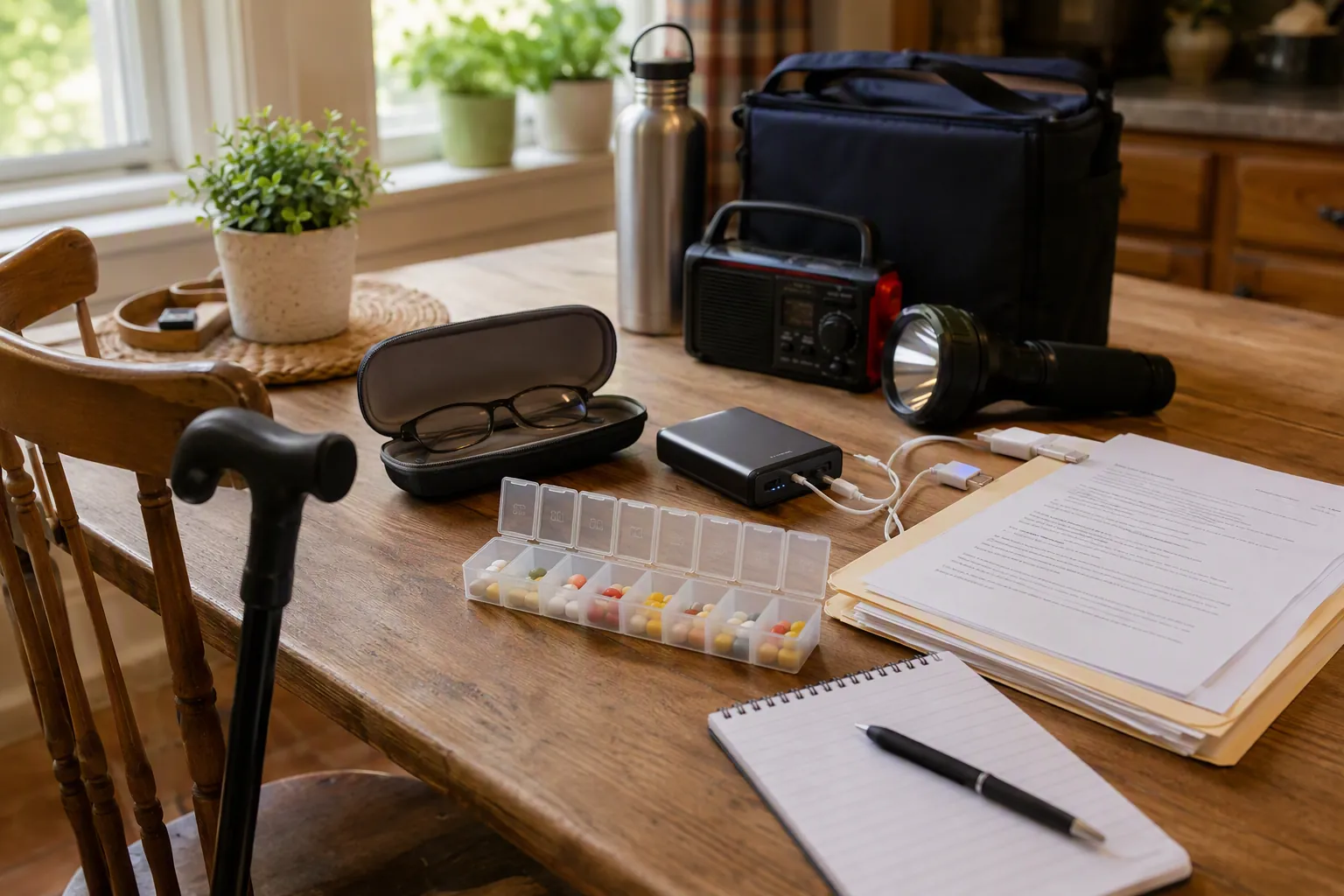
The working checklist: one Go-Kit, one home supply, one support plan
Think in two containers and one paper plan. The Go-Kit is what leaves with the older adult if evacuation becomes necessary. The shelter-in-place supply is what keeps the home safe if the power is out, roads are blocked, or caregivers cannot get there right away. The support plan names the people who will notice when the plan is failing.
| Part of the plan | What it must cover | Why it matters for an older adult |
|---|---|---|
| 3-day Go-Kit | Medications, medication list, water, ready-to-eat food, documents, chargers, assistive-device backups, flashlight, batteries, hygiene supplies, cash, and written contacts | It travels with the person if evacuation, sheltering, or a family pickup happens quickly. |
| Longer shelter-in-place supply | At least 30 days of medications when possible, several days of water and nonperishable food, backup power, safe lighting, refrigerated-medication plan, temperature monitoring, mobility-safe paths, and pet or service-animal supplies | It covers the more common problem: staying home longer than expected while power, heat, cooling, refrigeration, or transportation is unreliable. |
| Named support network | Who calls, who comes, who has a key, who can transport, who knows the medication and equipment list, and who is the backup if cell service fails | A vague promise to check in is not a plan when pharmacies are closing, elevators are out, or the older adult cannot safely leave alone. |
Ready.gov’s baseline kit guidance still applies: store one gallon of water per person per day for drinking and sanitation, and keep a several-day supply of nonperishable food.[2] For an older adult, those amounts are the floor. The real work is making sure the person can take medications correctly, power essential equipment, move safely, receive alerts, read instructions, and be reached by someone who has already agreed to help.
This is especially important because many older adults are not planning around one simple need. A 2008 CDC Preventing Chronic Disease article reported that about 80% of adults age 65 and older had at least one chronic condition, and estimated that at least 13 million Americans age 50 and older would need help to evacuate during a disaster, with about half needing help from someone outside the household.[3] Those figures are older, but they point to the practical issue still sitting on the kitchen table: many seniors cannot treat evacuation, medication, mobility, and communication as separate problems.
Before the storm: build the kit around the person, not the forecast
Before-storm preparation is where most of the senior-specific value is. Once a warning has been issued, the easy errands become slow: refill lines are longer, transportation gets uncertain, batteries are sold out, and the person who normally helps may be preparing their own household. This is the time to check the ordinary systems that keep an older adult stable on an ordinary day.
Medication continuity
Start with the medication supply because it is the item most generic storm lists treat too lightly. The Red Cross recommends keeping at least 30 days of medications for older adults.[1] If insurance rules, refill timing, or controlled-substance limits make that difficult, write down what is missing and when it can be refilled. A half-built medication plan is safer when everyone can see exactly where the gap is.
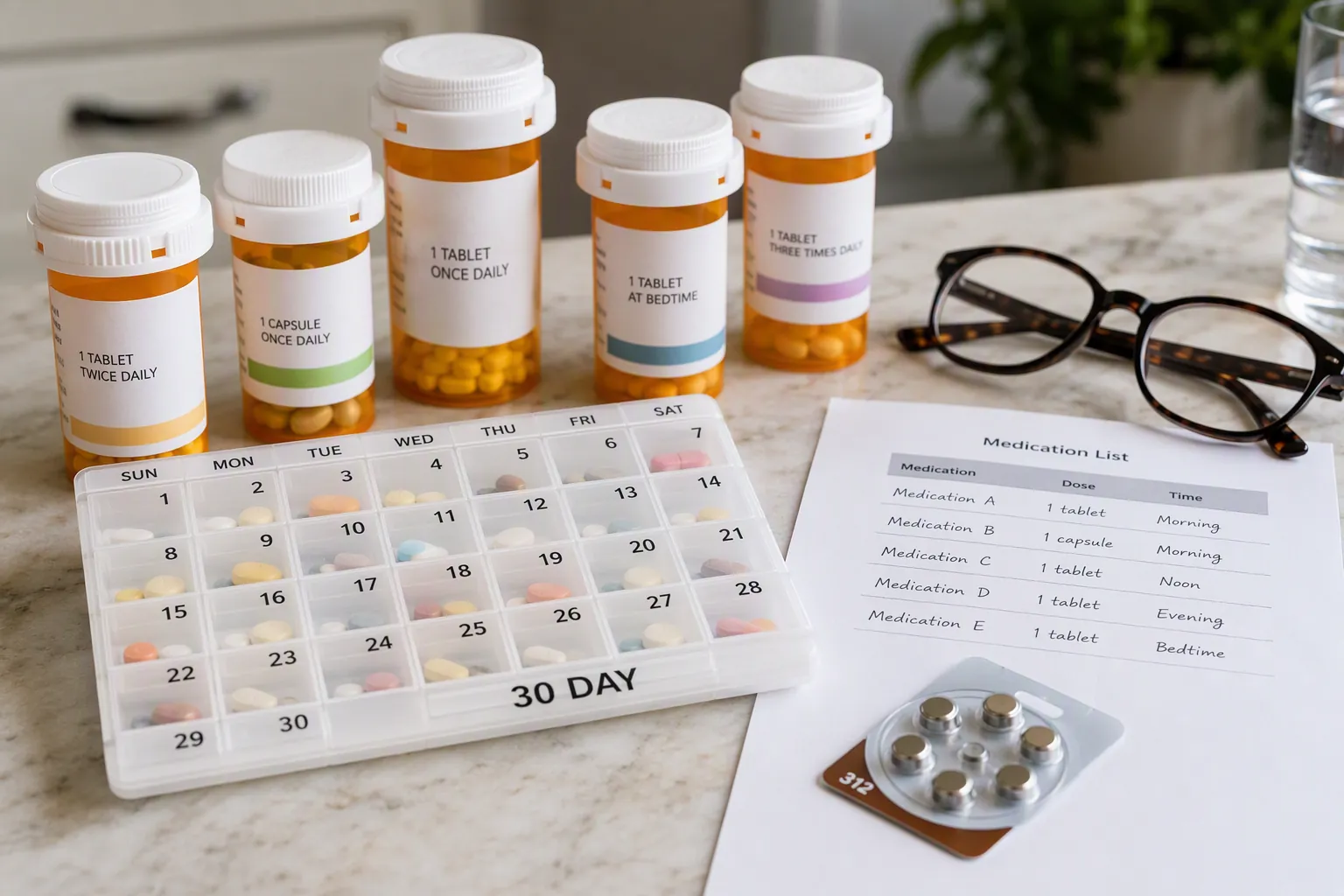
- Keep an up-to-date medication list on paper. Include drug names, doses, timing, prescribing clinicians, pharmacy phone number, allergies, and major diagnoses.
- Put a copy in the Go-Kit, one near the medication storage area, and one with the person who is most likely to help.
- Photograph prescription labels, but do not rely only on the phone. A dead phone should not be the only place the medication list exists.
- Ask the pharmacy in advance about early refill rules before storm season, not after a warning has been issued.
- Pack a pill organizer only if the older adult or caregiver can verify what is inside. Loose pills in a bag are not an emergency plan.
For refrigerated medication, do not guess after the outage has already lasted all night. Ready.gov says to throw away refrigerated medication after a power outage lasting more than one day unless the drug’s label says otherwise.[4] That guidance is not a substitute for a pharmacist or clinician, but it gives caregivers a clear reason to plan ahead: know which medicines need refrigeration, how long the backup cooling method is expected to work, and who to call before using medication of uncertain safety.
Power-dependent medical equipment
Write down every device that depends on electricity: oxygen concentrator, CPAP or BiPAP equipment, nebulizer, hospital bed, power wheelchair, stair lift, lift chair, refrigerated medication storage, communication device, or charging dock for hearing aids. Then test the backup. “We have a battery” is not the same as “this battery powers this device for the amount of time we need.”
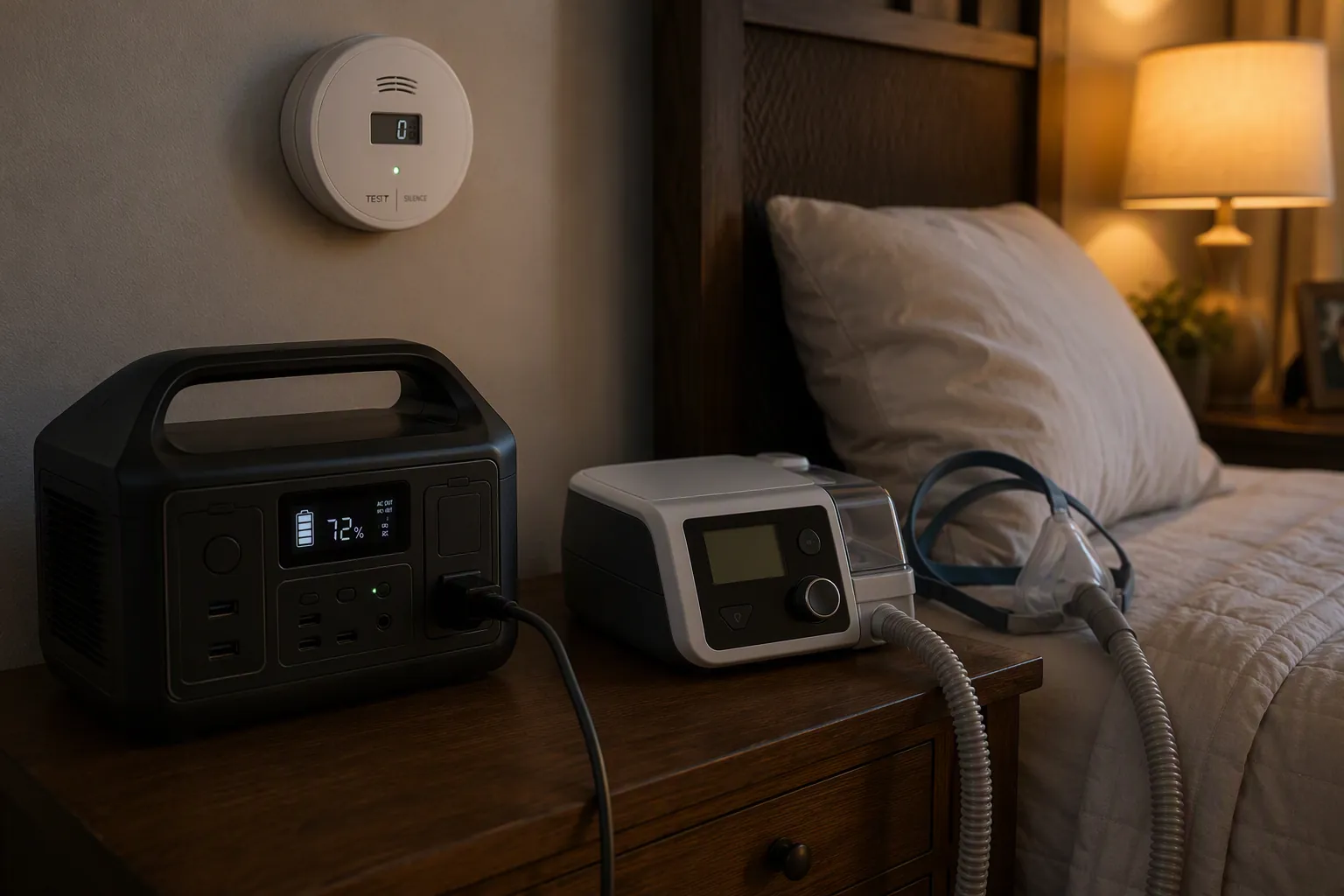
- Label each power cord and charger with the device name.
- Keep the backup battery charged on a routine schedule, not only when storms are forecast.
- Ask the equipment provider how long the device can run on the backup source and whether a car adapter, portable power station, or generator is appropriate.
- Tell the support network which equipment is essential and what failure looks like: breathing difficulty, inability to sleep safely, inability to transfer, or inability to charge a mobility device.
- If the device is medically essential, ask the utility company and local emergency management office whether a medical needs registry or priority notification program exists.
Generator safety belongs in the medical equipment plan, not in a separate “outdoor chores” category. Ready.gov says generators should be used outdoors at least 20 feet away from windows, doors, and attached garages, and that homes should have battery-backup carbon monoxide detectors on every level.[4] If the older adult cannot safely set up or monitor a generator, name the person who will do it. If nobody is named, do not pretend the generator is part of the plan.
Assistive devices and sensory backups
A spare cane, walker tips, glasses, hearing-aid batteries, magnifier, denture supplies, and charging cables can look minor until the lights are out. The Red Cross specifically includes extra assistive items such as a cane or eyeglasses in older-adult emergency supplies.[1] Put the backup where it will actually travel or be found. Spare glasses in a bedroom drawer do not help much if the older adult leaves for a shelter without them.
- Pack spare eyeglasses, not just sunglasses.
- Keep hearing-aid batteries or the hearing-aid charger in the Go-Kit.
- Add a small flashlight or headlamp that can be used while holding a cane or walker.
- Include backup rubber tips for canes or walkers if the older adult relies on them every day.
- Write down communication needs: hard of hearing, low vision, memory impairment, speech difficulty, or need for large-print instructions.
Documents, cash, and the handoff folder
The document folder is not just for insurance claims. It is what lets another adult step in without having to search through drawers during a power outage. Keep copies of photo ID, insurance cards, Medicare or Medicaid information, medication list, clinician contacts, pharmacy contacts, durable power of attorney or health care proxy if applicable, advance directive if applicable, emergency contacts, equipment provider contacts, and pet or service-animal records.
Add a short handoff sheet at the front: what the older adult needs every morning, what cannot be missed, what equipment must be powered, what mobility help is required, and what signs mean the plan is failing. This should be readable by a relative, neighbor, shelter worker, or emergency responder. If insurance papers and storm-damage records are part of your preparation, pair this checklist with a separate senior hurricane insurance review so the medical handoff folder does not become a stuffed envelope nobody can use quickly.
Water, food, hygiene, and ordinary supplies
Store one gallon of water per person per day for drinking and sanitation, plus a several-day supply of nonperishable food.[2] Choose food the older adult can open, chew, swallow, and prepare without full power. A shelf full of canned food is less useful if the can opener is electric, the food conflicts with a medical diet, or the person cannot safely carry pots of water in a dark kitchen.
- Manual can opener
- Ready-to-eat foods that match the person’s diet and swallowing needs
- Disposable plates, cups, and utensils if water may be limited
- Incontinence products, wipes, toilet paper, gloves, and trash bags
- Pet food, water, leash, carrier, medication, and vaccination records for pets or service animals
- Small bills in cash, because card readers and ATMs may not work
Set up the support network before anyone is under a warning
The support network should be written like a work schedule, not like a hope. Name the primary contact, backup contact, transportation contact, nearby check-in person, medication helper, and person who can take the older adult in if the home becomes unsafe. Then ask the awkward practical questions while everyone still has time to answer them.
- Who has a key or knows the lockbox code?
- Who can physically help the older adult transfer, walk, or get down stairs?
- Who can transport a walker, wheelchair, oxygen equipment, pets, or a service animal?
- Who knows where the medication list and documents are kept?
- Who checks in if cell service is unreliable?
- What is the backup plan if the first helper is also affected by the storm?
Evacuation planning needs the same specificity. If the older adult lives in a high-rise, do not wait until the elevator is out to decide whether stairs are possible. First Contact/211 Tampa Bay advises older adults and caregivers to consider special-needs shelter preregistration and to account for elevator risks in high-rise buildings during disaster planning.[5] Local rules differ, so check the county or city emergency management office well before storm season.
For families who need a fuller transportation and destination plan, use a dedicated emergency evacuation plan for elderly parents. The severe-storm checklist should not merely say “evacuate if told.” It should say who drives, what vehicle can fit the equipment, where the person goes, which documents travel, and what happens if the first destination loses power too.
During the storm: protect power, temperature, medication, and communication
During the storm, the goal is to keep the older adult reachable and medically stable while avoiding improvised fixes that create new danger. Keep the phone charged, but assume the phone may eventually fail. Use the printed contact list. Keep the medication list visible. If a caregiver is checking in by phone, ask about specifics: breathing equipment, medication taken, indoor temperature, food and medication refrigeration, bathroom access, and whether the person can still move safely through the home.
If the power goes out
Ready.gov says a refrigerator will keep food cold for about 4 hours if the door stays closed, and a full freezer will hold temperature for about 48 hours.[4] It also says to discard food exposed to 40°F or higher for 2 or more hours.[4] Those numbers matter because older adults may be more vulnerable to the consequences of foodborne illness, dehydration, or missed meals. Put a thermometer in the refrigerator and freezer if possible, and do not ask someone with low vision to make fine judgments by smell or label-reading in dim light.
For refrigerated medications, follow the label and call the pharmacist, prescriber, or emergency medical line if safety is uncertain. Ready.gov’s general instruction is to throw away refrigerated medication after a power outage lasting more than one day unless the drug label says otherwise.[4] If that medication is essential, uncertainty itself can become urgent. Do not wait until the next scheduled dose to discover there is no safe supply.
Watch indoor temperature, not just outdoor weather
Older adults may not sense temperature changes as reliably. CDC winter-weather guidance says adults over 65 should keep an easy-to-read indoor thermometer because the ability to feel temperature changes decreases with age.[6] In a cold outage, do not use an oven, stove, grill, or generator indoors for heat. In a hot outage, move the person to the coolest safe room, reduce activity, encourage safe fluid intake if allowed by the person’s medical plan, and contact the support network early if the home cannot be kept safe.
Cold risk deserves special attention because it can develop inside the home. The National Weather Service states that 50% of cold-exposure deaths are among people over 60, about 20% occur in the home, and a body temperature below 95°F is hypothermia requiring immediate medical care.[7] If the older adult is confused, unusually drowsy, shivering severely or no longer shivering despite being cold, or has a measured body temperature below 95°F, treat it as an emergency.
For heat-specific planning during outages, especially for someone without air conditioning, pair this checklist with heat-wave safety for seniors during a power outage. Heat and cold plans both need the same basic discipline: a thermometer, a threshold for leaving, and a person responsible for making the call before the situation becomes unmanageable.
Keep alerts and check-ins simple
Use more than one alert method: weather radio, phone alerts, local emergency messages, and a nearby contact. If the older adult has hearing loss, vision loss, memory changes, or trouble using a smartphone, the alert plan should not depend on noticing one notification. A caregiver check-in script can be brief: power status, medication taken, equipment working, indoor temperature, water available, bathroom access, and whether the person feels able to stay safely at home.
After the storm: do not resume normal routines too quickly
After the storm, the house may look familiar while the safe routines are still broken. Check medications before the next dose. Check refrigerated food before the next meal. Check whether medical devices are charging normally. Check whether extension cords, wet floors, debris, and dim hallways have changed the walking route.
This is the point where fall risk rises, but this article is not trying to rebuild a falls-first storm plan. Use the separate severe storm checklist for seniors that puts falls first for room-by-room fall controls, and the senior power outage fall-prevention checklist if the lights are still out or cords and batteries have changed the walking paths.
- Throw away unsafe refrigerated food according to time and temperature guidance rather than taste or smell.
- Call the pharmacist or prescriber before using refrigerated medication of uncertain safety.
- Do not bring generators, grills, or camp stoves indoors, into garages, or near doors and windows.
- Walk the main route from bed to bathroom to kitchen before the older adult resumes it alone.
- Replace used batteries, water, food, and medication copies while the gaps are still obvious.
- Write down what failed: the helper who could not come, the charger that was missing, the document nobody could find, the food that required cooking, or the device the battery did not power long enough.
When to call for emergency help
This checklist is planning guidance, not medical advice. When a storm disrupts medication, power, temperature control, or evacuation, caregivers should use clinicians, pharmacists, local emergency management, utility medical-needs programs, and emergency services rather than trying to solve a medical problem with household supplies.
Call 911 or local emergency services if essential medical equipment cannot be powered and the person’s health depends on it; if breathing, consciousness, chest pain, severe weakness, or confusion changes; if a refrigerated medication is essential and its safety or availability is uncertain; if the older adult cannot evacuate when ordered; if the home cannot be kept at a safe temperature; or if hypothermia is suspected, including a body temperature below 95°F.[7]
A senior storm checklist is not a bigger generic kit. It is a written continuity plan for one older adult: the medications that must not run out, the equipment that must not lose power, the glasses and mobility aids that must be within reach, the documents that must travel, and the people who have agreed in advance to act.
References
- Older Adults — American Red Cross.
- Build A Kit — Ready.gov.
- Identifying Populations and Areas at Greatest Risk of Household Evacuation Failure Following a Natural Disaster — CDC Preventing Chronic Disease. January 2008.
- Power Outages — Ready.gov.
- Disaster Preparedness for Older Adults and Caregivers — First Contact / 211 Tampa Bay.
- Winter Weather Safety — Centers for Disease Control and Prevention.
- Winter Storms — National Weather Service.
Related reading
Noticed something outdated or inaccurate on this page? Flag a correction. We review every report against CDC, NIA, and AARP HomeFit guidance before updating a page.
Part of the Fall Prevention section.