
STEADI: Intervene
Snow and Ice Fall Prevention Checklist for Seniors
Falls on snow and ice are a predictable, largely preventable winter hazard for older adults. This pre-season checklist covers the concrete steps — treating walkways before storms, choosing traction-ready boots, taking short flat-footed steps, and drying wet entryways — that help seniors stay steady from the first storm through spring.
Snow and ice fall prevention tips for seniors deserve their own checklist because winter changes where falls happen. In a CDC-authored analysis of 2015 emergency department data, winter accounted for 26.2% of older-adult fall ED visits; outdoor falls were even more winter-concentrated, with 29.8% occurring in winter. Among weather-related outdoor falls, about 97% were slips or trips on ice or snow.[1]
That does not mean older adults should stay inside until April. It means the safe route has to be built before it is needed: driveway, sidewalk, front step, porch, threshold, entry mat, and the first dry indoor floor. A fall can start at any weak point in that chain.
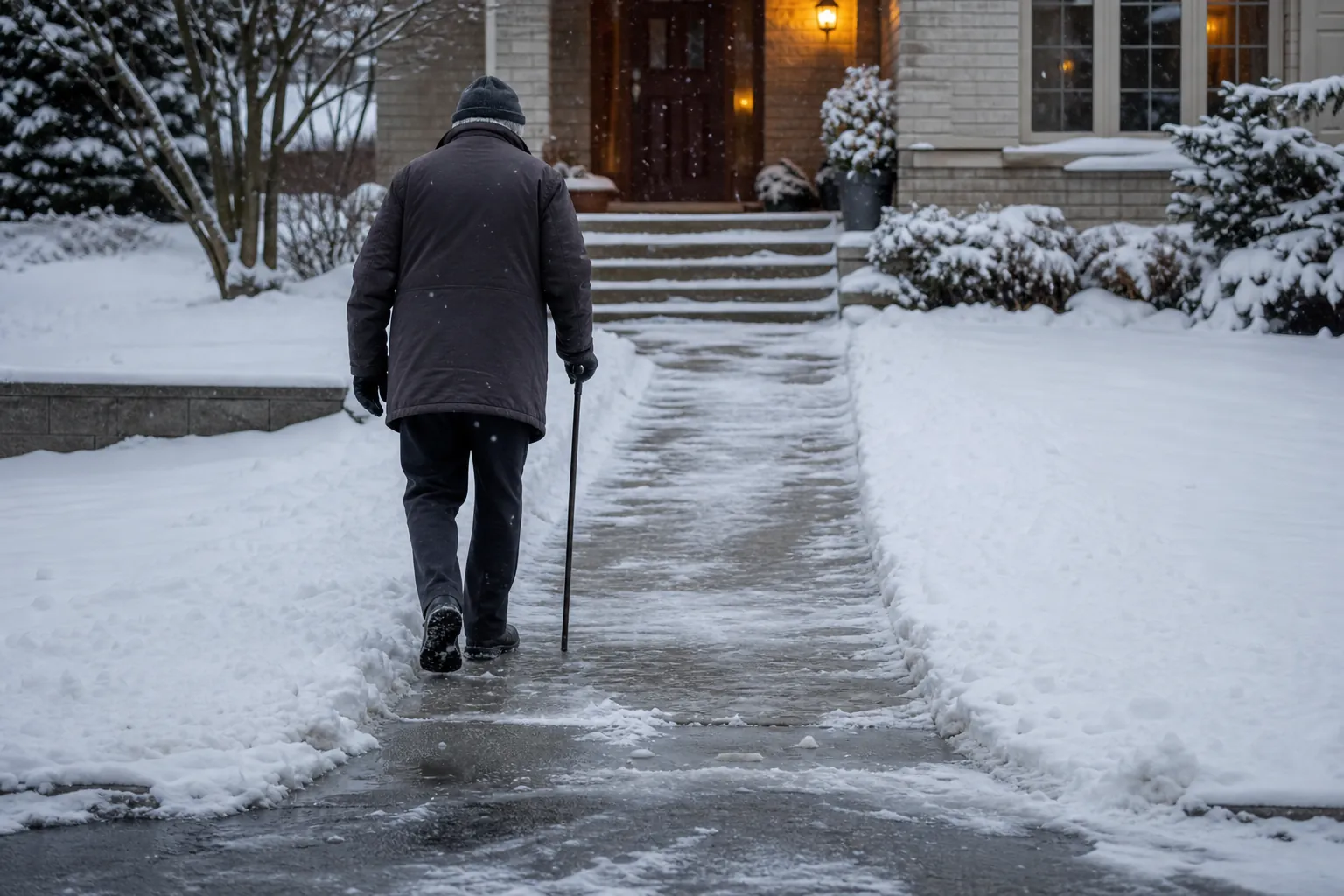
The route checklist, before the first storm
Start with the route the person actually uses, not the route that looks best from the kitchen window. For many homes, that is not just the front walk. It may be the garage-to-car path, the side door, the mailbox, the trash bins, the ramp, the curb cut, or the two concrete steps everyone forgets until they are glazed over.
| When | Action that has to be done | Owner to name now |
|---|---|---|
| Before winter | Walk the full route in daylight and mark the places that collect water, shade, packed snow, or refreeze. | Older adult, adult child, neighbor, landlord, or home-maintenance service |
| Before a forecast storm | Put ice melt, sand, or kitty litter where it can be reached without stepping onto ice. | The person who will actually spread it |
| During and after snowfall | Clear the walking line wide enough for steady steps, a cane, walker, or helper beside the person. | A named shoveling person, not “whoever gets to it” |
| Before leaving the house | Decide whether the route is treated, visible, and worth the trip. | The person going out, with caregiver input when needed |
| At the door | Keep the wet zone contained: secured mat, dry floor, boots and walking aids dried before moving farther inside. | Whoever enters first or checks in after the outing |
Stock the treatment supplies where the first step happens
A bag of ice melt in the garage is not much help if the dangerous step is between the kitchen door and the garage. Keep a small container, scoop, and gloves near the door used most often, while making sure the supplies themselves do not become clutter in the walking path.
Several winter fall-prevention resources recommend treating slippery outdoor surfaces with materials such as sand, ice melt, or kitty litter, depending on the surface and household needs.[2][3][4] The useful version of that advice is specific: decide what will be used on the front steps, what will be used on the sidewalk, what is safe around pets if pets are in the home, and who checks whether more is needed after melting and refreezing.
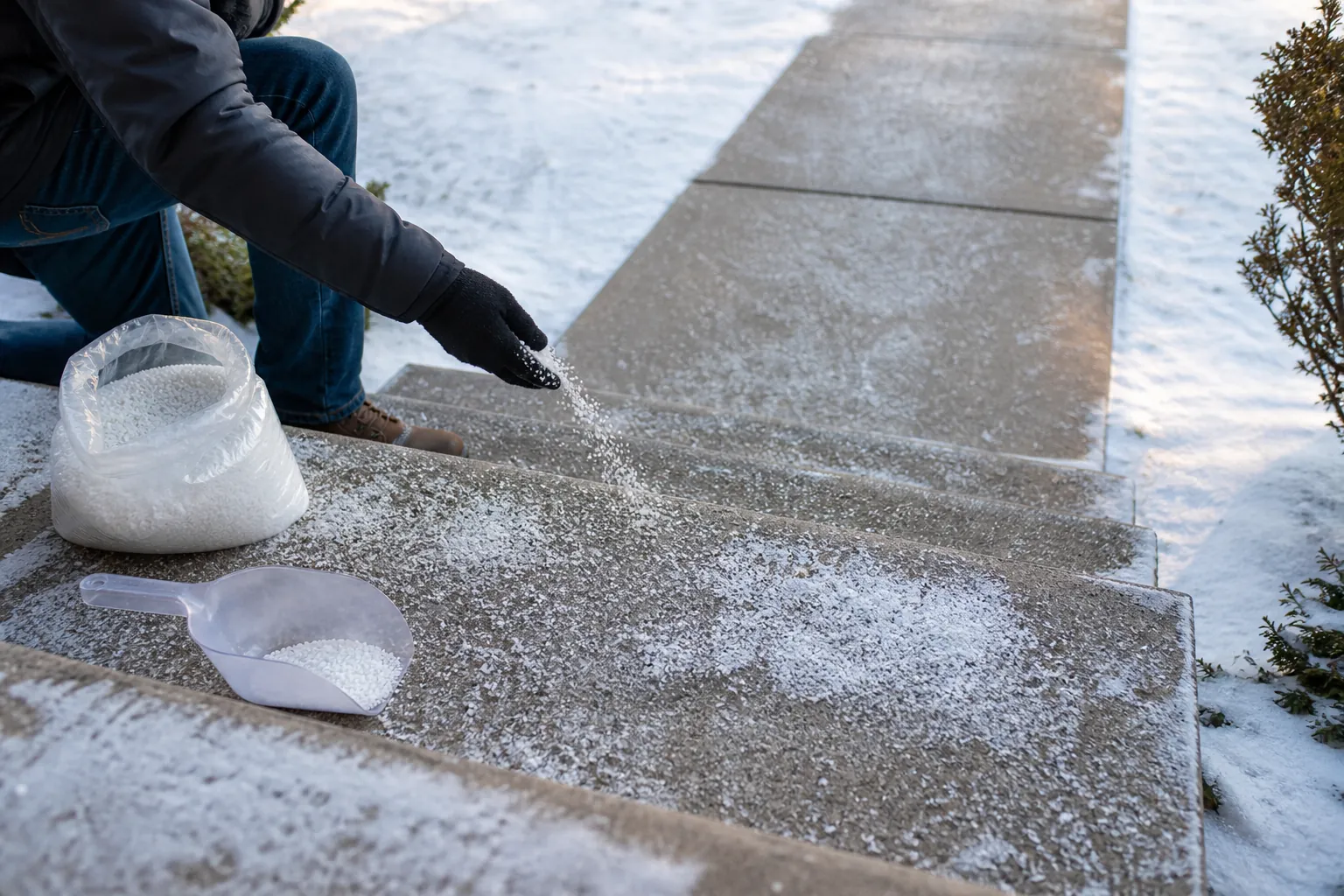
Treat before the storm, then inspect after the clearing
The pre-storm job is to make the first layer less treacherous. If ice or freezing rain is expected, the safest time to prepare steps and walkways is before someone is standing on them with a bag in one hand and a railing just out of reach. That is especially true for older adults who live alone and may feel pressure to “just do it quickly” before an appointment.
After snow is cleared, inspect the route again. Shoveling can leave a thin packed layer on steps. Plows can push ridges across driveway aprons. Meltwater can run off a roofline or down a sloped walk and refreeze after sunset. If the route is safe only at noon, it is not ready for a 5 p.m. return.
- Clear the full walking route, not just a narrow strip to the door.
- Expose step edges so depth changes are visible.
- Treat the bottom of steps, where packed snow often turns into a slick landing zone.
- Check the driveway-to-car path, including the spot where a foot plants while getting in or out of the vehicle.
- Keep railings usable: not buried, icy, or blocked by shoveled snow.
Make “not today” a planned option
A winter checklist should include permission to cancel a trip before anyone is halfway across a driveway. The Ohio Department of Aging advises that older adults stay indoors when snow is deeper than about one inch because it can hide curbs and uneven surfaces.[5] That is one state agency’s practical cutoff, not a law of physics, but it is useful because it turns vague caution into a decision point.
Use the same idea for ordinary errands. If the path is untreated, the curb is buried, the parking lot has not been cleared, or the return trip will happen after dark and refreezing, the safer plan may be delivery, rescheduling, a ride with door-to-door help, or waiting until the route is visible again.
Footwear and walking technique need to match the surface
Winter boots are safety equipment. They do not need to be expensive or fashionable, but they do need to be chosen for traction, fit, and stability. WRHA’s fall-prevention footwear guidance emphasizes features such as rubber soles, multi-directional lugs, wide and flat soles, ankle support, secure closures, and a snug fit.[6]
- Rubber traction sole: avoid smooth dress soles, worn-down tread, and hard slippery bottoms.
- Multi-directional lugs: tread should grip when stepping forward, turning, and stopping.
- Wide, flat base: narrow heels and unstable soles make recovery harder if the foot slides.
- Ankle support: especially useful when stepping over uneven packed snow or driveway ridges.
- Secure closure: laces, straps, or closures should keep the foot from shifting inside the boot.
- Snug fit with winter socks: a boot that is too loose can behave like a loose slipper on ice.
Check the boots before the first storm, not during the first storm. Put them on with the socks normally worn in winter. Walk across a dry indoor floor. If the heel lifts, the sole flexes unpredictably, the tread is polished smooth, or the closure cannot be tightened with cold hands, the problem will be worse outside.
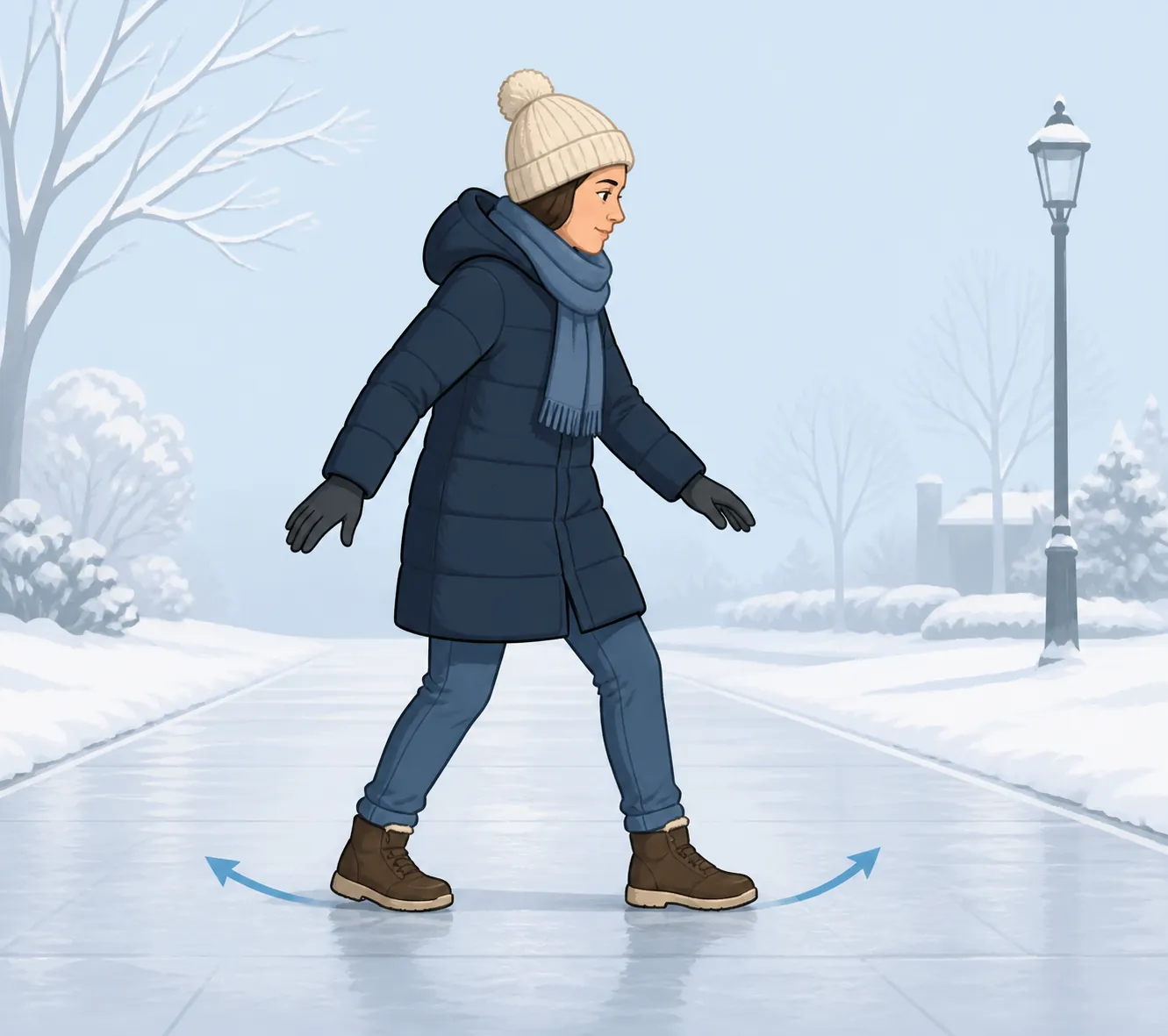
For icy patches that cannot be avoided, many health systems recommend a penguin-style walking technique: short steps, feet slightly turned outward, feet flat, knees slightly bent, and hands free for balance.[3][4][7] Treat it as a sensible technique to practice, not a magic shield. It works best when it is paired with a cleared route, traction-ready boots, and enough time to avoid rushing.
- Take short steps and keep the feet under the body.
- Place the whole foot down instead of striking with the heel first.
- Point feet slightly outward when crossing a slick area.
- Keep knees loose, not locked.
- Keep hands out of pockets and avoid carrying loose bags that pull the body off center.
- Stop before turning; small pivots are safer than twisting quickly on a planted foot.
The most dangerous winter sentence may be “I’ll just hurry.” Hurrying shortens the time available to notice ice, changes how the foot lands, and encourages carrying too much at once. If an older adult needs to bring in groceries, mail, or a trash bin, the checklist should say whether those jobs wait, get split into smaller trips, or get handed to someone else during icy conditions.
When a cane, walker, or railing is part of the route
A cane or walker does not cancel out ice. It can help only if the tip or contact points are dry, stable, and placed on a surface that will hold. Before winter, look at the usual walking aid the same way you look at boots: worn tips, loose parts, and poor fit are not small details when the ground is slick.
Railings deserve the same inspection. A railing that ends before the final step, is hard to grip with gloves, or sits behind a snowbank may be technically present and practically useless. The route is ready when the support points can be reached without leaning across ice.
The wet entryway is still part of winter fall prevention
Getting through the door is not the end of the risk. Melted snow follows boots, canes, walkers, and shopping bags inside. Several winter safety resources warn about wet indoor floors and recommend steps such as securing mats and drying boots or walking aids at the door.[3][4][5]
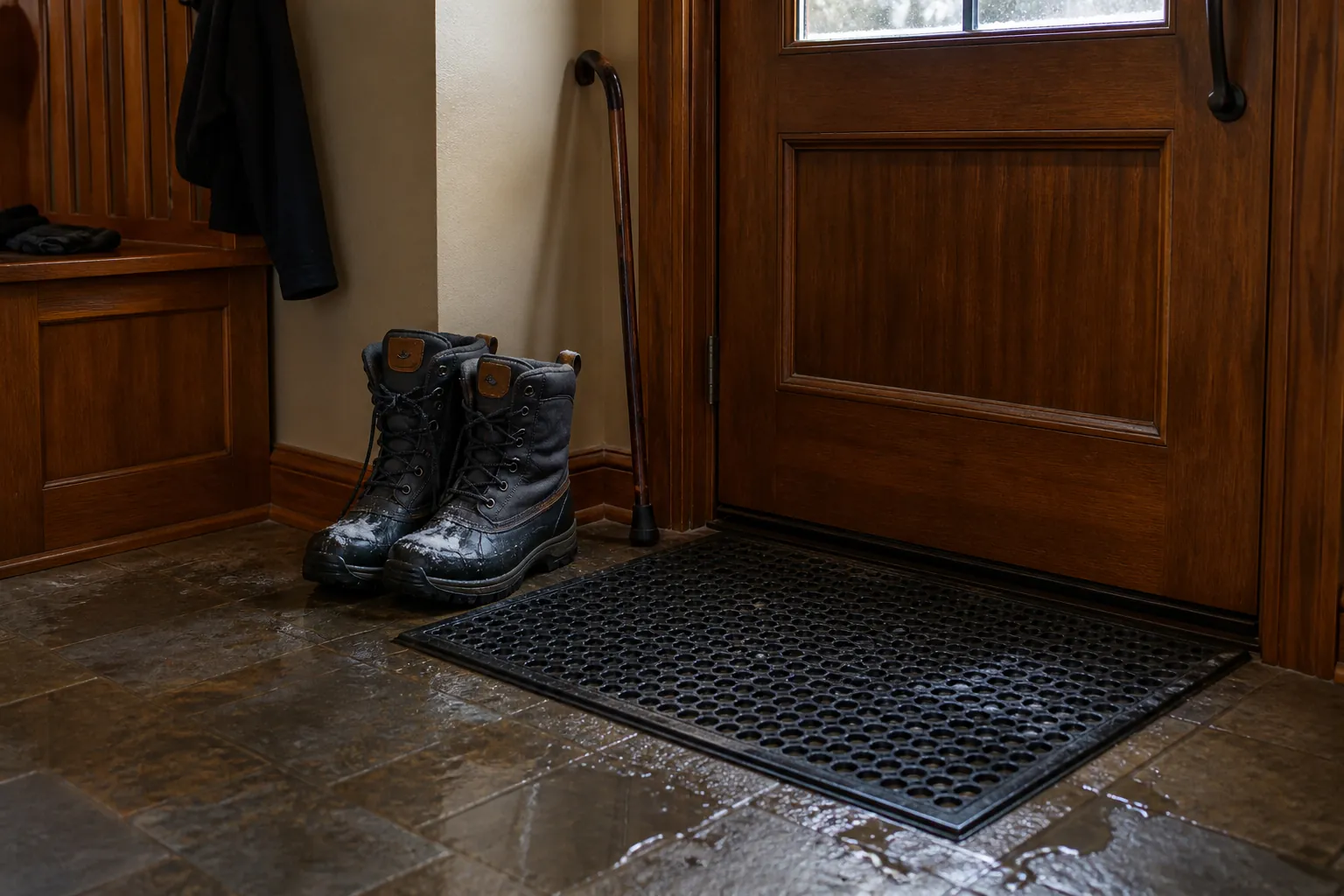
This is the part many winter tip lists rush past, and it is exactly where a good outdoor plan can be undone. A sliding mat can move under a careful foot. A cane tip brought inside wet can skid on tile. Boots left in the walking line can turn the first step out of the coat closet into an obstacle course.
- Use a mat with a non-slip backing, and replace mats that curl, bunch, or slide.
- Keep one clear place for wet boots so they are not left in the walking path.
- Dry puddles promptly, especially on tile, laminate, polished wood, or other slick flooring.
- Wipe cane tips, walker feet, and wheels before moving farther into the home.
- Keep towels or absorbent cloths at the entry during storm weeks, not in a closet down the hall.
What this checklist does not replace
This is a prevention checklist, not a fall-response plan. If a fall happens, the next steps depend on pain, injury, head impact, medications, ability to get up safely, and whether emergency help is needed. CareWise treats that as a separate act-now path because crisis decisions should not be buried inside a winter preparation article.
It also does not cover every winter hazard. Shoveling strain, power outages, heating problems, medication storage, and storm isolation belong in broader severe-weather planning. If the home has more general fall hazards beyond winter surfaces, start with the red-flag home safety checklist for elderly parents. For storm preparation that goes beyond walking surfaces, use the severe weather safety checklist for seniors living alone or the broader guide on why severe weather is deadlier for seniors and how to prepare.
For readers interested in why weather risks are becoming harder to treat as rare exceptions, CareWise also has a separate look at how climate change raises fall risk for older adults. And if a caregiver wants a device layer after the route, footwear, walking plan, and entryway are handled, the fall-detection watch guide can help compare options. A watch may help after a fall; it does not make an icy step safer.
Before the next storm
Put the ice treatment where it can be reached safely. Name the person who clears the route. Check the boots. Practice the short, flat-footed steps before the driveway is slick. Secure the mat and put a towel by the door. The useful winter safety plan is the one completed before the first storm and repeated from the outside route to the inside floor.
References
- Seasonal variation in fall-related emergency department visits among older adults, Journal of Safety Research, 2021
- Winterize to Prevent Falls, National Council on Aging
- Keeping your winter balance, Mayo Clinic Health System
- Winter falls aren’t inevitable: How older adults can prevent injury during Ozarks cold weather, CoxHealth
- Falls Prevention in Every Season, Ohio Department of Aging
- Footwear, Prevent Falls.ca
- Walk Safely All Year, Prevent Falls.ca
Related reading
Noticed something outdated or inaccurate on this page? Flag a correction. We review every report against CDC, NIA, and AARP HomeFit guidance before updating a page.
Part of the Fall Prevention section.