
Why Wildfire Smoke Is More Dangerous for People Over 65
Wildfire smoke poses a disproportionate threat to older adults. This article explains the physiological reasons, presents the latest evidence on mortality and indoor air failures, and equips caregivers with the facts needed to take protective action seriously.
Wildfire smoke has a way of being treated like bad weather: unpleasant, irritating, something to wait out. For an older adult, that framing is too casual. Smoke is not just a smell in the air or a brown sky outside the window. It is fine particle pollution that can push an already stressed body past its margin.
That matters during air quality alerts because adults 65 and older are not just “more bothered” by smoke. EPA and CDC guidance place them in a sensitive group, meaning protective action should begin earlier than it would for a healthy younger adult. At AQI Orange, which starts at 101, the general public may still be told the risk is lower, but sensitive groups are already advised to reduce exposure.[1][2]
The other reason to stop treating smoke as a rare disruption is that exposure has changed. Climate Central’s 2025 analysis of Stanford Echola data found that per-person wildfire smoke exposure during 2020–2024 was four times higher than during 2006–2019, and that every U.S. county now experiences at least 16 smoke days per year.[3] This is no longer a “Western fire season” problem that the rest of the country can ignore.
The Burden Is Already Measurable
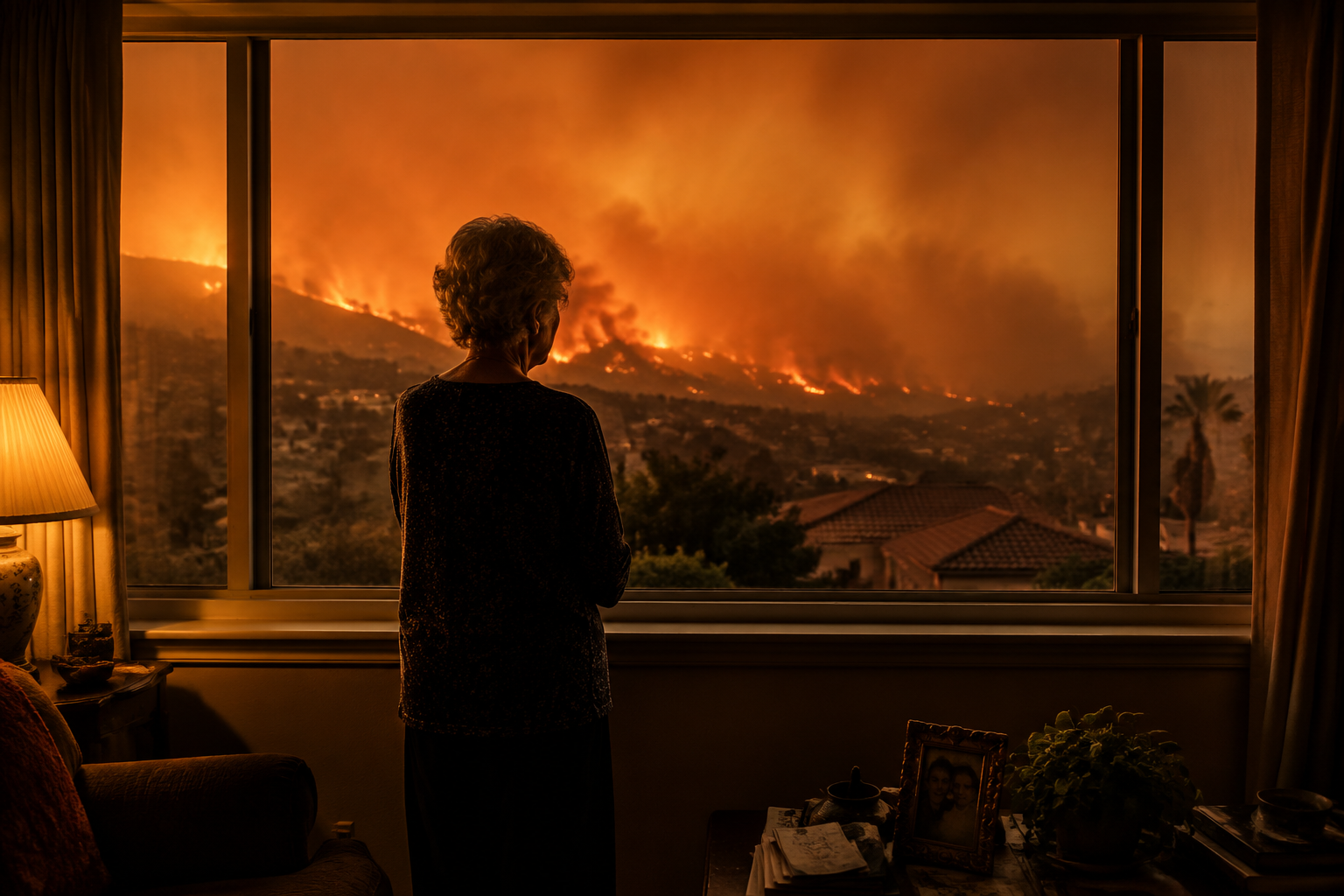
The cleanest way to understand why protecting older adults from wildfire smoke during air quality alerts deserves urgency is to look at the health burden, not the sky color.
A 2024 NBER working paper estimated that wildfire smoke is associated with 10,070 excess premature deaths and 191,541 excess emergency department visits each year among Americans over 65.[4] Those are not counts of people annoyed by haze. They are estimated deaths and emergency visits attributed to smoke exposure in an age group that already carries more heart disease, lung disease, diabetes, kidney disease, frailty, and medication complexity.
For a caregiver, the number changes the question. It is not “Will Mom mind staying inside today?” It is “What exposure can we remove before it becomes the kind of event that ends in an urgent call, an ER visit, or a week of recovery?” The person who will manage the rescue inhaler, the missed sleep, the confusion, the oxygen concentrator alarm, or the hospital discharge paperwork has good reason to be less relaxed than everyone else in the room.
Why the Same Smoke Hits an Older Body Harder
Wildfire smoke contains fine particulate matter, often discussed as PM2.5 because the particles are small enough to reach deep into the lungs. The practical issue for older adults is not that their bodies encounter a completely different pollutant. It is that they have less reserve when that pollutant arrives.
A younger person may cough, get a headache, sleep badly, and recover. An older adult with COPD, asthma, heart disease, diabetes, chronic kidney disease, or a recent respiratory infection may have less room for added inflammation, reduced oxygen exchange, or cardiovascular strain. CDC guidance specifically warns that people with chronic conditions can be at higher risk from wildfire smoke and advises keeping a 7- to 10-day supply of medications available during smoke events.[2]
Age also changes the logistics. Some older adults do not feel symptoms early, do not report them clearly, or minimize them because they do not want to be managed. Others live alone, use mobility aids, rely on caregivers for errands, or cannot easily relocate to cleaner air. A smoke advisory can become a health event not because anyone panics, but because small delays stack up: windows stay cracked, the HVAC fan is off, the spare inhaler is expired, the air purifier is still in the box, and no one checks AQI until breathing is already worse.
“Stay Indoors” Is Not a Complete Plan
Sheltering indoors is usually the first instruction during smoke. It is also where false reassurance creeps in. Walls help only if the indoor air is actually cleaner than the outdoor air, and that depends on building leakage, ventilation settings, filtration, open doors, window gaps, cooking, cleaning, candles, and whether anyone is measuring what is happening inside.
A 2022 Indoor Air study of four Idaho skilled nursing facilities during the 2020 wildfire season is a useful warning. The sample was modest, so it should not be read as proof that every senior facility performs the same way. But the details are hard to shrug off: outdoor PM2.5 averaged 51.8 μg/m3, while indoor PM2.5 reached 202.5 μg/m3 in one facility, nearly six times the EPA 24-hour standard. In another facility, indoor levels equaled outdoor levels. The study reported infiltration efficiency ranging from 0.26 to 0.76, meaning some buildings allowed a substantial share of outdoor smoke particles indoors.[5]
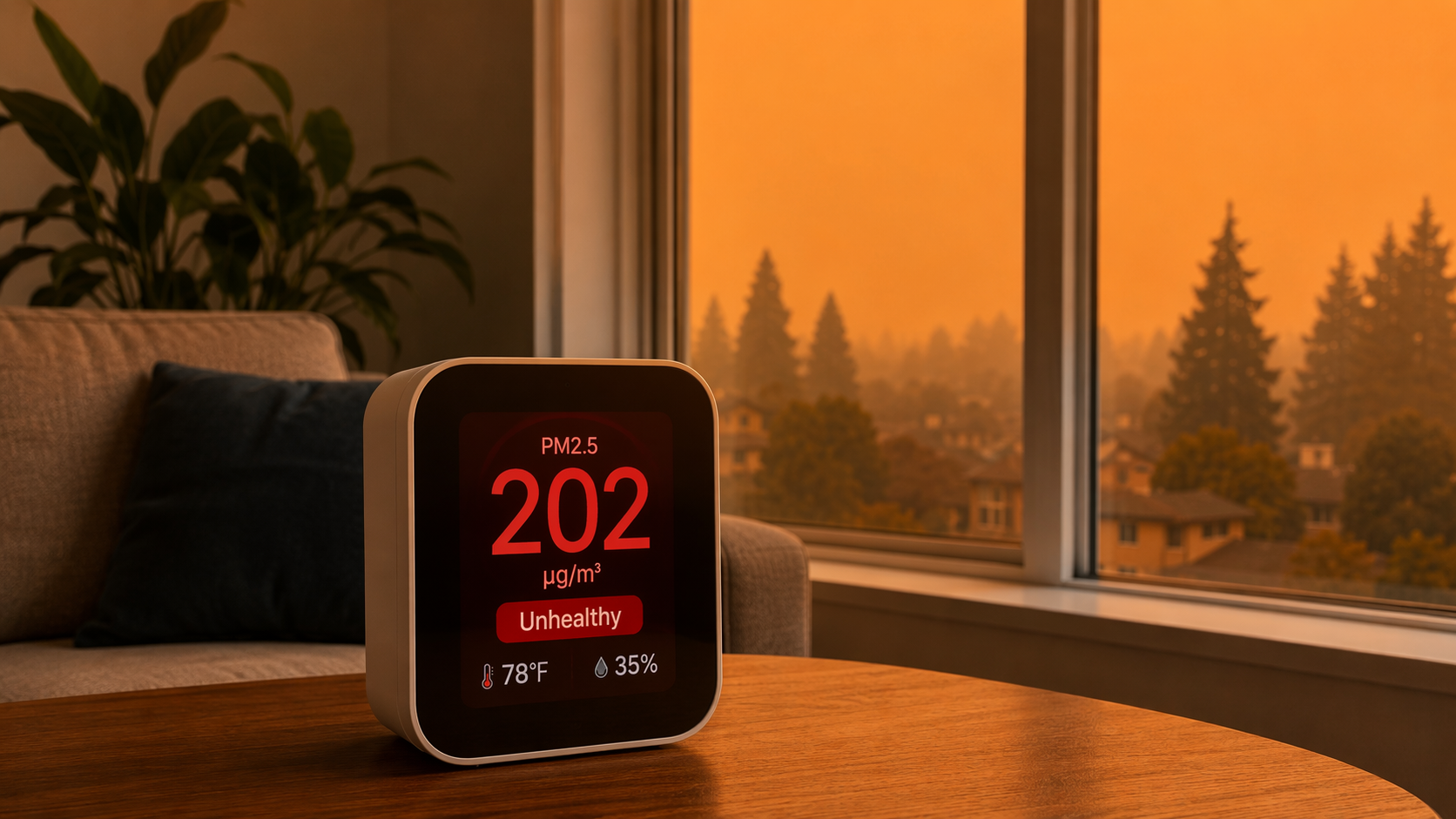
That study matters because it breaks the easy assumption that “inside” equals “safe.” If smoke can penetrate skilled nursing settings, a single-family home with older windows, a leaky door, a bathroom fan pulling air, or a central air system without adequate filtration should not be treated as automatically protected.
This is also where wildfire smoke safety differs from wildfire evacuation. A person may be miles from flames and still be in a dangerous air quality event. Evacuation decisions are about immediate fire threat, road access, and emergency instructions. Smoke protection is about particle exposure, indoor filtration, medical vulnerability, and how long the event lasts. Confusing the two can leave an older adult sitting in a smoky house because “the fire isn’t near us.”
The Decision Point Starts at AQI 101 for Older Adults
The AQI color system is useful only if caregivers use the right threshold for the right person. For older adults, AQI Orange is not a wait-and-see category. AirNow describes Orange, AQI 101–150, as “Unhealthy for Sensitive Groups,” and adults 65 and older are included among people who may need earlier protection.[1]
| AQI cue | What it means for an older adult |
|---|---|
| Green or Yellow | Usually lower risk, but symptoms and chronic conditions still matter. |
| Orange, 101–150 | Start reducing exposure for adults 65+, especially with heart or lung disease. |
| Red or worse | Treat outdoor exposure as a serious risk and tighten the indoor-air plan. |
The practical caregiver move is to check AQI before the day is already underway, not after someone has gone out for the mail, watered plants, taken a walk, or waited outside for a ride. If you need a step-by-step routine, the site’s guide on how to check air quality for an elderly loved one walks through using AQI tools without turning it into a full-time job.
Protection Is Boring, Specific, and Worth Doing
The most useful smoke precautions are not dramatic. They are the things that reduce particle exposure before symptoms make the decision for you.
- Move outdoor tasks earlier, postpone them, or have someone else do them when AQI reaches sensitive-group levels.
- Keep windows and doors closed during smoke, and avoid adding indoor particles from frying, candles, fireplaces, or vacuuming without proper filtration.
- Use HVAC filtration or a room air cleaner to create at least one cleaner-air room where the older adult spends the most time.
- If going outside cannot be avoided, use a properly fitted NIOSH-approved N95 respirator; cloth and surgical masks are not adequate for fine particle protection.
- Keep medications, inhalers, oxygen supplies, batteries, and clinician instructions accessible before smoke days stack up.
The respirator point is often misunderstood. The American Lung Association, reflecting CDC guidance, identifies NIOSH-approved N95 respirators as the minimum protection for outdoor fine particle exposure; cloth masks and surgical masks do not filter these particles effectively.[6] Fit still matters. A loose N95 on a frail older adult’s face is not the same as a sealed respirator, and some people with respiratory or cardiac disease may need medical advice before using one for long periods.
For indoor air, the goal is not to buy the fanciest device. The goal is to reduce PM2.5 where the older adult actually breathes. EPA research has found that DIY air cleaners made with a box fan and a MERV 13 filter can meaningfully reduce indoor PM2.5 from wildfire smoke when used appropriately.[7] That makes them a practical backup for households that cannot immediately get a portable HEPA unit or upgrade HVAC filtration.
For caregivers managing multiple conditions, the preparation needs to be more specific than “keep them inside.” A parent with COPD, heart failure, diabetes, chronic kidney disease, dementia, or mobility limitations may need different medication checks, symptom triggers, transportation plans, and backup power arrangements. The caregiver wildfire smoke preparedness checklist for chronic conditions is the better place to turn once the risk is no longer theoretical.
What to Do With This Evidence During an Alert
The evidence points to a plain conclusion: wildfire smoke is a quantified health emergency for older adults, not an inconvenience dressed up by anxious caregivers. Exposure has increased sharply. The annual burden among Americans over 65 is measured in thousands of premature deaths and hundreds of thousands of emergency visits. Indoor shelter helps, but it does not guarantee clean air.
That does not mean every smoky day becomes a crisis. It means the response should be tied to thresholds, symptoms, and indoor air control rather than mood, habit, or whether an older parent thinks the house “seems fine.” Caregivers still have leverage: check AQI early, treat AQI 101 as a sensitive-group action point, reduce outdoor exposure, improve filtration, prepare medications, and make one cleaner room reliable.
If you are ready to move from the evidence to a plan, start with how to protect your aging parent during an air quality alert for AQI-level actions, then use how to keep older adults safe during an air quality advisory to work through the house room by room. For families comparing risk within the 65+ group, not all older adults face the same risk from smoky air explains why vulnerability is not evenly distributed.
References
- AQI Basics, AirNow.
- Wildfire Smoke and People with Chronic Conditions, Centers for Disease Control and Prevention.
- Climate Change Worsens Wildfire Smoke, Climate Central, 2025.
- The Health Consequences of Wildfire Smoke, National Bureau of Economic Research, 2024.
- Indoor Air study of wildfire smoke infiltration in Idaho skilled nursing facilities, Indoor Air, 2022.
- How to Protect Yourself from Poor Air Quality, American Lung Association.
- Research on DIY Air Cleaners to Reduce Wildfire Smoke Indoors, U.S. Environmental Protection Agency.
Related reading
Noticed something outdated or inaccurate on this page? Flag a correction. We review every report against CDC, NIA, and AARP HomeFit guidance before updating a page.
Part of the Fall Prevention section.