
Glossary entry
Short-Term Care for Elderly: A Complete Guide to the 4 Main Options
What Is Short-Term Care for the Elderly?
Short-term care is temporary support designed to help an older adult recover, regain strength, or give a family caregiver a necessary break. Unlike long-term care, which is ongoing and often indefinite, short-term care has a defined endpoint: the person is expected to return to their baseline and resume their normal life. The duration typically ranges from a few hours a day to about three months.
The most common triggers for needing short-term care include:
- A recent hospitalization for surgery, a fall, or a serious illness
- A new diagnosis that requires a period of supervised recovery
- Caregiver burnout, where the primary family caregiver needs time to rest or attend to their own health
- A trial period to evaluate whether a residential setting is appropriate before making a permanent move
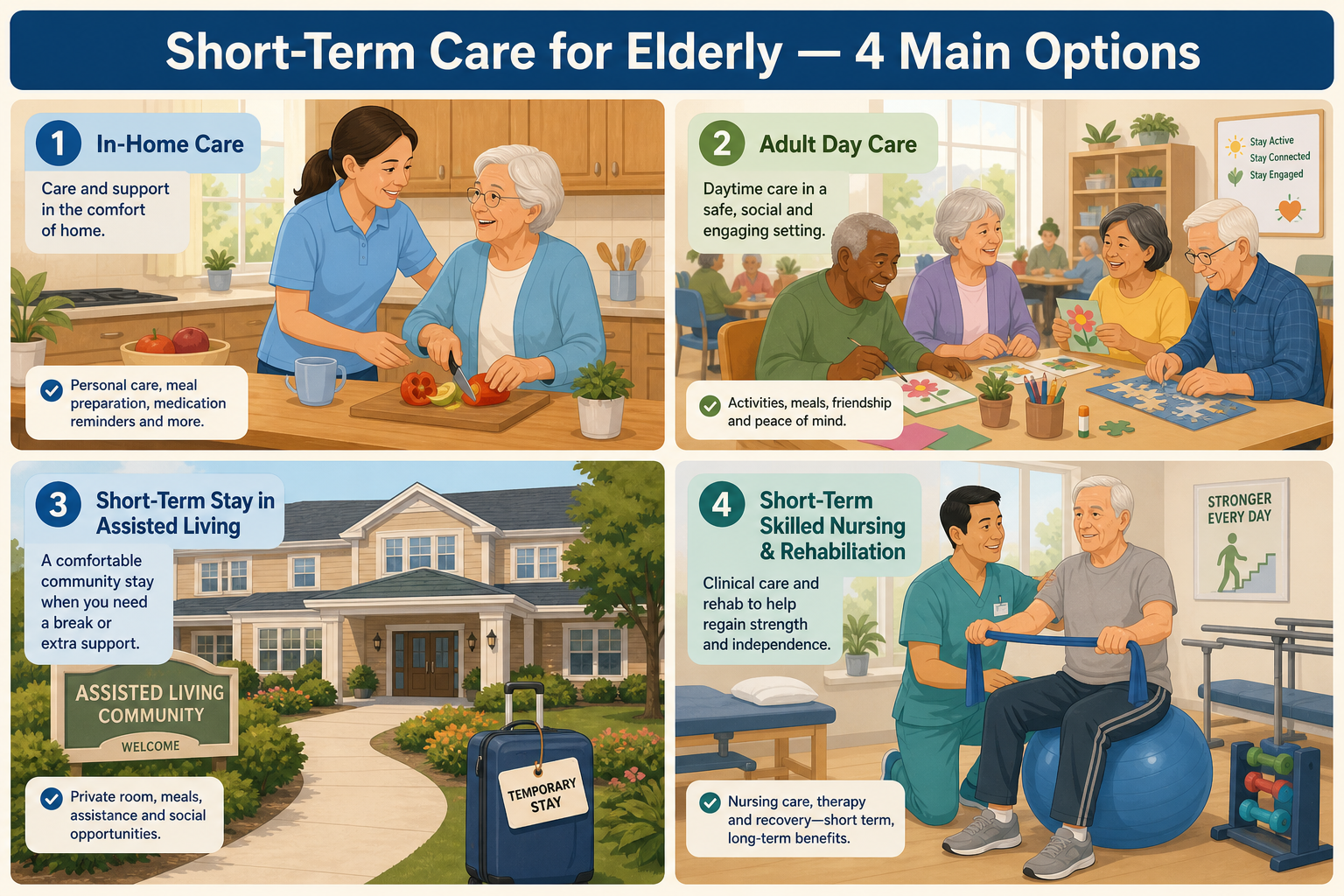
This guide covers the four main service types available for short-term care: in-home care, adult day care, short-term assisted living stays, and skilled nursing facility (SNF) rehabilitation. Each option serves a different purpose, comes with a different cost structure, and has different rules about what Medicare will and will not pay for.
Option 1: In-Home Care for Short-Term Recovery
In-home care brings a trained aide into the older adult's home to assist with daily activities during a recovery period. This is the most common short-term care choice because it allows the person to remain in familiar surroundings while receiving the support they need.
There are two main types of in-home care for short-term needs:
- Non-medical home care (homemaker or personal care aide): Helps with bathing, dressing, meal preparation, light housekeeping, and companionship. No medical training is required.
- Home health care: Provided by licensed medical professionals (nurses, physical therapists, occupational therapists) for wound care, medication management, injections, and rehabilitation exercises. This must be ordered by a physician.
According to Genworth's 2024 Cost of Care Survey, the national median cost for private nonmedical in-home care in 2026 is $34 per hour, with state medians ranging from $25 per hour in Mississippi to $44 per hour in South Dakota. For a typical post-surgery recovery requiring 30 hours of care per week, the estimated monthly cost is approximately $4,416.
Typical scenarios for short-term in-home care include:
- Post-hip or knee replacement recovery (2–6 weeks of daily assistance)
- Recovery after a fall that did not require hospitalization but left the person temporarily unsteady
- Post-discharge from a skilled nursing facility, when the person still needs some help but no longer requires 24-hour nursing care
Option 2: Adult Day Care for Caregiver Respite and Social Engagement
Adult day care centers provide structured daytime programs in a safe, supervised environment. They offer social activities, exercise, meals, personal care assistance, and basic health services. This option is designed for older adults who cannot be left alone during the day but do not require 24-hour care.
The national median daily rate for adult day care is approximately $100 to $115 per day, according to Genworth data cited by SeniorLiving.org. This makes it the most affordable non-home short-term care option. Monthly costs average around $2,123, though this varies significantly by state — from about $1,300 per month in Texas to $3,467 in Maine.
Adult day care is particularly well-suited for:
- Caregiver respite: A family caregiver who works during the day or needs a regular break can drop off their loved one in the morning and pick them up in the evening.
- Social engagement for seniors who are isolated at home and would benefit from structured group activities
- Transitional support after a hospital stay, when the person is stable but not yet ready to be alone all day
If your parent has dementia, an adult day care program specifically designed for memory impairment may be more appropriate. For a detailed discussion of dementia-specific day programs, see our dedicated guide: Adult Day Care for Dementia: How Day Programs Benefit Both Your Loved One and You.
Option 3: Short-Term Assisted Living and Respite Stays
Many assisted living communities offer short-term or respite stays that allow an older adult to live in the community for a temporary period — typically one to four weeks, though some communities allow stays as short as a few days. These stays provide room, meals, personal care assistance, medication management, and access to community activities.
According to A Place for Mom, the daily cost for short-term assisted living stays ranges from $99 to over $250 per day, depending on the level of care required, the community's amenities, and the geographic location. The national median daily cost for assisted living is approximately $206 per day (based on a monthly median of $6,259), according to Genworth data.
Short-term assisted living stays serve three distinct purposes:
- Post-hospital bridge: A senior who needs more care than can be provided at home but does not require skilled nursing care can stay in assisted living for a few weeks while recovering.
- Caregiver respite: When the primary family caregiver needs to travel, recover from their own illness, or simply rest, a short-term stay provides a safe alternative.
- Trial placement: Many families use a short-term stay to evaluate whether a particular community is a good fit before committing to a permanent move. Trial stays are often identical to short-term stays but may be offered at a flat rate for a limited number of days.
Option 4: Skilled Nursing Facility (SNF) for Short-Term Rehab
A skilled nursing facility (SNF) provides short-term rehabilitation for older adults who need daily skilled nursing care, physical therapy, occupational therapy, or speech therapy after a qualifying hospital stay. This is the most medically intensive short-term care option and is typically used for recovery after a serious illness, major surgery, or significant injury.
Medicare Part A covers SNF care on a short-term basis, but only under specific conditions:
- The patient must have had a qualifying inpatient hospital stay of at least 3 consecutive days (the day of admission counts; the day of discharge does not). Time spent under observation or in the emergency room does not count toward this requirement.
- The SNF admission must occur within 30 days of the hospital discharge.
- A doctor must certify that the patient needs daily skilled care (nursing or therapy) that can only be provided in a skilled nursing facility.
In 2026, Medicare Part A covers SNF care as follows:
- Days 1–20: $0 after the $1,736 Part A deductible is met
- Days 21–100: $217 per day coinsurance
- Days 101 and beyond: Medicare pays nothing; the patient is responsible for all costs
The national median cost for a semi-private room in a nursing home is approximately $9,277 per month, according to Genworth data. For a private room, the median is $10,646 per month.
It is worth noting that the vast majority of older adults receive care outside of institutions. According to the Family Caregiver Alliance, 80% of elderly people receiving assistance live in private homes in the community, not in nursing homes or assisted living facilities. Short-term SNF rehab is designed to be a temporary step toward returning home, not a permanent destination.
Medicare Coverage at a Glance: What's Covered and What's Not
The table below summarizes Medicare coverage for each of the four short-term care options. Use it as a quick reference to understand where you may face out-of-pocket costs.
| Care Option | Medicare Covers? | Conditions and Costs (2026) |
|---|---|---|
| In-home care (non-medical) | No | Not covered. Paid out-of-pocket or through long-term care insurance. |
| Home health care (skilled) | Yes, limited | Covers part-time skilled nursing or therapy from a Medicare-certified agency. Must be ordered by a doctor. No coverage for 24/7 care. |
| Adult day care | No | Not covered by Original Medicare. Some Medicare Advantage plans may offer limited coverage. Medicaid HCBS may cover it for eligible individuals. |
| Short-term assisted living | No | Not covered. Paid out-of-pocket or through long-term care insurance. |
| Skilled nursing facility (SNF) | Yes, limited | Requires 3-day qualifying inpatient hospital stay. Days 1–20: $0 (after Part A deductible). Days 21–100: $217/day coinsurance. Days 101+: all costs. |
| Hospice respite care | Yes, limited | Medicare covers up to 5 consecutive days of respite care in a hospital or SNF for hospice patients. This is a specific exception. |
How to Choose: A Decision Framework Based on Your Situation
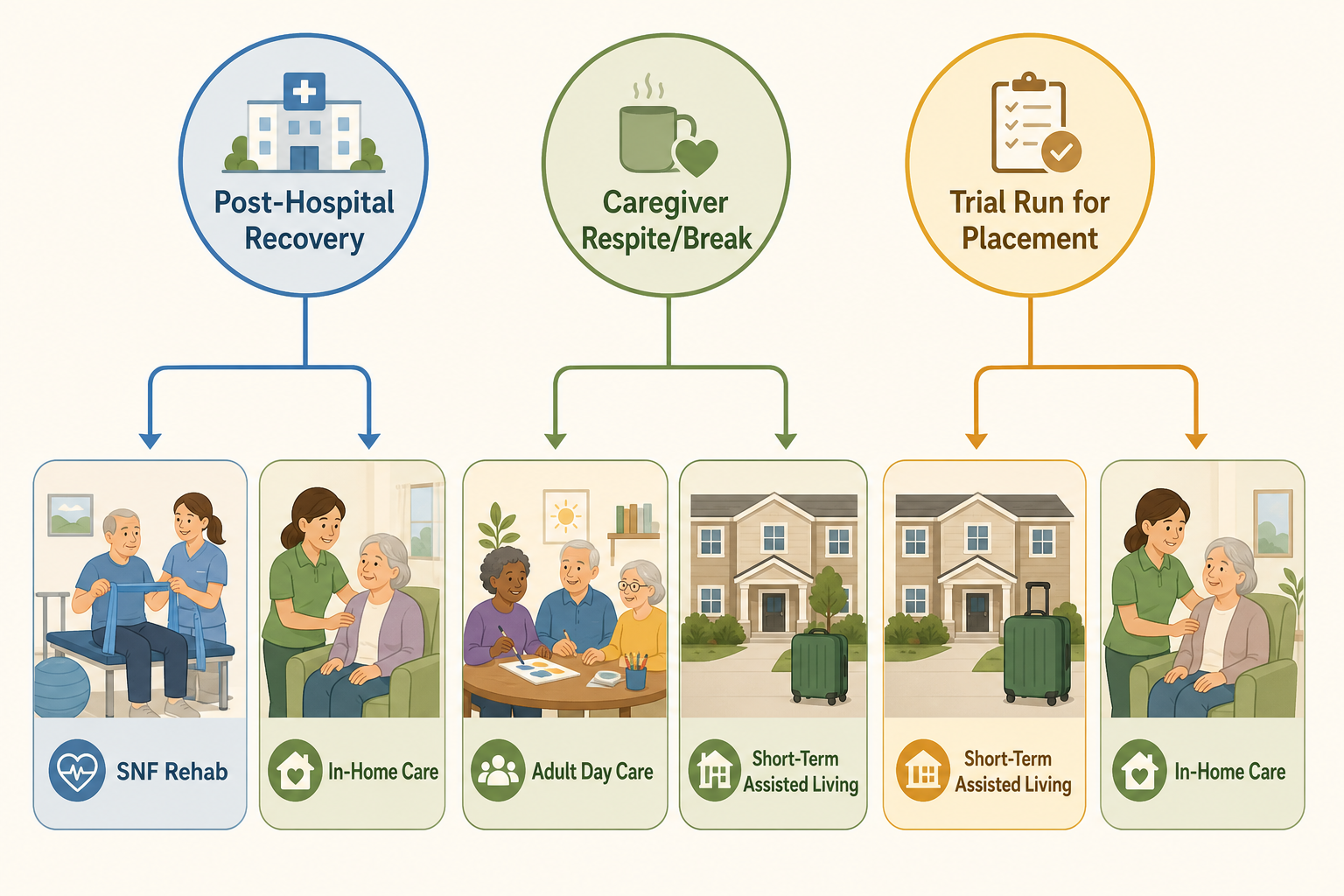
The right short-term care option depends on why you need it. Below are the three most common scenarios and the options that best fit each.
Scenario 1: Post-Hospital Recovery
Your parent has been discharged from the hospital after surgery, a fall, or a serious illness and needs a period of supervised recovery before they can safely return to their normal routine.
- If they need daily skilled nursing or intensive physical therapy: Consider a skilled nursing facility (SNF) for short-term rehab. Medicare will cover the first 20 days in full if the qualifying stay requirements are met.
- If they are stable but need help with daily activities and some therapy: In-home home health care (skilled) is a strong option. A nurse or therapist visits several times a week, and a home health aide can assist with personal care.
- If they need 24/7 supervision but not skilled nursing: A short-term assisted living stay can provide a safe bridge until they are strong enough to be home alone.
Scenario 2: Caregiver Respite or Break
You are the primary family caregiver and you need time to rest, travel, attend to your own health, or manage other responsibilities. Without this break, your own health and ability to provide care are at risk.
- If you need a regular, predictable break during the day (e.g., while you work): Adult day care is the most affordable option at $100–$115 per day. Your parent gets social engagement and supervision while you get time to recharge.
- If you need a longer break (several days to a few weeks): A short-term assisted living stay or in-home care for extended hours can provide the coverage you need. Expect to pay out-of-pocket.
- If your parent is on hospice: Medicare covers up to 5 consecutive days of respite care in a hospital or SNF. This is a specific benefit that many families do not know about.
Scenario 3: Trial Run for Long-Term Placement
You are considering a permanent move to assisted living or a residential care home, but you want to test the waters before making a final decision.
- A short-term assisted living stay (1–4 weeks) is the ideal option. It allows your parent to experience the community's daily life, meals, activities, and care before committing.
- Some communities offer trial stays at a flat rate for a limited number of days. Ask about this when you call.
- For a broader overview of residential care types and how to evaluate them, see our Senior Residential Homes FAQ: Types, Costs, and How to Choose in 2026.
How to Find and Evaluate Short-Term Care Providers
Once you have identified which type of short-term care fits your situation, the next step is finding and evaluating providers. Here are practical resources and evaluation tips.
Where to Look
- Eldercare Locator (1-800-677-1116): A public service of the U.S. Administration on Aging that connects you to your local Area Agency on Aging. They can provide referrals to home care agencies, adult day centers, and other community-based services.
- ARCH National Respite Locator: An online database specifically for respite care programs, including in-home respite, adult day care, and short-term residential stays.
- State health department websites: For licensed skilled nursing facilities and assisted living communities, your state's health department or department of aging maintains inspection reports, complaint histories, and quality ratings.
- Medicare's Nursing Home Compare tool: For SNFs, this tool provides star ratings, health inspection results, and staffing data.
What to Ask Before You Commit
- What is the minimum stay requirement? Some assisted living communities require a minimum of one week, two weeks, or 30 days. Confirm this before booking.
- What level of care assessment is done before admission? A reputable provider will conduct a thorough assessment to ensure they can meet the person's needs.
- Is there a trial period or money-back guarantee? Some communities offer a trial stay with a reduced financial commitment if the placement does not work out.
- What is included in the daily rate? For assisted living and SNFs, ask what services are included (meals, housekeeping, activities, transportation) and what costs extra (medication management, special diets, personal care supplies).
- Can we visit unannounced? A provider that is confident in its quality will welcome an unscheduled visit. This is especially important for SNFs and assisted living communities.
For a more detailed comparison of in-home care versus facility-based care, including the 40-hour rule that many families use as a decision threshold, see our guide: Home Care vs. Assisted Living: The 40-Hour Rule and How to Decide Where Your Loved One Should Receive Care.
Finally, remember that short-term care is just one chapter in a longer caregiving journey. For guidance on building a sustainable caregiving plan that anticipates changing needs over time, see our resource: From Crisis to Confidence: Building a Sustainable Family Caregiving Plan for Aging Parents.
Browse more in the Glossary.