
Product term
Eggs Seniors Should Avoid in the 2026 Recall
Last verified 2026-07-26
Last updated: July 26, 2026. If you are checking eggs for yourself or an older adult, start with the carton code, not the brand name. The July 2026 Midwest Poultry Services recall covers multiple brands and stores, so a familiar label on the front of the carton is not enough. Seniors should avoid eggs that match plant code P-1950 or 0840962 and Julian dates 157 through 184, with best-by dates from July 20 through August 17, 2026.[1]
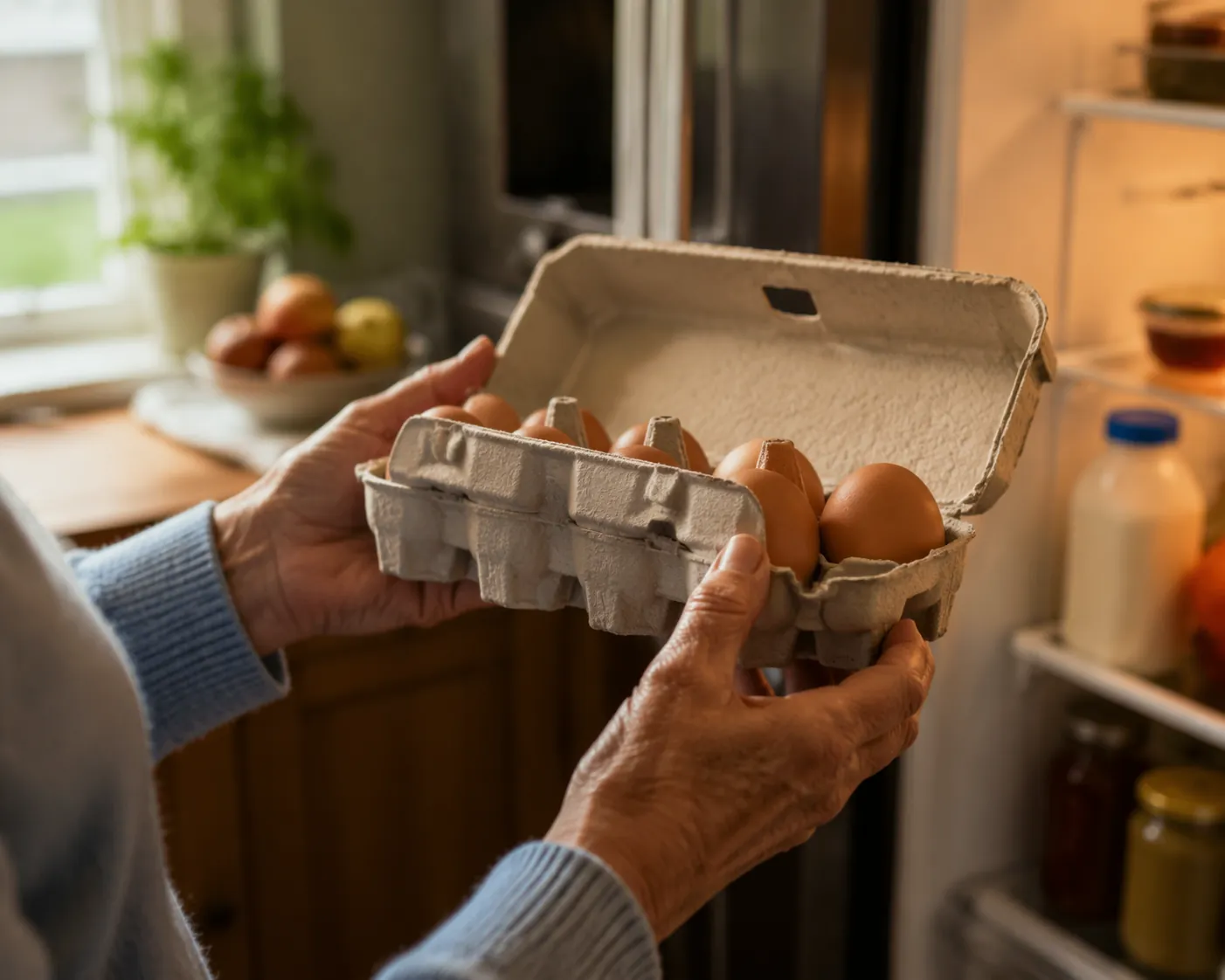
The Eggs to Check First
The recalled shell eggs were distributed under Kroger, Simple Truth Cage Free Brown, Brookshire's, Country Morning, and Sunups labels. Midwest Poultry Services L.P. recalled 1,589,577 dozen eggs on July 22, 2026, because of possible Salmonella Enteritidis contamination.[1]
| Brand or label | Where sold | States listed | Codes that make the carton affected |
|---|---|---|---|
| Kroger, all sizes | Kroger stores | Texas and Louisiana | Plant code P-1950 or 0840962; Julian dates 157-184; best-by dates July 20-August 17, 2026 |
| Simple Truth Cage Free Brown | Kroger stores | Texas and Louisiana | Plant code P-1950 or 0840962; Julian dates 157-184; best-by dates July 20-August 17, 2026 |
| Brookshire's | Brookshire Grocery Company stores | Texas, Oklahoma, Arkansas, Louisiana, Mississippi, and New Mexico | Plant code P-1950 or 0840962; Julian dates 157-184; best-by dates July 20-August 17, 2026 |
| Country Morning | Brookshire Grocery Company stores | Texas, Oklahoma, Arkansas, Louisiana, Mississippi, and New Mexico | Plant code P-1950 or 0840962; Julian dates 157-184; best-by dates July 20-August 17, 2026 |
| Sunups | Brookshire Grocery Company stores | Texas, Oklahoma, Arkansas, Louisiana, Mississippi, and New Mexico | Plant code P-1950 or 0840962; Julian dates 157-184; best-by dates July 20-August 17, 2026 |
That table is the short version, but the important part is the last column. A carton can have a recalled brand name and still not be part of this recall if the plant code and date do not match. The reverse problem is the one that worries me more in a home kitchen: someone sees a normal-looking carton from a store they trust, misses the small printed code, and puts it back in the refrigerator.
If you want a faster brand-and-code companion while standing at the refrigerator, use Egg Recall Brands Seniors Should Avoid Now. This page slows down on the carton check because that is where mistakes happen.
How to Check the Carton Without Guessing
Take the carton out of the refrigerator and look along the side panel, end flap, or stamped area near the sell-by or best-by date. The code may be small, lightly printed, or partly wrapped around an edge. If the older adult uses reading glasses, this is the moment to use them. If the carton is cold or damp, set it on a paper towel and turn on a bright light before deciding.
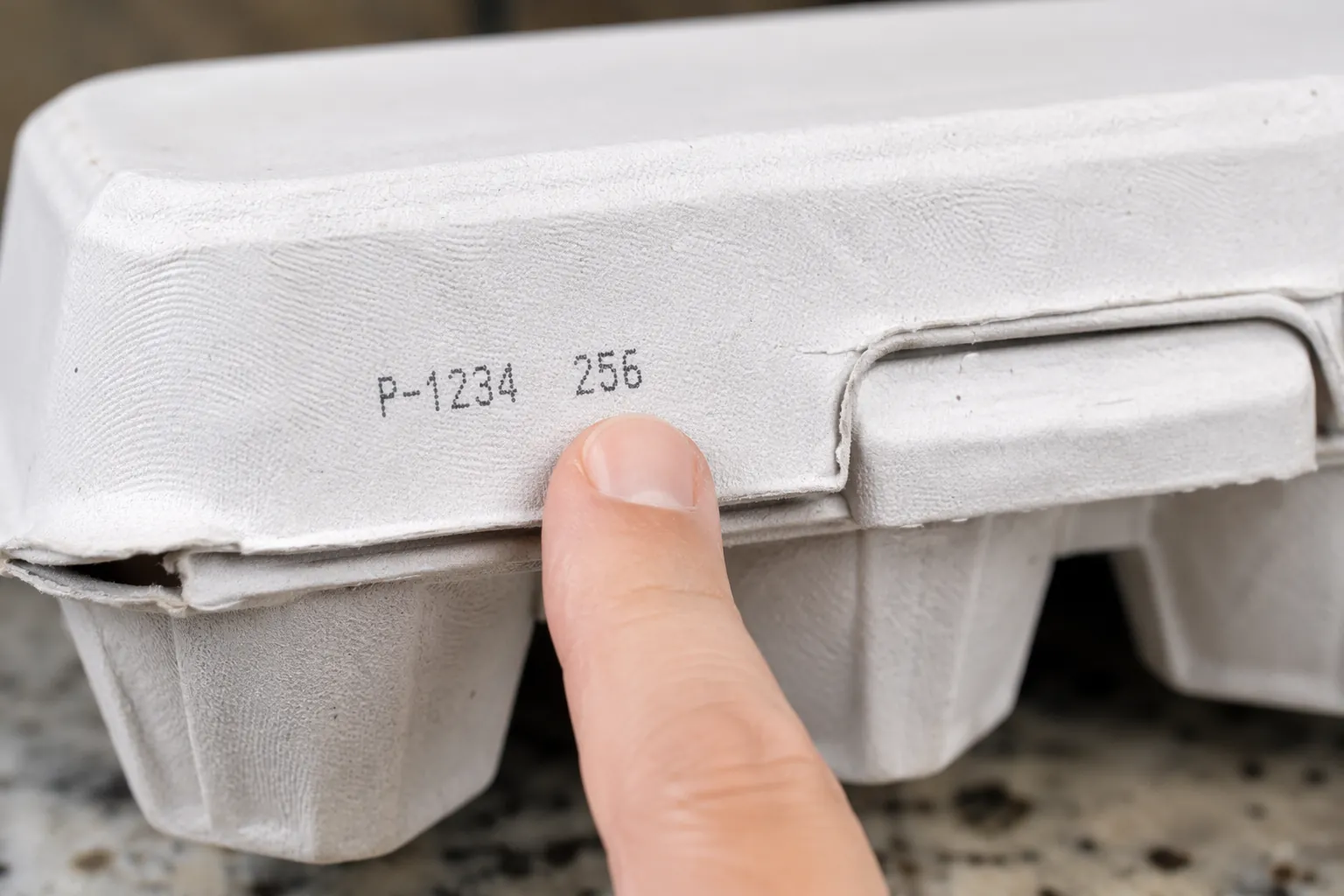
- Find the plant code. For this recall, the plant code to watch for is P-1950 or 0840962.[1]
- Find the Julian date. For this recall, the affected range is 157 through 184.[1]
- Check the best-by date. The affected cartons list best-by dates from July 20 through August 17, 2026.[1]
- Match all the recall identifiers before deciding. Brand alone is not the safety test.
A Julian date is a three-digit packing date. It counts the day of the year, so 001 means January 1 and higher numbers move later through the calendar year. The Egg Safety Center explains that this date is commonly printed on egg cartons along with the plant code, which is why it is useful during a recall.[2]
For this recall, do not try to convert every date in your head if that adds confusion. The practical rule is simpler: if the carton shows P-1950 or 0840962 and the three-digit Julian date is any number from 157 to 184, treat it as recalled. The best-by date range, July 20 through August 17, 2026, is a helpful cross-check, not a reason to ignore the plant code and Julian date.[1]
Why the Same Recall Has Several Brand Names
Egg recalls often look messier at home than they do in a government notice. A single producer can pack eggs that appear later under different store or house brands. That is why Kroger, Simple Truth Cage Free Brown, Brookshire's, Country Morning, and Sunups can all belong in the same recall notice. The shared identifiers are the plant code and date range, not the look of the front label.[1]
If the Carton Matches, Do Not Eat the Eggs
If an older adult's carton matches the recalled plant code and Julian date range, do not cook with the eggs, taste them, give them to a neighbor, or save them for baking. Heat can reduce risk when food is handled correctly, but a recall is not the time to negotiate with a carton that has already been identified as affected.
- Set the carton aside so no one uses it by habit while breakfast is being made.
- Follow the retailer or FDA recall instructions for disposal or refund.
- If throwing the eggs away, place the carton in a bag before putting it in the trash so broken eggs do not leak.
- Wash hands after touching the carton or eggs.
- Clean refrigerator surfaces, drawers, shelves, or containers that may have touched the carton or leaked egg.
For a caregiver, this is one of those small household jobs that is easier to finish completely than to explain three times. Remove the carton, deal with the refund or disposal, wipe the contact area, and then replace the eggs with a carton that has been checked. If several people use the kitchen, leave a short note so no one fishes the recalled carton back out of the trash or assumes it was removed by mistake.
CDC refrigerator-cleaning guidance for recalled food includes throwing out the recalled item, emptying the affected area, washing removable parts with hot soapy water, wiping inside surfaces, drying with a clean towel, and washing hands after cleaning.[3] That level of cleaning is especially reasonable if eggs leaked, the carton sat directly on a shelf, or the refrigerator drawer also holds ready-to-eat foods.
For a broader kitchen checklist after the carton is out of the house, see Protect Your Older Adult From Salmonella During This Egg Recall.
If the Eggs Were Already Eaten
If the recalled eggs were already eaten, do not spend the next few days blaming the person who cooked them. At that point the useful work is to write down what happened: when the eggs were eaten, who ate them, whether they were fully cooked, and whether anyone has symptoms. That note is much more useful than a vague memory if a nurse or doctor asks about possible exposure.
The CDC outbreak page reported 98 people infected across 17 states, 26 hospitalizations, and 0 deaths as of July 24, 2026.[4] The FDA recall notice says possible Salmonella Enteritidis contamination was detected through company environmental testing, and that no illnesses had been confirmed as linked to the specific recalled batch at the time of the notice.[1]
Those two facts can sit together. Zero reported deaths is reassuring as far as it goes. It does not make the recall casual for an adult in their 70s, 80s, or 90s, especially if they are frail, dehydrated easily, or already managing medical problems.
If you discover after the fact that a senior ate recalled eggs, use Ate Recalled Eggs? Salmonella Guide for Elderly Parents for the exposure-specific next steps.
Why Seniors Need the Extra Caution
FoodSafety.gov places adults 65 and older among groups at higher risk for foodborne illness because the immune system and organs may not recognize and clear harmful germs as effectively with age.[5] CDC food-safety guidance for adults 65 and older gives the same basic warning: older adults are more likely to get sick from contaminated food and to have a more serious illness.[6]
One statistic deserves careful wording. Federal food-safety materials report that nearly half of adults 65 and older with lab-confirmed illness from Salmonella, Campylobacter, Listeria, and E. coli are hospitalized.[5] That is a combined foodborne-illness statistic, not a Salmonella-only hospitalization rate, and it should not be stretched beyond what it says.
Even with that caveat, it is enough to change the household response. A younger adult might treat an egg recall as an errand. For an older adult, especially one living alone, the safer response is to remove the uncertainty quickly: check the code, get the carton out if it matches, clean the contact area, and monitor for illness if the eggs were eaten.
Symptoms to Watch For After Possible Exposure
After possible Salmonella exposure, watch for diarrhea, fever, stomach cramps, vomiting, signs of dehydration, weakness, confusion, or symptoms that are severe or not improving. For seniors, the line for calling a healthcare professional should be lower than it might be for a healthy younger adult, especially if the person has chronic illness, takes immune-suppressing medication, or is having trouble keeping fluids down.
For ongoing monitoring, keep Salmonella warning signs in elderly after an egg recall handy. If the person is in Texas and you want a state-focused symptom guide, use What Symptoms Seniors Should Watch for After the Texas Egg Recall.
Do Not Mix This Recall With Older Egg Events
If you search online, you may see older egg recall stories from 2025, including the August Egg Company outbreak and the Black Sheep Egg Company recall. Those are separate, resolved events. They are not the July 22, 2026 Midwest Poultry Services recall. For the carton in front of you today, use the July 2026 identifiers: P-1950 or 0840962, Julian dates 157-184, and best-by dates July 20-August 17, 2026.[1]
When the Carton Does Not Match
If the carton does not match the recalled plant code and Julian date range, it is not identified by the current FDA recall notice based on the information available as of July 26, 2026. Keep the carton if you need the code later, and continue using normal egg-safety habits: refrigerate eggs, avoid cracked or dirty eggs, wash hands and surfaces after handling raw egg, and cook eggs thoroughly.
For future recalls, a small system helps: keep eggs in their original carton, do not cut off the side panel with the code, and take a photo of the carton code if an older adult has trouble reading it later. A general setup like A Food Recall Safety Checklist for Seniors can prevent the next recall from turning into a refrigerator excavation.
There is also a practical fall-prevention angle here. Foodborne illness can mean diarrhea, dehydration, weakness, and urgent trips to the bathroom, all of which can make an already unsteady older adult less safe at home. For that connection, see Why Egg Recalls Deserve a Spot in Your Fall Prevention Plan.
The Practical Boundary
If a senior's egg carton matches plant code P-1950 or 0840962 and Julian dates 157-184, avoid those eggs now. Dispose of them safely or follow refund instructions, wash hands, clean any refrigerator surfaces that may have touched the carton, and monitor for symptoms if the eggs were already eaten. Because the recall is ongoing as of July 26, 2026, verify the latest product scope on the FDA recall page before relying on an older screenshot or news summary.[1]
References
- Midwest Poultry Services, L.P. Recalls Shell Eggs Due to Possible Salmonella Enteritidis Contamination — FDA, July 22, 2026
- Understanding Dates on Egg Cartons — Egg Safety Center
- Clean Your Refrigerator Because of a Food Recall — CDC
- Salmonella Outbreak Linked to Eggs — CDC, July 24, 2026
- Older Adults at Risk — FoodSafety.gov
- Food Safety for Adults 65 and Older — CDC
Browse more in the Glossary.