
Room checklist
The Evidence Behind Aging in Place Home Modifications: What the Latest Research Says Works
A 2025 systematic review of 20 studies found that 65% confirmed the effectiveness of home modifications in preventing falls, maintaining independence, and saving costs. This article translates that academic evidence into practical takeaways for adult children deciding which modifications to prioritize for their aging parents.
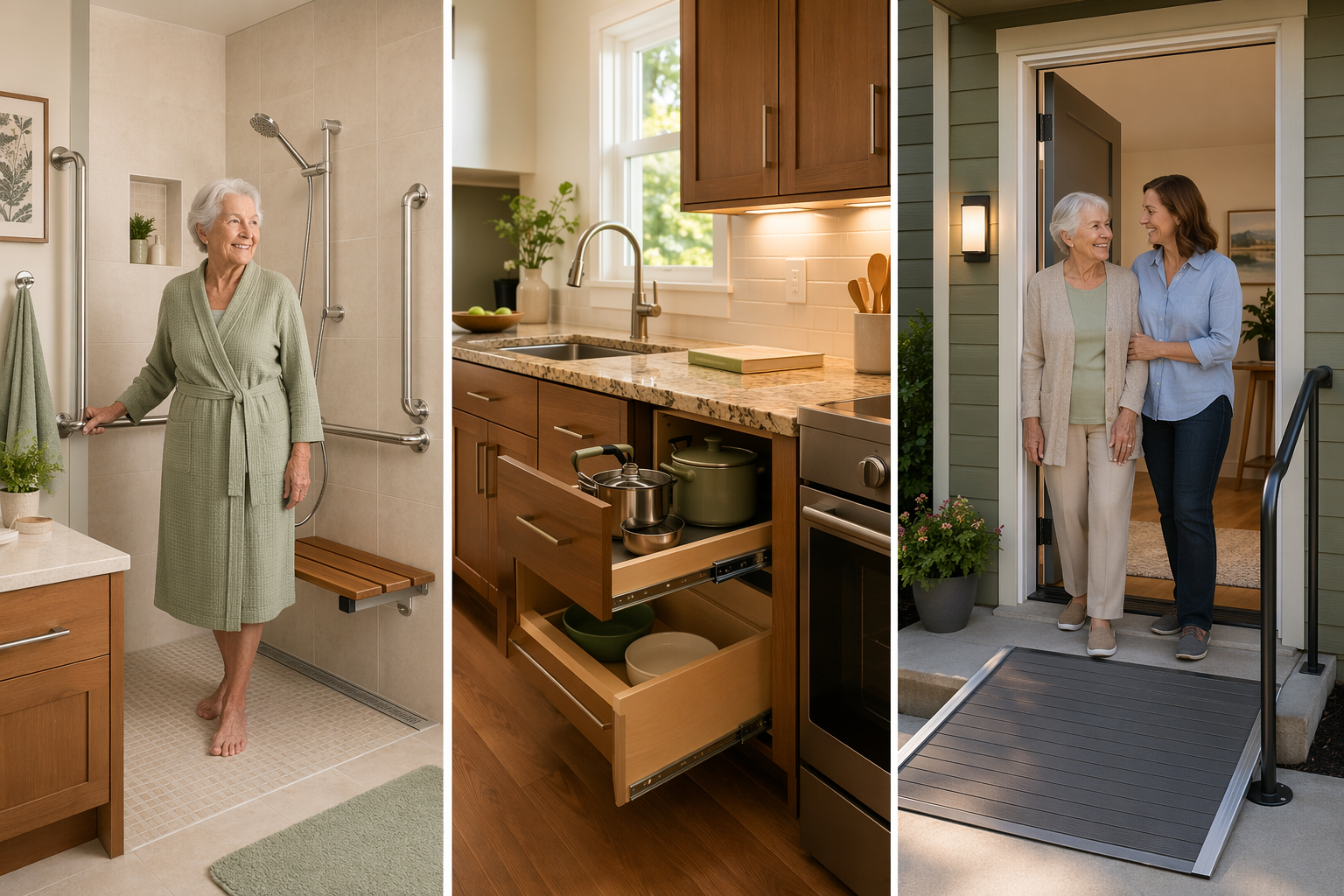
Introduction: What the Research Says About Home Modifications
If you are an adult child trying to decide whether to install grab bars in your parent's bathroom or widen a doorway for a wheelchair, you have likely asked yourself a version of the same question: Is this really worth the money and disruption? The answer, supported by a growing body of academic research, is a clear yes — but the evidence can be difficult to access if you do not have a subscription to a medical journal.
A 2025 systematic review published in Healthcare (An et al.) analyzed 20 studies following PRISMA 2020 guidelines and found that 65% of them confirmed the effectiveness of home modifications in three critical areas: fall prevention, maintaining functional independence, and cost savings. This article translates those academic findings into practical, actionable takeaways for families making decisions about aging in place.
The goal here is not to overwhelm you with statistics. It is to give you the authoritative reassurance that the modifications you are considering are backed by evidence — and to help you prioritize where to start.
Key Finding 1: Home Modifications Reduce Falls — 65% of Studies Confirmed Effectiveness
The most compelling finding from the 2025 systematic review is straightforward: 13 out of 20 studies (65%) confirmed that home modifications effectively reduce falls among older adults. This is not a single, small-scale observation. It is a synthesis of multiple research designs, populations, and settings, all pointing in the same direction.
To understand why this matters, consider the broader context. According to the CDC, one-third of adults aged 65 and older experience a fall each year, and two-thirds of those falls occur in and around the home. Falls are the leading cause of fatal and non-fatal injuries among older adults, and they often mark the beginning of a downward spiral in mobility and independence.
For families, this evidence means that investing in home modifications is not a gamble. When you install a grab bar in the shower or add a stair lift, you are acting on a body of research that consistently shows these changes reduce the risk of a fall. The question is not whether modifications work — it is which ones to prioritize first.
Key Finding 2: Bathroom Modifications Are Most Strongly Linked to Maintaining Independence
Among the modifications studied in the systematic review, bathroom changes showed the strongest evidence for supporting functional independence. This makes intuitive sense: the bathroom is the room where older adults face the highest combination of fall risks (slippery surfaces, hard fixtures, confined spaces) and the greatest need for assistance with personal care tasks.
The modifications with the strongest evidence include:
- Grab bars near the toilet and in the shower or tub area
- Walk-in or curbless showers that eliminate the need to step over a threshold
- Non-slip flooring to reduce the risk of slipping on wet surfaces
- Handheld showerheads and shower benches that allow bathing while seated
For a detailed, zone-by-zone assessment of bathroom hazards and tiered action priorities, see our Bathroom Safety Checklist for Seniors. That resource provides the step-by-step actions that complement the evidence summarized here.
This finding is particularly useful for families who feel overwhelmed by the number of possible modifications. If you can only do one room right now, the evidence points to the bathroom as the highest-impact starting point.
Key Finding 3: Every Dollar Spent on Modifications Saves $3–$6 in Fall-Related Healthcare Costs
The cost of home modifications is often the first concern families raise. A stair lift can cost several thousand dollars. A full bathroom remodel can run much more. But the evidence on cost-effectiveness provides a powerful counterargument: for every $1 spent on home modifications, families save an estimated $3 to $6 in avoided fall-related healthcare costs.
Consider what a single fall can cost: an emergency room visit, a hip fracture surgery, a week in the hospital, followed by rehabilitation in a skilled nursing facility. Even a moderate fall can generate $30,000 or more in medical bills. When framed against that backdrop, spending $500 on grab bars and non-slip flooring is not an expense — it is an investment with a measurable return.
The financial argument is especially urgent given that only 10% of U.S. homes are considered "aging-ready" — meaning they have a step-free entry, a first-floor bedroom and bathroom, and at least one bathroom accessibility feature — according to a 2020 report. That leaves 90% of homes with at least one significant barrier to safe aging in place. For a practical room-by-room upgrade plan, see The 9 in 10 Problem: Why Most Homes Aren't Ready for Aging in Place.
What the Research Supports: Specific Modifications with Strong Evidence
The systematic review did not evaluate every possible modification equally. Some interventions have stronger and more consistent evidence behind them than others. Here are the modifications that the research most clearly supports:
- Grab bars. Multiple studies confirm that grab bars in bathrooms reduce fall risk by providing stable support during transfers and while bathing. They are the single most studied and most consistently effective modification.
- Improved lighting. Poor lighting is a well-documented fall hazard. Research supports brighter, evenly distributed lighting — especially in hallways, stairways, and bathrooms — to improve visibility and reduce tripping risks.
- Non-slip flooring. Replacing slippery surfaces (tile, polished wood, linoleum) with non-slip alternatives or adding non-slip treatments reduces the likelihood of falls on wet or uneven surfaces. This is particularly effective in bathrooms and kitchens.
- Stair lifts. For multi-level homes, stair lifts are supported by evidence showing they reduce fall risk on stairs and allow older adults to access all levels of their home without assistance.
These four categories represent the modifications with the most consistent evidence base. If you are creating a priority list, start here.
What's Less Studied: Smart Home Technology and Long-Term Adaptability
The 2025 systematic review also identified important gaps in the research. Few studies examined personalized interventions — modifications tailored to an individual's specific health conditions, mobility limitations, and home layout. Even fewer looked at smart home technologies or the long-term adaptability of modifications as a person's needs change over time.
This gap matters because the home modification market is moving rapidly toward technology-based solutions. According to a Healthy Aging Poll, 49% of older adults already report having at least one smart home device. But the evidence base for these technologies — such as motion sensors, automated lighting, voice-activated controls, and remote monitoring systems — is still emerging. We do not yet have the same level of rigorous, peer-reviewed research for smart home modifications that we have for grab bars and non-slip flooring.
For families, this means that while technology-based modifications can be useful additions, they should not replace the foundational, evidence-backed structural changes. Install the grab bars first. Add the smart lighting later. The research is clear on what works today; the technology evidence will catch up over time.
The Role of Occupational Therapists: Why OT-Led Assessments Are the Gold Standard
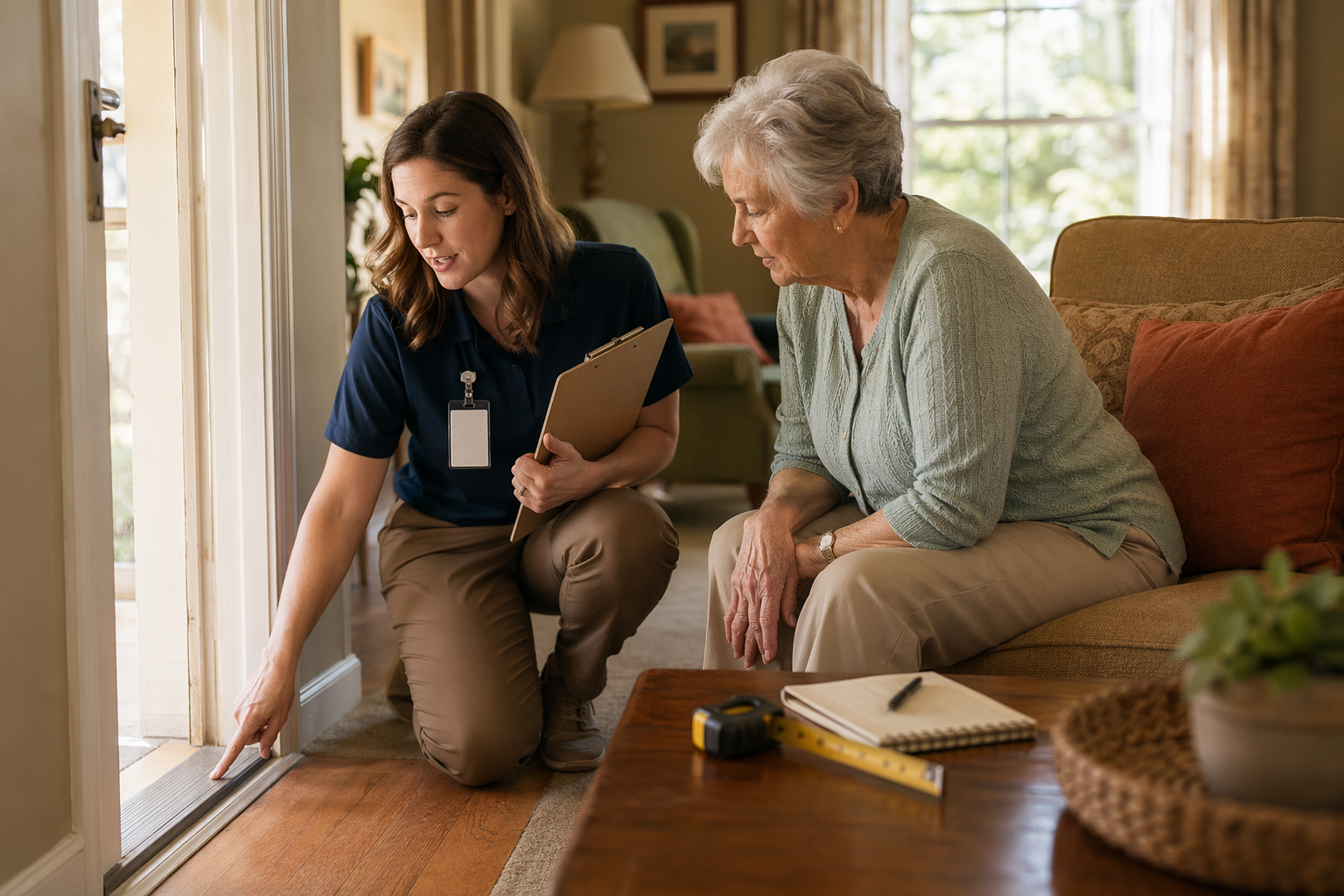
One of the most important takeaways from the research is that the effectiveness of home modifications depends heavily on how well they are matched to the individual's specific needs. A grab bar installed in the wrong location is not just useless — it can create a false sense of security. This is where occupational therapists (OTs) play a critical role.
The American Occupational Therapy Association (AOTA) recommends OT-led home assessments as the gold standard before making modifications. An OT assessment typically includes:
- A walk-through of the home to identify environmental hazards and barriers
- An evaluation of the older adult's physical abilities, balance, strength, and daily routines
- Specific recommendations for modifications, equipment, and behavioral strategies
- Coordination with contractors or CAPS-certified professionals for implementation
An OT assessment is different from a contractor's evaluation. A contractor looks at the structure of the home and tells you what is possible. An OT looks at the person living in the home and tells you what is needed. Both perspectives are valuable, but the research suggests that starting with an OT leads to better outcomes.
For a practical guide on whether to see an occupational therapist or a CAPS-certified contractor first, see our decision guide on OT vs. CAPS.
Room-by-Room Evidence Summary: What the Research Says About Each Area
The following table summarizes the evidence strength for modifications in key areas of the home. Use it as a quick reference when comparing options. Note that this table focuses on evidence strength and primary benefit — not cost, which is covered in our separate cost guide.
| Home Area | Modification | Evidence Strength | Primary Benefit |
|---|---|---|---|
| Bathroom | Grab bars, walk-in shower, non-slip flooring | Strongest | Fall prevention and independent bathing |
| Stairs | Stair lift, handrails on both sides | Strong | Safe multi-level access |
| Entryway | Zero-step ramp, widened doorway | Moderate to strong | Wheelchair and walker access |
| Kitchen | Pull-out shelves, lever faucets, task lighting | Moderate | Independent meal preparation |
| Bedroom | Bed rails, night lighting, clear pathways | Moderate | Safe transfers and nighttime mobility |
| General lighting | Brighter bulbs, motion-sensor lights, nightlights | Strong | Reduced tripping risk throughout the home |
Why This Evidence Matters for Family Caregivers
The research findings are not just academic. They have direct implications for the decisions you are making right now. Consider this: according to the National Council on Aging (NCOA), 94.9% of adults aged 60 and older have at least one chronic health condition, and 78.7% have two or more. Many of these conditions — arthritis, heart disease, diabetes, mobility impairments — are directly affected by the home environment.
A home with poor lighting, slippery floors, and inaccessible bathrooms does not just increase fall risk. It makes it harder to manage chronic conditions. It makes it harder to maintain daily routines. It accelerates the loss of independence. The evidence shows that home modifications are not a luxury — they are a fundamental component of managing the health and safety of an aging population.
For adult children, this evidence provides the reassurance you need to move forward with confidence. When a parent resists the idea of grab bars or a stair lift, you can point to the research: this is not about taking away their independence. It is about preserving it.
To help you choose the right next steps, see our decision framework for adult children.
Limitations of Current Research and What to Watch For
No body of research is perfect, and it is important to be transparent about what the current evidence can and cannot tell you. Here are the key limitations to keep in mind:
- The 2025 systematic review abstract provides a clear headline (65% of studies confirmed effectiveness), but the full-text article was not fully accessible. The abstract may lack nuance on effect sizes, specific study designs, and the quality of individual studies.
- The cost-effectiveness estimate ($1 saves $3–$6) is extrapolated from NCOA and CDC data, not from the systematic review itself. It is a reasonable estimate based on available data, but it is not a direct finding of the review.
- Smart home technology evidence is still emerging. The 49% adoption figure is from a 2024 poll and may not reflect current rates. Technology-based modifications should be treated as complementary to, not replacements for, structural changes.
- The AOTA recommendation for OT-led assessments is well-established, but the specific AOTA page on home modifications was not accessible during research. The recommendation is based on the general AOTA position and secondary sources.
- Most studies in the review focused on short-term outcomes. Long-term adaptability — whether modifications remain effective as a person's condition progresses — is less studied.
These limitations do not undermine the overall conclusion that home modifications are effective. They simply mean that the evidence is strongest for certain modifications (grab bars, lighting, non-slip flooring) and weaker for others (smart home technology, personalized interventions). As a family decision-maker, you can use this information to prioritize the changes with the strongest evidence base.
Conclusion: Making Informed Decisions About Home Modifications
The evidence is clear: home modifications work. A 2025 systematic review found that 65% of studies confirmed their effectiveness in reducing falls, maintaining independence, and saving healthcare costs. Bathroom modifications have the strongest evidence. Every dollar spent saves an estimated $3–$6 in avoided fall-related costs. And occupational therapy-led assessments are the recommended starting point for ensuring modifications are matched to the individual's needs.
If you are feeling uncertain about where to begin, start with the bathroom. Start with grab bars and non-slip flooring. Start with better lighting. These are the changes with the strongest evidence, and they are also the most likely to have an immediate impact on safety and quality of life.
For a structured approach to choosing your next steps, use our decision framework for adult children. And remember: the research supports your investment. You are not guessing. You are acting on evidence.
Related reading
- The Evidence for Aging-in-Place Home Modifications: What Research Says About Fall Prevention, Independence, and Cost Savings
- The Evidence for Home Modifications: What Research Says About Preventing Falls, Reducing Caregiver Burden, and Keeping Older Adults Independent
- The Caregiver's Guide to Home Modifications for Aging in Place: What Actually Works, What It Costs, and What to Do First
Need a professional assessment?
Find a CAPS-credentialed professional or local aging services through our outbound resource list — we never name or rank individual contractors.
Find Local HelpNoticed something outdated or inaccurate on this page? Flag a correction. We review every report against CDC, NIA, and AARP HomeFit guidance before updating a page.