
Room checklist
Aging in Place Home Modifications: A Decision Framework for Adult Children
A practical, stage-aware guide for adult children helping a parent age in place. Learn which low-cost safety upgrades to do first, how to prioritize mid-range projects, and how to navigate funding options — all organized into a phased 12-month action plan.
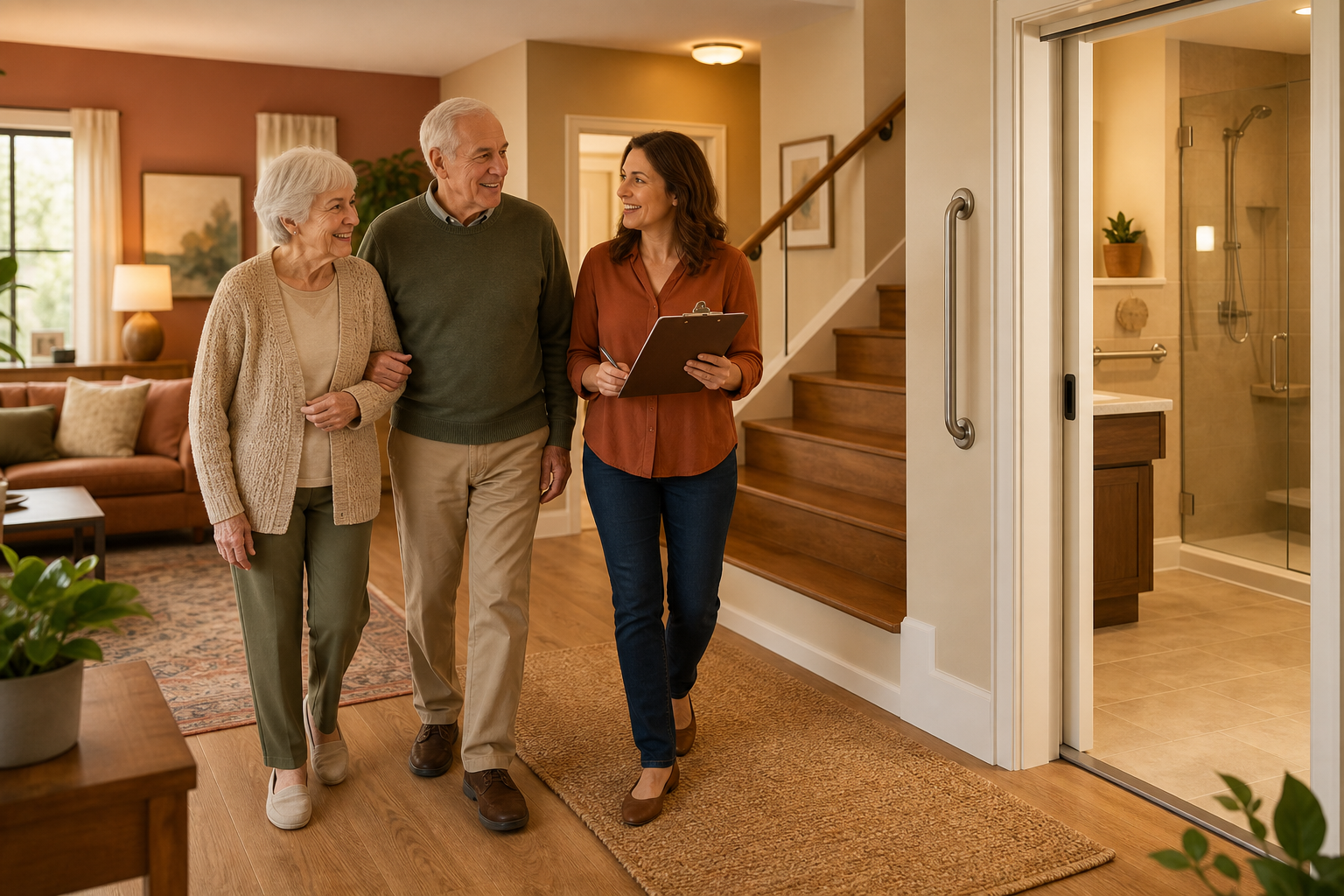
Start Here: The 3 Quickest $25–$500 Safety Wins
If you are reading this after a parent has had a fall — or because you are worried one is coming — the most important thing to know is that you can make a meaningful difference in their safety this week, for less than the cost of a dinner out. The research is clear: the modifications with the highest impact on fall prevention are also the least expensive. A 2021 study published in Human Factors found that people who used a grab bar were nearly 76% more likely to recover their balance during a shower-to-floor transition. That single $15–$80 piece of hardware can be the difference between a close call and a trip to the ER.
1. Install grab bars in the shower and next to the toilet
The bathroom is the most hazardous room in the house for older adults. Standard grab bars cost between $15 and $80, and floor-to-ceiling tension-mounted models run $140–$300. A 2025 systematic review of 20 studies confirmed that grab bars, non-slip flooring, and stair railings were the most impactful interventions for preventing falls. Start with the shower wall and the area beside the toilet. If you are unsure about installation, a CAPS-certified contractor or a handyman experienced with bathroom modifications can handle it in under an hour.
2. Improve lighting in high-traffic areas
Poor lighting is one of the most overlooked fall hazards. The path from the bedroom to the bathroom at night is especially dangerous. Plug-in nightlights with motion sensors cost $10–$25 each and can be installed in seconds. For hallways and stairs, consider replacing standard light switches with illuminated or motion-activated models. Lever-style door handles ($15–$40 each) also help — they are easier to operate than round knobs for someone with arthritis or reduced grip strength.
3. Add non-slip surfaces in the bathroom and kitchen
Non-slip bath mats and adhesive treads for the shower floor cost $10–$40. A shower chair ($50–$300) and a handheld showerhead ($25–$60) allow your parent to bathe while seated, dramatically reducing the risk of a fall on wet tile. These upgrades are simple to install and require no contractor. The total cost for all three quick wins — grab bars, improved lighting, and non-slip surfaces — is typically under $500 and can be completed in a single weekend.
For a detailed walkthrough on selecting and installing grab bars, see our Grab Bars for Bathroom Safety: A Complete Installation Guide for Family Caregivers.
Room-by-Room Priority Matrix with Cost Ranges
Once the immediate safety wins are in place, the next step is to assess the entire home systematically. Not all modifications are equally urgent, and not all need to happen at once. The table below organizes the most common modifications by room, cost tier, and priority level. Use it to decide what to tackle in the next 90 days versus what can wait until you have secured funding.
| Room / Area | Modification | Cost Range | Priority Level | Typical Timeline |
|---|---|---|---|---|
| Bathroom | Grab bars (shower + toilet) | $15–$300 | Critical | Week 1 |
| Bathroom | Walk-in shower (curbless) | $1,500–$3,500+ | High | Months 3–6 |
| Bathroom | Walk-in tub | ~$10,000 | Medium | Months 6–12 |
| Entryway | Zero-step entrance / ramp | $100–$250/sq ft | High | Months 3–6 |
| Entryway | Widened doorways (32–36 in.) | $500–$3,000 | Medium | Months 6–12 |
| Stairs | Straight stair lift | $2,000–$5,000 | High | Months 3–6 |
| Stairs | Curved stair lift | From $10,000 | Medium | Months 6–12 |
| Kitchen | Lever-style faucet + handles | $50–$150 | Low | Month 2 |
| Kitchen | Pull-out shelves / lower counters | $500–$2,000 | Low | Months 9–12 |
| Bedroom | Main-floor bedroom conversion | $500–$5,000 | High | Months 3–6 |
| Whole home | Improved task lighting | $25–$200 | Critical | Week 1 |
| Whole home | Non-slip flooring (rubber/cork) | $3–$10/sq ft | Medium | Months 6–12 |
For a more detailed room-by-room guide tailored to post-fall scenarios, see our Aging in Place Remodel: A Room-by-Room Priority Guide for Families After a Fall.
When to Hire an Occupational Therapist vs. a Contractor
One of the most common mistakes families make is hiring a contractor before having a professional assessment done. An occupational therapist (OT) and a contractor serve two very different roles, and the OT should always come first.
The occupational therapist: assessment and functional recommendations
An OT conducts a home safety audit to identify specific hazards and recommends modifications based on your parent's mobility, strength, balance, and daily routines. For example, an OT might recommend a specific grab bar placement that a contractor would not think to suggest. Many health insurance plans cover OT evaluations, and Medicare Part B may cover it as part of a treatment plan. This assessment should happen before any contractor is hired.
The contractor: installation and structural work
Once you have a written list of recommendations from the OT, you can bring in a contractor to handle the installation. For most structural modifications — grab bars, ramps, stair lifts, widened doorways, walk-in showers — you want a contractor who is CAPS-certified (Certified Aging-in-Place Specialist). CAPS certification means the contractor has been trained in universal design principles, fall prevention strategies, and the specific needs of aging adults. It does not guarantee a specific outcome, but it is a strong signal that the contractor understands the difference between a standard bathroom remodel and an accessible one.
For a deeper comparison of the two roles and how to find the right professional, read our guide: CAPS-Certified vs. General Contractor: Why the Right Credential Matters After a Parent's Fall.
Funding Decision Tree: VA → Medicaid → USDA → State Programs → Nonprofit → Financing
Most families assume they have to pay for home modifications out of pocket. In reality, there are multiple funding pathways — but they are not equally available to everyone. The key is to check them in the right order, starting with the programs that offer the most generous benefits and the strictest eligibility criteria, then moving to broader options.
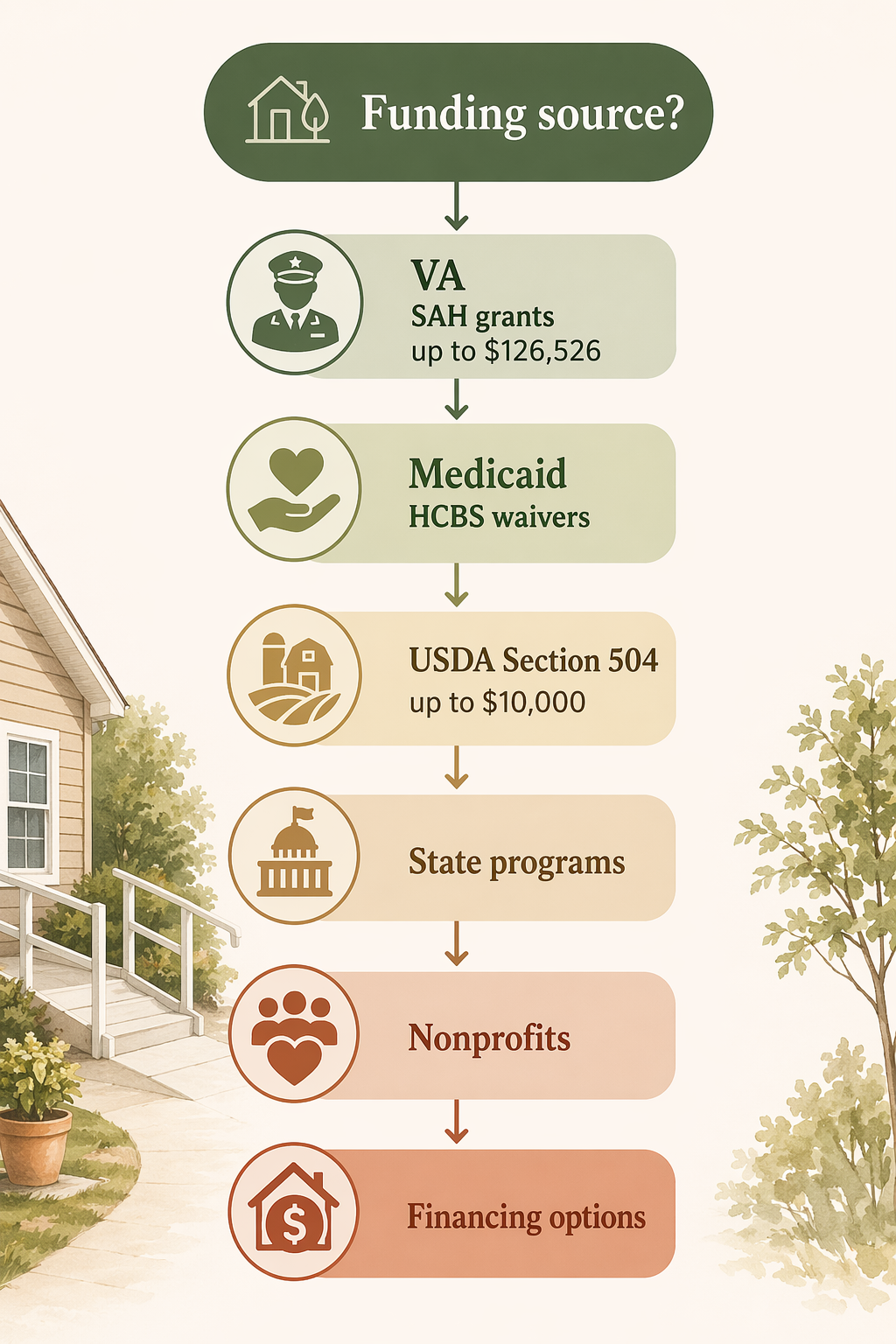
Step 1: VA benefits (if your parent is a veteran or surviving spouse)
The Department of Veterans Affairs offers several grant programs for home modifications. The most significant is the Specially Adapted Housing (SAH) grant, which provides up to $126,526 in FY2026 for eligible veterans with service-connected disabilities to modify their primary residence. The Home Improvements and Structural Alterations (HISA) grant covers medically necessary modifications for veterans with any service-connected condition. These grants can fund roll-in showers, widened doorways, ramps, and stair lifts. Eligibility is determined by the VA, so start by contacting your local VA medical center or a Veterans Service Officer.
Step 2: Medicaid HCBS waivers (if your parent has low income and assets)
Medicaid Home and Community-Based Services (HCBS) waivers are state-specific programs that allow older adults to receive long-term care services at home rather than in a facility. Many states include home modifications — such as ramps, grab bars, and bathroom modifications — as covered services under these waivers. The catch is that eligibility, covered services, and funding caps vary significantly by state. Contact your local Area Agency on Aging to find out what your state's Medicaid waiver covers.
Step 3: USDA Section 504 (if your parent lives in a rural area)
The USDA Section 504 Home Repair program offers grants of up to $10,000 to very-low-income homeowners aged 62 and older who live in rural areas. The grant must be used to remove health and safety hazards, which includes accessibility modifications like ramps and bathroom safety upgrades. This is a federal program, so eligibility is consistent across states, but the definition of "rural area" varies. Check the USDA eligibility map for your parent's address.
Step 4: State and local programs
Many states have their own home modification assistance programs, often funded through state housing finance agencies or departments of aging. Some states offer low-interest loans, deferred payment loans, or direct grants. The National Council on Aging (NCOA) recommends checking with your state housing finance agency and local social services department. Some states also have assistive technology loan programs that can fund equipment like stair lifts and walk-in tubs.
Step 5: Nonprofit and community programs
Organizations like Habitat for Humanity offer aging-in-place modification programs in some communities, including ramp building and bathroom safety upgrades. Local chapters of Rebuilding Together also provide free home modifications for low-income older adults. These programs are typically income-qualified and have waiting lists, so apply early.
Step 6: Financing options (if no grant or waiver is available)
If your parent does not qualify for any of the above programs, consider a home equity loan, a home equity line of credit (HELOC), or a reverse mortgage (for homeowners aged 62+). Some families also use personal loans or credit cards for smaller projects. While these options involve interest or fees, they are still far less expensive than the annual cost of assisted living.
For a complete breakdown of each funding source, including application steps and deadlines, see our How to Pay for Aging in Place Home Modifications: A Complete Guide to Grants, Loans, Tax Deductions, and Insurance Coverage.
Real Cost Comparison: One-Time Modifications vs. Annual Assisted Living
When families see the price tag for a comprehensive bathroom modification — roughly $8,000 for a roll-in shower, grab bars, and widened doorway — the initial reaction is often sticker shock. But that reaction changes when you compare it to the alternative. According to the National Association of Home Builders (NAHB), as cited by Age Safe America, the average annual cost of assisted living exceeds $60,000 per year. A one-time $8,000 bathroom modification is less than two months of assisted living.
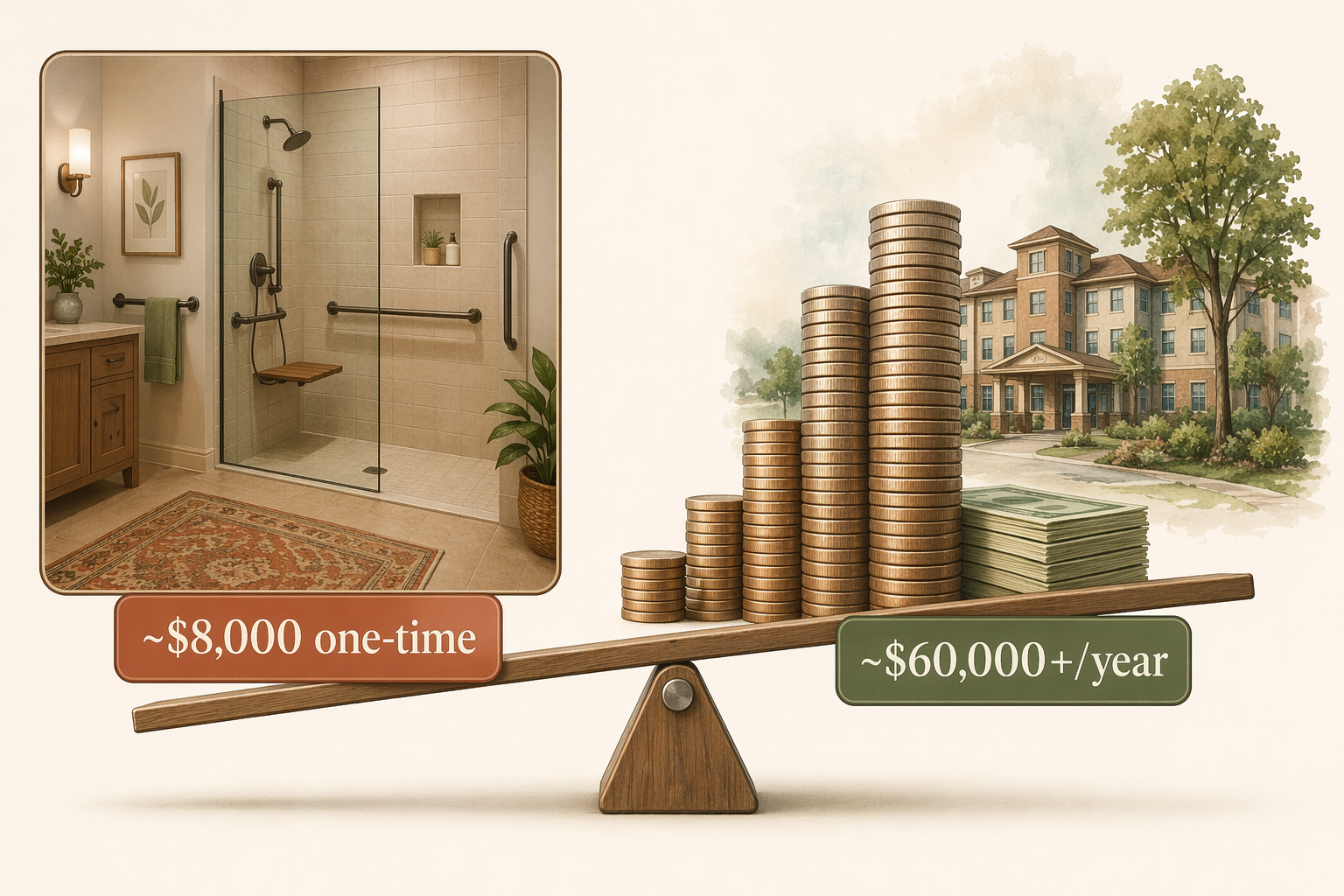
| Modification | One-Time Cost (Est.) | Annual Assisted Living Cost (Est.) | Break-Even Point |
|---|---|---|---|
| Comprehensive bathroom remodel | $8,000 | $60,000+ | ~1.6 months |
| Straight stair lift | $3,500 | $60,000+ | ~3 weeks |
| Ramp + widened doorway | $2,500 | $60,000+ | ~2 weeks |
| Full home modification package | $15,000–$25,000 | $60,000+ | ~3–5 months |
The financial case for modifications becomes even stronger when you factor in the non-monetary benefits: the emotional comfort of remaining in a familiar home, the avoidance of relocation stress, and the preservation of social connections in the community. A 2019 study cited in the 2025 systematic review found that weekly care hours decreased by 42% after home modifications — informal care dropped by 46% and formal care by 16%. That means fewer hours of family caregiving and lower out-of-pocket costs for paid help.
For a deeper analysis of the financial trade-offs, including hidden costs that families often miss, read The Hidden Costs of Aging in Place in 2026: Why Families Underestimate the True Price Tag.
Your Phased Action Plan Over 12 Months
The following plan is designed to spread the work — and the cost — across a full year. It assumes you have already completed the three quick safety wins from Section 1. Adjust the timeline based on your parent's urgency, your budget, and the availability of funding.
Months 1–2: Assessment and immediate safety
- Complete the Aging in Place Readiness Checklist to identify all hazards and needs.
- Schedule an occupational therapy home assessment. Check with your parent's insurance — many plans cover this.
- Install grab bars in the shower and next to the toilet.
- Add motion-sensor nightlights in hallways, bathrooms, and the bedroom.
- Place non-slip mats in the shower and kitchen.
- Replace round doorknobs with lever-style handles on frequently used doors.
Months 3–6: Mid-range projects and funding applications
- Apply for VA benefits (if eligible), Medicaid HCBS waivers, or USDA Section 504 grants. These programs can take 60–90 days to process.
- Get three written bids from CAPS-certified contractors for the top-priority mid-range projects: walk-in shower, stair lift, or zero-step entry ramp.
- If your parent uses a walker or wheelchair, widen the most frequently used doorway to at least 32 inches.
- Convert a first-floor room to a bedroom if stairs are becoming difficult.
- Install a stair lift if the main bedroom and bathroom are upstairs.
Months 7–12: Structural changes and long-term planning
- Complete the bathroom remodel: walk-in shower, grab bars, non-slip flooring, and a raised toilet seat.
- If needed, install a walk-in tub (budget ~$10,000).
- Replace flooring in high-traffic areas with non-slip materials like rubber or cork.
- Upgrade kitchen accessibility: pull-out shelves, lever faucet, and lower counter sections if needed.
- Reassess with the OT to confirm that all modifications are working as intended.
- Update the home safety checklist and schedule annual reviews.
For a companion resource that covers the full readiness assessment, see our Aging in Place Home Modifications: A Room-by-Room Prioritization Guide for Families.
Related reading
Need a professional assessment?
Find a CAPS-credentialed professional or local aging services through our outbound resource list — we never name or rank individual contractors.
Find Local HelpNoticed something outdated or inaccurate on this page? Flag a correction. We review every report against CDC, NIA, and AARP HomeFit guidance before updating a page.