
Room checklist
How to Choose an Aging-in-Place Contractor and Avoid Costly Mistakes
Choosing the right contractor for an aging-in-place remodel is as critical as selecting the right modifications. This guide helps adult children and older homeowners vet contractors, understand CAPS certification, ask the right questions, and avoid expensive retrofit mistakes.
Why Contractor Selection Matters More Than the Modification List
You've decided to modify a parent's home so they can age in place safely. You've read the room-by-room checklists, identified the grab bar locations, and settled on a curbless shower. That's the easy part. The hard part — the part that determines whether those modifications actually keep your parent safe — is finding someone who knows how to install them correctly.
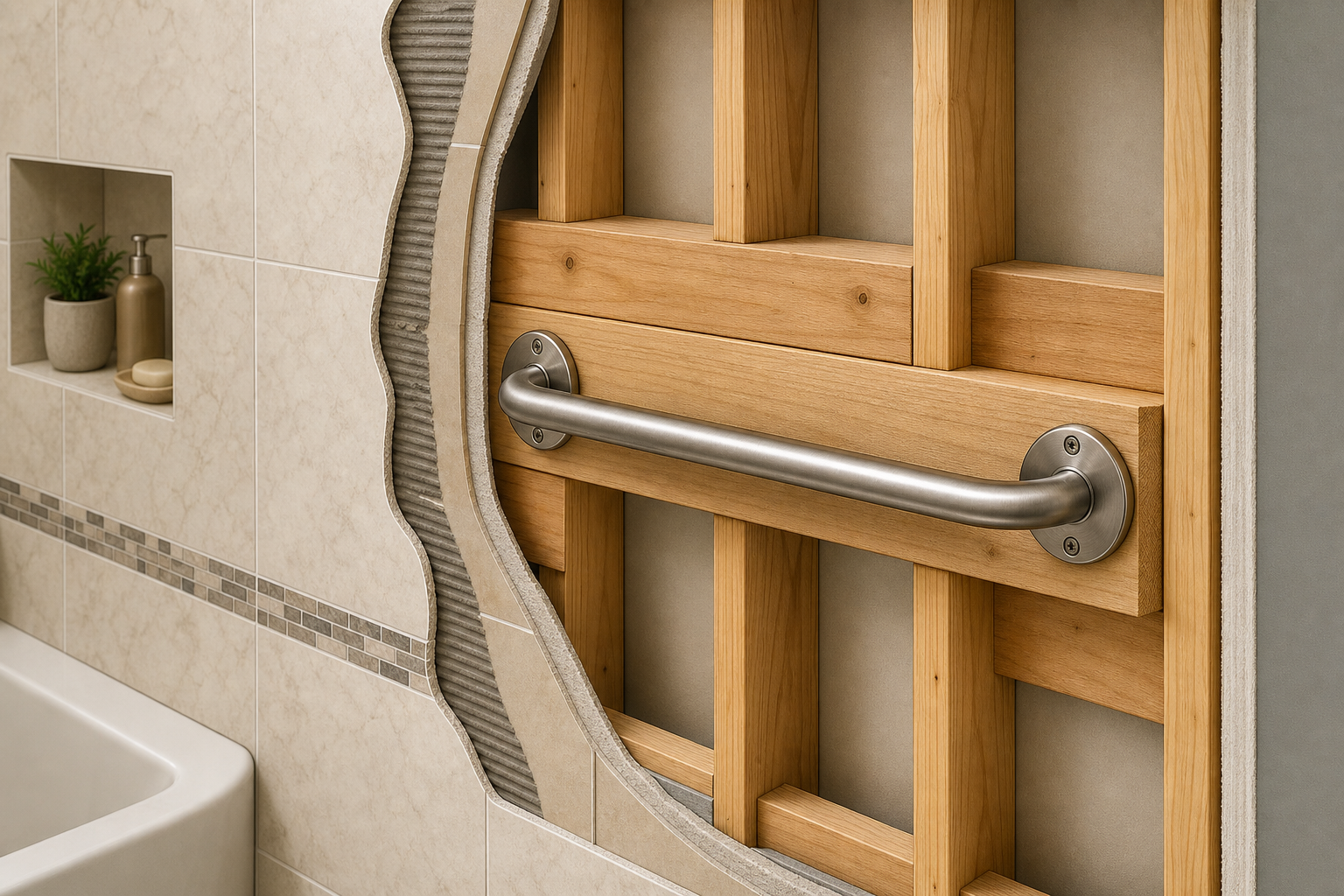
A standard general contractor can build a beautiful bathroom. But that same contractor may not know that a grab bar rated for 250 pounds needs solid wood blocking between the studs before the tile goes up, or that a curbless shower requires the subfloor to be sloped and waterproofed in a specific sequence. These aren't cosmetic details. They are structural requirements that, if missed, turn a $15,000 remodel into a $30,000 problem.
The stakes are high because most homeowners are navigating this territory for the first time. According to the University of Michigan National Poll on Healthy Aging, only 18% of adults aged 50 and older have made any home modifications to support aging in place. That means more than 8 in 10 older homeowners — and their adult children — have never hired anyone for this kind of work. They don't know what questions to ask, what credentials matter, or how much a missed detail will cost to fix later.
This guide is for the moment after you've decided to hire a professional. It covers how to vet contractors, what CAPS certification actually means for your project, the specific questions to ask before signing a contract, and the real cost of mistakes made by inexperienced remodelers.
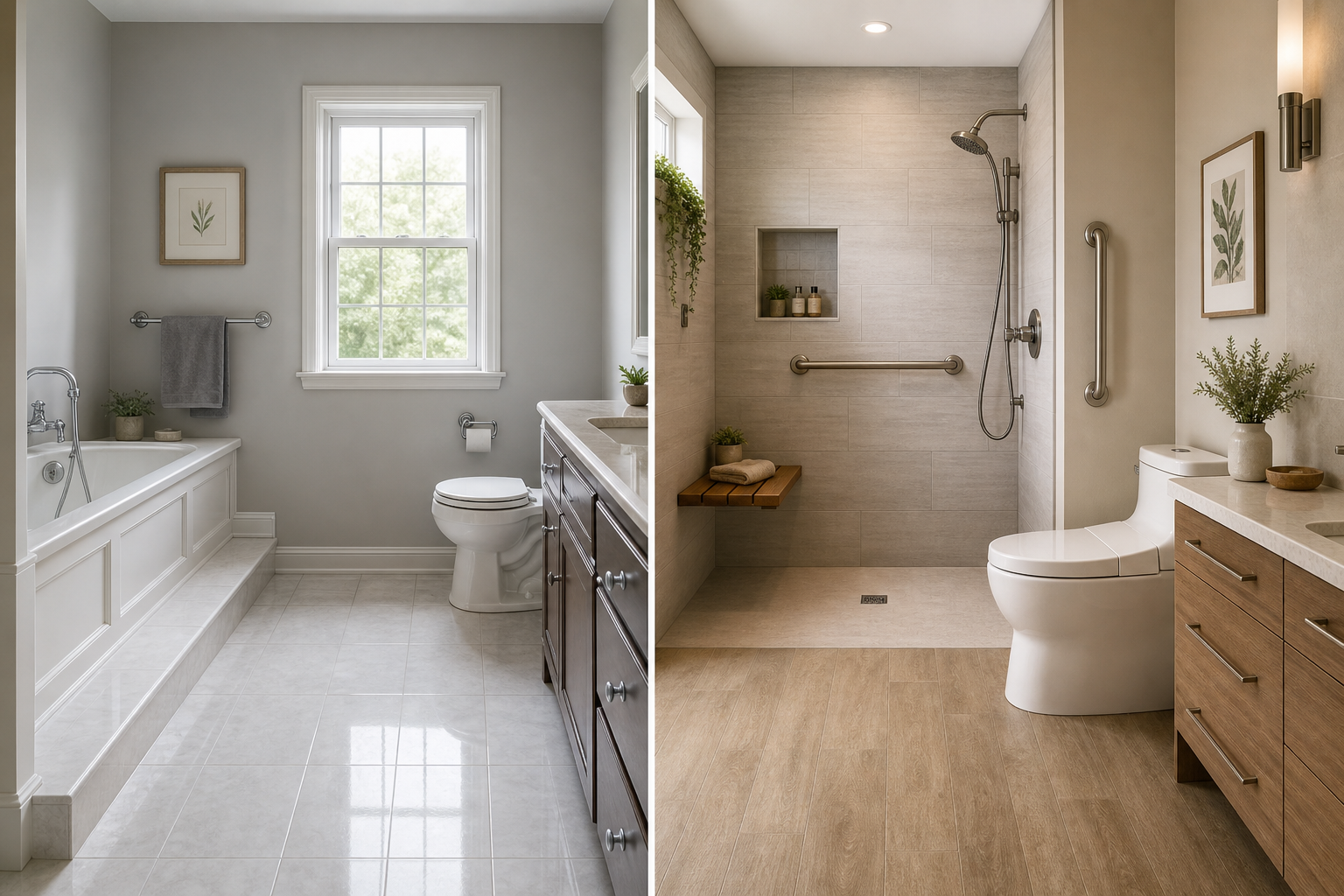
What CAPS Certification Means — and Why It Matters for Your Remodel
A Certified Aging-in-Place Specialist (CAPS) is a contractor, designer, or remodeler who has completed training through the National Association of Home Builders (NAHB) on the technical and design aspects of aging-in-place renovations. The certification covers product selection, building codes, universal design principles, and the specific installation methods that make a home accessible without looking institutional.
Mike Foti, president of Innovate Building Solutions, puts it plainly: CAPS-trained contractors "will know the best aging-in-place products to use and the best way to incorporate them into your home remodel." That knowledge translates into practical differences during construction — proper blocking for grab bars, correct shower pan slopes for curbless entries, and doorway widths that actually accommodate a walker or wheelchair.
CAPS certification is not a guarantee of quality, but it is a strong signal that the contractor has invested in understanding the specific challenges of this type of work. The NAHB reports that 76% of remodelers have seen increased demand for aging-in-place features over the past five years, and 93% have installed grab bars in the past year. A CAPS credential tells you that a contractor is part of this growing segment and has made aging-in-place work a deliberate part of their business — not an occasional side project.
- CAPS training covers:
- Design principles for accessibility and universal design
- Product specifications and installation best practices
- Building codes relevant to aging-in-place modifications
- Strategies for blending safety features with attractive finishes
5 Questions to Ask Before Hiring an Aging-in-Place Contractor
A contractor who has never done aging-in-place work may still be capable of learning on the job, but the risk is too high for a project where structural details matter. Use these five questions to separate experienced professionals from generalists who are in over their heads.
| Question | Why It Matters | What a Good Answer Sounds Like |
|---|---|---|
| How many aging-in-place projects have you completed in the past two years? | Experience with AIP-specific work is different from general remodeling. A contractor who has done 10+ AIP projects will know the common pitfalls. | "We've completed 15–20 bathroom and entryway modifications specifically for aging in place. Here are three recent projects we can show you." |
| Can you provide references from clients who needed grab bars, curbless showers, or widened doorways? | References from standard remodels don't prove AIP competence. You need to talk to someone who had the same needs as your parent. | "Absolutely. Here are contact details for three clients who had similar work done. Two of them are happy to discuss their experience." |
| Do you install solid wood blocking for grab bars, and can you show me where it will go before the walls are closed? | Surface-mounted grab bars are weaker and less attractive. Blocking must be installed before tile or drywall. A contractor who can't explain this doesn't understand the structural requirement. | "Yes, we install 2x6 or 2x8 blocking between studs at the heights you specify. We'll mark the locations on the subfloor so you can see them before we close the walls." |
| How do you handle the subfloor slope for a curbless shower? | Curbless showers require the subfloor to be sloped toward the drain before waterproofing. This is a common point of failure for inexperienced contractors. | "We recess the shower pan into the joists or build up the rest of the bathroom floor to create a seamless transition. We use a bonded waterproofing membrane over the sloped mortar bed." |
| Are you familiar with universal design principles beyond the ADA minimums? | ADA standards are a baseline, not a design goal. A contractor who understands universal design will suggest features that work for everyone, not just the minimum required by code. | "We follow universal design principles — lever handles, task lighting at 50% higher output than standard, slip-resistant flooring that doesn't look institutional. We can walk you through the options." |
Ask these questions during the initial consultation, not after you've received a bid. A contractor who hesitates or gives vague answers is telling you they lack experience. Move on to the next candidate.
Red Flags That Signal an Inexperienced Contractor
Some warning signs are subtle. Others are glaring. Here are the red flags that should make you walk away from a contractor — no matter how competitive their bid looks.
- "We can just surface-mount the grab bars." Surface-mounted grab bars are sometimes necessary on concrete or masonry walls, but in a standard wood-frame bathroom, they are a shortcut. Properly installed grab bars require blocking between studs. A contractor who suggests surface-mount only is either inexperienced or cutting corners.
- "Grab bars aren't really necessary if we use non-slip mats." This statement reveals a fundamental misunderstanding of fall prevention. Non-slip mats reduce risk but do not eliminate the need for grab bars near the toilet and shower. According to the NAHB, 93% of remodelers installed grab bars in the past year — they are the most common aging-in-place modification for a reason.
- "We don't do CAPS certification, but we've built plenty of bathrooms." Building bathrooms and building accessible bathrooms are different skill sets. A contractor who dismisses the value of specialized training is unlikely to know the nuances of blocking, shower pan slopes, or doorway clearances.
- "We can make the doorway 30 inches — that should be enough." Standard wheelchair and walker clearance requires a minimum 32-inch clear opening, with 34–36 inches preferred. A contractor who suggests 30 inches either doesn't know the standard or is trying to avoid structural work.
- No liability insurance or workers' compensation. This is non-negotiable for any remodeling project. If a contractor is injured on the job or damages your parent's home, you need insurance coverage. Ask for proof of insurance before the first hammer swings.
The Real Cost of Contractor Mistakes: Retrofits and Re-Dos
When a contractor misses a critical detail during initial construction, fixing it later is not a simple adjustment. It often means tearing out finished work, paying for new materials, and living through a second round of construction. These retrofit costs are substantial — and entirely avoidable with the right contractor from the start.
| Mistake | Cost to Fix After Construction | Cost During Initial Construction |
|---|---|---|
| Adding grab bar blocking after walls are closed | $500–$1,500 per location | Nearly zero (blocking added before drywall) |
| Converting a standard shower to curbless after the fact | $5,000–$15,000 | $0–$2,000 (subfloor modification during initial build) |
| Widening doorways after construction | $1,500–$3,000 per doorway | $300–$800 (framed wider during initial rough-in) |
| Replacing standard-height toilet with comfort-height model | $200–$500 (toilet + labor) | $150–$400 (specified and installed during initial plumbing) |
The cost data tells a clear story. Adding grab bar blocking after the walls are closed costs $500 to $1,500 per location — compared to nearly zero if the blocking is installed during initial framing. Converting a standard shower to a curbless entry after the fact requires subfloor modification that runs $5,000 to $15,000. Widening a doorway after the walls are finished costs $1,500 to $3,000 per doorway — five to ten times what it would have cost to frame it wider initially.
An aging-in-place remodel typically costs 10 to 25 percent more than a standard remodel because of the specialized materials, structural modifications, and design considerations involved. That premium is not an upcharge — it is the cost of doing the job correctly the first time. A contractor who quotes the same price as a standard bathroom remodel is either planning to skip the critical details or doesn't know what they are missing.
Where to Find Qualified Aging-in-Place Contractors
Finding a qualified contractor takes more than a Google search. Start with these targeted resources, which are specifically designed to connect homeowners with professionals who understand aging-in-place work.
- NAHB CAPS Directory. The National Association of Home Builders maintains a searchable directory of CAPS-certified professionals. This is the most reliable starting point because every listing has completed the NAHB training program.
- National Aging in Place Council (NAIPC). NAIPC is a membership organization that includes contractors, designers, occupational therapists, and other professionals focused on aging in place. Their directory can connect you with local resources beyond just contractors.
- Area Agencies on Aging (AAA). Your local AAA can often recommend contractors who have worked with other seniors in your community. They may also have information about funding programs for home modifications.
- Occupational Therapy Referrals. An occupational therapist who specializes in home modifications can assess your parent's needs and recommend specific modifications. Many OTs work with contractors they trust and can provide referrals.
- Habitat for Humanity Aging-in-Place Program. For low-income seniors, some Habitat for Humanity affiliates offer free or low-cost home modification services. This is not a contractor directory, but a direct service option for qualifying households.
Making the Final Decision: Balancing Cost, Quality, and Trust
After you've interviewed candidates, checked references, and reviewed bids, the final decision comes down to a balance of three factors: cost, quality, and trust. Here is a framework for weighing them.
- Get at least three bids. A single bid gives you no basis for comparison. Three bids let you see the range and identify outliers. If one bid is dramatically lower than the others, ask why — and be skeptical of the answer.
- Verify CAPS status directly. Don't take a contractor's word for it. Check their certification through the NAHB directory or ask for their CAPS certificate number and verify it.
- Call references — and ask the right questions. Ask references: Did the contractor install proper blocking? Was the project completed on time and on budget? Would you hire them again? If the reference had a negative experience, what went wrong?
- Trust your instincts about communication. A contractor who is evasive during the bidding process will not become more transparent during construction. If they can't clearly explain how they will handle the subfloor slope or where the blocking will go, that lack of clarity will persist.
- Consider the long-term value, not just the upfront cost. A well-executed aging-in-place remodel adds value to the home and eliminates the need for expensive retrofits later. The 10–25% premium for doing it right the first time is an investment in your parent's safety and your own peace of mind.
Choosing the right contractor is not the most glamorous part of an aging-in-place project. But it is the decision that determines whether the grab bars hold, the shower is safe to enter, and the doorways accommodate a walker. Take the time to vet thoroughly. Your parent will live with the results every day.
Related reading
Need a professional assessment?
Find a CAPS-credentialed professional or local aging services through our outbound resource list — we never name or rank individual contractors.
Find Local HelpNoticed something outdated or inaccurate on this page? Flag a correction. We review every report against CDC, NIA, and AARP HomeFit guidance before updating a page.