
Room checklist
Aging in Place Home Modifications: When to DIY vs. Hire a CAPS Professional
A practical decision guide for adult children helping aging parents modify their home. Learn which simple upgrades you can safely do yourself and which structural changes require a licensed CAPS-certified specialist to avoid costly mistakes and safety hazards.
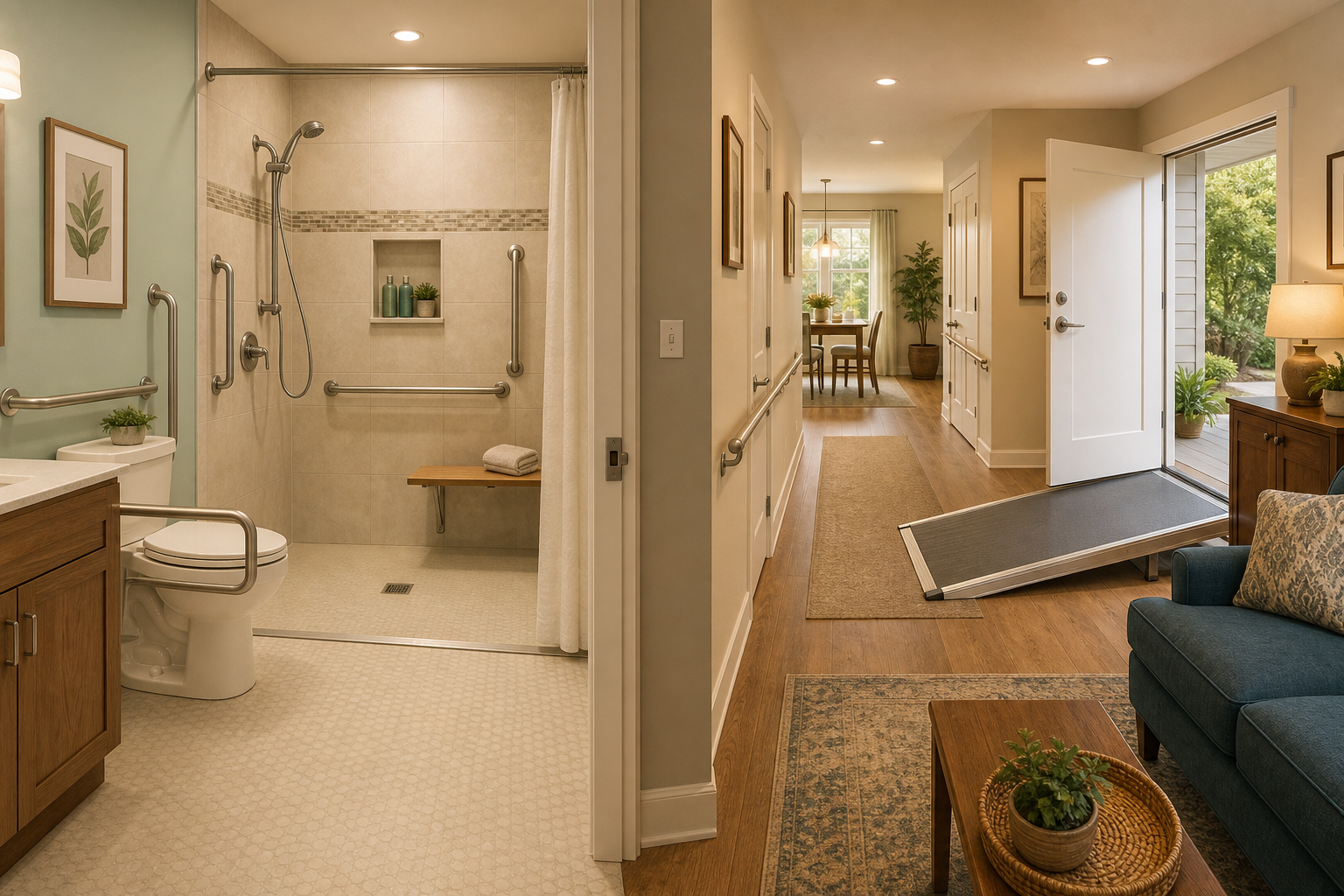
The Real Cost of Getting It Wrong: Why DIY Isn't Always the Safest Choice
The desire to save money is understandable. A grab bar costs $25 at the hardware store, and installing it yourself seems straightforward. But that calculation changes when you consider what happens if the bar pulls out of the wall when someone grabs it to break a fall.
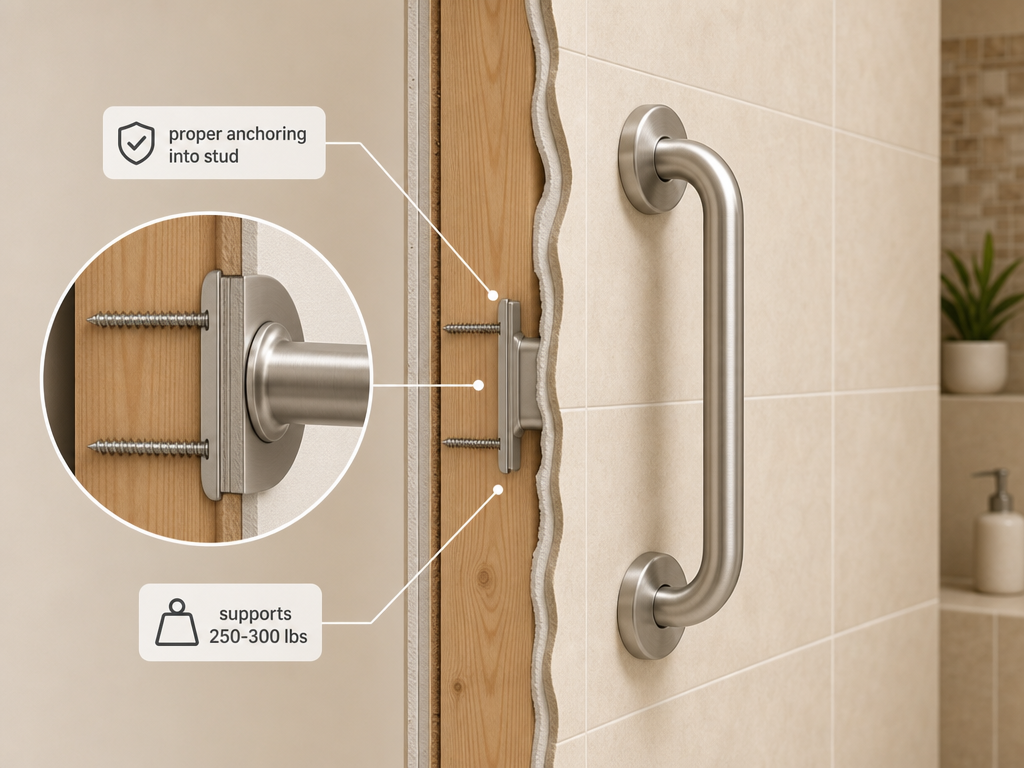
Improperly installed grab bars are not just ineffective — they are dangerous. A bar that rips from drywall can cause a more severe injury than no bar at all, because the person falls backward with unexpected force. The AARP emphasizes that grab bars must be anchored into wall studs or solid blocking to support 250–300 pounds. Drywall anchors alone will not hold.
The stakes extend beyond physical safety. A 2025 systematic review of 20 studies, published in PMC, found that 65% of studies confirmed the effectiveness of home modifications for fall prevention, functional independence, and cost savings. But that effectiveness depends entirely on proper installation. The same review highlighted that bathroom modifications — grab bars and non-slip flooring — were the most impactful interventions across all studies. Getting them wrong means losing that benefit.
Electrical work carries similar risks. A miswired outlet near a sink or an improperly installed stair lift can create shock hazards or fire risks. And if a modification fails and causes injury, some homeowner insurance policies may deny claims if the work was not performed by a licensed contractor. The short-term savings of a DIY approach can quickly evaporate.
The broader context is sobering: only 18% of adults aged 50 and older have made any home modifications to support aging in place, according to survey data cited by Choice Mutual, despite 77% wanting to remain in their homes. And nearly 90% of U.S. homes are not equipped to accommodate an aging adult, per U.S. Census Bureau data. That gap represents millions of families facing the same decision you are now. For a broader look at what a fully prepared home entails, see our room-by-room upgrade plan.
What Any Capable Adult Can DIY: Simple, Low-Risk Upgrades
Not every modification requires a contractor. Many of the most useful upgrades are simple, inexpensive, and carry almost no risk if installed imperfectly. These are the projects where a handy adult with basic tools can safely save money.
According to ElderLife Financial, low-cost upgrades in the $25–$500 range are well-suited for DIY. These include:
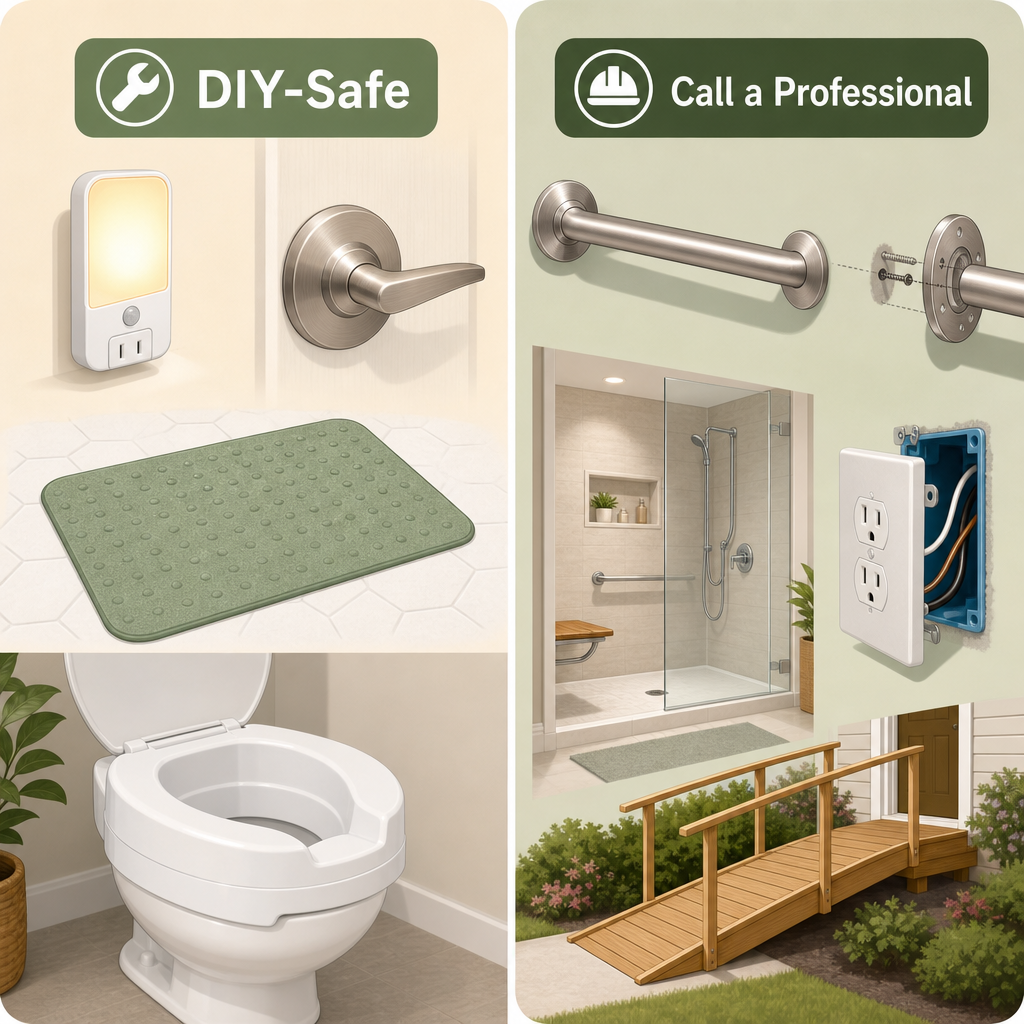
- Plug-in nightlights or motion-activated LED strips for hallways, bathrooms, and bedrooms
- Lever-style door handles that replace round knobs — easier for arthritic hands to operate
- Non-slip bath mats and adhesive slip-resistant strips for the shower floor
- Raised toilet seat risers (add 2–4 inches of height, no tools required for most models)
- Handheld showerheads with a slide bar — typically screws onto the existing shower arm
- Brighter LED bulbs in fixtures and under-cabinet task lighting for kitchens
These items share a common trait: they are not load-bearing, not wired into the home's electrical system, and not anchored into structural framing. A nightlight that falls off the wall is a nuisance, not a safety crisis. A lever handle that loosens over time can be retightened with a screwdriver. The risk profile is fundamentally different from structural modifications.
What Requires a Licensed Professional: Structural and Safety-Critical Changes
Once a modification involves anchoring into the home's structure, carrying a person's full weight, or altering electrical or plumbing systems, the DIY calculus changes. These projects demand professional expertise — not because a homeowner cannot physically do them, but because the consequences of failure are severe.
Grab Bar Installation
This is the most common modification where DIY goes wrong. A grab bar must be screwed into a wall stud or into plywood blocking installed between studs during a prior renovation. The bar must support a dynamic load of 250–300 pounds — the force generated when a person grabs it suddenly during a fall. Most bathroom walls have tile over drywall, making stud location difficult without a high-quality stud finder. If the bar is installed into tile alone, the tile can crack and the bar can pull free.
Walk-In Showers and Bathroom Modifications
Replacing a tub with a walk-in shower involves plumbing, waterproofing, and sometimes structural subfloor work. A leak caused by improper sealing can lead to mold, rot, and thousands of dollars in water damage. The AARP checklist recommends walk-in showers specifically to avoid stepping over a tub wall — a common fall trigger — but the installation must be watertight and slope the floor correctly for drainage.
Stair Lifts and Ramps
Stair lifts require secure mounting to stair treads, electrical wiring, and precise alignment to ensure the chair travels smoothly. A poorly installed stair lift can derail or malfunction, trapping someone mid-staircase. Ramps must meet specific slope ratios (1:12 is the standard for wheelchair access) and be built with load-bearing capacity for the user plus the wheelchair. A ramp that is too steep or structurally unsound is unusable at best and dangerous at worst.
Electrical Work and Doorway Widening
Adding outlets, installing stair lift wiring, or upgrading lighting fixtures often requires work inside walls. Most jurisdictions require a licensed electrician for any work beyond simple fixture replacement. Doorway widening to accommodate a wheelchair or walker involves removing and reframing the door header — a structural change that must maintain the wall's load-bearing integrity.
What a CAPS-Certified Specialist Brings to Your Project
A Certified Aging-in-Place Specialist (CAPS) is a remodeling or construction professional who has completed a nationally recognized credential program through the National Association of Home Builders (NAHB). The credential signals that the contractor has specific training in designing and building homes that accommodate the changing needs of older adults.
The CAPS program consists of three courses:
- CAPS I — Marketing and Communicating with Aging-in-Place Clients: covers how to understand the functional needs of older adults and communicate design options effectively.
- CAPS II — Design Concepts for Livable Homes and Aging in Place: teaches universal design principles, barrier-free layouts, and ADA/ANSI standards.
- CAPS III — Details and Solutions for Livable Homes: focuses on technical installation, product selection, and practical solutions for common home modification challenges.
What distinguishes a CAPS from a general contractor is their understanding of how aging-related functional limitations — reduced grip strength, balance instability, vision changes, and cognitive decline — translate into specific design decisions. A CAPS knows, for example, that a lever handle should be installed 42 inches from the floor, not the standard 36 inches, for someone using a walker. They know that contrasting colors on stair edges help people with depth perception issues. They understand that a curbless shower requires a sloped subfloor, not just a linear drain.
For a deeper comparison of how CAPS credentials differ from general contractor licensing, see our guide on CAPS vs. general contractor.
How to Find a CAPS Professional and What to Ask Before Hiring
The NAHB maintains a searchable directory of CAPS-certified professionals on its website. You can filter by location and specialty. However, finding a name in a directory is only the first step. Before hiring, ask these questions:
- "How many aging-in-place projects have you completed in the past two years?" — Look for specific experience, not just certification.
- "Can you provide references from clients who had similar needs?" — Speak with those clients about timeline, budget, and whether the modifications worked as intended.
- "Do you carry general liability insurance and workers' compensation?" — Verify coverage limits. A contractor without insurance leaves you exposed to liability if someone is injured on the job.
- "Will you coordinate with an occupational therapist if needed?" — The best CAPS professionals welcome OT input because it leads to better outcomes.
- "Do you provide a written contract with a detailed scope of work, timeline, and payment schedule?" — Never proceed without a written agreement.
For a complete walkthrough of the hiring process — including how to evaluate bids, what to look for in a contract, and red flags to avoid — read our complete guide to hiring a CAPS specialist.
Combining an Occupational Therapist Assessment with a CAPS Contractor for Best Results
One of the most effective — and most overlooked — steps in the home modification process is having an occupational therapist (OT) assess the home before any contractor sets foot on the property. An OT evaluates the older adult's specific functional abilities: their balance, strength, range of motion, vision, and cognitive status. Then they walk through the home and identify which modifications will have the greatest impact on safety and independence.
This sequence matters. An OT can recommend a $50 grab bar in the shower and a $200 handheld showerhead, and skip the $5,000 walk-in tub that the family assumed was necessary. According to ElderLife Financial, consulting an OT before requesting contractor quotes can help prioritize the most impactful changes and avoid wasted spending. The OT's assessment becomes a prioritized scope of work that the CAPS contractor can then price and execute.
The evidence supports this approach. A 2017 randomized controlled trial by Stark et al., included in the 2025 systematic review, found that OT-led home modifications reduced falls by 39%. And the Schiller et al. (2023) program, which embedded home modifications within home-based primary care and used OT assessments, cost just $528 per patient — a fraction of what families often spend on unguided modifications.
Cost Comparison: DIY Savings vs. Professional Installation for Common Projects
The table below compares estimated costs for common modifications when done as a DIY project versus professionally installed. These are national averages; actual costs vary by region, home condition, and project complexity. Professional installation costs include labor, materials, and permits where required.
| Modification | DIY Cost (Materials Only) | Professional Installation | Risk of DIY Failure |
|---|---|---|---|
| Grab bar (single, bathroom) | $25 – $50 | $150 – $300 | High — stud anchoring required |
| Lever door handle (per door) | $20 – $40 | $75 – $150 | Low — easy to replace |
| Handheld showerhead | $30 – $80 | $100 – $200 | Low — simple threading |
| Stair lift (straight staircase) | Not recommended | $2,500 – $8,000 | Very high — electrical and structural |
| Walk-in shower conversion | Not recommended | $3,000 – $10,000 | Very high — plumbing and waterproofing |
| Modular ramp (5–6 ft) | $200 – $500 | $800 – $2,500 | Medium — slope and anchoring critical |
| Raised toilet seat | $30 – $60 | $75 – $150 | Low — no tools for most models |
| Non-slip bath mat / strips | $10 – $30 | N/A | Minimal |
Note that the professional installation cost for a grab bar — roughly $150–$300 — is a fraction of the average cost of a fall-related hospitalization, which can exceed $30,000. The Schiller et al. (2023) model demonstrated that professional guidance can be remarkably cost-effective when embedded in a coordinated care approach. For detailed bathroom remodel costs and phased financing options, see our bathroom remodel cost guide.
Making the Decision: A Simple Framework for What to DIY and What to Delegate
When you are standing in the hardware store aisle or looking at a contractor's estimate, use this framework to decide:
- Does the modification need to support a person's body weight? If yes, hire a professional. This includes grab bars, stair lifts, and ramps.
- Does it involve cutting into walls, floors, or ceilings? If yes, hire a professional. This includes doorway widening, electrical work, and plumbing changes.
- Does it connect to the home's electrical system beyond plugging into an outlet? If yes, hire a licensed electrician.
- Is it a non-structural, low-risk addition that simply makes daily life easier? If yes, DIY is safe. This includes nightlights, lever handles, non-slip mats, toilet risers, and handheld showerheads.
- Are you unsure about the answer to any of the above? Start with an occupational therapist assessment, then bring the OT's recommendations to a CAPS-certified contractor for a quote.
The goal is not to do everything yourself or to hire someone for everything. The goal is to make your parent's home safer in a way that lasts — and that means matching the complexity of the job to the right level of expertise. A $200 grab bar installation can prevent a fall that leads to hospitalization and a $50,000+ nursing home bill. That is not a DIY risk worth taking.
Related reading
Need a professional assessment?
Find a CAPS-credentialed professional or local aging services through our outbound resource list — we never name or rank individual contractors.
Find Local HelpNoticed something outdated or inaccurate on this page? Flag a correction. We review every report against CDC, NIA, and AARP HomeFit guidance before updating a page.