
Home Care, Assisted Living, or Memory Care? A Staged Decision Guide for Dementia Caregivers
A practical, stage-based framework to help adult children decide when home care is sufficient, when assisted living may work, and when memory care becomes necessary — using clinical dementia progression markers, not just preference.
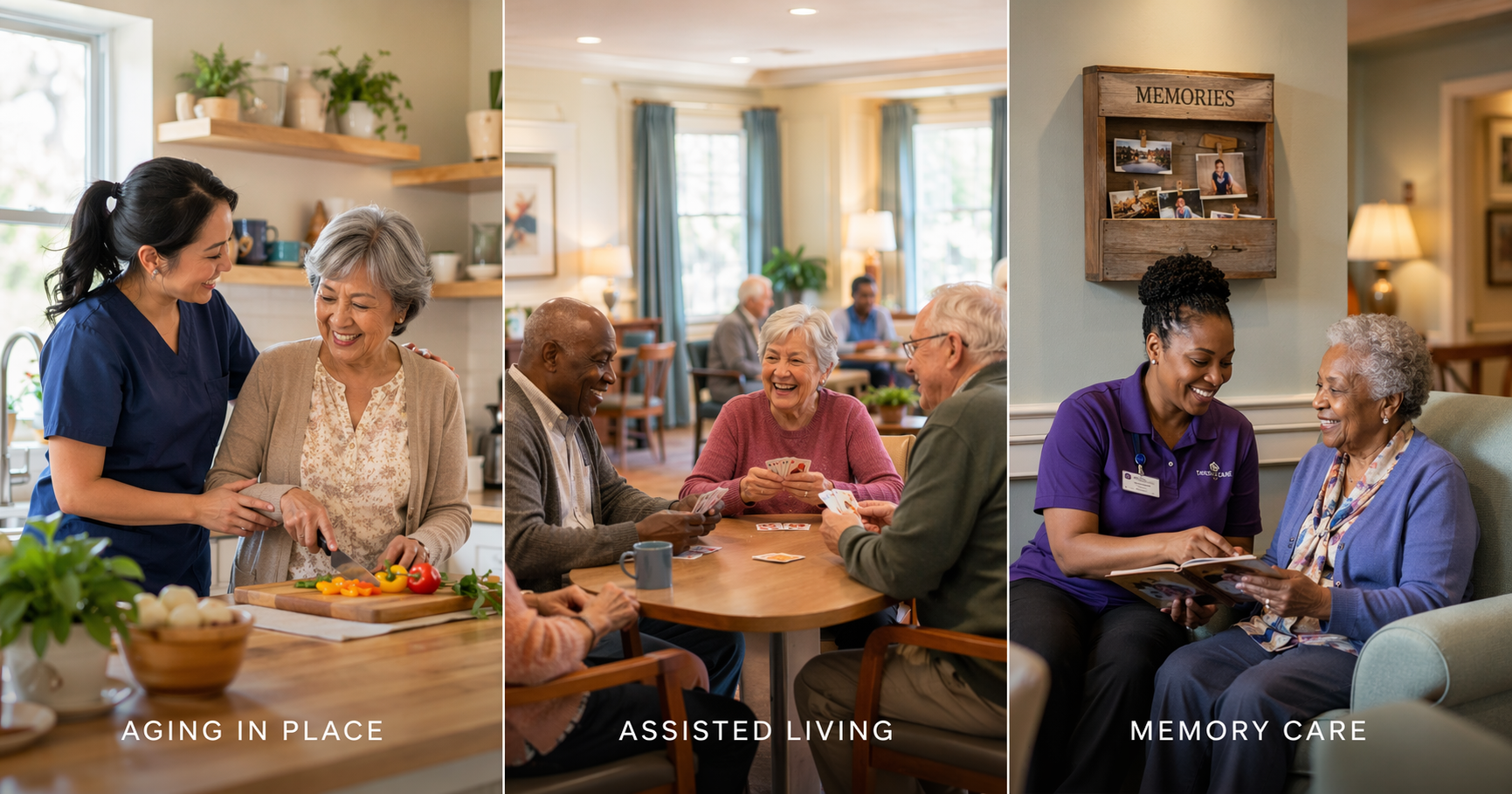
The Care Decision That Follows the Disease, Not the Calendar
If you are reading this, you have likely already crossed the threshold from worry into action. A parent has received an Alzheimer's or dementia diagnosis, and you are now facing a question that carries enormous emotional weight: Should they stay at home with help, move to assisted living, or go directly to a memory care community?
The guilt that accompanies this decision is almost universal. Adult children often feel they are "giving up" if they consider a move, or that they have failed if home care becomes unmanageable. Neither is true. The reality is that dementia is a progressive disease, and the care setting that works at diagnosis will almost certainly be inadequate two or three years later.
The core thesis of this guide is straightforward: the choice between home care, assisted living, and memory care is not a one-time event. It is a staged process that follows the disease's progression. Home care with appropriate support works well in early stages. Assisted living may suit mild-to-moderate dementia when wandering and behavioral symptoms are not yet present. Memory care becomes necessary when safety concerns — wandering, exit-seeking, aggression — override preference.
Below, we walk through each stage of dementia and map it to the care setting that best matches the clinical reality at that point. The goal is not to prescribe a single answer but to give you the framework and the clinical markers you need to recognize when it is time to adjust the care plan.
Stage 1: Early-Stage Dementia — Home Care and Adult Day Services
In early-stage dementia, the person can still manage most activities of daily living with minimal assistance. They may forget appointments, struggle with complex tasks like finances or medication management, and show subtle personality changes, but they remain safe at home with the right support structure in place.
This is the stage where home care — supplemented by adult day services, companion care, and community-based programs — is most appropriate. The goal is to maintain independence and quality of life while providing enough support to prevent crises.
Types of Services Available in Early-Stage Home Care
- Home health aides: Provide personal care assistance (bathing, dressing, grooming) and medication reminders. Typically charged by the hour.
- Companion services: Offer socialization, supervision, and help with light housekeeping or meal preparation. Often less expensive than skilled home health care.
- Adult day centers: Structured programs during daytime hours that provide social activities, meals, and supervision. The National Institute on Aging notes that adult day care is generally less expensive than in-home care or nursing home care, and evidence suggests people with dementia maintain cognition and function longer when they participate in such programs.
- Meal delivery services: Programs like Meals on Wheels (888-998-6325) provide nutritious meals for those who can no longer cook safely.
- Transportation services: Some communities offer free or fee-based transportation for medical appointments and errands. Medicaid covers emergency and doctor-appointment transportation in many states.
- Geriatric care managers: Licensed nurses or social workers who assess needs, coordinate services, and monitor the care plan. They charge by the hour, and Medicare/Medicaid generally do not cover their fees, though some long-term care insurance policies may.
Cost of Early-Stage Care Options
| Service | National Median Cost | Source & Year |
|---|---|---|
| In-home care (non-medical caregiver) | $35/hour ($80,080/year at 44 hrs/week) | CareScout 2025 |
| Adult day health care | $95 per eight-hour day | CareScout 2025 |
| Home health aide (skilled) | $90/hour | CareScout 2025 |
It is important to note that Medicare does not cover custodial care — the type of long-term assistance with daily activities that most people with dementia need. Medicare covers only short-term, skilled home health care from a Medicare-certified agency, typically after a hospitalization. Medicaid coverage for home and community-based services varies significantly by state.
Stage 2: Middle-Stage Dementia — Assisted Living vs. Memory Care
Middle-stage dementia is where the care decision becomes most complex. The person may still be physically healthy and mobile, but cognitive decline has progressed to the point where safety, supervision, and behavioral management become primary concerns.
This is also the stage where most families face the assisted-living-versus-memory-care decision. According to A Place for Mom, the average age in assisted living is approximately 85, and nearly three-quarters of residents in that age group have some form of dementia. This means that many families move a parent into assisted living expecting a general retirement lifestyle, only to discover within months that the level of care needed has shifted.
Clinical Markers That Tip the Decision Toward Memory Care
Not every person with middle-stage dementia needs memory care. Some do well in assisted living communities that offer medication management, meal services, and light supervision. The decision to move to a dedicated memory care unit is driven by specific clinical markers:
- Wandering: 6 in 10 people with dementia wander (Alzheimer's Association). Wandering is the single most common reason families transition a loved one to memory care. A person who wanders is at risk of falls, getting lost, exposure to weather, and traffic accidents. Memory care communities are designed with secure environments — alarmed doors, coded elevators, enclosed outdoor spaces, and tracking bracelets — that make wandering safer.
- Sleep disruption and sundowning: Agitation, restlessness, and confusion that worsen in the late afternoon or evening. When a person with dementia is up multiple times per night, the caregiver's sleep is destroyed, and the risk of nighttime falls increases dramatically.
- Incontinence: Loss of bladder or bowel control requires a higher staff-to-resident ratio for timely toileting assistance and dignity management. Most assisted living communities can manage occasional incontinence, but frequent incontinence often signals the need for a higher level of care.
- Aggression and agitation: Verbal or physical aggression, resistance to care, and exit-seeking behaviors. These symptoms require specialized staff training in de-escalation and behavioral interventions that are not typically available in standard assisted living.
Cost Comparison: Assisted Living vs. Memory Care
| Setting | National Median Monthly Cost | Source & Year |
|---|---|---|
| Assisted living | $5,419/month | A Place for Mom 2026 (based on 24,000+ residents) |
| Memory care | $6,690/month | A Place for Mom 2026 |
| Memory care (alternative estimate) | $7,645/month | U.S. News 2026 |
| Memory care (NIC estimate) | $8,399/month | NIC 2023 |
One important factor to consider: approximately 80% of assisted living communities that partner with A Place for Mom also offer memory care on-site. This means that if you choose an assisted living community with a connected memory care unit, the transition — when it becomes necessary — can happen within the same campus. The person with dementia does not have to adapt to an entirely new environment, new staff, and new routines all at once. This within-campus transition is significantly less traumatic than a move to a standalone memory care facility in an unfamiliar location.
Stage 3: Late-Stage Dementia — Memory Care or Skilled Nursing
In late-stage dementia, the person requires round-the-clock supervision and assistance with virtually all activities of daily living. Communication may be severely limited, mobility is often impaired, and the risk of medical complications — infections, pressure ulcers, aspiration pneumonia — is high.
At this stage, the question is no longer whether to move but which type of facility best meets the person's medical and safety needs. The two primary options are dedicated memory care units and skilled nursing facilities (nursing homes) with dementia-specific programming.
When Memory Care Is the Right Choice
Memory care communities are designed specifically for people with Alzheimer's and other dementias. They provide a secure environment, specialized staff training, structured routines, and therapeutic activities tailored to cognitive impairment. The supply of memory care units has grown dramatically: memory care units increased by 84% from 2013 to 2023, reaching 162,100 units nationally (NIC).
Key features of memory care communities include:
- Secure environments: 88% of memory care communities are secure facilities (A Place for Mom partner data).
- Wandering management systems: 41% feature dedicated wandering management systems, including alarmed doors, coded elevators, enclosed courtyards, and tracking bracelets.
- Specialized staff training: 79% provide specialized dementia training for staff (A Place for Mom partner data).
- Therapeutic activities: Music therapy, art therapy, reminiscence therapy, pet therapy, and structured daily routines designed to reduce agitation and support cognitive function.
- Design features: Color-coded walls to aid wayfinding, circular hallways that prevent dead ends, enclosed outdoor spaces, and personalized memory boxes outside each resident's door.
When Skilled Nursing Is Necessary
Some people with late-stage dementia require the level of medical care that only a skilled nursing facility can provide. This includes:
- 24/7 skilled nursing care for complex medical needs (tube feeding, wound care, IV medications)
- Frequent falls that require close monitoring and fall prevention interventions beyond what memory care can provide
- Severe behavioral symptoms that require psychiatric consultation or medication management beyond the scope of memory care staff
- The caregiver's own health is at risk — this is a valid and important reason to transition to a higher level of care
The National Institute on Aging notes that some nursing homes have special Alzheimer's care units with specially trained staff and environments designed to feel more like home. These units are inspected and regulated by states, providing an additional layer of accountability.
Clinical Decision Points: What Each Symptom Signals About the Right Care Setting
The table below maps specific dementia behaviors to the care setting most appropriate for managing them. Use this as a quick-reference tool when evaluating whether your current care arrangement is still adequate.
| Symptom / Behavior | Can Assisted Living Manage? | Signals Memory Care When... | Signals Skilled Nursing When... |
|---|---|---|---|
| Wandering | Limited — most AL communities lack secure perimeters | Wandering occurs regularly; person cannot be redirected; secure environment is needed | Wandering combined with fall risk or medical instability |
| Sleep disruption / sundowning | Possible if night staff is available and behavior is mild | Nighttime agitation disrupts other residents; person is at risk of leaving the building at night | Sleep disruption is accompanied by medical complications (e.g., dehydration, infection) |
| Incontinence | Occasional incontinence can be managed | Frequent incontinence requires higher staff-to-resident ratio for timely toileting and dignity | Incontinence with skin breakdown, recurrent UTIs, or need for catheter care |
| Aggression / agitation | Not typically — staff may lack de-escalation training | Verbal or physical aggression toward staff or other residents; exit-seeking behavior | Aggression requires psychiatric medication management or one-on-one supervision |
| Exit-seeking | Not safe — most AL communities are not secure | Person repeatedly attempts to leave; memory care's secure environment is essential | Exit-seeking combined with medical frailty or fall risk |
Cost Comparison Across Care Settings for Dementia Care
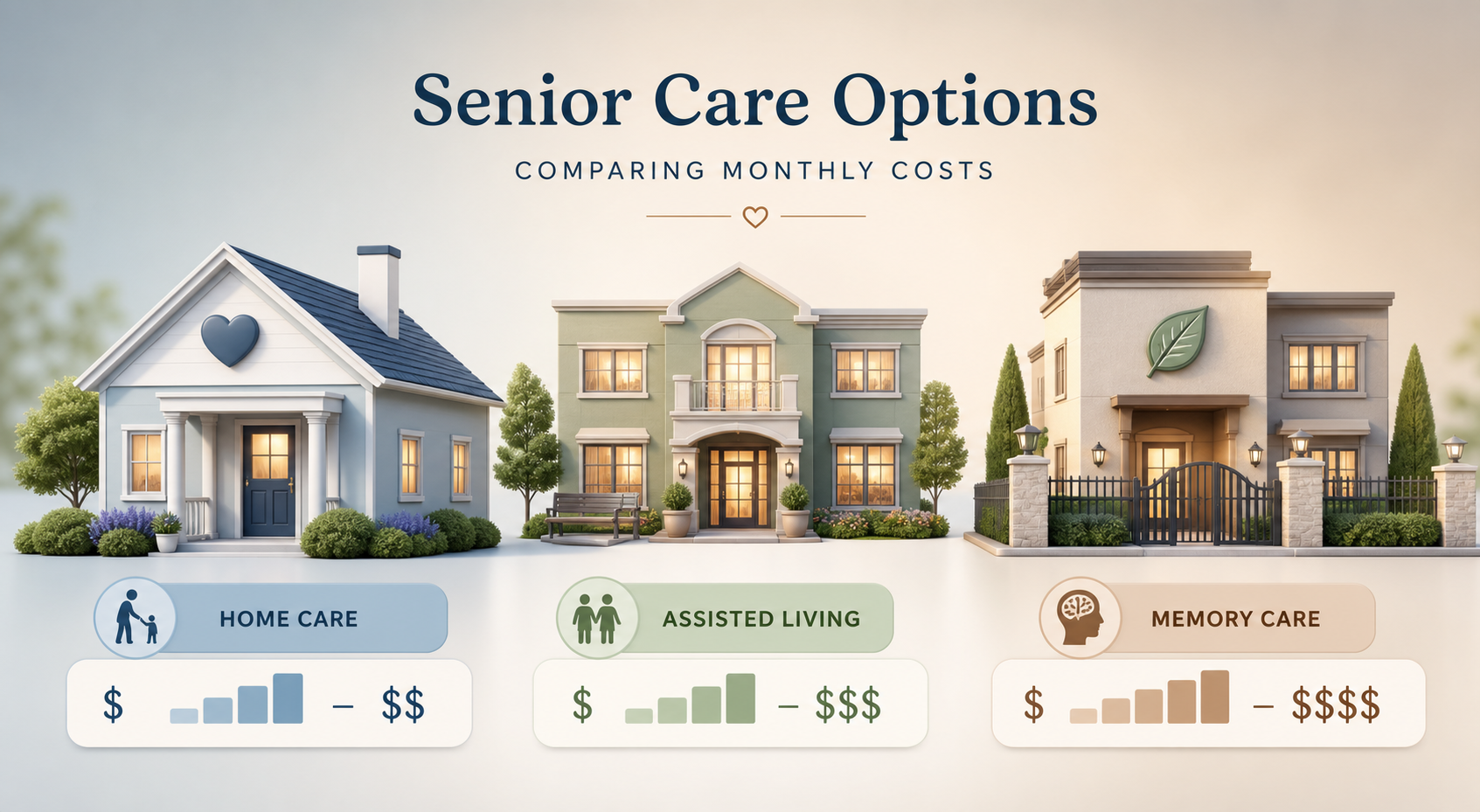
Understanding the full cost landscape is essential for planning. The table below presents national median costs across all care settings relevant to dementia care, with source attribution and data collection year for each figure.
| Care Setting | National Median Cost | Source & Year |
|---|---|---|
| In-home care (non-medical) | $35/hour ($80,080/year at 44 hrs/week) | CareScout 2025 |
| Adult day health care | $95 per eight-hour day | CareScout 2025 |
| Assisted living | $5,419/month | A Place for Mom 2026 |
| Memory care | $6,690–$8,399/month | Multiple sources (see note) |
| Nursing home (semi-private room) | $9,581/month | CareScout 2025 |
| Nursing home (private room) | $10,798/month | CareScout 2025 |
It is worth noting that while in-home care at 44 hours per week appears comparable to residential care on an annual basis, the comparison is not apples-to-apples. In-home care at that level typically requires multiple caregivers and does not include room and board, utilities, or the 24/7 supervision that memory care provides. For someone with middle- or late-stage dementia who needs round-the-clock monitoring, the cost of in-home care at 168 hours per week would be substantially higher than any residential option.
How to Evaluate a Memory Care Facility
When you have identified that memory care is the appropriate setting, the next step is evaluating individual communities. The National Institute on Aging recommends making both announced and unannounced visits, using the Medicare Nursing Home Checklist, and asking specific questions about dementia care.
Memory Care Facility Evaluation Checklist
- Security features: Are all exits alarmed? Are elevators coded? Is the outdoor courtyard enclosed? Does the facility use tracking bracelets or other wandering management systems? (41% of memory care communities have dedicated wandering management systems per A Place for Mom partner data.)
- Staff training: What percentage of staff have received specialized dementia training? (79% of memory care communities provide specialized training per A Place for Mom.) Is training ongoing or a one-time session? How does staff handle agitation, aggression, and exit-seeking?
- Staff-to-resident ratio: What is the ratio during the day? At night? Higher ratios are critical for residents with incontinence, wandering risk, or behavioral symptoms.
- Therapeutic activities: Does the community offer music therapy, art therapy, reminiscence therapy, or pet therapy? (Per A Place for Mom partner data: 33% offer light therapy, 62% offer reminiscence programs, 76% offer art classes, 80% offer fitness classes.) Are activities structured and scheduled throughout the day?
- Design features: Are hallways color-coded to aid wayfinding? Are they circular (no dead ends)? Are there memory boxes outside resident doors? Is the lighting soft and non-glare? Is flooring non-slip?
- Meals and nutrition: Are meals served in a dining room with assistance available? Can the kitchen accommodate special diets or texture-modified foods for residents with swallowing difficulties?
- Medical oversight: Is there a registered nurse on staff? How are medication changes communicated to families? Is there a relationship with a local geriatrician or neurologist?
- Family involvement: Are family members welcome at any time? Are there family support groups or regular care conferences? How does the community communicate with families about changes in a resident's condition?

Payment Realities for Dementia Care
The cost of dementia care is substantial, and most families pay out of pocket. Understanding the payment landscape early — ideally before a crisis forces a decision — can prevent financial distress later.
What Medicare Covers (and Does Not Cover)
This is the most important financial fact to understand: Medicare does not cover custodial care — the type of long-term assistance with bathing, dressing, eating, and toileting that people with dementia need. Medicare also does not cover room and board in assisted living, memory care, or nursing homes. Medicare Part A covers only short-term skilled nursing facility care (up to 100 days after a qualifying hospitalization) and hospice care. Medicare Advantage plans generally follow the same rules.
Other Payment Sources
- Medicaid: Covers nursing home care for low-income individuals. Some states offer Medicaid waivers that cover assisted living or home and community-based services, but availability and eligibility vary significantly by state. Contact your state Medicaid office or local Area Agency on Aging for specific information.
- VA Aid and Attendance benefits: Eligible veterans and surviving spouses can receive up to $2,874/month for a married veteran, $2,424/month for a single veteran, and $1,558/month for a surviving spouse (per American Council on Aging, cited by U.S. News 2026). These benefits can be used toward assisted living, memory care, or in-home care costs.
- Long-term care insurance: Policies vary widely in what they cover. Some cover assisted living and memory care; others cover only nursing home care. Review the policy carefully and contact the insurer to confirm coverage for dementia-specific care settings.
- Out-of-pocket payments: The majority of families pay for assisted living and memory care from personal savings, retirement funds, or the sale of a home. The median length of stay in assisted living is 22 months (NCAL), making the total cost approximately $119,218 at median rates.
Making the Move: How to Transition a Person with Dementia with Less Trauma
The transition itself — the actual moving day — is often the most stressful part of the entire process for both the person with dementia and the family caregiver. The National Institute on Aging offers several evidence-informed strategies for reducing the trauma of the move.
Before the Move
- Choose a community that allows a within-campus transition if possible. As noted earlier, approximately 80% of assisted living communities that partner with A Place for Mom also offer memory care on-site. Starting in assisted living and moving to the memory care unit within the same campus is far less disorienting than moving to an entirely new facility.
- Visit the facility multiple times before moving day. Take the person with dementia for short, positive visits — have a meal in the dining room, walk through the garden, attend an activity. Familiarity reduces anxiety.
- Talk to a social worker or geriatric care manager about the transition. They can help you develop a plan that accounts for the person's specific cognitive and emotional needs.
- Get to know the staff before the move. Introduce the person with dementia to the caregivers who will be working with them. A familiar face on moving day makes a significant difference.
On Moving Day
- Bring familiar items from home: favorite bedding, photographs, a comfortable chair, familiar decorations. These objects provide continuity and comfort in an unfamiliar environment.
- Maintain the person's daily routine as much as possible. If they usually eat lunch at noon, have lunch at noon on moving day. Routine is a powerful anchor for someone with dementia.
- Stay calm and positive. The person with dementia will pick up on your emotional state. If you are anxious, they will be anxious. If you present the move as a positive step, they are more likely to accept it.
- Be present during the first few days. Your presence helps the person adjust and gives you the opportunity to advocate for their needs with the staff.
After the Move
- Be an advocate. Attend care conferences. Ask questions. If something does not seem right, speak up. You know the person better than anyone on staff.
- Be supportive but do not argue. The NIA advises that if the person with dementia is upset about the move, listen and validate their feelings without arguing about the reasons for the move.
- Give it time. Adjustment to a new living environment can take weeks or even months for a person with dementia. A difficult first week does not mean the placement was wrong.
- Take care of yourself. The guilt and emotional exhaustion that follow a move are real. You have made a difficult decision out of love and concern. Allow yourself to feel whatever you feel, and seek support from a caregiver support group or counselor if needed.
Related reading
Noticed something outdated or inaccurate on this page? Flag a correction. We review every report against CDC, NIA, and AARP HomeFit guidance before updating a page.
Part of the Fall Prevention section.