Senior Health Care and Memory Loss: How Dementia Changes Medical Needs at Every Stage
stage guideearly, middle, late stageReviewed: 2026-06-19
Senior Health Care and Memory Loss: How Dementia Changes Medical Needs at Every Stage
A dementia diagnosis rewrites the entire health care playbook. This guide helps adult children understand how medical needs, medication management, provider communication, and care planning shift across early, middle, and late-stage Alzheimer's or other dementias.
By Editorial Team
early-stage Alzheimer's
middle-stage Alzheimer's
late-stage Alzheimer's
dementia communication
safety planning
hospice and end-of-life
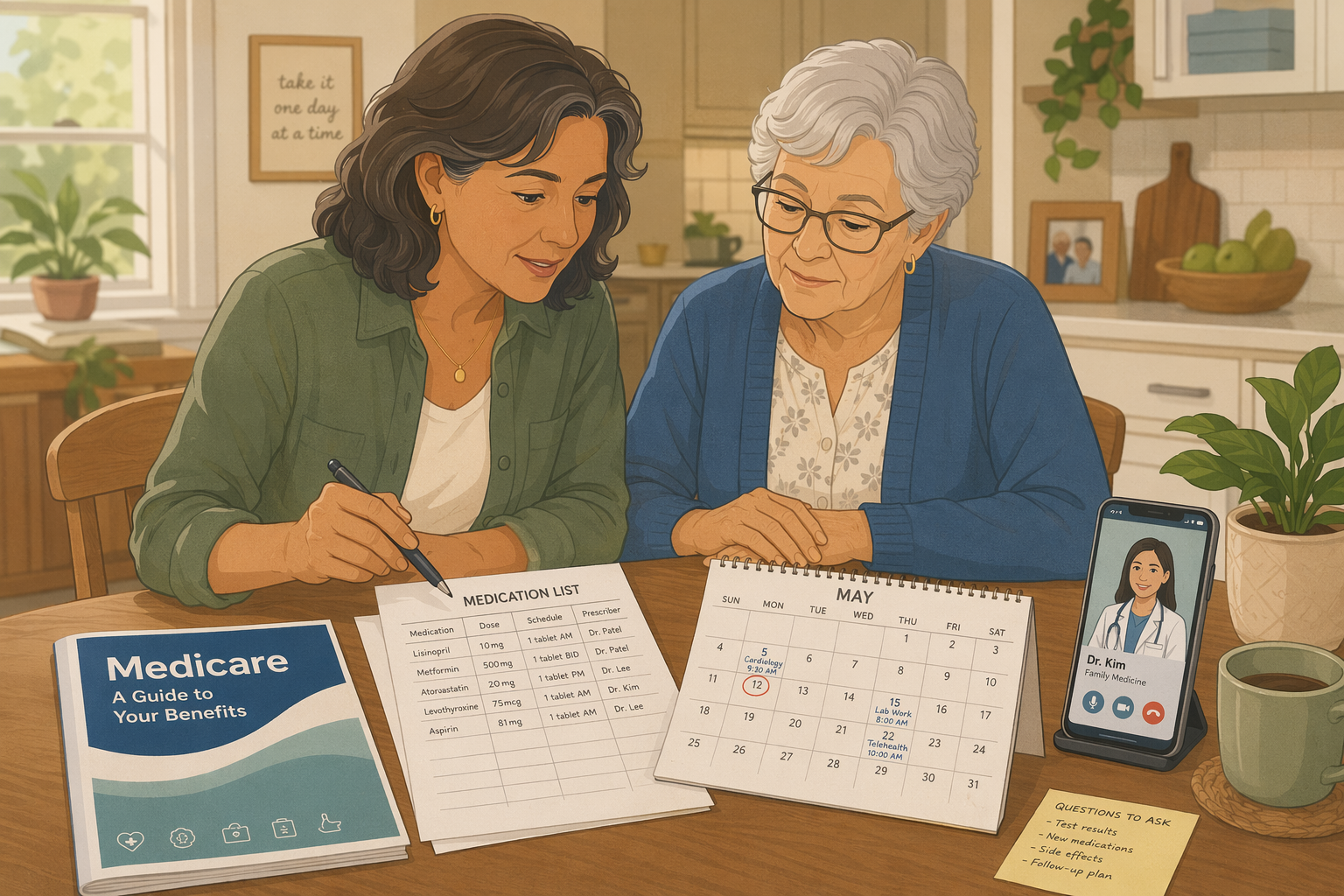
Navigating senior health care together as a family requires a new playbook after a dementia diagnosis.
Why Dementia Changes the Health Care Equation
A diagnosis of Alzheimer's disease or another dementia does not simply add one more condition to a list of chronic illnesses. It fundamentally rewrites how a person interacts with the entire health care system. The routines that once worked — remembering a doctor's instructions, describing symptoms accurately, managing a weekly pill organizer, driving to appointments — become unreliable or impossible over time. For the family caregiver, this means stepping into a role that goes far beyond emotional support: you become the communication bridge, the medication manager, the appointment coordinator, and the medical advocate.
Alzheimer's disease is the fifth leading cause of death among adults aged 65 and older in the United States, according to 2024 CDC data. Yet the health care system is not designed for the way dementia changes a person's needs. Standard preventive care schedules, medication protocols, and provider communication styles all assume a patient who can self-report, remember instructions, and follow complex treatment plans. Dementia erodes those abilities progressively, which means the caregiver's understanding of how health care needs evolve across stages is not optional — it is essential for preventing avoidable hospitalizations, medication errors, and crises that could have been anticipated.
Early-Stage Dementia: Preserving Independence Through Proactive Health Care
In the early stage, cognitive decline is mild but noticeable. The person may forget appointments, struggle to track medications, or have difficulty following a conversation with a doctor. This stage is a window of opportunity — the person can still participate in their own care decisions, and the caregiver's role is to support rather than take over.
Maintain Preventive Screenings While the Person Can Participate
Early-stage dementia does not eliminate the need for routine preventive care — mammograms, colonoscopies, eye exams, hearing tests, and vaccinations. In fact, staying current on these screenings is more important now because the person can still tolerate the procedures and communicate any discomfort or after-effects. Schedule these appointments early in the day when the person is most alert. Request longer appointment slots if available, and inform the provider's office about the diagnosis so they can adjust their approach.
Set Up Medication Organization Systems Now
Medication management is one of the first areas where dementia creates risk. A 2024 study of family caregivers identified medication management complexity as one of four major challenge domains, including remembering dosage schedules, managing swallowing difficulties, and handling storage requirements. In the early stage, the goal is to build systems before they are needed.
Use a weekly pill organizer with large, clearly labeled compartments for morning, afternoon, and evening.
Set phone or smart speaker reminders for each dose time.
Create a simple medication chart with the drug name, dose, time, and a photo of the pill for visual matching.
Review all medications with the primary care provider at each visit to identify any that may increase fall risk or interact with dementia symptoms.
Complete Advance Care Planning While the Person Can Express Their Wishes
This is the most time-sensitive task of the early stage. Once the ability to understand and communicate complex decisions declines, the person can no longer legally execute advance directives. Before that happens, complete the following documents:
Health care proxy or durable power of attorney for health care — designates who will make medical decisions when the person cannot.
Living will — documents the person's preferences for life-sustaining treatment, feeding tubes, and resuscitation.
POLST (Physician Orders for Life-Sustaining Treatment) — a medical order that translates the living will into actionable instructions for emergency responders and hospital staff.
Middle-Stage Dementia: Managing Behavioral Changes, Fall Risks, and Four Key Caregiver Challenges
The middle stage is where health care navigation becomes most complex. Behavioral changes — agitation, sundowning, repetitive questioning, and wandering — complicate every medical interaction. The person may resist taking medication, become anxious in a doctor's waiting room, or be unable to explain what hurts. This is also the stage when fall risk increases sharply, and the caregiver's coordination workload multiplies.
A 2024 qualitative study of family caregivers identified four major challenge domains that become acute in this stage. The table below summarizes each domain and practical adaptive techniques drawn from caregiver research and NIH/NIA guidance.
Four major challenge domains for dementia caregivers in the middle stage, with adaptive techniques from caregiver research and NIH/NIA guidance.
Challenge Domain
What It Looks Like in Middle-Stage Dementia
Adaptive Techniques
Communication difficulties
Person cannot describe symptoms, follow instructions, or remember what the doctor said. May become agitated when asked questions they cannot answer.
Use simplified language and short sentences. Write down key points. Use nonverbal cues like pointing or demonstrating. Build quiet times into the day before appointments. Encourage two-way conversation even when responses are limited.
Financial strain
Caregiver reduces work hours or leaves job. Medication costs increase. Additional expenses for home safety equipment, adult day programs, and transportation.
Review Medicare Part D plan annually for medication coverage changes. Ask the provider about generic alternatives. Explore whether the person qualifies for Medicaid or veterans' benefits.
Medication management complexity
Person refuses pills, forgets doses, or has difficulty swallowing. Multiple medications with different schedules increase error risk.
Use pill organizers and medication charts. Ask the pharmacist about crushable or liquid formulations if swallowing is an issue. Use a bell system or phone reminder to prompt doses. Review all medications with the provider at each visit.
Transportation barriers
Person can no longer drive safely. Caregiver must transport to all appointments. Emergency transport becomes complicated if the person is agitated or confused.
Schedule appointments during the person's best time of day. Keep a hospital bag ready with medication list, advance directives, and comfort items. Inform emergency services in advance about the dementia diagnosis if possible.
Fall Prevention Becomes a Health Care Priority
Falls are a leading cause of injury and hospitalization for older adults, and dementia significantly increases the risk. Wandering, poor judgment, balance problems, and medication side effects all contribute. A single fall can lead to a cascade of health decline — hip fracture, hospitalization, delirium, and loss of mobility that accelerates the need for full-time care.
Key fall prevention strategies specific to dementia include:
Use a sturdy shower chair and non-slip mats in the bathroom — bathing is a high-risk activity for falls.
Install grab bars in the shower and next to the toilet.
Remove loose rugs and clutter from walking paths.
Ensure the home is well-lit, especially hallways and the bathroom at night.
Review medications with the pharmacist to identify any that cause dizziness or drowsiness.
For wandering at night, consider a bed alarm or motion sensor that alerts you when the person gets up.
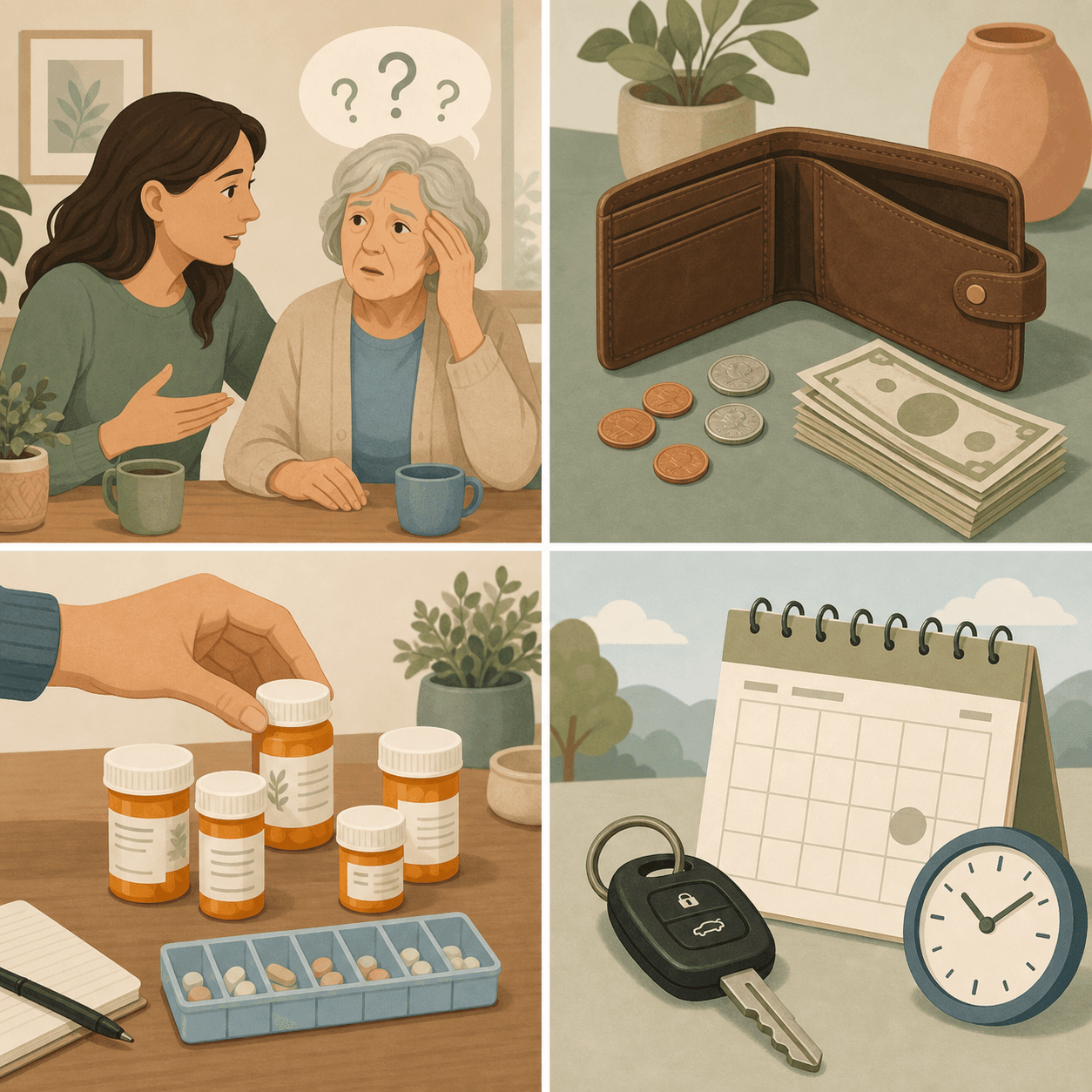
The four major challenge domains that become acute in middle-stage dementia.
Late-Stage Dementia: Transitioning to Full Personal Care and Hospice Considerations
In late-stage dementia, the person requires 24-hour assistance with all activities of daily living — bathing, dressing, eating, toileting, and mobility. Verbal communication is severely limited or absent. The health care focus shifts from managing behaviors to providing comfort, dignity, and medical support for the body's declining systems.
When to Consider Hospice
Alzheimer's disease is the fifth leading cause of death among adults 65 and older, yet many families do not realize that hospice care is appropriate for dementia. Hospice is not only for cancer patients — it is for anyone with a terminal diagnosis whose life expectancy is measured in months, not years. For dementia, hospice eligibility typically requires:
Severe cognitive decline (unable to speak, recognize family, or perform basic activities of daily living).
Hospice provides a team approach — nurse, social worker, chaplain, and volunteers — focused on comfort and quality of life rather than curative treatment. Medicare covers hospice care in full, including medications for symptom management, medical equipment, and respite care for up to five consecutive days in a hospital or skilled nursing facility.
Palliative Care vs. Hospice: When to Transition
Palliative care can begin at any stage of dementia and focuses on symptom management and quality of life alongside curative treatments. Hospice is a specific form of palliative care for the final months of life. The key difference: palliative care does not require a terminal prognosis, while hospice does. If you are unsure whether it is time for hospice, ask the person's primary care provider for a palliative care consultation first. For a detailed explanation of the differences, see our guide on palliative care for seniors with chronic conditions.
Memory Care Costs and Coverage: What Families Need to Know
The financial reality of memory care is sobering. According to the Alzheimer's Association, the average annual cost for a memory care facility is $116,800 for a private room and $104,025 for a semi-private room. Most families pay out of pocket, although long-term care insurance, Medicaid, and veterans' benefits may cover some or all of the cost.
Memory care costs and Medicare coverage limits. Data from the Alzheimer's Association via Harvard Health, last reviewed October 2024.
Cost or Coverage Item
Amount or Detail
Average annual cost — private room (memory care)
$116,800 (Alzheimer's Association)
Average annual cost — semi-private room (memory care)
$104,025 (Alzheimer's Association)
Does Medicare cover memory care room and board?
No
What Medicare does cover in memory care
Physical therapy, doctor visits, certain medications, and assistive equipment
Potential funding sources
Long-term care insurance, Medicaid (varies by state), veterans' benefits

Comments
Join the discussion with an anonymous comment.