
Caregiver decision guide
Summer Essentials to Prevent Falls for Seniors
Find out which summer essentials directly counter common seasonal fall risks for older adults — from hydration and cooling gear to proper footwear and outdoor pathway checks.
The summer fall risk that gets missed is usually not the dramatic one. It is the ordinary loop: porch, tomato plants, driveway, mailbox, deck, sidewalk, back door. A senior can be doing everything that looks reasonable — going out in daylight, staying close to home, using a cane — and still be set up for a fall by dizziness, tired legs, loose sandals, or one hose pulled across the path.
That is why the best summer essentials for seniors are not just comfort items. They are the items that interrupt a specific fall pathway. Older searches for “best summer essentials for seniors 2025” still point to the right seasonal question, but the useful answer in 2026 is simpler and stricter: prioritize what reduces dehydration dizziness, heat fatigue, unsafe footwear, and outdoor pathway hazards.
| Summer fall risk | What it can look like | Essential that actually helps |
|---|---|---|
| Dehydration dizziness | Lightheadedness, weak legs, unsteadiness when standing or walking outside | Placed water bottles, routine fluid prompts, medically appropriate electrolyte plan |
| Heat fatigue | Slower reactions, heavier steps, needing to hurry back indoors | Shade timing, hands-free cooling, rest points, a shorter outdoor loop |
| Unsafe summer footwear | Tripping in flip-flops, sliding in loose sandals, poor grip on wet surfaces | Closed-toe, non-slip, rubber-soled summer walking shoes |
| Outdoor pathway hazards | Hoses, sprinkler heads, wet decks, dew-slick grass, soft lawn edges | Daily path check before gardening, walking to the mailbox, or sitting outside |
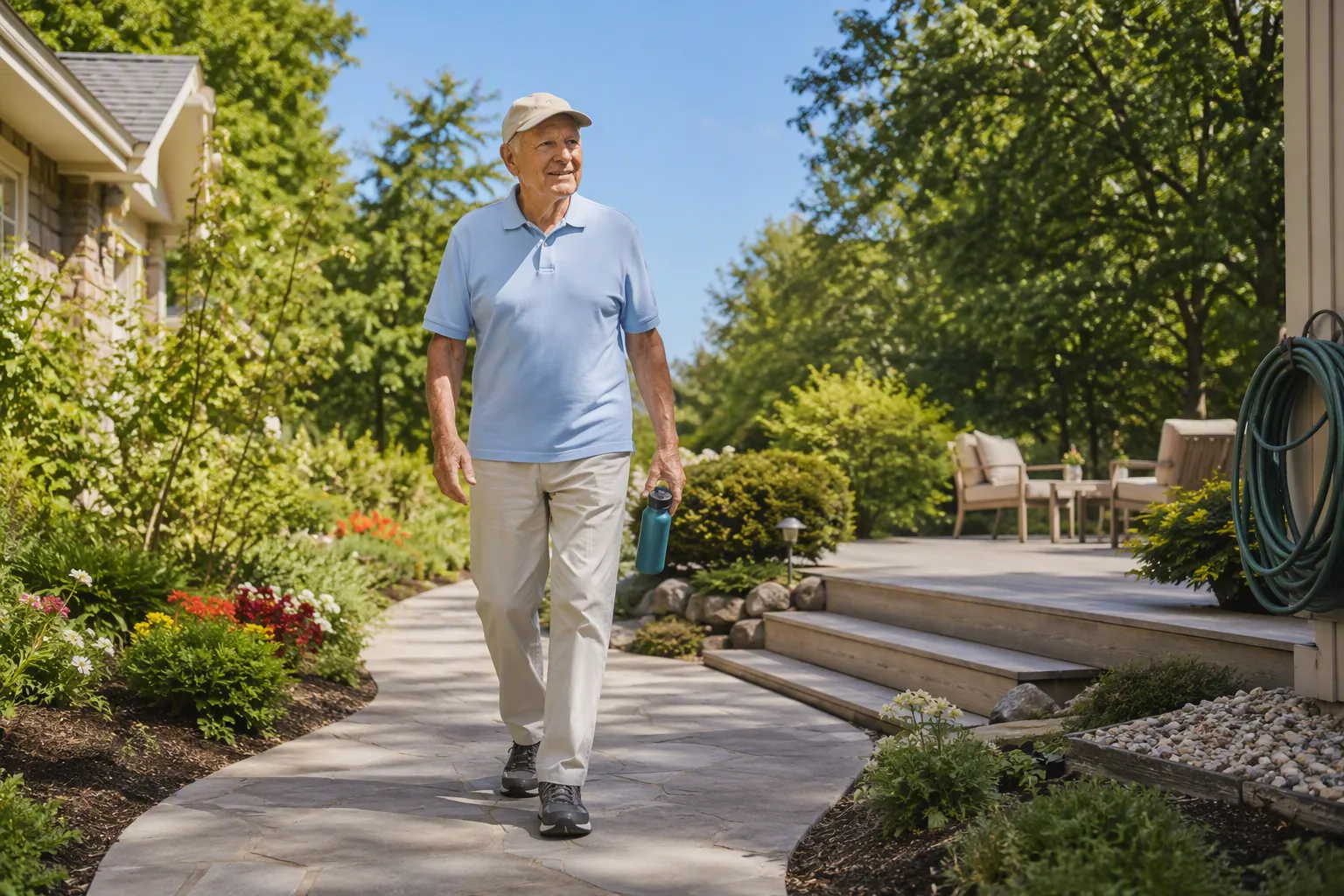
Start With Water Because Dizziness Changes Everything
Hydration sounds like the softest item on a summer checklist until it shows up as a balance problem. The National Council on Aging reports that up to 40% of older adults may be chronically underhydrated, and the CDC notes that older adults are at higher heat risk partly because thirst sensation can decrease with age and the body retains less water.[1][2] That means “drink when thirsty” is not a dependable fall-prevention plan.
The fall mechanism is not mysterious. Dehydration can contribute to dizziness, lightheadedness, and muscle weakness, all of which make an older adult less steady during routine movement.[3] A person who feels fine while sitting on the porch can stand up, turn toward the steps, and suddenly need better balance than the body can provide. If orthostatic blood pressure changes are already an issue, dehydration can make that transition even less forgiving; see fall prevention for orthostatic hypotension for that narrower concern.
A water bottle only earns its place as a summer essential if it is positioned where the drinking needs to happen. One bottle in the refrigerator does little for someone who spends the morning watering plants. Better placements are boring and effective: one by the usual chair, one near the door used to go outside, one visible on the porch table, and one that fits the walker basket or crossbody bag without requiring both hands.
- Use a lightweight bottle that can be opened with stiff or arthritic hands.
- Choose a bottle that does not leak when carried in a walker pouch or bag.
- Place water before the outdoor activity starts, not after dizziness begins.
- Pair drinking with existing habits: morning pills, porch time, watering plants, lunch, and the evening news.
- Watch for skipped drinking on days when the senior says they “do not feel thirsty.”
Electrolyte drinks need more care than many summer guides give them. They may be useful after sweating, outdoor activity, or very hot conditions, but they are not automatically safe for every older adult. People with diabetes, kidney disease, heart conditions, fluid restrictions, or sodium restrictions should ask a clinician before making electrolyte beverages a daily habit.
Cooling Gear Should Keep Hands Free and Balance Steady
Heat fatigue is different from feeling warm. It can make movement slower, judgment less sharp, and recovery from a stumble less quick. The CDC identifies adults 65 and older as more vulnerable to heat-related health problems, especially because the body’s ability to cool itself can change with age.[2] In everyday terms, that can turn a short walk to the mailbox into a return trip where the person is tired, hurried, and less steady.
Cooling products are worth considering when they reduce that fatigue without creating another task. Juniper Communities lists cooling towels, neck fans, cooling vests, and cooling clothing among products marketed for older adults, but performance claims vary by product and are often manufacturer-based rather than independent fall-prevention evidence.[4] Treat them as tools to test, not magic protection.
Hands-free matters. A handheld fan occupies the same hand that may need to grip a railing, cane, walker, or doorframe. A cooling towel around the neck, a wearable neck fan that does not interfere with hearing aids or balance, or light breathable clothing can be safer because the hands remain available. The point is not to stay outside longer at any cost; it is to make the planned outdoor task steadier.
- For porch sitting: keep water, shade, a phone, and a cooling towel within reach before sitting down.
- For gardening: use a wearable cooling option and set a visible stop point, such as one planter bed or one watering cycle.
- For mailbox walks: avoid carrying loose items in both hands; use pockets, a small crossbody bag, or a walker pouch.
- For longer outdoor time: plan the route back inside before fatigue starts, especially if there are steps or uneven ground.
Heat waves deserve separate attention because they can affect falls through dehydration, medications, and blood pressure changes at the same time. For that broader mechanism, read three ways heat waves increase fall risk in seniors. Disaster heat also belongs in a different plan; use heatstroke prevention for seniors after a disaster when power outages, evacuation, or prolonged indoor heat are part of the risk.
Summer Shoes Are Not a Style Detail
Footwear is where a lot of summer fall prevention becomes preventable in plain sight. Right at Home and Circle of Care both warn against risky outdoor footwear choices such as flip-flops, loose sandals, or shoes without secure traction.[5][6] These are not small preferences when the person is stepping from a dry kitchen floor to damp grass, a deck board, a sloped driveway, or a garden edge.
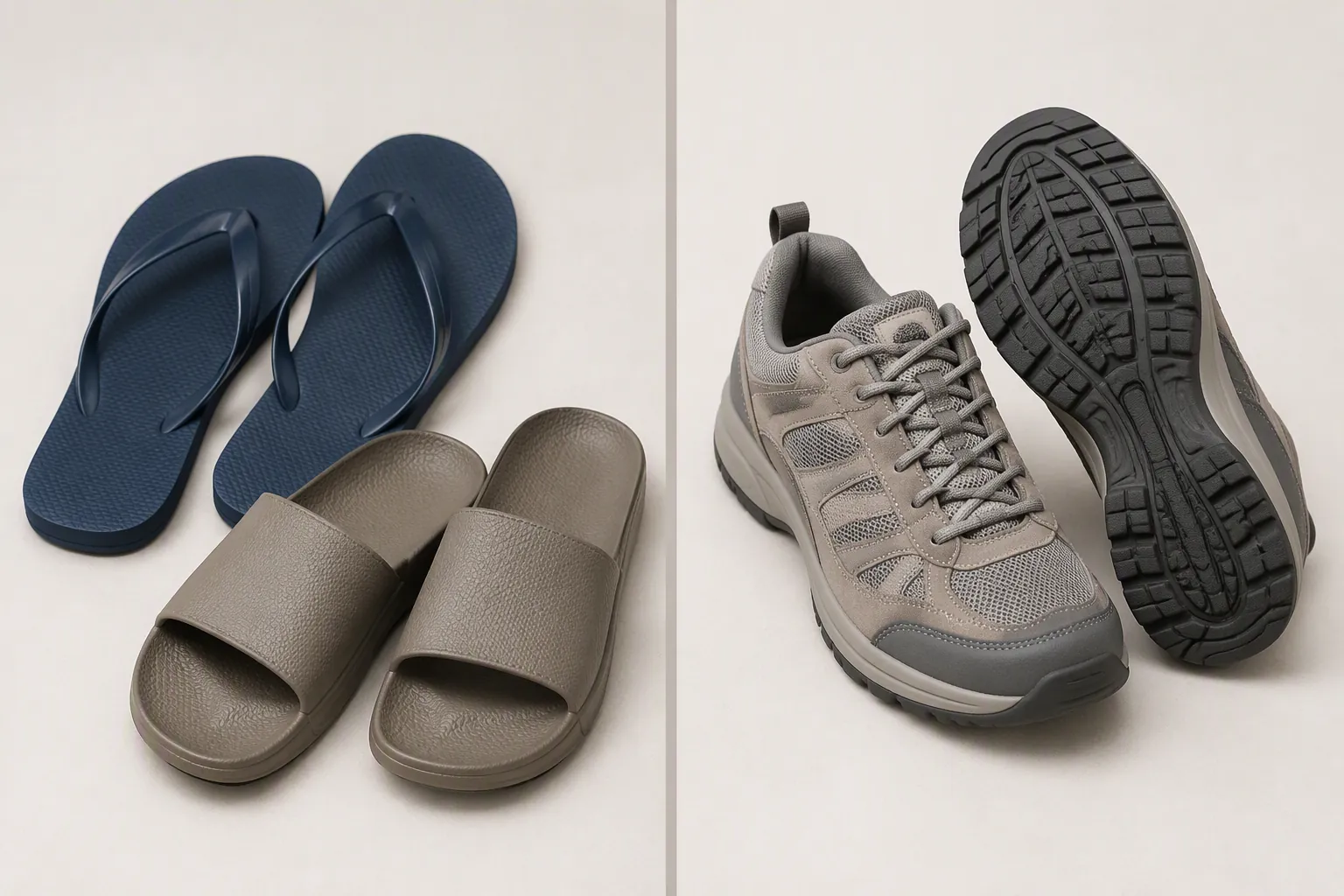
The better summer shoe has a job description: closed toe, secure heel, non-slip rubber sole, enough structure that the foot does not slide side to side, and a fastening system the person can actually use. If laces are difficult, a secure hook-and-loop closure may be safer than a slip-on shoe that moves around the heel. The shoe should be cool enough to tolerate, but not so open that it gives up stability.
| Avoid | Why it matters for falls | Choose instead |
|---|---|---|
| Flip-flops | They can catch, twist, or require toe-gripping to keep them on | Closed-toe walking shoe with secure heel |
| Loose slide sandals | The foot can shift during turns, steps, or wet-surface walking | Adjustable sandal or shoe with back strap and traction |
| Smooth-soled dress shoes | They reduce grip on decks, tile, and damp pavement | Rubber-soled shoe with visible tread |
| Old yard shoes with worn soles | The familiar pair may have lost the traction that made it safe | Replace when tread is flat, cracked, or uneven |
The same inspection belongs on canes and walkers. WelbeHealth recommends checking mobility aids as part of summer fall prevention.[3] In practical terms, look at the rubber tips after hot pavement, wet sidewalks, porch use, and garden paths. If a cane tip is worn smooth, cracked, loose, or angled from uneven wear, it can slide at the exact moment the person trusts it most.
The Outdoor Path Check Should Happen Before the Routine Starts
Summer adds hazards that are not usually sitting in the hallway in January. Right at Home and Circle of Care both emphasize inspecting outdoor areas for fall risks, including uneven surfaces and objects in walking paths.[5][6] The important part is timing. A path check after someone has already crossed the yard with a watering can is too late.
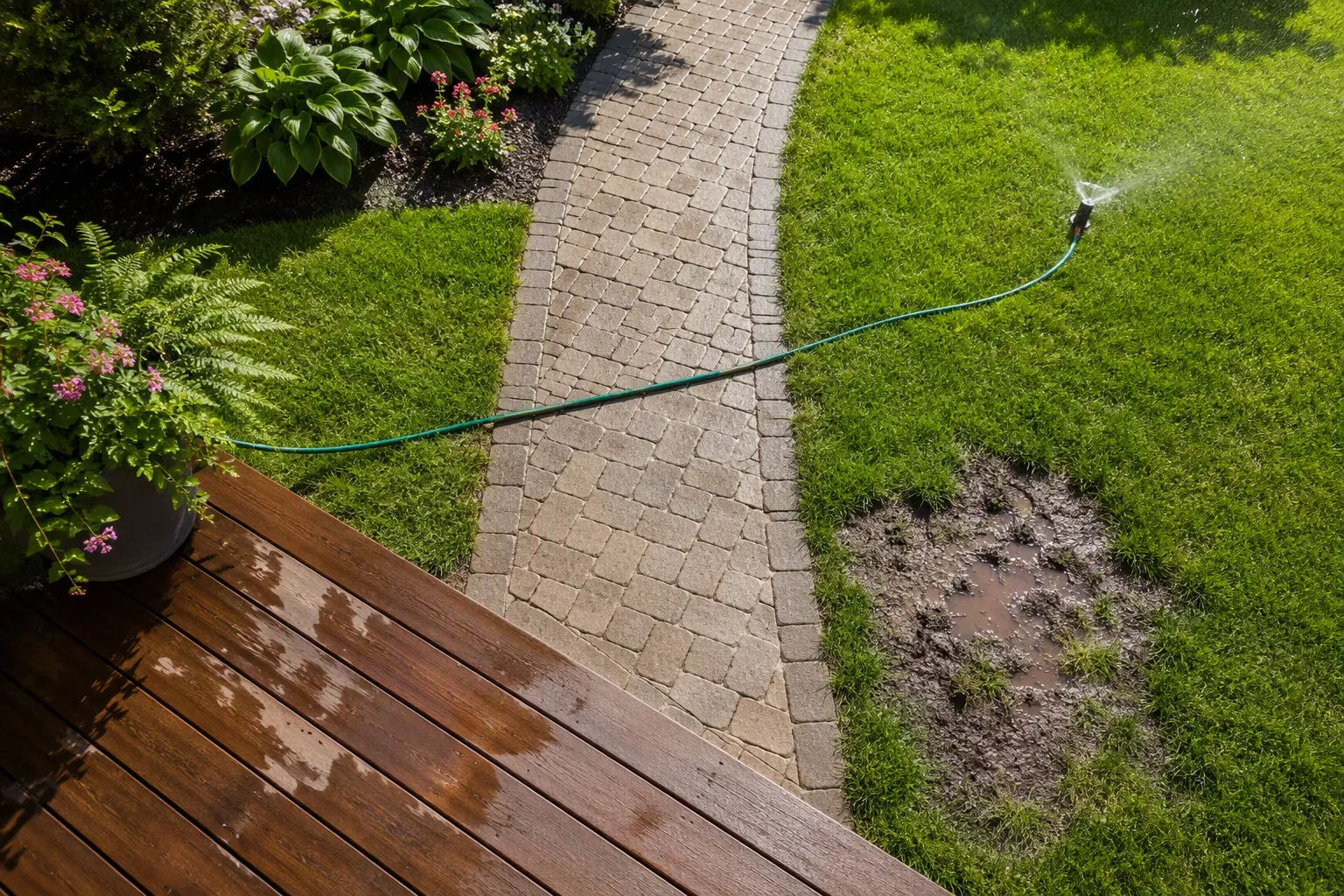
- Coil hoses completely off the walking route, not just along the edge where a foot can still catch them.
- Mark or adjust sprinkler heads that sit near grass-to-walkway transitions.
- Treat wet decks, damp porch steps, and dew-slick grass as fall surfaces, even when the weather looks clear.
- Check soft lawn spots near garden beds, downspouts, and walkway edges before stepping off pavement.
- Move planters, bags of soil, watering cans, and outdoor cushions away from the route used most often.
- Confirm that outdoor lighting still covers the return path, especially for evening porch time.
After storms, the same yard can become a different fall environment. Wet leaves, shifted branches, loose mats, and pooling water can change a familiar route overnight. For storm-specific planning, use severe weather safety for older adults and post-hurricane fall prevention rather than treating a major cleanup day like an ordinary summer errand.
A Short Setup Beats a Long Reminder List
A good summer setup is something a caregiver or older adult can run before the usual outdoor activity. It should take minutes, not become another lecture. The aim is to remove the hazards that will be hard to solve once the person is tired, warm, carrying something, or halfway across the yard.
- Put water where the activity starts and where the person rests afterward.
- Choose the shoes before opening the door, not after stepping onto the porch.
- Check cane or walker tips for smooth, cracked, loose, or wet rubber.
- Look down the full route for hoses, sprinkler heads, wet boards, soft ground, and clutter.
- Add cooling support before fatigue starts: shade, towel, neck fan, lighter clothing, or a shorter route.
- Set the stopping point clearly: one walk, one watering task, one garden bed, or a timed porch visit.
Medication storage deserves a quick summer check too. Homewatch CareGivers notes that many medications should be stored away from heat, and heat exposure can matter when dizziness, blood pressure, alertness, or balance are already concerns.[7] This is not a reason to change medications independently; it is a reason to keep them stored as directed and ask a pharmacist or clinician when heat exposure is possible.
Sunscreen, hats, and sunglasses can still belong in a summer routine. They just do not replace the fall-prevention essentials. A hat that encourages a safe porch visit is useful. A wide-brimmed hat that blocks vision on steps needs adjustment. A sunscreen reminder is reasonable. A water bottle at the wrong end of the house is not a hydration plan.
The Priority List
If only a few changes can happen this week, start with the ones that remove the most direct fall mechanisms: accessible water, safer shoes, checked mobility-aid tips, and a clear outdoor route. Add cooling gear when heat fatigue is limiting steadiness, and treat electrolyte drinks as a medical-fit decision rather than a universal summer upgrade.
The goal is not to keep an older adult indoors through summer. It is to make the porch, garden, driveway, mailbox, deck, and sidewalk less likely to punish one missed detail.
References
- How to Stay Hydrated, NCOA
- Heat and Older Adults (Aged 65+), CDC
- Summer Fall Prevention for Seniors, WelbeHealth
- Best Cooling Products for Seniors, Juniper Communities
- Preserving Independence Outdoors, Right at Home
- Staying Safe Outdoors in Summer, Circle of Care
- Summer Safety Checklist, Homewatch CareGivers
Questions to bring to a clinician or OT
This is not medical, legal, or a family's final decision — only a framework. Bring these questions to a clinician, occupational therapist, or your local Area Agency on Aging.
Find Local HelpRelated reading
Noticed something outdated or inaccurate on this page? Flag a correction. We review every report against CDC, NIA, and AARP HomeFit guidance before updating a page.