
Caregiver decision guide
Room-by-Room Wildfire Smoke Protection for Older Adults
A staged, room-by-room protection checklist that helps family caregivers prepare before wildfire season, protect their aging parent during smoke events, and monitor for delayed symptoms afterward — because generic "stay indoors" advice is dangerously incomplete for older adults with chronic conditions.
“Stay indoors” sounds simple until smoke is in the forecast and an older parent is standing in a hallway asking whether the bedroom window really has to stay shut. Indoors is not a plan. For older adults, especially those with COPD, heart disease, diabetes, dementia, chronic kidney disease, or oxygen needs, wildfire smoke protection has to answer smaller questions: which room gets cleaned first, where the medications are, what happens to the CPAP if power fails, and who checks for symptoms after the sky looks normal again.
The extra caution is justified. In Southern California research, wildfire smoke PM2.5 was estimated to be about 10 times more harmful to respiratory health than PM2.5 from other ambient sources, based on associations with respiratory hospital admissions.[1] That does not mean every smoky day produces a medical emergency. It does mean wildfire smoke should not be treated like ordinary “bad air” that can be waited out casually.
Being inside also does not guarantee protection. A study of four skilled nursing facilities in Idaho found indoor PM2.5 during wildfire days ranging from 35 to 202 µg/m³, compared with the EPA 24-hour PM2.5 standard of 35 µg/m³.[2] The study was small, and buildings varied; infiltration efficiency ranged from 0.22 to 0.76.[2] Still, the practical lesson is hard to ignore: walls and windows help only if the home is set up to keep smoke out and filter what gets in.
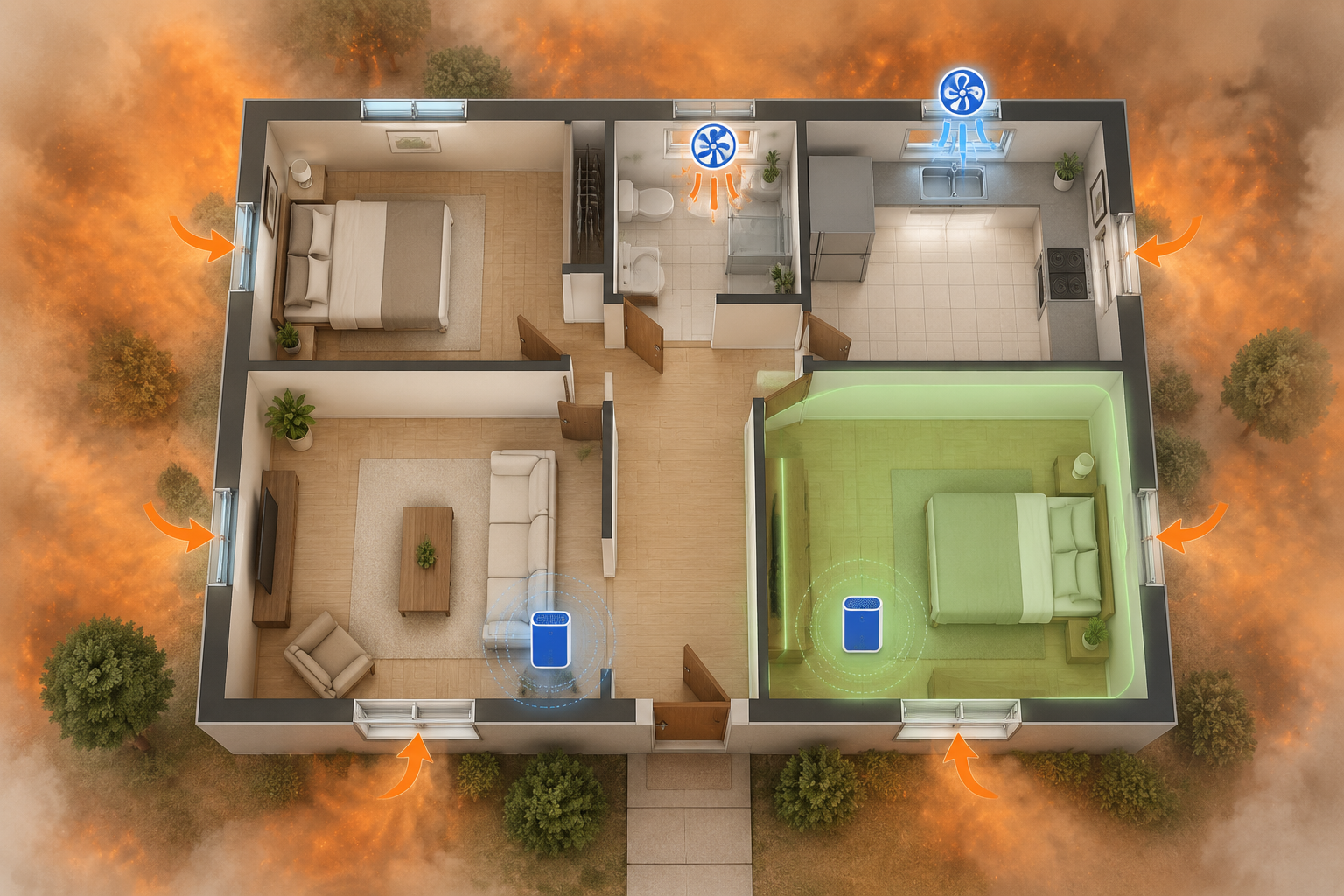
Before Fire Season: Build the Household Plan While Nothing Is Urgent
The safest smoke-day decisions are made before anyone is tired, coughing, or arguing over a window. Start with the boring inventory: medications, equipment, documents, room layout, transportation, and power. If your parent lives alone, this is also the time to decide who checks in and how often, because phone calls made in a panic are where small gaps turn into real risk.
CDC guidance for people with chronic conditions recommends keeping a 7- to 10-day supply of medications available and following the care plan from the person’s health care provider.[3] For a caregiver, that means more than counting pills. It means knowing which prescriptions can be refilled early, which inhalers or nebulizer supplies run low first, whether diabetes supplies are complete, and where the printed medication list lives.
- Medication supply: keep 7 to 10 days of routine medications, rescue medications, testing supplies, and device accessories when possible; ask the clinician or pharmacist how early refills should be handled.[3]
- Printed information: keep a medication list, diagnoses, allergies, pharmacy, clinician contacts, insurance cards, oxygen supplier, and emergency contacts in one folder.
- Equipment list: write down every device that depends on power, including oxygen concentrators, CPAP or BiPAP machines, nebulizers, power recliners, lift chairs, refrigerated medication storage, and phone chargers.
- Permission and dignity: explain the plan before smoke arrives. A clean-air room is easier to accept when it is presented as comfort and control, not as someone taking over the house.
If your parent uses oxygen, CPAP, BiPAP, insulin, dialysis-related supplies, or other condition-specific equipment, the smoke plan belongs partly with their clinician, durable medical equipment supplier, and local emergency guidance. Do not improvise flow rates, medication doses, or device substitutions during a smoke event. The household job is to keep supplies, documents, and backup options ready so the medical plan can actually be followed.
Choose the Clean-Air Room Before the Smoke Arrives
Pick one room that can become the clean-air room. For many older adults, that is a bedroom because rest matters and smoke events often last overnight. For others, the living room works better because it is closer to the bathroom, has fewer fall hazards, or allows a caregiver to sit nearby. The right room is not the prettiest room. It is the room that can be closed off, filtered, cooled or heated safely, and used for hours without making the person feel trapped.
| Room Feature | Why It Matters |
|---|---|
| Few windows and exterior doors | Fewer gaps usually mean less smoke entering the room. |
| Enough space for seating, walker, oxygen tubing, and a purifier | Crowded rooms create fall risks and make equipment harder to manage. |
| Near a bathroom if possible | Long walks through smoky or unfiltered areas defeat part of the plan. |
| Electrical outlets that do not require extension cords across walkways | Medical equipment and HEPA units need power without adding trip hazards. |
| Can stay comfortable with safe heating or cooling | Heat and smoke can overlap; comfort is part of safety. |
Portable HEPA air cleaners are among the most effective indoor steps named by the American Heart Association, which notes they commonly cost about $50 to $200 and can reduce indoor PM2.5 by 50% to 60%.[4] That estimate depends on correct sizing, placement, and use. A purifier sitting in a hallway with the door open is not the same as a properly sized unit running continuously in a closed bedroom.
If you have only one HEPA unit, put it in the clean-air room first. If you have two, the second usually belongs in the room where your parent spends the most daytime hours. Keep the intake and outlet clear. Do not tuck the unit behind furniture, under a table, or next to a curtain because that makes the machine work harder while cleaning less air.
Make the Go-Bag Less Dramatic and More Useful
An evacuation bag can feel insulting to an older parent who hears it as “you can’t manage.” The better framing is practical: this is the bag that keeps the pharmacy, oxygen supplier, and emergency department from guessing. It should be packed before smoke season, then checked when air quality alerts begin.
- Medication list, diagnoses, allergies, clinician contacts, pharmacy, insurance cards, and emergency contacts.
- Several days of medications and supplies when available, including inhalers, spacers, glucose testing supplies, hearing-aid batteries, glasses, and continence supplies.
- Device information for oxygen, CPAP or BiPAP, nebulizer, mobility devices, and any supplier phone numbers.
- Chargers, backup battery packs, a flashlight, spare masks if recommended by local guidance, and comfort items that reduce agitation or confusion.
- A plan for refrigerated medications, including a cooler option and instructions from the pharmacist or clinician on safe temperature handling.
For broader condition-by-condition planning, use a separate chronic-condition checklist rather than trying to rebuild every medical plan on the day smoke arrives. A good starting point is A Caregiver's Wildfire Smoke Preparedness Checklist for Chronic Conditions.
The First 24 Hours Before Smoke Arrives
When smoke is forecast, the job shifts from planning to setup. This is the day to reduce errands, close gaps, charge equipment, and move the house toward one protected zone. Check AQI, but do not let the number be the only trigger. Older adults with chronic disease may need precautions earlier than healthier adults, and symptoms matter as much as the color on an app. If you need a deeper threshold guide, use Know the AQI thresholds that protect older adults from wildfire smoke.
- Close windows and exterior doors before smoke thickens, not after the house already smells smoky.
- Run the HEPA purifier in the chosen clean-air room and keep that room’s door closed as much as practical.
- Set HVAC or air conditioning to recirculate if the system allows it, and check that filters are installed correctly.
- Charge phones, hearing aids, backup batteries, power stations, and any portable medical equipment batteries.
- Move medications, water, a phone charger, tissues, a trash bag, glasses, mobility aids, and the printed medical folder into or near the clean-air room.
- Call the oxygen supplier, home health agency, or clinician’s office before offices close if equipment, refills, or symptom instructions are unclear.
Do outdoor tasks early if they cannot be avoided: trash bins, pets, mail, car fueling, prescription pickup. Once smoke arrives, every doorway opening matters a little. Not enough to panic over, but enough to stop treating the front door like a revolving door.
During the Smoke Event: Walk the House Room by Room
The main smoke-day mistake is protecting the whole house poorly instead of protecting one or two rooms well. If the home is leaky, older, or busy with visitors, the clean-air room becomes the anchor. Other rooms still matter, but they should serve the plan rather than compete with it.
Bedroom or Clean-Air Room
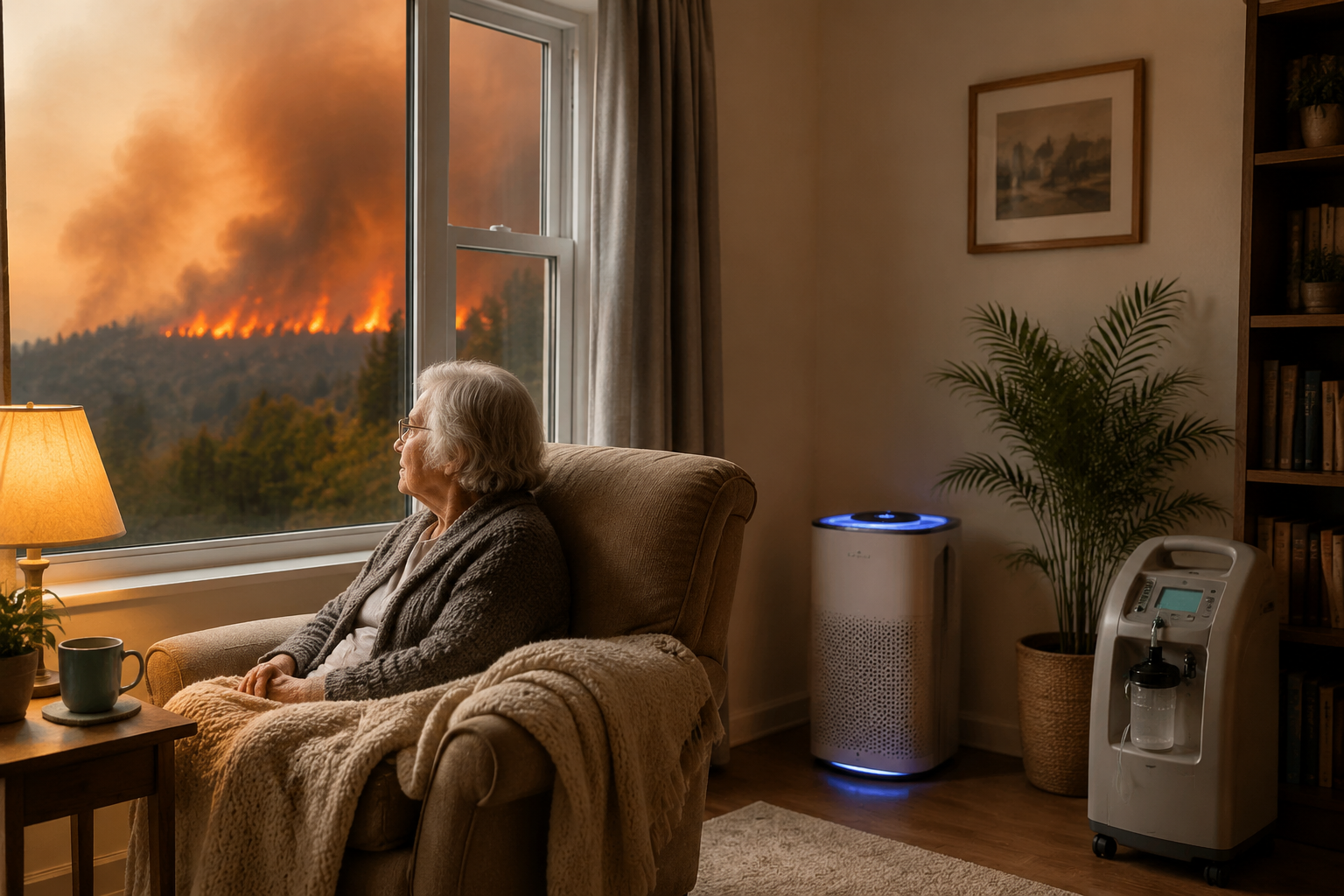
Run the HEPA unit continuously in the clean-air room, with the door closed as much as your parent can comfortably tolerate. If the bedroom is the protected room, set it up for daytime use too: chair, lamp, water, medications, phone, charger, tissues, hearing aids, walker, and a clear route to the bathroom. A clean-air room that requires repeated trips to the kitchen, den, and hallway is not really functioning as one.
For a parent with dementia or anxiety, explain the change plainly and repeatedly: “The air outside is smoky today, so this room is where the cleaner air is.” Avoid turning the room into a sickroom if that will make them resist. Keep familiar blankets, photos, music, or TV available. Safety plans work better when they leave the person some say in where they sit and what they do.
Living Room
If the living room is not the clean-air room, decide whether it is still worth filtering. A second HEPA unit here can make sense if your parent spends long stretches in a recliner, uses oxygen there, or cannot safely stay in the bedroom all day. Place the purifier near the seating area but not where tubing, cords, or walkers will cross it.
This is also where doorway habits matter. Keep exterior doors closed. Ask visitors not to come in and out repeatedly. If a caregiver must enter from outside, have them remove smoky outer layers away from the clean-air room when possible.
Kitchen
During heavy smoke, the kitchen should do less. Avoid frying, broiling, burning candles, using incense, vacuuming without a HEPA-filter vacuum, or anything else that adds particles indoors. Cook simple foods quickly, reheat prepared meals, or use food that does not require cooking. If your parent has diabetes, kidney disease, heart failure, or swallowing restrictions, this is not the time to replace the care plan with random shelf-stable snacks; plan acceptable easy meals before fire season.
Kitchen ventilation is awkward during smoke because range hoods may exhaust air outdoors and pull smoky replacement air through leaks. If you are not sure how the system works, keep cooking minimal and move your parent away from the kitchen while meals are prepared.
Bathroom
Bathroom fans can pull air out of the house and draw smoky air in through gaps. That does not mean never use them; humidity, odors, and safety still matter. It means use them briefly when needed, then turn them off. Keep the path from the clean-air room to the bathroom clear, lit, and free of cords. Smoke days already strain breathing and attention; adding a fall hazard is an avoidable second problem.
HVAC, AC, and Heat
Use air conditioning or HVAC in a way that reduces outdoor air intake when the system allows it. Many caregivers face smoke and heat at the same time, and heat can become dangerous faster than a perfectly sealed room becomes useful. For a more detailed setup, see How to use AC for seniors during wildfire smoke and heat.
Do not run unvented combustion appliances indoors. Do not use outdoor generators indoors, in garages, or near open windows. If cooling depends on power and the clean-air room becomes too hot, the plan has to change.
Medical Equipment and Power
Power failure is one of the clearest places where “stay inside” falls apart. Oxygen concentrators, CPAP or BiPAP machines, nebulizers, electric beds, lift chairs, stair lifts, and refrigerated insulin all assume the house keeps working. Before a smoke event becomes a power event, confirm backup batteries, portable oxygen tanks if prescribed, supplier contacts, and where your parent could go if the equipment cannot run safely at home.
For oxygen users, keep paperwork visible: prescription details, supplier name, after-hours number, and backup instructions. For CPAP or BiPAP users, ask the clinician or equipment supplier ahead of time what to do during an outage and whether backup power is appropriate. For insulin or other refrigerated medications, ask the pharmacist how long the medication can safely remain outside the recommended temperature range and how to transport it if evacuation becomes necessary.
When Staying Put Stops Being the Safer Choice
Sheltering in place can be reasonable when the home has a functioning clean-air room, the temperature is safe, medications and equipment are available, and symptoms are stable. It becomes less reasonable when one of those supports fails. The decision is not about proving the plan worked. It is about noticing when the plan no longer matches the conditions.
- Leave or seek urgent help immediately if local officials issue an evacuation order or emergency instruction.
- Call emergency services for severe trouble breathing, chest pain, blue lips or face, fainting, new severe confusion, or symptoms your parent’s clinician has identified as urgent.
- Reconsider staying home if power loss stops oxygen, CPAP, cooling, refrigeration, or essential mobility equipment from working safely.
- Reconsider staying home if indoor air smells smoky despite closed windows and filtration, or if the clean-air room cannot be maintained.
- Reconsider staying home if the caregiver cannot safely remain, transportation may soon be blocked, or the older adult cannot be monitored.
If evacuation is possible but not yet required, make the decision earlier for a medically fragile parent than you would for yourself. Waiting until symptoms are worse, traffic is heavier, or equipment batteries are lower leaves fewer good options. For severe-weather mobility and evacuation basics, see Help an Older Adult Stay Safe and Steady During Severe Weather.
After the Sky Clears, Keep Watching
Smoke can look gone before the body is done reacting. During the 2023 Canadian wildfire smoke event, emergency department visits for asthma were 17% higher on days when AQI exceeded 101 and 82% higher on the worst day in New York, based on CDC data reported by AARP.[5] Those numbers measure asthma-related emergency visits, not every delayed symptom an older adult may experience, but they fit what caregivers often see: the cough, fatigue, chest tightness, or confusion may show up after the dramatic orange sky has passed.
For the next several days, watch for changes from your parent’s baseline: increased coughing, wheezing, shortness of breath, chest discomfort, unusual fatigue, dizziness, poor appetite, sleep changes, swelling, confusion, agitation, or reduced ability to walk usual distances. For people with dementia, smoke-related stress or poor sleep may show up as behavior change before anyone reports breathing trouble. For more on cognition and alerts, see How Air Quality Alerts Harm the Aging Brain.
- Keep the HEPA purifier running until outdoor air quality has improved and the home no longer smells smoky.
- Replace or check HVAC filters according to the system instructions and the amount of smoke exposure.
- Restock medications, inhalers, oxygen supplies, batteries, masks, and easy meals while the gaps are fresh in memory.
- Write down symptoms, dates, AQI conditions if known, and any rescue medication use before calling the clinician.
- Assign someone to check in for several days, especially if your parent lives alone or tends to say “I’m fine” automatically.
Longer-term research is still developing, but the direction is not reassuring. A 2024 PNAS study estimated that wildfire smoke PM2.5 contributes to about 11,415 non-accidental deaths per year in the United States; that is a modeled estimate, not a direct count of observed deaths.[6] A 2023 scoping review also found that older adults face heightened wildfire-related risks across physical health, mental health, evacuation, and access to services, although the evidence base varies by outcome and setting.[7]
The household lesson is narrower and more useful than fear: wildfire smoke health risks for older adults are managed in stages. Prepare the supplies before fire season. Turn one room into a cleaner-air room before smoke fills the house. Protect the equipment that keeps breathing, cooling, medication storage, and communication working. Know when staying home is no longer safe. Then keep watching after the smoke appears to lift.
References
- Wildfire smoke impacts respiratory health more than fine particles from other sources: observational evidence from Southern California, Nature Communications, 2021.
- Wildfire smoke infiltration into a long-term care facility, Indoor Air, 2022.
- Wildfire Smoke and People with Chronic Conditions, CDC.
- Wildfires may fuel heart health hazards, American Heart Association.
- Wildfire Smoke Health Risks for Older Adults, AARP, July 2026.
- Mortality burden from wildfire smoke under climate change, PNAS, 2024.
- Wildfire risks to older adults: a scoping review, PMC, 2023.
Questions to bring to a clinician or OT
This is not medical, legal, or a family's final decision — only a framework. Bring these questions to a clinician, occupational therapist, or your local Area Agency on Aging.
Find Local HelpRelated reading
Noticed something outdated or inaccurate on this page? Flag a correction. We review every report against CDC, NIA, and AARP HomeFit guidance before updating a page.