Right at Home Senior Care: A Complete Guide to the Franchise-Based Home Care Provider
An independent, evidence-based guide for families evaluating Right at Home. Learn how its franchise model affects care quality and pricing ($29–$50/hr), what services are offered, how it compares to competitors, and the key questions to ask your local office before signing.
By Editorial Team
home care
right at home
franchise home care
dementia care
skilled nursing
📄
A printable version of this guide is available. Use your browser's print function (Ctrl+P / ⌘P) to save or print.
Right at Home operates over 700 franchise locations across the U.S., but each office is independently owned and operated.
What Right at Home Is (and Isn’t)
Right at Home is a national franchise network of in-home care providers founded in 1995 by Allen Hager, a former hospital administrator who observed patients being readmitted shortly after discharge because they lacked adequate support at home. Today, the company operates more than 700 locations across the United States and five other countries, with its headquarters in Omaha, Nebraska. The current CEO is Margaret Haynes.
It is important to understand what Right at Home is not. It is not a single, monolithic company with uniform policies, pricing, and caregiver quality across every location. Each office is independently owned and operated under a franchise agreement. This means the experience a family has in Boca Raton can differ dramatically from what another family experiences in Tucson or Jenkintown. The national brand provides training resources, a care philosophy, and a standardized service menu, but the day-to-day reality — who shows up at your parent’s door, how much you pay, and how quickly the office responds to a scheduling problem — depends on the local franchise owner.
Right at Home provides non-medical home care (companionship, personal care, homemaking) and skilled nursing (medication management, wound care, IV administration) in states where its caregivers are licensed nurses. It is not a Medicare-certified home health agency in the traditional sense, though some locations may offer services that overlap with home health. If your parent needs physical therapy or occupational therapy under a Medicare home health benefit, you would typically need a separate Medicare-certified agency for those services.
Services Breakdown: What Right at Home Offers
Right at Home’s service menu is broader than many national home care chains. The company divides its offerings into four main categories, though availability varies by franchise location and state regulations.
Companion care: conversation, meal preparation, light housekeeping, medication reminders, transportation to appointments, and social engagement. This is the entry-level service for seniors who need supervision and company rather than hands-on physical assistance.
Personal care: bathing, dressing, grooming, toileting, incontinence care, and mobility assistance. This level of care addresses the activities of daily living (ADLs) that often become difficult as a parent ages.
Specialty care: Alzheimer’s, dementia, and Parkinson’s care delivered by caregivers who have completed additional training. Some locations offer the AlzBetter method, a structured dementia care program that includes 16 video courses for caregivers, ongoing coaching, and family resources such as a 'Teachable Moments' video series and an AlzBetter manual written in plain language. Availability of this specific program should be confirmed with your local office.
Skilled nursing: medication management, IV administration, wound care, catheter and ostomy care, and vital signs monitoring. This is a significant differentiator — most national home care chains do not offer skilled nursing services. However, these services are only available in states where the franchise employs or contracts with licensed nurses.
For a broader explanation of how companion care, personal care, and skilled nursing differ from one another, see our complete guide to types of in-home care services.
The Franchise Factor: Why Local Ownership Matters
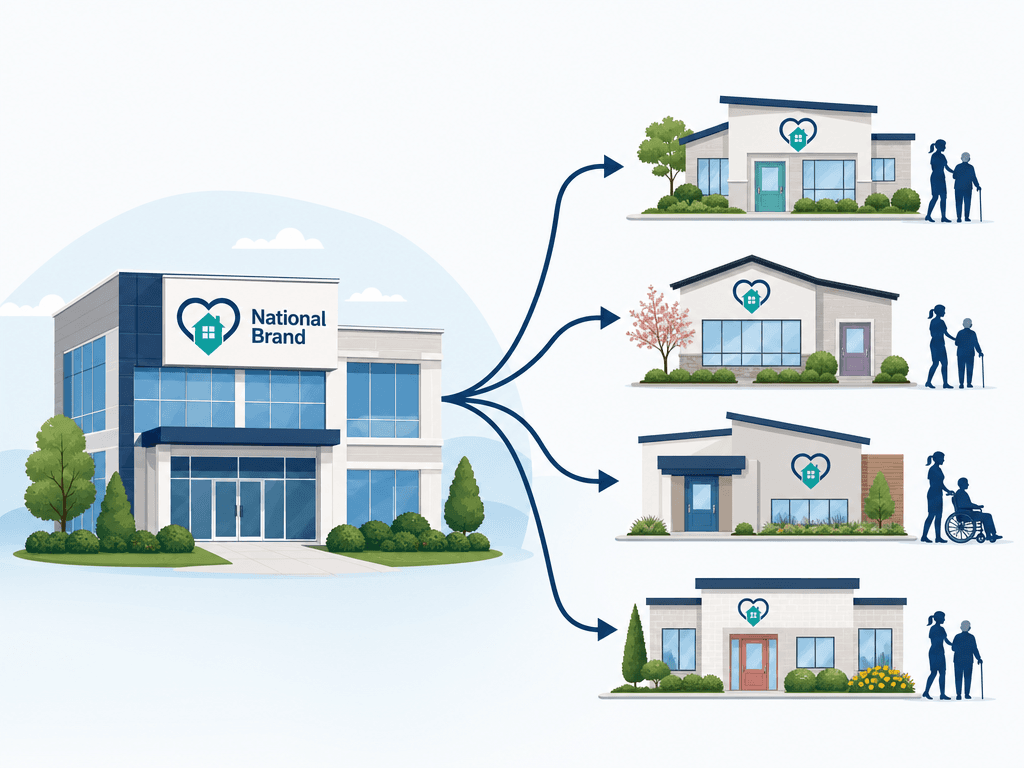
Right at Home’s national brand provides training and infrastructure, but each franchise office operates independently.
The franchise model is the single most important factor families need to understand when evaluating Right at Home. It is also the dimension most review sites and the company’s own marketing gloss over.
Right at Home’s corporate headquarters in Omaha provides franchise owners with a brand, a care philosophy, technology tools (including the Right Focus dashboard for tracking client satisfaction and caregiver quality), and an Innovation Task Force that tests new technologies. According to a March 2024 Franchise Business Review article, 94% of franchisees would recommend Right at Home franchise ownership, and 90% say the company acts with honesty and integrity. The average annual net billing per office was nearly $1.45 million with a 46.93% profit margin at the end of 2022.
But franchisee satisfaction does not automatically translate to client satisfaction. Review aggregators paint a mixed picture. On Trustpilot, Right at Home receives an average of 3.7 out of 5 stars, though many of those reviews come from clients in the UK and Australia. On ConsumerAffairs, the rating drops to 1 out of 5 stars, though not all reviews are negative. SeniorSite reports a 3.9-star average from 535 reviews across ConsumerAffairs and Yelp. On Sitejabber, about 50% of reviewers recommend Right at Home.
The common pattern across reviews is a split: families consistently praise individual caregivers as compassionate, skilled, and reliable. The frustration is almost always directed at office management — scheduling errors, poor communication, high caregiver turnover, and difficulty reaching someone who can resolve a problem. This split is a direct consequence of the franchise model. A well-run local office with a responsive owner and a strong care coordinator can deliver an excellent experience. An understaffed or poorly managed office, even under the same national brand, can leave families feeling abandoned.
The practical implication is clear: you are not hiring Right at Home the national brand. You are hiring a specific local franchise. The national reputation matters only as a starting point. The real evaluation happens at the local level.
Pricing Deep Dive: What You’ll Actually Pay
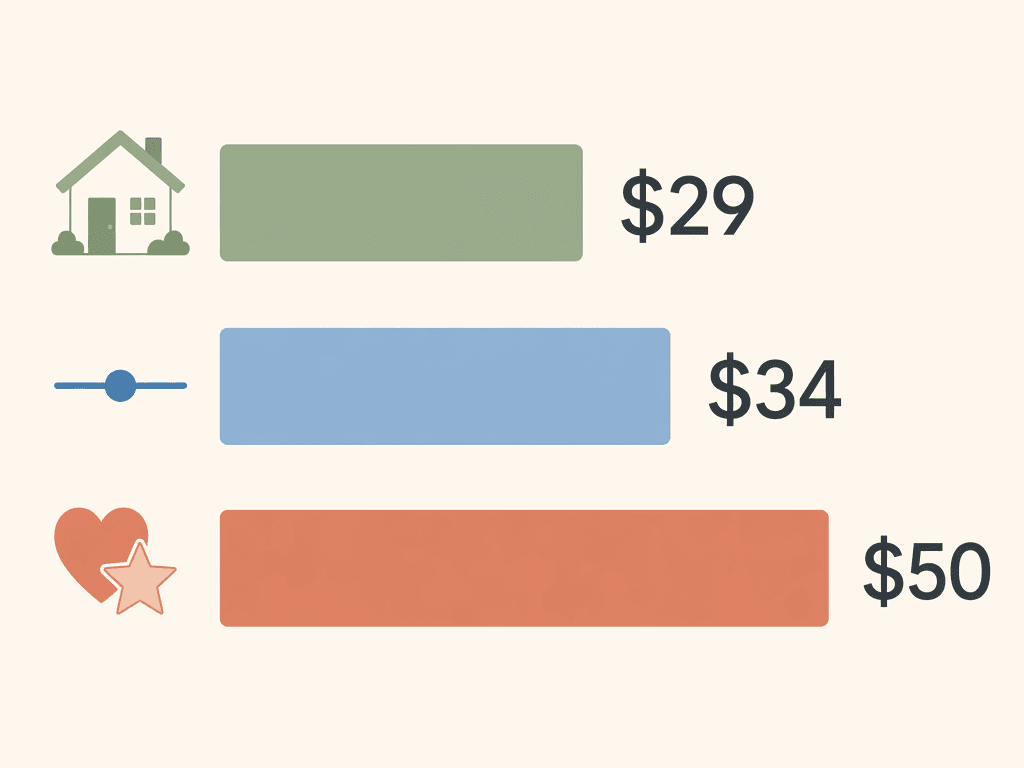
Right at Home’s published hourly rates range from $29 to $50 per hour, but the actual rate a family pays depends on three variables: geographic location, shift length, and whether care falls on a weekday or weekend.
The table below shows specific pricing examples from three franchise locations, drawn from The Senior List (January 2026) and SeniorSite. These are real published rates, not estimates.
Right at Home pricing examples from three franchise locations (The Senior List, January 2026; SeniorSite).
Location
Hourly Rate
Minimum Requirements
Context vs. State Median
Boca Raton, FL
$29/hr
4-hour shift, 12-hour weekly minimum
Below Florida’s $31 median (A Place for Mom, 2026)
Jenkintown, PA
$33–$43/hr
Varies by shift length and weekday/weekend
Above Pennsylvania’s $34 median
Tucson, AZ
$35–$50/hr
1hr at $50, 2–3hrs at $40, 3+hrs at $35
Near Arizona’s $36 median
The Jenkintown example illustrates how shift length and day of week interact. A 4-to-6-hour weekday shift costs $39 per hour, while the same shift on a weekend costs $43 per hour. A 10-plus-hour weekday shift drops to $33–$36 per hour, with weekend rates at $37–$40 per hour. Weekend and holiday premiums of $4 to $10 per hour are common across most franchises.
Most Right at Home franchises require a minimum of 4 hours per shift and 12 hours per week. The average client schedules 15 to 20 hours weekly, which at typical rates would cost roughly $420 to $560 per week. For context, the national median cost of non-medical in-home care in 2026 is $34 per hour, according to A Place for Mom’s state-by-state guide (last updated June 3, 2026). State medians range from $25 per hour in Mississippi to $44 per hour in South Dakota.
To understand how Right at Home’s pricing compares to other care settings such as adult day care, assisted living, or nursing homes, see our cost comparison and decision guide.
Right at Home’s hourly rates range from $29 to $50, compared to the 2026 national median of $34 per hour.
How Right at Home Compares to Other National Providers
Families researching Right at Home are likely also considering Visiting Angels, Comfort Keepers, and Home Instead. The table below highlights key differences across dimensions that matter most to families.
Comparison of national home care chains on key dimensions. Pricing ranges are approximate and vary by location.
Provider
Franchise Model
Skilled Nursing
Dementia Training
Pricing Range
Right at Home
Yes — 700+ locations
Yes — medication, IV, wound care
AlzBetter method at some locations
$29–$50/hr
Visiting Angels
Yes — 600+ locations
No — non-medical only
Life Care Navigation program
$28–$45/hr
Comfort Keepers
Yes — 800+ locations
Limited — varies by state
Interactive Caregiving system
$25–$45/hr
Home Instead
Yes — 1,200+ locations
No — non-medical only
Dementia care training program
$27–$45/hr
Right at Home’s primary differentiators are its skilled nursing services and its structured dementia training programs. No other national chain offers skilled nursing as a standard service category. For families whose parent needs post-hospital wound care, IV medication, or catheter management, Right at Home may be the only national franchise option that can provide those services at home.
However, the franchise factor applies equally to all these providers. A well-run Visiting Angels franchise may outperform a poorly run Right at Home franchise on caregiver quality and scheduling reliability. The brand alone is not a guarantee.
10 Questions Every Family Must Ask Their Local Right at Home Franchise
The following checklist is designed to help you evaluate a specific local franchise before signing a care agreement. These questions go beyond the standard advice found on the company’s own blog and address the franchise-specific risks that families actually encounter.
What is your caregiver turnover rate? High turnover is the most common complaint across home care franchises. If the office cannot retain caregivers, your parent will see a rotating cast of strangers. Ask for the average tenure of currently active caregivers.
What is your backup plan if a caregiver calls in sick? Some franchises have a pool of substitute caregivers; others scramble to fill shifts. Ask how often backup caregivers are needed and how quickly they can be dispatched.
How do you match caregivers to clients? Right at Home uses a matching process that considers personality, skills, and location. Ask whether your family can request a different caregiver if the match is poor, and how long a replacement typically takes.
What dementia or Parkinson’s training do your caregivers receive? If your parent has a dementia diagnosis, ask whether the local franchise uses the AlzBetter method or another structured program. Confirm that the training is ongoing, not a one-time session.
How do you handle scheduling changes and cancellations? Ask about the minimum notice required to cancel a shift, whether there are cancellation fees, and how schedule changes are communicated to the family.
How often does a supervisor visit the home? Some franchises conduct regular supervisory visits to assess care quality. Others only visit when there is a complaint. Ask about the visit schedule and whether you will receive written reports.
Are your caregivers bonded and insured? This is standard for any reputable agency, but confirm it explicitly. Ask what the insurance covers and whether there is any gap in liability protection.
What is your policy on caregiver consistency? Ask whether the same caregiver is assigned to your parent on a recurring schedule, or whether shifts are filled by whoever is available. Consistency is especially important for seniors with dementia.
What is your cancellation and refund policy? Some franchises require 24 to 48 hours’ notice to cancel a shift without penalty. Others have stricter policies. Get the cancellation terms in writing before you start.
Can you provide references from current clients? A reputable franchise should be able to connect you with one or two families who have used their services for at least six months. If they cannot or will not, consider that a red flag.
Payment Options: How to Pay for Right at Home Care
Right at Home accepts several payment pathways, though the availability of each depends on the specific franchise and your parent’s eligibility.
Private pay: This is the most common payment method. Families pay out of pocket for services. Some franchises offer discounted rates for longer shifts or weekly commitments.
Long-term care insurance: Right at Home has a partnership with the American Association for Long-Term Care Insurance. If your parent has a long-term care policy, check whether it covers in-home care and what the daily or monthly benefit limits are.
Veterans Aid & Attendance: Veterans and surviving spouses who qualify for the Aid & Attendance pension benefit can use those funds to pay for home care. Right at Home franchises generally accept this benefit.
Medicare (limited): Original Medicare does not cover non-medical home care. However, Right at Home participates in the newer Medicare-funded FAiR (Family Alzheimer’s In-home Respite) program, which provides respite care for families caring for someone with Alzheimer’s or dementia. Eligibility criteria and nationwide availability should be verified with your local franchise and your parent’s Medicare plan.
Reverse mortgage or life insurance conversion: Some families use a reverse mortgage (available to homeowners aged 62 and older) or convert a life insurance policy into a viatical settlement to fund care. These are complex financial decisions that should be discussed with a financial advisor.
For a comprehensive overview of payment pathways including Medicaid waivers, state programs, and financial planning strategies, see our long-term care reference guide.
The Bottom Line: Is Right at Home Right for Your Family?
Right at Home is a strong option for families who need specialized dementia or Parkinson’s care, or who require skilled nursing services at home that most other national chains cannot provide. Its national footprint means there is likely a franchise in your area, and its caregiver training programs — particularly the AlzBetter method at some locations — are more structured than what many independent agencies offer.
But the franchise model is the central decision point. You are not hiring a national brand. You are hiring a specific local business that happens to operate under the Right at Home name. The quality of care, the reliability of scheduling, the responsiveness of the office, and the consistency of the caregiver assigned to your parent all depend on how well that local franchise is run.
The practical takeaway is this: use the national brand as a starting point, but evaluate the local franchise as if it were an independent agency. Ask the 10 questions above. Request references. Check local reviews. Visit the office. Trust your instincts about the people you meet.



Comments
Join the discussion with an anonymous comment.