
Clinical term
Long-Term Care for the Elderly: A Complete Reference Guide — Definitions, Settings, Costs, and Payment Pathways
What Is Long-Term Care?
Long-term care (LTC) is not a single service or a specific building. It is a broad range of services designed to meet a person's health or personal care needs when they can no longer perform everyday activities on their own. The National Institute on Aging defines it as a continuum that can be provided at home by informal caregivers (family, friends) or formal caregivers (nurses, home health aides, therapists), as well as in community and residential settings.
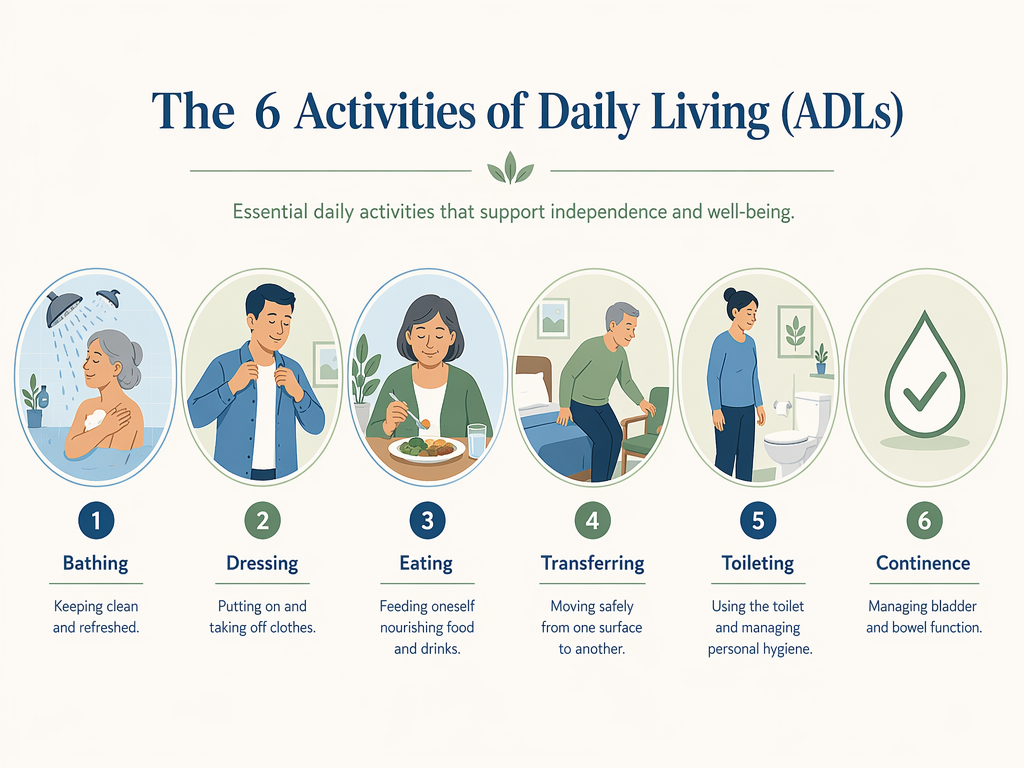
A critical distinction to understand from the start: most long-term care is custodial care — help with what professionals call Activities of Daily Living (ADLs), such as bathing, dressing, eating, toileting, and transferring from bed to chair. This is not skilled medical care. It does not require a doctor's order or a nurse's supervision. It is the kind of assistance a family member can provide, and indeed, most of it is provided by unpaid family caregivers.
The best time to think about long-term care is before you need it. But the reality is that most families begin exploring these options only after a crisis — a parent's fall, a hospitalization, or a new dementia diagnosis. If that describes your situation, you are not alone, and this guide is designed to give you the foundational understanding you need to make informed next decisions.
Who Needs Long-Term Care?
The need for long-term care is not a niche concern. It is a near-universal risk for anyone who lives long enough. According to the U.S. Department of Health and Human Services, 70% of adults turning age 65 will need some form of long-term care during their remaining years. More recent HHS data (2022) puts the figure at 56%, but even the more conservative estimate means more than half of older adults will require assistance.
Several factors influence who needs care and for how long:
- Age: More than 50% of long-term care residents are age 85 or older (CDC). The likelihood of needing care increases sharply with advanced age.
- Gender: Women need long-term care longer on average — 3.6 years compared to 2.5 years for men (DHHS/ACL). This is partly because women tend to live longer and are more likely to be widowed and living alone.
- Chronic conditions: 93% of older adults have at least one chronic condition (CDC). Among residential care residents, 92% have at least one chronic condition, and 55% have two or three. High blood pressure is the most common, affecting 55% of residents.
- Cognitive decline: More than 42% of long-term care patients have Alzheimer's or another dementia (NCHS/CDC). In 2026, an estimated 7.2 million Americans age 65 and older are living with Alzheimer's disease.
- Family caregiving: The majority of long-term care is provided not in facilities but at home by family. AARP reports that 63 million Americans provided ongoing care for an adult in the past year, contributing an estimated 49.5 billion hours of unpaid care valued at over $1 trillion.
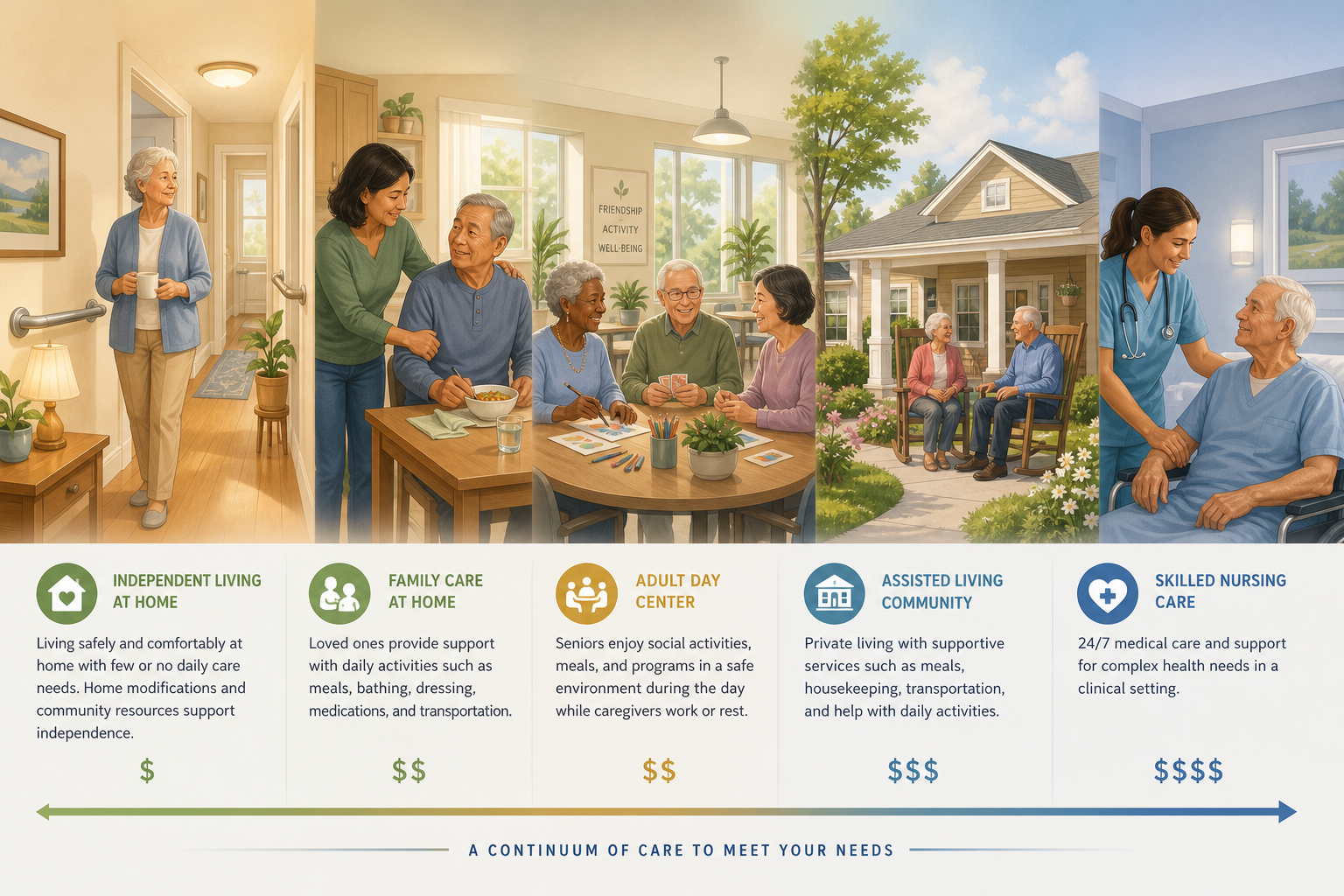
The Long-Term Care Continuum: From Home to Residential Care
Long-term care is best understood as a continuum of support, not a binary choice between "at home" and "a nursing home." The level of care ranges from occasional help with errands to 24-hour skilled nursing. Understanding where each option fits on this continuum is the first step toward matching services to your family member's actual needs.
Home-Based Care
Most older adults want to remain at home, and most long-term care happens there. Home-based care includes:
- Informal family care: Unpaid care provided by family members or friends. This is the most common form of long-term care in the United States.
- Home health aides: Trained aides who provide personal care (bathing, dressing, toileting) and may perform basic health-related tasks under a nurse's supervision.
- Homemaker services: Help with housekeeping, meal preparation, laundry, and shopping — services that support independent living without providing direct personal care.
Community-Based Care
These services provide care and social engagement outside the home during daytime hours, allowing the older adult to return home in the evening.
- Adult day care centers: Structured programs offering social activities, meals, and some health services during daytime hours. They serve older adults who need supervision or assistance but do not require 24-hour care.
- Senior centers: Community gathering places that offer meals, exercise classes, and social activities. They provide light support and engagement but not personal care.
Residential Care
When home-based or community-based care is no longer sufficient, residential options provide varying levels of housing, supervision, and medical care under one roof.
- Board and care homes: Small residential facilities (typically 20 or fewer residents) that provide personal care, meals, and supervision but not skilled nursing. They are a middle ground between living at home and entering a larger facility.
- Assisted living: Designed for people who need help with daily care but do not require the intensive medical supervision of a nursing home. Residents typically live in their own apartments and receive personal care, meals, and 24-hour staff supervision.
- Nursing homes (skilled nursing facilities): Provide 24-hour skilled nursing care, rehabilitation services, and medical supervision. They are appropriate for people with complex medical needs or significant functional impairments that cannot be managed in other settings.
- Continuing Care Retirement Communities (CCRCs): Campuses that offer independent housing, assisted living, and skilled nursing all on one site. Residents can move between levels of care as their needs change. CCRCs typically require a large entrance fee plus monthly fees.
For a detailed comparison of providers within each setting, see our guide on Elderly Care Companies Compared.
Key Costs by Setting (2026)
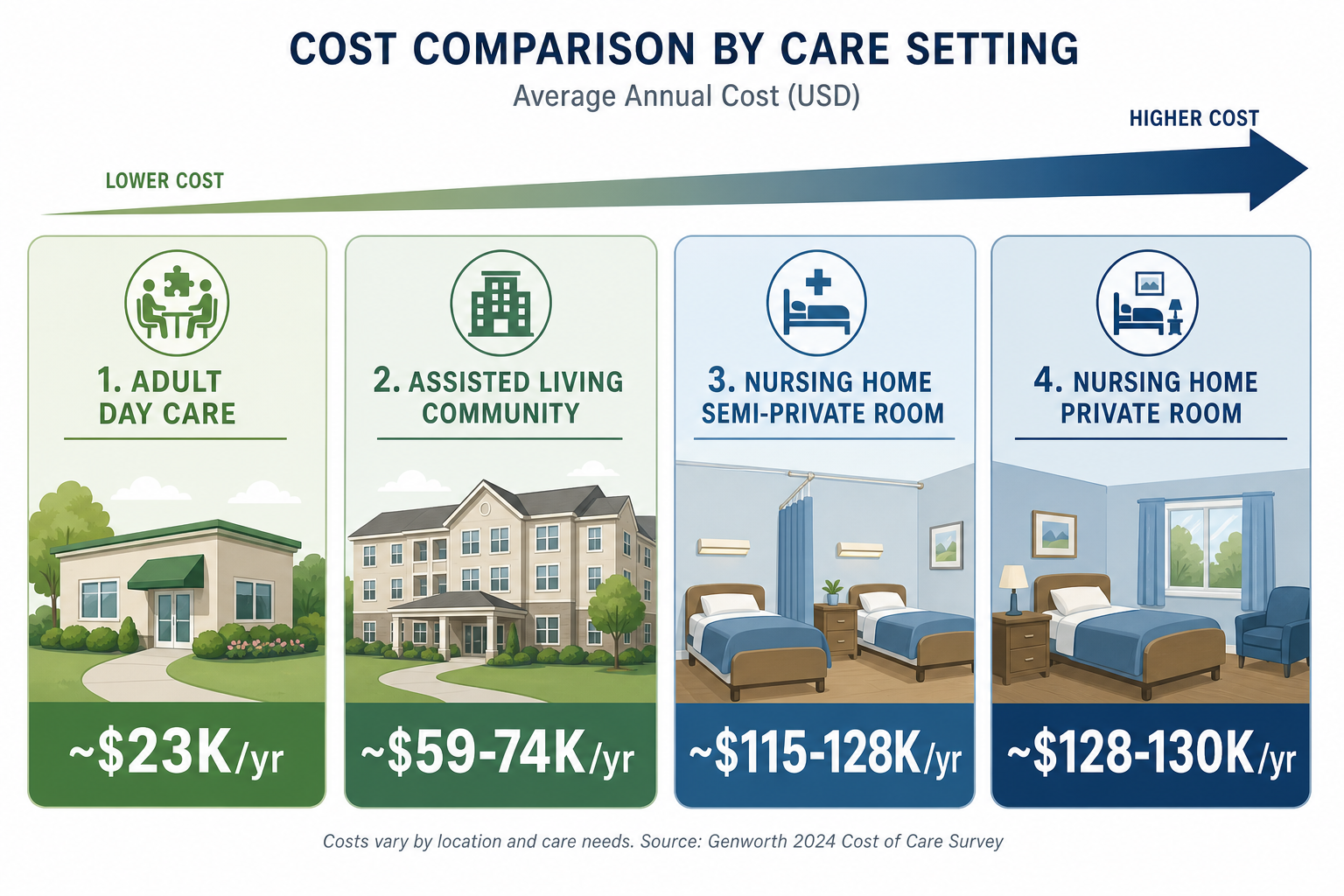
Cost is often the most urgent question for families. The table below presents national median annual costs for the major care settings based on 2026 data from LTC News and CareScout. These are national medians — actual costs vary significantly by state, region, and level of care required.
| Care Setting | 2026 National Median Annual Cost | Source |
|---|---|---|
| Adult day care | ~$23,000/yr ($61/day) | LTC News 2026 |
| Home health aide (44 hrs/wk) | ~$67,500/yr ($185/day) | LTC News 2026 |
| Assisted living | $59,591–$74,400/yr | LTC News 2026 / CareScout 2025 |
| Nursing home (semi-private room) | $114,975–$128,834/yr | CareScout 2025 / LTC News 2026 |
| Nursing home (private room) | $127,750–$130,000/yr | CareScout 2025 / LTC News 2026 |
Cost inflation is a growing concern. According to an AARP report published June 2026, home care costs rose 7.9% from May 2025 to May 2026 (BLS data), and median LTC costs have increased nearly 50% for home care and assisted living since 2019. The median annual cost of home care at 30 hours per week is now $51,480 — more than twice the average annual Social Security benefit of approximately $23,700.
For a detailed cost comparison between specific settings, see our guide on Adult Day Care vs In-Home Care vs Nursing Home. For hourly home care cost strategies, see Elderly Care Cost Per Hour.
How to Pay for Long-Term Care
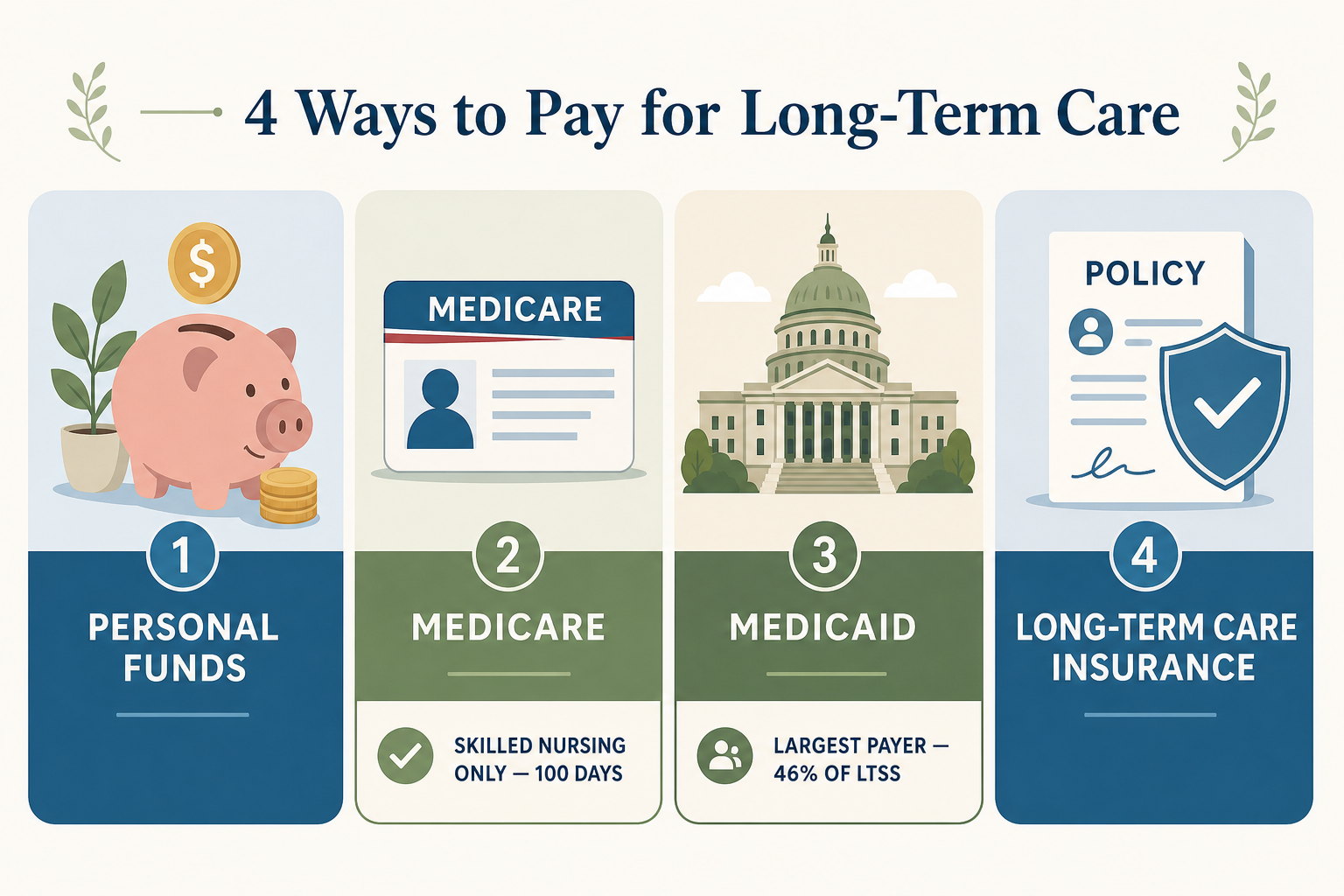
Paying for long-term care is the most complex and stressful part of the planning process for most families. There are four main payment pathways, and most families use a combination of them.
1. Personal Funds (Out-of-Pocket)
Many families pay for long-term care out of pocket, especially for home care and assisted living, which are not covered by Medicare or most insurance. According to the U.S. Department of Health and Human Services, families will pay approximately one-third of LTC costs out of pocket, and approximately 14% of individuals will spend more than $100,000 out of pocket on long-term care. The median household income for adults 65+ is approximately $60,000/year, while median financial assets for households 75+ is approximately $50,000 — figures that highlight the financial strain.
2. Medicare (Limited Coverage)
Medicare does not cover long-term custodial care. This is the single most important financial fact for families to understand. Medicare covers only up to 100 days of skilled nursing care in a Medicare-certified facility following a qualifying hospital stay, and even then, coverage is full only for the first 20 days. After day 20, a daily coinsurance applies. Medicare does not pay for assisted living, adult day care, or long-term home care. For a deeper analysis of this gap, see our guide on The Medicare Home Health Care Gap.
3. Medicaid (Largest Payer)
Medicaid is the single largest payer for long-term care in the United States, covering approximately 46% of all long-term services and supports (LTSS) spending, which totaled $257 billion in 2023 (Congressional Research Service). Medicaid covers nursing home care and, through home and community-based services (HCBS) waivers, can also cover home care and assisted living in many states.
4. Long-Term Care Insurance
Private long-term care insurance policies can help cover the costs of home care, assisted living, and nursing home care. Key policy features to understand include:
- Benefit triggers: The criteria that must be met for the policy to pay benefits — typically the inability to perform 2 of 6 ADLs or the need for substantial supervision due to cognitive impairment.
- Elimination period (waiting period): The number of days you must receive care before benefits begin, similar to a deductible.
- Inflation protection: A feature that increases your benefit amount over time to keep pace with rising care costs. Required for Partnership policies purchased at age 79 and younger (NY DFS).
- Partnership policies: A public-private partnership that allows you to protect a portion of your assets when applying for Medicaid after exhausting your policy benefits.
According to the American Association for Long-Term Care Insurance (AALTCI), 78% of LTC insurance policies are purchased between ages 50 and 69. Waiting 10 years from age 55 increases costs by 49.9%, and more than 47% of people aged 70+ are denied coverage due to health concerns.
For a comprehensive guide to all payment options, see How to Pay for Senior Health Care Services. For a complete map of assistance programs beyond Medicaid, see Beyond Medicaid and Elder Care Assistance Programs.
Signs It's Time to Consider Long-Term Care
Recognizing when a family member needs more support than can be provided at home is often gradual, but certain signs indicate it is time to evaluate options. The most reliable indicators are impairments in Activities of Daily Living (ADLs).
According to the National Center for Health Statistics, the percentage of residential care residents who need help with each ADL is:
- Bathing: 75% need assistance
- Ambulating (walking/moving): 71% need assistance
- Dressing: 60% need assistance
- Transferring (moving from bed to chair): 57% need assistance
- Toileting: 51% need assistance
- Eating: 28% need assistance
Beyond ADL impairments, cognitive decline indicators include wandering, sundowning (increased confusion in the evening), safety concerns (leaving the stove on, getting lost in familiar places), and difficulty managing medications or finances. If you are observing these signs, it is time to begin a structured assessment.
For a practical decision framework designed for families in crisis, see Senior Care Options: A Practical 3-Step Decision Framework. If you are feeling overwhelmed and do not know where to begin, start with Where to Start When Your Aging Parent Needs Help.
Key Terms Glossary
The terminology around long-term care can be confusing. Below are plain-language definitions of essential terms, sourced from the LTC Consumer Glossary and the New York Department of Financial Services Glossary.
- Activities of Daily Living (ADLs): The six basic personal care tasks: bathing, dressing, eating, toileting, transferring (moving between bed and chair), and continence. Many LTC insurance policies and Medicaid eligibility determinations use the inability to perform 2 of 6 ADLs as a benefit trigger.
- Custodial Care (Personal Care): Non-medical care that helps with ADLs. It does not require medical training and is the most common form of long-term care. Medicare does not cover custodial care.
- Skilled Care: Daily nursing and rehabilitative care provided by skilled medical personnel (registered nurses, physical therapists), usually 24/7, ordered by a physician. Medicare covers skilled care in limited circumstances.
- Benefit Triggers: The conditions that must be met for an LTC insurance policy to begin paying benefits. Standard triggers are the inability to perform 2 of 6 ADLs or the need for substantial supervision due to cognitive impairment.
- Elimination Period (Waiting Period): The number of days you must pay for care out of pocket before your LTC insurance benefits begin. Common elimination periods are 30, 60, or 90 days.
- Spend Down: The process of reducing your countable assets to the level required for Medicaid eligibility. This is a common strategy for individuals who need nursing home care but have too many assets to qualify for Medicaid.
- Partnership Policy: A type of LTC insurance policy that, in participating states, allows you to protect a dollar-for-dollar amount of assets equal to the benefits paid by the policy when you later apply for Medicaid. This is a public-private partnership designed to encourage private LTC insurance purchase.
- Cognitive Impairment: A deterioration or loss in intellectual capacity, including problems with thinking, reasoning, remembering, or making judgments. Alzheimer's disease and other dementias are the most common causes of cognitive impairment in older adults.
- Tax-Qualified Policy: An LTC insurance policy that meets federal standards under the Health Insurance Portability and Accountability Act (HIPAA). Benefits from tax-qualified policies are generally not considered taxable income, and premiums may be treated as medical expenses for itemized deductions.
Next Steps: Where to Go from Here
This guide is designed as a reference hub — a place to build foundational understanding before diving into the deeper resources on this site. Depending on your situation, the following guides will help you take the next step:
- If you need a practical action plan: Start with the Senior Care Assistance Triage guide, which breaks down what to do now, next week, and next month.
- If you are overwhelmed and don't know where to begin: Read Where to Start When Your Aging Parent Needs Help, a 5-step triage framework for new caregivers.
- If you need to understand payment options in depth: See How to Pay for Senior Health Care Services and Beyond Medicaid.
- If you are comparing providers: Our guide on Elderly Care Companies Compared provides a structured comparison of home care, assisted living, and nursing home providers.
- If you are facing a dementia diagnosis: Visit our Memory Care section for stage-specific guides and behavior reference pages.
Long-term care is a journey, not a single decision. The information on this site is designed to grow with you as your family member's needs evolve. Bookmark this guide and return to it as a reference point — the definitions, cost ranges, and payment pathways here will remain relevant as you move from understanding to action.
Browse more in the Glossary.