
Glossary entry
The Real Cost of Aging in Place: What Families Underestimate About Staying Home
The Two Numbers That Should Stop Every Family
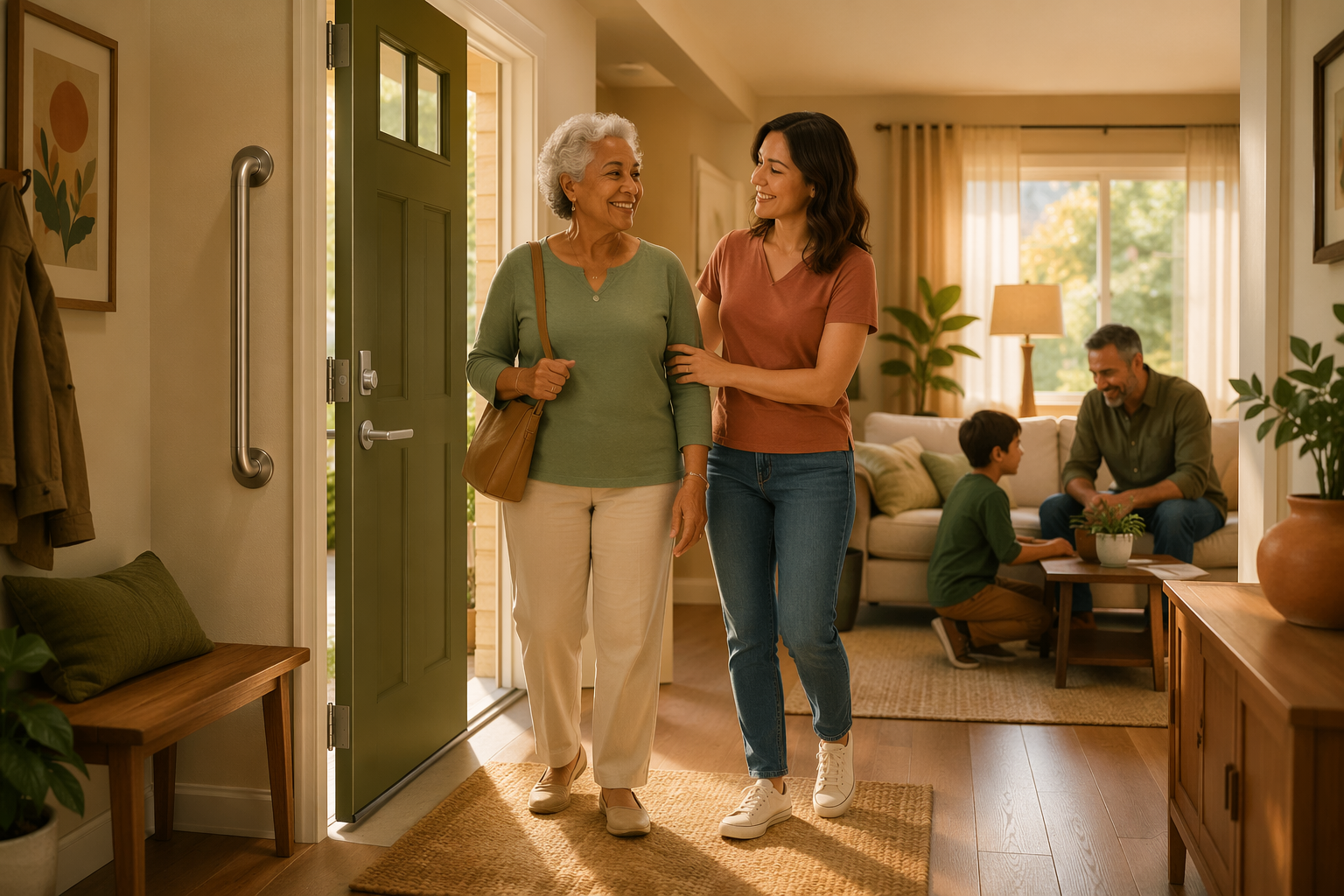
Ninety-three percent of adults over sixty-five want to stay in their homes as they age. That is from Pew Research Center, February 2026. I want you to hold that number. Now hold these: only 21% of adults over sixty-five have long-term care insurance. And according to a Healthy Aging Poll cited by Choice Mutual, 85% of seniors planning to stay in their current homes do not believe they will need significant home modifications.
That 85% is the number that bothers me most. It means four out of five families are walking into a financial trap with their eyes closed. They assume staying home is the cheap, obvious option. The data suggests the opposite: aging in place can end up costing as much as, or more than, assisted living, especially when you count everything that actually gets spent.
What the 85% Miss: The Real Cost of Making a Home Livable
That 85% who say they don’t need significant modifications? They are wrong. Data from the U.S. Census Bureau, cited by both the PMC review and Choice Mutual, show that only 10% of American homes are “aging ready” — meaning a step-free entry, a bedroom and full bath on the first floor, and at least one bathroom accessibility feature. Nine out of ten homes do not qualify.
So what does it cost to get a home ready? The range is between $10,000 and $100,000, depending on scope. A grab bar and a non-slip mat is not a modification plan. A full bathroom remodel — walk-in shower, grab bars, raised toilet, widened doorway — runs thousands of dollars. A stair lift adds three to ten thousand. A ramp, another few thousand. Most families do not budget for this because they do not know they will need it.
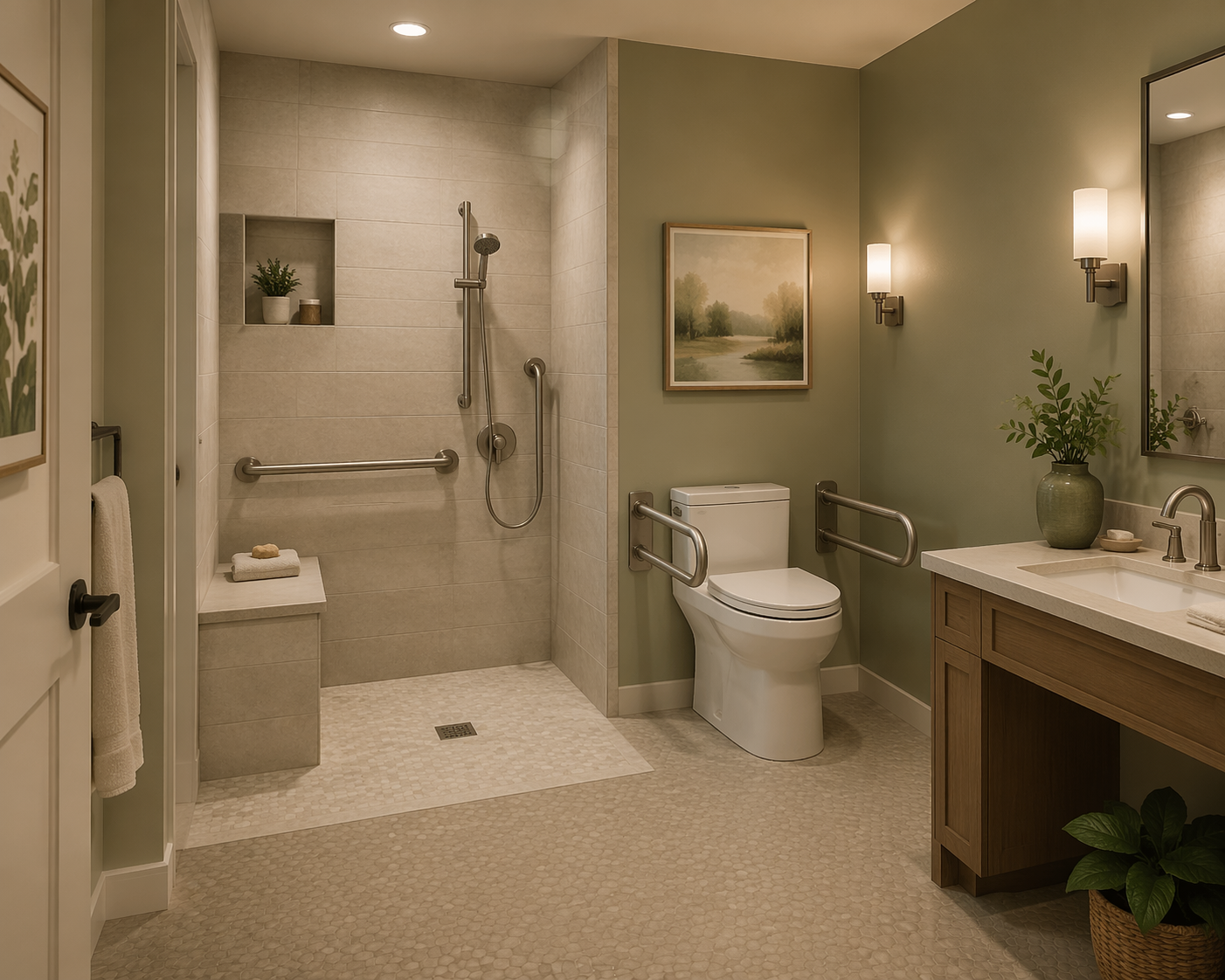
AARP data, also cited by Choice Mutual, says that nearly 80% of older adults will need bathroom modifications. That is four out of five people. Yet the 85% who think they won’t need modifications are essentially ignoring the most predictable expense.
If you are deciding whether to remodel the family home, the question is not just whether you can afford the remodel. It is whether the remodel plus the ongoing care costs still beat the cost of moving. I covered that decision in detail in our aging-in-place remodel financial decision framework.
The Monthly Bill That Doesn't Stop: In-Home Care vs. Assisted Living
Home modifications are a one-time expense. In-home care is not. That is the difference most families miss when they compare a $30,000 bathroom remodel to $64,200 a year for assisted living and conclude home is cheaper.
According to AgingInPlace.org, cited by Choice Mutual, in-home caregiver services can cost up to $4,000 per month. That is $48,000 a year for part-time care. Full-time care can easily double or triple that. Meanwhile, assisted living averages $64,200 per year ($5,350 per month) according to AHCA/NCAL, and that includes housing, meals, and care.
Now do the math over three years. A family that spends $30,000 on modifications and $48,000 a year on part-time care is out $174,000 after three years (modifications plus $144,000 in care). The same three years in assisted living at $64,200 a year comes to $192,600. The difference: $18,600. And that is before we count the biggest hidden line item, which comes next.
| Cost category | One time / Annual | 3-year total |
|---|---|---|
| Home modifications | $30,000 | $30,000 |
| Part-time in-home care ($48K/yr) | $48,000 | $144,000 |
| Total aging-in-place | – | $174,000 |
| Assisted living ($64,200/yr) | $64,200 | $192,600 |
The point is not that assisted living is always cheaper. The point is that aging in place is not automatically cheaper, and you cannot know which is better until you run the cumulative numbers.
For a deeper look at where the crossover happens, see our guide on the cost crossover point.
The Billion-Dollar Line Item No One Puts in the Budget: Unpaid Family Care
Here is where the “home is cheaper” assumption really falls apart. The economic value of care provided by unpaid family caregivers is staggering. The CDC, cited by PMC, puts it at $470 billion annually. A different calculation from A Place for Mom, cited by Choice Mutual, comes in at $873 billion. I'm using the lower CDC figure here because I want to be conservative. But $470 billion is still larger than the budget of many federal programs. And it represents labor that families do not bill themselves for, but they pay for in lost wages, reduced retirement savings, and burned-out health.
Let's be concrete. There are 53 million informal caregivers in the United States — one in five adults. If you are reading this and you have a parent who needs help, you are probably one of them. The hours you spend driving to appointments, managing medications, cleaning, cooking, and providing companionship are not free; they are diverted from your own earning power. The cost does not show up on a receipt, but it is real.
Families who ignore this line item are making a decision based on an incomplete budget. Our financial survival guide for caregivers covers programs and tax credits that can offset some of these losses.
The Middle-Class Trap: Too Wealthy for Medicaid, Too Poor for Private Care
Now that you see the full cost picture, the next question is: who gets squeezed hardest? The answer, according to the PMC review from 2022, is middle-class Americans. The wealthiest can afford modifications and care out of pocket. The poorest may qualify for Medicaid waivers or other subsidies. But the middle — too much income for Medicaid, too little to pay $5,000 a month for assisted living — ends up doing what? Draining retirement savings, going without care, or depending entirely on unpaid family labor.
Pew’s February 2026 data adds another layer: upper-income older adults are more likely to prefer assisted living (28%) than middle-income (19%) or lower-income (13%). That suggests that wealth may actually make moving to assisted living more feasible, while middle-income families cling to home not because it is better, but because they cannot afford the alternative — and they do not realize that staying home may cost nearly as much.
For middle-class families, the search for funding becomes critical. Only 21% have long-term care insurance. Medicare does not cover custodial care. Your options are limited to: Medicaid waivers (income- and asset-tested), VA Aid and Attendance for veterans, home equity conversion mortgages, and tax deductions for medical modifications. Our practical funding guide for elderly home care walks through each option.
What to Do: Plan with Eyes Open, Not Assumptions
This article is not arguing that aging in place is the wrong choice. For many families, it is the right one — emotionally, practically, and even financially, if the numbers line up. But the default assumption that “home is cheaper” is dangerous because it skips the entire budgeting process.
Here is what I want you to do with this analysis:
- Estimate the cumulative three-to-five-year cost of aging in place: modifications + in-home care (hours needed × hourly rate) + the value of any unpaid care you or a sibling will provide.
- Get the same three-to-five-year estimate for assisted living or a continuing care retirement community — including housing, meals, and care.
- Compare. If the numbers are close, aging in place may still be worthwhile for the emotional and autonomy benefits. But you need to know you are paying for them.
- Explore every funding source you can. Long-term care insurance (if you still have time to buy it), VA benefits, state Medicaid waivers, home equity loans, and tax deductions.
If you are still weighing your options, our full cost comparison of home care, assisted living, and nursing homes and decision framework based on ADL and IADL needs can help you decide.
The point is not to talk you out of staying home. The point is to make sure you are not one of those families who walks into the trap with eyes closed.
Browse more in the Glossary.