
STEADI: Intervene
72-Hour Earthquake Safety Checklist for Seniors
For an older adult, earthquake danger doesn't end when the shaking stops. This 72-hour checklist covers what to check first — injuries, head impacts, and new fall hazards from debris, broken glass, and aftershocks — and when a senior needs 911 versus urgent care.
The shaking has stopped. For an older adult, the first job is not to tour the house, check the water heater, or hurry to the front door. The first job is to keep one frightening event from becoming a fall, a head injury, or a delayed medical crisis. This earthquake safety checklist for seniors starts there: pause, check the person, put sturdy shoes on before anyone walks, bring the cane or walker within reach, and clear one safe path before moving through the home.
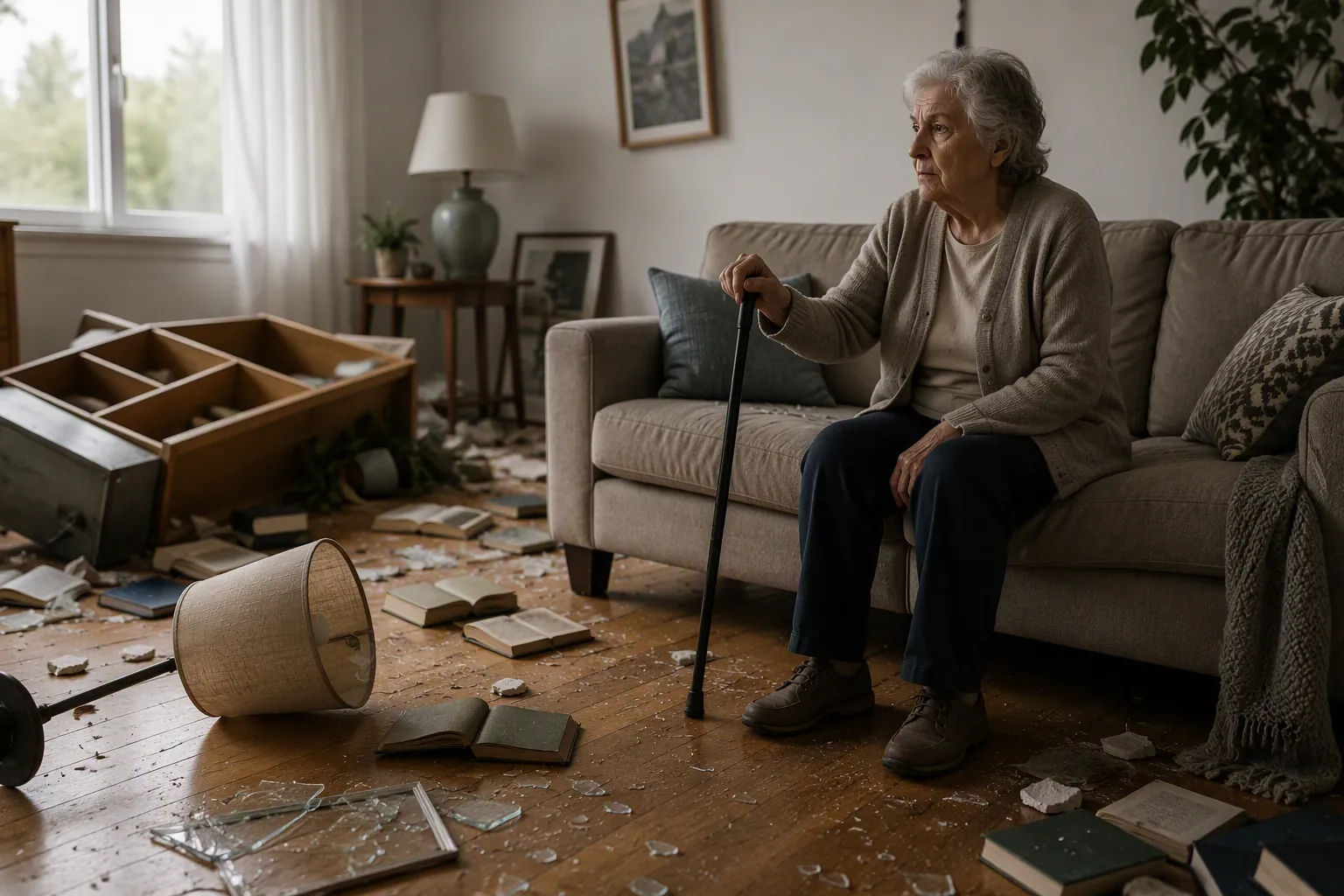
The first 10 minutes: keep the person still, shod, and protected
After an earthquake, Ready.gov advises people to expect aftershocks, check themselves for injury before helping others, and put on sturdy shoes and protective clothing before moving through debris. Senior-specific guidance from the Illinois Emergency Management Agency adds two details that matter in a living room full of glass: keep walking aids close, and if a person cannot safely reach a protected spot, have them sit or stay seated and cover the head if possible.[1][2]
If you are with the older adult, slow the room down. If you are on the phone, give one instruction at a time. A parent who says, “I’m fine,” while standing in socks beside a toppled bookcase is not ready to inspect the hallway.
- Pause and listen. Assume aftershocks may follow. Do not rush to stairs, doorways, or windows.
- Ask whether the person fell, hit their head, was struck by anything, or has new pain, dizziness, weakness, confusion, bleeding, or trouble breathing.
- If they are seated and safe enough, keep them seated while you look for shoes, glasses, phone, hearing aids, and their cane, walker, or rollator.
- Put on sturdy closed-toe shoes before they stand. Socks, slippers, and bare feet are not enough around broken glass.
- Move the walking aid to the person, not the person to the walking aid.
- Clear one short path first: from the chair or bed to a safer seated spot, bathroom, exit, or phone.
- Keep the head protected if another shock starts and safe movement is not possible.
- Delay cleanup. Gloves, long sleeves, and better light come before picking up glass or lifting fallen items.
- Check utilities only after the person is stable, shod, and not walking through hazards.
- Write down falls, head strikes, missed medications, new symptoms, and whom you called. In the next 72 hours, memory gets unreliable fast.
Why the next 72 hours matter
A National Academies review of the 1989 Loma Prieta earthquake found that roughly 40% of deaths and injuries occurred within the 72-hour period after the earthquake. In the same historical review, among shaking injuries not related to structural collapse, 26% were attributed to falls, particularly stairway falls, and 28% to falling or overturning objects.[3]
Those figures should not be stretched into a universal rule for every modern earthquake or every older adult. They come from a 1994 review of a 1989 event. Their practical value is narrower and more useful: the danger did not end when the shaking stopped, and many injuries came from the ordinary home hazards people tried to move through afterward.
That is especially important for seniors because fall risk is already common before a quake rearranges the floor. CDC fall data say more than 1 in 4 older adults falls each year, about 3 million emergency department visits each year are due to older-adult falls, and “Falls are the most common cause of traumatic brain injury (TBI).”[4]
CDC earthquake safety guidance also notes that most earthquake deaths and injuries come from collapsing materials and heavy falling objects such as bookcases, cabinets, and heating units.[5] In a senior’s home, that means the toppled shelf is not only a property problem. It is a fall path, a head-strike risk, and sometimes the thing blocking the walker.
Before anyone walks, do a quick injury and head-impact check
Start with the person, not the room. Ask direct, plain questions: Did you fall? Did your head hit the floor, wall, furniture, or anything falling from above? Are you bleeding? Can you move both arms and legs as usual? Are you more dizzy than normal? Did your glasses, hearing aids, cane, or walker get knocked away?
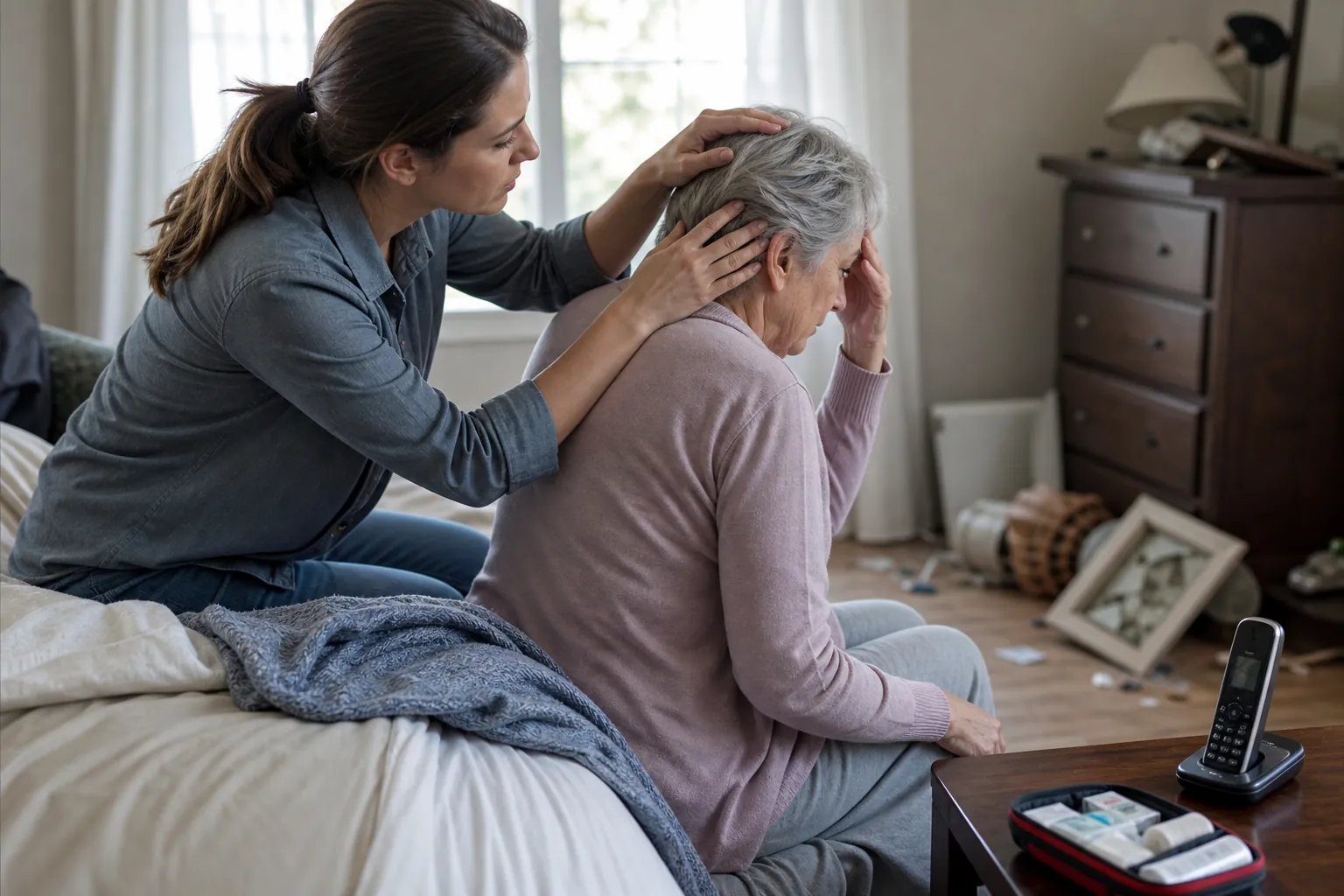
If you are checking a head impact, do not turn it into a rough exam. Keep the person seated or lying safely. Look for bleeding, swelling, a tender spot, new confusion, worsening headache, vomiting, unusual sleepiness, or anything that feels out of character. If any of that is present, or if the person cannot clearly tell you what happened, treat it as medical until a clinician says otherwise.
Call 911 now when the situation is unsafe or potentially life-threatening
- The older adult is unconscious, hard to wake, newly confused, or not acting like themselves after a fall or head strike.
- They have trouble breathing, chest pain, severe bleeding, a seizure, severe weakness, or signs that make you think emergency care is needed.
- They fell and cannot get up safely, cannot bear weight, or may have a hip, neck, back, or head injury.
- They are trapped, the exit path is blocked, or another hazard makes it unsafe for a caregiver or neighbor to move them.
- You smell gas, see fire, see sparks, hear a hissing sound, or suspect a utility emergency.
Arrange prompt medical evaluation when a head strike may have happened
CDC fall guidance says an older person who falls and hits their head should see a doctor promptly, especially if they take blood thinners.[4] That applies even when the person insists they are fine. The earthquake may be over, but the medical question is not settled by a calm voice on the phone.
- If there was a head hit plus alarming symptoms or unsafe movement, use 911.
- If there was a head hit but the person is awake, stable, and safe where they are, call their clinician, nurse line, urgent care, or local emergency guidance promptly for next steps.
- If they take blood thinners, do not wait to “see how it goes” without medical input.
- If you are a long-distance caregiver and cannot verify what happened, ask a neighbor, building staff member, family member, or emergency service to check in.
Medical safety note: this checklist is general safety education, not medical advice, diagnosis, or treatment. Follow local emergency instructions and the person’s clinician’s advice. If this article is used in a care program or publication, it should be reviewed by a named qualified clinician before being presented as clinically reviewed.
Clear one safe path before checking the rest of the home
A senior does not need a perfectly cleaned house in the first hour. They need one usable route. That route should be short, lit if possible, and wide enough for the actual mobility device they use on a bad day, not the one they prefer to say they do not need.
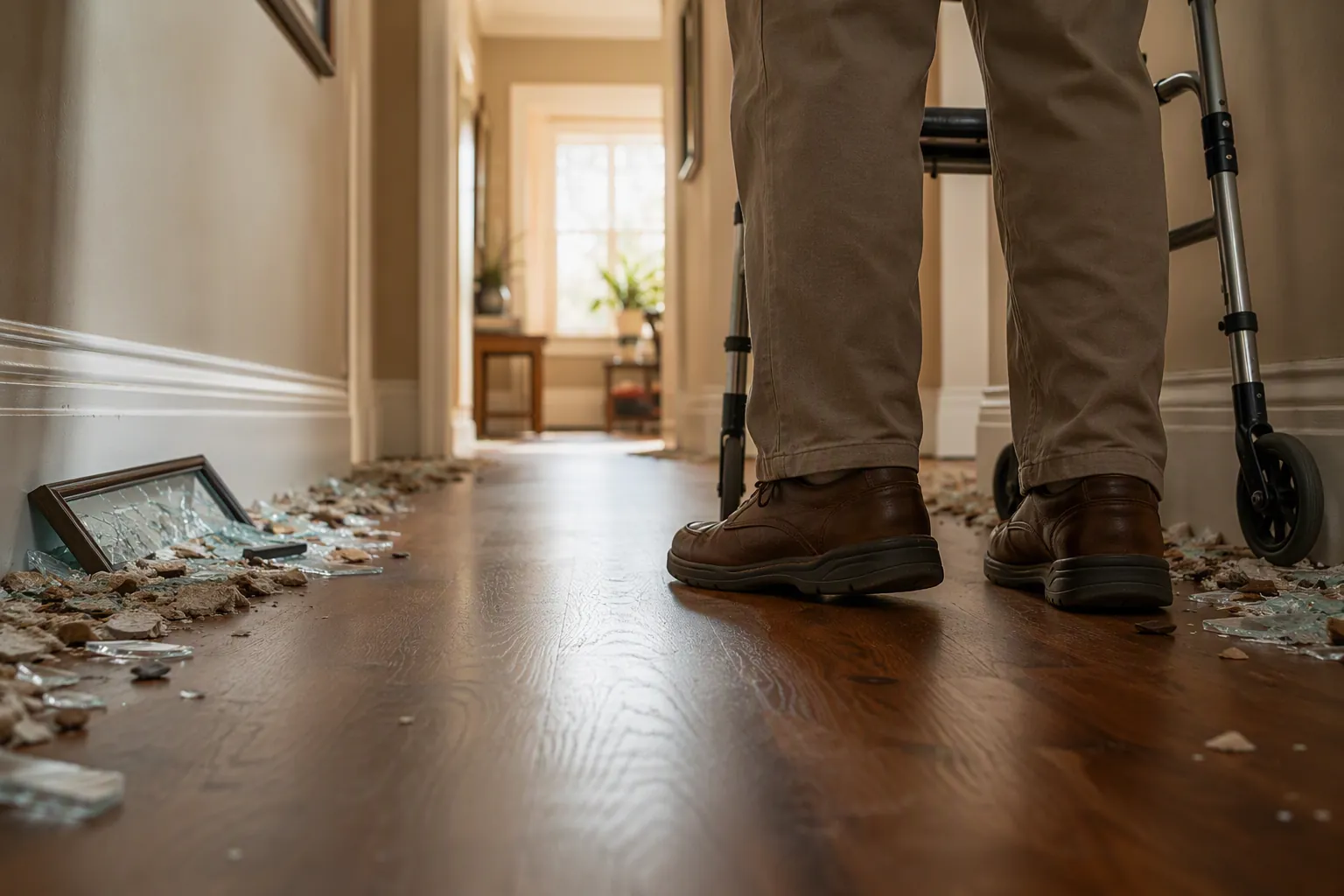
- Put on sturdy closed-toe shoes before standing. If shoes are across the room, bring them over.
- Move the cane, walker, rollator, or wheelchair within reach before asking the person to stand.
- Sweep or push glass and debris to the side only if you can do it without kneeling in glass or lifting unstable furniture.
- Keep the path away from windows, tall furniture, hanging frames, loose rugs, and anything that may fall in an aftershock.
- Avoid stairs unless they are necessary for safety. Stairway falls were specifically noted among fall injuries in the Loma Prieta review, and stairs after a quake deserve extra caution.[3]
- Use a flashlight instead of candles if the power is out. Poor light changes a small rug edge into a real hazard.
- If the person is too shaky to walk, choose a safer seated position and bring essentials to them.
Do not let the first trip be to the kitchen because the phone charger is there, or to the garage because the emergency bin is there. The first trip should solve the immediate safety problem: getting the older adult away from glass, unstable furniture, cold floors, blocked exits, or a bathroom route they cannot use safely.
Then check gas, water, power, and building hazards
Utility checks matter. They just should not outrank a barefoot older adult standing in debris. Once the person is seated safely or moving with shoes and a walking aid, shift to the home hazards that could force evacuation or create another injury.
| Check | What to do first | What should wait |
|---|---|---|
| Gas or possible fire | If you smell gas, hear hissing, see fire, or suspect a gas leak, leave if you can do so safely and call emergency services or the utility from outside. | Do not keep searching the house or flipping switches while trying to confirm the source. |
| Water leaks | Look for obvious flooding, wet floors, ceiling leaks, or water near electrical items. | Do not send a senior across a slick floor to find the shutoff. |
| Electricity | Watch for sparks, damaged cords, fallen lamps, and water near outlets. | Do not handle electrical damage in the dark or while standing on wet flooring. |
| Structural hazards | Look for blocked exits, fallen furniture, broken glass, cracked stairs, loose railings, and items still likely to fall. | Do not lift heavy furniture or climb on unstable surfaces during early cleanup. |
Ready.gov also advises wearing gloves and protective clothing during cleanup.[1] For an older adult, cleanup is often when the second injury happens: a cut hand, a twisted knee, a fall while carrying broken dishes, or a trip over a cord pulled loose by a fallen lamp. If a neighbor or adult child is available, this is the moment to delegate the sweeping, lifting, and shutoff checks.
The 72-hour watch: what to monitor after the first hour
The next three days are not a waiting room for worry. They are a watch period for delayed problems, aftershock hazards, and the small interruptions that become dangerous for someone who depends on routines, medications, mobility equipment, and steady footing.
| Time window | Main concern | What to do |
|---|---|---|
| First 0–2 hours | Falls, head impact, bleeding, blocked mobility, gas or fire hazards, unsafe exits | Keep the person seated until shoes and walking aid are ready; check for falls and head strikes; clear one route; call 911 for emergency symptoms or unsafe conditions. |
| 2–24 hours | Delayed pain, dizziness, confusion, missed medications, poor lighting, unsafe bathroom trips, aftershocks | Recheck symptoms; arrange prompt medical advice for any head hit; set up a safe bathroom path; move essentials within reach; avoid unnecessary stairs. |
| 24–72 hours | Cleanup injuries, fatigue, medication disruption, power-related problems, repeated trips through debris | Limit cleanup by the older adult; keep using sturdy shoes; recheck walking paths after aftershocks; confirm medications, food, water, phone charging, and follow-up care. |
Aftershocks are part of the reason this window matters. Ready.gov tells people to expect them after an earthquake.[1] A path that was safe at noon may have new glass on it at 4 p.m. A walker that was beside the bed may be knocked out of reach overnight. A loose rug edge that was annoying before the quake may become the thing that sends someone down.
Recheck the person, not just the damage
Ask again later about headache, dizziness, nausea, pain, weakness, confusion, sleepiness, vision changes, and whether they remember falling or being hit. Older adults may minimize symptoms because they want to stay home, avoid “making a fuss,” or protect their independence. That deserves respect, but it does not make a head strike harmless.
Also ask about medications. Did pills spill? Is the pill organizer buried under debris? Is refrigeration or electricity needed for any medication? If the earthquake has become a power outage problem, use the site’s 72-hour power outage checklist for seniors rather than trying to solve medication storage from memory.
Bathroom trips deserve special attention
The bathroom route is where good intentions get tested. The person may wait until urgency wins, then move too fast, without shoes, in poor light, over a cracked tile or fallen bottle. Put shoes, glasses, the walking aid, a flashlight, and a phone within reach before the first trip. If the route is unsafe, use help, a bedside commode if one is already available, or local emergency support rather than improvising a risky walk.
Keep cleanup from becoming the next fall
Cleanup asks for bending, carrying, reaching, stepping around piles, and deciding whether furniture is stable. That is a poor assignment for someone already shaken, tired, or using a mobility aid. The older adult can direct where important items are, but another person should handle heavy lifting, glass, and unstable furniture when possible.
If another shock starts
If the older adult can safely protect themselves where they are, have them do that rather than trying to cross the room mid-shaking. USGS guidance for earthquakes emphasizes dropping, covering, and holding on, and not running outside or downstairs during shaking.[6] For someone who cannot drop to the floor, use the safest realistic version: stay seated, lock wheelchair brakes if applicable, cover the head and neck, and keep away from windows or objects that may fall if this can be done without walking into worse danger.
For more detail on the during-shaking response, use earthquake safety for seniors who cannot drop to the floor. This article stays focused on the aftermath, where the cane is missing, the hallway is messy, and someone is deciding whether to stand.
For long-distance caregivers: what to ask on the phone
A phone call after an earthquake should not start with “Is the house damaged?” Start with the person’s body and the floor around them.
- Where are you sitting or standing right now?
- Are you wearing sturdy shoes?
- Did you fall, hit your head, or get hit by anything?
- Is your cane, walker, wheelchair, glasses, hearing aid, phone, and medication within reach?
- Is there broken glass, water, cords, furniture, or books between you and the bathroom?
- Do you smell gas, see smoke, hear hissing, or see sparks?
- Can you stay seated while I call a neighbor, building staff, family member, or emergency service to check on you?
If the answers are vague, assume the risk is higher, not lower. A calm “I think so” is not the same as a safe path, shoes on feet, and a walker within reach.
What can wait, and what needs a separate plan
Not every U.S. household has the same earthquake exposure. Risk is higher in some western, southern, and central fault-zone regions than in others, and local emergency management guidance should shape the plan. If earthquakes are part of your household’s realistic hazard profile, the after-quake checklist belongs beside the rest of the fall-prevention emergency planning—not buried under general disaster supplies.
The plan-ahead work does not need to be rebuilt during the crisis. Use the earthquake preparedness checklist for seniors for supplies and home setup, the one-weekend earthquake checklist for elderly parents for a fast home project, and the room-by-room earthquake safety checklist for elderly parents for securing furniture and reducing falling-object hazards before the next event.
If evacuation may be needed, prepare that separately with an emergency evacuation plan for elderly parents. If the older adult has dementia or another cognitive impairment, use the earthquake preparedness guide for dementia caregivers so the response does not depend on memory, judgment, or quick compliance during a frightening moment.
The crisis checklist
- Pause and expect aftershocks.
- Check for falls, head strikes, bleeding, pain, dizziness, confusion, breathing trouble, and whether mobility aids are reachable.
- Call 911 for life-threatening symptoms, unsafe movement, suspected serious injury, fire, gas, entrapment, or any situation you cannot manage safely.
- Arrange prompt medical evaluation for any older adult who fell and hit their head, especially if they take blood thinners.
- Put on sturdy closed-toe shoes before standing.
- Bring the cane, walker, wheelchair, glasses, hearing aids, phone, and medications within reach.
- Clear one safe, lit path before inspecting other rooms.
- Avoid stairs, slick floors, loose rugs, broken glass, unstable furniture, and unnecessary cleanup.
- Check gas, water, power, and exit hazards after the person is safe.
- Recheck the person and the walking paths repeatedly for 72 hours, especially after aftershocks.
References
- Earthquakes, Ready.gov
- Earthquake Planning Guide for Seniors, Illinois Emergency Management Agency
- Practical Lessons from the Loma Prieta Earthquake, National Academies Press, 1994
- Facts About Falls, Centers for Disease Control and Prevention
- Earthquake Safety, Centers for Disease Control and Prevention
- What should I do during an earthquake?, U.S. Geological Survey
Related reading
Noticed something outdated or inaccurate on this page? Flag a correction. We review every report against CDC, NIA, and AARP HomeFit guidance before updating a page.
Part of the Fall Prevention section.