
The Aging-in-Place Gap: Why 92% of Older Adults Want to Stay Home but Only 10% of Homes Are Ready — A Practical Guide for Families
This guide helps adult children assess whether their parent's home is truly ready for safe, independent aging. It bridges the gap between the strong desire to age in place and the reality that most homes lack basic accessibility features, offering a three-domain readiness framework and a prioritized action plan.
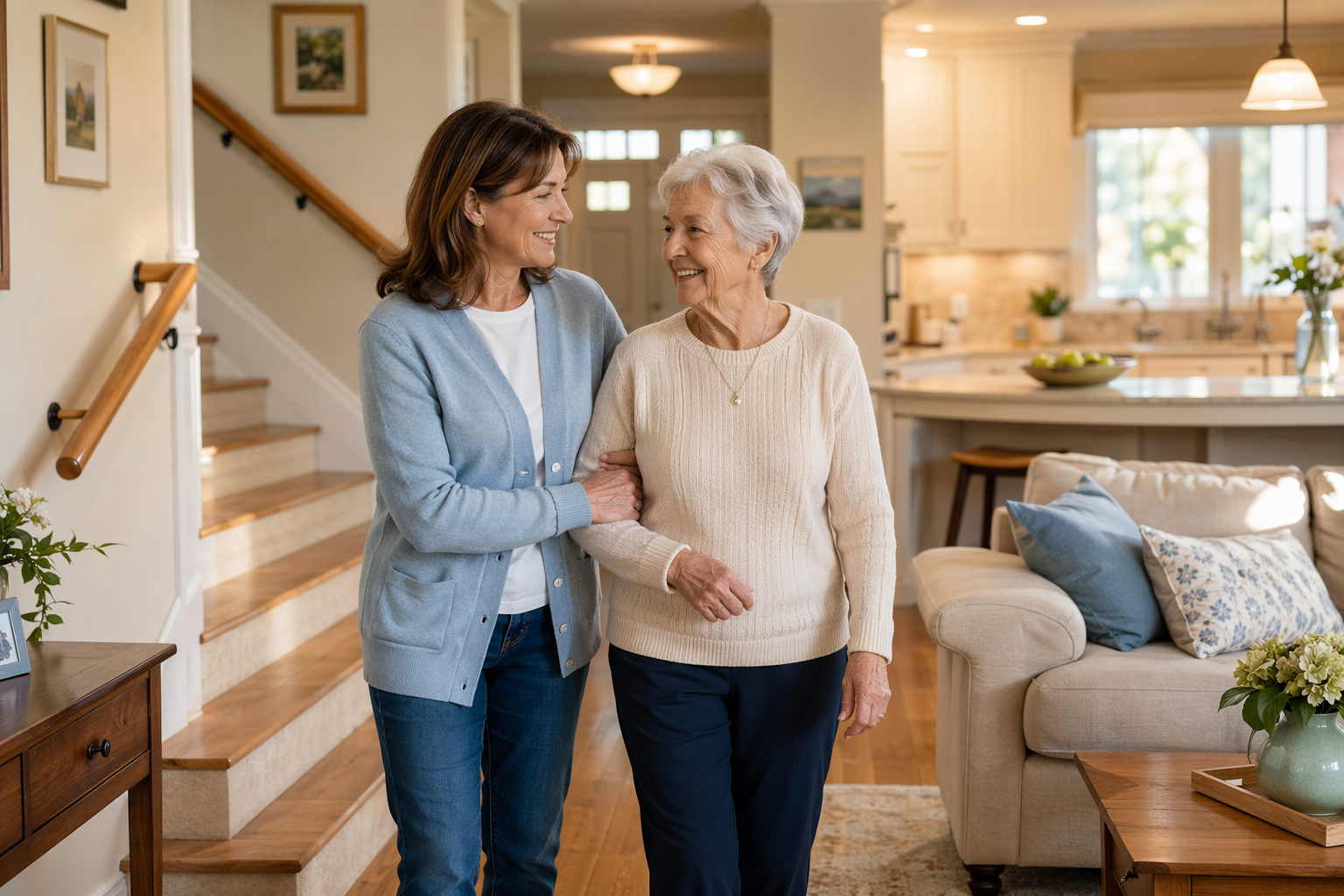
The Gap in Numbers: What Older Adults Want vs. What Homes Can Deliver
The desire to age in place is nearly universal among older Americans. A February 2026 Pew Research Center survey of 2,582 adults aged 65 and older found that 93% currently live in their own home or apartment. Among those living at home without a caregiver, 60% said they would want to stay in their home and have someone care for them if they could no longer live independently. Only 18% would prefer assisted living, and 11% would move in with family.
But there is a sharp disconnect between what older adults want and what they believe is achievable. The same Pew survey found that only 37% of those who want to stay home with care think it is extremely or very likely to happen. That gap between desire and confidence is not unfounded — it reflects a real and measurable readiness problem.
According to U.S. Census Bureau data compiled by multiple sources, only 1 in 10 American homes meets basic criteria for aging in place: a step-free entry, a first-floor bedroom and bathroom, and accessible bathroom features. That means 9 out of 10 homes lack the fundamental infrastructure to support safe, independent living for an older adult with even moderate mobility challenges.
The consequences of this gap are severe. The CDC reports that falls among adults 65 and older caused over 38,000 deaths in 2021, making falls the leading cause of injury death for that age group. In that same year, emergency departments recorded nearly 3 million visits for older adult falls. The medical costs of fatal and nonfatal falls were estimated at approximately $80 billion annually. More than 14 million older adults fall each year — and over half of those falls happen at home.
Only 21% of adults 65 and older have long-term care insurance, according to the same Pew survey. This means the vast majority of families will need to fund home modifications, in-home care, or both out of pocket. The financial dimension of the readiness gap is as significant as the physical one.
The good news is that this gap is solvable. It does not require a complete home renovation or a six-figure budget. It requires a clear-eyed assessment of three interconnected domains: the home environment, the support system, and the family's financial resources. The following framework is designed to help families conduct that assessment without being overwhelmed.
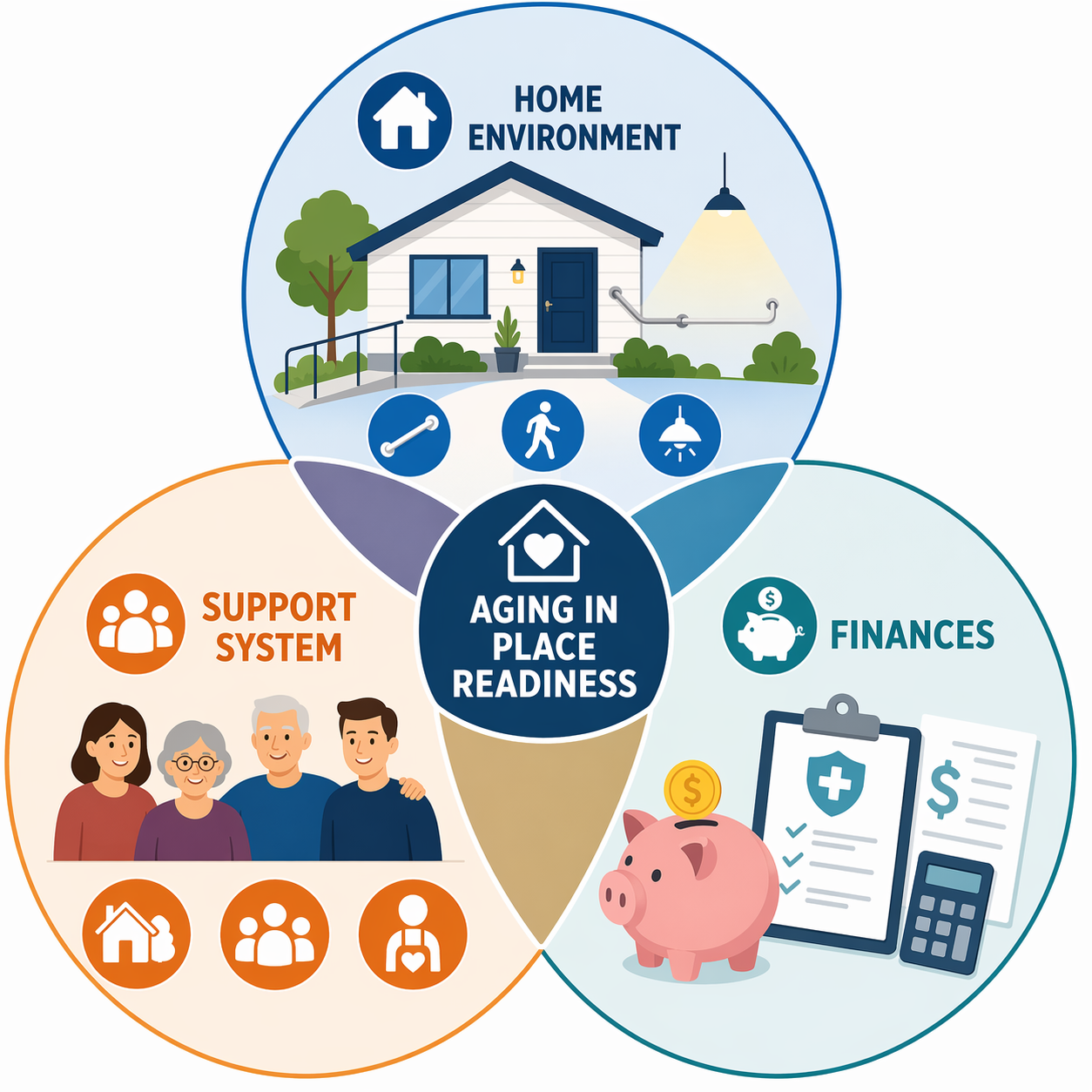
The Three Readiness Domains: A Framework for Family Decision-Making
Most conversations about aging in place focus on one thing: grab bars in the bathroom. While bathroom safety is critical, true readiness requires a broader view. A framework developed by geriatric medicine specialists at Mass General Brigham identifies five pillars of successful aging in place: Home Safety and Design, Health and Mobility, Social Connection, Transportation and Access, and Support System and Backup Plans. For family decision-making, these five pillars can be consolidated into three practical domains that every family can assess.
Domain 1: Home Environment
This is the physical space where your parent lives. It includes the structural features of the home (stairs, door widths, bathroom layout), the presence of fall hazards (loose rugs, poor lighting, clutter), and the availability of assistive features (grab bars, handrails, non-slip surfaces). The MGH framework notes that most falls happen during routine activities like getting out of bed or using the toilet — not during obviously risky activities. This means the home environment assessment must go beyond obvious hazards and look at the daily movements your parent makes dozens of times each day.
Domain 2: Support System
Who will be available to help? This includes family members who live nearby, neighbors who can check in, community resources like Area Agencies on Aging and senior centers, and paid care options such as home health aides or companions. The support system domain also includes medical care coordination — does your parent have a primary care provider who is aware of their fall risk? Is there a plan for getting to medical appointments? The MGH framework emphasizes that a strong support system and backup plans are essential for aging in place to be sustainable.
Domain 3: Finances
This is the domain families most often avoid discussing. The financial assessment includes: the cost of home modifications (from $25 for a grab bar to $50,000+ for a full bathroom remodel), the cost of in-home care (which can range from $20-30 per hour for a companion to $50+ per hour for skilled nursing), and the availability of insurance coverage. Only 21% of older adults have long-term care insurance. Medicare does not cover home modifications or long-term custodial care. Medicaid may cover some modifications through home- and community-based services waivers, but eligibility varies by state. The VA offers grants for eligible veterans. Understanding what is and is not covered is essential before making decisions.
These three domains are interconnected. A home that is physically perfect but has no support system is not truly ready. A strong support system cannot compensate for a home with stairs that your parent can no longer climb safely. And without a realistic financial plan, neither modifications nor care can be sustained over time. The goal of this framework is to help families identify which domain is the weakest link in their specific situation and start there.
For a deeper look at how to prioritize home modifications within this framework, see our Aging in Place Home Modifications: A Decision Framework for Adult Children.
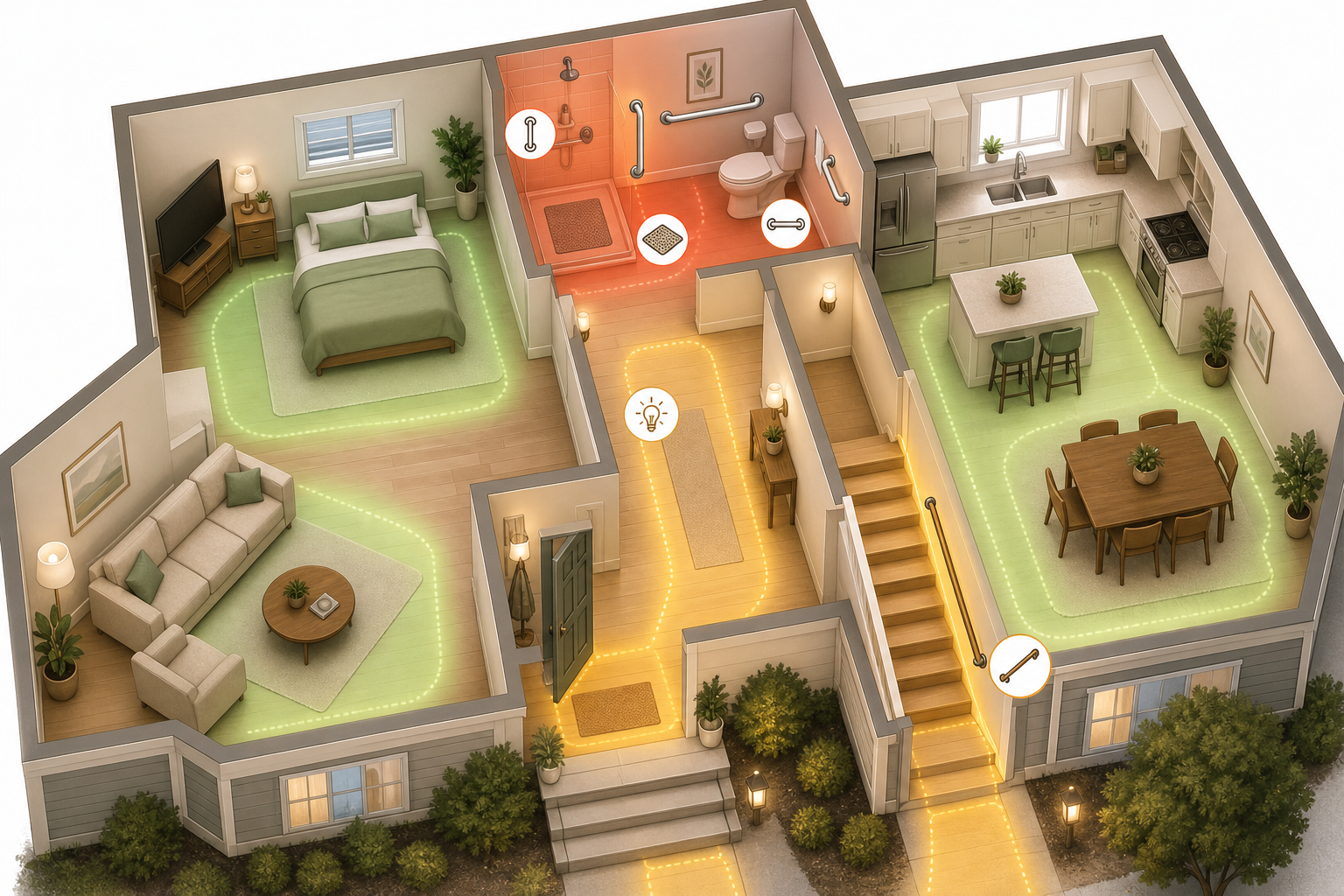
Room-by-Room Priority Checklist: Start Where the Risk Is Highest
Not every room in the home needs the same level of attention. The National Institute on Aging and the National Council on Aging both provide room-by-room guidance that prioritizes areas where falls are most likely to occur and where the consequences are most severe. The following checklist is organized by priority, starting with the highest-risk areas. This is not a comprehensive STEADI-aligned walkthrough — it is a starting point for families who need to know where to focus their time and money first.
Priority 1: Bathroom
The bathroom is the most dangerous room in the home for older adults. Nearly 80% of older adults report needing bathroom modifications like grab bars and walk-in showers, according to survey data compiled by RubyHome. The combination of wet surfaces, hard fixtures, and the need to transfer on and off the toilet and into the shower creates multiple fall opportunities every day.
- Install grab bars near the toilet and inside and outside the tub or shower. The NIA specifically recommends mounting grab bars in these locations. Grab bars cost $20-30 each and can be installed in under an hour.
- Place non-slip mats or adhesive strips inside the shower or tub and on the bathroom floor outside the shower.
- Install a shower seat and an adjustable-height handheld showerhead so your parent can shower while seated.
- Replace a standard toilet with a comfort-height toilet (17-19 inches vs. the standard 14-15 inches) or add a toilet seat riser. This reduces the effort required to stand up.
- Improve lighting. Add a night light or motion-activated light so the bathroom is visible during nighttime trips.
Priority 2: Stairs and Entryways
Stairs are the second most common location for falls at home. The NIA recommends installing handrails on both sides of every staircase, with good lighting at the top and bottom. For entryways, the priority is creating a step-free path into the home.
- Install handrails on both sides of all stairs, indoors and outdoors. Ensure they are securely mounted and extend the full length of the staircase.
- Add bright, non-glare lighting at the top and bottom of stairs. Consider motion-activated lights for nighttime use.
- Remove all throw rugs and loose mats from the top and bottom of stairs. These are tripping hazards.
- For exterior entryways, add non-slip material to steps and install a grab bar near the front door for balance while unlocking and opening the door.
- If your parent uses a walker or wheelchair and there are steps at any entry, a modular wheelchair ramp ($1,000-3,000) may be necessary.
Priority 3: Bedroom and Living Areas
The NIA recommends placing night lights and flashlights in bedrooms and bathrooms, and keeping a phone near the bed so your parent does not have to rush to answer it. In living areas, the focus is on clear pathways and accessible storage.
- Place a sturdy chair in the bedroom for seated dressing. This reduces the risk of falling while trying to balance on one leg.
- Store frequently used items between waist and shoulder height in closets and cabinets. This eliminates the need to reach overhead or bend down.
- Clear all walking paths of clutter, cords, and furniture that protrudes into walkways. The NCOA recommends clearing stairs of clutter and throw rugs as a quick modification.
- Replace burnt-out bulbs with bright, non-glare lightbulbs. Poor lighting is one of the most common and easiest-to-fix fall hazards.
Priority 4: Kitchen
The kitchen presents fall risks from spills, reaching, and fatigue. The NIA recommends keeping frequently used items within easy reach, cleaning spills immediately, and preparing food while seated to prevent fatigue.
- Move everyday dishes, glasses, and food items to lower cabinets and drawers so your parent does not need to reach overhead.
- Place a sturdy chair or stool in the kitchen so your parent can sit while preparing food or washing dishes.
- Replace round doorknobs with lever-style handles, which are easier to operate for someone with arthritis or reduced hand strength.
- Ensure all spills are cleaned immediately. Non-slip flooring in the kitchen is a longer-term upgrade but worth considering.
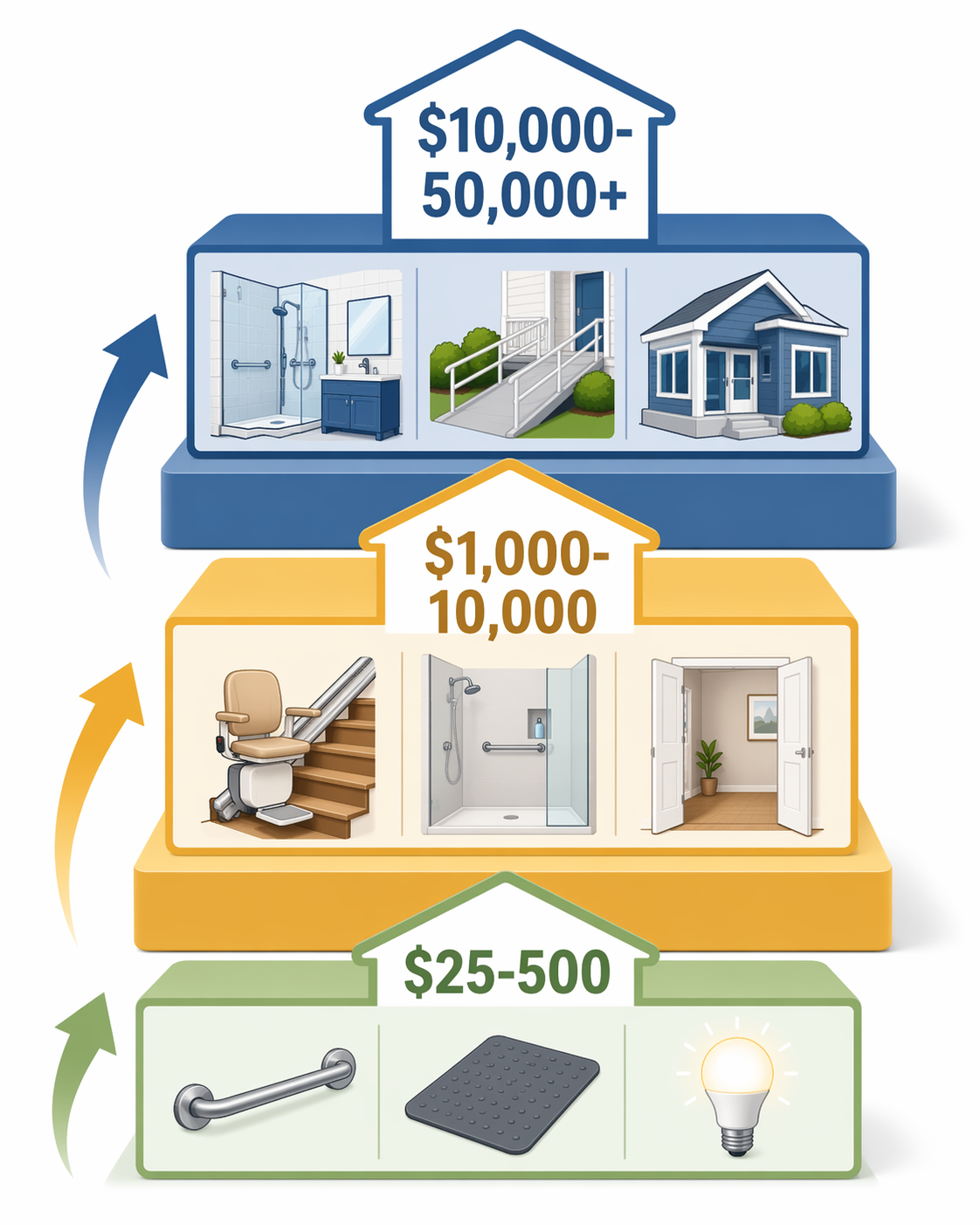
Cost Realism: What Modifications Actually Cost and How to Prioritize
One of the most common reasons families delay home modifications is the assumption that they are prohibitively expensive. While some structural changes do require significant investment, the most critical fall-prevention modifications are surprisingly affordable. ElderLife Financial provides a useful three-tier framework for understanding costs.
| Cost Tier | Price Range | Examples | Impact on Fall Risk |
|---|---|---|---|
| Low-cost upgrades | $25 to $500 | Grab bars ($20-30 each), lever-style door handles, handheld showerheads, non-slip bath mats, toilet seat risers, improved lighting | Addresses the most common fall scenarios: bathroom transfers, nighttime trips, and reaching hazards |
| Mid-range projects | $1,000 to $10,000 | Walk-in showers ($6,000-12,000), stair lifts ($2,500-8,000), modular wheelchair ramps, comfort-height toilets | Eliminates the highest-risk activities: climbing stairs, stepping over tub walls |
| High-cost structural changes | $10,000 to $50,000+ | Widening doorways, adding a first-floor bedroom and bathroom, installing elevators | Enables full home accessibility for wheelchair users or those with severe mobility limitations |
The key insight from this framework is that the highest-impact modifications are also the most affordable. A $200 grab bar installation in the bathroom can prevent a fall that leads to a hip fracture requiring surgery, rehabilitation, and potentially a move to a skilled nursing facility. ElderLife Financial notes that a single fall-related hospitalization can cost more than a full set of home modifications. The National average cost for an aging-in-place remodel is approximately $9,500, according to remodeler survey data compiled by RubyHome, with a range of $3,000 to $15,000. But most families do not need a full remodel — they need targeted modifications in the highest-risk areas.
For families who need a deeper breakdown of costs by room and modification type, our Aging in Place Home Modifications Cost Guide: Room-by-Room Budget Tiers for Families provides detailed estimates for every common modification. For families considering in-home care as part of their financial plan, see our Live-In Companion Costs in 2026: A Complete Financial Guide for Families.
Building the Support Team: Who You Need and When
A safe home is only part of the equation. The MGH framework emphasizes that a strong support system and backup plans are essential for sustainable aging in place. No single person can provide all the support an older adult may need, and trying to do so is a recipe for caregiver burnout. Building a support team means identifying the right people and resources for each type of need.
Family and Neighbors: The First Line of Support
Family members who live nearby can handle daily check-ins, transportation to appointments, grocery shopping, and medication reminders. Neighbors can serve as a backup contact for emergencies. The key is to be specific about who is responsible for what — a vague "we'll help" is not a support plan. Create a simple contact list with each person's role and availability.
Community Resources: Often Overlooked, Often Free
Area Agencies on Aging (AAAs) are a federally mandated network of local organizations that provide information, referrals, and direct services for older adults. Services vary by location but may include meal delivery, transportation, caregiver support, and home modification assistance. Local senior centers often offer social activities, exercise classes, and health screenings. These resources can reduce the burden on family caregivers and provide social connection for the older adult.
Professional Assessments: Occupational Therapists and CAPS Contractors
Before making any significant home modifications, consider a professional assessment. An occupational therapist can evaluate your parent's specific functional limitations and recommend modifications tailored to their needs. A Certified Aging-in-Place Specialist (CAPS) is a contractor with specialized training in home modifications for older adults. These professionals can identify issues that a family member might miss and can recommend solutions that are both effective and cost-efficient.
For a detailed comparison of these roles and guidance on when to hire each, see our guide: CAPS vs. General Contractor vs. Occupational Therapist: Who Should You Hire for Aging-in-Place Home Modifications?.
Paid Care Options: When Family Support Is Not Enough
For families where adult children live far away or have demanding jobs, paid care may be necessary. Home health aides provide personal care assistance (bathing, dressing, toileting) and are typically licensed and supervised by a home health agency. Companions or homemakers provide non-medical support such as meal preparation, light housekeeping, and companionship. The cost varies significantly by location and level of care, but planning for this expense is essential.
Warning Signs: When to Consider Alternatives to Aging in Place
Aging in place is not the right choice for every older adult in every situation. The MGH geriatric medicine framework identifies several warning signs that it may be time to consider alternatives. Recognizing these signs early — rather than waiting for a crisis — preserves more options and allows for a planned transition rather than an emergency one.
- Falling frequently. One fall is a warning sign. Two or more falls within six months is a strong signal that the current living situation is not safe, even with modifications.
- Trouble getting to the bathroom safely. If your parent is having accidents because they cannot reach the bathroom in time, or if they are limiting fluid intake to avoid bathroom trips, this is a serious safety concern.
- Missing medication doses. Whether due to confusion, forgetfulness, or physical difficulty opening bottles, missed medications can lead to serious health consequences.
- Not eating well. Weight loss, spoiled food in the refrigerator, or a freezer full of frozen meals that are never eaten are signs that your parent may be struggling with meal preparation.
- Feeling uncomfortably isolated. Social isolation is a health risk in its own right, associated with increased rates of depression, cognitive decline, and even mortality.
The MGH framework emphasizes that planning ahead gives families a broader menu of choices. Waiting for a crisis — a fall that results in a hospitalization, a dementia diagnosis that requires immediate supervision — eliminates options and forces decisions under pressure. If you are seeing one or more of these warning signs, it is time to have a family conversation about whether aging in place is still the right goal, or whether a different living arrangement would provide better safety and quality of life.
For a structured approach to evaluating when aging in place may no longer be viable, see our When Aging in Place Is No Longer Viable: A Decision Framework Based on Functional Decline Markers.
Related reading
Noticed something outdated or inaccurate on this page? Flag a correction. We review every report against CDC, NIA, and AARP HomeFit guidance before updating a page.
Part of the Fall Prevention section.