
STEADI: intervene
Blueberry Recall Safety Checklist for Seniors
Use this checklist to check your freezer against the GreenWise frozen berry recall: which packages to discard or return, how to sanitize what they touched, and the symptoms in an older adult that mean calling the doctor.
Last verified: August 1, 2026. The GreenWise frozen berry investigation was still active at that point, so use this as a home checklist, then re-check the FDA and CDC pages before you decide the job is finished.
Start at the freezer. If you or an older parent has GreenWise frozen blueberries or mixed berries, pause eating them, keep the package if you still have it, and read the product name, bag size, UPC, lot code, and best-by date before anything gets thrown out. If the package is already gone and the berries are loose in a container or freezer bag, do not try to guess from memory.
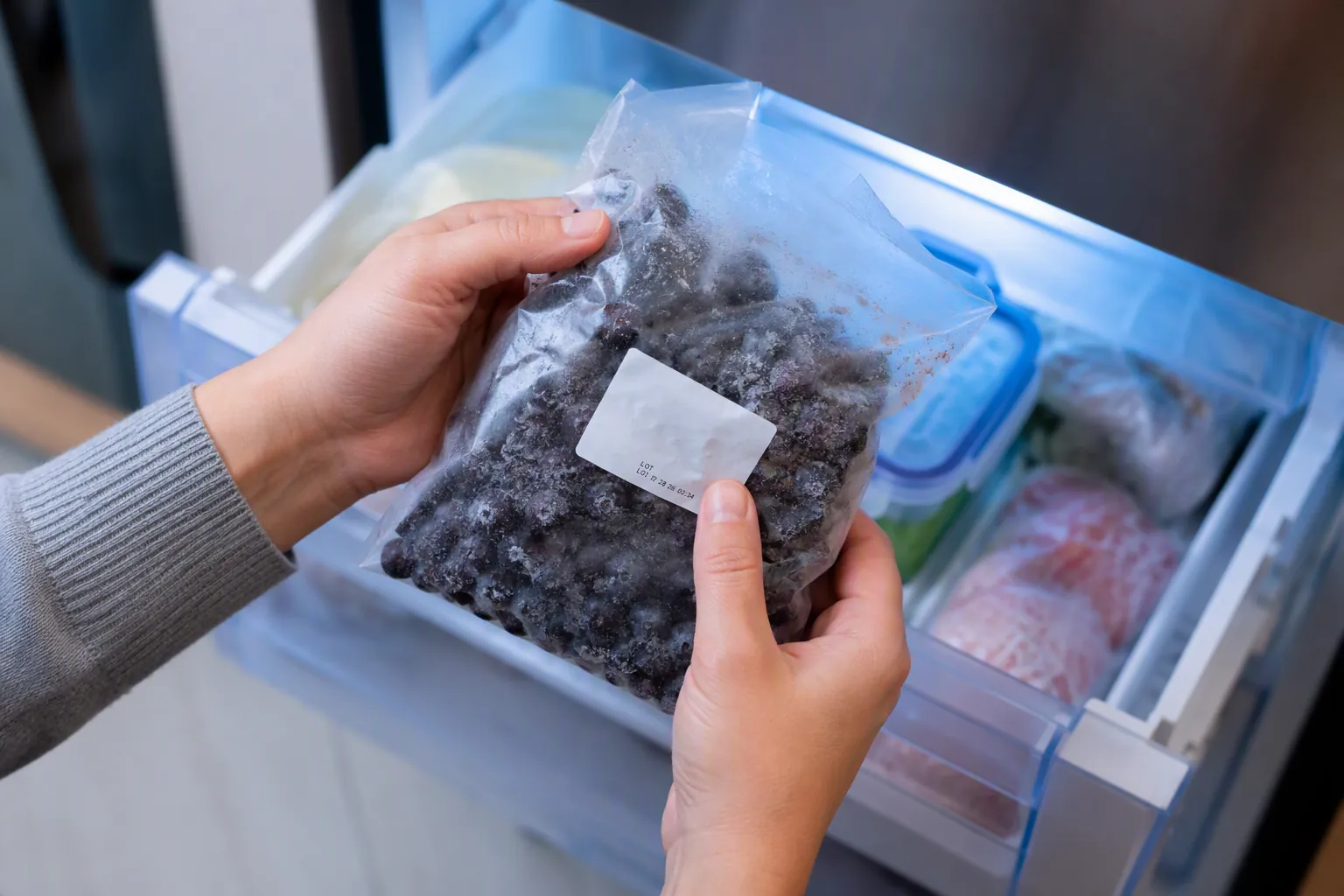
The 10-minute freezer check
- Stop serving or eating the GreenWise frozen berries until the package has been checked.
- Put the bag on a counter or tray so berry juice and frost do not drip into the freezer or onto other food.
- Photograph the front of the bag and the UPC, lot code, and best-by area if you may need help reading it.
- Compare the package against the July 29 all-lots recall first.
- Then check the earlier July 3 lot-specific recall if the bag is a 10-ounce GreenWise Organic IQF Blueberries package.
- If the berries are recalled, discard them safely or return them according to the retailer’s recall instructions. Then clean anything they touched.
- If the packaging was removed and the household cannot confirm the berries are unaffected, throw them away.
That last line is the one that prevents a lot of unsafe guessing. Frozen berries get poured into plastic tubs, smoothie bags, bowls, and freezer bins. Once the printed code is gone, there may be no reliable way to separate an unaffected handful from an affected one.
Check the July 29 GreenWise recall first
Publix recalled all lots of these GreenWise organic frozen berry products on July 29, 2026, after FDA sampling found E. coli O145:H28 in a product sample. The recalled products were sold in Alabama, Florida, Georgia, Kentucky, North Carolina, South Carolina, Tennessee, and Virginia. [1]
| Product to check | Bag size | UPC |
|---|---|---|
| GreenWise Organic Frozen Whole Blueberries | 10 oz | 41415-06453 |
| GreenWise Organic Frozen Whole Blueberries | 48 oz | 41415-12053 |
| GreenWise Organic Frozen Whole Mixed Berries | 10 oz | 41415-06753 |
| GreenWise Organic Frozen Whole Mixed Berries | 48 oz | 41415-12153 |
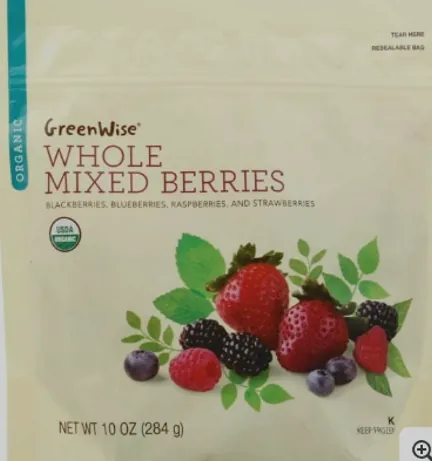
For this July 29 recall, “all lots” matters. If the product name, size, and UPC match one of the recalled entries above, do not keep the bag because a different lot code looks less familiar. The all-lots recall is broader than a single-code check.
If you are checking for a parent over the phone, ask them to read the UPC slowly from left to right, then read it again. A smudged 6 and 8 or a missing middle digit is enough to turn a clear decision back into a guess. A photo sent by text is often easier than a second round of “read me the number again.”
If the berries were repackaged
The FDA’s outbreak page gives a plain rule for households that no longer have the original packaging: if the package was removed and you cannot confirm the berries are not part of the recall, throw them away. [2]
Use that rule for berries poured into meal-prep smoothie packs, a freezer-safe storage box, a half-labeled zip bag, or a bowl that someone meant to use later. The goal is not to prove the berries are dangerous. The goal is to stop relying on memory when the code that would answer the question is gone.
Also check this earlier July 3 package
There was also an earlier, narrower recall announced July 3, 2026. Check for 10-ounce GreenWise Organic IQF Blueberries with lot code 60401 and a best-by date of February 9, 2028. [3]
This July 3 item is not the same kind of check as the July 29 all-lots recall. For the July 3 notice, the lot code and best-by date are part of the decision. For the July 29 notice, matching the product, size, and UPC is enough because all lots of the listed products were recalled.
Discard or return without spreading berry juice
If the package matches the recall, do not open it to inspect the berries. Put the bag inside another bag, seal it, and either place it where no one will retrieve it from the trash or keep it contained for return according to the store’s recall instructions. If it leaked, treat the outside of the bag, the shelf, the bin, and the counter as touched surfaces.
For a senior household, the practical risk is often the second person in the chain: the spouse wiping the drawer, the adult child rinsing a smoothie cup, the grandchild touching the counter. Keep the cleanup small and controlled. Do not carry an unbagged, frosty package through the kitchen while it drips.
Clean what the berries touched
CDC’s recall instructions say to wash items and surfaces that may have touched the recalled berries using hot soapy water or a dishwasher. [4]
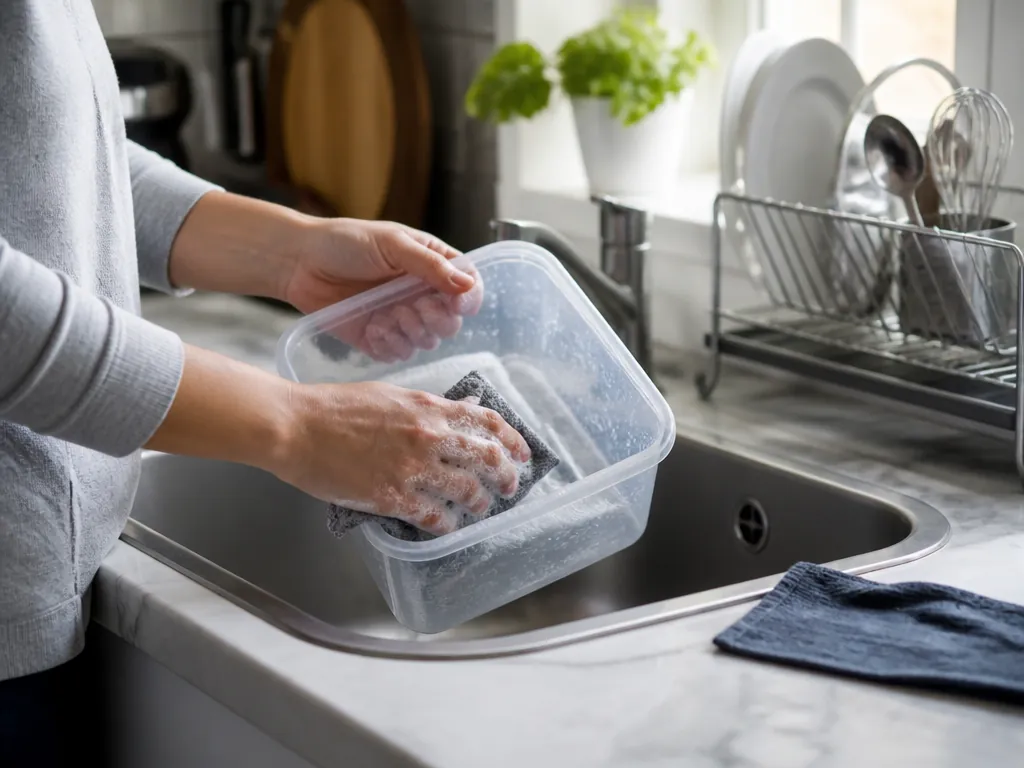
- Freezer bins, drawers, shelves, and the ledge where the bag rested
- Counters, trays, cutting boards, or bowls used while checking the package
- Measuring cups, blender cups, spoons, colanders, and storage containers
- Hands, sink handles, trash can lids, and any cloth used during cleanup
If a freezer bin is removable, take it to the sink and wash it there instead of crouching and wiping around frozen food. If crouching, tugging a drawer, or standing up quickly is hard for the older adult, this is a good moment for someone else to do the freezer part. The berries are the recall item; the cleanup should not create a fall hazard.
If this freezer also lost power recently, use a separate power-outage food-safety check rather than treating the berry recall as the only issue. Our 72-hour power outage safety checklist for seniors and what to do if power is still out after a storm cover those broader discard decisions.
Why seniors get a stricter symptom-watch
Blueberries are not unsafe for seniors as a category. The problem here is specific recalled GreenWise frozen berry packages tied to an E. coli O145:H28 investigation.
The reason to use a lower threshold for calling a clinician is that older adults have less room for “wait and see.” CDC says nearly half of people age 65 and older with a lab-confirmed foodborne illness from Salmonella, Campylobacter, Listeria, or E. coli are hospitalized. [5]
That statistic does not mean every older adult who ate a recalled berry will become seriously ill. It means that if symptoms start, the household should not treat dehydration, bloody diarrhea, or worsening weakness as a routine stomach bug.
As of the FDA’s July 30, 2026 update, the outbreak investigation listed 12 illnesses, with 11 in Florida and 1 in Georgia, 4 hospitalizations, 0 deaths, and the last reported illness onset on June 5, 2026. [2]
Those numbers may change. They are included here to explain why the recall is being taken seriously, not to predict what will happen in one household.
Symptoms that mean calling a doctor
This is safety guidance, not a diagnosis. If an older adult ate recalled berries and develops stomach symptoms, use CDC’s food poisoning thresholds for when to contact a doctor.
- Diarrhea with a fever higher than 102°F
- Diarrhea lasting more than 3 days without improving
- Bloody diarrhea
- Vomiting that prevents the person from keeping liquids down
- Signs of dehydration, including not peeing much, dry mouth or throat, or dizziness when standing
Those call-your-doctor thresholds come from CDC’s food poisoning symptom guidance. [6]
For an older adult who already uses a walker, takes blood pressure medicine, has kidney problems, or has had a recent fall, dizziness when standing deserves special attention. Dehydration can make a nighttime bathroom trip or a quick stand from a chair less steady. That fall-risk link is secondary to the medical concern, but it is a real home-safety reason to call earlier rather than later. For more on that chain, see why extreme heat raises fall risk in older adults and nighttime bathroom trip safety during a heat wave.
HUS red flags are emergency signs
Some E. coli infections can lead to hemolytic uremic syndrome, or HUS. CDC describes HUS as a medical emergency and lists warning signs that include urinating less often, losing pink color in the cheeks and inside the lower eyelids, unexplained bruising, tiny red spots on the skin, blood in the urine, extreme fatigue, and decreased alertness. [7]
If any of those signs appear, do not manage it as ordinary food poisoning at home. Seek emergency medical care.
Before you close the freezer door
- The recalled bag is out of use, sealed, and discarded or set aside for return.
- Any loose or repackaged berries that cannot be confirmed as unaffected have been thrown away.
- Freezer bins, counters, utensils, containers, and hands that may have touched the berries have been washed.
- Anyone who ate the berries knows the doctor-call symptoms and the HUS emergency signs.
- Someone has checked the latest FDA and CDC pages again, because the investigation and product list may change.
If you use recall checklists for other senior-safety items, the same one-decision-at-a-time approach applies. Our related recalled hand warmers guide for seniors follows that format. For another foodborne-illness update written with the same last-verified-date habit, see what 2026 Cyclospora numbers mean for seniors.
References
- Publix Recalls All Lots of GreenWise Organic Frozen Blueberries and Whole Mixed Berries Due to Potential E. Coli Contamination - FDA - July 29, 2026
- Outbreak Investigation of E. coli O145:H28: Frozen Blueberries, July 2026 - FDA - July 2026
- Frutas y Hortalizas del Sur S.A. Initiates Recall of Frozen GreenWise Organic IQF Blueberries Due to Potential E. Coli Contamination - FDA - July 3, 2026
- E. coli Outbreak Linked to Frozen Blueberries - CDC - July 2026
- People at Increased Risk for Food Poisoning: Adults 65 and Older - CDC - CDC
- Food Poisoning Symptoms - CDC - CDC
- Hemolytic Uremic Syndrome - CDC - CDC
Related reading
Noticed something outdated or inaccurate on this page? Flag a correction. We review every report against CDC, NIA, and AARP HomeFit guidance before updating a page.
Part of the Fall Prevention section.