
STEADI: Screen
The Cruise Safety Check Older Adults Need Before Booking
Before paying a deposit, run a fall-risk and mobility screen to decide whether a cruise is a safe fit for an older parent. This checklist applies the same CDC STEADI-style factors used at home — medications, balance, vision, and footwear — and ends with clear go/no-go rules plus when a land trip is the safer choice.
Before anyone pays the cruise deposit, the family needs to answer a less cheerful question than “Which balcony cabin?”: can this older adult move safely through the trip the brochure is selling? A real cruise safety checklist for older adults before booking starts there, because the most serious injury pattern for older passengers is not vague “travel risk.” It is falling. In one study of cruise passengers hospitalized at a Level I trauma center, 79.1% of injuries were ground-level falls, 52.2% were femur fractures, and 70.1% of the patients were 65 or older.[1]
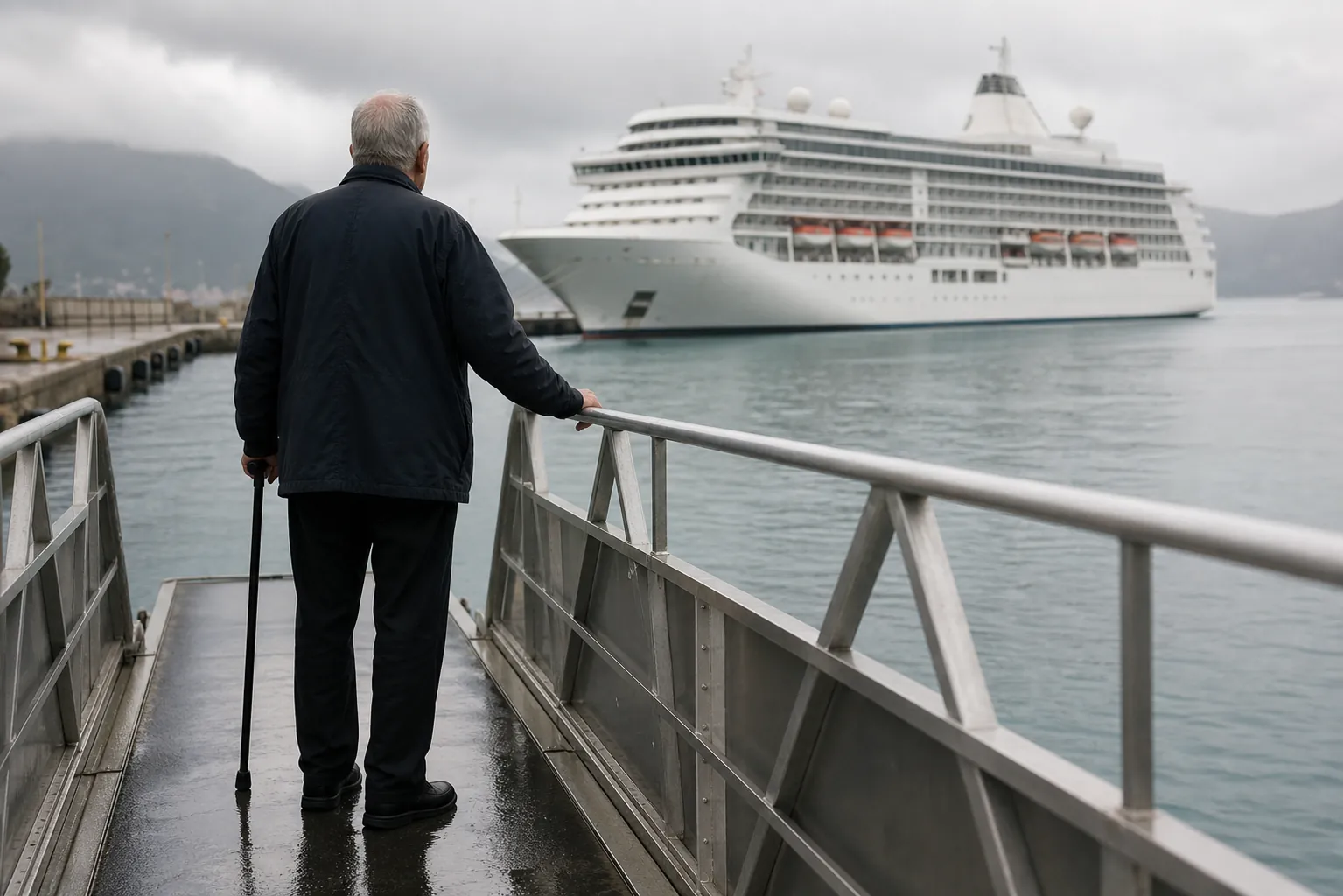
That does not mean a cruise is automatically a bad idea. For some families, one unpacking, steady meals, elevators, and entertainment in one place are exactly what makes a vacation possible. But a cruise turns ordinary fall factors into a harder environment to recover from: wet decks, sloped gangways, stairs, crowded dining areas, long corridors, moving surfaces, and ports where the family cannot easily reset the day if mobility runs out.
The deposit is not the harmless first step. It is the moment when a family either checks the real risk or commits everyone to hoping it works out.
Why the checklist starts with falls, not packing
The CDC Yellow Book 2026 reports that slip, trip, and fall injuries account for roughly 12% to 18% of cruise ship medical-center visits, second only to respiratory illness. It also notes that about half of all passengers who seek shipboard care are 65 or older.[2]
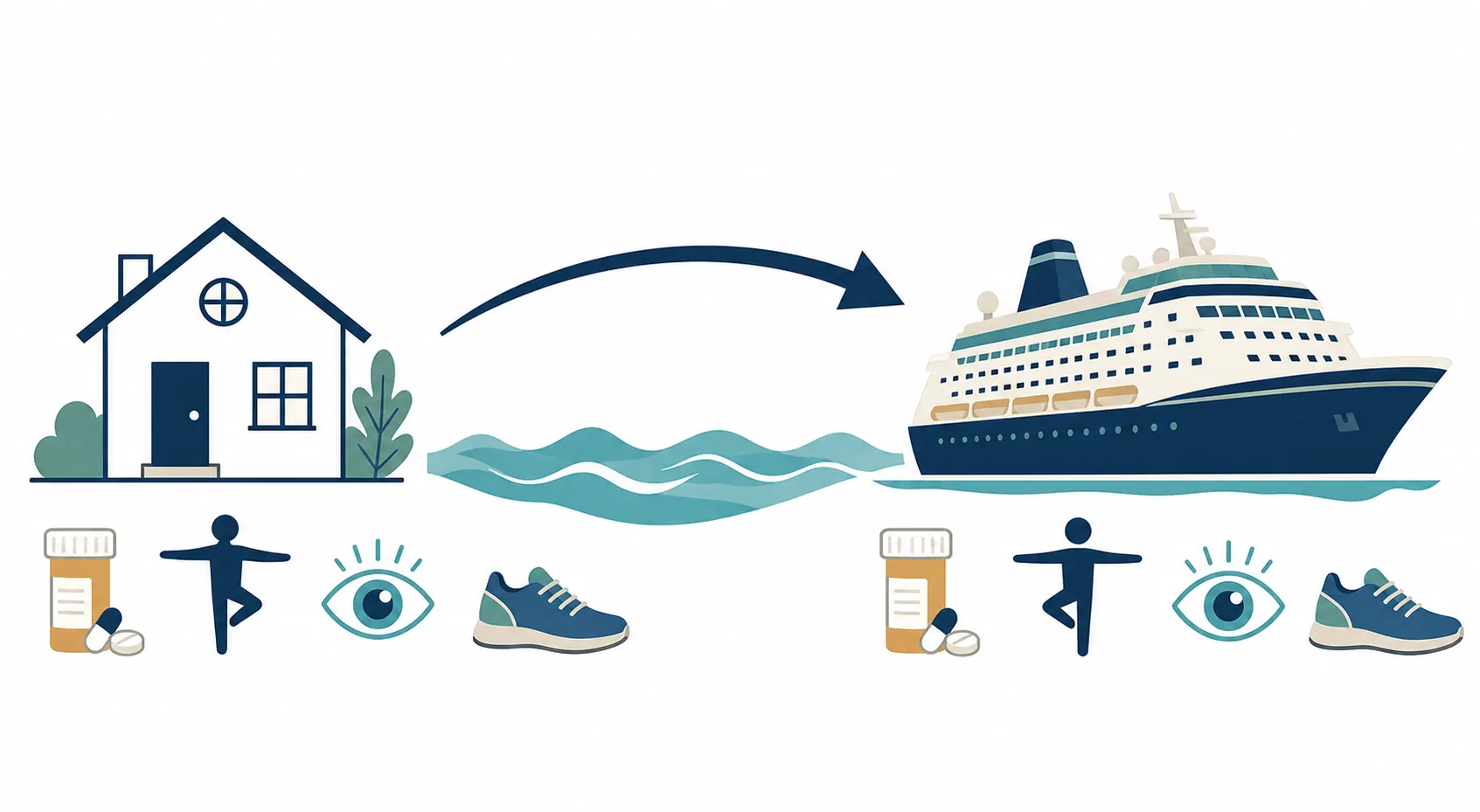
A cruise does not create balance problems from nowhere. It exposes the ones that may already be showing up at home: a hand sliding along the hallway wall, a pause before stepping off a curb, a new reluctance to shower without grabbing something, a medication that makes standing up feel lightheaded, shoes that are fine on carpet but useless on a damp deck. The CDC lists medication side effects, balance problems, vision issues, and poor footwear among fall-risk factors for older adults.[3]
Those are not cruise-specific factors, which is exactly the point. If they matter in a kitchen, bathroom, driveway, or rainy parking lot, they matter on a ship. The same wet-surface logic families use in a rainy-day home safety check applies to decks, pool areas, exterior stairs, and gangways.
The pre-booking fall and mobility screen
Use this screen before the deposit, not during packing week. It is planning support, not medical advice; when the answers point to dizziness, medication changes, balance decline, recent falls, or chronic-condition instability, bring the itinerary to the older adult’s clinician before booking.
| Before booking, verify | Questions to answer honestly | What it means for the cruise decision |
|---|---|---|
| Recent falls or near-falls | Has there been a fall in the past year? Any stumble that required grabbing furniture, a wall, another person, or a shopping cart? Any new fear of falling? | A recent fall or repeated near-falls is a pause signal. Do not book until the cause and prevention plan are clearer. |
| Walking tolerance | How far can the older adult walk on a normal day without rushing, pain, shortness of breath, or needing to sit? Can they repeat that distance several times a day? | Cruise walking is repetitive. Cabin-to-dining, dining-to-theater, ship-to-port, and port-to-transport can add up even when each segment looks manageable. |
| Standing tolerance | Can they stand in lines for boarding, elevators, buffet areas, restrooms, excursions, or customs without becoming shaky or lightheaded? | If standing is the weak point, build in wheelchair assistance, shorter routes, or a different trip before money is committed. |
| Stairs, ramps, and gangways | Can they use railings, step onto uneven surfaces, and manage a sloped ramp without being pulled by someone else? | Gangways and port transitions are not details. If the plan depends on an adult child physically rescuing the movement, pause. |
| Tender ports | Does the itinerary require small boats between ship and shore? Would stepping down, timing movement, and transferring with assistance be safe? | Tender-heavy itineraries are a poor fit for unstable balance unless the cruise line and clinician agree the plan is realistic. |
| Medication changes | Has any medication been started, stopped, increased, or combined recently? Any dizziness, sleepiness, blood-pressure drops, confusion, or urgent bathroom trips? | Medication-related fall risk should be reviewed before booking, especially when the itinerary includes heat, alcohol, stairs, or long walking days. |
| Vision | Is the older adult using the right glasses? Any cataract, low-light difficulty, depth-perception trouble, or missed eye appointment? | Dim corridors, theater steps, glossy floors, and unfamiliar cabins make vision problems more consequential. |
| Footwear | Will they wear secure, supportive, non-slip shoes every day, including dinner, excursions, pool-adjacent areas, and boarding? | A promise to “pack comfortable shoes” is not enough if the person will not wear them when surfaces are wet or crowded. |
| Mobility aid reality | Do they already use a cane, walker, rollator, wheelchair, or scooter? Is it fitted correctly? Will they use it without arguing once the trip starts? | A device that is resisted, borrowed at the last minute, or used incorrectly is not a plan. |
| Bathroom access | How quickly do they need restroom access? Can they walk from dining, theater, excursion bus, or cabin without rushing? | Rushing is a fall setup. If urgency is common, itinerary, cabin location, and excursion choices need review before booking. |
| Night movement | Do they get up at night? Can they safely move in an unfamiliar cabin when sleepy? | Nighttime toileting plus unfamiliar layout is a predictable hazard, not a surprise. |
| Caregiver capacity | Who will walk with them, manage luggage, handle crowds, push a wheelchair if needed, and make the unpopular decision to skip an excursion? | If one adult child is silently assigned all rescue work, the cruise is not yet a shared plan. |
The hardest line in this screen is usually not medical. It is social. An older parent may hear every mobility question as an accusation that they are fragile. The adult child may already know the answers because she has watched the furniture-grabbing and the careful turns in the kitchen. Write the answers down anyway. A written screen keeps the conversation from becoming “you worry too much” versus “you never listen.”
Use the 4–6-week medical visit as a checkpoint
The CDC advises older travelers to see a healthcare provider or travel medicine specialist 4 to 6 weeks before travel, or as early as possible if that window is not available.[4] For a cruise with fall concerns, treat that visit as a booking checkpoint, not just a vaccination or medication-refill appointment.
Bring the actual itinerary. “A cruise” is too vague for a useful review. The clinician needs to know whether the trip includes long port days, tender transfers, hot-weather walking tours, stairs, alcohol-heavy meals, recent medication changes, and whether the older adult will be using a cane, walker, wheelchair, or scooter.
- Ask whether any current medication could increase dizziness, sleepiness, low blood pressure, confusion, urinary urgency, or dehydration risk.
- Ask whether a recent fall, near-fall, balance change, or new weakness needs evaluation before travel.
- Ask whether vision, hearing, foot pain, neuropathy, arthritis, obesity, diabetes complications, heart disease, or neurologic symptoms change the walking plan.
- Ask whether the chosen mobility aid is appropriate for cruise surfaces, cabin movement, ports, and transfers.
- Ask what symptoms should cancel an excursion, require shipboard medical care, or end the trip early.
Families who are already sorting through walker, scooter, and walking-distance decisions may find it useful to compare the cruise day with a land-based logistics plan, such as a senior-friendly city weekend itinerary. The question is the same: how many transitions can the person repeat safely before fatigue changes the risk?
Do not hide the mobility aid question until after booking
If Dad needs a cane at home but insists he will “just take it easy” on the ship, that is not a stable plan. If Mom uses a rollator in the neighborhood but refuses to use it in public, that is also part of the risk screen. The issue is not whether a device exists in the garage. It is whether the older adult will use the right device, in the right way, when the deck is crowded, the hallway is narrow, the elevator is full, or the family is late for an excursion.
A last-minute rented scooter or borrowed wheelchair can solve some distance problems, but it can create others if no one has practiced transfers, charging, storage, turning, or getting through crowded spaces. Those details belong before the deposit because they may change the itinerary, cabin category, shore excursions, or decision to cruise at all.
Where cruise movement becomes less forgiving
A family can talk itself into a cruise by picturing the calm parts: sitting at dinner, watching the water, unpacking once. The fall screen has to picture the transitions. That is where ordinary instability becomes more consequential.

- Boarding and disembarkation: luggage, lines, documents, ramps, time pressure, and crowds arrive before the vacation has even settled.
- Gangways: slope, damp surfaces, changing angles, and the gap between shore and ship can make a normally manageable walk feel different.
- Buffets and dining rooms: carrying plates, turning around people, and scanning for seats can challenge balance and attention.
- Theater and lounge steps: dim lighting and uneven attention can turn a small misstep into a serious fall.
- Cabin bathrooms: unfamiliar layouts, thresholds, nighttime toileting, and wet floors deserve the same suspicion as a risky bathroom at home.
- Ports: curbs, cobblestones, heat, shuttle steps, long walks from pier to town, and excursion timing may be more demanding than the ship itself.
- Tender transfers: stepping between a ship platform and a smaller boat is a different test from walking down a hallway.
This is why generic advice to “bring comfortable shoes” is too thin. The family needs to know whether the older adult will wear supportive, non-slip shoes when they clash with dinner clothes, whether they can stand through a delay, and whether someone is expected to grab them if the surface moves or the crowd presses forward.
A smaller study still points in the same direction
A PubMed-indexed abstract from Dahl reported 663 passenger injuries over 3 years on one cruise ship; the median injured passenger age was 72, 62.7% were women, and 12.5% of the injuries were classified as serious.[5] This should not be stretched into a fleetwide injury rate. It is one ship, reported injuries, and an abstract-level view. Still, it fits the same practical concern: older passengers are not an edge case in cruise injury planning.
The better use of that evidence is not to frighten families away from cruising. It is to stop them from treating mobility as a customer-service issue that the cruise line can magically fix after the deposit clears.
Go, pause, or choose land
The screen has to end in a decision. If every answer becomes “we’ll figure it out,” the family has not finished the checklist.
| Decision | Use this result when | What to do before money changes hands |
|---|---|---|
| Go | Mobility is stable; there are no unresolved recent falls or near-falls; walking and standing tolerance match the itinerary; footwear and mobility aids are realistic; medication, dizziness, balance, vision, and chronic-condition questions have been reviewed when relevant. | Book the cruise that matches the screen, not the fantasy version. Favor easy boarding, fewer demanding port days, clear elevator access, realistic excursions, and time buffers. |
| Go, but choose an easier cruise | The older adult is generally stable but the original itinerary includes too many stairs, tender ports, long tours, heat exposure, or rushed transitions. | Change the itinerary before booking. A calmer cruise is not a consolation prize if it prevents the family from spending the trip managing avoidable risk. |
| Pause | There has been a recent fall, new dizziness, medication change, new balance concern, worsening vision, new mobility aid use, or disagreement about whether help is needed. | Do not pay the deposit yet. Schedule the medical review, test the mobility aid, shorten the walking plan, and ask the cruise line specific accessibility questions. |
| No-go for now | The plan depends on denial, luck, a family member physically catching the older adult, last-minute equipment, or accommodations that have not been confirmed. | Choose a land trip or a less demanding local vacation. Preserve the vacation without pretending the fall risk is smaller than it is. |
A clear “go” is not the same as “no risk.” It means the known fall risks have been named, reviewed, and matched to a trip the person can actually move through. A pause is not a punishment. It is the point of screening before the deposit.
When a land trip is the safer vacation
A land trip is often safer when the family needs more control: a hotel near familiar medical care, a car instead of gangways and tenders, the ability to cancel one outing without missing a port, bathrooms close by, meals on a flexible schedule, and no pressure to keep up with a ship’s movement through the itinerary.
This is the same planning discipline families use for other crowded, out-of-home events. Booking early can make safety easier when it allows better timing, accessible parking, shorter walks, and rest breaks; the same verify-before-you-commit approach appears in this state fair safety checklist for seniors. The cruise version simply has less room for improvising once the ship sails.
Companion checks that matter, but should not bury the fall screen
Cabin layout, door width, scooter storage, ship medical costs, evacuation coverage, medication supply, and infection prevention all matter. They are just not substitutes for the fall-risk decision. A perfectly chosen cabin does not solve an unreviewed dizziness problem. Travel insurance does not make a wet gangway easier to cross.
Fitness-to-cruise letters are another area where families should avoid assumptions. During March 2020, some cruise lines announced medical certification requirements for older guests, but those policies were tied to that period and cruise-line rules can vary and change.[6] Check the current requirements with the specific cruise line before booking; do not treat an old article, a travel forum, or a friend’s experience as a universal rule.
If the older adult’s fall risk is tangled with weight, neuropathy, medication burden, or service-related health issues, use the cruise screen as the trigger for a deeper review. For example, families can read more about how obesity can raise fall risk in seniors or how Agent Orange-related health effects may affect fall risk in aging veterans. The cruise decision should be narrower than a full medical workup, but it should be honest about the conditions that change balance, stamina, vision, sensation, and reaction time.
The decision before the deposit
Book only when the screen produces a clear “go”: stable mobility, reviewed fall-risk factors, realistic walking and standing demands, and a plan that does not depend on last-minute courage or one family member doing all the catching. If the answer is pause, choose an easier cruise, or choose land, that is still vacation planning. It is just planning without pretending the fall-risk screen can wait until after the suitcase is packed.
References
- Patterns of injury amongst cruise ship passengers requiring hospitalisation — International Maritime Health, 2018
- CDC Yellow Book 2026, Cruise Ship Travel — CDC Yellow Book 2026
- CDC Facts About Falls — CDC
- CDC Older Adults and Healthy Travel — CDC Travelers’ Health
- Passenger accidents and injuries reported during 3 years on a cruise ship — PubMed, 2010
- Cruise Lines to Require Medical Certification for Older Guests — Travel Agent Central
Related reading
Noticed something outdated or inaccurate on this page? Flag a correction. We review every report against CDC, NIA, and AARP HomeFit guidance before updating a page.
Part of the Fall Prevention section.