
STEADI: Intervene
What to Do Right After a Spider Bites a Senior Camper
A step-by-step first-aid plan for the minutes after an older camper is bitten — when to call 911, when Poison Control is enough, when a same-day doctor visit is needed, and what to watch over the three days after the bite.
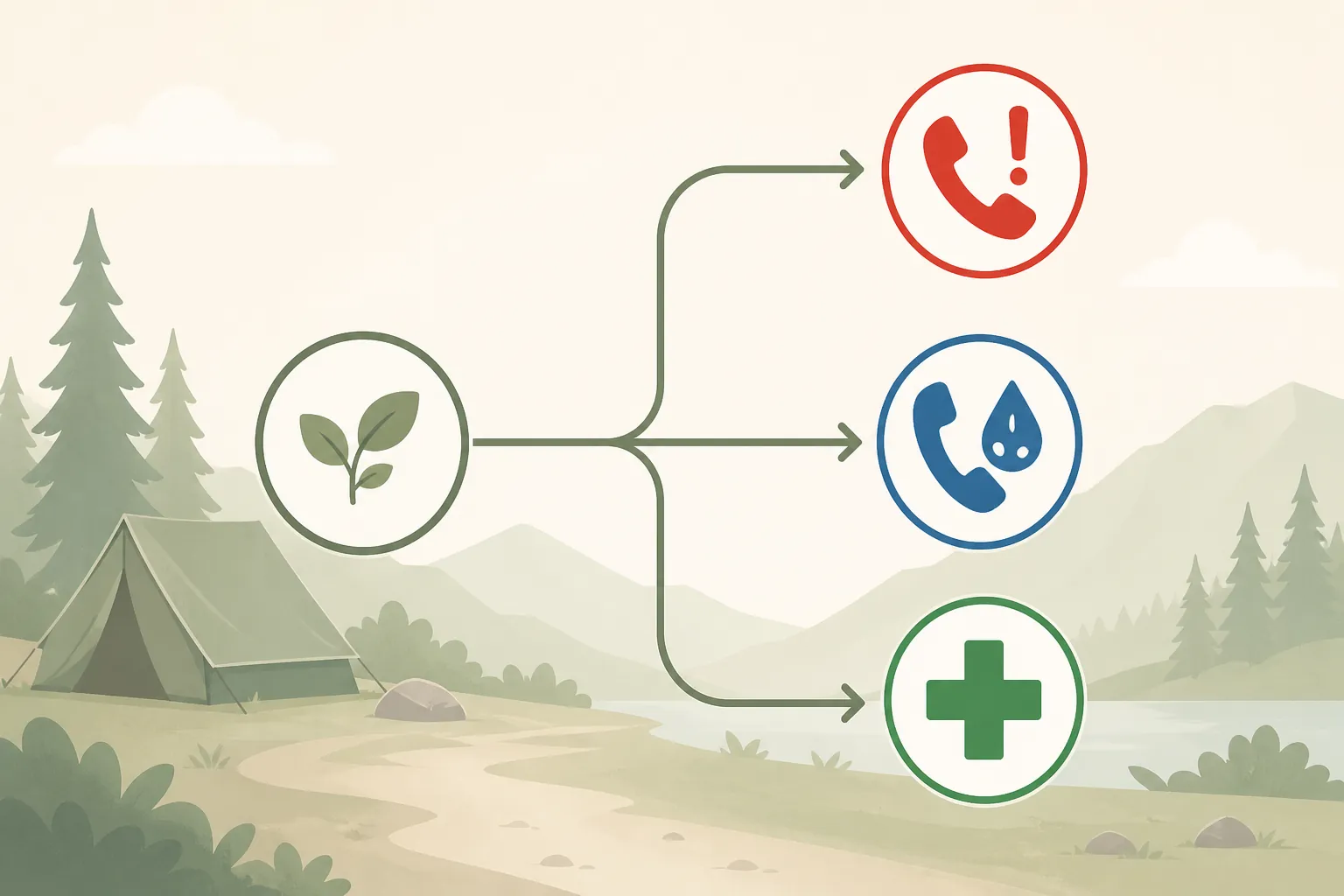
A spider bite at a campsite is not the moment to debate whether most bites are minor. For a senior camper, start with the branch that changes what you do next: 911, Poison Control, or same-day medical care.
First minutes: decide who to call
| What you see or hear | What to do now | While waiting or preparing to go |
|---|---|---|
| Trouble breathing or swallowing; rigid muscles in the chest, back, shoulders, or abdomen; severe pain or stomach cramping; a blood-filled blister; or a bullseye/target pattern that is enlarging with tissue destruction or a black scab. | Call 911 now. Do not drive a struggling, faint, confused, or breathing-impaired older adult yourself unless emergency dispatch tells you to. | Keep the person still, loosen tight clothing, note the bite time, and watch breathing. Red Cross and Mayo both treat these as urgent escalation signs. [1][2] |
| No emergency signs, but the spider is unknown, the bite was not witnessed, symptoms are unclear, or you are unsure whether this could be a dangerous bite. | Call Poison Control: 1-800-222-1222. It is free, confidential, and available 24/7. | Put the phone on speaker if service allows. Be ready to describe age, symptoms, where the bite happened, and any heart or blood-pressure history. [3] |
| A suspected black widow or brown recluse bite in a camper age 60 or older, even if symptoms are not dramatic yet; worsening pain; spreading redness with streaks; an enlarging wound; or uncertainty after Poison Control advice. | Arrange same-day medical care. If symptoms are severe or changing fast, use 911 instead. | If the spider was safely captured, bring it, even dead. Do not delay care to hunt for it. Mayo advises prompt care for dangerous or uncertain spider bites. [2][4] |
If nobody actually saw the spider bite, keep your language honest when you call: “possible spider bite,” not “brown recluse bite” or “black widow bite.” The Red Cross notes that a spider bite is only certain if it was witnessed. That matters because clinicians also have to think about skin infection, allergic reaction, injury, or another condition that only looks like a bite. [1]
Do these first-aid steps, then stop fussing with the wound
Once you have chosen the right call branch, the first aid is plain and limited. This is good news at a campsite, because nobody needs a complicated wound ritual in the dark.
- Keep the camper calm and as still as practical. CDC/NIOSH includes staying calm in first aid for venomous spider bites, and Mayo advises keeping the affected area still. [2][5]
- Wash the area with soap and water. CDC/NIOSH lists washing with soap and water as an initial first-aid step. [5]
- Use cold carefully. Mayo describes applying a cool, damp cloth or cloth-wrapped ice pack for 15 minutes each hour; the Red Cross describes a cold pack wrapped in a thin towel. Do not put bare ice directly on older skin. [1][2]
- Elevate the bite area if you can do that without causing strain or a fall risk. Mayo and CDC/NIOSH both include elevation. [2][5]
- For a recluse-type wound, Poison Control describes cleaning the area and covering it with a non-stick bandage. [3]
- Write down the time, location, first symptoms, and what first aid was done. A phone note is fine; a paper card from the glove box is fine.
Do not cut the bite, suction it, use a tourniquet, try electricity, or try to remove venom. Red Cross specifically warns that cutting, suction, tourniquets, ice used incorrectly, and electric shock do not slow venom and can cause injury; CDC/NIOSH also says not to attempt to remove venom. [1][5]
Do not borrow pressure-immobilization advice from Australian funnel-web guidance and apply it to a suspected U.S. widow or recluse bite. The U.S. first-aid sources here point to washing, cooling, elevating, keeping still, and escalating when symptoms or uncertainty require it — not wrapping the limb tightly.
Why the threshold is lower for campers 60 and older
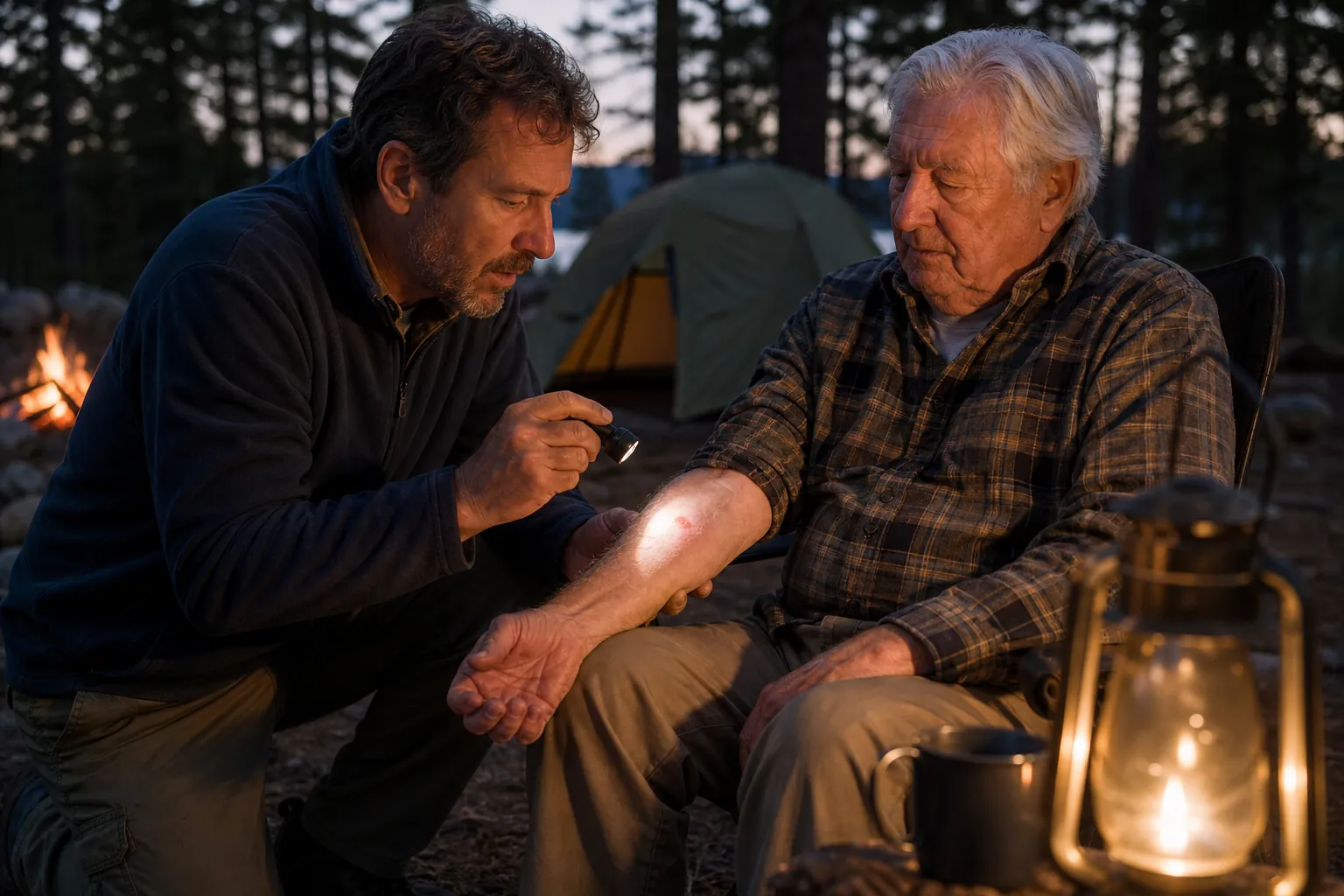
A younger, healthy camper with a small itchy bump may reasonably end up in the “clean it, watch it, ask for help if it changes” lane. A 72-year-old camper with a possible widow or recluse exposure belongs closer to the phone.
Several sources point in the same direction. Harvard Health lists older adults among those at greatest risk from black widow bites. Cleveland Clinic says black widow and brown recluse bites are most dangerous to children and people over 60, and that some people may need hospitalization for breathing, heart, blood-pressure, or severe muscle symptoms. FamilyDoctor.org also says older adults are at higher risk of complications and are more likely to need medical attention. [6][7][4]
The older clinical literature is not a campsite script, but it supports a conservative posture for higher-risk seniors. A 2007 American Family Physician review states that symptomatic elderly patients with hypertension or coronary artery disease should be hospitalized and observed after black widow bites. A 2014 educational review also names elderly patients among groups for whom antivenom may be recommended in black widow envenomation. [8][9]
That does not mean every red bump is an emergency. It means the person holding the flashlight should not use “most bites are harmless” as permission to ignore a senior’s severe cramping, sweating, spreading redness, or a wound that is changing under their eyes.
The two bite patterns that cause the most bad decisions
Widow-type symptoms may look like something else
Black widow symptoms can include severe stomach pain or cramping, headache, shaking, and sweating, and Mayo says symptoms may last 1 to 3 days. [10]
At a campsite, “my stomach is cramping” may send everyone’s mind toward bad food, constipation, heat, anxiety, or a heart-related worry. Do not try to sort that out alone if there was a possible bite and the camper is older. Severe abdominal cramping after a suspected spider bite belongs in the emergency-care branch, especially if it comes with sweating, shaking, weakness, chest tightness, trouble breathing, or a sense that something is badly wrong.
Recluse-type wounds can start quietly
Brown recluse bites may not look dramatic in the first minutes. FamilyDoctor.org says a recluse bite may sting or be painless at first, and the ulcer can continue enlarging for up to about 10 days. Mayo notes that a recluse bite wound can take weeks or months to heal and may leave scarring. [4][10]
That delayed pattern is exactly why “it doesn’t hurt much” is not enough reassurance for an older camper if the exposure fits: reaching into stored gear, putting on dark shoes, using an outdoor toilet, handling firewood, or moving items from debris or a shed-like storage area. CDC/NIOSH identifies places such as woodpiles, debris, outdoor toilets, closets, and dark shoes as relevant habitats or hiding spots for venomous spiders. [5]
If you did not see the spider
Most campsite “spider bites” are suspected, not proven. The bite may have happened while pulling on a boot, lifting a camp chair, unpacking a storage bin, or using a vault toilet. The spider may be gone. That uncertainty is normal; it is also the reason Poison Control is useful.
Call 1-800-222-1222 when there are no 911 signs but you are unsure what you are seeing. Tell them:
- the camper’s age;
- when the bite or first symptom happened;
- where it happened — boot, sleeping bag, firewood pile, toilet, gear bin, picnic table, trail stop;
- what the bite looks like now;
- whether pain, redness, swelling, cramping, sweating, shaking, breathing, or swallowing has changed;
- heart disease, blood-pressure history, allergies, and the full medication list.
Mention blood thinners if they are on the medication list because the clinician should know all medications. Do not assume blood thinners make spider bites worse; the sources used here do not support that specific claim.
What to bring if you go for care
If the spider was safely captured, bring it with you, even if it is dead; FamilyDoctor.org advises taking the spider to the doctor if possible. Do not put another person at risk, dig through woodpiles, or delay a needed call to capture it. [4]
- The camper’s medication list, including heart and blood-pressure medicines.
- A list of medical conditions, especially heart disease, high blood pressure, immune problems, diabetes, or prior severe allergic reactions.
- The time symptoms began and the time first aid was done.
- Photos of the wound, ideally with the same lighting and distance when possible.
- Notes from Poison Control or 911 dispatch, if you called.
A small pre-trip kit makes this easier. If you are packing for an older adult who travels with medical equipment or daily medications, pair this plan with a senior emergency kit checklist and a basic health-change log before the trip, not while somebody is already hurting.
The next 72 hours: watch for the change, not just the bite mark
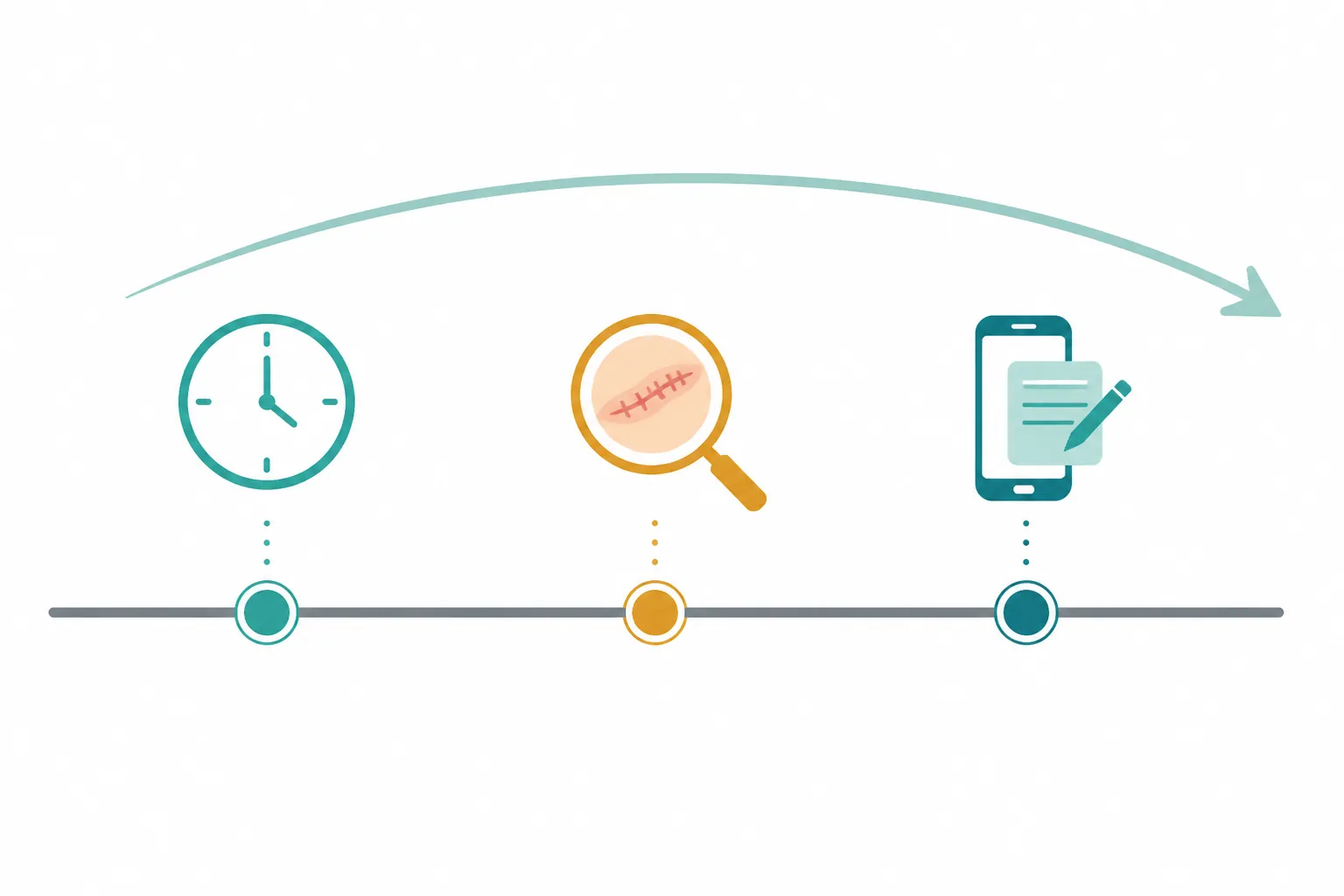
The first look at the bite is only the starting point. Widow symptoms may last 1 to 3 days, and recluse-type wounds may enlarge later rather than announce themselves immediately. [10][4]
| Timeframe | What to check | What changes the plan |
|---|---|---|
| First hour | Breathing, swallowing, severe pain, stomach cramping, sweating, shaking, rigid muscles, fast-spreading redness, and the size and color of the bite. | Call 911 for breathing or swallowing trouble, rigid chest/back/abdominal muscles, severe cramping, or rapidly worsening symptoms. Call Poison Control for uncertainty without emergency signs. |
| Rest of day 1 | Repeat wound photos. Check whether redness is spreading, whether streaks are appearing, whether swelling is moving up the limb, and whether pain is increasing rather than settling. | Same-day care if the wound is enlarging, pain is worsening, redness spreads with streaks, or the spider may have been a widow or recluse. |
| Days 2–3 | Keep checking for delayed cramping, sweating, shaking, headache, weakness, wound darkening, blistering, a target-like pattern, or a scabbed black center. | Escalate promptly for new systemic symptoms or a wound that is expanding or breaking down. Do not wait until the camping trip is over if the wound is changing. |
| After 72 hours | Continue watching a suspected recluse wound. The main 72-hour watch does not mean the skin risk is over. | FamilyDoctor.org says a recluse ulcer can keep enlarging for up to about 10 days; Mayo says healing may take weeks to months and may scar. [4][10] |
Use the same wound photo angle when you can. If service is weak, save notes locally on the phone. If the camper minimizes symptoms because they do not want to ruin the trip, write down what you observe anyway: sweating through a shirt, stopping mid-sentence because of cramping, guarding the abdomen, new shaking, or needing help walking back from the bathroom.
Tetanus is a doctor-discussion note
Ask the clinician whether the camper is up to date on tetanus protection. CDC recommends routine adult tetanus boosters every 10 years. FamilyDoctor.org notes that after a spider bite, a doctor may give a booster if the person has not had one in the past 5 years. Keep both facts straight and let the treating clinician apply them to the wound and vaccine history. [11][4]
If the bite happens away from the campsite
The same branching works at a trailhead, campground bathroom, roadside picnic stop, cruise excursion, or community event: emergency signs get 911, uncertainty gets Poison Control, and suspected dangerous bites in an older adult get same-day care. For broader away-from-home planning, see the senior travel safety checklist, community-event safety guide, and the same 911-versus-wait logic used in a power-outage medical equipment checklist.
This article is first-aid information, not a diagnosis. If symptoms are severe, changing quickly, or hard to interpret in an older adult, use emergency services or Poison Control rather than trying to make the campsite call alone.
References
- Spider Bites — American Red Cross.
- Spider bites: First aid — Mayo Clinic.
- Brown recluse spider bites — Poison Control.
- What Should I Do If I Get a Spider Bite? — FamilyDoctor.org.
- Venomous Spiders at Work — CDC/NIOSH.
- How to treat spider bites and when you need to see your doctor — Harvard Health.
- Spider Bites — Cleveland Clinic.
- Common Spider Bites — American Family Physician, 2007.
- Acute Abdomen During Pregnancy: A Case Report of Black Widow Spider Bite — PMC, 2014.
- Spider bites - Symptoms & causes — Mayo Clinic.
- Tetanus Vaccine Recommendations — CDC.
Related reading
Noticed something outdated or inaccurate on this page? Flag a correction. We review every report against CDC, NIA, and AARP HomeFit guidance before updating a page.
Part of the Fall Prevention section.