
STEADI: intervene
Winter Storm Preparation Checklist for Seniors at Home
A printable winter storm preparation checklist organized around the two ways storms injure older adults: falls on ice in the entry zone and indoor cold emergencies like hypothermia, carbon monoxide poisoning, and heating fires. Each step gives seniors and their caregivers a measurable threshold to verify before the storm hits, not generic advice.
A winter storm preparation checklist for seniors at home should start at the front door. That is where ice, poor lighting, stiff shoes, a slippery threshold, and a locked-in snow-removal plan either get handled before the storm or become someone’s emergency after it.
Use this as a two-pass walkthrough: first the outside-and-entry pass for falls on snow and ice, then the indoor pass for cold rooms, power loss, carbon monoxide, and heating hazards. The useful checks are measurable: who clears the walkway, whether the thermostat can be read, whether the house can stay at or above 68°F, whether a space heater has 3 feet of clearance, and whether a medication supply is confirmed before roads close.
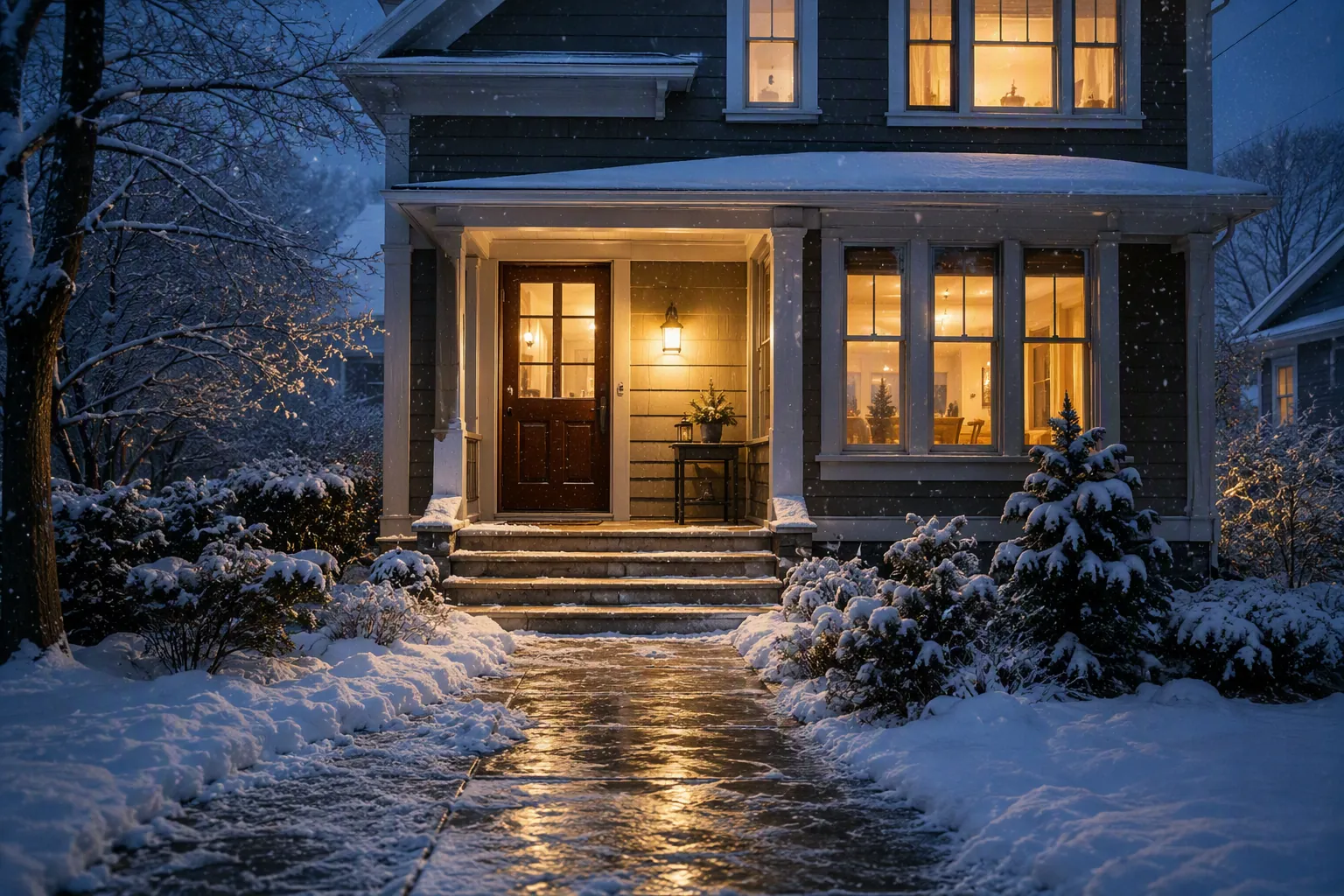
Why the entry zone comes first
The CDC’s winter storm guidance for older adults does not stop at canned food and blankets. It calls out an easy-to-read thermometer for anyone over 65, outdoor lighting near walkways and stairs, a support network to clear ice and snow, and even a small table near the entry door so someone is not juggling bags and keys on a slick step [1]. Those are not decorative details. They are the difference between arriving safely and falling at the door.
The fall concern is not theoretical, although the evidence should be read carefully. A peer-reviewed Ontario study of winters from 2011 to 2015 found that fall-related emergency department visit odds rose 5% to 8% on days with at least 0.2 cm of snowfall and stayed elevated for up to a week afterward; it is Canadian data, so it should guide the checklist without pretending every U.S. region has the same pattern [2]. A separate Truveta Research analysis reported 13.1 winter fall-related emergency department visits per 10,000 visits, a rate three times higher in freezing states, with adults 65 and older accounting for 23% of those falls; Truveta describes this as research from its health data network, not a peer-reviewed population study [3].
The larger fall burden is already high before winter adds ice. NCOA reports, citing CDC Falls Facts as of January 2026, that falls are the leading cause of injury for older adults, with 1 in 4 older Americans falling each year, about 3 million emergency room visits, and 1 million hospitalizations annually [4]. A storm checklist belongs in fall prevention because the storm makes a familiar hazard faster, colder, darker, and harder to correct.
Printable winter storm preparation checklist for seniors at home
Print this, put a name beside each assigned task, and check the house in the order shown. If you are doing one caregiver visit before a storm, do the entry-zone pass first, then the indoor cold-emergency pass.
| When to check | Entry-zone fall prevention | Indoor cold-emergency prevention |
|---|---|---|
| Before the forecast turns urgent | Confirm who clears the walkway, steps, ramp, and driveway; place salt or sand where it can be reached without stepping onto ice; test porch and path lighting. | Confirm the main heat source works; make sure the thermostat or room thermometer is easy to read; plan to keep indoor temperature at or above 68°F, a National Institute on Aging recommendation cited by AARP [5]. |
| 24 to 48 hours before the storm | Move packages, mats, cords, planters, and loose railings out of the entry path; place a small table or landing spot by the door; set dry footwear and traction aids where they can be put on while seated. | Check that space heaters have 3 feet of clearance from anything burnable, ovens are not used for heat, carbon monoxide detectors are on every level, and any generator will be kept at least 20 feet from windows, doors, and vents [6]. |
| During the storm | Do not send the older adult out to inspect ice. Use the support-network contact instead. Keep the entry light on if visibility is poor. | Watch the indoor temperature. Know that a body temperature below 95°F is a medical emergency, and that hypothermia can happen even above 40°F if someone is wet or chilled [7]. |
| If power is out | Switch to a dark-home fall plan: clear a short path to the bathroom, keep a flashlight within reach, and avoid unnecessary trips to the door. | Use stored water at 1 gallon per person per day; discard food exposed to 40°F or higher for 2 hours or more; check refrigerated medication instructions separately [8]. |
| Just after snowfall | Assume the risk is still present. Confirm snow and ice removal before opening the door for mail, trash, pets, or visitors. | Confirm heat is stable, detectors are working, and the older adult can reach help. Recheck the medication supply; the Red Cross recommends a 1-month supply and separates a 3-day Go-Kit from a 2-week Stay-at-Home Kit [9]. |
For a pre-season structural pass, use Winter-Proof Your Parent’s Home Room by Room. That is the slower room-by-room work: repairs, layout changes, and seasonal home modification. This article is the storm-cycle checklist for the days before, during, and just after a winter storm.
Entry-zone checks that deserve a slower walkthrough
Stand where the older adult would stand when leaving the house. Look down first. A walkway that is merely “mostly clear” is not clear enough if the remaining ice is at the first step, the mailbox path, the trash-bin path, or the place where a walker or cane tip lands.
Name the snow-and-ice person before the storm
Do not leave snow removal as a hopeful favor. Write down the person or service responsible for the walkway, steps, ramp, driveway edge, and path to the mailbox or car. Add the phone number, the trigger for action, and the backup name if the first person cannot come.
- Primary snow-removal contact:
- Backup contact:
- Areas to clear: front steps, handrail side, ramp, walkway, driveway edge, mailbox or trash path.
- Where salt or sand is stored:
- Who checks again after plows, refreeze, or drifting snow:
That last line matters. A cleared path can become unsafe again after meltwater refreezes, after a snowplow blocks the driveway edge, or after wind pushes snow back against the threshold.
Check lighting from the outside, not from the hallway
Turn on the porch light and stand at the bottom of the steps or at the start of the walkway. Can you see the edge of each step, the change from walkway to porch, and the patch where ice usually forms? If the light only makes the door look warm from the street, it is not doing the job.
Replace dead bulbs before the storm. If a motion light is used, test it from the actual approach path. A light that turns on only after someone has already reached the icy step is late.
Give the hands somewhere safe to go
Check the handrail with a gloved hand. If it wobbles, is buried behind snow, ends before the final step, or cannot be gripped while holding a cane, mark it as a hazard. Do not count a doorframe, storm door handle, towel bar, planter, or loose post as support.
If grab bars or stronger hand support are part of the longer-term fix, use proper mounting standards rather than improvised hardware. For the difference between decorative bars and real support, see Towel Bar vs. Grab Bar.
Set up the footwear transition
Winter footwear causes falls in two directions: shoes without enough traction outside, and wet soles or loose boots inside. Set a sturdy chair near the entry so shoes can be changed while seated. Put dry indoor shoes within reach. Keep a towel or absorbent mat where wet soles land, but remove curled rugs and sliding mats.
A small table by the door is not fussy. It keeps mail, keys, medication bags, and grocery bags out of the person’s hands while they close the door, remove traction devices, or steady themselves. If there is no table, add one that does not block the walking path.
Inspect the threshold and first indoor steps
The threshold is where snow gets dragged inside and melts. Check for raised metal strips, curled weather stripping, loose mats, puddles, and a dark step immediately inside the door. If a walker is used, make sure the front wheels or glides can cross the threshold without catching.
If the home has stairs just inside the entry, clear that landing as part of the storm checklist. A person carrying a coat, cane, mail, or flashlight should not have to step around boots, packages, or a laundry basket.
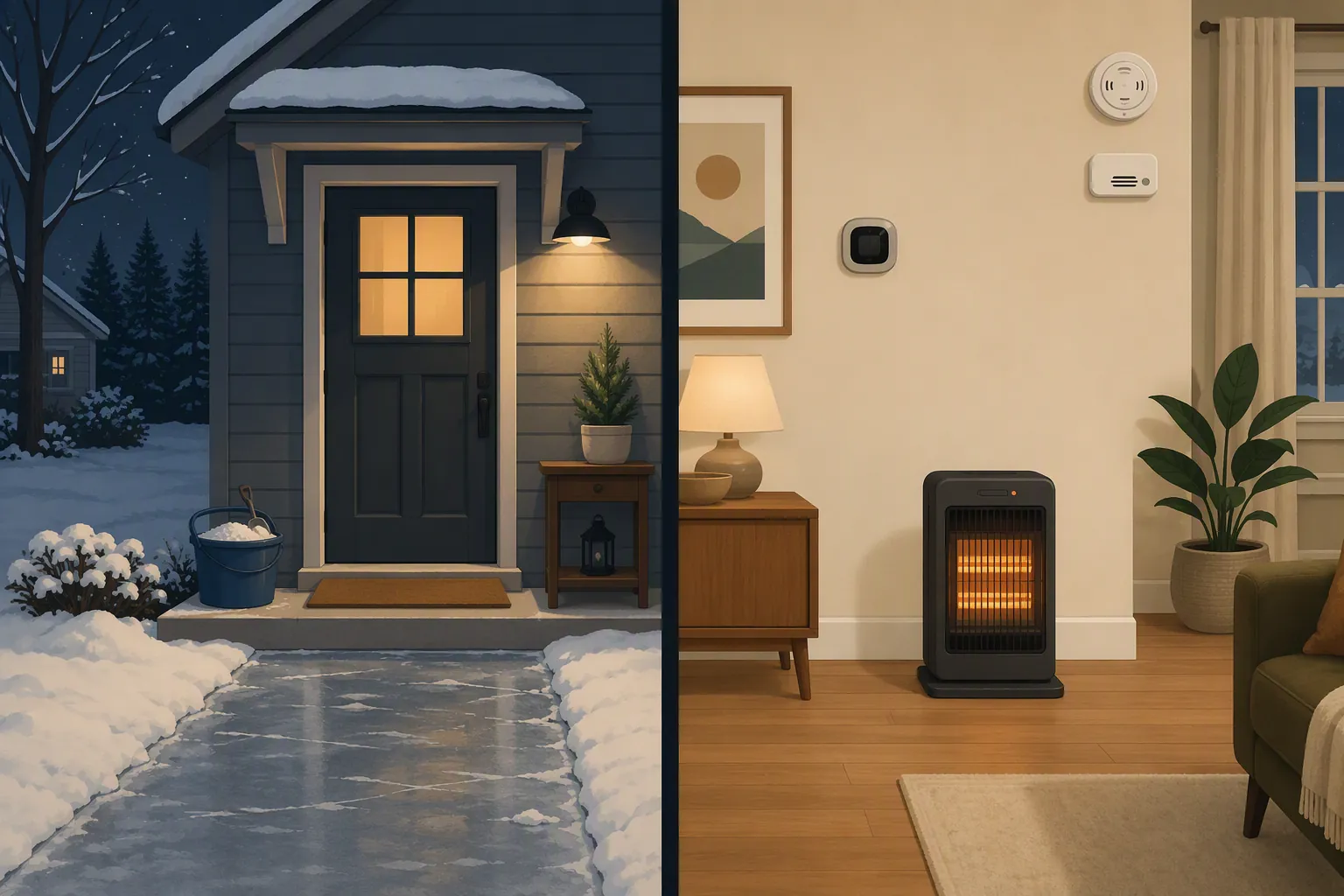
Indoor cold-emergency checks
Once the entry is assigned and visible, move indoors. The indoor pass is not just about comfort. Cold rooms, improvised heat, generators, and power loss create separate hazards, and they need separate checks.
Thermostat and thermometer
Confirm that the thermostat can be read by the person who lives there. If the display is small, dim, or confusing, add a separate easy-to-read room thermometer in the room where the person spends the most time. The CDC specifically recommends an easy-to-read thermometer for people over 65 [1].
Use 68°F as the minimum indoor target. AARP, citing the National Institute on Aging, advises older adults to set heat to at least 68°F [5]. If the home cannot hold that temperature during a storm, do not treat extra blankets as a full plan; identify the person to call, the backup heat option, or the safer place to go before travel becomes dangerous.
Hypothermia warning line
Know the emergency threshold: a body temperature below 95°F is a medical emergency. The CDC also warns that hypothermia can happen even at temperatures above 40°F when a person is wet or chilled, and that older adults may make less body heat because of slower metabolism [7].
Do not wait for dramatic shivering before taking cold seriously. A HealthInAging winter safety tip sheet for older adults notes that shivering may be absent or reduced in some older adults; because that source is older, use it as a practical caution, not as a substitute for current medical advice [11].
Space heaters, ovens, and heating-fire risk
If a space heater is used, place it on a stable surface and keep it at least 3 feet from anything that can burn: curtains, bedding, papers, furniture, oxygen tubing, clothing, and throw blankets. The CDC also says not to use an oven to heat the home [6].
This is one place where “just for tonight” thinking becomes dangerous. Ready.gov reports that home heating was the second leading cause of home fires in 2021, with 32,200 fires, 190 deaths, and $442 million in loss [10]. A heater surrounded by clear floor space is not a preference; it is the check.
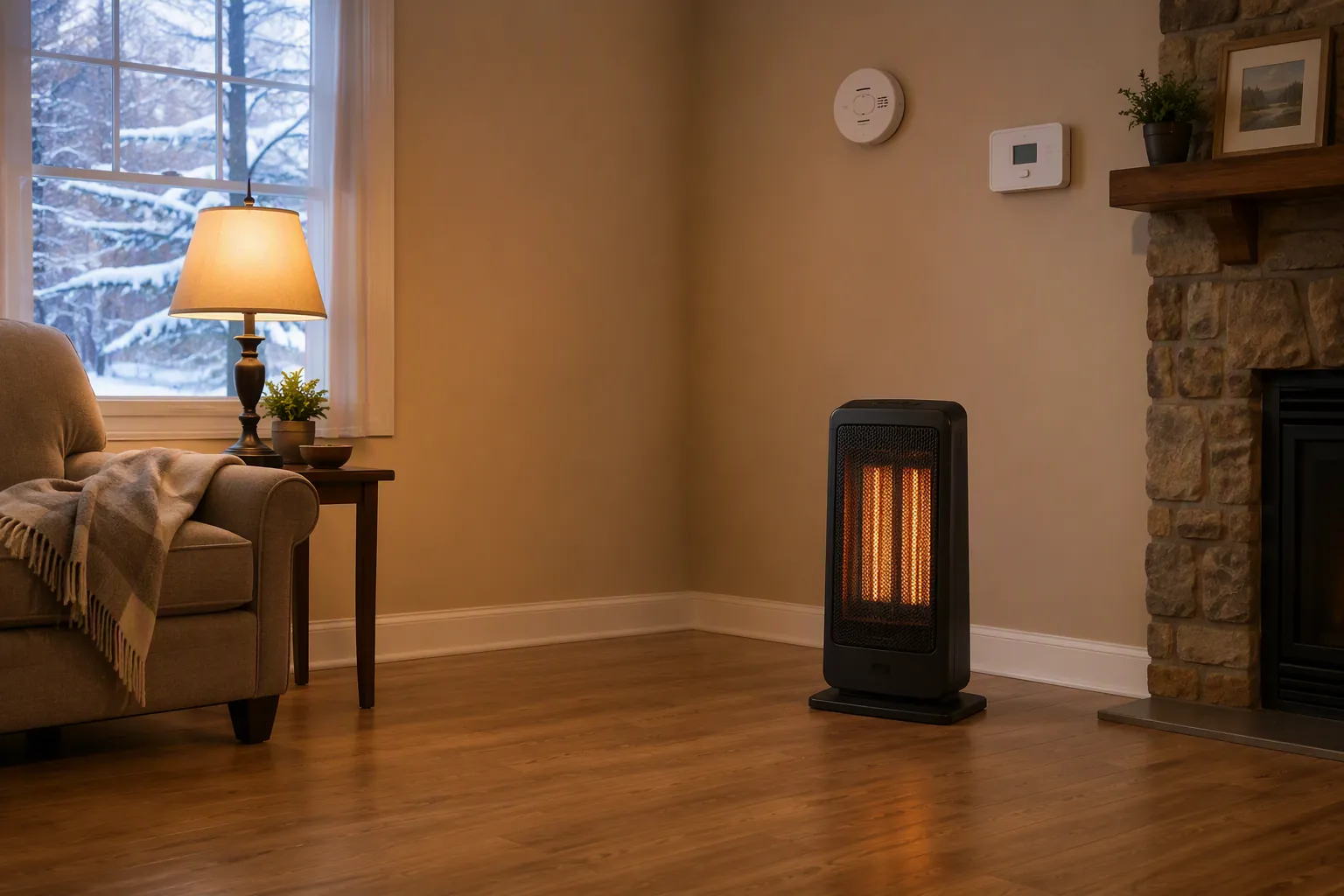
Carbon monoxide and generators
Confirm carbon monoxide detectors are installed on every level and working. If a generator is used, it must stay outside at least 20 feet from windows, doors, and vents. The same CDC guidance places both checks in winter storm safety, because the danger rises when people improvise heat or power during outages [6].
Do not run a generator in a garage, breezeway, porch, basement, or near an open window. If the carbon monoxide alarm sounds, the checklist is over; leave for fresh air and call emergency help.
Power-outage basics to confirm
For this winter storm checklist, the power-outage pass is a confirmation pass: water, food, medication, light, heat, and communication. Ready.gov advises storing 1 gallon of water per person per day and discarding food that has been at 40°F or higher for 2 hours or more [8]. The Red Cross recommends a 1-month medication supply and separates supplies into a 3-day Go-Kit and a 2-week Stay-at-Home Kit [9].
If the power is already out or likely to fail, use the deeper outage workflows in Room-by-Room Power Outage Safety Checklist for Seniors and Your Parent’s Power Is Out — What to Check First. Those pieces handle the fuller sequence for dark rooms, refrigerated medication, food safety, and generator decisions.
Medication, communication, and the support-network sheet
A winter storm turns ordinary errands into access problems. Before roads close, confirm the 1-month medication supply, refill timing, delivery options, and what to do if a medication must stay refrigerated during an outage. Do not assume the pharmacy, clinic, or adult child can solve that after the storm begins.
Ready.gov’s older-adult preparedness framework is useful here because it is plain: assess needs, make a plan, and engage a support network. Its materials include printable worksheets that can be kept on the refrigerator [12]. For a senior living alone, that refrigerator sheet should not be a vague emergency contact list. It should show who checks heat, who clears the entry, who can drive, who has a key, and who can be called if the phone battery is low.
- Medication confirmed through:
- Pharmacy phone number:
- Refrigerated medication instructions:
- Primary caregiver or neighbor:
- Backup caregiver or neighbor:
- Person with house key or lockbox code:
- Transportation contact if heat fails:
For related checklist formats, see Emergency Evacuation Checklist for Seniors Living Alone. Winter storms do not always require evacuation, but the same principle applies: names and thresholds beat good intentions.
The final verification pass
Before the storm arrives, do one last pass with a pen. If a line has no name beside it, it is not assigned.
- Entry cleared by: name, phone, backup.
- Entry checked after snowfall by: name and time.
- Porch, stair, and walkway lights tested: yes or no.
- Small table or landing spot by door: yes or no.
- Dry footwear and seated shoe-change spot ready: yes or no.
- Thermostat or room thermometer readable: yes or no.
- Indoor temperature plan at or above 68°F: yes or no.
- Space heater clearance measured at 3 feet: yes or no or not used.
- Carbon monoxide detectors on every level: yes or no.
- Generator location at least 20 feet from windows, doors, and vents: yes or no or not used.
- Water, food, flashlight, phone charging, and medication supply confirmed: yes or no.
- Person reachable if heat or power fails: name and phone.
When the checklist is no longer enough
Preparation lowers risk. It does not make icy steps safe, make a cold room harmless, or turn improvised heat into a good idea. Stop the checklist and get emergency help if there is a fall with injury or inability to get up, a body temperature below 95°F, a carbon monoxide alarm, smoke or fire risk, or no safe way to keep the home warm.
For a senior at home, winter storm preparation is not mainly a pantry project. It is a front-step check and a heat-safety check, done early enough that someone can still fix what fails.
References
- Preparing for a Winter Storm, CDC.
- Huynh et al., Ontario winters 2011–2015.
- Thin ice and slippery snow, Truveta Research.
- Winter Fall Prevention Tips for Older Adults, NCOA.
- 15 Ways Older Adults Can Stay Safe in Extreme Cold, AARP.
- Safety Guidelines: During & After a Winter Storm, CDC.
- Preventing Hypothermia, CDC.
- Winter Weather, Ready.gov.
- Winter Storm, American Red Cross.
- #WinterReady, Ready.gov.
- Tip Sheet: Winter Safety for Older Adults, HealthInAging / American Geriatrics Society Foundation, 2019.
- Older Adults / Take Control in 1, 2, 3, Ready.gov.
Related reading
Noticed something outdated or inaccurate on this page? Flag a correction. We review every report against CDC, NIA, and AARP HomeFit guidance before updating a page.
Part of the Fall Prevention section.