
Room checklist
Bathroom Safety After a Fall: A Prioritized Roadmap for Aging in Place
After a bathroom fall, families need a clear priority sequence for modifications. This guide ranks fixes by risk reduction and cost—from under $1,000 critical changes to major renovations—so you know where to start and what to budget.
After a bathroom fall, the first fix is not a full remodel. The first fix is anything that reduces the chance of the same movement failing again: standing from the toilet, stepping into the shower, turning on wet tile, reaching for the sink, or walking to the bathroom at night.
That urgency is justified. In a study of high-risk community-dwelling older adults, falls that happened in the bathroom were 2.4 times more likely to result in injury than falls in the living room, and 17% of injurious in-home falls occurred in the bathroom.[1] That is a better number to plan from than the familiar but poorly supported claim that most older-adult falls happen in the bathroom. The bathroom may not be where every fall starts, but when a fall happens there, tile, water, hard fixtures, tight turns, and awkward transfers make the consequences less forgiving.
For a family searching for aging in place bathroom design after a parent has already fallen, the order matters more than the product list. Start with the hazards that can cause another fall tonight or this week. Then add the features that reduce strain during daily routines. Leave the construction-heavy changes for the point when the budget, contractor, and plan are ready.
| Priority | Budget range | What to fix first | Why it comes here |
|---|---|---|---|
| Tier 1: Critical | Under $1,000 | Grab bars at key transfers, wet-floor traction, night lighting, handheld showerhead | These address the movements most likely to fail during daily bathroom use. |
| Tier 2: High impact | $500-$3,000 | Comfort-height toilet, shower or transfer bench, anti-scald valve, lever handles | These reduce effort, reaching, standing time, and temperature-related panic. |
| Tier 3: Major renovation | $3,000+ | Curbless shower, wider doorway, pocket or outward-swing door | These help when mobility needs, wheelchair access, or layout limits require structural work. |
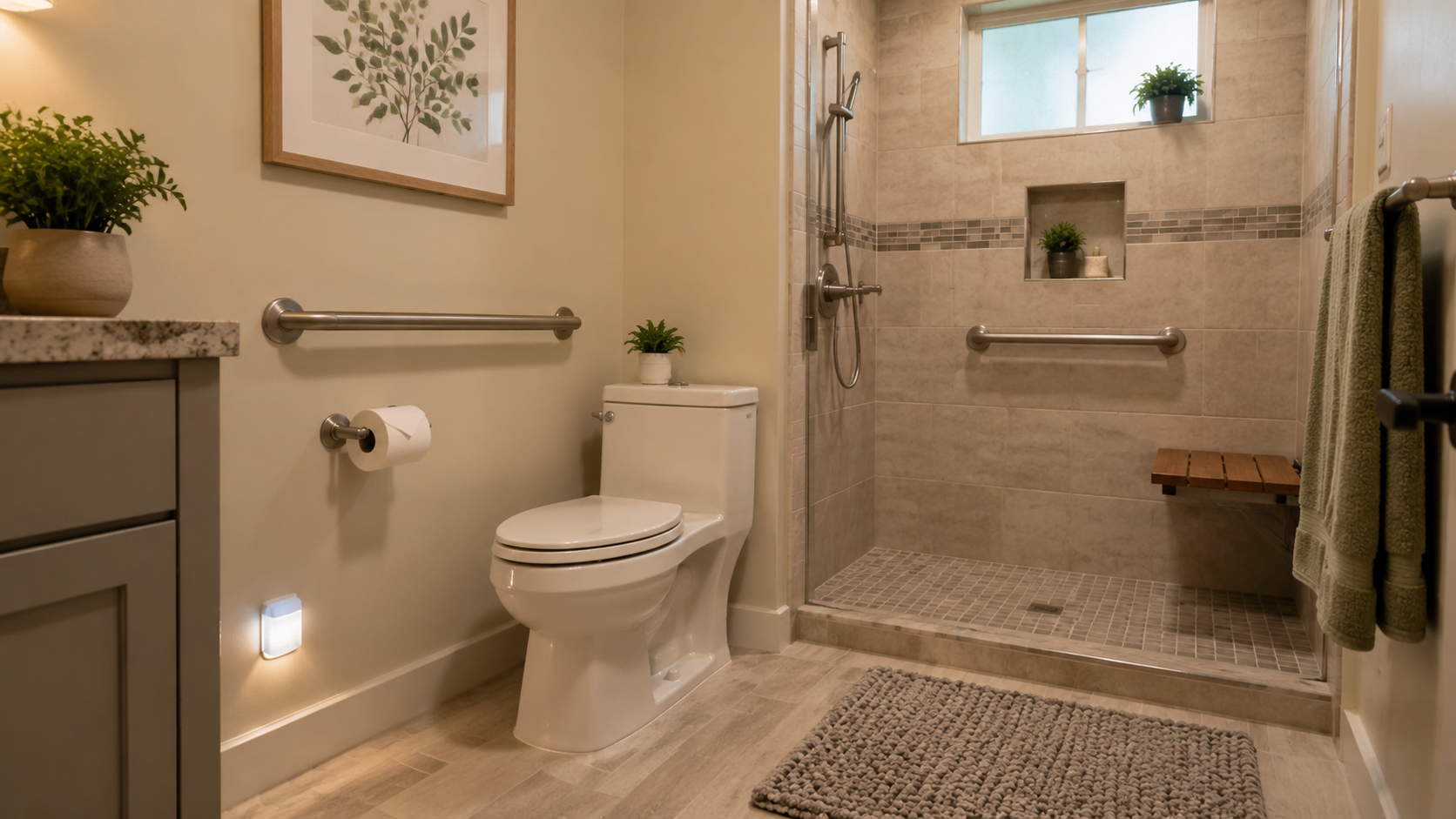
Tier 1: Fix the Transfer Points First
The first tier is for changes that should not wait for a dream bathroom plan. If someone fell while standing from the toilet, getting into the tub, turning in the shower, or crossing the floor at night, the bathroom needs stable handholds, better traction, and better visibility before anyone argues about tile color.
Grab bars are the first purchase only if they are installed correctly. The usual priority locations are beside the toilet for sit-to-stand transfers, at the shower or tub entry, inside the shower, at the tub-to-shower transition if a tub remains in use, and near the sink if the person reaches for the vanity to steady themselves. The exact height and angle should match the person's movement, not a showroom diagram.
A towel bar is not a grab bar. A suction-cup bar is not a grab bar. Those products may look reassuring, but the failure mode is bad: the person reaches during a loss of balance and the support gives way at the moment it is most needed. Proper grab bars require secure anchoring into wall structure, usually solid wood blocking or another approved structural backing. Decorative grab bars in brushed nickel, matte black, and oil-rubbed bronze can look like regular bathroom hardware while supporting 250 pounds or more, but the rating only matters when the installation can carry the load.
Floor traction belongs in the same first pass. Wet tile is not a design inconvenience; it changes how much margin a person has when one foot lands slightly wrong. For wet bathroom areas, a DCOF of 0.60 or higher is a stronger target than the minimum wet-area threshold of 0.42. If new tile is not being installed now, use a low-profile non-slip mat that does not curl, bunch, or create a new trip edge.
Night lighting is small, cheap, and frequently underrated. Motion-sensor night lights are typically listed at $15-$50 per outlet in the planning range. Place them so the route from bed to toilet is visible before the person steps onto the bathroom floor. A bright overhead light may still be useful, but many older adults avoid turning it on at night because it feels harsh; the safer light is the one they will actually use.
A handheld showerhead on a slide bar, usually estimated at $30-$150, can reduce twisting, reaching, and prolonged standing. It is especially useful when paired with a shower chair or bench because bathing no longer requires the person to stand under a fixed spray while turning repeatedly. If the slide bar is not rated and installed as a grab bar, do not treat it as one.
Families who need a broader post-fall timeline can use a post-fall home modification triage guide to separate what should happen in the first few days from what can wait for a one-month or one-year plan.
Wall Blocking Is the Decision That Changes the Rest of the Bathroom
If the wall is open for any reason, add blocking. This is the bathroom safety decision families are most likely to miss because it is invisible after the drywall goes up. It also has one of the clearest cost differences: installing 2x10 blocking between studs during construction is estimated at $50-$100 per location, while retrofitting support later can add $300-$500 per grab bar location.
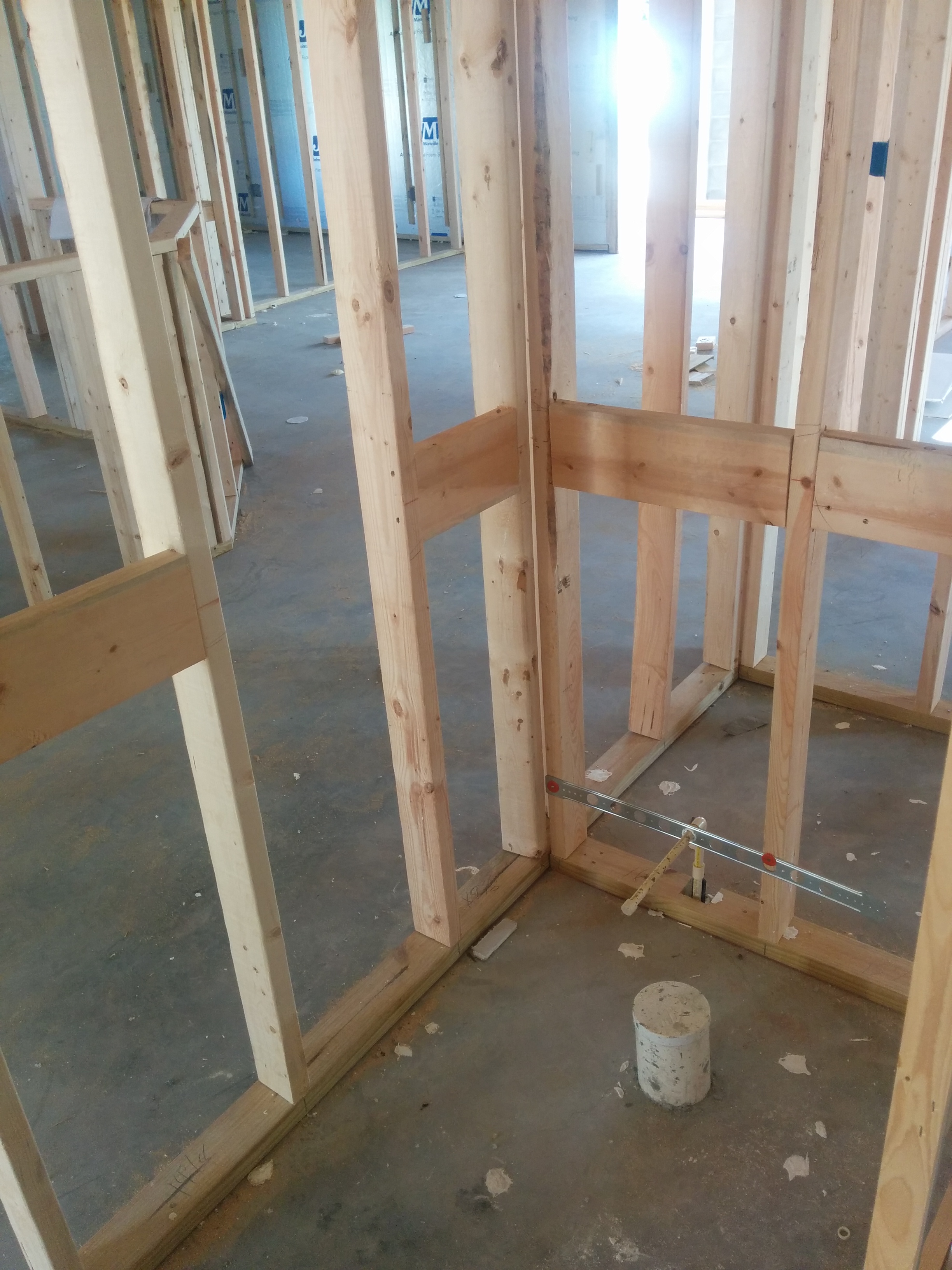
Blocking does not force someone to install every grab bar today. It gives the family options. A parent who only needs one toilet bar now may need a second bar beside the shower in a year. A spouse may develop different needs. A walker may become part of the bathroom routine. Without blocking, every new bar becomes a smaller construction problem.
Ask the contractor to document where blocking was placed before the wall is closed. Photos with measurements are useful later. The important locations are around the toilet, shower entry, shower interior, tub edge if present, and any wall where a future transfer may happen. This is also the point to ask whether the contractor understands bathroom fall-prevention details such as grab bar backing, wet-area tile traction, and shower threshold planning. A contractor-level bathroom remodel guide for fall prevention can help frame that conversation before work begins.
Tier 2: Reduce Effort, Reaching, and Standing Time
Once the immediate fall points are addressed, the next upgrades should make daily bathroom tasks less demanding. These changes do not always look dramatic, but they reduce the number of moments when someone has to push hard, bend low, twist, or hurry.
A comfort-height toilet, estimated at $200-$800, can make sit-to-stand transfers easier for many older adults. It is not automatically right for everyone. A shorter person may feel less stable if their feet do not rest well on the floor. The practical test is simple: can the person sit, plant both feet, lean forward, and stand using a safe handhold rather than pulling on the sink, towel bar, or door frame?
A shower bench or transfer bench, commonly planned at $60-$300, changes bathing from a standing endurance task into a seated task. A transfer bench is especially useful when a tub remains in place because the person can sit outside the tub and move legs over the edge one at a time. That is not as elegant as a curbless shower, but it can remove the dangerous step-over motion while the family decides whether a larger renovation is realistic.
An anti-scald pressure-balancing valve, estimated at $80-$200 before labor, is not only about comfort. Sudden hot water can make someone jerk backward, step quickly, or abandon the stable hand position they were using. Lever-handle faucets, estimated at $40-$200, reduce grip force and awkward wrist turning. They matter more when arthritis, neuropathy, weakness, or tremor makes round knobs difficult.
This is also where families should decide whether they need a Certified Aging-in-Place Specialist or a general contractor with specific bathroom safety experience. A narrow fixture swap may not require a specialist. A bathroom with a recent fall, poor lighting, a tub transfer problem, and uncertain wall structure deserves someone who can discuss function, not just finishes. For that hiring decision, compare the roles in a guide to choosing between a CAPS specialist and a general contractor.
Tier 3: Renovate When the Layout Is the Hazard
Major renovation earns its place when the existing layout keeps forcing risky movement. A tub wall may be too high for safe transfers. A narrow doorway may block a walker. An inward-swinging door may trap a person inside after a fall. These are not cosmetic problems, and small equipment may not fully solve them.
A curbless shower conversion is typically placed in the $5,000-$15,000 range depending on scope. Widening a doorway to 32-36 inches is estimated at $800-$2,500. A pocket door or outward-swinging door can make emergency access easier, especially in a small bathroom where someone could fall against the door.
Full aging-in-place bathroom modification ranges are much wider, with national estimates spanning $6,600-$28,000. Treat those as planning ranges, not promises. Local labor costs, plumbing location, tile selection, subfloor condition, permitting, and whether walls are already open can move the number sharply. A Sacramento-area contractor's practical pricing, a national remodeling estimate, and a local CAPS-certified quote are not interchangeable.
The mistake is waiting for the full remodel before doing anything. A family can install the first set of grab bars, improve traction, add night lighting, and provide seated bathing long before the curbless shower is scheduled. For families comparing phases, a phased bathroom remodel cost guide can help separate immediate safety work from later construction.
What to Ask Before You Spend
Before approving a bathroom safety estimate, make the contractor answer movement-specific questions. Where will the person put a hand when standing from the toilet? What support is available before the first foot crosses the shower threshold? Will wet feet land on a high-traction surface? Can the person bathe while seated? Can someone get into the bathroom if a fall blocks the door?
Then ask construction-specific questions. Is there solid backing for every grab bar? If the wall is open, where will blocking be installed for future bars? What DCOF rating is specified for wet-area flooring? Is the showerhead reachable from a seated position? Will the toilet height fit the person using it, not just the product category? Who is checking the final placement with the older adult present?
The broader home still matters. Bathroom work should eventually connect to hallway lighting, bedroom-to-bathroom paths, threshold changes, stair safety, and medication or vision issues that may have contributed to the fall. A room-by-room plan can wait until the bathroom is usable tonight, but it should not disappear. Use a room-by-room aging-in-place guide when the immediate bathroom hazards are under control.
For this week, the practical order is clear: install real grab bars where transfers happen, improve traction, add night lighting, make bathing possible without standing the whole time, and use any open wall as the chance to add blocking. After that, price the higher-impact upgrades and decide whether the layout itself requires renovation. The goal is not to make one bathroom choice and declare the home safe. The goal is to remove the next obvious failure point before someone has to test it again.
References
Related reading
Need a professional assessment?
Find a CAPS-credentialed professional or local aging services through our outbound resource list — we never name or rank individual contractors.
Find Local HelpNoticed something outdated or inaccurate on this page? Flag a correction. We review every report against CDC, NIA, and AARP HomeFit guidance before updating a page.