
When Home Care Isn't Enough: A Decision Framework for Knowing When to Add Professional Help, Palliative Care, or Transition to a Facility
This guide helps adult children caring for a parent at home navigate the guilt-laden decision of when their parent's needs exceed what family caregiving can safely provide. It offers a staged escalation framework with objective readiness markers at each level — from informal care through hospice — so you can make decisions with clarity, not guilt.
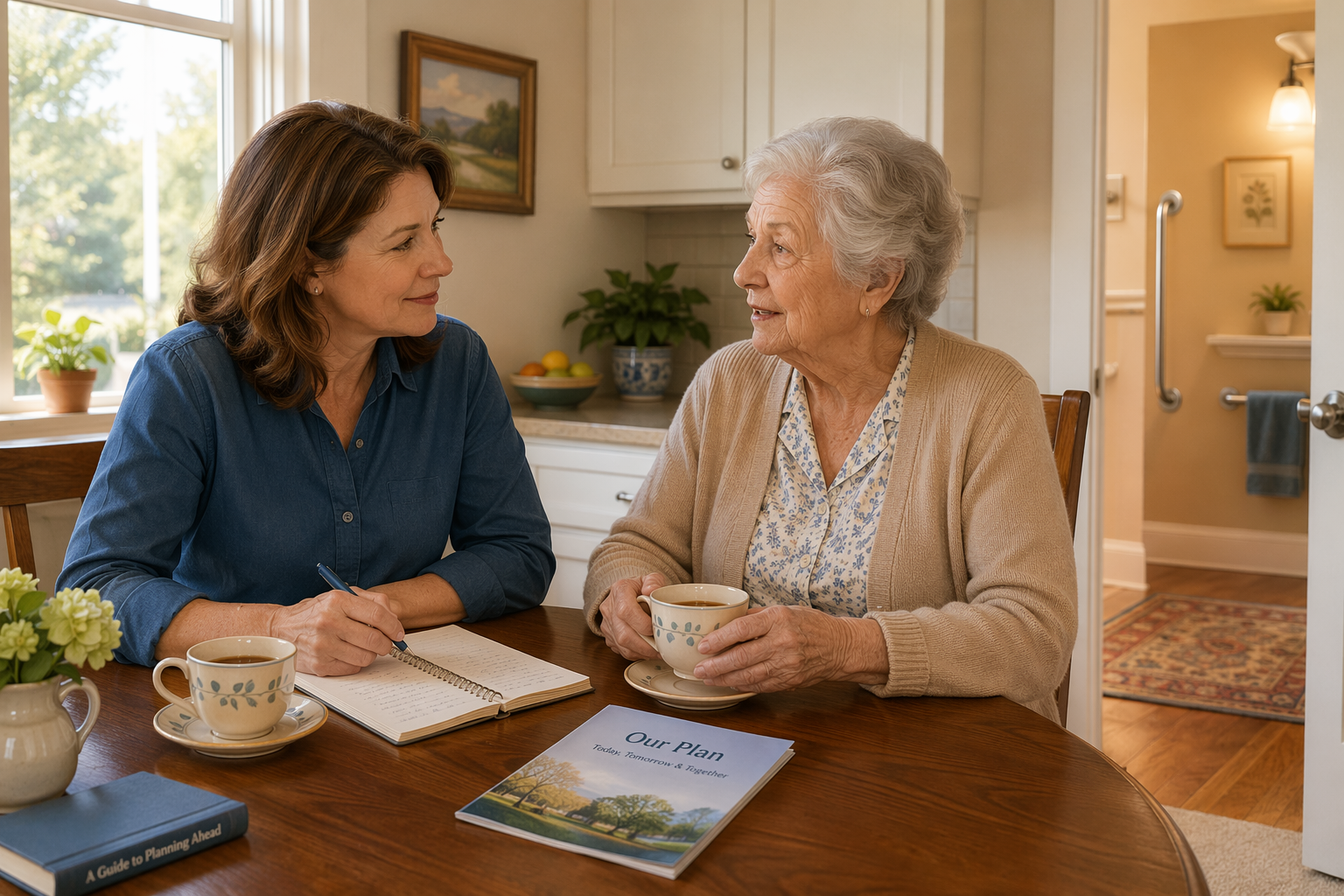
The Hardest Decision: Why Families Delay and How an Objective Framework Helps
You are not alone in feeling stuck. Among the 63 million U.S. adults who serve as unpaid family caregivers, the vast majority reach a point where they ask themselves a question they dread: "Is what I'm doing still enough?" The answer is rarely clear in the moment. Exhaustion creeps in slowly. A parent's functional decline happens in increments, not leaps. And the guilt of even considering outside help can be paralyzing.
The data confirms this is not a personal failing — it is a structural problem. According to a 2025 Pew Research Center survey of 8,750 U.S. adults, among those who regularly help a parent with daily tasks, 39% report a negative impact on their emotional well-being and 33% report a negative impact on their physical health. Women bear the brunt: 47% report emotional strain compared to 30% of men. And with 90 million Americans projected to be over 65 by 2050, this decision will confront millions more families in the coming decades.
The problem is not a lack of love or dedication. The problem is that most families make this decision reactively — after a crisis, a hospitalization, or a moment of complete caregiver collapse. Research from UT Southwestern Medical Center, citing a study in BMC Geriatrics, found that 27% of caregivers felt mild regret and 15.2% felt moderate-to-high regret after moving a cognitively impaired loved one to a nursing home. Regret is often the residue of a decision made under pressure, without a clear framework.
This guide offers an alternative: a six-stage escalation model that replaces subjective guilt with objective readiness markers. Each stage has specific signs that indicate it may be time to consider the next level of support. The framework is designed to help you make decisions with clarity, not guilt — and to recognize that choosing professional help is an act of responsible care, not abandonment.

Stage 1: When Informal Family Care Is Still Enough — and the Signs It May Not Be
In this baseline stage, family members provide all care without paid help. This works well when a parent needs only occasional assistance — help with groceries, transportation to appointments, medication reminders, or light housekeeping. The caregiver's own health, work, and family life remain largely intact.
The challenge is recognizing when this equilibrium is shifting. The signs are often subtle at first: you feel more tired than usual, you have missed two work deadlines this month, or your parent has lost weight because cooking has become difficult. The Zarit Burden Interview, a self-assessment tool referenced by UT Southwestern geriatrics specialists, can help you evaluate caregiver strain objectively. It asks about your feelings of stress, your social life, your health, and your relationship with the person you care for.
Objective markers that Stage 1 may no longer be sufficient:
- You regularly feel exhausted, irritable, or overwhelmed
- Your parent has declined in two or more activities of daily living (ADLs) — bathing, dressing, toileting, transferring, or eating
- You have missed work or reduced your hours to provide care
- Your own health has suffered — you have skipped doctor appointments, gained or lost weight, or experienced sleep disruption
- Safety concerns have emerged: your parent has fallen, left the stove on, or become disoriented while alone
If even one of these markers is present, it is time to begin exploring Stage 2. You do not need to act immediately — but you need to start gathering information so that when the moment comes, you are prepared rather than panicked.
Stage 2: In-Home Professional Services — Home Health Aides, Skilled Nursing, and Personal Care
Bringing paid help into the home is the first escalation that many families consider, yet it remains surprisingly underutilized. According to MedPAC, only about 7% of Medicare beneficiaries use home health services in a given year. This suggests that many families either do not know these services exist, assume they cannot afford them, or feel uncomfortable having a stranger in the home.
Understanding the different types of in-home services is the first step to using them effectively.
| Service Type | What They Do | Who Pays |
|---|---|---|
| Home Health Aide | Personal care: bathing, dressing, toileting, meal preparation, light housekeeping | Private pay, long-term care insurance, some Medicaid waivers |
| Skilled Nursing Visit | Medical care: wound care, medication management, IV therapy, chronic disease monitoring | Medicare Part A/B (post-hospital or with a qualifying condition), private insurance |
| Private-Duty Personal Care Attendant | Companionship, supervision, assistance with ADLs, often for longer shifts | Private pay, long-term care insurance |
| Physical or Occupational Therapy (Home-Based) | Rehabilitation: fall prevention, strength training, adaptive equipment training | Medicare Part A/B (with a qualifying need), private insurance |
The key distinction is between "skilled care" (ordered by a doctor, often covered by Medicare) and "custodial care" (help with daily living, typically private pay). Many families assume Medicare will cover a home health aide for long-term care, but Medicare only covers skilled nursing or therapy visits for a limited time under specific conditions. For ongoing personal care, families usually pay out of pocket or use long-term care insurance.
When considering this stage, start by asking your parent's primary care doctor for a home health referral. This triggers a Medicare-covered assessment that can identify skilled needs. For personal care, contact your local Area Agency on Aging for a list of licensed home care agencies. Our Complete Guide to In-Home Care Options for Seniors provides detailed guidance on evaluating agencies and understanding costs.
Stage 3: Adult Day Programs and Respite Care — Giving the Caregiver a Break
Many caregivers resist this stage because it feels like "sending their parent away." But adult day programs and respite care are not about abandonment — they are sustainability strategies. The ARCH National Respite Network has documented that these services significantly reduce caregiver stress and improve the longevity of family caregiving arrangements. Yet they remain dramatically underused, largely due to guilt and lack of awareness.
Adult day programs provide structured activities, social engagement, and supervision for older adults during daytime hours. For a parent with mild to moderate dementia, these programs can be a lifeline — offering cognitive stimulation and peer interaction that actually benefits their well-being. For the caregiver, even two days a week of relief can mean the difference between sustaining care and burning out.
Respite care is broader: it can mean a few hours of in-home help so you can run errands, or a short-term stay at an assisted living facility so you can take a vacation. The National Institute on Aging recommends planning respite breaks before you feel desperate, because a burned-out caregiver cannot provide safe care.
Common barriers and how to address them:
- "Mom will feel abandoned." — Frame it as a positive: "I want to make sure I have the energy to be fully present with you. This program will give you a chance to socialize while I recharge."
- "We can't afford it." — Some adult day programs offer sliding-scale fees. Medicaid may cover adult day health services in some states. Check with your local Area Agency on Aging.
- "Dad won't go." — Start with a trial visit. Many programs allow a free half-day trial. The social aspect often wins reluctant participants over.
Stage 4: Palliative Care — Symptom Management Alongside Treatment
Palliative care is one of the most misunderstood options on this spectrum. Many families associate it with end-of-life care, but that is not accurate. Palliative care is specialized medical care focused on relieving symptoms and improving quality of life for people with serious illnesses — and it can be provided alongside curative treatment. A person receiving chemotherapy for cancer, or managing advanced heart failure, can also receive palliative care to address pain, breathlessness, anxiety, and other symptoms.
The Central Coast VNA & Hospice guide describes the continuum clearly: home health addresses recovery and skilled care, palliative care addresses symptom relief and can coexist with curative treatment, and hospice shifts the focus entirely to comfort. Palliative care becomes appropriate when a parent's symptoms — pain, nausea, shortness of breath, severe fatigue — are not well-controlled by their primary doctor alone, or when the family caregiver feels overwhelmed managing these symptoms at home.
Palliative care can be delivered at home, in a hospital, or in a clinic. A palliative care team typically includes a doctor, nurse, social worker, and chaplain. Medicare Part B covers palliative care consultations, and many private insurance plans do as well.
Stage 5: Hospice — When the Focus Shifts to Comfort
Hospice is the stage that families resist most fiercely, and for understandable reasons. Choosing hospice means accepting that curative treatment is no longer working or is no longer desired, and that the goal of care has shifted to comfort and quality of life in the time remaining. It is an emotional threshold that feels like a surrender.
But hospice is not about giving up hope. It is about redirecting hope toward comfort, dignity, and meaningful time together. Medicare hospice eligibility requires a doctor's certification that the patient has a life expectancy of six months or less if the disease runs its normal course. Hospice care covers:
- Nursing and aide visits for symptom management and personal care
- Medications related to the terminal diagnosis
- Medical equipment (hospital bed, oxygen, wheelchair)
- Bereavement support for the family for up to 13 months after the death
- Respite care for the caregiver (up to 5 days in a facility)
Importantly, hospice can be provided at home. Many families do not realize that their parent can remain in their own home with hospice support. The hospice team visits regularly, and a nurse is on call 24/7. This allows the parent to die in familiar surroundings, surrounded by family, rather than in a hospital.
The decision to begin hospice is deeply personal, but it should not be delayed out of guilt. Studies consistently show that families who use hospice services report higher satisfaction with end-of-life care and lower rates of complicated grief. Choosing hospice is choosing to prioritize your parent's comfort and dignity over aggressive treatments that are no longer helping.
Stage 6: Residential Transition — Assisted Living, Memory Care, or Nursing Home
This is the stage that most families think of first when they imagine "not being able to care for Mom or Dad at home anymore." It is also the stage where regret is most common — the BMC Geriatrics study found that 27% of caregivers felt mild regret and 15.2% felt moderate-to-high regret after placement. But the research also suggests that proactive, informed decisions reduce that regret. The key is to recognize the objective markers that indicate a residential setting may be the safest option, rather than waiting until a crisis forces the decision.
Objective markers for considering residential transition:
- Recurrent falls that cannot be prevented with home modifications and supervision
- Incontinence that exceeds the family's capacity to manage hygienically and safely
- Wandering behavior that creates a serious safety risk (especially in dementia)
- Need for 24/7 skilled nursing care that family members cannot provide
- Caregiver health crisis — when the caregiver becomes too ill or injured to continue
If one or more of these markers is present, it is time to begin evaluating residential options. The type of facility depends on the level of care needed:
| Facility Type | Best For | Typical Care Level |
|---|---|---|
| Assisted Living | Seniors who need help with ADLs but are relatively stable medically and cognitively | Meals, housekeeping, medication management, personal care assistance, social activities |
| Memory Care | Seniors with Alzheimer's or other dementia who need a secure environment and specialized programming | All of the above plus secured wandering paths, dementia-trained staff, behavior management |
| Skilled Nursing Facility (Nursing Home) | Seniors who need 24/7 skilled nursing care, rehabilitation, or have complex medical needs | Full medical supervision, therapy services, wound care, IV medications |
Our Senior Residential Homes: A Complete Decision Framework provides a detailed guide to evaluating facilities, understanding costs, and navigating the emotional process. For families whose parent recently experienced a fall and is weighing home modifications versus a move, our article Aging in Place vs. Assisted Living After a Fall offers a targeted comparison.

A Guilt-Management Framework: How to Make This Decision Without Carrying It Alone
Every stage in this framework carries emotional weight. The guilt does not disappear just because you have a checklist. But it can be managed — and the data shows that caregivers who actively manage their emotional health make better decisions. According to Caregiver Action, 41% of caregivers report low overall well-being, and only 23% report good mental health. These numbers are not acceptable, and they are not inevitable.
Five strategies to manage guilt and make clearer decisions:
- Normalize the feelings. Guilt is not a sign you are doing something wrong — it is a sign you care deeply. The 63 million U.S. adults providing unpaid care, contributing an estimated $1.1 trillion in unpaid care annually, are not failing. They are operating in a system that offers little structural support. Your guilt is a rational response to an impossible situation, not a moral failing.
- Involve your parent in the conversation. This is the hardest and most important step. Use the strategies in our guide When Your Aging Parent Refuses Help: A Conversation-First Guide to approach the topic with respect and collaboration, not ultimatums. Even if your parent cannot fully participate in the decision, explaining your reasoning aloud can clarify your own thinking.
- Engage siblings and family members. Caregiver burden is often invisible to siblings who do not live nearby. Schedule a family meeting — even a video call — to share the assessment you have done using this framework. Ask each person to take on a specific role: researching facilities, managing finances, providing weekend relief. Shared decisions are lighter decisions.
- Consult a geriatric care manager. This is a professional who can provide an objective, third-party assessment of your parent's needs and recommend appropriate services. A geriatric care manager costs $100–$200 per hour for an initial assessment, but that single session can save thousands in misguided spending and months of unnecessary stress.
- Use the staged framework as a reference point. When guilt surges, return to the objective markers in this guide. You are not making this decision based on feelings of inadequacy — you are making it based on specific, observable signs that your parent's needs have changed. The framework is your anchor.
The decision to move from one stage to the next is never easy. But it is not a sign of failure. It is a sign that you are paying attention, that you are willing to adapt, and that you are putting your parent's well-being — and your own — at the center of the equation. That is not abandonment. That is the definition of responsible care.
Related reading
Noticed something outdated or inaccurate on this page? Flag a correction. We review every report against CDC, NIA, and AARP HomeFit guidance before updating a page.
Part of the Fall Prevention section.