
Caregiver decision guide
How to Check Recalled Eye Drops Lot Numbers for a Parent
The four major 2026 eye drop recalls (K.C. Pharmaceuticals, Lupin, Rohto, Clear Eyes) each cover specific lots, not every bottle. This guide walks caregivers through finding the lot number on a parent's bottle, matching it to the affected lists, and taking the right return or pharmacist-replacement step only when a bottle matches.
If you heard that millions of eye drops were recalled in 2026, the first safe move is not to throw out every bottle in your parent’s bathroom. The four major recalls covered specific products, lots, NDCs, or SKUs — not every eye drop, and not whole categories of drops. The practical question is narrower: does the bottle in your hand match the recall record? FDA enforcement reports are the source to check when recall details change or expand. [1]
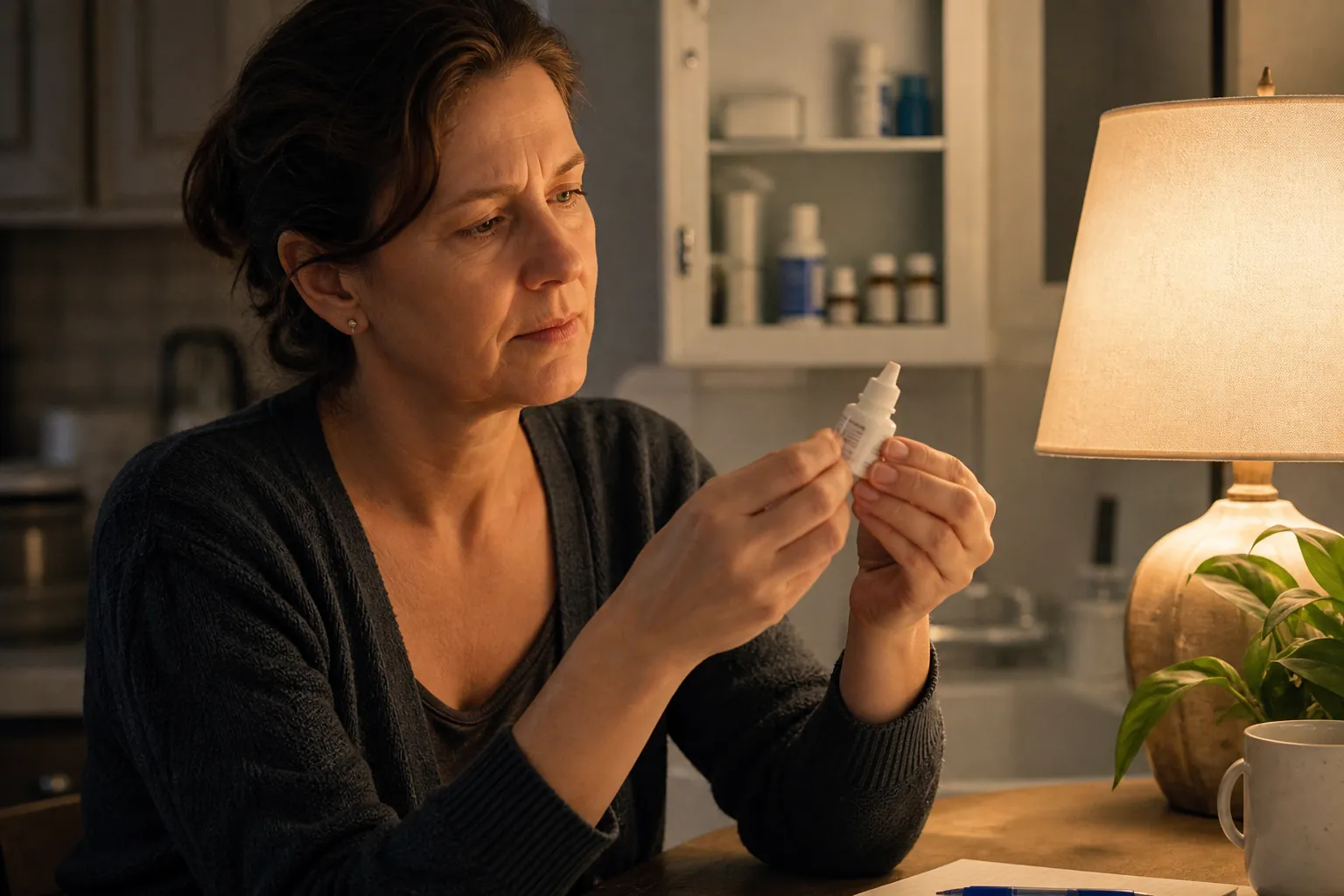
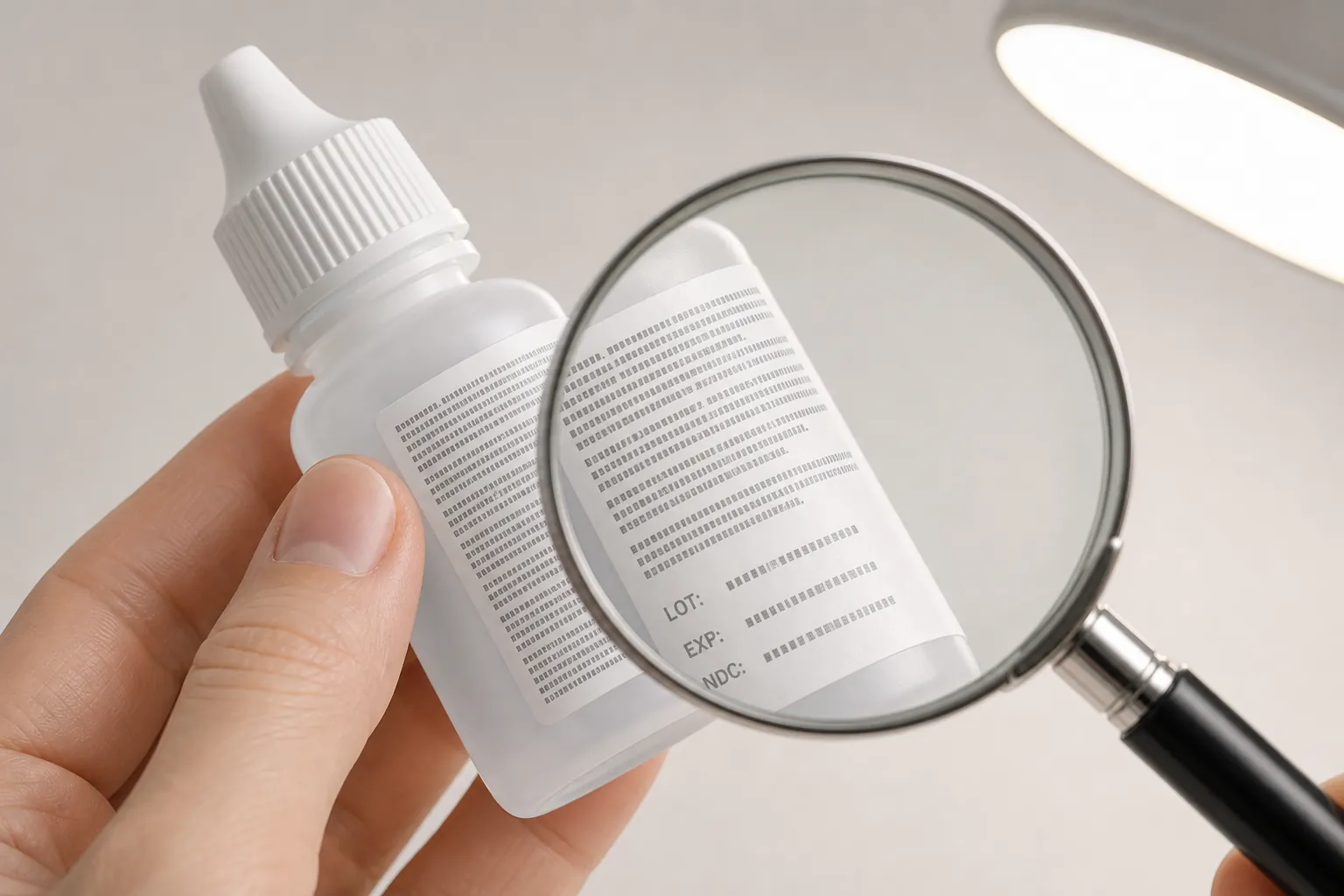
Before anyone stops a daily prescription drop, collect the bottle and the outer carton if you still have it. You are looking for four things: the product or manufacturer name, the NDC if listed, the lot number, and the expiration date. The lot number is often printed near the expiration date, sometimes in tiny ink on the bottle or carton. [2] The NDC is commonly easier to find on the outer packaging than on the bottle itself. [3]
The kitchen-table check: bottle, carton, lot, expiration
Work through the drops one at a time. Mixing bottles together, guessing by brand, or relying on a headline number is how a caregiver can miss the one bottle that matters.
- Put every eye drop bottle and matching carton on the table. Keep prescription drops separate from over-the-counter drops.
- Read the front label first: brand name, product name, strength, and whether it is a prescription medication.
- Turn the bottle under a bright lamp and look for LOT, Lot, L, EXP, or Exp. A phone camera zoom or magnifier helps.
- Check the carton for the NDC and any lot or expiration printing. Do not throw the carton away until the check is finished.
- Compare the bottle against the recall table below. Match by product plus lot or NDC, not by brand name alone.
- If the label is smeared, missing, or too small to read, call the pharmacy with the bottle in hand instead of guessing.
For a fuller walk-through of where the print may be hiding, use Worried About Eye Drop Recalls? Check the Bottle Label. If you want a step-by-step safety flow after a possible match, keep Eye Drop Recall? Here's Your Step-by-Step Safety Checklist open beside you.
Four 2026 eye drop recalls to compare against the bottle
Last verified against the cited sources: August 25, 2026. Recall records can be amended, so use this table as a caregiver screening tool and confirm a possible match through the FDA enforcement report, the manufacturer’s recall page, or the pharmacy before making a final decision.
| Recall | What to match on the label | Affected lot or product screen from available public reports | If your parent’s bottle matches |
|---|---|---|---|
| K.C. Pharmaceuticals eye drops; recall initiated March 3, 2026 and classified Class II on March 31, 2026 | Manufacturer or distributor details, product name, store-brand label, lot code, and 2026 expiration | More than 3.1 million bottles; eight products sold under 28+ store brands, including Walgreens, CVS, Rite Aid, Kroger, Harris Teeter, Dollar General, Circle K, and Publix labels. Public screening prefixes reported: AC, AR, LT, SU, RG, RL, SY, AT, with 2026 expirations. [4][5][6][7] | For a matching OTC bottle, stop using it and follow the recall notice for return or refund. Do not discard the bottle until you have the lot and product information recorded. |
| Lupin Pharmaceuticals prednisoLONE Acetate Ophthalmic Suspension USP 1% | Prescription name, strength 1%, manufacturer, lot code, and expiration | About 2.5 million bottles recalled in July 2026; the recall involved prescription prednisolone acetate ophthalmic suspension and FDA language about a foreign substance. Public screening series reported: HA, HB, and HC lot series. [4][7] | Do not simply stop this prescription steroid on your own. Call the pharmacist or prescriber and ask how to replace it or bridge treatment safely. |
| Rohto Mentholatum eye drops | Exact Rohto product, SKU or product identifier, lot and expiration, and any recall page instructions | Roughly 12 million units across eight products; recall reported July 23, 2026. Public product-level pages should be used to match the exact product and lot, rather than assuming every Rohto bottle is included. [7] | For a matching OTC bottle, stop use and follow the Rohto recall or return instructions. For product-level help, use the Rohto recall pages linked below. |
| Clear Eyes Maximum Itchy Eye Relief | NDC, product name, lot, and expiration | NDC 67172-999-01; lot 2552A; expiration 09/30/2027; 39,060 bottles; classified Class II on August 14, 2026. [8][9] | For this exact OTC match, stop use and follow the recall instructions for return or refund. |
The K.C. Pharmaceuticals row is the one most likely to trip up a household check because the same recall reached many store labels. A CVS, Walgreens, Kroger, Dollar General, Publix, or other store-brand bottle may not say “K.C. Pharmaceuticals” on the front in large print. Turn the bottle and carton over and look for the product identity, distributor or manufacturer information, lot code, and expiration before deciding it is a no-match.
The Lupin row needs a different kind of caution. Prednisolone acetate ophthalmic suspension is a prescription steroid drop. Stopping it abruptly because it appears in a recall article can create a different medication-safety problem. If the bottle looks like a match, call the pharmacy or prescriber and say: “I have Lupin prednisoLONE Acetate Ophthalmic Suspension USP 1%. The lot begins with HA, HB, or HC. Can you check whether this bottle is recalled and arrange a replacement?”
For Rohto, avoid the shortcut of treating every Rohto product as recalled. The public reports describe a large recall across eight products, but the safe household action is still a product-and-lot match. For more detail, use the Rohto eye drops recall guide and how to return recalled Rohto eye drops.
Quick lot-code index
- K.C. Pharmaceuticals: screen for lot prefixes AC, AR, LT, SU, RG, RL, SY, and AT, with 2026 expirations reported in public summaries. Confirm the full lot and product against the FDA record or recall notice. [7]
- Lupin prednisoLONE Acetate Ophthalmic Suspension USP 1%: screen for HA, HB, and HC lot series, then call the pharmacy or prescriber because this is a prescription medication. [7]
- Rohto Mentholatum: screen by exact product and lot/SKU from Rohto or FDA product-level recall information; do not use brand name alone. [7]
- Clear Eyes Maximum Itchy Eye Relief: NDC 67172-999-01, lot 2552A, expiration 09/30/2027. [8][9]
If the bottle on your table is not one of these four but the name sounds familiar from another recall — for example, products connected in public tracking to the Excelvision-facility situation such as certain GenTeal, Systane, Optase, Ivizia, Oasis Tears PF, or Freshkote PF entries — do not force it into this table. Search the FDA enforcement reports or ask the pharmacy to check the exact product and lot. Some recall situations have involved all unexpired lots, which is a different matching rule. [1][7]
What the FDA language means — and what it does not mean
Most of these 2026 recalls are described as sterility-assurance problems. In plain language, that means the company could not adequately assure that the product was sterile. It does not automatically mean a bottle in your parent’s bathroom is proven contaminated, and it does not mean an infection has already been traced to that bottle.
FDA describes a Class II recall as a situation where use of or exposure to the product may cause temporary or medically reversible adverse health consequences, or where the probability of serious adverse health consequences is remote. [10] That is less severe than a Class I recall, but it is still a recall. For an eye drop that matches a 2026 notice, the useful question is not “How scared should we be?” It is “What does this specific recall tell us to do with this specific bottle?”
There is also a small but important difference between FDA’s general recall education and the instructions in a particular notice. FDA’s general material explains that some recalled products may be continued unless a patient is told otherwise. [10] But the 2026 eye drop notices discussed here commonly direct consumers to stop use, return the product, seek a refund, or arrange replacement. The recall-specific instruction wins.
The available 2026 source reports reviewed for these recalls did not report confirmed infections tied to the recalled bottles. [4][7][9] That is reassuring, but it is not permission to keep using a bottle that matches. Eye drops go directly onto the eye, and sterility is not a decorative requirement.
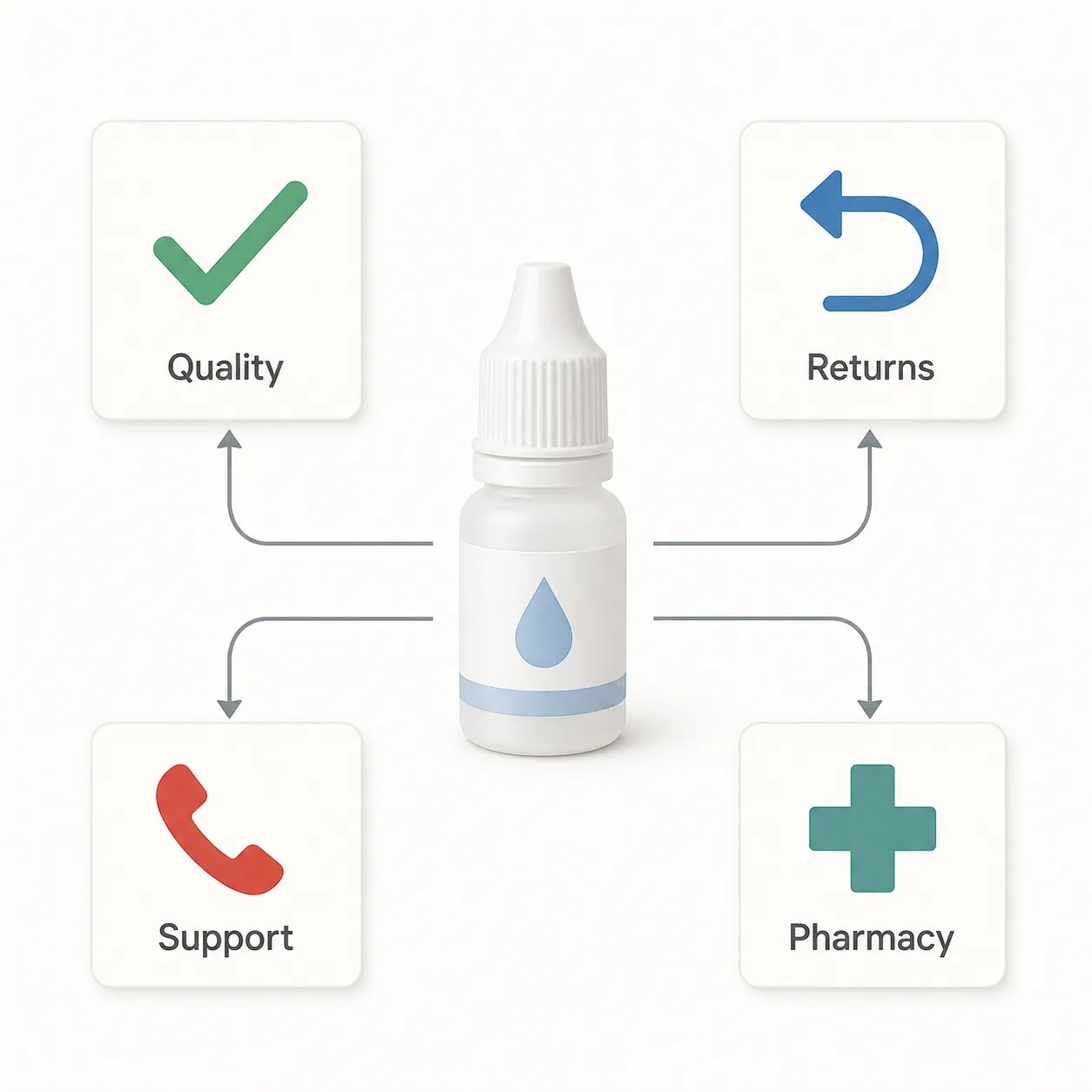
After the match: the right action depends on the kind of drop
| What you found | What to do |
|---|---|
| No product, NDC, lot, SKU, or expiration match | Keep the drop in its usual place and use it as directed. Do not stop a prescribed eye medication because another product was recalled. |
| OTC eye drop matches a recall notice | Stop using that bottle. Keep the bottle and carton, record the lot and expiration, and follow the recall notice for return, refund, or disposal. |
| Prescription prednisolone drop may match the Lupin recall | Do not stop on your own. Call the pharmacist or prescriber and ask for a replacement plan. Have the bottle, lot, expiration, and pharmacy label ready. |
| Label is unreadable or the carton is gone | Call the pharmacy if it was purchased or filled there. If it was bought OTC, call the manufacturer or retailer and use the FDA enforcement report to compare what you can still read. |
| Your parent has eye pain, worsening redness, discharge, light sensitivity, or vision changes | Treat symptoms as a medical issue, not just a recall paperwork issue. Contact an eye clinician or seek urgent care depending on severity. |
For the “we bought it — now what?” branch, use What to do if you bought recalled eye drops for elderly parents. For a shorter senior-focused action page, use Eye Drops Recalled? What Seniors Should Do Now. Serious problems can also be reported through FDA MedWatch. [11]
Why these recalls deserve attention without household panic
The reason eye-drop sterility gets taken seriously is not abstract. The 2023 EzriCare and Delsam outbreak was a different kind of event: The Conversation, citing final counts, reported 81 infections across 18 states, 14 cases of vision loss, four eye removals, and four deaths. [5] Earlier patient-facing explainers from UCLA Health and UT Southwestern discussed earlier CDC counts of 68 patients in 16 states, which is why older articles may not line up perfectly with later summaries. [12][13]
That 2023 outbreak should not be pasted onto every later recall as if the facts are the same. The 2026 recalls discussed here are being handled as sterility-assurance or related manufacturing-quality problems, not as confirmed infection clusters in the available reports. The lesson for a caregiver is steadier than the headlines: check the bottle, match the lot, and act only on a real match.
There is still a broader pattern worth noticing. Dry Eye Foundation’s public tracking has described hundreds of eye-drop notices or recalls since 2022, along with FDA warning letters to dozens of distributors and manufacturing facilities. [7] That does not make every bottle unsafe. It does make label literacy — the unglamorous habit of reading LOT, EXP, and NDC — part of protecting daily vision care.
When you are done, each bottle should have a disposition: no match, keep using as directed; OTC match, stop and return; prescription match, call the pharmacy or prescriber for a replacement; unreadable label, call with the bottle in hand. That is the point where the cabinet can go back to being a routine, not a crisis.
References
- Enforcement Reports, FDA
- How to Find Drug Recalls and What to Do Next, AARP
- What to Know About Eye Drop Recalls, Geisinger
- Eye drop recall 2026: FDA flags over 3 million bottles, UC Davis Health, April 2026
- Massive eye drop recall reflects ongoing issues with manufacturing and FDA inspection, The Conversation
- Millions of eye drops recalled. See affected products., USA Today via Detroit News, April 5, 2026
- Dry Eye Foundation, Dry Eye Foundation
- 40,000 bottles of eye drops across the US recalled, The Guardian, August 22, 2026
- FDA recalls eye drop that relieves ocular itch, Ophthalmology Times
- Understanding Drug Recalls: What to Know and What to Do, FDA
- Reporting Serious Problems to FDA, FDA MedWatch
- What you need to know about contaminated eye drops, UCLA Health
- What patients need to know about the 2023 eye drop recall, UT Southwestern
Questions to bring to a clinician or OT
This is not medical, legal, or a family's final decision — only a framework. Bring these questions to a clinician, occupational therapist, or your local Area Agency on Aging.
Find Local HelpRelated reading
Noticed something outdated or inaccurate on this page? Flag a correction. We review every report against CDC, NIA, and AARP HomeFit guidance before updating a page.